On this page
-
Departments (4)
-
Adverts (4)
-
-
Text (14)
-

the GOLD IN CALIFORNIA. . .. ¦ " January...
-

THE TERDICTS. St. Pancras.—On Thursday e...
-

Allotmbxts.—The Bath Journal maintains t...
-

police
-

WESTMINSTER.-Shockino Case of Distress.—...
-

prisoner. This man, he thought, had stru...
-
THE MAIL ROBBERY ON THE GREAT WESTERN RA...
-
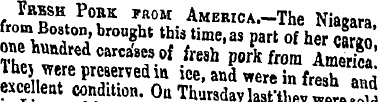
Frbsh Pork thou AMEwcA.-The Niacara from...
-

GOLD IN CALIFORNIA n.
-

Mavmn, #*?
-

COllN. Mabk-lasie, Mondav, January 15.-W...
-

DEATHS. Last week, Mr. Hartley Coleridge...
-

Printed bv WILLIAM KIDER. of No. S. Maeclesfielrt-st.^*
-

m the parish ot 5>t Anno, tt estuunster,...
Note: This text has been automatically extracted via Optical Character Recognition (OCR) software. The text has not been manually corrected and should not be relied on to be an accurate representation of the item.
-
-
Transcript
-
Note: This text has been automatically extracted via Optical Character Recognition (OCR) software. The text has not been manually corrected and should not be relied on to be an accurate representation of the item.
Additionally, when viewing full transcripts, extracted text may not be in the same order as the original document.
Inquest <Vw Rnv. Nmt.Tvn-F.V T-Ftrafnvft...
fotatoes , and were perfectly satisfied both as to thc quantity and quality g iven to tho children . Witnesi first received notice of the outbreak of Cholera on the 2 nd of January . Thc Coroxbr here interrupted the witness to suggest that every information possible should he given to parents inquiring for their children in the workhouse . He had had several complaints upon the subject . One poor woman stated that the first information she Lid received about her child was , that he ¦ was dead and buried . ( Sensation . ) Mr . James said that everything that lay in his power should be done to allay the anxiety of relatives , hut he could only speak for hunself .
Thc report stated that meetings were held , ami that it was resolved the children should be removed . "Witness immediately got vans and removed all who were in a fit state from Tooting . This was on Fridav , the 5 th . 1-55 children were removed . —Coroner . —How manv were left behind in consequence ot lieing ill ? It was mated that twenty-one were . let , hut there were thirtv-seven in the first instance . — Coroner : How manv are there now left alive out ot thc thirtv-seven . ' " i am sorry to say there were only fifteen on Sundav last . Six are not accounted for , hut it is supposed they went home to their parents . One little tbiiur got into the van unper-C-eived . ( A laugh . ) We used every exertion to Iiring awa ' v those who did belong to us , and not to Lrin those who did not belong to us . I received an official list of the living on Monday , heuig
filled up to tho previous day . Mr . Drouet called on me on Saturday , and said that the list was made out , but in his confusion he had come away without it . I have an account of sixteen deaths , while there are only fifteen remaining in the establishment . There are " six unaccounted for . I have heard that two children left on the 31 st Dec , probably taken out for a walk by their parents , and have not returned . Coroner : Whv did not Mr . Drouet g ive earlier information ? Do was not asked . It you had seen the reckless state of madness he was in , you would feel that it was utterl y useless to put the question . William Wrscn , member of the board of guardians of the Holborn Union , examined . —I went with the committee to Tooting ; the children were at dinner . They were all standing . I believe they never sit at meals . 1 cut up 100 potatoes , not one of which was fit to eat . These were served out to
the hoys . Thoy were positively black and diseased . I did not speak to thc children , nor did I complain in their presence . I told Drouet the potatoes were very bad . His reply was , that they cost him £ 7 a ion . They had no other vegetables . On his mention ing the price , I suggested other food . He made n- - - reply . We passed through the wards . I remarke-i to Mr . Drouet that the newly erected rooms smeU iinhealthy . One of the committee ( Mr . May ) suggested that thoy should he a foot highre . ' Drouet fcaid ho should have enough to do if he minded everybody . This witness corroborated the statement ofthe former witness as to the violent conduct of Mr . Drouet on the tfth of May . One boy said he had a short supply of bread , when Drouet said ,
" You had a good dinner to-day . The boy then said , " We have not bread enough either for breakfast or supper . " I found that the printed dietary was one ounce less per meal than in the union . I went again on the 80 th of May , when everything assumed a different aspect . The potatoes were excellent . I was surprised to find that the bread was not weighed . It was cut indiscrnninatel y into sixteen pieces . I examined the meat . One thinsr struck me . I observed some of the boys with salt in a bag , and they were bartering it with others for their potatoes . 1 ascertained that no salt was supp lied to the bovs . The calculated cost of
maintaining children in the workhouse , including clothinsr , is 3 s . Id . per week . It has been as low as 2 s . 6 iu . 1 think 4 s Sd . was ample payment . Ten or twelve shillings a year would clothe them as they are clad at Tooting . Mr . Drouet keeps a tailor on the premises . 1 did not object to the dietary , further than thc potatoes . Mr . Drouet said that , if we paid more , wc might have them fed better . I heard that tit . George ' s-in-the-East paid 5 s . Mr . Drouet proposed to reduce to 4 s . 3 d . when provisions became cheaper . Everything was better on the second day ' s visit ; but my impression was , that our visit vras expected . Mr . Drouet apologised . I don ' t think he had notice , but he would learn it in manv
ways . Richard Hall , Esq ., Assistant Poor-law Commissioner , and a Poor-law Inspector , occasionally visited Drouet ' s establishment twice a year til obtain information for the Board . The Commissioners had come to the conclusion that thev could not regulate these institutions . The commissioners mig ht have exercised power by prohibiting anv union from sending their children there , but it would be a very strong measure . I think that , directly , the commissioners had no power over Mr . Drouet ' s establishment . I deemed it my dutv to visit from time to time , and report to the hoard . My last visit was on the loth November . My visit was in consequence of Mr . Drouet having intimated to mo that he intended to receive children from S tJ Pancras . I reported that neither his accommodation , nor his supply of teachers and trainers , would admit of his increasing the number of children . I recommended that he should receive
pecuniary assistance towards the payment of teachers , as Mr . Aubyn had received some years Before . I did not think that the atmosphere of the school was in a proper state at the time of our visit . It was too hot . I said so to Mr . Drouet . The Coroner . —Did you ever expostulate with Mr . Drouet as to the crowding of his rooms ? Tcs , in 184 fl I found that the children were sleeping three in a bed , and I expostulated with him on the subject , informing him that in the Unions , only two in a bed were permitted . He promised to g ive the subject his attention , and to have the defect remedied .
John Bosomworth , potato-dealer ; the foreman to a baker named Wilkinson ; J . Gain , a butcher ; and Samuel Bowyer , a corn-dealer , were severally examined as to the quality ofthe food supplied to the Tooting establishment . After which Tho Coson ' eh said he thought the ends of justice would be best answered by taking as the next witnesses the children who had been in the habit of sleeping with the four who had died . Mr . Drocet here interposed , and objected to the evidence of these children being taken . The Coroner observed that whenever he wanted to elicit tho truth children were the best witnesses , but was willing that the children at the hospital should he first taken if Mr . Drouet wished it . Mr . Drouet acceded to this arrangement , and the procecdins-j were adjourned till Friday next .
INQUEST AT HACKNEY . An inquest was held on Saturday last before Mr . Baker , at the Old Mermaid , Church Street , Hackney , to inquire into the cause of the deaths alleged to " be from cholera , of John Burke , 14 ; William "Walton , 7 ; Thomas Xeeson , 7 ; and John Keen , 3 years and 3 months old ; pauper children belonging to Islington , who had" been removed from Tooting Asylum on Monday week last , and placed in Park House , with fifty-fire others . Mr . Baker read the principal points of Mr . Grainger ' s report , and
suggested the practicability of deferring the inquiry untu the termination of that pending before Mr . Wakley . After some conversation , the jury then proceeded to view the bodies , which were lying in an out-building of Park House , and afterwards minutely inspected the house , the arrangements of which gave unqualified satisfaction . Ei ght children were in the convalescent ward , and two in the sick ward in a dangerous condition . After the return of the jury , a long and animated discussion ensued between the jury and coroner and Mr . Oldershaw , and the inquirv was adjourned for some days .
IXQUEST AT CHELSEA . Mr . Wakley held an inquest on Monday at Chelsea workhouse , on five eluldren , named Kelliek , Bidgway , Hartley , Ingur , and Pollingron , removed from Mr . Drouet ' s pauper establishment at Tooting ^ where they had died of cholera . In the course of the proceedings it was elicited that the Chelsea puardians have 105 £ pauper children still at Tooting , and that ten children from Chelsea had died at Mr . Drouet ' s . The Coroxer observed that he had heard very bad accounts . Mr . PoriLUi said that there had been no true case Of cholera at Tooting since Saturday ; the cases were mostly consecutive fever .
The Coroner . —How many deaths have you had at Tooting altogether ?—Mr . Popham . —Over 100 . I cannot exactly say . The Coroker . —Yes , a great many more than that —more than 130 . Jons Kellick examined . —Was a labourer , and now an inmate of Chelsea workhouse . His two children were sent to Tooting from that workhouse about nine weeks back . They were then as healthy g irls as they could wish to see . The age of the elder child was eleven years , and that of the deceased nine years . He visited them first at Tooting about six weeks back , and then was more satisfied with their appearance than when in Chelsea ¦ jrorkhouee . When he saw the children he was not allowed to see them in private . The eluldren were * ent out into the lodge to see him , and some of tin ? officers of thc establishment were there . I did not
ask to he permitted to see them privately and alone . I again saw them on my last monthly Sunday out , and I then asked them if they had sufficient to cat there , and they answered ' ' Xo . " I took them down three allowances of pudding , which mv wife had brought here , and two allowances of bread and butter , and although the children had just had their dinner they were eo hungry that thov ' ate the whol * of it . They said they did not get enough to eat there , and they wished they were at home ) meanin g back at the Chelsea Workhouse . I did not coinplain to the Chelsea guardians that mv children had not enough to eat at Tooting . Had . " I done so , I might have met with worse treatment than I have done . When I went the second time I found that as well as not having had enough to eat , the younger one was eaten up with the itch . I was t here last . Sunday week , and then thought my chil-
Inquest <Vw Rnv. Nmt.Tvn-F.V T-Ftrafnvft...
dren looked well : but that was the time thoy were dying . On the following Thursday I received notice tliat ^ my child was ill , and on going to Tooting the same dav I found the deceased hi one of the sick , wards and very sadlv . I remained m the ward for two hour * . I ha ' ve been down there several time * since . I saw no medical gentleman attend unon mv child , or any other , all the time I was there I saw Mr Kite and Mr Popham but they were not attending my child . I think there were about fifteen children iu the ward where my child was '
. . . ... The Corover . —Did you ask to see the medical men about your child ? _ . Witness . —I did not . I am positive I saw . no medicine administered either by the nuvsea or the medical men . When I came hack I sent in a petition with four others , to the Board , to say that wo would find lodgings for our children in tho parish , if the guardians would let them come away from Tooting , and find them in food . The answer was that the guardians had decided that the children should all remain at Tooting , and it could not be allowed .
JLaria Ixgah said she was the mother of tho doceased Sarah Ingor , and saw her die at the Tooting Asylum at four o ' clock on Saturday morninn last , after an illness of twenty-four hours . She had great pain and cramps in the stomach , and had mustard poultices and other remedies applied , and medicine administered by the medical gentlemen . Deceased had been at Tooting about eig ht weeks , and on remarking that she looked very pale the last time she saw her she complained that she was kept out in a cold yard . —By thc Coroner : I saw her in the lod ge , but I had no opportunity of speaking to her in private . I did not notice that she was scantily clothed except about tho neck and shoulders . On Friday nig ht , after she was taken ill , I asked her if she had sufficient food , and she said , "No mother ; I did not get food enough , " and she then told me she had bought bread of one of the nurses , with some halfpence I had given her . On the Friday evening nothing was g iven her hut brandy and
water . Mr . William Hors Popjiam deposed that ho was a member ofthe Royal College of burgeons . He had attended the deceased , George Hartley , from Tuesdav last , when he was first attacked , until the time of his death , on thc morning of Friday last , thc 12 th instant . His case presented all the symptoms of cholera , and he died in a state of collapse . Mr . Waklet told Mr . Popham that ho had been called to prove thc death of George Hartley , but that as he would he called upon to state tho cause o f the calamity , it was necessary that he should be present during tho whole enquiry . Mr . Popham , in explanation as to the children lying five in a bed , said he had ; given Mr . Grainger
that information under an erroneous impression that it was a fact , but he had subsequently ascertained , that where he supposed that to be the case , it was a fact that a board had been placed between two beds for the purpose of making an additional bed for a patient , which made it appear that five were in a bed . The inquest was then adjourned , until after that held at the Free Hospital was concluded . A discussion then took p lace as to the propriety of letting the Chelsea children remain at Tooting , when a juryman said he had seen a family of five children a day or two since which had come from Tooting , andsuch objects he had never before seen , for they appeared half starved . —The inquiry was then adjourned .
IX-QTJEST AT ST . PANCRAS . On Monday , Mr . G . J . Mills , the deputy-coroner for Middlesex , resumed the inquest ( adjourned from Monday last ) , at the Elephant and Castle , King ' sroad , Camden-town , on the body of John Joseph Coster , aged 8 , one of the children removed from Mr . Drouet s establishment , at Tooting , to St . Pancras workhouse . The inquest was again adjourned , and the only portion of the evidence worth noticing was an opinion expressed by Mr . Bird , the surgeon who attends the children returned from Tooting to St . Pancras workhouse , that the cholera is contagious . This opinion was g iven in answer to a question put by the coroner , and Mr . Bird supported it by referring to the case of one of his nurses , who had boon attacked by the disease , and was in a , stato of collapse . He said that she had not been to Tooting , and was in very good health previously to attending * on the children .
THE TOOTING PESTILENCE TRANSFERRED TO LONDON . On Mondav last an inquest was held before Mr . Wakley , M . P ., at the Holborn Union workhouse , on the bodies of two paupers , John King , an elderly man , and James Cowderoy , aged 29 years , who died in consequence of being attacked by malignant cholera , the former on Saturday , and the latter on Sunday . It was stated in the inqvest-room that these are the first instances which have occurred in this workhouse of death from Asiatic cholera , but it unfortunately happens that another pauper is now lying dead in the house , having since fallen a victim to this nialigant disease . From the evidence of the wife of John King , it appeared that her husband had been taken ill on
Friday night , with vomiting and purging , and she believes he refused to send for the doctor in the ni g ht time , because he had a dread of going to the sick ward on account of the number of troublesome and disagreeable patients there . Her husband had the best of attendance , and she was most grateful for it . She had been told that the person now dead ( Kelly ) was sleeping in the next bed to her husband . Sarah Cowderoy . ( a pauper ) , sister of the dedeceased James Cowderoy , stated that she did not see her brother when he was ill until Sunday morning at half-past nine o ' clock . She saw her hrothei on Saturday week ; ho was then going to the Free Hospital with food for thc children . ( The children
removed from Tooting . ) He made no complaint against any one . He was a sober man . Her brother had not been five weeks out of the Fever Hospital before he was sent in this way to the Hospital . Mr . Wakley here observed , that a man so recently suffering from fever was the last person that ought to have been so employed , for it was well known that the weak were the most liable to attacks from cholera , and thoug h it had been held by most eminent authorities , and such , indeed , had been his own opinion , that cholera was not contagious , yet he must sav that some things which had recently
taken p lace were calculated , iu some ' degree , to shake that confidence . Mr . Edward White , one ofthe medical officers of the union , who had made a . post-inortcm examination of the bodies , stated that the two deceased persons died from malignant , commonly called Asiatic cholera : and a verdict to that effect was accordingly returned by the jury , one of the jurymen at the same time suggesting , that under present circumstances , additional medical assistance should be obtained for the necessities of the workhouse , in the propriety of which suggestion Mr . White cordially concurred .
The Gold In California. . .. ¦ " January...
. . .. ¦ " January 20 , 18 / 9 . 8 THE NORTHERN STAR . _ ¦ TJFffimm .
The Terdicts. St. Pancras.—On Thursday E...
THE TERDICTS . St . Pancras . —On Thursday evening Mr Mills resumed and concluded , at the Elephant and CVistle , Camden-town , the adjourned inquest on the child Carter ; several witnesses having been examined , the jury came to the following verdict : — " We find that Josiah Joseph Coster died from virulent cholera , a disease occurring to him at a time when he was suffering from the effects of insufficient diet , defective warmth of clothing , and impure ah-, at Surrey House , Tooting ; aud the jury add to their verdict . in expression of their regret that the directors of the poor of St Pancras did not bind Mr . Drouet , the
proprietor of Surrey Hall , to fulfil his duty to such a large number of children as they had confided to his care , under a written and a more definite contract than appears to be executed by them . At the same time the jury most empliaticaUy condemn the practice of farming pauper eluldren in the house of strangers , because the system engendered b y it affords to unprincipled persons disastrous opportunities of defrauding the poor children ot their proper food and clothing , in a manner that does not seem to become pubUely apparent , nor to produce such adequate effects on the minds ofthe guardians , as to lead them to the correction of the evils which Inflict the most direful effects on the helpless population of such an establishment . "
Kensington . —On Thursday , Mr . Wakley held an inquest in the . . board-room of the Kensington workhouse , on the h-Kly of John Wilkins , one ofthe twenty-three boys belonging to that parish , removed from Mr . Drouet ' s establishment , and who was subsequently attacked with cholera , from the effects of which'he died . —After several witnesses had been examined , the jury returned the foUowing verdict , ' That the deceased had died from the mortal effects of exhaustion consequent upon fever supervening on an attack of malig nant cholera . "—The Foreman said that the jury considered that , in' returning a verdict ia necordance with tiie medical testimony , they should only do right in coupling it with their' opinion , that the attack of cholera produced at Tooling , proceeded from the insufficiency of food and warm clothing , and the want of proper ventilation in Jjr . Drouet ' s estsMisluuent . Hackney . —The inquest was resumed on Thursday and again adjourned .
Allotmbxts.—The Bath Journal Maintains T...
Allotmbxts . —The Bath Journal maintains that the allotment , system , generally carried out , would call into profitable uso aU thc redundant labour of the empire . Pork Pie . —An immense pork pie , which Aveighod 1321 b ., though the crust had been raised by hand , without the aid of a mould , was exhibited last week in Hull . Extkaokdisary Birth . — -On Sunday morning last the wife of a poor shoemaker , residing in Rochester Row , Westminster , was delivered by Mr C . Russell , surgeon , of Holywell Street , Millbank , of five well-formed , still-born children . The poor woman is doing well . The mother is twenty-three years of age .
Miss Cushman appeared at the Theatre Royal , Dublin on Monday , in the part of Bianca , in Mr . Milman 8 drama , of ? A 2 I 0 . At the conclusion of the perforomnce Miss Cushman was called for , and greeted with a storm of applause .
Police
police
disposed of in the streets , but the slender profit derived from these sources was totally inadequate to supply the wants of their children , and , to fill up their cup of misery , both were taken ill a few days ago , and were unable longer _ to assist in the slightest degree themselves or children . Death had that morning released the poor man from his sufferings , and the picture their abode presented at that moment was frightful . Next to the poor man lay the wife apparently in a dying state , without bed , clothing , food or firing , her six starving children were mourning the death of their father , and the probable bereavement of their remaining parent . On being acquainted with these circumstances , applicant hastened to the workhouse of St . Margaret ' s and
St . John ' s , Westminster , that afternoon , in order to make the authorities acquainted with the matter , and implore them to administer to the ^ extreme necessities of the sfflicted mother and children , and perform the usual decencies to the deceased . All his attempts , however , to obtain an audience at either the workhouso . ' or of the relieving officer were unavailing . He had hastened to this court in the hope that , if he were successful in arriving era the magistrate left , something would be done to alleviate their sufferings . —Mr . Broderip , who was evidently much affected , inquired whether applicant knew the nature of the disease of which the poor man died ?—The applicant said it was a sort of cramp , brought on , he too much feared , by starvation . —Mr . Broderip rose
hastily from the bench , and , addressing the chief usher , desired him to go immediately to tbe house of affliction , to procure for the family all the necessaries and comforts time would allow , and let . him know the expense . Agreeably with the directions he had received from Mr . Broderip , the chief usher of the court set about executing the commission entrusted to him with praiseworthy zeal . After unsnccessful applications at the residences of two of the overseers of St . John ' s , who were from home , heat once proceeded to the abode of wretchedness , and there found that the landlord had drawnbuta feeble , picture ofthe distressing reality . In a noisome atticflay the deceased sufferer in his clothes as he had expired ; by his side his stricken wife , who was
weeping convulsively . She was lying upon a miserable dirty mattress , and appeared for some time unconscious ofthe chief usher ' s presence . She appeared very ill , and articulated feebly ; and , in reply to an inquiry from the usher , stated that some time ago they had had a little relief from the parish , but of late had been reluctant to apply for any assistance , hoping that some favourable ( change might occur in their circumstances . The whole of the furniture the attic contained consisted of a broken chair , a form , and an old table , with the mattress before alluded to , upon which the woman was stretched , without a morsel of rug ' or bed-covering of any description ; Her children-pictures of squalid misery—were sitting near her . There was no covering of any
description to shield the children from the inclemency ofthe weather , and their whole stock of apparel consisted of the clothes they had on . The usher learned from the eldest child that they had had no food of any description on Sunday , and that for some days previously the only thing that had passed her father ' s lips was weak tea or cold water ; a small jug of which was found in the wretched apartment , and there appeared little doubt that he had died from starvation . Having given the afflicted woman and children some food , of which they partook but very sparingly , the usher proceeded to Mr . Thomas , one of the relieving officers , who immediately returned with him , supplied some blankets and a holster , gave an order for the doctor to visit
the poor woman immediately , and evinced in every respect the greatest kindness . As Mr . Broderip had given very strict directions that the greatest possible attention should be applied to the case , the officer visited the poor creatures three times on Tuesday , and found that the poor woman had been insensible during the night , and so extremely ill at one portion of it that it was thought she would have breathed her last . She , however , rallied slightly in the morning and during the day . She has been supp lied with flannels and such other comforts as the shortness of the time would permit , and was up to last evening progressing favourably , but slowly . The deceased and his wife have been both very well brought up , and the husband , who is described as
the son of an eminent solicitor named Williams , possessed some talent as an author and artist . It was stated in the court on Wednesday , that the interest in this case continued to be very great , a number of ladies and gentlemen wrote to Mr . Broderip , enclosing donations ; and others called with " contributions in aid of the distressed objects of their solicitude , about whose present condition many anxious inquiries were made . The landlord of the house in which the family had for some time resided , through whose application to the magistrate this case of distress and destitution was first brought to light , also waited upon the magistrate , and thanked him for the great attention he had paid to his hurried application on Monday , and for the prompt relief he had directed to be afforded . Mr , Broderip observed that he had exhibited much kindheartedness and deserved great praise . After
, reading a certificate , Mr . Broderip remarked that he found it there stated that the coffin containing the remains of the husband was still in the room . The chief usher of the court land the landlord both replied that the afflicted wife would not allow it to be taken from her sight . —Mr . Broderip requested that they would both use their best endeavours to induce her to permit its removal . It was most essential , under the circumstances of the case , to the recovery ofthe widow and health of her children , that she should suffer it to be removed . The landlord said he would use all his persuasion , and he had no doubt that , on his assurance that the body should not be taken to the workhouse , it having been the expiring entreaty of the husband that his remains should never go there , she would consent . He had no doubt he could find a p lace for the coffin until the funeral . >
THAMES . — -An Agreeable Neighbour . — Joseph Calvert , a nightman / appeared to a summons , issued at the instance of Mr . Cousens , a surveyor appointed by the parochial authorities ofthe Stepney Union , to carry out the act 11 and 12 Vic , cap 123 , for the removal of nuisances and the prevention of contagious and epidemic diseases , charging him with accumulating a large quantity of night soil on Bowcommon , to the great discomfort and hazard of health to the inhabitants of that vicinity . It was shown that a most deleterious and disgusting effluvium , shifting its direction with every motion of the wind , and carrying pestilence in all directions , emanated from the heap of filth which had been accumulated on the spot for a considerable period ,
becoming every day more and more putrid and poisonous . One ofthe witnesses stated that an almshouse for seamen s widows contiguous to the place suffered severely from the noxious exhalations . A fever broke out in the establishment , and several deaths had occurred , which if not caused were greatly aggravated by the baneful malaria . In addition to the unwholesome vapours , the oozings from the accumulation tainted the supply of water to the almhouses , rendering it very foetid , —Defendant : Why , bless the old ladies , I would not do anything to annoy them . The place has been used for the same purpose these 50 years , and no one complained of its killing people before . —Mr . Symons , the chief clerk , said he lived in the neighbourhood . When the wind blew from the direction the effluvium was most offensive . —Defendant : Why there ' s my neighbour , Dr . New , says he likes it , and that it is very wholesome ( laughter ) . —Mr . Pelham : That ' s rather
a new doctrine . —Mr . Yardley : Besides , doctors being accustomed to foetid substances , are not quite so sensitive . —Defendant : That may be , your worship , and perhaps he looks to his own interest . We are all for ourselves in this world ( loud laughter ) . —Mr . Yardley here inquired of Mr . Cousens whether he was authorised to proceed in this matter by a majority of the guardians of the union?—Mr . Cousens replied in the negative , as the guardians seldom or never met in a majority . He understood that the clerk of the board , or any number of the guardians , could authorise the proceedings . —Mr . Yardley : No , that is not the ease , and the whole of this proceeding is void . The nuisance has been proved , but the mode of proving it is informal . The act requires that you should have thesanction of the majority of the guardians , either directly or by delegation . I would , however , though the summons must be dismissed , advise the defendant to abate the
nuisance as soon as possible . —Mr . Cousens said he would communicate what had taken place to the guardians , who would not meet until Thursday , aud the defendant was cautioned that , if he did not abate the nuisance before , fresh proceedings would be instituted against him . LAMBETH . —Assault and Robbery . —Mary Ann Flood was charged with assaulting and robbing Mr . E . Bates . —The prosecutor stated that ' on the night before he was on the Ilungevfovd Suspension Bridge , when he was accosted by the prisoner , who walked by his side , and on nearing the Surrey side struck him a violent blow that knocked him from one side of the bridge to the other , and stole his watch from his waistcoat pocket . Previous to striking him the prisoner got in front of and stopped him , and it was when he was pushing her out of hi * way that she struck him . Immediately before he was struck a man accused him of iasulting" the
Westminster.-Shockino Case Of Distress.—...
WESTMINSTER .-Shockino Case of Distress . —As Mr . . Broderip was about retiring on Monday evening , a respectable-looking man rushed into court , and requested to be allowed to speak to the magistrate for a moment . His request was immediately complied with , although it was long after the usual hour of closing the court , and he then stated that a man and his wife had come with their family to lodge in a house belonging to applicant in York-street , Westminster . For a short time they endeavoured to procure a subsistence—the mother by knitting worsted cuffs , and the father , who had been a schoolmaster , bv writing small labels for shop-windows , both of which two of their children
Prisoner. This Man, He Thought, Had Stru...
prisoner . This man , he thought , had struck him as well as the prisoner , for the force with which he fell against the opposite , side of the badge was so great as to render him insensible . The prosecutor admitted that he was not sober at the time . —L . Battern deposed that he saw the prosecutor and prisoner close together . After he had passed them he heard a sort of tussel and a blow . H e turned his head and saw the prosecutor in the act of falling on his face against the opposite wall to that he saw nun a few minutes before . The prisoner then ran past him , but he called police , and a constable took her into custody . —The prisoner was remanded . MANSION IIOUSE .-Two Strings io a Bbau .-An Irish female of respectable appearance , wno in
stated that ^ he was servant a family in the city . applied to Alderman Lawrence for advice in t- « e inlawing emergency . She hal , she said , been nwned five years a ^ o to a man , a native of the county trom which she cams , and although the ceremony had been performed in the Church of England , the person thus solemnly bound to protect her , not on iy refused to give her any assistance , but had absolutely seized upon the wages to which she was entitled , an « said she had no claim upon him , and that he would form another matrimonial engagement if he fancied , uch a thing .-Alderman Lawrence said , application to the parochial authoriti s would soon compel him to support her . —The applicant said , her name before her marriage was Healeybut she was married
, in the name of llorley , the banns having been published in that name . Her husband had promised her that they should be afterwards married in the Roman Catholic Church , of which they were both members , and she relied upon that promise , which , however , had never bet n performed . He seemed , on the centrary , to be determined to take advantage of tho error in the n- 'm <\ and acted towards her accordingly , by denying her claim as a wife , although he made himself master of all her hard earnings . —How did it happen , said tre Alderman , that you were married in the name of Horb y ?—The applicant , in a-. somewhat roundabout way , said that her husband had been , before they married , paying attention to a young female of the name of llorley , and had , in
fact , put up the banns between him elf and that woman . He , however , called the day before tbe last publication upon the applicant , and told her that they could be married next day as they had bee * called in church . Upon going to the church he told her that there was a mistake in the name , but it did not signify , and she accordingly married him in the name of Horley . —Alderman Lawrence . —Pray did you know that he had put up the banns of marriage between him and the woman named Horley?—Tue applicant . —Not until we were at the altar together . He then told me that she was a youne woman he did not care anything ab mt , and rthought it was all right , —
Alderman Lawrence . —And jou consent d to be married in her name ?—The applicant .-1 did . — Alderman Lawrence . —Well , then , I won't pretend to give any opinion upon the question , but I advise you to continue in service , and not to give him one farthing of your earnings . —The applicant was thankful to the magistrate , but could not conceal her anxiety to be informed whether it was possible for the person to whom she had been married to marry the other woman . — Ihe Alderman repeated his advice to her to look to herself , and not to allow any further robbery to be committed upon her by a fellow who had eviient ' y acted with baseness to the two females interested .
GUILDHALL . —A Candidate for Transportation . —Daniel Donovan , a young urchin whose head scircely reached above the bar , and who was only twelve years of age , was charged before Mr . Alderman Hooper with stealing one shilling and sixpence . —Mary Levi , of 28 , Hosier-lane , said , that on the previous evening she discovered the prisoner concelled behind her counter , and that Isi fid . in silver had been abstracted from the tid . She at once gave him into custody ; but none of the money was found upon him , although she declared that no person entered the shop from the time she placed it in the till until sho frond the prisoner out . —iMr . Alderman Hooper . -Well , prisoner , why did you go into the shop ?—Donovan hesitated for some time , and then
said with great frankness , "Why , I went in for money , but did not get any . " ( Laughter . )—Aldermon Hooper . —And where did you expect to get it ?—Prisoner . —In tho till , to bo sure . ( Much laughter . ) —Alderman Hooper . —And when did you commence this trade ?—Prisoner . —1 have done it before , and was taken to Bagnigge Wells . —Alderman Hooper . — And what was done with you ?—Prisoner . —Why , I had six weeks of it . —Alderman Hooper . —Did they order you to be whipped ? - Prisoner . —No ; certainly n « t . —Alderman Hooper . —Then I shall treat you differently to what they did at Bagnigge Wells ; I shall send you to prison on bread and water for fourteen d iys , and order you to be well whipped . —The prisoner was removed , not at all appearing to relish
the latter part of his sentercc . Attempted Svicwe . —A young man , named Frederick Jaques , residing at No . 49 , Allerton Street , Hoxton , was charged with being on Blackfriars Bridge , with intent to destroy himself . When placed at the bar , the prisoner , who appeared in great distress of mind , burst into crying , and continued sobbing while the witnesses gave their evidence . Henry Capsey , of 7 , Addle Hill , Doctor ' s Commons , said that about a quarter past nine o ' clock he was passing over Blackfriars Bridge , when his wife called his attention to the prisoner , who was stooping down in one ofthe recesses , with his hat off . Witness passed on and on looking round , he observed him with his foot on the parapet , upon
seeing which he ran back and found him in a very excited state , with a cord round his neck , to the other end of which a large brick-bat was attached . He at once took out his knife and cut the rope from his neck , and on asking him why lie could contem . plate so rash an act , he burst into tears and said , " Oh ! don ' t ask me , " He then gave the prisoner into custody . —Robert Kennedy , 337 , deposed to taking the prisoner into custody ; and , on searching him , found a pocketbook , containing the following letter to his wife : — " January 11 , 1819 . " My dear wife—I take up my pen to address a few lines to you for the last time , as to the state of my mind , for my heart is broken to think ef my present condition ; and that when I left you I had only a small portion
of dry bread , which is all we have to eat the whole day ; and , after working the whole week all day and half the nights , the both of us only to earn enough to pay the rent . Do you think I can sit by you and see you starve ? No , I cannot : it would drive me mad , my dear . I have been on the wide world now ei g hteen years , aud never stained my character only by this horrid deed , I am now driven to perish by my distressed circumstances . Steal I will not , starve I cannot , and employ I cannot get . So , mv dear Mary , I hope you will not fret at , but pray for my soul , that it may be saved , and pray for God to assist you through all the trials of this world . Be upright , honest , and just to all . Pray go to your father for protection , I know that he will see
that no harm come to you . Serve him day and night , and God will reward you . I have tried to sell the ticket of my boots , but in vain , so I cannot bear it any longer . Pray for my soul to be saved . —So na more from your affectionate and broken-hearted husband . F . Jaques . P . S . by the time you receive this , your wretched husband will be no more . To Mrs . M . Jaques , 49 , Allerton Street , Hoxton New Town . " Alderman Hooper asked the prisoner what he had to say ? lie replied that he was a cheesemonger b y trad e , but had lately set up an eel-pie house , which had proveda disastrous speculation , for he lost upwards of £ 40 . in a short time , and became so reduced that he could hardly procure a crust of bread for
his wife ; and not being able to see her starve , it had driven him almost mad , and that induced him to act as he had done . —It was here intimated that the prisoner ' s wife was outside the court , upon which the Alderman ordered her to be called in , when , on seeing Jaques , she burst into tears , and for a length of time was unable to answer any of the questions put to her . —She hoped the Alder * man would forgive the prisoner , and she would take him hv * me with her .-AIderman Hooper said he should not . The wife had better go to her parents and inform them of what had occurred and he
should detain her husband for a couple of days when he would have the benefit of seeing the surgeon ofthe Compter Infirmary , who would report as to his state of mind ; and also the chaplain , who would converse with him on the enormit y of rushine unbidden into the presence of his Maker . —On Wednesday , Jaques was again placed at the ' bar when his wife , tather » in-law , and other witnesses were examined ; all the evidences shewed him to be a hard working decent young man , and he was discharged , intimation having been given in the court that a grocer in Woolwich was desirous of providing a situation for
him-WORSHIP STREET .-FnrGHTPUL Outkage . -A tall powerful fellow named William Ortou described as a sawyer , was placed at the bar before Mr . Arnold , charged with feloniously outline and wounding a married woman named Maria Luff re siding m Nottingham-place , Kingdand . The m ! - S ff Ut / V ! . ° ™ ^ ? onfined t 0 h <* bed from the effects of the injuries she had sustained , and was stiU m such a state of suffering and debilit y thatlhe was a lowed to be seated during her examiStion was at one time m such danger that on Sort Sf her medical attendant the magistrate and chief clerk wereobhgod to go to her houle and take £ rdeS B ^ - ^^^ - ^ t ^ B
aaass ^^ Sffir ^ iK K ^ ffiSaS
Prisoner. This Man, He Thought, Had Stru...
-i ei ,. wfl 9 rescued from further violence by the ? n *? . ^ {^^^ eighbeurs , whoassisted her interrMisition of several neigi sargeon ; but i ? t f Si Sfthw when the prisoner burst hey had ^^ J ^ L ^ L towards her with a SSf & 4 SSrS her and extended the knife out to her throat , wun fhe anSarenSention of drawing the weapon across t- bffibrfore " he could accomp lish his purpose he wasaharmed by the sound of footsteps hrthe p MJJJ . and hastily ran up to his own apartmente ^^ medmal gentleman soon after arrived and dressed her wounds , and had been in constant attendance upon her ever since . -Mr . Finer , the surgeon alluded to , deposed that upon examining the prosecutrix he fpundihat , in addition to Other injuries of a serious character , one of her ribs had been fractured , and an incised wound inflicted over her left eye , of such a daneerous nature that he was for some time apprehensive ft must inevitably result in a fatal termination . The nrisnner was fully committed to Newgate for trial .
D i < trbssisg Case . — An elegantly a-tired female was charged with robbery . —Mr . Pepper , tbelaudlord of the King ' s Arms , in thc Wbitechapel-road , stated that on the preceding afternoon the pris ner pre sented herself at the bar , and called for some gin , which was supp ied to her , and she eat down under the pretence of looking over the newspaper . He urcsently after saw her stea'tluy secrete the glass under her shawl , and at the same moment , place another glass uponthe counter , which . ^^^ ; other publican , whose name it bore , and to escape detection had changed it for his own , on which there were no marks . She was Riven into custody , and the officer , upon searching her , discovered the ^ glass where the witness had seen her place it . The constahlesflid that , frominquineihc hadmade riapeotine
( he prisoner , he found that she was comecrea with a highly respectable family , who had been obliged to discard her on account of her vicious propensities , and that , upon searching her at the station , a letter was found in her possession , addressed to her by her father , a solicitor , formerly in extensive practice , couched in the most affecting terms , reproaching her bitterly for her habits of drunkenness and crime , which had compelled him , afier repeated forgiveness , to turn her from his roof , and expressing his intention to refuse her all support after that week . —Upon being questioned by tho magistrate , the prisoner merely said , that her fami y were anxious to send her to South Australia orftme
other part out of this country , and that she was determined not to comply with such unreasonable expectations . —Mr . Hammillfelt ithis duty to remand her , to afford the police time to make further inquiries respecting her previous course of life . MARLBOROUGH STREET . —Spoils of the Revolution . —A foreign gentleman addressed Mr . Hardwick in French , stating that he was the owner of the picture produced in court some short time ago , in the proceedings against parties who were endeavouring to dispose of a large quantity of diamonds and other valuables , alleged to have been stolen from the Palace of the Tuileries and the Chateau de Nueilly ,
after the abdication of King Louis Philippe , and that the picture was detained from him by the Baron de Bassagnes . When the charge against Baron de Bassagnes and Madame Dolarice and M . Saulnier was undergoing investigation , he had been summoned from Paris , with other parties , to give evidence of the Baron de Bassagnes having become lawfully possessed by purchase and otherwise of all the property found in his possession , and seized by the police on the plea that it was the private property of King Louis Philippe . The picture in question he ( applicant ) had bought in Paris after the abdication foi * 35 f ., and he had entrusted it to M . Saulnier to dispose of in London . When the proceedings were commenced against Baron de Bassagnes and others
his expenses were paid over to this country , and he was prepared with proof that he was proprietor of the picture found in the rooms occupied by the baron . The proceedings had terminated , as the magistrate was aware , by the Custom-house officers taking possession of all the property until it could be satisfactorily proved that it had paid duty on being brought over . The picture in question had paid the regular duty , and it was now in possession of the Baron de Bassagnes . When he applied for its restoration , the Baron refused to deliver it up : consequently , by way of reprisal , he had seized a valuable cashmere shawl belonging to the baron , which he intended to keep possession of until he got back his picture . —Mr . Hardwick asked the applicant if he was aware that
General Chabannes had stated thifc the picture had been cut from a larger picture in one of the royal palaces of France?—The applicant , said so he had heard . He had bought it at the time on speculation as there were bargains of the same kind to be picked up after the Revolution in February , and he had entrusted it to M . Saunlier , who was going over with the Baron de . Bassages to England , to dispose of some valuable property , which parties had disposed of at a sacrifice , in consequence ofthe then unsettled state of affairs . The picture he expected to be able to sell for 600 f . in England . As soon , however , as he heard that , among other things , the picture had
been claimed as the private property of King Louis Philippe , he had written to the King to say that , provided he were repaid the 35 f . he had given for the picture , he would at once restore it . He had received a reply from General Chabannes referring him to Mr . Humphreys , the solicitor . The applicant here produced the letter and answer in corroboration of his statement . —Mr . Hardwick said , the ownership of the picture was very questionable , and he did not see how he could interfere . The applicant would do best if he waited until the Baron went back to France , and then the question of ownershi p could be submitted to a French tribunal . —The applicant thanked the magistrate and withdrew .
The Mail Robbery On The Great Western Ra...
THE MAIL ROBBERY ON THE GREAT WESTERN RAILWAY . The second examination of the prisoners took place on Saturday last , at one o ' clock , an adjourn - ment from eleven—at which hour the court at first assembled—having been granted at the requet t of Mr . Peacock , solicitor to the Post Office . The two prisoners were then placed in the dock . The fust witness called was—Mr . H . Lee , whose evidence went to establish the identity of the prisoners . Evidence to the same purpose was given by other witnesses ,
Sarah Ellworthy said , I know Mr . Poole . He lodged with me at Plymouth . He came on the 10 th of May last , and remained with me six or seven weeks . During the time he lived at my house I observed him with a handkerchief . I should know the colours of the handkerchief , but I could not swear to anything else in it . There is no private mark on it for me to swear to . The handkerchief was then shown to wi ' ness . It was that in which the letters and parcels were found sn the night Poole and his accomplice were apprehended . —Mr . Peacock : Do you identify that handkerchief ?—Witness : Yes , I know the colours , but nothing more . I should not like to swear to it , but it is very like it .
E . Langly , a detective sergeant in the Metropolitan Police , was brought from London to identify Poole ' s accomplice . This man - still pertinaciously refused to give his name . Langly said : I know the prisoner—the one who refused to give his name . I have known him ei ght or nine years , but I havt lost sight of him the last year and a half . His name is Edward Nightingale . I know his father : his name is George Nightingale . Nightingale , who had shown considerable hauteur during the proceedings , seemed complete !? beaten by this testimony . He held down hia head , and seemed to think that his last hope was gone . Poole also appeared to be considerabl y unnerved .
This was the whole of the evidence , and the mayor asked the prisoners if they wished to sav w it # B iV bei !! , ? fer ; ce-B 7 the advice of Mr ' . Uellcsford they declined to say anything at present . —The Mayor then formally committed both of them for trial . Poole belongs to a respectable family at Taunton but has not been on friendly terras with them for some time . The announcement that Poole was pos . sessed of property through his wife seems to be a mereme to evade the strictness of the inquiry into his resources . * '
A Sunday paper states that tbe prisoner Nightingale carried on the business of a horsedealer at Hoxton , near London . His father , George Nightmwle who has been dead about six months , obtained ^ siderable notoriety by his gambling transactions at Goodwood and other races , where he alone was SK-to . ^^^* - " **
Frbsh Pork Thou Amewca.-The Niacara From...
Frbsh Pork thou AMEwcA .-The Niacara from Boston , brought thistime . as part of her Sn ' one hundred carca ' sea of fresh pork from ImSca ' Ihej were preserved ia ice , and were in # ¦ ¦ £ 7 a The "Nat ional Society — The v ™ r u « Lonsdale , son of the W ^ du lJS' l ° h \ G ' appointed Secretary of ihe ^ NatiSf ' - ^ 8 been speS oftnor WOne ° th 8 G ° —*
InHouL « f n ° F PARMAMENT .-The address ia the ? ° uf of C ^ monswillbe mofed by Lord Harry vane and seconded by Mr . Bunbury . Her Majesty wdl open Parliameat iu person ,
Gold In California N.
GOLD IN CALIFORNIA n .
Ad00813
HOW TO GET THERE . Only One Hundred Days . Through Texas being the most direct route ; proceed to GfiUveston . Passage and Pron . sions included £ 8 Where hands of every trade arc wanted , at glivages ' Enter you nanie with our agent , who will effect an engagement for you with an American party who will convey you to California and board you , on condition that you divide the gold you collect . Texas , tiie adjoining state to California : is . a country abounding in mineral weath ; the staples are cotton , sugar and tobacco : and die best part of the world for consumptive persons io go to . and whore you can have Land given you tor a famwndrf you will cultivate five acres of tobacco you can get one hundred pounds yearly ; breeding live Stock lor the fat , Cd hides , and wool , will pay you above twenty-five per cent . Nothing to hinder you from getting on , no iont to pav-no tithS-no taxes-no rates-no _ game laws-or other impositions ,, See our Plan to Practical Emigration , The Emigrant ' s Guide to Texas , Map , ic . Land ior sala or barter , from One Dollar per . acre . The only MflW House giving land away ; also Correct Guide to GUifurnia , Passengers shipped to all parts of the world , and supplied witii bonded stores , provisions , Ac ., free of commission , at the California , Tertian , and Mexican and Land Agency Offices , 15 , Easteheap , London , and o 2 , ^ Wrlooroad , Liverpool ; also Local Agents . European Agents tor California , Texas , and Mexico .
Ad00814
A PARLIAMENTARY SOIREE AND PUBLIC MEETING , will be held at Till-: LITERAltY AND SCIENTIFIC INSTITUTION , J «* J »**« et , HUroy . square , on Monday Evening , January .. ' 9 th , 1 S 4 J . 8 The following gentlemen , Members of Parliament , are m . vited to attend :-T . P . Duncombe , Esq ., F . O Connor , Esq ., It . Osborne , Esq ., J . Williams , Esq ., f Wakley Lsq ., C . Lushington , Esq ., C . Ilindley , Esq ., W . J . I ox , Esq ., and Colonel Thompson . The following gentlemen will also he present : —Messrs . Ross , Harnev , M'Grath , Dixon , Clark and Kydd . Tea on table at half-past six o ' clock , and the meeting to commence at eight . , Tickets for tea and meeting , is . each .
Ad00815
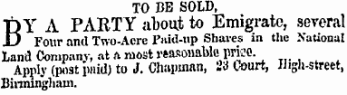
TO BE SOLD , "DY A PARTY about to Emigrate , several iJ Four and Two-Acre Paid-up Shares in the National Land Company , at ft most reasonable prico . App ly ( post paid ! to J . Chapman , 2 J Court , Uigli-street , Birmingham .
Ad00816
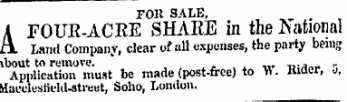
FOK SALE , A FOUR-ACRE SHARE in the National Ol Land Company , clear of aU expenses , the party being \ bout to remove . ... „ ., „_ r Application must be made ( post-free ) to W . Kider , o , Hacclestield-street , Soho , London .
Mavmn, #*?
Mavmn , # *?
Colln. Mabk-Lasie, Mondav, January 15.-W...
COllN . Mabk-lasie , Mondav , January 15 .-We had rather a bet . ter supply of EngUsh wheat to this day ' s market ; and swue quantftv of foreign . English and free foreign sold pretty readilvm retail at fully last Monday ' s prices , and bonded wheat attracted a little more attention at rather improved rates . In Flour very little doing , though 2 s . per sack cheaper . Tho arrivals of barley having become more moderate , there was a better sale hut cannot alter our nuotatiuiis . Malt fuU is . lower . Beans 1 * . and peas 2 s choker , « iih UtUa doing atthe reduction . The supplies of forekm oats were small , but some cargoes of Irish and Scotch having arrived the trade was slow at barely last week ' 3 prices ? live dull . Tares nominal In linseed and for clover seed is till
cakes very little doing . The inquiry s very limited . _ . -. ,, j t .- .. j »< . . BniTWH . —Wheat . —Essex , Suffolk , and Kent , red , o 6 s to 50 a , ditto white , S 8 s to 54 s , Lincoln , Norfolk , ftlid Yorkshire red , 40 s to 47 s , Northumberland and Scotch , white , 40 s to 43 s , ditto red , 38 s to 43 s , Devonshire and Somersetshire , red , 38 s to 43 s , ditto white , 42 to 50 s , rye . - 'to to 29 a , barley , 24 s to 31 s , Scotch , 23 s to 27 s , Malt , ordinary , —8 to —s , pale , 5-Js to 5 Gs , peas , hog , 30 s to Sis , beans , large , new , 21 s to 23 s , oats , Lincoln and Yorkshire feud , 1 / s to 23 s , ditto Poland and potato , ISa to 23 s , Berwick and Scotch , 20 s to 24 s , linseed , sowing , 50 s to 52 s , rapeseed , Essex , new , £ 26 to £ 28 per last , carraway seed , Essex , new , 25 s to 2 Us per cwt ., rape cake , £ 5 to i ' o as per ton , hnseed , £ 1110 s to £ 12 per 1 , 000 , flour , per sack of 2801 bs ., ship , 30 s to 34 stown 3 $ s to 42 s . "
, , , Foreicv . —Wheat . —Wantzig , i 8 s to 56 s , Pomeranian red , 47 s to 48 s , Danish , Holstein , and Frieslaud , 42 s to 46 s , Petersburg , Archangel , and Kiga , 41 s to 44 s , Polish Odessa , 43 s , to 48 s , Taganrog , 35 s to 3 » s , Brabant and French , 40 s to 45 s , Salonica , 35 s to 38 s , Egyptian , 20 s to 30 s , rye , 23 s to 23 s , barley , Wismar and KostocK , 2 ls to 23 s , Danish , 22 s to 23 s , Egyptian , 16 s to 10 s , Danube , 16 s to 19 s , peas , white 24 s to 2 ( is , beans , horse , 23 s to 30 s , Egyptian , 24 s to 2 lis , oats , Groningen , DaiiislvBremen , and Friesland , feed and black , 15 s to 18 s , ditto , thick and brew , 20 s to 22 s , ltiga , l'etersburg :, Archangel , and Swedish , 16 s to ISs , flour , United . States , per lOlilbs ., 24 s to Ufis , Hamburg ! Ws to ' 2 'iu , Dantzig and Stettin , 23 s to 2 Ss , French , per 2 o 01 bs ., 35 s to 37 s , Duties . —Wheat , 10 s , barley , 2 s , oats , 3 s Cd , rye , 2 s , beans , 2 s , peas , 2 s .
Wednesday ,. January 17 . —Since last Monday we are well supplied trith forei s" (^ ""in a nd Irish oats , and the weather boiiijJ ! very mild , with tho day fast approaching for the li . beration of all grain ami flour now under lock , our buyers confine their purchases to immediate want , so that business is very limited . Arrivals this week : Wheat , 710 qrs . English ; 8 , 460 qrs . foreign : barley , 2 , 938 qrs . English ; 2 , 67 » qrs . foreign : oafcs , 2 , 7 » 0 qrs . English ; 15 , 130 qra . Irish ; 2 , 160 qrs . foreign ; flour , 970 sacks . Bread . —The prices of -wlieaten bread in the metropolis are 7 Ad to 8 d ; of household ditto , 5 ^ d to 7 d per 41 bs . loaf .
CATTLE . SMrrntiELD , Monday , Jan . 15 , —The numbers of foreign stock in to-day ' s market—as will be seen by the annexed return—was limited , even for the time of year , and of very inferior quality . The beasts and sheep sold somewhat freely , at a trifle more money ; but calves were much neglected . With home-fed beasts we were very scantily supplied this morning—the result , doubtless , of the low prices lately obtained here for that description of stock , and which have induced many of the leading graziers to re . frain from forwarding their stock at the present momentand their quality exhibited a material falling off . Although
the attendance of buyers was not to Bay large , the beef trade was firm , nt an advance in the quotations realised on Monday last of quite 2 d per 81 bs . A few very superior Scots sold at 4 s 4 d ; but the more general top figure for beef was 4 s 2 d per 81 bs . There was a considerable falling off in the numbers of sheep , there being a deficiency of 5 , 000 head eompared with last week ' s supplv ; hence the mutton trade whs firm , at fully , but at nothing quotable beyond , the currencies paid on . this day se ' nnight . The primest old downs sold freely at from 4 s 8 d to 4 s lOd per 81 bs . Calves , though in short supply , moved off slowly at last week ' s quotations . Prime small pigs sold steadilv ; other kinds of pigs slowly , at late rates .
Hkad or Cattle at Smitutiem > , Beasts .. .. 2 , 7841 Calves .. .. m Sheep .. .. 18 , 200 1 Pigs 1 . 3 . 5 Price per stone of 81 bs . ( sinking the offal ) Beef .. 3 s 2 d to 4 s 2 d 1 Veal .. 3 s 6 d to 4 s 6 d Mutton .. 3 4 .. 4 10 I Pork .. 3 10 ., 4 8 . l'er Slbs . by the carcase . Newgate and Leadexiiall . Monday , Jan . 15 . —Inferior beet , 2 s 6 d to 2 s 8 d ; middling ditto , 2 s lOd to 3 s ; prime large , 3 s 2 d to 3 s 4 d ; prune small , 3 s 4 dto 3 s « d ; lai-e pork 3 s 4 d to 3 s lOd ; inferior mutton , 2 s 8 d to 3 s 2 d middling ditto , 3 s 4 d to 3 s lOd ; primo ditto , 4 s to 4 s 4 d ' veal , 3 s 4 d to 4 s 4 d ; small pork , 4 s 2 d to 4 s 3 d . '
rilOYIBIONS . Mokdat , Jan . 15 . —Since our last report the weather has been variable , for the most part mild , and therefore le = s activity m the demand for Irish butter ; the dealings accordingly were limited ; prices steady . Foreign- No arrivals from Friesland ; Kiel and other kinds consequ » ntlv were more saleable , and prices for such slightly advanced . Bacon : With better supplies the demand was limitedI prices rather lower . Bale and tierco middles : No altcrv turn m demand or value . Hams dull , prices nominal . Lard rather more 111 request . American bacon in good demand , at improved prices . ° u = "'^» u , English Burq Market , Jan . 13 . -Our trade continues maverymaiumato state , although our best ttungs fro " Sr ™?^™^ are n » w * "ought after Stole and 5 » W ^^ 'T « i ff « % ^*
POTATOES . S ^ t alT ?? . Jan- ^ - The arrivals the Pa * e ^ I with th ? pJ ^ ' ^ . < luite equal to the demand ; nStitoLTn ^ K ^ ° lmic V' evel- y description of potato u nearly the same price as last week The follow . W $ ffisn ^ i ^^ z & ff ? ^^ Tn ? j & £ [ s ^ lr Belgian ditto , 70 s to 00 s - Dutch dil £ 40 s % . ° 8 t 0 ltos HOPS . Borough , Monday , Jan . 15 .-Bather more business is & : i ! i « « ' . «™» P rf ™ arefirnilymaSei snecuH ^ 0 ^ 0118 - " ^ PS luwo attracted the notice rf S 2 r » considerable quantity of the inferior soi ts of hops have changed hands during the past week . COAL . Monday , January lS .-Mnrket exceedingly heavy ; Iittla F ™ w " S ? ??' . fy la , n ' 13 s 6 d Wdt Wyla , n ; ' l 2 s .-iresh arrivals , 144 ; left from last day , 12 C .-Total , 270 .
COLONIAL PRODUCE . fl »^ fc ^! fi , n ,, 3 M -r The 8 U *> ' ftr market has opened fo ouantwi ^ ^^ d upward tendency , and the lar * e lhl ? x ? ° fl - ? - WC 0 k t 0 0 d ad «™ e . West India , 030 & . 30 M & 6 i ° bagS > , Ben al 10 ' 000 ba ' ^ ' anJ „ , ? ™ W ^ f also seT <* rul parcels , of foreign bv prifnU „^ Ct A Therefi' -ed market has also been active at lull prices . Grocery lumps , « s to 51 s . CoFFEE .-. Tlii 3 article has not been quite so brisk , but the nS J ' I ) 0 rt « -3 has prevented any decline . Good £ Z' ^^ o C < = ylon sold in public sale at 34 s Gd , the larg-ci portion that was offered was bought in at 35 s .
THE IUOX TRADE . h « * . ? P * 1 ? jP Bl quarterly meeting of the iron masters of »« , } and dwtri « t . held at Birmingham , on Thursday ween ; the trade was reported to be improving , and prices remained nrm ot last quarter ' s quotations . The orders for pigs were unusually brisk , the mark for at least two months m advance being already purchased . As a consequence of the steadiness ot the iron manufacture the demand for coals is large-, at the old prices .
Deaths. Last Week, Mr. Hartley Coleridge...
DEATHS . Last week , Mr . Hartley Coleridge , son of Coleridge , tha poet . The deceased was the author of several poems and prose works , including the " Btographi * Boroalis , " ( a collection ot brief biograp hies of celebrated men born in the north of England ) . The deceased had been some tim » enlaced in the composition of a series of prose essays for Mi \ Moxon , and these will shortly be published . it . Lemercier , who was President of tho Council of An . cienta . on the 18 th Brumaire , and who became afterwards President ofthe Senate , and lastly , a peer of France died in Varis a few days ago .
Printed Bv William Kider. Of No. S. Maeclesfielrt-St.^*
Printed bv WILLIAM KIDER . of No . S . Maeclesfielrt-st . ^*
M The Parish Ot 5>T Anno, Tt Estuunster,...
m the parish ot 5 > t Anno , tt estuunster , at the Printingoffice . 1 G , Graat Windmill-street , llaymarket , in the Ci * v of Westminster , for the Proprietor , FEAUGUS O'CONNOR Esq . M . P ., and published by the said William Rnysa , at the Office , in the same s ' treetau ^ parish , —Saturday . January 20 th , 1849 , " "
-
-
Citation
-
Northern Star (1837-1852), Jan. 20, 1849, page 8, in the Nineteenth-Century Serials Edition (2008; 2018) ncse.ac.uk/periodicals/ns/issues/ns2_20011849/page/8/
-