On this page
-
Departments (4)
-
Text (9)
-

ffiijttim htf&ij&ntt
-

THE MURDER AT SALT-HILL
-
Notwithstanding the calm demeanour of th...
-

THE CASE OF THE LONDON COMPOSITORS AND THEIR KIND EMPLOYERS.
-

/^/*1<M
-

TO PERSONS IN WANT' OF SITUATIONS. THE A...
-

JUST OPENING. MESSRS. MILLER AND JONES, ...
-
OPENING OF THE OLDHAM WORKING MAN'S HALL...
-
WEST HIDING OF YORKSHIRE. SPRING SESSION...
Note: This text has been automatically extracted via Optical Character Recognition (OCR) software. The text has not been manually corrected and should not be relied on to be an accurate representation of the item.
-
-
Transcript
-
Note: This text has been automatically extracted via Optical Character Recognition (OCR) software. The text has not been manually corrected and should not be relied on to be an accurate representation of the item.
Additionally, when viewing full transcripts, extracted text may not be in the same order as the original document.
Ffiijttim Htf&Ij&Ntt
ffiijttim htf _& ij & ntt
FRANCE . Tbx Secret Sebticb Fmm—The debate in the Chamber of Peers upon the Secret Service Fund Bill tenninated on Friday evening , and upon the question -being put tothe vote there appeared—Por the grant ... — — — HI . Against it _••• - . • ** Majority for Ministers - —87 The _debate _wasmorejrotractedandmoreanimated than is usual with that grave assembly . The third day's debate turned entirely upon the abuse committed bv the Archbishop of Lyons in his inandement against M . Dupin ' _s book , and for which he had been _wiisured by the Council of State . The Keeper ofthe Seals and the venerable Count Portalis , who had _-fjeen a Cabinet Minister under the Restoration , vindicated the independence of the Gallican Church , and proved that the doctrines of the Archbishop were subversive of the law of the land .
_To-ctos , Mahch 3 . —Sthike of the Workmen in ihe Absesal . —( From the Mornino Herald . ) —At " break of day this morning the druWbeat to armsall the authorities were at their post ; a stranger would have _iniagined tbat the town was besieged . The fact is , all the workmen in the arsenal have made a strike—they refuse to work to-day , but in all probability will to-morrow . The anger of the -men -was roused because Admiral Baudin had docked off flie few minutes given after the ringing ofthe call"bell . Little or no importance is attached to the strike . Two battalions of infantry have been sent into the arsenal to keep four thousand galley slaves in order , and Admiral Baudin , the maritime prefect , lias issued a _proclamation of a most humane and Soothing description . Mabch 4 .
The - workmen still hold out , and have torn down { he proclamation . Several of the men , particularly the bakers , having shewn a disposition to-give in , lave been ill-treated by their comrades . The cooks , "bakers , and nearly all the men ofthe squadron lying in this port , have been placed at the disposition of the prefect . Monbat , March 10 . —Defeat op thb _Mtxistbt . — On a "ballot on the Pension Bill this day in the Cham-Ser ef Deputies , there were—For the bill 183 _Against it .... •¦ ...... ••¦• _... •¦ . •«• . -rfi / x Majority against Ministers 13
M . Remusat afterwards proceeded to develope his proposition relative to the incompatibility of certain public functions with those of deputies . M . Guiiot combated it on the ground that it was defective in itself , and contrary tothe institutions and interests of society . He would accordingly oppose its adoption , but had no objection to its being taken into consideration , because it would lead to a discussion of its merits , which would induce the Chamber to reject it . M . Beaumont complimented M . Guizot on this resolution , and reminded him thathe had hitherto
• opposed even its being taken into consideration . M . "Dupin , who spoke next , said that he had always voted against the proposition , but that the recent dismissal of several public functionaries " on account of their rotes had converted him to its principle . The taking into consideration of the proposition was then put to the vote , and agreed to by the Chamber without a single dissenting voice . _^ _TEmimiiox or the Tomes Strike . —The Paris -papers of Wednesdry announce the termination of flic strike at Toulon by the return of the workmen to their employment .
SWITZERLAND . The Diet . — We learn from the Gazette de Zurich that the proposition for referring the question before the Diet to a committee , had on the 5 th been carried by a majority of three . The Diet adjourned to the sixth to name the members ofthe committee , and would then adjourn further for a month to receive iheir r eport . Letters ibom Zurich ofthe 7 th inst . state , that ihe Minister of Prance presented to the President ofthe Diet on the 6 th a note from M . Guizot to the -same effect as that of Lord Aberdeen . The Diet was not to meet until the lflth to resume the discussion on the free corps . Thc Grand Council of Vaud elected on the 7 th a committee of fifteen members , who were to bo charged with ihe revision ofthe Constitution of 1831 .
General Sonnenberg , the Commander-in-Chief of the forees of the Catholic League , had disbanded a great portion of flic troops levied by Lucerne onthe 5 th inst .
MEXICO _Ca-ptcbe or _Sasta Assa . —The Tay brings the following news : — " The accounts respecting the movements of Santa Anna state that after Ms attack fiponPucblahe fled with 1 , 000 cavalry to San Antonio , and from thence hestole away in the nig ht , with four attendants only , and left Ms followers in the lurch . He attempted to reach his farm , , that is , his private property , at Enccrro , hut on his way was caught by a small party of Indians , who captured and made him prisoner . " TMs took place at the village of Hicoa about -three leagues from Calopa , whence they
escorted him , their party having been reinforced , and _3 eKveredhimovcrtotheauthoritie 3 . Hewasshortly afterwards removed to the castle of Perote . The general impression is , that he will be shortly put upon his trial , afterwards banished the country , and the whole of bis property confiscated to the state . He iras careless enough to write to some friends at Vera Cruz respecting Ms money and other treasures , and giving directions for their safe disposal . Thc letters ¦ wer e , however , seized , and an embargo laid npon the whole . General Bravo , it is supposed , will be the new President . The country isnow tranquil .
UNITED STATES . _L-poktaxt News . —The Senate asd _Ajotesatios . — -Bv an arrival at Liverpool we have received New _Yoriilournals to thc 12 th of February . The last ac-COUnti from Washington stated that the committee Of thc Senate on the foreign relations had reported © n the Texan question . Thc report is very long , but the importance of the document lies in its conclusion , Which is as follows : — n _,. '" The _aimmittee respectfully recommend the
adoption of the following resolutions : — *¦** ' Resolved—That the joint resolution from the House of Representatives for the annexation of Texas to the United States be rejected . " ' Resolved—That the several bills and joint resolutions originating in the Senate the resolutions of sundry state legislatures , and the petitions and memorials of many citizens ofthe United States , for and against the ' annexation of Texas to this union , which _, have been referred to this committee , do lie opon the table . ' "
The committee consisted of Mr . Archer _^ of _Virginia , chairman , Mr . Buchanan , Mr . Berrian _, Mr . Morehead , and Mr . Choate . Mr . Buchanan only dissented from the report . The discussion was expected to commence immediately , and no doubt appears to have been entertained ofthe adoption ofthe above resolutions .
WEST INDIES . _SouiHiMnos , Makcii 11 . —The Tay royal mail Bteam-ship , cemmander Richard Sharp , arrived this -morning , at half-past eleven o ' clock . Destructive Fire at Barbadqm . —Between the hours of 8 and 8 o ' clock on Monday night , Feb . 3 rd , a three-storv stone-wall dwelling , in the occupation of Mr I . Lobo , situate opposite the north-western extremity of Swan-street , Bridgetown , was discovered "by some of the occupants to have taken fire on the ground-floor in a front room , iu which a coloured wo-Inan , ofthe name of Dial , alias Mulatto , kept a cookshop , and ia which she was in-the habit of-using a coal pot for the purpose of dressing food and making _-suear cakes for sale . A strong scent of burning rag 01 tne
and a smother first attracted the suspicions _femilv , who were in the _dravring-room above , when Mr Isaac Lobo immediately hastened down 1 stairs , searched the kitchen , buttery , & c , butnotseeing any _^ re in either , went to a door ofthe room occupied by Dial and finding it closed , peeped through the keyhole ' of the lock , when to his utter surprise , he _dis--covered fhe whole of the room enveloped 111 flames _, lfr Lobo instantlv gave the ahum of fire , Two gentlemen , Mr . Byn _' oe and Mr . Pile , who were passing at the time , at the request of Mr . Lobo , assisted him in forcing open tiie door wMch was in the inner part Ofthe house , and on doing so , the fire , wluch had now received a current of fresh air , burst forth with _fcemendousfury , communicated to ihe i-taur-case , and
in afew minutes afterthe whole ofthe building was in a blaze . Bv this time crowds of persons had rushed to the spot , and every ex « rtion was made to arrest _theprogress ofthe devouring element , as before this could be effected the rising flame had mounted np and taken possession of the garret and roof , and was now -pouring forth dense volumes of fire and smoke through every door and window of the building . As soon as the foe-engines could be brought to the place , they were made to play upon the front and rear ofthe bmrning premises , but it was evident that _everv such- attempt to extinguish the fira , which raged with great violence and had nearly consumed the roof , would be in vain , and the water from the engines was then discharged upon the roofs ofthe nearest houses , in order . ifDOSsible . to presenethcni
from the effects ofthe numberless sparks which wero fining thickly uponthem ; this attempt proved likewise fruitless and unavailing . A house tothe west of "Mr . Lobo ' s was the next which took fire , and diorilv afterwards one aback at the east end of Chanel-street , tenanted by Miss Innis , and another at the opposite corner to the north of Broad-street , the propcrtv of Mr . John Wilson , were in a blaze . Prom the position of the wind , which was blow ing but moderately from thc north-east , the fire took an opposite direction , and one house after the other to the west of Chapel-street on hoib sides was consumed until it had reached a large dwelling , the property of Mr . Aaron Robinson , on the right side , where it stopped , while on the left side the fire burnt to nearly thciasthouse , and commnnicatinj in its course with _George's-street , which is next-to
Ffiijttim Htf&Ij&Ntt
Chapel-street , and runs parallel with it , laid this portion of the town also in ashes . The fire by this time had reached from Wilson's house- across Beckwith-square , and made its way into Lower Broadstreet ; a large house of Mrs . Allans , adjoining the West Indian office , was speedily wrapt in flames ; these quickly communicated to the chambers ofthe Hon . G . N . Taylor and the Hon . the Solicitor-General , next , to the valuable druggist establishment of Mr . John Gill , and from thence passed over to the opposite side , burning with great fury and spreading the flames to every house in the whole street , on the right until it reached the house of Mr . John Wrong , where it stopped , but on the left still more caTamitous consequences ensued . Here the fire passed in a a southerly direction to Canary-street , destroying tbe
valuable stores ofthe Messrs . Hardy , the handsome residence of Mr . Torres , and almost every other building in this quarter and vicinity , until it " arrived at the back stores ofthe Messrs . Moore , where it was brought under and extinguished at this point , at about three o ' clock in the morning . At this moment the whole ofthe west end ofthe city , from the house where the fire originated as far down as within a few feet of Miss Rebecca Phillips' hotel in Cumberlandstreet , presented one unvaried scene of ruin and desolation , no trace remaining of the burned houses but their blackened and dilapidated walls . During the _conflagration the spectacle was truly awful and terrific . In Lower Broad-street more especially , where the fire raged with unabated violence throughout the whole night , and where every building
covering an area of fully a mile and a-half was burning together , the spectacle was heart-rending in the extreme ; nor did the confusion attendant upon the removal of the few articles of household property wMch could be saved from tho general wreck add a little to the prevailing terror and _. _disniay . The wharf , Prince William Henry-street , and many other parts ofthe town , were literally thronged with hogsheads , barrels , boxes , furniture , and other packages , belonging to individuals who liad either fled from their burning dwellings , or had them removed there as a place of safety . On its being found that the engines had but little or no visible effect upon the burning masses , it was at length resolved , as the only alternative , to blow up such of the houses as would , from then * position , connect the chain of flame at
several points with those streets lower down to thc westward , and farther on to the southward . The materials requisite for the undertaking were provided , and this duty was performed by a detachment of the Royal Sappers and Miners , and another of the Royal Artillery , under then * superior officers , in a highly creditable and effectual manner . Sovcral explosions took place with good effect . His Excellency the Governor , the Commander of the Forces , the Lord Bishop , and Vice-Adniiral Sir Charles Adam , were in the town from an early hour , and were eye-witnesses of the terrible effects of this anvful visitation , a calamity wMch we have but imperfectly described , aud of which the power of language can convey no distinct or adequate idea to those who were not the beholders of the terrific spectacle . At this moment even , indeed , it is impossible to compute with any degree of accuracy the aggregate amount of losses occasioned by the destruction of property . Some persons estimate it at £ 400 , 000 , some at half a million ,
and _othersat even more . If , however , the valuable houses and buildings destroyed were to be rebuilt upon the same plans , the like furniture replaced , and the stolen and consumed goods thrown into the calculation , we should think it would require little short of a million to do this . Barriers have been placed in various parts ofthe city to prevent any interruption to the performance of this duty . Notwithstanding the almost _incalculable destruction of property which resulted from the conflagration of Monday night , and the confusion and dismay it created , we are enabled to state that there was no loss of human life , and although hundreds of seamen with the daring character of these brave and hardy sons of the ocean , were actively engaged in working upon the burning houses and assisting otherwise , only one of them , a man belonging tothe Pique frigate , received an injury , and this not to a very considerable extent , a consoling circumstance in the midst of our distress .
The Murder At Salt-Hill
THE MURDER AT SALT-HILL
TRIAL OF JOHN HAWELL . THIRD DAT . —Friday . _Co-mcTioK asd SKKiEXCK _.--The Court was again opened at eight o ' clock this morning , and was more crowded even than yesterday . Mr . Baron Parke took his seat on the bench at afew minutes after that hour , and the prisoner was immediately brought in and placed in the dock . He appeared much as he did yesterday , with this difference , that his face had a more anxious and worn expression . The feeling of excitement in Court with TCgard to the issue appeared intense . The Learned Judge , as soon as silence had been proclaimed , commenced sunmiing up the evidence . His Lordship began by the usual observation , that it had then become the province of the jury to
decide upon the merits of this most deeply important case , and to decide , after having heard from him those observations which it was his peculiar duty to make , both upon the law ofthe case and the evidence given in it , upon the guilt or innocence of the prisoner who stood there upon his trial before them . The prisoner was charged with the commission of a crime almost unparalleled in the history of human wickedness . The question was one of fact , and it was the duty of the jury to consider it , thev being the judges of the question of fact . —His Lordsliip then proceeded to offer some comments on the present state of the law affecting the forms of prosecution and defence in cases like unto the present . He proceeded as-follows : —The case was to be proved , as they had been told , by circumstantial evidence . It was the only sort of evidence that could be obtained in most cases of a similar nature . The most atrocious crimes were committed in
secret , but Providence had so ordered it that some traces were frequently left , wMch were sufficient to to lead to the discovery of the perpetrators . The law had , therefore , wisely provided that direct proof of crime was not absolutely necessary ; but , on the other hand , it was equally true that by circumstantial evidence the case should be so fully made out as to leave no rational doubt of its committal . He ( Baron Parke ) should , therefore , advise them ( the jury ) to lay down the rule , that they should fii _* st consider what had been proved to their satisfaction , and then to consider whether all those facts were quite consistent with the guilt of theprisoner . Whilst on that part of the question he should observe that the counsel for the prisoner had admitted all those facts , hut had asserted that the law required not only that those facts shouldbeproved , but thatit should also be shown directly that tbe deceased had died by poison , and that a sufficient quantity of poison to produce death had been found in her stomach . That
was not true of thc law . It was not necessary to give direct and positive evidence in every step ofthe ease . There was no difference between direct and circumstantial evidence , if the evidence was sufficient to satisfy their minds that death had ensued from poison . It was not necessary to prove what quantity of that poison was necessary to produce death by the testimony of any person who had actually seen human life destroyed by it , nor was it necessary to prove that such a quantity as would destroy life had been actually found in the body . They should consider all the facts of the case , and if they were satisfied that the prisoner had administered the poison to the deceased , and that she had died of it , it was not necessary to prove what"quantity had been
administered to her . Thc only positive fact which the law requires to be proved "was the finding of the body , wheresuch was possible . He said " possible , " because in such a case as a person being cast overboard at sea , for instance , the body could not be produced , and the jury should be contented with positive evidence of the wilful casting overboard . But where possible the body should be proved to have been found . This was necessary , because formerly persons had been found "uiltyofthe murder of persons who were afterwards found , alive . The body of the deceased having been found , itwas to be considered whether the prisoner had administered poison to her . The quantity was not necessary to be proved . He ( Baron Parke ) agreed with the Learned Counsel for the prisoner that it was necessary to prove that , poison had been administered , and that , if it had been , that the question would be—whether it had been adrainistered to the deceased by the prisoner , or by
herself . The only allegation that she 'had done so was that of the prisoner Mmself : and if the jury thought the extraordinary stc-iy told by him was worthy of credit , it would agree with the latter mode of accounting for her death . But if they did not believe it , they , had no other conclusion left than that he had committed the crime imputed to him . The Learned Judge then proceeded to comment npon tlic evidence ol Mrs . Ashley and others , who deposed to the perfect health and good spirits of the deceased up to a few minutes previously to the discovery of her lifeless body , and to the medical evidence of her state of perfect internal bodily vigour , leaving no doubt that she had not died from natural causes . He then went to the evidence of Messrs . Champneysand Pickering , the surgeons , who , on opening the body of the deceased on the day following her death , at once smelt the odour of prussic acid . There , then , was evidence at once of tllC presence of prussic acid in the stomach on the day fol-
The Murder At Salt-Hill
lowing a sudden death , accompanied . by appearances such as would be symptomatic of sudden death from that powerful poison . Mr . Cooper , the chemist , had analysed thc contents of the stomach subsequently , and found a quantity of pure prussic acid in it . His Lordship then proceeded to comment upon the evidence of prussic acid liaving been in the stomach immediately after death , and to observe upon ' thc allegation of thc prisoner ' s counsel that it was producible from apples , and that it might have been produced from natural causes in the stomach / which contained a quantity of apple pulp . He pointed out that , from all the medical evidence , it was proved that the acid was contained , not in the apple , but in the pip , and the pips were not found in the
pulp in the deceased ' s stomach . He also observed that prussic acid had been obtained from thc pips themselves only by a process of distillation , and was not producible by the mere natural process of digestion in the stomach of a human being . No one would die from eating apple pips , although a person might be killed by the prussic acid obtained from them by chemical distillation . Besides , the action ofthe acid was sudden and immediate , and the deceased had died in the manner she would have done af ter suddenl y swallowing some . Having drawn attention tothe evidence regarding the smell having been perceptible or not under different circumstances , his LordsMp said that all that could be inferred from it was , that although the perception of the odour of
the acid was a positive proof of its presence , the non-perception was no proof of its not being present . Aa to the deceased having died from tho water being poured down her throat , his Lordship said it was quite idle to attribute her death to such a cause . At that moment she was not living . * Death had already done its work . With regard to the quantity of prussic acid requisite to kill a human being , it had been proved that less than a grain would kill in some cases , as appeared by the melancholy instance so frequently referred to of the seven epileptic patients in Paris and Mr . Cooper had proved that more than a grain existed in the stomach of thc deceased . He having first found that no other poison existed in the body , he came to the conclusion that prussic
acid was the cause of death ; and having tested the contents , he found that sufficient was actually there to destroy life . His Lordship then went to the consideration of' the conduct of the prisoner , and observed that it would be necessaiy for thejury to couple that conduct with all the other evidence in order to judge how far it bore out or contradicted the inferences which might be derived from it . After reviewing at some length the various movements and conduct of the prisoner from the time of the deceased ' s death to thc time of his arrest in London . His Lordship read over the _convocations of the prisoner with the constables when taken into custody , and then went on . On the Friday , about one o ' clock , the prisoner had an
interview with his legal adviser ( Mr . Williams ) , and after that interview , and not until after it , did he make any attempt at explanation , or give any account of what had taken plate , and the account he then gave was , that extraordinary statement which he ( Baron Parke ) should read at full length for them . ( His Lordship read the statement made by Tawell to the two constables , in wMch he said the poor unfortunate woman had once lived in liis service ; and gave the account of her putting something out of the phial about thc size of a thimble into her glass , and then drinking it off , & c . ) Here , then , the prisoner had represented himself as present when the poison was administered , and , as it was found in her stomach , it was for the jury to say whether the question did not
amount to the simple one , of whether she had destroyed herself , or the prisoner had administered it . If he thought that she had been threatening to poison herself , he certainly should at least have stayed to see what the effect would really be upon her . Thc jury should next observe , keeping that story of the prisoner ' s in mind , that no such phial as that described by him was found in the house . His Lordship here explained that the bit of half-burned paper wluch had evidently been used to cover some small bottle , had not been produced by the _counsellor the prosecution , but by his ( Baron Parke ' s ) own orders , behaving found it mentioned in the depositions , and having thought it a matter that should bo inquired into . He then returned again to the prisoner ' s conduct ,
and said that the fact was proved by Mr . Thomas , who had sold him the poison in the morning that the prisoner had prussic acid in liis possession on that day . He ( Mr . Baron Parke ) did not give much weight to thc observation of prisoner ' s counsel that he would not have been likely to go back next day to the same shop for more if he were conscious of guilt , because in cases of murder , especially in eases of murder by poison , it was found that great precaution was not always used . The pevpretators did not expect to be at all found out . As to the medicinal use alleged to have been made by the prisoner of this deadly poison , he might have had various views ,- but , at all events , it had been shown that he had the poison in his possession—lie
had the means of doing tliis act on the clay it bad been committed . Thc next question was that of motive ; and for the purpose of coming to an opinion on that point , Ms Lordship thought it necessary to srive a brief history of the connection between the prisoner and thc deceased . Having gone through thai portion ofthe evidence which detailed the commencement of that connection , his Lordship came to the scene between the prisoner and the deceased in his house , whicli Baron Parke commented on as showing the extraordinary affection and devotion of the deceased for the . prisoner . With striking selfdevotion she said , that in order not to prevent the union of the ' prisoner with the lady he was about to be married to , she would go out of the world , and be
dead to the world , even to her own mother , from that day forth * , and the jury had heard from that very mother , that from that time she had never heard of her unfortunate daughter until after her death . She kept _tbr . t promise . She did go out of the world , and _wciifc from place to place , until she went to reside at Slough . His lordship touched upon all the evidence regarding the alleged pecuniary circumstances of the prisoner , and read -the letter from his wife , in which allusion was made to the anxiety to have the papers from Sydney . The strong facts against the prisoner were his presence at the woman ' s house about the time she died ; Ms declarations before and after his arrest , and the fact that prussic acid was found in
her stomach . He had now given an outline of the case , and made the general observations it was his intention to make , and he would next proceed to read over the evidence . The Learned Judge then read the evidence in detail . He then proceeded to say that he believed he had gone through the whole of the case , and read all thc material evidence at length ; and it was for them now to form their conscientious opinions as reasonable men , holding tho scales of justice between the public and the prisoner . If the evidence adduced left any rational doubt upon their minds—a doubt which , as sensible men , they thought had weight , but not a trivial doubt created by ingenuity , but a rational doubt—they were boHnd to give the prisoner the benefit of it . It was their duty to
do so , for they were bound to convict no one on evidence which left any rational doubt upon their minds . But if they thought they could not explain all the circumstances of the case—the presence of prussic acid , and the conduct of theprisoner— -if they believed his statements unworthy of credit , and conscientiously thought he was guilty ofthe offence with wliich he was charged , it would be their duty for the sake of public justice to find him guilty . He would add nothing more , but would leave the * issue in their hands . Tho Learned Judgesaid there was one circumstance whicli he wished also to remind the jury of , and to wMch he had already adverted , but only in a general way—he meant the good character whicli the
prisoner hhd received from several witnesses . Such evidence was admissible hi cases of this kind , because it went to show the general impression of the habits and feelings of a person . The prisoner was reputed to be a kind-hearted and benevolent man . It was admitted by his counsel that he had been transported for some offence , the nature of which they had not been told ; but it was said that it was not one which was calculated to affect his character for kindness ot disposition . His Lordship then read over the evidence alluded to , and left it for the jury to decide in reference to its value to the prisoner in his present position . The Learned Judge concluded his summing up at thirty-five minutes after eleven o ' clock , and thejury theii retired to consider their verdict .
At five minutes after twelve o ' clock the jury returned Into court , and a passage was immediately cleared for tliem , in order that they might face the prisoner whilst delivering their verdict . The prisoner looked extremelv pale , but advanced to the front ofthe dock with a firm step . The Clerk ofthe Crown said , —Gentlemen , are you agreed to your verdict ? Foreman . —Tcs . The Clerk of the Crown—What sav vou , is the prisoner guilty or not guiltv ? Foreman ( in a loud aiid firm tone ) . —GUILTY . The Clerk of the Crown , addressine the prisoner , said , —You havo boon indicted for the _' wUfiil murder of Sarah Hart , and you have been found guilty of having committed that murder . What have you now to say that thc Court should not give you ju dgment to die according to law ? ' The prisoner made no reply _.
The Murder At Salt-Hill
The usual proclamation for silence , whilst the Judge . was pronouncing sentence , having been made , The Learned Jud ge put on fhe black cap , ; and addressed theprisoner m the following terms : —Prisoner at the bar , —The jury have just returned their _unaninious / and deliberate verdict against you . They have performed their painful duty under the solemnobligation ( of their oaths , and it now remains for me to perform my duty , by telling you that for that horrible , base , and cowardly crime , of which you have been convicted , upon clear and satisfactory evidence , you must die an ignominious and horrid death on thc common scaffold . You thought to commit that crime , and you thought no eye would see you , except that eye wluch sees all things , and to which you probably paid no regard : but , happily , circumstances were
discovered , and numerous cogent and satisfactory reasons have been adduced which have left no . doubt on the minds of the jury , as they have none upon mine , nor , I will venture to say , upon the mindsof any of that auditory who have been listening with painful attention to the trial , that you are guilty , of one of the most diabolical offences that ever man committed . We now see , almost as it were with our own eyes , you mixing the poisonous ingredients in the cup from which she was to drink in a moment of unsuspecting confidence on her part , supposing that you were her benefactor and protector . You hurried" heryou hurried her in a moment , without allowing her an instant for the preparation ofher thoughts , to give that awful account for wMch you ' have now only a few days left you to prepare , I will . say
nothing more of your heinous offence , because I'do not wish to aggravate those feelings which I hope and believe are at this moment tearing your mind . I wish it were so , that you may be brought to repent of that grievous sin , and of that course , of . your life _, wliich has been marked by hypocrisy , during whicli you wore the garb of a virtuous , peaceful , benevolent , and religious body of persons . I say to you , repent of those grievous indulgences of your passions , and the crimes of which you have been guilty , when in a state of mind so devoid of all feeling as to commit this wicked and cruel murder . I will say no more . I hope you will profit by the little time left you , which will not be longer than the law allows , and endeavour to repent of your crimes . Prostrating yourself at the throne of mercy —seeking there , through the grace of the Almighty
and the merits of the Saviour , that mercy which you cannot obtain from men . It remains for me to pass upon you now the sentence ofthe law—that sentence is , for the murder whereof you have been convicted , that you be taken from hence to the place from whence you came , and from thence to the place of execution , there to be hanged by the neck until you are dead , and tliat your body be taken down and buried within the precincts of the gaol wherein you shall be confined after the passing of tMs sentence ; , and may God have mercy upon your miserable soul . During the passing of the sentence the prisoner appeared calm and unmoved , but when the last words ot the Learned Judge werc uttered the muscles of his face became slightly convulsed , but he walked back into the dock without the assistance of any person .
Notwithstanding The Calm Demeanour Of Th...
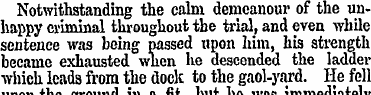
Notwithstanding the calm demeanour of the unhappy criminal throughout the trial , and even while sentence was being passed upon him , his strength became exhausted when he descended the ladder which leads from the dock to the gaol-yard . He fell upon the ground in a fit , but he was immediately raised by the gaolers who were conducting him to his cell , and he recovered in a few minutes . His spirits , which , during thc time he was in prison previous to his trial , were unusually good , have now sunk to the lowest possible ebb . Up to a late hour of the evening he continued to pace his cell , and cry " Oh dear , oh dear , what will become of my poor wife and children ! " Dinner was served to him at his
usualhour for eating , but he declined to partake of it . Later in the evening he ate some beef steak . Whether in seriousness or otherwise , Ms conduct gave evidence of a feeling of certainty that he must be acquitted . He not only invited the person who daily served him with his meals to visit him at his house , but anticipating that his trial would terminate on Thursday night , he actually had a carriage in readiness to convey him to his home . His son , by the unfortunate woman Hart , was in the court during the trial . lie is a very fine lad , about five years ot age . When thc verdict of guilty was pronounced by thc foreman ofthe jury , a murmur of applause was heard in court , but it was at once and veiy properly suppressed .
The Ckoome Murder . —This inquiry , imputing the crime of murder to ten individuals who have been for a long period known in the vicinity of Pershorc as an organised gang of poachers , has naturally created considerable interest . The case came on at the Worcester assizes on Wednesday , March 12 th , when Joseph Turvey , aged 37 , Francis _Dingley , 34 , Samuel Turvey , 37 , George Brant , 18 , Thomas Hooper , 19 , John Cook , 25 , Joseph Tandy , 42 , Thomas Collins , 20 , William Cosnett , 25 , and William Bromficld , 19 , were indicted for thc ( Wilful murder of Thomas Staite , in the parish of Severn Stoke , in that county . Mi * . F . V . Lee opened the case for the Crown , and called a _laruo number of witnesses in support ofthe
charge . The case occupied the whole of Wednesday , and was adjourned to the following morning . On Thursday morning the trial was resumed . At thc conclusion of the evidence for thc prosecution , Mr . Godson , Q . C , addressed thc jury for the defence . The Lord Chief Baron summed up , thejury retired , and after consulting together for about ten minutes , returned a verdict of—Manslaughter against all the prisoners . His Lordship then adjourned the court , intimating his intention of passing sentence at nine o ' clock the following morning . Child Burst . —On Friday ( yesterday ) evening , a little girl , aged nine years , daughter of Mr . Thomas Williams , cowherd , residing at No . 1 , Half Mooncourt . Stanhope-street , Clare-market , w « s dreadfully
burnt , in consequence of her clothes having ignited while playing before the fire . It appeal's that the mother had gone out for work ( being employed in the army tailoring business ) , and left the sufferer alone amusing herself on the hearth , when the poker fell out of the fire upon the' child ' s pinafore , which instantaneously communicated with the whole of her clothing . She is severely burnt about the body and head , one ofher ears being literally burnt off . She was immediately removed to King ' s College Hospital , little hopes being entertained of her recovery . The Homoeopathic Ststem . —On Tuesday , an inquest was held before Mr . Wakley , M . P ., at tho Blue Room , TaYistock-street , Bedford-square , on the body of Henry Cordwell , a solicitor , whose death was
alleged to have been caused b y treatment under the homoeopathic system of medicine . Mr . Wakley , on commencing the inquiry , asked who made the post mortem examination ?—Dr . Hancock , whowas present , said that he had examined the thorax and abdomen . Mr . Wakley said that it was not usual to make an examination without an order from the coroner . He had understood that many medical gentlemen of eminence had been present at the examination ; andhe was very much surprised to find , when he saw the body , that the head had not been examined . In a caso like the present , where the death was alleged to have been caused by improper practice , it was necessary that every part ofthe body should be Strictly examined . Could Mr . Hancock
• date the cause of death ?—Mr . Hancock said that there was _haemorrhagefroin the bowels ofthe deceased . —Mr . Wakley : Of course you could not ascertain the extent ofthe liremorrhagG : whether it was four ounce * or four pounds ?—Dr . Hancock : Certainly not . — Mr . Wakley : Then you could not distinctly ascertain the cause of death . —Dr . Hancock ; There was the disease I have already described . —Mr . Wakley said that he was afraid that he should bo compelled to adjourn the inquiry . He had received a great many letters from some friends of the deceased , demanding an inquiry . He had also received many anonymous letters to the same effect . Were there any of the friends or relatives of the deceased present ?—A gentleman stepped forward and said that he had been a friend of the deceased . He understood that a relative ofthe deceased resided in Bedford-row , and believed his name was Field . . Mr . Wakley said he should adjourn the inquiry until an examination of
the head had been made , and thc cause of death ascertained . He understood that a medical gentleman named Currie had at first treated the deceased under the homoeopathic system , and that afterwards Drs . Roots and Headland had been called in , Dr . Currie _askedif lie might be present at the examination . Some reports had been circulated against him , and he was anxious to'have the inquiry followed up to the fullest extent . Mr . Wakley inquired whether Dr . Currie was a member of any medical institution in England ? Dr . Currie said he was not , but that he was educated in Franco , and had received his diploma there ( The diploma _' was produced . ) Mr . Wakley said ho was not , therefore , a legal practitioner . An _Englishman , undcrthe same circumstances , would not bo allowed to practice in Pans . However , Dr . Currie could be present at the 2 _> ost mortem examination , ii _vi f _* The hiquest was then adjourned until _Iriday .
On Friday the inquest was resumed , a number of witnesses were examined , and the jurv returned thc following verdict : — " The jury aro o ' t' opinion that Henry Cordwell died from exhaustion , caused by loss of blood from the intestinal canal , " produced by
Notwithstanding The Calm Demeanour Of Th...
natural disease : and in complying with what the jury believe to be their bounden . duty , in returning their verdict in strict accordance with the sworn evidence of the medical gentlemen who have" been called as witnesses , the jury cannot refrain from expressing the strongest feelings of disgust and indignation , at hearing it proved by the testimony of the nurses that the afflicted gentleman had been cruelly exposed to a system of starvation , wliilc in a state of the most extreme debility , during , at least ten days previous to his death ; he having , during that long time , been allowed nothing but cold water , by the advice of his medical attendant . " Suicide _ix the Regent ' s Park . — About twenty j
minutes before six o ' clock on Thursday evening , an elegantly attired young female proceeded on to the suspension bridge , near Sir L . Goldsmid _' s , hi thc Regent's Park , and deliberately precipitated herself therefrom into the water beneath . She was observed by a gentleman and one of the park-keepers , who lost no time in extricating her ; and the attendance of a surgeon was promptly procured , but it was found impossible to restore animation , and the body was conveyed to the Marylebone workhouse , Newroad . From documents found on the deceased , it has been ascertained that her name was Eliza Chase , and that she resided at . 21 , High-street , Camden Town .
The Shapwick Murders . — Sarah Freeman , the woman'charged with these fri ghtful atrocities , and now in the gaol of this town , is not likely to live until the approaching _assiues , a series of epileptic fits having daily led to the expectation ofher dissolution . —Taunton Courier .
The Case Of The London Compositors And Their Kind Employers.
THE CASE OF THE LONDON COMPOSITORS AND THEIR KIND EMPLOYERS .
TO THE EDITOR OP THE NOBTHEBN STAR . Sir , —In-thanking you for the manly article which appeared in your last A _' orthern Star , I hope you will excuse my correcting one mistake you have * inade , and allow mc to lay before you the real facts of the case , hoping that they n'Ul assist you in another article upon the subject . You state that ** * " a Mr . _M'Dowall has been selected by the masters to try the foul experiment upon the pliancy o _' f bis men . " This is not quite correct ; for Mv . M'Dowall was the sole originator of the scheme , —he liaving taken the " Appeal Cases" so much below the other masters , that he found he could not pay the regular established price to his men and put profit in his pocket : so he took , as he thought , a safe time to propose to the Master Printers of the metropolis a reduction in the price of this particular work . With tins in view , he , as secretary to the- Masters '
_Association , summoned a committee of that association to meet at Ms own house , where he had prepared the resolutions eventually sent round to the trade . A meeting was the ; : caUe ' d ofthe Masters at Anderton ' s Hotel , Mr . Spottiswoode in the chair , when M'Dowall endeavoured to convince them thatfive-sixths of the Masters paid only 7 d . Pf * -thousand : . 1 statement totally devoid of truth . 8 d . having always beeu paii- mi-. ¦ Ar i /< j \ . _^ . u . rfi 30 iu J ; were then put by the chairman to the meeting , _« o rcv' ?» . mended 03 ; tfce _committM ; and , as most employers are _eyei willing to benefit themselves by _tramplin-j- on the rights ot the men working for them , it is unnecessary to say they were carried by a large majority . The Master Printers , however , were not aware that the Compositors of the three kingdoms were united in an Association as well as the Master Printers of London ; and they entirely forgot to consider the most important part of the question , viz . —whether the Compositors of London would take thc offered reduction ? It was speedily settled by tho whole body that it should not be taken . Sir , the necessity of an
union amongst the members of every trade was never more fully exemplified thau in this instance ; and nothing can more-fully show that if men continue firm and true to each other they must triumph . Tho London Compositors have remained true to this principle , and they have triumphed—for on Saturday it was resolved by the Masters ( more ' unanimously tha . a they were passed ) , " That their former resolutions should be rescinded , and the men offered their frames at the former prices ; " thusproring _' , sir , that unanimity and determination in a good cause must triumph against oppression and tyranny . Should you think proper to notice the question again , I hope you wiU notice the shameful and unjust practice adopted by ifr . M'Dowall of " Posting" the men who would not submit to take precisely what price lie liked , to pay them for their labour , in opposition to the established scale price ; thus endeavouring to prevent men , who had been guilty of no fault , from earning for themselves and families that support whieh every man had a right to .
I hope , sir , you will continue to advocate the cause of the industrious classes in the same manner as you have done in this instance ; and press upon every trade the immediate necessity of uniting firmly together to protect industry , and to oppose tyranny in whatever shape it may offer itself . If they prove true to each other they must triumph . Had our employers succeeded in reducing us in this one instance , a general reduction would most certainly have followed . As it is , the union o / _tk'uwi hat foiled them , I remain , yours , truly , "A _TvpE-IfUrrEa . "
Bokouoii of Greenwich . —A public meeting was held at the George and Dragon Tavern , Blacklieathhill , on Tuesday evening , March llth , in support of the Duncoinbe Testimonial , and in denunciation of the espionage at the Post-office . —Mr . J . Morgan , tallow-chandler , was unanimously called to thc chair . He said gratitude was pre-eminently due to Mr . Duncombe ,- for had it not ueeu _' for the great service rendered by the Member for Finsbury , the working classes would at this moment have been subject to be dragged from thoir employment and placed on the treadroillat the mere nod of any capricious employer , through the operation of the Masters and Servants BiU , happily strangled in its birth by Mr . Duncombe . ( Cheers ) . Who was there that did not owe that gentleman a deep and heavy debt of gratitude for his
very able and effective expose of the nefarious system of espionage at the Post-office ? —Mr . Woldridge , licensed victualler , moved the foliowingresolution : — " That this meeting view with admiration the manly and consistent Parliamentary conduct of Thomas Slingsby Duncombe in advocating the rights and liberties of the many ; and hereby pledge themselves to aid and assist the Central Committee in raising a grateful testimonial to that gentleman . " Mr , Turner seconded the motion . —Mr . Stallwood , as one of a deputation from tho Central Committee , in a brief speech supported the resolution . —Mr . M'Grath , in a few eloquent and pertinent remarks , also ably supported the motion . He said the poor and impoverished Irish raised £ 15 , 000 annually for Daniel _d'Connell , and he asked was T . S . Duncombe less worthy
of their gratitude ? If Duncombe was to have a testimonial the -working classes must raise it . Tho Master and Servants Bill , alluded to by their chairman , was a vile concoction of Toryism ; a measure which , if it had been suffered to pass , would have conferred perpetual serfdom on the working classes . ( Hear , hoar . ) Mr . Duncombe , too , had let the light of day in on the nefarious practices ofthe Home Secretary . He believed every one was aware of Mr . Duncombe ' s Herculean labours on behalf of tho working classes . ( Loud cheers . ) Ho trusted the borough of Greenwich would do her share in raising such a testimonial as would be worth Mr . Duncombe's acceptance , and worthy of the people to give , ( Cheers . ) The resolution was carried Unanimously . Mr . Robson moved the second resolution as follows ' : — "That
this meeting have heard with detestation and alarm ofthe system of espionage , as practised at the General Post-office under the sanction of the Secretary of State for the Home Department ; and look forward with hope tothe introduction of Mr . Duncombe's promised motion for an end of a system fraught with such baneful consequences . " Mr . "Robson contrasted the conduct of Mr . Duncombe with that of the Home Secretary . The former was consistent , patriotic , virtuous , good—doing all he could for the working classes , to relieve them from , political and social degradation ; whilst the other , by the most degrading and vile menus , ' was rendering all the assistance in his power to aid foreign despots to crush the liberties , and endanger the lives of their more virtuous fellow men . ( Hear , and loud cheers . ) The
useless non-producers might daily be seen traversing the " great metropolis" in a splendid equipage , revelling in luxury , whilst the useful wealth-producer was allowed to " shiver and perish in his rags . " Mr . Duncembe had seen those things , and felt for the miseries of the poor and oppressed ; and in his place in Parliament claimed for them a larger share of the " good things of this life . " ( Loud cheers . ) It was now for them to show that they duly appreciated the labours of so worthy _achampion . ( Cheers . ) Mr . Dowling , the other deputy from the CentralCommittee , said he perhaps might be pardoned if he travelled a little out of tho record . Splendid _testimonials had been presented to a Cochrane , a _Marlbqiaugh , a Nelson , and a Wellington : then why _showft-not a National Testimonial be presented to a _DutiicSmbe , who , in a social point of view , was much more _wtrthy of it . ( Loud cheers . ) Mr . Ihmcombo had consistently supported the
shortening the duration of the hows of labour ; the abolition of church-rates ; thc abolition of those remnants of gross superstition , the Ecclesiastical Courts ; the abolition of thc rate-paying clauses in the Reform Bill ; and that great and crowning measure , the right of suffrage to all —( loud cheers ) : therefore , as his friend Stallwood had justly said , all classes of reformers were indebted to Duncombe : and , for his part , he never would he satis / led until Graham was hurled from power , and Duncombe filled his place . ( Cheers . ) Mr . _Blackmore ably supported the resolution , which was carried unanimously . A vote of thanks was then carried by acclamation to the chairman , and tho meeting separated . Thc following sums have already been collected in thc borough of Greenwich .- —The Shipwrights of Deptford , £ 10 ; working nion of Greenwich , £ 4 2 s . 2 d . , * working men of Lewisham , £ 1 15 s . 3 d . ; Admiral Dundas M . P ., £ 1 ; E . G . Barnard , M . P _., £ 1 .
/^/*1≪M
_/^/* _1 _< _M
i Cabvbrs ; and _; _GfiMtw _^ m _* t _¥ > g ; < _$ f ' _»¦* _£ « body was held on Tuesday evening , March llth , at the Green Man , Berwick-street , _coho , to elect a delegate to the Oonfer 8 iice ; _.-Mr . v ¥ illiams was proposed and unanimously elected . Stew-were taken to effect a corporation of tho whole trade m the matter , and the meeting separated . Bristol TiunES .-iimeeting of _Trades secretaries and delegates was held atthe Crown andDove , _Unde-I well-street , on Monday evening-, March 10 th . to consider the proprietv ofsending delegates from the trades _ofthiscitytotliefiastorCouterenee ; Mr .. Heffer , Corkcutter , in the chair . Mr- Jacobs was elected secretary , and vpnd _the _enrrraronndence on the subject . Ihe
Bristol plan was then read and approved of . The Brassfounders' delegate reported that they considered one delegate sufficient to besent from the trades ; , and would be their share towards the expense . At ten o ' clock the meeting adjourned to Monday next , to receive the reports of other trades , and conclude the arrangements . _YoRKsmni * . —The next general delegate meeting of Miners will be held at , 'the house of Mr * : Samuel Rowbottom _, tho Unicorn Imi , _Adwalton-, on Saturdav , the 15 th day of March—to commence at eleven 0 clock in the forenoon , when it is expected that every colliery will send a delegate-to the said . meeting , to take into consideration . the propriety of Yorkshire
sending a delegate to the Trades' Conference , to be held in London on Easter Monday . Bradford Trades' Meeting . —A special meeting of the Shoemakers' Society will be held atthe Boy and Barrel Inn , Westgate , on Monday evening , at seven o ' clock . —A public meeting will beheld in the Temperance-room , Victoria-buildings , on Tuesday evening , at eight o ' clock , to elect delegates to tho Trades' Conference about to he held in London on Easter Monday and following days . The Trades ' committee are requested to meet at six o'clock on Tuesday evening , to arrange the business of the meeting . All trades are requested . to forward nominations to the committee on . Tuesday afternoon ..
To Persons In Want' Of Situations. The A...
TO PERSONS IN WANT' OF SITUATIONS . THE _APPRENTICE , PUBLISHED every Saturday , price lJd , contains a list bf all Vacant Situations , compiled with great care and labour from the several Newspapers throughout tiie Country , so that persons in want of situations , by buying THE APPKENTICE , will be made acquainted with all the vacancies that occur , and the qualifications requisite for obtaining them , witliout making : it necessary to hunt through newspapers or purchase other works . _A' ofice of Contracts of Works , CompetitionSi . _Jsc , are also given . Order , of any _booksc-ller or newsman .
Just Opening. Messrs. Miller And Jones, ...
JUST OPENING . MESSRS . MILLER AND JONES , TAILORS AND WOOLLEN . DRAPERS , 153 , OXFORD-STREET , CORNER OF MARY
LEBONE-LANE . AN Extensive Assortment of the Best Goods , made and unmade , . always on hand . Bought for ready cash at the cheapest and best markets . To bs sold for ready cash only , so that , the disagkeeabls necessity or _CnaEQINO _UBAVt PROFITS TO COVEll BAD Debts mat bb _avoid-ed . Single Garments and Suits of Clothes in great variety , aud at low and honest prices . Gentlemen ' s superfine dress coats , cut and finished in the first style , £ 115 s ' ., and upwards . Cloth , cashmere , doeskin , and tweed trousers , 9 s . 6 d ,, " -nil timverdg . wardB ' _'"' " ' _VUli 0 "" "•• UviHiui ? -rests , 5 s . 6 d „ and up-Yery rich plain and fancy 5 . iii _* _i _snslsilij velvet _rosH , IDs ., and upwards . _tig * Mechanics' Working Clothes . equaUy Cheap .
Opening Of The Oldham Working Man's Hall...
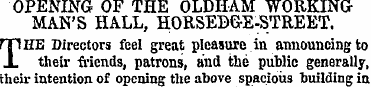
OPENING OF THE OLDHAM WORKING MAN'S HALL , _HORSEDG-E-STREET . THE Directors feel great pleasure in announcing to their friends , patrons , and the public generally , their intention of opening the above spacious building in Easter week next ,, in the following order , viz ., on _Easier Sunday , March 23 rd , 1845 , _FeaRCDS O'COKKOB _, Esq ., will deliver a Lecture in the large Room of the above Hall , to commence at half-past two o ' clock in the afternoon . In the evening the above-named gentleman , together with Mr . James Leach , of Manchester , will each deliver a
suitable address , to commence at six o ' clock . On Easter Monday a grand Fbstivai . will take place ; commencing with * Tea-Party , at four o ' clock in the afternoon precisely , when the following distinguished friends of the People have already signified their intentions to be present , and wiB severally address the Assembly : —General Johnson , M . P . for the Borough ; Feargus O'Connor , Esq . ; * W . P . Roberts , Es _** . . ; Mr . James Leach , Mr . Wm ! Dixon , Mr . Wm . Bell . The following gentlemen have likewise been invited , and ¦ are expected to attend , namely , John Fielden , Esq .., M . P ., and Thomas S . Duncombe , Esq ,, M , P ,
At the close of the above proceedings , a Grand BAIL will commence , and , during the evening , a variety of the most Fashionable Dances will be introduced , comprising the improved and much admired Garland Dance , Highland Fling , Quadrilles , Hornpipes , Galopades , Waltzes , and Contra Dances ,, a la Polka . The evening ' s entertainments will be interspersed with a variety of popular - 'Sungs , Recitations , & c . Mr . J . Travis , the celebrated Comic Singer , has been engaged , who will sing several of liis Comic Songi . . character . On Tuesday eveiung there will be a second Ball ,
conducted on a similar scale to the one on Monday , to _comsKcnce at seven o ' clock . A full and efficient Quadrille l )< _-. iiu will be in attendance . —Leader , Mr . T . Holland ; . Master of the Ceremonies , Mr . T . Garner . Tickets may bo had on the following terms : —To eaoh of ihe lectures on Sunday—Platform , 3 d . , * Body of the Hull , Id . Tea Party and Ball on Monday : Single Tickets , Ladies ' , Is . ; Gentlemen ' s , ls . 2 d . ; to the Platform , Is . fid . Double Tickets , admitting a Lady and Gentleman : Body of the Hall , 2 s . each ; to the Platform , 2 s . 6 d .: to the _BaU only , 8 d .
-y . B . —Tea friii he provided at the close of the after _, noon ' s Lecture , for the accommodation of strangers and friends : Tickets , Gd . each .
West Hiding Of Yorkshire. Spring Session...
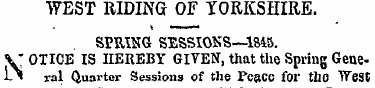
WEST HIDING OF YORKSHIRE . SPRING SESSIONS—1845 . N OTICE IS HEREBY GITEN , that the Spring General Quarter Sessions of the Peace for the "West Riding of the County of York , will be holden at Pontb-F'iAcr _, on Monday , the . seventh day of April next ; on wliich day the Court will be opened at Ten o ' clock of the forenoon , and on every succeeding day at Nine o ' clock . Prosecutors and Witnesses in Prosecutions must be in attendance in the following order , viz .: — Those in Felony , from the divisions of Strafforth and Tickhill , Lower Agbrigg , Bftrkstonach , _Staincross ,
and Osgoldcross _, and also those m respited Traverses , are to be in attendance at the opening of the Court on Monday morning . Those from the division of Upper Agbrigg , Morley , and Skyrack , are to be in attendance at one o ' clock at Noon on Mouday . Those from the divisions of Staincliffe and Ewcross , Claro and the Ainsty ( being the remainder of the Yfcst Riding ) , and those in all Cases of Misdemeanor ( except in respited Traverses , who are to attend on Monday ) , are to be in attendance on Tuesday morning .
After the charge to the Grand Jury has been given , Motions by Counsel will be heard ,, after wliich the Court will proceed with the trials of Felonies and Misdemeanors , until the whole are disposed of , commencing with tho triall of respited Traverses , The hearing of Appeals will commence , at all events , ou Friday morning , in case they shall not have been begun on Thursday ; but parties- in Appeals must be in readiness on Thursday morning , and all Appeals must be
entered before the sitting of the Court on that day . SoUcitors are required to take Notice , that the Order of Removal , copies ofthe Notice of Appeal , and examination of the Pauper , are required to be filed with the Clerk of the Peace on the entry of the Appeal : —And > that no Appeals against Removal Orders can be heard unless the Chainu & n is al & o furnished hy the Appellants with a copy ofthe Order of Removal , ofthe Notice of Chargeability , of the Examination of the Pauper , and of the Notice and Grounds of Appeal .
Coroners and High Constables must he in attendanoa at the sitting ofthe Court on Tuesday morning . The names of persons bound over to answer in Felony or Misdemeanor , with a description of the Offence , must be sent to the Clerk ofthe Peace ' s « ffiue seven days at least before the first day of the Sessions , together with all Depositions , Convictions , and Recognizances . The attendance of Jurymen will not be excused on the ground of illness , unless it be verified by affidavit , or proved by ovidence in open Court .
And Notice is also Hereby Given , That the Public Business of the Riding will be transacted in open Court , at Twelve o ' clock at Noon , on Wednesday , when Motions for Gratuities , and the Finance Committee ' s Report , will be received and considered . And Notice is also Hereby Given , That Application will be made to the Court on the same day and hour , for a grant of a sum not exceeding £ 1 , 800 , for the purchase of Land adjoining the West Biding Pauper Lunatic Asylum ; and also of a sum of £ 720 , for the purchase of Land near to the said Asylum . And on the same day and hour , tlic _Application of fOBK SLATES for an increase of his salary for cleaning and warming the Court-house at Bradford will be considered .
And Notice is also Hereby Given , That on the same day and hour , the Report of the Committee of Justices appointed at the General Quarter ¦ Sessions for the said West Riding , holden at Pontefract ; in the year 18 « , touching the Memorial of certain Inha-. bitants of Wetherby , in the said "Riding , presented to the ; Court at Knarcsborough Sessions , on the 17 th day of October , 1 S 43 _, requesting that the Memorialists might _bes allowed to take down the old Court-house there , the property of the said Riding , and lhrow Ihe site thereof to thee Market-place—which said Memorial was , at tho said _ses-s . sions held at Pontefract in the year 18 * 14 , referred to thea said Committee—will be takenjntc _^ _cOniMeHiJbn . ' , . - , _„ , _£ " _* V- i ' _-OlerU ' o & t _% _^ e _** e . SB o lerk ofthe Peace ' s Office , Wakenetd ;? _> € k-. W _»« fi 10 th March , 1845 . < _0 _>^^ P _» ' f » S
ft w . m W' _# &* m _^ m ¦ . _jH _£ _V * v # . * . *•** _. _* _.- _»» ; v » * V cif _W _> s s 5 r _r-EKJ _^ f _* _sS M \ . 12- ' - * _Vfer _^ ' _+ _- ¦¦
-
-
Citation
-
Northern Star (1837-1852), March 15, 1845, page 1, in the Nineteenth-Century Serials Edition (2008; 2018) ncse.ac.uk/periodicals/ns/issues/ns3_15031845/page/1/
-