On this page
-
Departments (2)
-
Text (13)
-

ifg 27.1Mg- .THE NORTH-URN STAR. g
-

?ottr? :
-

- -"' " OUR TRUST. BT XKSC6T JOSES. ,- w...
-

THB HOLY CAUSE . Uy brothers in England,...
-

* L>ui» Pniiippe. W. \V . f Gad's hand h...
-

&tbitu)$.
-
THE LABOURER. A Monthly Magazine of Poli...
-

lloivitfs Journal, Parts XV ., XVI. L nd...
-

Tke Charter, what it Means ! The Churtis...
-
The Midland Florist, Mat. London : Simpk...
-
TO THB PEOPLE. Position of the Democrati...
-

"* Of course I urn H|>eak\ng of tbe jive...
-

FRiGRiyi'L Dbatii,—k>n Tn^d-iy lasia you...
Note: This text has been automatically extracted via Optical Character Recognition (OCR) software. The text has not been manually corrected and should not be relied on to be an accurate representation of the item.
-
-
Transcript
-
Note: This text has been automatically extracted via Optical Character Recognition (OCR) software. The text has not been manually corrected and should not be relied on to be an accurate representation of the item.
Additionally, when viewing full transcripts, extracted text may not be in the same order as the original document.
Ifg 27.1mg- .The North-Urn Star. G
_ifg 27 . 1 Mg- . THE NORTH-URN STAR . g
?Ottr? :
? _ottr ?
- -"' " Our Trust. Bt Xksc6t Joses. ,- W...
- - " ' " OUR TRUST . BT XKSC 6 T JOSES . ,- werking men—stsnd by your ordfrl _VTcrfefe _? . _^ _gtc _-siog—deception at band ; TTe _^ °° \ j . ! e ? and titled marauderjf . t _cnlJ S _* _^ ~ _ _> tke heart of your baud . * rc £ SCS ! _n h ' . » er—despite of thtir _treason ; _«*» * - na " w the 'How V and tbe When V AeB _* _- _« J cu hearts jour o _* n hands , and your reason * _^* 1 _^ ' Pri _i _^ e ! Measures , not men ! rnr \ the _« errice of those who stcodbyyou , your wars :
r <> _ri * _** ° - . _t . _.... _^^ _- _^ _«> , n _fcnuht In _ror no . _^ „ urws who fought In your ~ ars Be 2 ien : co t to fawn on the c ' . assm n wbo fly you , iad dri » . n ; r WCEp _ . ns t 0 5 trike in Vicir cause . Yet _iiii 1 _10 - , . , n & forth , and the world mu = t _otey thee * _l _$ ' ~ _thrinfe back , and the world will despise ! L , b 0 _th » cr _' Hi « who none may gainsay thee ; _^ S X > os the moment _, for swiftly it flies . . „ - ri = oro _< r , nor mid tasnrrertron _, *> _rts R volution , is winning its noen . ireaching dion
- V of Ian' sg-s _« _pre , Z _Unas are uplifted to p luck it too soon ! - _, ; _i-Hea t _> sna of the vile _proSt-merger ! lh XX . o for bim be the fruit of tbe free . - _* n ' _-. _'iv around it . brave children of hunger ! Uth _^ S a ' ' ' oaly EhaI ! plnck fr _° m ti : e tr * * ,- > i " » _hu « - lonr have you fong htfor tha Charter % _Te , r _^ the _veari of your _wroag and distress ; _^ _V-n not sw _' orn at the grave of each _rnirtjr : . ' ojrrig htsandno _more ! ' and « Our rig hts and no
. _ -ow when the first pang of poverty presses ' ' _ICl _, lc-: n _*>«« _miaions _wno ma _3 e you so _poorffia'Vs _Mail ycur struggle—your strength—your dis tresses , £ 5 bat in making their order _stenra . tr-rs ' t- ; : : n " n working men- 'Stand by yonr _ChsrterjK-r . 'c . _va s _3 v : _withsut jou thtir _iffom aro nought . _vtaiom _snl Right are not _thims _y--u can birter ; " lien rally the phiiaax of mihhood and _tftoiipfit •' 1 . j _, crt rim e of trial ! My friends , be you ready , Tie ship is afloat , aud ihe heavens , they smite ; _Vo-v ' ssilOK , be faithful—BOW , helmsmen , be steady' \ ni _fcretzes of Liberty , blow but awhile .
OV r _quicksands and breakers I see ths calm haven ; fjy with your trico _' our nailed to the mast . Success forthe valiant , a- * d wrtc _* 5 fortv . ecravea ' Hurrah 1 for the _vessel g _iss gallantly past , do you a ; k _ms to _nasae jou the d 3 y of _yaur power ! _Organise—organise—organise , etill ! _T-. tn I'll tell you the day—nay , I ' ll tell you the hour : You'll just gaia the Charter , _tchenecer you icill .
Thb Holy Cause . Uy Brothers In England,...
THB HOLY CAUSE . Uy brothers in England , Thtre ' s _plentj for all ! _Bit oar nobles are base ! A corrupt knavish race ! B jy dawns when they fail ! My brothers , knep watching ; Be steady and true ! A _; d _Totosry _ls _«* l—Awed in by the regal ! Its long reign shall rue ! GtI in bounty has _blessai Our dear native isle ! Wr ' _ve beea trampled down long , bat 0 Gjd we are strong ! If thon . only smite ! And brothers , remember , God 6 _milfs on the right ! He * _Kho _banished the knave ! * he whoaidsd the brave If Lends _pior men bis might ! _Bsavs brothers , your _eoiutry for freedom doth cry ! All oae boll effort make , and your _bondagecbains break ! Or like Britons die !
* L>Ui» Pniiippe. W. \V . F Gad's Hand H...
* L > ui » Pniiippe . W . \ V . f _Gad ' s hand has guided the revolutions of Europe
&Tbitu)$.
_& tbitu ) $ .
The Labourer. A Monthly Magazine Of Poli...
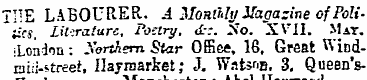
THE LABOURER . A Monthly Magazine of _Poli' _& s . Literature , Poetry , < _£ ¦; . No . XVII . Mat . _iLondon : . Vortnem Star Office , 16 , Great _Wind-Eii ; i- _* treet . Haymarket ; J . Wats ' _iB . 3 , QueBn _' _s-Eeac-passage ; Manchester : Abel Heywood . _TTe miss some of the usual contributions in this _Eumbar of tha Labourer ; but there is no 'ack of _readible matter , both in poetry and prose . To us . the most inter _^ tiag _articie is the continuation of the E-: ries on National Literature . Mr Ernest Janes , _hsr ' mv _disoosed of Poland and Russia , dot
_iatrcczce _* his readers to the popular literature ol Germany , the subject of his first review being Frederick Von Schiller . Amongst the contents of thi ? number are ( the commencement of ) 'St John ' s ± . ve : a _Ri-nantic Dnnn , ia _Tiree Acts ; ' 'Pride £ n < . Piej _' _-dioV which will be appreciated by all true reformers ; ' The London Door step , ' a picture of one of the social _as-assin < tions which are _everlastingly _giinj on in ibis corrap ; Babel ; and 'The Wife , a porin _, by Jane '—rsyrtlt ; asd cypress-wreathed . We qiote a _' prose article on the political movements of the hour , and a new poem by Mr Ernest Jonea—both will speak for themselves : —
BEFOHM AKD _REFORMERS . _Yhzrehas generally been a great _difference between Reform and B _° innneTS , and one of the great evils in _polices ! movements hitherto , has been , that _jheH-f . _iroa lad the _R-firmer have been _considered _identical . All t = ; hissed on a few men—if they wera . weak . —or _fcuaT _' _uh _^ -or bsQ _- £ — -ua movemsut was lost , for the p ; _opU had looked to _theea , instead of to themselves . Kow , a chance has coma over political feeling . ' Mea . lures ' , not Hen , ' is the motto of tbe day . The people have _cu-eroan their political _leadins-strings _, and begin tc think , _jutee , and & = t , for ttemselves . Mr _O'Conaor has _greatly c * nduced to this result , _inasmach es he has ever tried io _iaform the popular mind—to explain his _nitivf s and _tii _* _actioas . to give reasons instead of merely _zrtinz _ofin-ons , ani _thns we find that the people can no lunger be led a « tray by any _will-a ' _-tbe-whisp _, and so iD _2 ? _-rbow _slavishly to any _stereotyped idol
Thi = is of _greater cons- _qaeaces tbaa ever , in the _preisnt _= tate nf the Chartist movement . Strong and _pro-= . tinr , as is its present 1 osition , -warms of ambitions men ar- now _ttartin ** forward , ready to float 00 the tide 0 ! _success to the _havta Of th ' ir own self-interest ; bnt * ho nrver toiled in tbe boar of adversity , who never _jai ' -ea us in tbe lime of depression _. We c _^ n-cien _^ _oas'T otli _^ _ve lbs : the people ere ripe eci .-. ad . to obtain their right * _; but if auy tiling could make cs doubt i ' , . t w / . uM ba the fact , thai every bog . light thst thus appears on the surface from the mire of _= _ri _«^ _-rat = c or middle class li'e , is EOt only hailed _nith _op-ii srras ( tM 5 is well enouih ) , bat actually _prottO-el to ( face , over the heads or _dcscrvicir _workine _rusn—1 : 0 _autrds , ant _< veterans ia the Chartist caase This < _-hcul 1 no : be . If a man is to wear epaulettes , let
_n- . m elm them . W _* _- ; ree also , thit work ng men ra-ist , as a whole , carry th * raovemer . t of tbe working _claus ; bat ws _diss-Z'ir _. aike with that spirit of _chss " _-ervility , which makes more ofa _recru-ta few days old from the ranks of wealth ar . d ¦ birth . ' than of a working veteran—and witb that _83-rit of clt ; s _« -bo 5 tility oa the other band , whieh would etc uie ail t . ut working men from _participatioa in th _« ereit work of redemption . This is a narrow rpiri :. Thi * is , ie'eed , a class spirit — that is the _sery _quintessence ef _class-Iegislatiun . ' All _wtn a-e fcre'br < n "—and we , who eschew _class-Irri-sViori , should bs the last mea in lbs _worbl to curl S _2 _T-i-ir s , iik- a hedgehog , within the bri 5 _tling limits of _cUts-rxclusiveasa . H > _-ro ate two « x _ritnes alike d % n _» _^ roasto our movem _» nt : excess of confidence , and Hoe ' s of _er-luMveoess .
_Xuw , we _uuatsitatinjly assert , itis the right of the _^ o _.- _' iicg ela _^ _f s to ba tho most _powerful aEd primary _« _s-.. r _? 5 t in the _ccm-nuniiy _; to this the _othtr _classsswiil _acrtr c- n _< _= ent . until compelled : and for this it is _ueces _^ ss- . that t » _-e _toil-ni _minion- , sbould retain the lecdersfc _it ¦ f thtir own cause . We wish to ask the 'Reform _ps-. ' . _j ' in the House , of Cou . _moBs , what are theyf . r ! Wta- to tbey mean to do ? If they want tte _seaport c : tii ? _connt . rv , the couatry nustknow wbat they meau . Ar ; tbej for the six points of the Charter ? If not , for _h-.-w _tuudi ? How do they mean to obtain it ! Why < 3 id 'hty no j 'in us _beft-re f What do tbey want the pe pie to < _- o t A burnt child _dr-ads tha fire _^—aad let theui rest a tared , _teior _^ tbey can s tir the _pseple as tie > were s irr _« d for th " . R form Bill , _vjgae professions _Sust cease , and we ma _^ t have guarantees that they _JetUv n ]« n thi- _Cnarttr .
We repeat , we are _prtpsred to waive old animosities , _sa-: _loenteronD w frieniship , so _Iokk as tbat fri _nith-p is basrd on csndonr _, honesty , and principle ; bnt We wiil have no truckling , _timeterrin _^ , or temporising . As t ' : epi -neers of reform , we will not wait for the _laggards . The working cUs _« es are marching oa the _highroad 10 pr _<» _sr'S ion—the middling class are hobbling afi . r . Why do they coat f _Bccaaso we are moving en , tan tbej cannot do without ui . If we atop , they stay ; if w ; go on , tht-y will _« pur harder .
THE SOXG OF THB GAGGER 3 . BT ESNEST JOStS . _Gsf—sei : _—gaS ! Is the cry of sbe traitor band , While they try , with a _priatedrag , To _riar like a midnight hag Oa thi _trctst of a sleeping _Iaa-J . _Cotne knave end villvin _, informer end * _py , To tte govp . _nnunt mint , _wr-tta yoa coin a lie ! Gold—gold—gold ! Is th- im ror the re dy slave , _Wbos ,. woid at a _breith can _dettray the bold , la _iftj- hills where jmrice is toaght sad soil , _An-l th' _withering g lance falls been aad _celd On the heart of the trae Bnd _brare .
Gag—gag—gag ! If tha cry of tfee traitor basd _Wliiie thsy try , wiiS a printed ray , To tide like a moonlight hag Oa the breast of a sleeping land .
The Labourer. A Monthly Magazine Of Poli...
We'll ttay ta _» stream ia ita fullest force , We'll stop the world in its _oaward course Gag—geg—gag ! Therolc 3 of six thousand years Shall begin at our bidding to fall and flag , Not a Up shall breathe , nor a tongue shall wag , And _history ' s page be an idle brag , Compared to a _RaBsell ' s fs » ra Gag—gag—gag ! Ig the cry of the irmtor band ,
While they seek , with a printed rag , To ride like a tnidnigbi hag On the _breast of a _sle-ping land . In vain shall the _blooi of _bh _E-arj > ett have flowed , la vain sball the breast of a _mistr have glowed J G * _t—gag—gag ! Tbe thought ia tbe teeming brain ! The pubs iu the heart ef the world shall lag , Aud nntioai the burden of miseiy biog , And _Lilliput _trample on Brobriinnag , As long as a Russell shall reiga .
G « _j—gag—gHg _» Is lhe cry 01 the traitor band , While they s _* ek , with a printed rag , To ride like a midnight hag On the breast of a sleeping land .
Lloivitfs Journal, Parts Xv ., Xvi. L Nd...
lloivitfs Journal , Parts XV ., XVI . L ndon : "W Lovett , 291 , Strand . _Thf-renre many excellent articles in these parts of _Houitf ' s Journal ; _amonast the best ara Howict ' s ' Facts trom the Fields , ' exhibiting the _depopulating _policy of our landed and m _inied aristocrats , and shuw ing how by the _extension of the _manufacturing systt-m men are worked up into malefactors ; ' Scenes and Characters from the French Revolution' translated _fr = ni Lstnartine ' s History of tbe Girondins ; ' Letters from Paris , ' hy _G-mdwyn Birrcby : ' Poets f the Peop _' e ; ' snd _binsraphical notices of Lamartine and Albert . There are also translations of * The Marseillaise Hymn' and ' Mourir pour la Patrie 'both were transferred to our columns some weeks ago . We select the following _extract' : —
ALPHOXSE DE LAMARTINE . Alpbonse de Lamartine was born at _Macos , ths 21 st of October , 1790 : bis family name was De Prat ; be has lately taken tht- name ofhts maternal unci ? . HU father wasm-jir ofa regiment of cavalry under _L-inis XVf ., end his mother was dau ; hter of Madame drs R _. > i » , _URdcreoverHe < _= « of the Pr : _necs of Orleans . Attached thu « to the oM order of ttunzi , his family was broken dawn b y 'he _Revolution , and fcis most early recollections carried _thcmt'lvei baek to a sombre jail , where he went to visit his father . Soon was the child obl ' ged to quit his _paternal roof ; fh _* y sent him to finish his education at Boll : y , in tbe coll _ige ofthe Fathers ofthe Faith . The reli _gious germs which w _^ ra sown by his mo ther , _developsd _themselves strongly , in that melancholy solitude of the cloister : the beautiful episode of Jocelya is full of remembrances imprinted by the calm aad austere life of tbat holy residence .
After his departure frora college . M . de _Lamattine _Bassed some time at Lyon " , made a first brief _pxcur * _b-n iato Italy , aad came to Pjris daring the last dayB of tbe empire . In 1 S 13 . the poet revisited Italy : the greater part of his " Meditaions' were _inspired by its beautiful _skv . and that _delicioutpage ofthe 'Harmonies , ' entitled _'Ftsi _Loi-e , * was sounded forth , it 13 believed , bv soma sweet first mystery of the heart _bnried _n-ithin a tomb . At ths fall of the empire he offer-d _hlg services to thf > ancient race , who bad had the blood and tha love of hi * father * , and was entered in a company of the guards .
After the Hundred Days , II . de _Litnartine quitted the service . One passion ab » orb -d bim entirely that passion made bis glory . Love came _\ nd achat-d the fountain of poesle which _slumbered in the dep : _hs of his soul . I' was needful _toopt-n a passage for the gushing wave Tbe _object of that mysterious pas « ion _, that loving ani loved Elvira , was snatched from his arms by d- _a-b . She lived again ia bis verse * . _Limsrsine _sunir 'o give eternity to htr name , and Francs consecrated him her poet ! This was in 1820 . A yonng man , scarcely recovered from a crusl _itlno-s , his vi « a < e paled hy sufi-rin < , and covered witb s veil of _Bickness , on wbich could bs read tbe loss of a w _rshipped being , w < -nt timidly hawking about , from bo' _-kieller _* _* to bookseller's , a poor little cany book of verses , wet with tears . Everywhere _tKey politely shifted off the poetry and the poet . At las ' , a _boofcesUrr _, le _« s pralent , or _perhipt engaged b y the infinite grace of tbe _\ _oungman . decided to acceDt the MS so ofren ri fused . Tbe _goed-nsturtd boukscller was , J believe , nata _^ _d Kicolie .
Everything possible has been said on this first work of the _poet ' s All tbe world knows by heart the ' Ode to Byron , ' the _'Evraitg . ' tbe ' _L-ske and Autumn . ' In four years , 45 , 000 copies of the ' M _ditatiens' were circulated . Five _jfars _afterwards the sublime voice at _"Rer-e _. 'f-und an harmonious echo , and with on « bound only M . da Lamartine placed binnelf on the aame _p--destal , byt eside of the _demi-gods of the epoch , _Caateaabriand , Goethe , and Byren . ThU _l'terary success , the most brilliant ofthe age since the _Gssiuso / C / iristitm _' ty _, opened to il de Lim & _rtine the career of a d plomatisr . Attached ce the embassy at Florence , h- departed _forTuvcnj , and there in its land of inscirat' _-oa . ia th- midst of the _splendours of an Ita . lian _feit ' val _, it is » aid that he _hear-l a foreign v .. ice a tender aad melodious voiea . murmuring ia his ear , these _vrraes of the * Meditations '—
A hopeless retnrn of the bass which has fl > wn , Perhaps in tbe future is store 1 for me still , And perhaps in tho crowd a sweet spirit unknown _. Will answer me _kindl y » nd koow ray soul well . The soul of the poet waB known , he found a s _^ _eo- > d Elvira , and some months _aft--r he became the happy bus . band ofa young and rich English woman , eatirely _smittea with his person and his _fann . F < _-otn that time to 1325 , the post resided successively at _Ifaples , as Secretary of the _Embis = y , some while in London in the same office , and then returned to Tus . cany in the quality of s _Charge d ' Afi _"< irea . In the interval his _fortuae , already considerable from h's _marriane . increased again through the inheritance of aa opulent ancle .
The 'Second Mcdita'ions ' appeared in 1823 . There _wasnotioad in this new collection , a more correct , more balanced , mere precise _versification . Thepoet ha _^ _br _. n abroad in tha domain of the soul . Graad historic facts had furnish d him with noble iaspirations . The ' O . _ie ta Bonap . irte , ' 'Sappho , ' the ' Preludes , ' aad the ' Djing Poet , ' were admired . This volume was also well followed by the * _Poet-c Sketch of _Socrat'S , ' ana by tbe list ce . nto of the ' Pilgrimage o f _Childe-H-iroW . ' In these verse 3 . intended to complete the epic of Byron , tbe poet finished with an eloqueat tirade oa the aoasement cfl a ' y : — Pardon _m-. \ shade of Rome ! for seek I must E 8 where for men , and not in human dust . This apostrophe appeared offensive to C _loael P < pe , a Neapolitan officer . In tbe name of his country , be de . msnded satisfaction from M . de Lamartine . Tho poet defended his _peetry with the ss _^ ord _, and received a severe wound , wliich for a lonr ; while put his life in danger . When scarcely rtcovered he hastened to intereede with the Grand _Dikeia favour rfhls adversary .
After hating in 1825 published the ' Song of tbe Sscred , ' the poet returned to France in 1 S 29 and in the _Kiontb o _; " May of tbe same year appeared the ' Harmoaie _" , Poetic and Re 2 i ; _ioue . ' M . de L _^ _mariine was _received a ' , the Academy , aDd _whrn the Revolution oi Julv hr _^ ke ont , ha departed for Gr- ec- in th ? cbaracter of Minister Pl ? _aipoteatiary . His tribute of sympathy _oace ptid to the _unfortaaate great . M . de L _mirtioe dashed gallantly into the new road opened to the mind of tfee _R-jvolutioa of Ju ' y . ¦ The past is nothing rao-e than a dream , ' said he , ' we must regret it , but we ought not to lose the day iu _weeping to no purpose . It is always _lawful , always honourable , for ono to take his eh 3 re in the _unhappiness o others , though h _^ ought not gratuitously to take his share ia a fault which one has act committed * * * II should returu iato the ranks of his fellow ctizens _, to think , to _spe _» k , to act , to fight , with fcis couatry—the farailv of fsmilief . '
S me while ifcerwardg he decided upon putting into execution the _projec * . of his whole lifrf , and on the 20 th of May , 1842 , he was at Marseille * , ready to embatk for Asia . ' After 0 travel of six months , M . de _Limartlne _retarne-i from the East , with grand ideas , and a b . * autiful b * ok _, ' Travel * in the East , ' a treasure alas ! _rightdearly _bought , as he had lost there his only child , his fair Julia wbom the noble heart ef the father aad of the poet wept for , like Rachel wbo would not be _comfortod . Wben in Asia , _L-idy Stanhope , that miniature S ; miramis , half sublime , and half foolish , predicted him mar . _villous _destir-ieB , & n _2 the Arabs delighted with tbe beau _titul au 4 imposing , figure , tall in height , _straight , Bad sparkling with _crm » , ot bim who pasBed at a g 3 llop with twenty horf emrn over the desert , bowed the head to him they c lied th _* French Emir , tie French Prince .
Sines bis entry to the Chamber , SI . _Lamar tine , has not abandoned the worsliip ef his first , of his most gloriom years . He ha ; attempted to march in rank , the iaspiratioasof the poet , aad the dutieB of the deputy . In 1 S 35 , be _publlfhed tbe poem of ' Jocelyu , ' a _magnificent picture of passion sacrificed to duty . After 'Jjceljn , ' _Lamtrtiaa gave us , the' Fall of an Ang ? l , ' the si cond episode of that vast _epopeia , with which he wbb _iaspired by the east . This was followed by Ms poetic recollfctions . Tbeie works were not so well received by tbe critics , and ia the introduc . ion to thc latter . M . de Lamartine professed to despise mere _postie inactivity , and to aspire to social
_laboar for tbe advance of society . At the same time that _Limartiae thus met unseenslozned _repBlsions in the literary world , be grew greater at tbo tribune . The Oriental ques-ion fuTaished bim with nn occasion i- _r developing his ideas on the bases of a new _Europeaa system . A warm sad eloqaent a'taik oa tbe _puaishment of death ; some generous words in favour of foundlings ; a beautiful _improvisatioa ia which he _coatecded for classical _siudies _, a _^ a _'oet a rough joufter , M . Arago , who _combated for _scitace , rondo Lamartine _ksowa la the rank of a chief of a column , collected _arouadhim a littlo p _h alanx of choice men , and this _aieregation was decorated with the aame ef the Social Party . The _doctriae of Lamartine approaches that of St Simon , He _repudietsi not thi * lik . es . e 5 g , He bad pro-
Lloivitfs Journal, Parts Xv ., Xvi. L Nd...
_oiatBed tt some while before . ' St SimonHua' _saiU hf 1 ' has sonuthiBg in ic ofthe true , of the grand , and of the fruitful , the application of _Chrlstishism to political society , and the legislating in f * vonr ef human fraternity . In this p » lnt of view I am a Saint Slmonian . That which was- deficient ia that eclipsed sect , was not the idea , was not the disciples : it wanted only 8 chief , a master , a _regalator . The _orgaaisers of _Saiat _Simoaism deceiied themselves in declaring at ones a deadly war , _agaisBt family , against property , _against religion . They 0 _uld not _coaqoer the world by the power of a word They converted , they agitated , they worked , and they changed , but when an idea is not practicable it is not presentable to tha _sscial world .
There rema _' ns to be known , howsver _^ ' tvhat is the practical system whioh M . _Ltnurtlne _presems to the sociel world , that system he thus expresses : You B _» y that all is doid , that there no longer ixlsts either _fiiith or belief . There is a faiih , —th . itfo . ith ig _thegenral reason , the word is its organ , the press is its apostle ; it wishes to reuake ( n if * image , religious civilisations , societies , and laws . It desires in religion , God oae and _perfect SB tbe deg ta : et . rnal morality as the symbol : adoration and charity ai the worship—in politics , humanity above natlonalitie«—in legislation man equal to man , man bro ther of man , Christianity mado law . '
_lhepooitof _Eivira has In his general _appsarance a something which recalls Byron . There is the same beauty of face and look , there are the same habiu of tlegance and of dandyism , tho Bame toitrnnre , a little trimmed , a little _English , perhaps , but perfec tly neble and distinguished ! _lfyouj'in to this to comp lete thc resemblance , tbe _traiaofagreatlerd , asumptuous hotol , horses of pure race , a magnificent chateau , you can then conclude that since _Tarse and Camoen * , the times are a _l'ttt . _. changed , and that oae is permitted ia our days to be a greai post without dying in an hospital .
With the late _political position of M . de Lamartine tha public is familiar . Th * longer ho has satin the C _& amber of _Deputies tho more he has seen caase to withdraw his confideaco from tbe Kiag aad Guizot , to oppose th * m , and warn ths country of tbe _n-cessityof a firm stand for liberty . For this hie _eloquaoco has been zealou » Iy and splendidly exerted in the Chamber ; for tbis be eftabllahed the Journal Bleu PnV . ique ; hut above all , for thi * bas he written his great work the h story ofthe Girondists , which has unquestionably done more thaa any other caase to urge oa tbe era of the Revolution . We now extract the follow ing notice of Albert , ouurier . member of the late Provisional
Government
ALBERT THE ARTISAN . Albert Is a soa of Lyons . There be was bora , brought np , ani hss mostly _resided . By _emplojmeat ha was simply a mccbinic . a working modeller . Not tho less for that ! Bu _ns burnt . the stubble , before be flamed forth in song . _Massanlello was a fisherman , mad ' - up mostly of maccaroni , and by no means of jellies and ices , before he was known in Naples . Hofer was aa inn . _keeper , before hia _natna ran like a thrill _through the Tyro ! . N't tbe less thst Albirt is aa artisan 1 Tie hut witb all Its holes of _disadvantage has produced more _heroes thin the hall . Ever the Cat may match against the C utle for prophet , poet , saint or saga . Never need the C > _ttag _} fear comparison with tbe Court , nor the hovel ef th _> hamlet with tbe palace oi the princf .
In his education Albert bad probably some advantages above tco < e of his brother artisans . Certainly his in . tellectual dwalopment was auoerior to that of those ia the midst of wbom he dwelt . Moral _hiois- 'lf , his _experiince among his fellow _workmen showed bim the _aecessity for tlmr _moralisstion . To moralise them , le f iund he must make tbem think . He could discover no 'nn way tothe heart but by tho road ofthe Intellect . In tbis intfl ! ectuali < _ing ha entered without intending it , the province of politics . Ther ? he found how much of _th-demoralisation of the people was the _consequencn , direct or indirect , of class _legislation—how terrible taxation _ceased morbid _minery—how that morbid _melan . _eholj misery Aid to venal vice as a rascal refuge , —and bow that vice _coniequente-l crime . lie determined thea
to war w th that class _legislation which was tae of the chief causes of tho _demoralisution of the people . By the hard work of bis hands , he _savid sufficient to start , sad ultimately to establish , a publication , which appeared under the _modest title of La Glanev . se , or Thf Gleaner , but nhich was in truth mostly an original po itical _pjronieal . This journal was published in his n _^ t _> 1 townof Ly > _ns , and became locally , _espieially pa . _pMar . Its politios weTe frankly _republicaa ; from the firs ' , it proclaimed without besitatioa the wants and the right . * ofthe _working population , aad it _exercised a _consideraVe influ- _hco over the _labouilog _clsssi s , Its artisan editor , however , was several timeB under process for hU pablicatioa . Just previous to the breaking out of the insurrection of Lyons , in the year 1833 , he was _cr . _nrle-nned for this ca > i < ao with tte har c h sentep . ee of fifteen _months ' _iiipriiO'imesif . and a fine of 5 . 000 franes His
_s _; o h-re had noc 'O n „ nly his _jo-irnal , but his _buv ' ng ass mhled all tbe members of his ptrty _together , at a public political banquet . The _celebrated outbreak at _Ly-mi , found him therefore a political martyr ; nnd bailed him fondly as such . He was ibenthe Chief ofa _8-ctioa ofthe Society of the Rights of Man , aad neces . _urily took a ennsid rable part in that terrible strugi _? le tn which so much generous and unfortunate _bloo-1 was _sh-. d It was be wbo then caused tbe workmen in in . _surrection to adop _* . for their tanners that _determined devi ' cp , that terrible formula wbich _s _tarv- d stomachs and _hungry beirts can al » ne justify : — ' To live by _tcorking or io die hy fighting : '— ' To exht by labour , or to perish in conoat' This device of his formed tbo ground of an act of accusation against him after the insurrection was sub . fluid . Hm was also implicated iu the process of April , bnt was hononrably acquitted _.
More laf- ly we find Mm in Paris . After the Parisian emeutein 18 * 0 . of which the writer wis an eyewitness , he founded hia second pablicatioa . under the nnme of L ' Atelier , or the Workshop . Its editors , or contributors as we sbould call them , seem clearly convinced , that no _political change can bo permanent without a new _in-<* ustri » _lorganisation , that no governmental modification can be _succt-ssfal without a reformation of cur present _sacietary state Th _^ y write not only against class _legislation _, and ita monstrous anomalies , but _aho _agiin-t _competitioa iad its awful incoherency . Tbey writi uot alone for _nnivsrial suffrage , aad political eafrancbis ? _. menr , but likewise for universal association and _industrial orgsnlsatioa .
We _nsrtmeet Albert at tbe patiotic banquets before 'be late revolution . We then behold him bailed as one of tiie provisional government of tbe French Republic . Af ; er the consummation of that grand event , we now e e him as Vice-President of the Governmental Commission for tbo _Organisation of National _Etnpl- >} ment or the Labouring Classes of France . No longer now la it to liv ¦ by working cr to dis by _fighting , the question now is how to organise industry ? It is indeed a great question . That which be has beea _theorising upon , m _.-iy now be tested by practice . At the head of ihe com . miBBion , of which he in tho YicePreddcnt , presides Louis Blane , the _autborof aremarlsable book , on the _organisalion of work , in which he _simplified and pnpular ; _sed the pr _igressive theories oh tbat subject , The commission of industry has also just appointed J . B . _Kratatz as its agent for tbe creation of aa industrial army , « tlh which to wage a truly glorious war of reclamation with the uncultivated landB _' of Prince ,
I saw Albert , ai the Commission of In _dustrial _Organi - sation , sitting atthe Luxembourg . He is a bearded man rather above the middle heig ht , with a _gpdste air , aad somewhat sombre and pensive look . AsLonis Blanche-Cime impassioned in his addresK , his eye , however , brightened np , aud you saw that there was afire latent there . He looked straightforward in his c ' otb coat , and would have appeared to more _advantage en blouse . In that brightening eye , however , there was tbat which redeemed all el _? e , whtch vin-Mcatedthe man in _splteoftbe _t lilor , and proclaimed the patriot .
Albert at the late _eleo'ion was returned ai one of the deputies for Paris On the _meeting of the Assembly _, he , in conjunction with the other members ofthe Provisional Governrarnt , _resigned his power as member of that government : The re-actionary character of the _Assembly , _toa soon appeared , and _tbenommission at tbe Luxembourg _wai _dis-olved . Of course Albert was too _democratic to ba elected to the ExecutiveCommitteeappointed bythe _Assemhly . The 15 ; hof May four . d Albert at the Hotel de Vilb _. jn _c-. impany with Barbe =, the people having named him
a member of the Committee of Public Safety . Almost immediately afterwards _berfss _dragged to the dungeons ef Vincennes , where he is at unseat ' _yini ? once more a martyr for the great prineipl-s he his throughout lite fo nobly advocated . Th e only member cf the Assembly who rose up against them- > - tinn for his amst , was Flocon . Honour to that patriot . ' If tbe peo , "ld of Paris tarrely allow the destruction of Albert and hia brother _pitriots . they will well deserve the yke the bourgeoisie are preparing for them . This comes of _Litnartine'a' soothing ays tem . ' Oh ! for one hour of ' 93 !
Tke Charter, What It Means ! The Churtis...
Tke Charter , what it Means ! The Churtists , what they Want ! explained in an _address to the midd--classes of Great Britain . By Petes _Murhat _M'Douall , Surgeon . London : E . Dipple , Holywell street , Strand . Dr M'Douall bas in this pamphlet fully and plainly exhibited the _tiue principles and objects of the Chartists ; and replied to every possible objection to the Charter by arguments calculated to convert all _opponents who are open to conviction . His exposure ofthe absurdities ofthe _Household Suffragists leave * nothing to be desired ; and in dealing with both sham
reformers , and honest—but prejudiced objectors , the advocate ofthe Charter will find in this pamphlet a compbto armoury of unanswerable _arguments . in support of his cause . Want of space _forbiJs extrnc , which wo the Jess regiet , _seeinu that tbe pamphlet itself may be obt lined for two-pence . We recommend Chartist Councils to procure a eupoly of Dr M'Douall ' s pamphlet for loan or _distribution , in thenrespective localities . Its wide circulation ia ca ' _ovlated to greatly advance the good cause , and accelerate tho march of the movement .
The Midland Florist, Mat. London : Simpk...
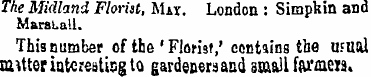
The Midland Florist , Mat . London : Simpkin and MarsLa . l . This number of the ' Florist , ' contains the _UFUtU _mUteriatcrestisglQ gardeners aud small _farm-eis _.
To Thb People. Position Of The Democrati...
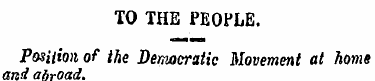
TO THB PEOPLE . Position of the Democratic Movement at home and ah oad . The States General and the National Assembly of _France-Character of the Assembly-The IMh of Mayi- Progress of the Counter Revolution . The Future—Nil Desperandum ! Friends , _Countrymeu-, a _\* d _Buothhrs , In reviewing , or rather glancing at the position of the Democratic movement at home , I fear it must be admitted that Chartism , if it has not retrograded , has hardly advanced since the end of March last . For this the Chartists ha \ e . principally to thank themselves . It is true that the
systematic lying of the press could not fail to have injured any party against whom its calumnies and falsehoods were directed . On the principle ' throw mud enough and some of it will be sure to stick , ' the dirty diatribes _projected-from Puddledock failed not , to a considerable extent ,, in- producing the intended effect . The Chartists _* were covered with the foulness of their enemies , who had cra _. 't enough to raake lhe unthinking ami politically ignorant believe that such was the natural , ' unwashed' condition of the proscribed party . Still it required Chartist folly to complete the work of Whig , Tory , and sham-Liberal villany , and ,, unhappily , that folly was not warning . The fearfully mismanaged ' National Petition' was ' a heavy blow and sore
discouragement' to the cause of the Proletarians . The buffooneries of which the ' Convention' was the theatre , and the cut-throat _quarrellings of the ' Assembly' completed the sad work of Chartist suicide . The Press-gang found it quite superfluous to abuse the ' Assembly' seeing thac its members were evidently resolved to talk themselves down . Hence the ' Assembly' escaped the libels ol which the Convention hadbeen the mark . To ' writedown ' those determined on self-destruction would have been a waste of ink and paper . The press seems to have regarded the ' Assembly' in much the same light as Satan is reported to have regarded the denizens of this [ earth when discoursing with Michael . —( _t-n ' ffe' Vision of Judgment . )
' They aro gro « n so bad That Hell has nothing better left to do Tb * u leave them to themselves : so much more mad—And evil by tbeir own Internal curse , Heaven cannot make them better , nor I worse ' If the defunct ' Assembl y' has any mourners , let them not charge me with _exaggerate the faults of the deceased . Anything that I have said , or even could say , must fall immeasurably short of the withering condemnation pronounced upon its acts by one of the members thereof—one , too , of the new Chaitist Executive . Mr James Leach : —
Ho ( Mr Leach ) believed if their constituents could on _> y get to see tbem—could onl y manage to look in upon them for one half hour—they would send the Assembly home . They had spent more time In abusing _eaoa other tban they bad ia transacting the business of the _peiple . * * * Ha saw . their proceeding * with Borrow , lie had sat disgusted with the Assembly , an _^ ie hoped that no suoh Assembly would ever be taken as representative of England again . Countrymen , let tbis be a warning to you . Reflect , that ifyou appoint incompetent delegates to represent you in a Chartist Assembly , you thereby furnish your enemies with a dangerous argument against your admission to the exercise of the
franchiseviz ., your unfitness to select fit and proper persons to legislate for the nation . Remember that the mere ' Shibboleth' of ' the Charter , ' though sufficient for the ranks , is not sufficient for tbe commanders-Your le ? ders and delegates should be tried and approved Chartists , and something more . You should not only know them well , and know them to be honest ; you should also know them to be able , discreet , and energetic ; honesty , ability , energy _, and judgment , are the grand requisites for popular leadership . Wanting any one of these , tbe best-intentioned man may mar the hopes of millions . A glance at the state of the Democratic movement in Germany , Poland and Italy must suffice for the present .
In Germany , the Democratic cause has received a check from the defeat ofthe ill-advised undertaking ofthe Republicans of Baden . Public attention , too _. bas been directed from home to foreign questions . The war against Denmark , and the renewal of the conflict ol races in Posen , bave served to divert tbe Prussians from questions of home reform . Seventeen ' wise men . ' sssembled at Frankfort , have concocted a monster-humbug , in the shape of a constitution for a Germanic empire , which might have done for the times of Charlemagne , but which , in these times—if ever erected—will be found less stable than a house of cards . Democratic _Republicanism is the destined future of Germany , as of every other country in Europe .
Poland is once more the scene of bloody conflict , and , unhappily , thc conflict is between , not Pole and Russian , but Pole and German . This is the work of the treacherous Prussian King . After the terrible conflict at Berlin , Frederick "William , terrorstruck at the prospect of losing bis throne , promised , not only free institutions to the Prussians , but also the Polish restoration of Posen , as a first step towards the complete establishment of ancient Poland . But Frederick William is determined to repeat the usual royal illustration of the old adage : — ' When tbe devil was sick tbo devil a saint would be , When the devil got w . U thn devil a Baint was be . '
He bas falsified every promise he made to the Poles—decreed another partition of Posen—excited the old prejudices of German a : ainst Pule—and at this moment bis armed assassins are ravaging the entire Duchy of Posen with fire and sword . Tht-Poles , after fighting with the valour of despair , and performing prodigies of heroism , have been again crushed . The unhappy emigrants , who have been lured from Western Europe by the promises of this perfidious king , are treated as criminals , and the Poles from ' Russian Poland' are driven back across
the frontier by Prussian bayonets , where , treated as deserters , they are knouted to death or sent 10 Siberia . Austria is playing the same game in Galicia and Cracow . The ancient capital of Poland has heen bombarded , and hundreds of its inhabitants mercilesslv slaughtered . This comes of putting faith in kings ! How long are the miseries of _Pofai d to continue ? The heartless government of this country will , of course , regard the destruction of the Polish patriots with a secret joy . With heartfelt grief and indignation I must add , that the government of Republican France is apparently equally criminal !
In Italy , Charles Albert is , like a true king , playing his old game of fast-and-loose—bis one object being to annex Lombardy to Piedmont . It is not unlikely that , after all , he may fail , unless France throws her sword into the scale . I come now to France , where Democracy would appear to lie destined to once more succumb to the Bourgeoisie . The repetition of ' the 4 th of May ' lias been closely followed by something very like a repetition of ' the 1 st of Prairial . ' Fifty-nine years ago , the 4 th of May _witnessed a spectacle similar tothe one of whicb Paris was the theatre three weeks since . On that day , in the vear 1789 the openingof the States General took place .
The procession of the twelve hundred has been often described . The broad streets of Versailles failed to contain the immense masses congregated from Paris . Every house was decorated with feathers , flags , and flowers . The sun ' shone on fair wnmrn and brave men . ' The inspiring strains of music filled the air , and all ' the pride , pomp , aud circumstance' of military power added to thc intoxication of the scene . There were the nobles in their p lumed hats , velvets , gold , and lace . There were the bishops in robes of violet and lawn , and the cures in "towns of black . There -were the m ? nib . 'TS of the Tiers Etat in their bourgeois dresses , the destined conquerors of plumed hats and violet _robfis . In that procession was contained men who , tbongh conscious that the hour had come when thev could
no longer enjoy tlieir foul usurpations _unquestioned and unassailedby tbe long-suffering victims of their tyranny , were , nevertheless , determined to struggle for the maintenance of tlieir evil power , evea though thev _plunged France into the horrors of end strife . There were others who , determined upon eombiitiing the assertors of hereditary and hierarchical privilege , we / e only _animated by the motive of personal ambition , or the desire to found the empire of the bourgeoisie mon the ruins of _aristociiicy and _priostcraft . Lastly , the « e were others—alas , how few !—wbo p ossessed both tbe wisdom of head and the honesty of heart to desire the eatire destruction of lhe ancient system , not for personal orclass aggrandisement , but for the freedom anil happiness of allthe emancipation of all Freachmtn , and tbo welfare of entire Fiance .
In that procession , was seen the bad , but not bold father of the cunning tyrant , whose ignominious deposition from the throne of France has created the second ' 4 th of May . ' How strange tbat the example of thu tumble result of the father ' s crooked ways should bave been no warning tothe son ' . In that _procosMo _" _, was to be seen the eloquent but
To Thb People. Position Of The Democrati...
corrupt , the _mean-ibut mighty Mirabead _, _bearin- j aloft his lion . like head ; scorching with his very glance the sons of privilege from whose ranks he had been ostracised . There too were the mouthing demagogues , the popular idols of an hour , Barnave Duport , and the _Lameths , whose exterior , mock patriotism could not long conceal their rottenness . Lastly _^ there too was the master-mind of the future , the ruler ofthe C 'nvention , the Apostle of Equality , 'who died too soon for humanity , ' tbe incorruptible UOBESPIERRK . On . the 4 th of May , I 7 S _# _> France desired a gloriousand bL 6 odless regeneration . Alas ! the intrigues of the monarchy , tbe priesthood , and the aristocracy , _ai-d still , more the dishonesty of the bourgeoisie , prevented'the realisation of the hopes of tbe people .. Ii am not about to review tba events of the first French
Revolution , but this g lance at the past has been naturally tailed forth by the events passing before our eyes . The spectacle of the 4 th inst ., was in some respects more imposing than that of the 4 th of May , 1789 . When on the recent opening of the National Assembly ,. seven hundredidenuties leaving their seatsappeared , in front of the Hall , and there with uncovered heads and uplifted hands—with the brightly shilling sun and two hundredthousaiid of the people of Paris for their witnesses— proclaimed that the Republic was and should _oontinue to be the govern > - ment of France ; men fondly hoped that this solemn confirmation of the voice of the victorious Proletarians of the 21 th of February , had made the course ofthe future plain and straig htforward—that reaction henceforth had no chance , and anarchy and counter-revolution were _equally impossible .
Thus probably thought many sanguine but unreflecting well-wishers of tbe French Republic ; but a little inquiry into the composition of the Assembly would at once bave excited apprehensions of the afflicting events that have already occurred , and seem likely to occur . The first exercise of Universal Suffrage in France * has not called into existence tho best possible of representative assemblies . Itis a remarkable fact , that with Universal Suffrage , No Property Qualification , and Payment of Deputies , there are nevertheless not fifty working men in an assembly of nine
hundred members ! The bulk of the members consist of lawyers , bankers , contractors , landlords , military officers , & c . Whether so bad a selection has been caused by a dearth of fitting men amongst the werking classes capable of assuming the functions of _legislators , or the inability of the proletarians to perceive that their sscial emancipation depends principally upon the law-makers being men of their own class , I am unable to say . Probably both causes , but princitbe latter , have operated to produce so marked a limitation of the number of ouvriers in the
Assembly . f It is matter for profound regret , that not only are the working men elected to tbe Assembly very few , but that also many men wbo have long made the social problem tbeir study have been altogether excluded . It is _Iamentai'Ie that such men should have been excluded from an Assembly which contains instead men notorious for their championship of legitimate royalty ard intolerant priestcraft , like Berryer and Montalembkrt ; military adventurers like Lamoriciere ; Louis-Philippists like Dupim ; and _pwlitieal humbugs , like tbat poor ( ountcrfeit of O'Connell , Odillon Darrot .
Is it probable tbat the members of the former 1 dynastic left ' will honestly set . their hands to the creation of democratic _institinions ? Is it possible for bankers and the other traffickers is the sweat and blood of the people , named above , to seriously desire such an organisation of labour as would redeem the Proletarians from the slavery imposed upon tbem by their taskmasters ? ' Men do not gather grapes from thorns , or figs from thistles , ' and honest democratic legislation—political and social—will not be performed by the National Assembly unless driven in the right path by the pressure from without . Tbat pressure has been attempted , but badly timed and unwisely directed -, it has , instead of weakening the reactionnaires , endowed them with increased strength .
Tbe events of the 15 th of May I nerd not recapitulate , you all must be familiar with them . My purpose is to defend tbe principles of tbe proscribed democrats , and justify their intentions . I judge their principles and objects by the known characters of the leaders , by their declarations in the tribune of tbe Assembly and by the documents found at tbe office of ihe Commune de Paris . The actors of the 15 th of May are proscribed under the names of' Communists' and ' Anarchists . ' The fact is that Cabet and other Communist leaders bad nothing to do with the movement . Very
probably there were Communists amongst the men wbo invaded the assembly , but Barbes . Blanqui , Sobrier and Hubert are not Communist leaders , they are chiefs of the ultra-democrats—the social regeneration democrats . In France'Communist' is just now used as a ' cry , ' staried by villains and echoed by fools , iu tbe same sense that the term ' Jacobin ' was employed in tbis country fifty years since . ' Anarchist'is an old ciy invaria _' _ily applied to the defenders of the poor and tbe champions of eternal justice . Jesus Christ himself was denounced as an anarchist , and crucified as ' a seditious and a blasphemer . '
Barues , Blanqui , Hubert , Sobrier , Raspail , Albert , and others of the proscribed , arc men who have devoted their lives to the service of the people . They have endured years of persecution and dungeon-tortures . Tliey are the recognised chiefs of the men who , on the 24 tb of February , summoned order out of chaos and enthroned liberty upon tbe ruins of despotism by decreeing tbe Republic When masters of the Assembly , on the 15 th of May , what were their demands ? Bread and work for the people , a Ministry of labour and progress , justice for the llotieu democrats—butchered or imprison ! d by the royalists the immediate formation ofa democratic constitution , and a tax on the _ric-h
to enable the French _peoolo to express in proper form tbeir generous sympathies for bleeding Poland . Who will assert that tbe _.-e demands were not just ? The documnets alleged to have been found at the residence of Sourikr , supposing them lobe genuine , perfectly justify the intentions of the party . The first 'decree' ( prepared like the rest in advance ) after asserting that ihe National Assembly had _violated its mission and setting forth facts in support of that assertion , proceeds to decree the formation of a C _immittce of PublicSafety , invested with unlimited powers for constituting and organising a truly democratic Republic . The second ' decree' is missing .
The third ' decree' aliolishi-s all existing administrative and judiciary powers , public charges , functions , privileges and monopolies , and provides foi the . estab'ishment of Iresb powers thoroughly popular . The bourgeois _Kuard was to be abolished , and a working men ' s guard established instead under the title of Force Ouvriere . Tbe fourth ' decree' provides that all known proprietors ( landlords and capitalists ) were tobe called upon for a species of property tax , to which tbe title uf 'Impot _l-Vateniel' was to be given , ranging from one-fifth up to the inoieiy of their income in _progression , ace rding to the amounts of their incomes , or , in case of refusal , to be liable to confiscation . This decree contains
further provisions for the distribution of the monies thus raised among the necessitous . Another ' decree'declares tbat an organisation of _Jaliour , founded upon the best possible bases , shall be promulgated in _thrue weeks , anti shall be entir . _sriy in the interests of the workman , protecting as fiar as possible tin jus * , rights of the capitalist . Of course the respectable _rafcAer- _; of society are terribly shocked ai the ' _spoliating' _intentao-ns avowed by ib _« ' anarchists . * Only think of
qotopelling an _e-iiormously rich Mil'er to give up _tholialf < , f his income , that bread and ! wo k might _ths'ia-wli be supplied ! by tbe Slate to . till .-people ! _Ajicii then think of the monstrous wickedness of _arm-i-wR the labourers , and disarming , _iilieir enemies I The very thoughfi of such a stat _& of things is cui ' ctilated to throw _ai ) idlers , parasiibos , schemers , andj plunderers into _n cold sweat , anili so , of course , _ihase worthy classes denounce Sooj « ier and his . friends as 'thieves' aud _'tfiuroiists . ' On thia side of the
water , too , much _vinuous indignation is expended against the' _auaiichists , ' ' _communisis / and ' _terraifists . ' Wh y ?! _Because as the *• _hlg _Viei- classes' are in tbe habit s >! importing French fashions , il _uvght be , that if the nig-, of Justice- were once established in France , the-lower classes of this country mig ht also become importers of the fashions _o ! their neighbours ! It is asserted tbat tbe patriots of tbe clubs used thc name of Poland as a pretext under which to
To Thb People. Position Of The Democrati...
cover their ' conspiracy' against the _Abseiublj-f , They may have conspired against the Assembly , bu ( j ( undoubtedly they desired to fly to the rescue ofci Poland . The correspondent of the Times , a bittecr enemy to the Clubbists , writing from Paris the dayy before the 15 th , said : — I must confess that the refusal of tba government too aid the Pole * seems _calculutid to produce on amount obt _dissatisfaction wbich o _.-inoot bo conceived bj any _persons who has not seen how _enthuMaetic & lly thu Parisiansthe lower order * _nbovo al !—have taken up tho cause off Polaiid . Not merely was the Rue du Faubourg _Sfrlr _Aatoinn literally fill d with groups , but ail the lateral I streets _nUs , Thu Place de la _Bastille was cov r < d with ; them , and tho whole Hue ot tho Boulevard more , . * _IdSS so .
Again , it is asserted , that Barbes and his friends only desired their own personal aggrandisement . [ £ this were true , Bapj _. _-oss must have aspired to the ptesidency of the Republic , yet we have bf pn told by the journals of the aristocracy and tbe bourgeosie that Barbes and bis friends proposed that no Directory , nor Consulate ) nor Presidency , should be created , but that tbe duties of the Executive should be performed by Committees appointed by the General Assembly . Again the press-gang denounce Barbes as a ruffian who desired to give up Paris to the pillage of bis followeis , yet the same parties have informed the world tbat Barues ' is a-gentleman of education and fortune , wiih an estate worth £ 4 , 000 or £ 5 , 000 per annum . '
Tbe men who invaded tbe Assembly on tbe 15 th of May are represented-by the lying journals of Paris and London as a crew of confederated cut-throats ; yet their demonstration was an unarmed one , and they shed not a drop of blood . The brave men wbo are now denounced as robbers and would-be assassins , are the very men wbo , at lhe barricades in February last , conquered Louis . Philippe . The following description of these self ; same men was written by the correspondent of the Times on Thursday , March 2 nd , exactly one week alter the overthrew of the monarchy :-
—Those men of iho barricades—thoso grim looking- , terrifi-- men of _Wednesday and Thursday last—those _univtstu-d , ill . _dresaerl , tottered men of the uuirt . _rs ol St Martin and S : Denis , and of tha Salle , and ol ihe Hotel de Ville , and of _th-j _Fdubou'S St _Aatoin- ' , _wlioga appearand ) ond whose ories w _« re appalling—wh re are thej-1 They have returned _ruotestly to tutir labour ; to the praotic . i of their admirable industry ; to their priYations and their _en- ' . _urancus . Lot those men bo known to the world . The _Rreat mass of the combiiUniB of 22 fld , 23-d , aid 24 lh of Fab , were the poor hard . working _cla-JSi-B ef lha _Paris'ans .
They wero lab . _iurera nt tho p iris , _shovniakyr _? , _aawytrs , ciirpmtcrB , ahoeblacka in a word , tho _op-rativtR and tbo _la-iOU'ers of « h » capital . _VVJiat did tbey ? Tbey believed thut the late i . ovorome » t had cheated them of the fruits of tbeir revolution o- July . They waited the proper _momt'iit for rec inquiring their rlgh ' . _s , and they went at it without urais , taking their chance of Boding a dead enemy , and of arming _themselvt-s wit ' i h \ i _wca--pons . A'ld when , by a succession of miracles , tbeir courage and thoir constancy w _.-re reworded by the most splendid victory _evi-r achieved by insurgents , what di 4 _tjjey ?—' rob , '' p _llntfe , ' ' murder ?'
_Searc'i th" columns of the ne _^ _spaprn , d rosnd of tho thou >> . ud _< of F . nglith and otliiT foreign n >« id _. _nts nf Paris during thi severe _Btruirulf , andthy will tell you thn . * those men , no hideous and so terrible in the Mr et _« and nt the barricades , so infuriattd by tbe _s au _# hter of their _fnen- ' _e , _sr > zed the _earli-at opportunity _f-r _leaving the « hos 3 _publique to _b-i looko . l af _^ er by honest _c-ompet _.-nt m n . und returned to their _werkrbop _* _. thtir _hovols , ani tbeir povpr'y , proud—for tbat too should be knownproud of _having onee moro conqut rod liberty for their country . This u not hyperbole nor is it a _designing , a _cowsrdly or an _inti-rested _c-- > mpl : m _. nt . if it > . \ erc , I should b 3 sure _t- » be _i-ontradicted by dozens of letters to you . dofs con'r . _idiction .
I could add many a similar testimony , hut the above must be all sufficient . If such was the conduct of the working men generally , you may he sure that the men of the clubs—the most enlig htened of the people—participated in that noble conduct . Notwithstanding that I am prepared to defend the principles and objects of the men ofthe clubs , I must express my regret at the attempt of the 15 th of Mav . It was , I repeat , ill-timed and ill-directed . The clubs should have remembered tbat although the Assembly was composed of a most unmistakable set of rascals , that nevertheless it was the representation of the Universal Suffrages of the French nation , and should have been respected until at least it had
prepared the new constitution . If , when that constitution bad been brought to li g ht it had been found to have been anti-Democratic , then , I say , the people of Paris , wbo with their blood bad made the Revolution , and therefore were the natural guardians of tbe young Republic , would bave been justified in overthrowing tbe Assembly by force . Had the clubs waited until then , tbey would have been a hundred-fold stronger in their moral force , and . iti all probability have been able to have commanded tbe physical force ofthe entire people of the capital Since the 15 th the Assembly has rapidly progressed from bad to worse . The monarchical reaction is in full swing _, and if matters progress as of late , tluev have done , then , indeed , we mav conclude
with Bi . anqui , that ' the regency cannot be far off . ' Barbes , _Sobiuer , Albert , and Raspail , with more than 200 other patriots nre in prison . _Btan-« ui Hubert , and Thore are being hunted for like wild beasts . The best of the clubs have been suppressed by armed force . To shoot a clubbist ( patriot ) is meritorious ; to shoot , in self defence , a National Guard ( reactionnaire ) is murder 1 Even the moderate Democrats , such as Caussidiere and Guinard , are driven from power . Louis Blanc is hooted , bustled , and insulted bv tbe National Guard .
and his arrest demanded . Yir . _c _. N and _Li-diiu-Roi . i _. in are t' reatened with proscription , and even Lamartine is said to bave lost his popularity with the _bourgeoisie , because supposed to be not sufficiently hearty in erecting a rei gn of terror against the Democrats . The committee for drawing up tbe constitution is composed of tbree parts monarchists , and includes not one thorough Democrat . Lastly , the slayer of Akmand Carrem . o ienl y spits upon the Republic , and is _indirectl y advo _.-ating the claims of King Smith ' s son , Joinvillc , to the throne of the _intended new monarchy !
Such are tbe melanchol y results of the g lorious days of February—such are alread y tbe bitter fruits of the second' 4 th of May . ' Tbis letter presents a cheerless puture of the present poshion of the Democratic cause . Hi ; is a traitor to himself who shuts his eyes to the dangers tbat are visible in his path ; be it our part , therefore , to look present evils iu the face , and resolve to _overcame tbem . At home we are not without hope for tbe future . The people have recently exhibited an unanimous and stern determination to stand by iheir long tried friend and leader . This argues well for union . Tbe energy of thc new Executive argues well for action . Tbe cause of Democracy is not lost in Germany . Since tb « first portion of tbis letter was written , a popular movement in Vienna has established Universal Suffrace ! What will miscreant Mettichnick
3 ay to that ? Tbe Poles though defeated and bet rived , will again and again rise until vietorious . Shall we not hope for Italy ? It would he treason to humanity to despair . And France , g lorious Franco , w II , depend upon it , _no-S be again _enslaved without a fearful _struggle to save _ttte Republic . E _.-iei y day the acts of the Assembly are _justifying tbe movement of tbe lath o £ Mav , and can hardly fail to e _^ e long _produce a much more formidable movement . Countrymen , in spite of temporary defeats—in spite of tyrants nasi traitors—in s ? _-ite of aristocratical and _profit-mongering Conspira'er 3 -all the world overour motto , s . _bs . 11 still be , ' Sever Despair !' L _. _' _-Ami DU P'KUrLE . '
"* Of Course I Urn H|>Eak\Ng Of Tbe Jive...
" * Of course I urn H |> eak \ ng of tbe _jivea _.-nt revolu ion , f I fear a third cause tins operated to ii 1 the Ch . i £ _* . ber with the enemies ruthr . r than tho _^ _rltndd of L _^ b . ur ; namel y , the negleo : of a very _lar || 8 numb _. r of thu working men to _exen-iae thtir right of Soff . _WKO . It Is said _thdt In the _depurtmtnt of tha Seine atone a hundred _tiousand vee . _t 4 _neglected to apposr _«* . tte _polllag
Frigriyi'l Dbatii,—K>N Tn^D-Iy Lasia You...
_FRiGRiyi'L Dbatii , —k _> n Tn _^ _d-iy lasia young _mara named Benjimin _Catfhpoln , a _^ ed twenty-nine , a _servanA . in th « employ i ? f Mr Hare , &? _Fnston . _ruec with \ _th death under the _fol'owing _iamentable oircutu 8 _> _ianofs . lie had Uoen _ploughing ,, " _mcomoanY with ; _fouu or five other raen , and upoa their _leavinsif _worik ., at twelve o ' clock at noon , _ttiey all proiesd _. d homewards , th _cicCeased riding on a sp irited colr „ and leading its fellow horse . Id passing into aa _adjoinins ; field some _difficult w ; ia _exoerien : ed in setting both animals through tha gateway ; b » t _ihi _* having at _leasth been accomplished , tho t-olt lie was ridinc _baearac _n-stivc . Alarmed tor j , is sitety . tbe youRcr _rcan threw hiraseJf off . _ivm . tell on bis _hiad _, through _») V > foot / . 'ettinjz _oBtauf led in the trace , lo litance l neatly hlty
this position he wns _draped a «* » yardi avid < _vns so much trampled upon by tho onlt , that hi * left lee _» s _ti-iw completely _i . ffat ihe thigh , a _iioKton of the pelvis and como of tre intestines also , _e-raing awnv with it . _Wlirrs . picked i > p . tha _U-r fellow wss _rjiihe dead ; and _ujioti sub ? en _* ient exomina'ion by a medical roan , hc w . n found to have sustained , in addition to ihe above _tVigliltul . iiiiuries . a fracture of tho temple bono , _resulting ia _| n ' Ca _? iBi 9 ? _b ofthe brain . The _mansled limb _wk _^ foi _^ _'drjt _^ fil _^ f yards tre . _iu tho body . An inquest ttra _^ - _^ Itl _^ tji t ho - following day ar _^ l a \ CTuict ot ' At _& id _^ _ifta _^ , D _& $ jh * returned . He was a ramarkably Btc _« dy ; _yptiJg ;'* m ' _aSii . ' hud his death , under such _drcun & tarjceB , has __ of _« fi » ated a strong _sensation in tbo _neighbourhood , _^ _uhtj _, elicited much _jyeipaUiy for _hlarelfAtiTer / - ' _:-. _'{); ,
-
-
Citation
-
Northern Star (1837-1852), May 27, 1848, page 3, in the Nineteenth-Century Serials Edition (2008; 2018) ncse.ac.uk/periodicals/ns/issues/ns3_27051848/page/3/
-