
On this page
-
Departments (1)
-
Text (4)
-

Untitled Article
-
Untitled Article
-

Untitled Article
-

| SCOTfeSH CONVENTION OF SCOTfeSH CONVENTION OF DELEGAltE.S.
Note: This text has been automatically extracted via Optical Character Recognition (OCR) software. The text has not been manually corrected and should not be relied on to be an accurate representation of the item.
-
-
Transcript
-
Note: This text has been automatically extracted via Optical Character Recognition (OCR) software. The text has not been manually corrected and should not be relied on to be an accurate representation of the item.
Additionally, when viewing full transcripts, extracted text may not be in the same order as the original document.
Untitled Article
According to previoci &mnggataft , tb £ great meeting of Ddiegatts , from Scotob towM aad Tillage * , to consider the best method of fiiganifSng the Radicals < tf Scotland , tbe more effectujn'ly , to promote tJ * cause of Universal Suffrage . wa& . held in the Universaliits' Chapel , Glasgow , on Wedaeadaj forenoon , at twelve o ' clock . About the hour appointed foe meeting , the most of the delegatei , representing towns which had previously intimated to the
Radical * of Glasgow their intention of sending delegates , bad arrived , and during the reading of the credentials with which they were furaiahed , the other delegate * came dropping in . Mr . Feargns O'Connor , appointed by tie ConTention to , Ittend , and give an aocouns o ( the preetnt Kite of pablie opinion in England , alao made hit appearance rinrdy after the delegate * "had assembled , and was cheered enthusiasticall y . Tbe natses of the delegates being read over , it appeared that tbere were fifty- » even delegates present .
Mr . John DtrjrcAi * , delegate from Edinburgh sod MttStelbnrgh , wa » th < n appointed to . the chair . Mr , G-iilespie , of Glasgow , was also appointed Secretary for the occasion . It was thsn icbmitted to tie delegated whether strasgers thcmld b « admitted to bear tbe proceedings . Several of the delegates expressed it as their opinion that the proceedings eonld not be too open , I : was pot to the ? ota , and unanimously agreed to admit . The doors were then thrown open to the public , and the chapel was immediately crowded .
The Chaismiw said—before eommeneiag tbe proQeedirngs , he bagged to male one or two obserravozs on the purport of their present meeting . Never wa » a meeting of greater importance to the people of this country held on any fonaer occasion ; and not to Scotland alone was it of importance , it woo . . be anxiously looked to by the people of Englandy-Ire £ tB ^ aad Wales . These countries were now . iaU ^ jery excited elate , and they looked to the iwnlr-rffiiie deliberations of this delegate meeting with , astk earnestness . iHear , hear . ) Scotland had taken a Tery active part in the movement tor Univeriai Soffirafe , in common with the people of other para , ana be wa * baund to say she had played
her part Terr well as yet . ( Great applause . ) He was folly cos vj need , and be believed every other delegate present was of the same opinien ; indeed , their presence was a decided proof that the men of Scotland were taking a warm interest in the cause . He hoped that those gentlemen who addressed the meeting would express theniselvM as clearly , firmly , aad briefly as possible , and that nothing like pe ' r-• onaiirie * or invective would be ineulged in by any one ; thst iherr deliberations should manifest the firmness of their character , and that they should exhibit that hiah moral standing that had always csaracferL > ed the conduct of the men of Scotland .
And , as-taey valued the cause itself , he entreated that they would enter in : o the iiscussioa of the subject for-which they had net , withont the smallest particle of parry spirit , and conduct their business £ ke men who rained their rights , and were determined to obtain them , ( Applause . ) Before sitting down , ae ¦ would remind the pablic of tbe necessity o ^ Tfcprt . « h ! ij ail marks of approbation , or in any other way tiving eipressioa to their feelings . Oa a qneidcn being put , as to wheiber delegates from associations would be liable to asv danger if they took part in the business of the meetimj .
Mr . O'COXKOR Said , so locg a . 9 they c © Ds ; 3 ere < 3 themselves aj delegates from district , they were perfectly s afe . Several delegates explained that they bad been appointed a : public meeting ? , but had go ; instructions from associations . Mr . O'Connor said that was al * o perfectly legal , if thev were appointed at public meetings . Ob the motion of Mr . Lawsuk , of Pennvccick , the proceedings were opened by prayer . Mr . O \ Xeil , of HarjhiU , wea dtiiTered a thon a = d impressive prayer . THB STATE OF PXJBLIC OPINION IN SCOTLAND . It was then agreed that eich delegate should give a short account of the it Ate of public feeling , and the projre * 3 of the principles of Universal Suffrage , ; n th- districts which he Tipresazte-i .
Mr . Wa . SaiiH , delegate froa Ajr , « aid , the Radicals ef Ayr Here rtidy to assert iheir rights , but ihey were no : prepared to take them by force . ( Hear , bear . ) There were same choice fpirits ia Ayr , although their Bomber was not very great . Tney expected that that delegate meeting would haTe a beaeScial effect ou the cause . Taey had delegated him to say that they were decidedly of opicion that there * m a great want ef organisation with them , and if soms good plan were adopted , they Bright speedily attain such a portion as would ' enaole them to ca-ry U = iTcr ? al Suffra . £ e in a short time , without any recourse to other than moral iE » aa * .
Mr . Petes Crawford , Delegate from Barrheai , Eaid his constituents w < -re determined to wort out TJaiTenfjil Suffrage , come wha .: migiiL Although tbty were cot atpretsnt in a proper state of orgaLwat ios , so as to carry out some of the ulterior mea * nre « rtcoHnBeudeii by the Conrention , yet they were doing Tery well . As to the propriery of arming , they had kft all individuals to de a » they thoughtfit . He would confrf » that they were not prepared for tbe Sacred Moata . Seme were for pcririonine again , and others were opposed to it 5 but , neTertheless , all were determiced to hare Unmr * aA Suffrage made the law tf the land , whatever might be the result .
Mr . ChasLE-S Stewab . t , from CDatbridge , said Coatbridge was a town liable to so much fluctuation from working people going and coming to tbe TJtlage , owing to the public wore ? , that they could » ca . rc « ly make much progress as aa association . The numbers that were joined , howerer , were resolute aad determined . Bu ; the Sacred Month woaid aot do there . A great masy had refrained from excisable articles of luxury ; nevertheless , they were ccBTineed that a proper system of organi * atiin wea essemtiaUy necessary to the success of the cat : se .
Mr . William Yotjsgsos , from Dundee , said be belieTed he represented tbe largest town on tbe North-nse-ef tbe F 4 rtj | -of forth . The p » pnbttion was 70 , 009 . Radieaitt !« , iberej he regretted to say wm not so strong ks" they could wish . A great many took what they ealled a moral force -new of the question : nevertheless , the recommeadaHon of the CtareBtioa as to the Sacred Week had already beet followed up there . They had done very well with the NadcEal Security Saving Backs ; indeed , ko well had this one of their ulterior measures been carried out , that they could Ijarcly get a pound of silter in Dundee . ( Hear , hear . ) They had adopted tbe system of exclusre dealing with theshopoeracT
and they expected shortly to realise eomethicg by it . He could al « o inform the D = ieg » te ? that they had formerly twe Associations , and soae difference had sprang up among the Radicals about Moral and Physical 1 ' orce , but it had all been p « an end to by tha two Associations joining hand in hand for Universal Suffrage , and expressing tbeir determination to hare it . Before pitting down , he might say for Ferfar , tiat ti » inhabiraata of that coatty were np to Broatene . O'Briso ' g mark . ( Laughter and eheern . ) They would haTe come out upon the recommendation for the Sacred Moath had they not received statements from the Glasgow As-60 * iaiiea which altered their resolution .
Tne Cel » £ ate from Kerresiuir said , & great cumber were armed , and the organizaton there was going ea tigorouily . Tae Dalegate from Danferniline eaidthey were generall y alf Chartigts there . At one time there had been a civision about Moral and Physical Force but they were now a ' . l joined in ona ' AisocittioB ' . They eonsidtred the Sacred Month to have been one of th = best measure * that could have been proposed if the coanrry had been prepared to put it into prao- ' tice . The district around Daiifennline appeared more enthusiastic in the cause than Duniermline itself .
Mr . J . B&UCB , of Exglesham—The number of the Chaiusls was . not j > reat there . They had many detennited gtaunch friends , howeTer , ready to go almost any leagth to obtain Universal Suffrage . Eaglesham itself was a nest of Toryism , and there was no use attempting to hold a Sacred Month , or a Sacred D * y there . In regard to that proposition , Mr . O'Connor ' s opinion , fiven in tbe Northern Star , . lalued exactly with ifc ? : rs . A great number of thes lad agreed to the resolHtion passed by the Glasgow Association , to aLsta ' n from all articles of luxury , a ? far as health would permit . They hoped to do a deal of good if they got their Workiag Man ' s Association joined to that of the Teetotal . Mr . DcSCAX . from Eainbargb aad Mossslbnreh , said , the men ia Edinburgh were thorongh-gnbg determiaed Radical : —that wss all v \ o vrerc _
msinbera of the Universal Suffrage Asiociation . At oce tisie , it was supposed that there was a ec-m / iete division among the Badlcals of E-iinburgh ibont Moral aid Physical Force , but the ac-risg Badieals there made no distinc&n now between tbe two kinds of fsree . They wereafeennired touseeverymcralmeass « ccompli 8 b , tfe 38 ff oSeet ; oat a great number wtrt & *^ $ jU 3 uii £ . ' : ~ He bai been enjoined to tell the aettugfpfflfc Baiieals cf Edinburgh were detejj »« fi ^ % " h 3 Te Uaberatl Srirrage at all ha *« rd »
Untitled Article
He might also infora them tb * t « sclas { Te : dfating was about to be patintoactiveoperaties—aOiae were already engaged in ojvanitiDg theaseltw jito societies to carry it into ethct . The Radical ! of'UonU bni ^ h had done tie eame . He ooold usnie tie meeting that in Edinburgh there was no diTiaion among the Radicals . There were a few who talked of moral force , and moral force alone , bat t >» great mass wer » decidedly opposed to agitating tie question or talking of it at aU ; but , if smote on the one cheek , they would not turn up tha other also . ( Chsers . ) They also expressed a hope that the attention of the delegates would be mostly directed to eoBc » cting an efficient plan of rganization . The oaute with them was progressing rapidly , in the He m . 'ga * * l » o inform them 1 M escl ^ 'deatine
conrse of a month , they expected to have their as «> - cia'ioa is a a * et efficient state of organization , Since tbe outrages in Birmingham , they had had large accessions to their numbers—their meetings since then had been crowded . ( Hear , hear . ) Tke Saturday after the news of police and magistrates having broke the peaoe in Birmingham , they had enrolled 151 members of the association . They saw that it was only by putting themselves into a thorough state of organization , that thej could resigt any illegal acts of aggression that might be made against them . ( Cheers . ) That was a oorrect account of the stats Edinburgh was in .
In reply to a qsestion by a Delegate , as to whether it was legal to organise into tens or twenties , for the purpose of canvassing the middle classes , Mr . O'Conmob said they might organ i ze themaelre * into nvei , te n * , twenties , or fifties , if they choose to carry on such a canvas * , provided they m * de use of no threats er intimidation . They had no occasion to us § threats , nor did he believe they would use them . He held that everv man wbo
might put himself in danger lather hurt the cause than otherwise . ( Hear , hear . ) It was also quite legal to publish tbe names of those who were fa - VouraUe to their © axw « , bat sot the names of tho * e who were against them , bscause it was considered by tha law as oonspiiaey against tke individuals . They were at liberty to publish the names of those who were favourable—this was conspiring in their favour , and it would answer the purpose equally well . ( Laughter and cheers . )
Mr . Andrew Millar , Elderslie , said , theirs was a small village , bntit appeared to him mat the spirit of liberty was hereditary there . It was the aacient birth-place of Sir "William Wallace . ( Hear , hear , and che * r » . ) They were pretty generally determined to carry out the ulterior raeasuies of the Convention , and they had done something in that way already . In a short time tht-y would be able to bold a Sacred Month , or a Sacrtd Six Months . ( Cheers . ) Mr . John Malshaii ., Greenock—It was a long time be / ore they had commenced the agitation , and wfcen they had commenced it , they bad met with much opposition from Whigs and Torio ) , and sham-Radicals . But they were iapidly pTogiessiog to a state of good organization , until which time they did net expect a great deal could be done .
Mr . Jamxs Lindsay , GaUton—Theirs was a small Tillage . The popalatioa was only 2 , 000 ; out cf which TOO had signed the Narion&l Petition . They were all generally prepared to adopt any ulterior measures which that meeting might recommend . They were agreed as to total abstinence , and a general system of organization . And they heartily agreed to the proposal to have missionaries sent tbrongh the country to iffect a thorough organization of tie people . At all events , they were determined to bare Universal Suffrage . Mr . ARTHUR 'Kobbutson , Hamilton , said they were in a very flourishing condition . Thev were pretty well organised ; they could get up a meeting at a f ? w hours' notice . There were a number of
Tillages around Hamilton with whicb thev held eoncf xioD , \ lA the » ost of them were doing well . Very few of thea were " up to O'Briea ' g mark , " however . He wa . 8 instructed to gay that they were in favour cf none but moral means being used to pmaote the cause . They were for going on legally , constitutionally , but firmly and determinedly . They had agreed to the plan of sending lecturers throughout the chantry , ta agitate and organise the
peopie . A great majority of the male population of Hamilton were in favour of the Chartist agitation . 1 hey had applied to the * hopocra . cy , and a vast aajoriry of th-m were in favour of the movement . Tne National Petition had received 2 , 000 sigaatures there , and fo far had they carried the iystem of exclusite dealing with the clergy , that they had already set up an their own account . ( Laughter and cheer- * . ) And they were making great progress in that plan too .
Mr . Robert Blair , Irvine . —There were 200 members joined wftfc « tora \ Vorking Men ' s Association there . Tbe National Petition had got 1 , 300 signa-iures in Irvine . . They were resolved , however , to sign no more petitions to the House of Coih : eo 28 , bat recommendei that an efficient system of Etitatien be immediately put into practic-, to u to o-ga . s » e the whole of Scotland efFee : na !! y . Mr . James Black , Juniper Green . —After the affair in Birmingham , a great many had joined their ranics ; indred , that affair had given a great impetus to the cause everywhere . They approved of no other than moral means being had recourse to f # r obtaiciEg Universal Suffrage . They thought that moral means wtre ail that thev had in their
power at preheat , &Dd it wa . f foolish to apeak of o : h&r means , { Hear , hear . ) Tsey had commenced to organise tbe county , f » r which purpose they had already engaged a lecturer . They were directly opposed to all violent language , or violent proceedings . Mr . Alex . M'Lachlan , Johnston . —Chartiits not numerous there . Being a manufacturing district , a great many of the worker ; were afraid to express their sentiments openly . Some division about moral &Bd pajsici . 1 foTce . He had been sent te h ^ ar wkat eoBClarioES the meeting came to Tbpy would abide by tbe decision of the delegates . They had agreed te address the Queea on behalf of the three men condemned to death for tbe BiraiDghim affiir . ( Hear , hear . )
Mr . John Howl * , KAlmarcack . —Their association hai existed some time . They were afraid that some division waald take place among th « m at the rime their delegate , Mr . Craig , came home ; but tbe proceedings at Birmingham had thoroughly united them all . They approved of having recourse to extensive agitation , that a good gjstem of orgmizatien ghould be entered into . And they snggegted that tbe plan of missionaries going throughout the country , should be taken into consideration , and considered that the meeting had nothing to do with the discussion of the qne * tion of moral and physical force .
Mr . DATID IBTING , Kilburaie—They had had an association existing since the yes . r 1 & 33 . The ia ' . e flagrant oatrage of the police and magistrates of Birmingham had united all parties , aad been of much service to the cauie . They bad full confidence in the Conveanon , and were determined to support them in every ctBstitutioaal measure . They kad also agreed to the ulterior measure relating to txciseable article * of luxury . They were of opinion that violent language b . ad _ already hurt their cauje , and thej were opposed to it . Mr . Alexander Mxxwill , Kilboreban , said tbeir population wa » £ , 200 or 2 , 409 . There were 233 meabers connected with their Association .
There were 119 in the Tillage friendly , but would norjoia . Whig ? , 36 . Tories , 30 . Indifferent and C 3 re . ) ess . who did not give twopence for the movement , 115 . ( Laughter . ) They were willing to go along with the majority of the delegates . Mr . Alexasdeb A-ndsrsox , Linlithgow—The place very small . Only 50 or 60 members connected with their Association . They were determined Tiot to petition tbe House of Commons again . Thought that lecturers should be-sent throughout the country to progress the agitation . The country just required to be stirred up , and they would 'peediiy have their rights—those rights which the Creator had given to man . "God and our rights , " ¦ was the mono of the men of Linlithgow .
Mr . Jamxs Cowan , Lennoxtown—Village small . Those who had joined were determined to have Universal Suffrage , and they would do every thing in their power to briDg the thing to a crigis . Mr . ASTHUB O'Nsil , Marrhill-They were m a ojsorgamsed Btate , &ud wished to be put into a proper mte along with the rest of Scotland . Mr . Thomas Cameron , Newmiln ? -Population 2 , 500 . Charusts numbered npward * of 500 . They had earned on a very active system of agitation ticce the eoBinencement of the present moTeitent . Looked forward to this meeting with jrreat anxiety . ° °
^ . ' r ^ Ckawfokd , Old Cumxo-ok . -Tba R ational Petitios had received 400 signatures in O . d Cumnock . They wouli never pJdtion tha House o » Commons again . "Were ready to act up to any plan of organization aereed to bi , the Delegates . There were 40 determfm d men in the village ready to go any length tooDtain Univ ^ rsdSuffrage . They 'K-era- * ' up to the woijeA ^ ^ r , A ££ k . Gilltzs , S ^ ffierglen . —Place verf aggf ^ lpBest of ToryiMB . A number of 4 et < & fgUBypulicals there , however . He wasainril 3 fBK 3 Bte for whatever would farther the catSfc
Untitled Article
HU constituents wKdd go any length to obtain their righti . , Mr . F 2 ANCI 0 , Renfrew . —Theirs was the most rotten . Tory borough in Scotland . The cumber of the Radicals not great . They were aU determined to free themselves from the state of degradation tkey were bow placed in . He wu actheriaed to support any plan he thought most likely to promote the great c&ose of Universal Suffrage . The members o ( the Awotiation were ietermineJ , by every jMMlin conttituento w ;* oia go any length to obtain tfteir
their power , to w * rk out th * ir ptu'ticai ^ gjlTii ^ im Dep 4 nd lpon what emanated from this j | totiag * Mr . Wm . Barry , Strathaven . —Their Aasoeiadonhad now existed two years . Tkey would go every length within the bounds of moral means , to obtain their rights . Since the late disturbaaces in Birmingham , they had gained a great accession U their numbers . They would adopt all the mlterior measures « f the National Conveition , except the Sacred Month . Yfere not inclined to petition
Mr . Hamilton , Stonehouse . —They had commenced tbe agitation under tbe name of Reform Association , but had remodelled it into s Universal Suffrage Association . They wonld use every moral means in their power to make the suffrage universal . Very few of them held the doctrine of physical force , but none of them would' be inclined , if smote on the one cheek , to turn np the other airo . ( Laughter and cheer * . ) They had gone on very cordially in the movement . A public meeting had been held , and all the ulterior roea-mes , except the proposition of the Sacred Month , agreed to . Unless all Scotland , England , and Wale * were unanimous on that point , he did not think they would agree to
it . Considerable d . fL-rence as to tke system of exclusive dealing ; cambers thought it was a system of persecution ; the majority , however , had agreed to it . With regard t « the aiming—it was tokeep the peace that they agreed to arm . And they had resolved to petition Lord John Russell , aa he seemed to hare plenty of arms and ammunition f « r those who were willing to protect their livetf and properties . ( Much laughter ) Tney found the clergy their most decided opponents , and they were now going to try to make their own souli comfortable , as well as thtir bodies , without the aid of these men . ( Hear , hear . ) A geod deal of excitement had taken place there mKoat the arrests and prosecutions of the
letters in England . They recommend this meeting to agree to get up petitions in thousands , and keep the table of the Home ef Commons groaning with them for several months , eo that , by importunity , they might weary aad harass the present House of Cocmcns out , and literally compel them to graat the People ' s Charter . ( Hear , bear . ) They also wiihed a good system of organisation get on foot , and qualified lecturers 10 agitate the country . They thought the question ot moral and physical force should never be discussed . Physical Joroe would briDg itself out . Bat , it all their moral means were put in force , physical foroe ihouid never be required . ( Cries of " Question . " )
The delegate from Newmilni said he had forgot to tell the meeting that , in Newmilns , both tbeir magistrate * were Chartists . ( Applaese . ) And they had sworn in all the Chartists , the other day , as special censtable ? . ( Laughter . ) Mr . Robxht Rankline , Thornliebank—A small manufacturing village . Not three months since tbe Radical Association bad been established there . Had now 80 member * . They approved of the propo-ition to read lecturers throughout the country , to disseminate the principles of the People ' s Charter . They approved of petitioning the House of Commons again . The ulterior measure relating to excisable articles wan the only one they had resolved to carry out . They suggested the propriety of getting up cheap tracts , to dHsemiuate useful political knowledge among the working classes in the same way as reluious societies .
Mr . Jordan Chadwick , Tillicoultry—Upwards of 1000 inhabitants , 600 of whom had signed the Nationtl Petition . 300 had joined their association . Some idea of the feeliDg there might be formed from the fact , \ hat fifty Radical newnpapyrs came weekly to tbe village . They had given £ 6 tethe National Defence Fund , scd £ 5 lately to Dr . Taylor , as a mark of ex tee to , and they bad alao contributed a sum fir Mr . Stephens ' g Defence Fund . The ulterior mea ^ urts had been carried out to a considerable
extent there . They would not agree to the propa&ition for a Sacre « Month , however , until satisfied that a majority of those who signed the National Petition would do ro likewise . There was a happy mixture of moral and physical force men amoDg them , and if every village in Scotland was as far up to the mark , Universal Suffrage would speedily be tke law of the land . ( Cheers . ) If smote on the one cheek , they w » uld eot turn up the other also .
Mr . James Camerok , Vale of Leven—The Radicals of this quarter thought the recommendation for a Sicred Month rather premature , and it would have been better to have waited till the country was completely organized . ApproTed of the plan ef sending misMonahea througb the country . Exclusive deaiieg bad b ? en acted upon for the Il 8 t three weeks . They were 500 stroDg . They were of opinion that if the ulterior measures already recommended were acted up to , they would be quite snilicient to obtain Universal Suffrage .
Mr . James Strachak , Aberdeen . —He believed theirs was the tbird city in Scotland . Population 63 , 000 . The Chartist * numbered l , g 00 there , but thare were three times that number of Radicals not joined with Iheir Association . The account of the proceedings of the police and Magistrates of Birmingham had raised tinewppiricthere . Theirnumbere since that time had increased live to one , and their financial affairs were ia the same prosperous Btate . At a great public meeting there , 16 , 000 had held up their hands for carrying the People ' s Charter into lavr . They were determined not to petition agaiD . but , if possible , by some other plan to carry the principles
ot the Charter . He wan iBstructed to Bupport any measu v that would strengthen the cause . For the better organisation of Aberdeen , they had adopred the same plan as Edinburgh—formed the trades into Universal Suffrage Societies , and it was working well . Should any plan be proposed for a separate Conven ion , would not countenance it in any way whatever . Believed that the Scottish Patriot newspaper would be well iupported by the Radicals of Aberdeen . Disappro 'ed ot discussing the question of inoral and physical force , believing that there was little difference betwreb them , and it could be of no service to the cause to talk about them .
Mr . Robert Currie , Bridgeton—The cause rapidly progressing there . More since tb * Birmingham affair . Thought tbe word " force" ohould never have been applied to that movement at all . There were three hundred member * in tbeir Assoc ation , aed were-as far '' up to the mark" aa any o : her district in Scotland . Had sent convideraWe sums for National Rent , and had contributed to other fnndt < to promote the cause . Would agree to any efficient plan for the organitation of the CiKHtry .
Mr . Samuel Millar , Paisley—Association established ia the monih of May , 1838 . Paisley wa » not surpassed for her number of genuine Kadic&ls by any town in Scotland of the same size . Mr . Millar entered into a detail of the circumstances connected with the d ' spute between the Rev . Mr . Brewster and the Paisley Chartists . They were of opinion that Mr . Brewster had done much harm to the cause . The Birmingham affair had been of much service there . They had frreatly increased in numbers since them ; had adopted the whole of the ulterior measures ef tbe Convention . ( Hear , hear . ) There had been a run on the Savings' Banks ; one friendly society had lifted £ 200 , another £ 700 , and an * tker £ 50 ; a great number of the people of Paioley ha 4 resolved t ~> exercue the right of arming themselves ; a society existed
which was collecting money ; they did not say for what purpose they meant to devote that money , but it was for an article that cost 15 s . 6 d . ( Laughter , ) If they were illegally interfered with in the exereigiag tkeir constitutional rights , they were prepared to resist force by force . They had a most effective sygtem of exclusing dealing with the shopkeepers put in force , which mainly depended upon ihe women . He alluded to the arbitrary conduct of the authorities in tbe case ol the person who had put one of the placards issued by the Convention in his window , and to tbe late affair of a few boys burning an effigy before the dtsor of an unpopular shopkeeper which , bad been magnified into a Chartist outrage . They had taken means , however , to do away that impression by issuing a proclamation from the Council ef the Political Union .
Mr . J . Cricbton , Tollcross—There were 150 Chartists there . - The imprisonment of Messrs . Lovett j ^ G ^ liins , ;» nd Vincent bad' put new life into tfci « iiKThey recommended that subscriptions should be gStjap for ^ he famines cf these men . They hud mad ? , s run upon the Savings' Backs . One iriemily society had taken oui £ 100 . Mr . J . Stewart , Alba—Radicalism at a considerable discount here . Attached blume to the ^ want of agitation . 150 members in their Association . Tkey wculd ^ use every consd ; utional measuie to make the Charter the iaw of tbe land .
^ . Mr . Donald Donald , Airdrie . —The agitation efoicg on with great spirit . Association nu-. nbered 300 . .
Untitled Article
Mr . DaTid Av # V Calton . —Had generally acted al « ng with tl * Glasgow Association . Organization was going on lapidl j . The transactions in Birm i ngham bad been of great wsrvice to . the cause there . * Mr . Wv . Thomson , Parkheadj—Haddoneevery thing by public meetinge . Th « organisation wm ga ting on very well . . Mr . Kobt . Ai 8 Lory Anderrtinuw-yrere not agreed upon the whole of the ulterior measures , but determined to use every legal means to obtain Universal Suffrage . .... "" B atifgate : —Will follow out Total Abstinence and Exclusive Dealing . Net prepared for a Sacred Month . Quite hostile to petitioning any more . Mr . ¦ Walter , Cnrrie , Gorbala . —There was net a more determined body of men in any part pf Sootland . All their proceedings were like deep water , smooth but rapid . Theught that a great deal more might be dote by a good system of organization . Would recommend the Delegates to deviaa some cheap and efficient mode of vending sound political information through the country , which was muth wanted . WouU approve of any feasible plan , which would compel the Government , through their fears or otherwise , to concede Universal Suffrage . Thought that a cheap edition of the Charter ought to be printed and widely oirculated . They would alao suggest that » ome plan be formed to get the Trades' as trades regularly organized . Mr . DaTid At ^ a » , Calton . —Had aenetallv
Mr . Cas 8 Ells , Partick . —At the commencement of the agitation , they had for their objeot Household Suffrage , but they were now for Universal Suffrage . They had 150 members on the roll of their awooia-• ion . Exclusive dealing had been gone into with considerable effect . They had canvassed the Shopocracy , aad found a great many favourable to the cause . They had tried the clergy , but were . told that they would have to work out their own political salvation . They bad resolved to do so , and at the same time they would attend to their spiritual salvation them .-elvta . Tbere was a deep fetling in Partiek for Mesira . Lovett , Collins , Vincent ,, and tbe other patriots bow suffering iu the peoute ' v canse , and they thought that means should be taken to assist their families .
Mr . John Yuillk , Stirling . —They had an association in Stirling , and one in St . Ninians . The principles of the Charter prevailed there to a oonaiderable exteac . They had got much opposition from the middle claca men . They were of opinion that the movement for the Suffrage should be conducted upon the principle ! " of p « ace , law , and order . ( Hear , bear . ) Exclusive dealing had been gone into , and they wwro fully convinced of the necessity for a better system of organization . Approved of employing lecturers .
Mr . Ahdkew M'Ken » ib , Alva . —Their asso ciation was 260 strong . When Dr . Taylor wai arrested they had called upon the shopocrata , and in the space of two hours collected the sum of £ 10 Could nut carry out the Sacred Month —could not want their snuff or tobacoo , but had done something with the Savings' Banki—bad taken * at . £ 150 in gold . ( Applause . ) The minister of the place had refused them the church for their meetings . When the poor woman who earned her bread by letting it out had remonstrated with him , he had told her to look to God , and he would support her . ( Hisses . ) The authorities there could get none but Chartists to swear in as special constables . Mr . CHARLES Baird , KirkintilWh . —Association formed ia March last . Were going on w « sll . Did not approve of the Sacred Month .
Mr . John Crei , Perth . —Had done very well , but bad been hurt by the Corn Law agitation , the church question , and the local newspaper . " . Were moral force men . Mr . Laurence Lawson Falkirk . —Had been doing well , but were in want of agitation . Mr . Robert Taylor , Auchterarder . —Would be agreeable to act up to the recommendations ef thia meeting of delegates . Had be « U doing pretty well . Mr . John Shf . ddon , Beitb . —Members in their association three hundred . Were giving the cause all the aid in their power . Approved of tha proposition for mi « ionaries , te apitate the country for an efficient system of organisation .
Mr . John MHiavenny , Springburn . — Were very ardent in the cause . Did not quarrel about tbe question of moral and physical force . Had a mixture of both kinds of force men among them . Were quite determined to have the Suffrage , come what might . Mr . William Catennat , Blackquarry . —Since tbe riots in Birmingham the causa hod made great progress there . Were determined to support the General Convention by every means in their , power . Thought a good , system of organisation should be adopted .
Mr . Alexander Graham , Strathblane and Balfron . —A good aunvbtr of Chartiats there . Require organisation . Were all weavers in Balfron . Would walk up to the ulterior measHres as well as they possibly could . They had met with much opposition fr » m the clergy—thoie gentry whoheldouta sign of civil and religious liberty , but would have the people work out their temporal saltation . This they were determined to do ; and he could tell these men that they would work out their own spiritual salvation alao . ( Laughter and cheer- ; . )
Mr . David Crocket , Fife . —He represented twenty-two Associations , in the Eastern District of Fife . Chartism had been , progressing very weli sinre tbe time Messrs . Collins , Muntz , and the others of the Birmingham deputation had been there . They had already employed a gentleman to agitate the country . Did not thiak that they were up to "O'Brien's mark , "however . Mr . John Little , Chapelton . —Wei © determined to do everything in their power to have Universal Suffrage . It wa ? intimated by a delegate , that Houlston wae quite willing to go the same length as Paisley .
Mr . Gillespib , Glasgow . —Believed that Glasgow was organised to a considerable extent . Various plans had been gone into for getting monies and keeping up tbe agitation . Thought they would keep up the agitation until some favourable accident took place that would bring about Universal Suffrage . Read the resolutions passed at the public meeting at whicb tha Glasgow delegates had bean appointed , whicb were his instructions . Mr . William Tarbet , Dalkeith . —His constituents would go along with the decision of the majority of this Convention . Mr . John Lawson , Pennycuick . —Read a seriei of resolutions as his instructions . These recommended legal measure )) , and unity , and concentraion of action .
Mr . John Campbell , Lanark . —His oanstituents were all determined to obtain the Charter . Association three hundred gtrong . Would use only legal nod constitutional means to obtain their object . The Aberdeen delegate , again rose to inform the meeting that they hau two female Radical Afiiociations in Aberdeen . Mr . John StKin , Clackmannan . —Same feeling ing here aa the Radicals of Alva and Tillicoultry . The whole of tbe Scottish Delegates having given their evidence , aa Adjournment ; wai moved and
earned . ilffbe Delegates again met in the evening at seven o ^ lock . The Chairman shortly ad dressed the Delegates , congratulating them upon the way they Had conducted their business in the fore part of tbe day . He wa 8 exceedingly gratified with the clear and perspicuous manner they had givun their Reports of the state of feeling in their several districts . He was of opinion , from what be had heard from them , that there would be no difference relative to the question of moral and physical force . ( Hear , hear . ) Every delegate seemed impressed with the idea ot having a eompleto system of organization in practice . He hoped they would conduct themselven as before , and not divide into parties , but shew that they were united and leally anxious to obtain their "g&ts .
. _ .... A Delegate moved , that aa the Scottish delegates ' had given in their reports , Mr . Feargus O'Connor , delegate from the Convention , and Mr . Mason , from Newcastle , should be heard , aa to the state of public feeling in England . —Agreed to . Mr . Fearscs O'Connor then came forward , and was loudly cheered . He said—Mr . Chairman , and . delegates from Scotland , before I give you , what I consider to be , a true report of tbe present Btate of public opiaion in England—of tbe views , motives , and objects of the English Radicals , I cannot r * frain from congratulating both countries , on the proceedings ef this day . The manser in which the delegate ? have R iven their reports , and the able way yon
have filled that ebair , is equally gratifying to me , and creditable to yourselves . I find uo difference among the Scottish ielegatt « as to their ulterior determination to carry Universal Suffrage as speedily as those means which they recommend will allow . The people of England » re equally determined with yourselves to have Universal Suffrage made the law of the land , whatever may be the results . There has necessarily been a little difference of opinion in some districts , as to the means to be adopted , but the people are determined to h&ve their rights , come what may . I an glad to learn that the people are satisfied that the old Convention has dop . e as mirch as any tody similarly constituted could have done
Untitled Article
under the same cironraitanc «; and if we are to have that Convention convened again on the 36 th of this month , it will be rallied under very different and better circumstance * . 'When welosk to the ciroim-¦ tance that when that Convention met they had a Government ready ' to anticipate their every action , the opposition of the upper and middle chaws—it was flroaderful I g ay that it has done so much good and bo little evil . In regard to i he ulterior measures recommended by the Convention , I am completely satisfied that the proposition of the Sacred Month should never have Been recommended at all . I fear that * t this time I haie subjected myself to a good deal of ill will and opposition for tha part I have under the game cirouniitanoM ani if « . *«*« 1 , »«
taken in opposing th * t proposition , Ia what Ihava done I looked to the safe coarse , to the prudeat course , and from the evidence that I have heard this day , I am satisfied that however much the Delegates may differ aa to the other means for carrying the Charter , they hava umlvereally declared , and they have proved their position , that the people of Scotland are not able to stand out , even for a tingle day , instead of a month . ( Hear , hear . J We have formed public opinitn , we have organised public opinion ; but we have attempted to direct public opinion , when pablic opinioH ougW rather te have directed us . ( Hear , hear , and cheers . ) We had next to consider the question of moral and physical force . My
view a on this subject , have been pretty often expressed , and I am happy to know , that the people of Scotland ' generally , have adopted those viewsmoral power is the deliberative qu * H tjr in mea ' s misdrt , which teaches them how to endure , and when endurance become * a crime , physioal force , if required , will come like an electric shock , and—( here we lost the conclusion of the sentence in the cheering whioh ensued . ) But the man who recommend * it is a fool . ( Hear , hear , hear . ) I have very of tea found that thote men who nttommended i % were the greatest cowards , and werp&e ftraC to run off to avoid th » consequences when the hour of danger arrived ; while , on the other hand , the cool ,
temperate , prudent nan . who has stood by the ship in . the hurricane , and . when most danger was to be apprehended . ( Cheers . ) As soon as the Birmingham leaders joined uh , they made a great noise about mnaketa , arms , powder , and shot—what they themselves dealt in—and when the b « ur of danger came they ulipt out of tbe slime , and left the men who have since stuck to the cause to bear the attack of the enemy-- ( cheer *)—naj , the traitors themsolvee went over to ihe enemy , and left the people to wallow in the mire ( Hear , hear , and u true , true . " ) I contend , however , that notwithstanding their desertion—notwithstanding the desertioss of other delega'CB , and the insidious attempts of the
Government to crush the Convention , we have stood out nobly , and laughed to ecora the attacks of the be siegers . When I speak of the errors ef the Convention , and they had errors , I acknowledge , I will be understood to speak of my own at the same time . " I must say that thwy ought to be looked on considerately , and they ought to be looked on m a light t » warn us from the shores and quicksands whioh may again besot us ia our way . ( Hear , hear . ) There were two great errors committed at the very outset . We neglected te elect a permanent president and a council to prepare the business of the Convention , before it came to be discussed , into which council all motions and suggestions should
have been handed in at least ten dajs before it was intended to bring them before the Convention . Thia would have saved an immense deal of trouble , and avoided all those dangerous measures which were hastily concocted , and hastily passed into law . ( Hear , hear . ) But let us look to those infirmities with an eye of compassion—let us endeavour to heal up the cracks that have taken place , and n « w that Scotland ij to be organised , let us endeavour to learn wisdom from thsir proceedings . If a Convention was obliged to recommend measures whioh the people were not prepared to carry into effect , doe * it not provo that there has not been a perfect system of organization ? ( Hear , hear . ) It
w one thing to look for an object , but it is another thing to apply tbe means . Unless you have yourselves organised , you cannot expect to have the political salvation of this country guaranteed . We only aak for equality of rights and privileges , that equality which vre will have when Universal Suffrage is made the law ef thia country —that cqaality which ? hall give the same law to the rich as the poor —that iquality which shall enable the people of this country ta have the full benefit of their industry , their intelligence , and their good behaviour . ( Cheers . ) We have now petitioned the House of Commons uutil we are tired » f petitioning—we have prayed , and we have besetohed , and flattered , and coaxed
them , butnothing will we ( jet , nothing can we get from the House of Commons as at present constituted . For my part , I will never put my hand to another petition , and a majority ef tbe people of England are of the same opiniou . Let the middle class gentry petition , itis now their 1 urn , and it in their duty and interest to get the working classes the Suffrage . Let those peopit who have the vote Send Otf a petition for those who have none , and by the next po « t we will hear that Universal Suffrage is made the law of the land . Mr . O'Connor proceeded for some time in the same strain , and shewed the
Hecessity for having a complete system of organisation set on foot , and also tbe necessity of co-operating with England , Ireland , and Wales . He then shewed more particularly the state » f public feeling in England . He referred to the late arrests in Birmingham , and other place * , and to the sentence of death passed on tbe three men concerned in the late riots at Birmingham , and expressed hi 3 determination not to leave a stone unturned to B&ve the lives ot these unfortunate men . He went over a variety of topics , in his umal rapid and eloqueut way , and concluded by again congratulating the delegates oa the proceedings that had taken place , and on che occasion 9 f their meeting .
Mr . Mason , from Newcastle , thep . addressed the meeting at sorae length , and gave an account of the state of public feeling in the counties of Northumberland , Cumberland , and Durham . We regret that we Cannot give bis addrtss owing to the space which these proceedings have already occupied . It was ably delivered , and was lidtened to with great attention . At the close the cheering was loud and lon « - continmed . Mr . Pwkostkk , delegate from Leitb , and Mr . j ¥ ItKB > frcm Kirriemuir , were then announced , and gave a very favourable account of the progreB » of the cm <» in both places . Some other business being transacted , the meeting adjourned till Thursday morning .
Thursday , Avguti 15 . The Convention met this day at ten o ' clock , Mr . John Duncan wvb again appointed to ail the chair . A g « od deal of business was gone th -ougb . We find it 19 out of our power to give anything like a detail of tbe whole proceedings of this important meeting .
Friday , August 16 . The Convention met again thia morning . Mr . Ross , Treasurer of the Glasgow Universal Suffrage Association in tbe chair . Mr . Abram Duncan sat in the Convention to-day as Delegate from tbe Border Towns , Hawick , &c , and likewigo for Montroiei The Convention broke up this evening , about six o ' clock . Tbere were sixty-eight Delegate ? attended it . The proceedings were conducted in the most orderly and praiseworthy manner . The whole of the discussions were conducted in a mild and temperate , yet firm and snergetic manner , whioh did great credit to the men composing tbe Convention : the results , we .. . are confident , will be of immense service to the cause .
At the close , votes of thanks were given to Mr . O'Connor , Mr . Mason , Delegate from Newcastle , Messrs . Ross and Duncan , who had officiated as chairmen during the siuing , and Mr . M'Crae , M . C . for Ayrshire , who severally returned thasks , and the proceedings were eloped as they begas , with prajer . ^^
Untitled Article
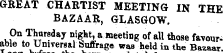
GREAT CHARTIST MEETING IN THE BAZAAR , GLASGOW . On Thursday night , a meeting of all those favourable to Universal Suffrage was held in the Bazaar Long before the hour appointed for commencing busmeaa every place where aatanding could be procured was filled up , a . d at ei ght o ' clock , a g « at number wereoutnde who could not gain admittance . The whole of the delegates to the Scottish Delegate Meeting were on the platform , at om * with the Directors of the Gla 9 goWRadical Association When Mr . Feargus O'Coanor made his appearance , a shout of applau . e burst forth perfectly deafening had tub , iaed nUed ^ ^ <***
SLr . GiLi , E 6 Pi a stepped forward and proposed that Mr . Proudfoot , Preside * of the Glasgow mL ° ' latlon ' 8 hould take the chair . Mr . Proudfoot , on taking the chair , eaid he felt great pleasure in feeing called upon to preside ou that ocC 18 ; on . He had bad some experience in presiding at ordinary meetinga , but this was an extraordinary one-it was the largest he had ever seen held within the walla of any house . He presumed that they had read the bill calling the meeting -it was of all thsse who were friendly for obtaining Universal Suffrage , and ke had a right to
Untitled Article
aMOioe they were ajl friendly to that object . Evew trui-hewted and honourablej ^ an wt 8 favourable to the Peeple ' s Charter ; and tia'i man wa * not honest who . denied fc the people ti ^ JrighU as laid down ia ir . »_ would ; fce unnecessary , he ¦ aid , to tell ttwnvhoir t $ befcave—they knew well . He wouW introduce Mr . OConBor to the meeting . ( Cheer *!) Mr . O'Connor then came forward and wm re . oeived with cheering and waving of bate which lasted for several minutes , and after having given to the meeting a most cheering account of the business performed b y the Scottish Convention , he said at „ . __„ „ -. .. . .
« ne generally came before them with pleasuM and gratification , but that now his task wa 9 amounw mi one j it was to eolicit their co-operation and support in an endeavour to save the lives of three of their fdlow creatures . ( Hear hear , cheers , and *• hlJ As Scotsmen always proceeded upon evidenue fie would lay the unvarnished story before th « m , and tfcen ask where was the Christian or the man , who would wrthbeld the helping hand , from the prhoner HnJST * ( C ^ " - ) Three unfortunate men o 2 Sw ° - ? £ , * rt « . were nnaer sent ence of death m Warwick Gaolfor political ( hear , hear , hear , } offences which when committed in 1133 by the pa £ usans of whiggery , were considered as necessarr preparatory stops towards political reformation ( hear and cheers , ) but which in 1839 are punched br the very men who created them . He would simply etate their caS 8 _ they were committed for a riot-th « v
were undefended by counsel—their witnesses , in consequence of thesupposition . tbai they would be merely I % . l . V " char 6 e to the Grand Jury who found the hi li agaiDit them , said that they belosged w apolitical party , one of whose principal object was , t « despoil the present owners of their land and to appropriate it to thenwelves . ( Shame , shame , and loud disapprobation . ) The Grand Jury / ww composed of landlords and the Petty Jury consisted of their tenant * . ( Shame , shame , and hisses . ) TheT were tried under an eld act of Parliament which makes , t felony to demolish or Jo > g iato pull down buildnJfs . This act slumbered fttil it 4 left ™ the A tjorney-General to ferret it out for the destruction of Chartism . The Attorney-General has the privilege of having the last word to the Jury , it w a Pri
vilege However which is seldom ueed , but in thk ease it was used although the prisoners were undefended and produced n 0 evidence . ( Disapprobation and ones or shame . ) Then , under such circumstances , what chance remained to tke prisoners ? Nonel save that resource which was in the hands of tbe people themselves . ( Cheers . ) Let them tt ? e it and let their ease go throughout the length and breadth or the land—let not a day-an hour—an instant ba lost till every man of mind , of feeling , and of soul sha 1 have Mgned a petition or address for tberemission ot their
punishment and restoration to their families . ( Cheer * , and " We will . " ) Upon their part it wa « £ unT « -r I ? ' ItWa 8 aa 8 Ct of Parity , of humanity , and of mercy , in whicb all , from the peer to the peasant , should join . ( Renewed ckeera ) And to the honour of all claws at Birmingham , nard 7 "In * *•? *?*** # *« " * Promul their pardon . ( Cheering ) . And would it be believed that some of tne most respectable of the middle classes ot that town , were prepared to prove that Roberts was not within a mile of the scene when the occuiw rence took place ? ( Deep sensation . ) AEain . i * 3 maxim
waa or morality , but p « rhap 8 not of W that the man who was a liar on Wednesday , wa > Sn V V ' aroi i . Thur 8 day , bntnotso would the ruffian Hall , the policeman , who wa * the wholesale swearer agaust the prisoners . This fellow had acquired the necessary qualifications for becoming a £ S , ; , r Tf * P ril < J-fi 6 hter - » drunkardla gambler . ( Load laughter and cheers . ) And now ob serve the fact , upon one day-his evidence w « sufficient to hang three men , and upon the aext , hi . evidence was discredited b y the Jury . ( Loud ehe * . r « L \ On the trial of Bird , who ' was chi « SI with t £ blood
dishing a y sword , and of having boasted that it had done much execution , Hall awore that it wm he who took the word from Bird , but another policeman , jealous of the undivided glory of Hall SSTnw' ™ V Per 80 Q wh « took tW sword from Bird , and Bird was acquitted . ( Loud cheer-Iff . ? J W m " 0 ? houtd DOt then a 11 the prisoners affected by Hall ' oath , have been acquitted ? ( "Yea . ye * , and cheer * . ) Then said Mr . O'Connor S case is before you . Will you join m 3 in a divert attempt to save the lives of those three mej K 2 thr ^ f ' p f T * hj - Vi 0 l - J ce or end ^ g « ing them by breat , ? for bear itv mind that if you are unanimaii
in your appeal , pardon must follow , while spite and vengeance might be tbe result of bravado , fenthuelastic cheering and « We'll doit" ) . A- to Lovett , ColUw and Vincentj theirs " too would come ( Cheers . ) They wete the cream of the ConvJStm rF On 7 . ° P / i the * auae-aad * e glory of Chartism . ( Load and long continued eheerimr . ) Th « v weta virtuous men-they were able men-they were glonou « men ; but alas ! there was one black . pot , libLr eri ;; ° rkin W' \ nd f 0 H 8 ^ f « ^ e cause of It ™! ' [ nde 8 fcnbabl f cheer . ing' ) . Thatthe-y akall never wantthe
more , nation shall take care . ( Cheers . ) Mr O'Connor then cencluded his po £ erful appeal which was listened to with the detest Sj t warmest response , by reminding the K f Vf a ° wa \ firft to advocate , and . wwU be the last to fle 8 ert the cauBe of the cause of the sSSLSfT aA dedariDR that before he K boot and he would procure one million wgnatures for his clients . ( Laud cheers . ) He had been ft a meeting where one hundred thousand men had been collected on Monday he had attended the Scotch Parliament on K ne 8 da 5 ¦ ad k Th «** J , * e would do so a ^ ain on Friday , and . onthe evening of theMme d » v JLm
SSTfc m , mea ° ^ wHire . ' Oh Saturday he would address the r » en of Kilmarnock ; on Monday th ,, of Perth ; Tuestty , Aberdeen j Wedaeedav , Dundee ; Thursday , Edinburgh : and in ^ h ort before he left Scotland L would make pubS Mr O'S , atC 0 Untt 7 i i re 3 i 8 tible - < Load cES ) fl' t S ¦ ' cont J nued » that having laid the dark « de of the . cture before them , he would come to ^ t T ^ ^ T 8 tore for them . England and Scotland he said had never before been united Ireland had never « oved on her own behalf . The Rose the Shamrock , and the Thistle were never yet tiTrn ? f ^ 1 bU / the PrnceediDg of their Scottish Coovention , the frntts of the Irish delegation , upon which Mr , Lowry , an eloquent and powerfl popular speaker , bad been re ^ ntly seat , and the better organ » auon of England «<> m prov ^ an ir [ egi ^ blephaUHx against the whole battery of corruption ^ ( Great cheering . ) _ Mr . O'Connor then nmi ^ S witn
a powerful defence of every act « f the General Convemion sitting in London , m wh . se virtaesand whose tanlta , whatever they might be , he Wtg readr to . t kc hu share both praise and of censure . ( Cbee ™^ He read a severe lecture to hot-headed WgVJKJ madness and folly was calculated to create seeSSS fSSSl ? TK be de 8 trD F tioa of universal f ££ S , ? -k « l * - ^ P sinagr at movement . The Erst wa « the creation of public opinion , the second was us . o-ganisation , and the last wg ^ to proper direction , and which direction never Should have been attempted until compete anj entire oonhave ^ thT ^ " ¥ " 3 » dgment that it could nave been thrown round as a ball . h '»« n ~ * k ^ u ., n ..
eye atone * , ; without scattering T ^ Sd and low jSpi , ^ i ^ S « Sr ? havin e ^ clared that the Sacred Month would damage their cause . ( Cheers ) He would S » 1 J i V bj T they were not P P * fora Sacred Month . It was because the abuse of machinery had transformed them from a natural t « an arUficial state ef society , by which meanB they were coapelled to live from hand to mouth , being entirel y at the mercy of their employee . ( Hear and cheers . ) Was it Hot a facf , tfeata combination of ten of the principal mtiuufacturera of fcrlasgow could starve the working men cf Gla > gow f ( Aye . ") Was it not a fact Hat ten of the principal
lanoioras of Ireland could starve her whole population ? ( Cheers , and " Yes . " ) Did not the same fact apply to every town ia England , and was it not then the natural conclusion , that it was the bounden duty of : the working classes of the three kingdoms to combine for the protection of their lives their UbtTties , and tkeir properties ? ( Great cheering . ) Why were the laws of olden timeB better than those of this reforming era ? It was because the children of the soil lived upon the soil—it was because they could teat the value of labour by a month ' s or a year ' s holiday , until the richte they sought for was granted . ( Loud cheer ? . ) And now if every man had hisplot of ground , his store-house , and the of his
key larder , no tyranny could last sw long as their proviaiens held oat . ( Renewed cheering . ) If the pig was hung by the he . ls-if the meal and malt were ia the corner , then the freeman s cottage would be tbe freeman ' s sentrjbQX , to the pioteotion of whioh thenational tire would rally with greater alacrity than the mercenaries now tly to the charge of the « Church and the Stock Exchapge is in danger . " ( Continued cheers . ) A » to Universal Suffrag e , Continued Mr . O'C , if von and your children were still to remain immured ia th . unnealt . iv rattle-boxes , it would not be worth one farthing to you- ( cheers ;) -but your share in lawmaking would ensure for 3 ou . 1 » hare iu the dUtri-( Concluded in our Znl nave 1
Untitled Article
3 ' . ~''^^ L . S ^ y- \ THE NORTHERS STA *^ ; Anocsi 24 , 1839 . . HU ¦ ^ .. ' " " - *
| Scotfesh Convention Of Scotfesh Convention Of Delegalte.S.
| SCOTfeSH CONVENTION OF SCOTfeSH CONVENTION OF DELEGAltE . S .
-
-
Citation
-
Northern Star (1837-1852), Aug. 24, 1839, page 2, in the Nineteenth-Century Serials Edition (2008; 2018) ncse.ac.uk/periodicals/ns/issues/vm2-ncseproduct1071/page/2/
-