On this page
-
Departments (1)
-
Adverts (1)
-
-
Text (3)
-
Untitled Article
-

T^A^SjftpiANTXC PACKET OFFICE, s> o.
-

Untitled Article
Note: This text has been automatically extracted via Optical Character Recognition (OCR) software. The text has not been manually corrected and should not be relied on to be an accurate representation of the item.
-
-
Transcript
-
Note: This text has been automatically extracted via Optical Character Recognition (OCR) software. The text has not been manually corrected and should not be relied on to be an accurate representation of the item.
Additionally, when viewing full transcripts, extracted text may not be in the same order as the original document.
Untitled Ad
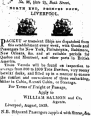
^ N 36 , { late 2 ) , Bath Street ,, KORTH BUD , PBINCBS DOCK , : ' LIVERPOOL . T ) ACKET « r tranhient Ship ' s are dispatched from X this establishment every week , with Qrood 8 : ftnd Pessengera for New York , Philadelphia , Baltimore . New Orleans , &o . and at suitable periods for Quebec and Montreal , aud other ports in British America . - These Vessel * will be found oa inspection to average from 500 to 1000 T 0 D 3 Burthen , very roomy betwixt' docks , and fitted up in a manner to ensure the comfort and convenience of those embarking , either in Cahin , Second Cabin , or Steerage . For Terms of Freight or Passage , Apply to WILLIAM . SALMON and Co . 3 Agtnta . Liverpool , August , 1839 . N . B . Skip 3 and Pasasager * 3 upplied with Stores . &c
Untitled Article
*» 9 th » t theiJttC *» i « n ptMfii tio % » gistratei ' * ffi «> tbey gKP » ed . The first kagu ^ e I hewd arDonill use »*« ' caBing the Government & bloodthirsty «» t ~© f \ Qu « a for prosecuting Stephe n * . H » iw said I .. advise you all , both faaeo , women , and Ajldren , t ? r arm ; and to do u they are doing in other puts of the country . He aaid , I hare bsen to different parts , of the . ^ pnntry , lo enlighten the Bj eopk , as I hafi ¦^ n . Mjijj in this part . I have been at Sbeeroes «* jC ^ &i& 2 CiB , and other places . The London ChartUt * coald *«* Uv take possession of the To »« r or London , » ith iu ' 2 W , 00 » stand of amw ; that fifty determined men could arm all London ; that there were plenty of gunsnithj aaops , where -we could get a qoaafitt of arm * by a man ja » t kicking : his foot through the door ; that the Loadan Chaitwta weuld be ready at *¦» th » t theiftOCftteien p * J * e& thfrlttagistratei' iSS ^ . fSft ^ T ^ li ^* : . ^ ,
three dayg * notice to meet the Chardsa in tte country . The meeting then BUoutedtte people crjinr out "We are ready , " ud one fired » pmel . HB gaid , " They dare not try Stephen * , for Stephens would try them . " -He then TOTued the people not to go by a few together—if tney thd . tha wldisrs -would fire ' Tipcn them ; bat to foin a large body together , and th ? n the soldiers wonld not ftre man them . He giid that five out-of ¦ even of -both officers in the army and navy were for taem ; ant tnatthB . goldier * were getting tip petitions in fayoorbf tie Charter . - Col . Sibthorps wanted to know what they wanted with pikes ; wa-will let him know-5 rl » t we -want them for if ih » T r »' n « M th «»
Chsr&sr , He said S 3 gtcnt Jrearted farmers' son * , wiiibill hock * would do a deal of execution in a good tstnse like this ; and one man with & good bill hook ¦ woald dp&g mxch execution as a hundred scamps in red jacket * hirfd for l * L a-d » y . He also talked bout mortar claps and other combustibles . His observations were rewired with' cheers -and a-ionu , great noiss and excitement prevailed . It was sneh a aeetang as ma calculated to rxciti terror and alarm in the . minds of the inhabitant * . Remvined with them till th » y dispersed , -which waj a lew minute * after eight o ' clock . Tiero was a light uiside the building : and ths ; popo . laee were in the dark . I beliexa ether jpaakcre addressed tie sieeong .
Mr . M'Douall defended himself ; and Mr . CoT-nxsHAii appeared fer Bradley ,. Cross-examined by Mr . M'Dovall—The first tiae I saw the precession was half-past seven , and I joined , them soonafurto waich them . Didiiot walk in precession , only followed , did not link arm * . There was Wands of mtmic and banners , with " terrible" word * upon them . Ttere were about 1 . 500 lefefirsr , they marched in regular order , and , was Joined by others before they returned . Mr . Jektis—VTith a secosd band of music ? The Judge—And-with a . double number of per-• ofis , I guppose . Gateley—Y « , civ Lord .
Lross- » xascicaUoa continued—I am constable of Hyde ; aad hare been a constable all my life . Did not recei ve order * to attend the meeting " ; nor had I any promises or reward held out tome : but thought it my duty 10 atteni the meeting . I was in the inidrlle of t&B meeting , about rwelvo yards from you ; another constable was with me ; did not take any notes . Mad « notes the next morning ; * laid them before the magistrates the game morning ; and was called upon to prove them the Friday following . Did not communicate with any person previously to that . Did not read all the banners . The procession tkat returned would b ? about 3 , © W ; ant they groaned opposite the Magistratejuoffice . 1 tlink the Magistrates were not in the office . You did not state how
ikejm-asi provide themselves with guns , pistol * , pikes , and sabre * . You talked about the Chartists of London ; and said you had been in all part * of the country . You taid that the people must meet the aoldiers not in a few but in numbers , and then they would not fire npon them . Yon at the same time told them they had nothing to fear from tha military . Noted it down from memory . [ Here Mr . M'Douall in order to tert tie memory oi the witness read a short passage from a book , ' and then asked th « witness what he had been reading . ] Could not repeat the substance of the passage just read . Your speech lasted an hour or better ; and 1 ocly recollected some parts of it . Can ' t recollect what you have now read .
Mr . M'Douai . 1—Then I shall not ask you any more questions . - Isaac Bradshaw was then called and » aie !—I am a special constable at Ily . Se . Recollect Mutdav evening the -B ~< 1 April , " that a numb ? r of per-oa > betweea l , o # Q and 1 . 500 collected near the Vi orking Men ' s InsrbstioE . Tbsy formed into a prcce < tioc , with mc-dc , aid carrying Eogj bearing inscriptions of UnmraJ Saffrage , Vote by Billot , Equal Ili | hu , acd £ a _ ' jal L 3 ir « , and Xo ' Property Qaalincation . Upon oae carried by a eirl 12 yearn of age was written Hyde Femaie Radical Ayscciatioa . Tuey wectfrom lour or live abressc down Hvde , through Flowery Field , towards Newton . I observed when theT returned to the number of 3 . 000 w-uh another
band of mesic that onpa&riag the Magis '^ a ' . ei-ofjice uiey r .-p « Rtedly groaned . I followed them to the W orking Men ' g Institution in company with the tut witness . Bridley wa-s stauding * t the vindov . He adn « edthem . to be quiet , a = d said Mr . M'Djcall woaldnext address them . . Mr . H'Douall then . ca . tae fbrward to the -winioar and was received with load aad tremendous clssering . Bradlev being jnst behind hira . The sateuace of -whatil'Do-ail * iid waa esliiaf ih ? goveriiin-nt a bloody Wlug Governxseiit : or pro « ecu : iBg Slepheu * . H ^ * iid , Thej dare not try Stephens , but he will try them . They have got out oi the frying pan and will next get into the fife . " He said he had been to Ltndon , Chatham , and Sheers ess , to agitate for the Peopls ' e
Charter ; and he had found out that the people need not fear neither ths army or the cavy ^ for they would Dot fire upon them , five out of every seven of both efficere and znea , being ready to go hand in hand with them . He advised them ail to get armed . Those who coald not purchase a gun , pisto ! , or a pike , must get lucifer matches , which were very cheap . He said ths Loadon Chartists were ready to meet taem at three days ' notice . The people then cried out" we are ready , " and some one fired a pistol . Ha said th » re was no more crime in breaking into a gun « milh . 's shop , tiaa in entering a cotton factory " ; and 30 determined men could hava any < jnast 3 . tr of arms by kicking their foot through a guiu'mnh's doer . He s&id that the town of London -with its 2 C 0 or 200 . 090 . 1 forget which , could easily be taken possession of . Ho paid he would be with them at the great day of * trEgg ' . e ; and woald fight with them to the last . Greet cheerine here took
place . He « aid that fifty farmers' boes ¦ with bill hoots , -wosld do a de » l of of execution iu & good cause like theirs . \ Vh ? n M ^ Douall withdrew , he was repeatedly cheered . Three pistol shots were fired duricg the-meeting . Bradley af : enrarda spoke shortly , but I could , not hear what h * said . A v ,-: e of thanks was given to 31 'De-nail , asd the Evse-UEg broke up between halfpast ten and ekvea o ' clock . The meeting was calculated to excite alarm in the neighboarhood . Made minutes of the proceedings the next morning . Cross-examined by Mr . CorrixGHiii—Three or icmr gL- ) s-ojsder twelve ye&re of age were carrying ( tags . There were sons- ) hundreds 9 f females and children in the procession . The majority were children . Bradley spoke shortly : did not hear him xay anythiEg about Moral Fores . The factories ¦ loose about half-past seven ; and the hands lo * e no time in getting to tb ? se Meetings ,
Cross-examined by M'Dquall—Was a watchman tat Stalybridge : left about six mouths ago of mj own accord , and came to H jde . Daring the inter-Wal , I -went to z foot-race at Kerial Moor . Never } kia accused of any misdemeaaenr or crime . Have been accused , at Hyde , by gome of year own pnpiLs , of stealing a coat at Keraal Moor . Saw a flag earned by girls . 1 said the miprity at the meeting 1 * sra boys and girLi . Did not state that you said I lat you had been in all parti of the country onlv to
agitate for Stephens . ueard thre « shots fifed : -was ten TsnLj froxa jou . Could not cajtch say more of tir e language than I haTe itated ; in cofit ^ quen ce of the noiss that preT « le 4 . " Did not take » ot * s . Gat-I t wrote the language down for me , and Ttold him wfi . at had passsd . Do not know whether any shops were shut er doorg locked ia conseq ^ uecce of the me « tinz . Toere are private dwellings atar vhe mari « tratei' Office , and aid not look if the j were cio *? d . [ Here M'Donall ' * read a sentence or two , ana asked the witness to lepeax wait had been raad , which he siecHns * to do . ] : M'DotALL—i « ha ! l decline asking any further
gnesnons . ? Re-examined by Mr . Wzlsbt ( for the prosecngonj—M'Do ^ ail ' s trade is agitation ; and [ mean or his pupils , his agitators . Joe Dann is oae of tteia , end a figater , aad one of the biggesi biackfccarcs in Newtoa- > . « Hi * Lordship said the witnes * had condaDtsd kimseli improperly in using such Langasga in Court . ! " Witna-s— But it ' s tree , my Lard . His LoRDSHrp replied tost that might be the case , bat it was not proper to be applied ia the maii-Ber the witness had usod it . William Tiakc-r was called and » aid—I remember Monday eTenin ? , ths 22 nd of April . About nine b ' clock , 1 saw the meeting aid procession at Hydo . JThere were between OBe and two thousand persons ; indsiw tiieai come towards tb * Woiksnf Met s
( usticution . 1 h » ard binds » f music , and 1 t ^ Vaunerj . While thsy passed aleng Cbonton and HibDert ' s Office , the Clerks to the Magistrates , 1 teard them groan loudly . 1 remained some uroe Opposite the oiiice ; and then went to the meeting , led found a large concourse of people , aad a man idiresiing them from the window . Drd net go rerv near . Bar staid very long . Hearl she speak , r « a- * som-jihiag abaat the Tower of LondoE , aud its' 2-- » . OOO sland ' . f arms ; and that li tr stoat izien would easily take posseesis-n of it . Did not stay long , became I did noc feel much at eis ? . 1 was more afraid of the in . « ul ' . g of the peepio than any boddv irjury ; \« 1 csnsidsr the : th 3 meeang -was < Rie cilcul-iied ' to craite alarm . CTO .-:- ; x 5 Jniaed by Mr . Ccttixgha *—Am a inrtfon a : Hvde . but * wa . ^ no ; on this occ-iiei goiss
Untitled Article
KtKS , f eatto the mestng because 1 KlS M ^« «^ wm going to « p « ak . 1 went ir « « S « '" y ^ oil kaown what ay poUtics are ~ thay are opposed to theirs . 1 am not a Tory ; 1 am anything but a Chartist . 1 hare been taunik with SSf « ^ Vu ^ tirf ^ ^ ^ By Mr . M'DooALt ^ -Had attended some ef their meeungi , and am related to some of the mannfacrawnj- am brother-in-law to Mi . Thomas Ashton , » Maptrate at Hyde . Saw nothing lik « riot or auturbwica ; but heard a shout and Bproar as the people paaaed the Magistrates Oflice . Was not per » oaally alarmed , nor any reason to fear insults , otber than to my political leeUng * . Am a Factory oergeon for that district . There wm no obimicv . tfee teoronghfwa in which th « people asstfmb . ea ; sawno- » Lop shut up in conseqneaca ol t&e meetinf . Cannot promise to repeat what you read ; it depends upon the nature of the sabjsct . Decline to repeat thp sentences you have just to tint parifcr . t * , \ - ¦„? tn tKn „ . , . , 7 ^^ M ^^ was ^ r ^^ Tenl
Joseph Mottrans—My father is tin proprietor oi the W&ier Works at Hyde . Saw the procession in question ; and weijt ^ o the place of meeting to hoar M'Donall speaks ia ocmpauv with another young man . M'DouaU ,- who was * talking through ihj wuodow , in speaking of . tha . prosecution of Stephens Oy Goveruaaent , he said he was glad to hear thas their friend . Stephens was gone into Worcester *!) Ir « for tha purpose of recruitirg hi * health ; but ha would be -with th # m in a ^ i-ort time . He- said ths Jtndges ' dare not try Stephens , but that Stephens would try tha Judged ; they had hopped out of the frying-pan into tha fire . He then saidihat the bu « - ness o « the Convention was left in able , wealthy , and willing tand ^ and that th- ^ y were-going aboat the country agitatiujr and DreDirinr tip n » ntiV .
He 8 a \ d that he ha-i btesn at Shepmes * , Chatham , aai otier partg , and tfiat toe people of London were riper ,, and in a more forward state of action , laan the people of Hyda aad th « neighbonrhosd ~ ta » l tfere were 200 , 000 stand of arias in the Tower —that thirty aMe-bodied loen migat gain possesrlou of them , and that many of tae shops in London wer < 5 well gtorsd with fire-arms . He siid he had no doubt if any of their partisans happened to fall while unag a sabre or cut \ a »» , that another would take it up and restore it from whence it came . Thev must remember the three glorious days of July . He recollected nothing else than that he said— " To your tenle , O Israel I" They kept tidng pistols ; but th 9 meeting was orderly , only they kept shouting now and then .
Cross-examined by Mr . Conts « HAH-I went the : e to kflten to * kat »« siid , and how it wa » conducted , for I had an anxiety oa that point I am not at school now . The pioslo were orderly , so far as regards tumult . By Mr . M'Douall—Did not feel any alarm ); the procession was not taauliuous > , that I know of . I am suo you spoke about thirty able-bodied men , 1 did not take notes , but speak from memory . ( Mr . M'Donall here r *» d a long geatence , which he asked witness ta repeat j witness said he could not do it , ) Thu closed the prosecution .
Mr . CoTTiSfjHAM acdreised t '^ e Court for Bradley , and submitted tkat those , in authority , at the head of her Majesty ' s Government , had committed ten time * a greater offence than had been proved against Bradley . Mr . M'Douai . 1 . then entered on hi * defence , which occupied four hours , la appearing before them at the present moment to plead his own cause , he could rvothelj recollecting the old aad trite expression , frequently made nse of , and which might , ptrhap * be applicable to himself , that he who pleaded his own cause had a fool for his client . Ha might certainly have employed counjel , and by so doing have given more dignity and importance to his cause ; bat when he considered the splendid legal talent which would be arrayed against him , and telt that as far as legal talent w » re concerned , that humble ax his own abilities werehe should be
com-, pelled to rely upon them and upon the justice ef his cause , aided by that wise and humaae proriiioa of the law which made it a duty of the Judge on the Bench to act as counsel , sot for the prose « ntioa , but for the prflfeer , in the justice of the laws of this country he placed his coafidance ; to the authority and decision * of the Judges who had prerided on tha judgmant- « eat ; aad to the well knoffn and established impartiality of British Juries ; to thes * . and to thess alone , he trusted for the success of hij cause and for hi . * hoaoorable dismissal from that bar . 1 ; wis needle « , he hoped , to a ? k the Jtiry to lay aside any pnjidicethat m ; gi . t have preoccupied their rain ^ , but he did entreat them to ca- * t aside all prejudice , which even uncoiucioa * ly arose in the minds of many Irom the ex . ra ; n } inarv
aiarm and general agitation which prevailed in this couctry , ani iu that district at the present moment . He cid . not stand before them t 3 deny any ore ¦ principle -which he ka . d advocated , but he did protest a » ain » t the manner in which the A ttoroey-Cieueral had alluded to meedngi , circumstance and event * , which had no connexion with the case the Jury had to try , meeting * thathad fonrerly takenplac * , anivfhich ths Attorney-General had no right lo allnde to , becaH . « e he did not , and could not , giva them in evidence . He prou-s ' ei agstinst the uafairness of impating to him moUve ^ s &' tt . e Horst description , and laxgaajje , the i > . uocity of which ihe Learrei Gpntlcman said he had no ' t language to describe . What anguage h * d bet-n proved to the Jnry which could
justify such an epitnet ? Wha : conduct that could justiiy the imputation of such motives ? . He then proceeded to defend the grounds on which he had supported th # pre ^ tot agiuitio a . Ho had not entered on it from any yisioaary notion , derived from more theoratical priacipies ; b--t he had founded the doctrines which , he hid advocated upon the Constitution and staiute-boak of Engknd , and upon the ancient and most authentic records connected with that Constitution . Ho then proceeded to quote a conriitraUe number of authorities in support of those views . Fnm Tacitus and Cssar , to prove that the British Uibes were . s thd habit of meeting in bodies in council ; that the same plan was tallowed by the Saxon « , and faat all thair law * were passed by edicts of geoera ] assemblies of tie wholts body of
the people , and referred , in proof of thin , to a decree of Sigeric , thus headed—• ' This is the decree of Sigsric , in the Court held bsfore King Etn ^ lred , tbo Archbishop of York , tie Bishop , Abbot .- - , and Senators , tha cni ^ fs , and people of tha whole country , " and then proceeded to enumerate various other Charters beaded in a similar manner . It was Al ' red the Great who introduced the principle of representatioa , in consequence of finding the assemblage of the whole people too cumkroos and inconvsnient . Thus it went on till the Norman dynasty became supreme in England , and » oon they respected and adopted the ancient Saxon customs . By the 4 ; h Eiwardlll . c . 15 , it was enacted that Parliament saould be held once or oftenerin every year , if need be . Thus the principal of Annual Parliabv
ment * waj » acctio&fid by ^ tatnte as well as custom . Nor was there fey the ancient laws audConstitnrion any property liaait of suifrage until the reign of Henry VI ., and what was the reason alleged for passing that Act ? Not that any inconvenience had actually arisen , bu : because by reason of men of smaller substance and no value voting at elections rioui might arise and be ! Annual Parliaments were held up to an i in the reign of Hemy VI 11 ., and it was well known that the attempt to interfere with the duration of Parliament had material influence in bringing Charles to the block . It was a remarkable feature in Enf lish history that it was not to EDglish but to foreign Monarch * that we were indebted for those invasions of the English Constitution which formed the subject of such
gpneral complaint at the present moment . William 111 ., a stringer , abrogated Annual Parliaments and introduced-Triennial Parliament * , and Geo .-ge j another stranger , pssssd the Septennial Act . T 5 jury weuld remember probably the celebrated protest of the Peer < $ on that occasion * and the reason they alleged , viz . —" B ^ cwise they conceived that frequent and ne jv . Parliament * were required by ihe fundamental Constitution of the Kingdom , and the practice thereof Icr many ages . " It was , therefore , lor nothing n ; w that tae CaartisU contended ; all that they ask was lbs restoration of those ancient laws and customs which were fundamental to toe Constitution , and which the necessity of the
present . times demanded should be restored . All that the Chartists claimed was the integrity and the reality of thai Constitution which hid grown with our growth , and strengthened with oar strength , which had been the boast of this-land , aad the envy of surrounding natio » s . . One cf the Tooit important elements oi that Constitution was tha riglit to perfect freedom oi discUj ^ on , and it appeared to him a moastroui violation of the Constitution to prosecute persons attending such meetings , » nd to treat them as tumultuous andualawful . Was it unlawful to call or to attend meeting * for the purpose of petitioning Parliament , to rcturB to tho * e ancient laws and institutions under which
the grandeur and greatness of this country had b : en ^? vebped and matured ? There could be no greater mistake than to snpposs that the Chartists aud thi' people generally were reckless advocates of chaiige . lc was contrary to the very nature of raaa to snpp ^« e this ; ! or national habifs , customs , and ' If w . i were the things to which the majority » f mankind were especially attached . It -was froca tte violation of th » se ancifnt laws and customs , which he sincerely believed were framed in the spir . t of the profotmdo't wi « doffi , that distress pervaded oar laad , aad agitation stalked in its train . Another of those erroneous notions regarding Cnarti « m which had been expensively a ^ id au : l * orifciiiveiy propagated , and -which iiad t-xciled a : oost tiEJUit " preju-i-M ajainit theaa , n-as ta » t it ^ wa * ttt-ir obiect and intention to appropriate and civic ? D g-. a ^ ry " . It was not to bs woaifred at that any
arw pJati . al s : c 3 ariain ^ in the state , sh- ; u ! d m-rt with ob ' .-Jiuy which they did not deser / e . _ 'liie ^ arlT Chrisiiias tiem -elves -ffere a proof of tuie , aiKi -ore s . cca < ed of cr . mes and mzt . ves of a most v " -ci-r" » cia-racter . To say thai : hd CXiitiits advo-
Untitled Article
cated a dinsion of property was a most atrocious libel npon them . Let them take the Charter with its nra points : let them read them from beginning to end , and they would not find theslghtest groand for such a ciarg * . The only division of proparty which the Chartists aimed at was a division of political property , an equal participation with others in political rights and pr ivilege * , and by which no one would be robbed or injured . He coald , g ay , not enly for himself , but for . all with whom he had aasocuted in thu caare , that he never , heard , either in public or private , tlw slightest whisper of ouch a proposal . Wbat ratioaal man coala for a single mstant entertain snch an idea ? For wer * property eqanlly divided one week the next would find it ^^^^^^ T ^ SS ? TSSTiS l ^^ Xtt £ &Z ?
merged in tbo hand * of the » trong , th « designing , and the industrious , by wham it would bs wreut * d from the weak , tho foolish , and the idlft . ; Another atrociota libel on the professors ol Chartism was the attributing to them the adTOcacy o ! the > , . dagger aad tks torch . la * ll times tae patriotic * tho « e who fought , the improvement of the institutions of their country , had to encounter unmerited abuse . The great Washington himself had nc ? t escaped , and , unfortunately for the Chartists—unfortunately for those who , ontof pure love of-. country , ' advocated ' the regeneration of our ancient CpHititution , there were a large number of bad and vicioBs men , to whom it migat be exceeding ; convenient to assams . tha nxEwk of Ckartiam , bat whoie viced " iind crimes exiswa
'yaica pnor to and independent of Cbju > tism , it wa » me » X unfair » charge themwich . Tbiw , in London , it was said there was a predatory populatim . of 10 « , Qt « l , perg 3 n 8 or at least , that 100 , 000 persons . rose every morning , in London , without knowing where to get a breakfast . " Were . the crimes of all the Kwle-s * of society to bn ih ^ rgeO , upon the Chartiits ? No ; thoqgh the five pomts O ! the Charter wer » insisted upon , And in 4 * 'id npon mainly , because of the misery iu which the poorer classes were ufr present plunged—though he felt deeply far thos 3 miseries , he could still ? fee ) for those who had been born ia affluence and norlered in luxury , and » houl 4 the torch of the incendiary ever , unhappily , be applied t their
dwellings , none would be more deserving of commiseration than those who should thus be , rendered homeless . The Chartists , tke true Chartists , those who entered upon or joined the present agitation on pure , aud philosophic , and constitutional motives , were just a * anxvpns to put dpwn the me of the dagger and torch , ai « the rich and the powerful themselves He then entered into a description of ; he mwtries and sufferings of the working ciajse . s , to which h » - attributed the agitation commenced by them for the incraasd of their political power . It had been the early habit of his lite to observe cltwely tae condition of the people , find the operation of the laws , and the misery which ne had s <; tn prevail around him , had iaduwd him closel
y to examine into and investigate tha causes . Of law years , h <* regretted to say , there had taken pace a striking and lamentable chance ia . the condition of the working clasjee of this empire . He coald well ( though young ) remember the time when there existed in his native country a highminded , educated , noble , and industrious race of men , the baud-loom weavers . The mea were intel ^ g « at and prosperous , their wives well clothed and happy , their hou **« » miling , and their heartUstone * glad . He could remember when the soag . of joy mingled witltftke rattle . of their looms , whd « tne people worked with happiness an 4 pleasure inetcad of ag no » with cursea muttering oa thejr lips agamst those laws by which they were not
protected . > r nere were now those men ? The backwoods of America , the watch-fire of the bjUw , the debtor 8 gaol , and the culprit's o * ll , had completed the work of misery ; their cattagea were rootldiB ; their hearth-stoueu cold , and in the beantiful Ianpage of Scriutare , the place that onoo kn « w them , knows them : no laager . When he came to this country he beheld tha name decline of a once noble race . ^ The handkrafUmen was passing awav , and carrying his talent and hi 9 ingenuity to other Jand ? , whiiat the mighty gen ^ s . of . machinery was calling factone * into existence in ev « ry direction . He once enfertamed the hope that machinery with its vast powers , was doomed to mitigite the toil of man : to enable him with lesi expenditure of labour to Jain
more of the comforts of lifa , and to improve the happiness of our social condition . In consequence of tie stimulus given to trade machinery was invented , and i : had produced the effects to which he bad just alluded . Ho had examined miuately into the coudmon of the factory Ubourew , holding , on tae only rational conclusion any one could come to , that , by the introduction of machinery manual labour would be lessened , but he fouad on the other baud , that iasu-ai of the eight hours' labour baing resiuoed to four by the applicati on of machinery , which would produce m much quick , r aud cheaper , that it hfid doubl d th 3 manual labour and increased it to sixteen hours . Ia his examination he wa * not dispo-ed to take the , complain * of tho BfODle
them-« lv « w or to believe all they stated , but he made , it his business to examise and inquire from feous * to hou «> , and from door to door , and ascertain what the real canditian of the people was , and from the situation he occupied as a , medical man , he was the better enabled U judge not enly of tb- > ir » ocial but their tomaetjc condltion . Of so much importance were hi * iu-Vv-tftijcaiious and res-ftrchen di * emed that oce of tue Secretaries of State of the present Government Lad written to him for a copy , and it also founi a place on the books of the British Association hold-at Newcastle-on-Tyae , which way , perhaps , the best evidence hecoaU giveot its correctness and truth . He had examined iha house * , which , ha would ob »
St-ne , wern built by the- factory master * for the workmen , for the purpose of realizing 20 per cent , by the speculation . Instead of the boaxted comfort aad convenience of tho factory labourers , about which si much had be-n said , he lound that ia lor familie ? , consisting 777 individuals , there wore only 137 bedrooms , or one for each family . In twenty-four families hehad found as * many m five sleeping in one bed-room ; in twenty-four families there were as many as geven persons sleeping in one bed-room ; in five families thsru were nine in one bud-room ; in three families tktro were eleves in one bed-room ; in two familu s there were twelve , and in one familv there were thirteen sleeping in one bed-room . " There were only 172 families out of 309 wko had two
bei-rooms . In eleven of these families there wera ten persons iu two bed-roims ; in four families thero wtre twelre ; in savju fami . ie * thens were 14 , and so oa . He hivd then inquired upon tae mibirct of wages , and he had ttkea tLe data laid down by the best and leading manufacturer * of Lancashire , namely tea shiibngs per head per week ; but ou examination hehad found that on the average of a number of families the wages ranged only from 52 * . Cd . to 5 s . 6 d . per head por wes ? k . At the date of nu investigation * ( August 1838 ; there wax a law jn existence by whicti the factory masters were tornpitied to find teachers for the persona employei under them , and oh the oubject ol education the result wa * tixat out of 303 f « nilies in eleven families
consisting of fifty p 9 r » ons , there was not one person able to read , iu twenty-six families there wad only one in each family able to read—in fifty-four families thera were only t » o in each , and hi thirty-two families only were there three persons in each able to read . In eighly-six families , consisting of 525 per « m : < , there was not one able to write . In sixtytwo families there were two abl * to write in each ; iu twenty-niue families there were three ia each . He would now direct them to another point for the purpose of showing the connection between his lormer persecutors and the present prosecution . The circumstance occurred at the village where he had been arrested , and where the meeting had been held , to ans-s / ef which he now appeared at their bar
He had stated already that he had gone iato an ex ' minaticn of the factory system , in consequence of a challenge which had been thrown out that ths mill of Mr . Thomas Ashton , at Hyde , was iheb ? st in Lagland , and of which a report had been drawn cp ana lubaiitted to . the British Association , by \| r . Falkin . That report j ? as -calcuUted . to spread » u erroneous . notion ¦ , throughout the world concerning the boasted comfort ot tho factory people cf England , beciuso at the meeting ot that association taamoea dhtiuguishcid men from America , France , Germaay , icaly , Switzerland , and almost all tie important towns and districts in Europe and Amer ica , were present . And in order to show the connection between the present prosecution and that
investigation which he hai made into the factory system , he would remind the jury that the principal witness against him , was the brother-in-law of Mr . Thomas Ashton of Hyde . In the first house he bad visited he had lound six males and threa feisaies—two out of the nine were worke ;* , and received 17 s . per week , out of which thev paid Mr , Thomas Ashton 5 s . o \ d . for coals , jent , and water , not forgetting 21 . a week for the Sunday School , leav ' . ng a sum of 11 s . 7 i . for nine persons to live on during the week . In another hous , e there » ere two females , one of whom was a worker , who received IDs . a fortnight . Oat of that sum she paid 10 s . Id . psr fortnight to Mr . Thomas A « liton , waich iclt 8 s . lid . to live upon and support another female for a fortnight . He might quote to them innumerable instances of this of the same description , but ha had collected together in the report he had prepared * omo facts of the foregoing descriptioato
, aauw the worl < f | he condition of the worker * in what wivs boasted to be the best aad most comfortable oi the factory districts in Lancashire ^—and in fact throughout the whole of his investigation there was oily cme woman whoss hatband received 25 s . a a week , * h ;> * aid that ter condition was moderately comfortable . In consequence of that investigation ha had been made the subject of tbe present prosecution ; and te was now accused by the Attorney-Cieneral of having only moiK-y in viex , and refusing to work without beini ? p&'d . Seeing no means of one individual contending against a class cf mea pj ^ essing cot oniy combination and numbers , bat capital , and perceiving that som ^ of the nobles : and most philanthropic , and ricli ^ t of men had toiler into ptnvrtr of tbj ; . vor . < : de-cripd ( m by a . shnilai course of eiideavonriug to procure jusiicj lor th
Untitled Article
poor and tho induatrious cla «« e « , he began to despair ? J *}* & . " ""• t » improTe their coadifion by any individual efforts of his own .- Believing that , and entertaining still the hope of bettering their condition , he saw no probability of eSFecting the object without , at the itma time , giving the people ths Hj « ans of eombattiog the powerful epposition raised agaiast aay man who would dare to come for war * and advocate the righu of the people . He had at length become convinced that thera was bo means of iwproting their conditiaa . witEout , ak the name time > . Riving them , the palUicatpowiw by which to effect it j and , pve » if ttie effect might lw calculated to prodaca nome agitation and nome evil to society , ¦ till th « r , e waa . innnitely greater evil in leaving these ^ Z ^^}^^^ T ^! m ^^
men exposed to the tyrannical inn Hence nnder which they were B « fforin | at the pKient moment . It wew impossible , it the reports made by the masters of tb » « ouditioft or' their workmen were true , that the statement of the Attoraey- General cauld . b <) correct , when he had accused hun ( Mr . M'Douallj of exciting andrauing up the wortmon againMf their masters . Na man , whatever might . beliia eloquence or popularity ^ covild . rous * ana , excite ' the ' people - to complain of the tyranny of their Aslai ' tew / and to put lorth the many grievances under which they laboured , unless gome « f these grievances really Muted . If the peoplo were really cbiafortablei no pojwer on tank could indue * the people to become agiUcors , aud subject them to tho absurd charge of to the and
a ^ mptmg snbveit lawa institationi of the country , when ., their puly object was to risttt changes iu th ^ ir social condition , ' and ; obtain ' . the re ^ toratioaofjjhosa political rights which theur ancestors had enjoyjed ., If . the people weracqmibrtable , there would be ^ no agitation . ; but . ' if real xnissry and distress « xwted , then agitation waa merely an effect , aud' the' misery they suffered tha caiise of that agitation . The Attorney-Genet al' hai , therefore , eati ' rely mistaken the matter , and h ' ad . imput . 'd ' to the etfect what he oagit in justice only to have ascribed to the cause . VV patever obloijiy or misrepresontatiori might attach to bi « acli'jua or procaodings , he would never relinquish bin proui position- of advocating tho establishment
of tauB © principles which wera toijnded on the ancient statutes , aad customs , and rights » f their forafat | aier () , forauug the brigktest pag * ia ftw history of England , and which were aover more necessary thau at the present time , in consequence oi the-mi * seijeB which the people endured—he would h (> ver relinquish that great pnrpose for any viuinary scheme of a division of property , or the atrocious system of the dagger and the torch . What he had dem aided w » 8 to establish those principles which would extend to the labourer * of that couatrythe same political powers which the Reform Bill had conferred upon the middle elates . He demanded that as a right , which they ought to possess from tkeir position , as producer * of the wealth of that country , d be
an a * ^ ng Bupfirior ,, and mqre important , as a clats , than thorie in whose hands only that power was at present vested , and who were niarely the di « - tnbutort 6 f the wealth and Buscouance which the mduatnbus classes produced and created . He demanded ft in right of their iaieUigenca ; for what class of men , hw would ask , possessed a greater right to it on the ground of intelligence aad mental capacity than tho mechanist , who by bis ingenuity could lonn those lenses by which distant spheres were brought apparently closer to the ' uihttbitants of the earth , by which they were enabled to examiae into tho beauty and harmony , of their oon » trucuon , and thus teach them to worship the Creator in the contemplation of tbe wonders and magnitude of hU works ? What men wero better
entitled to those right than the labourers toho toiled ia tieir fields , and made tha valleys and the hill sides of the country greoa arid in the proper aeison wavidg with luxuriant crops of grain and teeming with fertility and abundance ? From that clasi * ot men they derived all by which life was sustained ; aud for « i ( erything , from , conaforts the meanest to luxury the highest , they were dependant upon that vast mechanical arm , the labouring population . Without the labouru of that class all their ellorts in commercial enterprise and mechanical improvement , and social advancem « at were as nothing , an i , as good archit « ct 8 , they should certatnly bu anxiou * to see the basis of the noble edifice or which they were bo proud , established uiiOu a foundation oi
security , and permanence , and happiness . He sougkt for no wild , ' viniouary , or theoretical improvements . He only wished to aee the ancient in-Ktuutiwns and tue rtcogniaed rights of the people oi that nation restored and acted upon . He merely sought for want at tie pnwwitmoment ejtiated iu its most expended seniie , in a country wtioh was likely to be one of the greatest iwnong th * nations of tae earth—the America-i Republic . ' At tho samj ho would obsart * that ev » n by the entitbhshuient of the-M ! principles * he did tiui eKj »« ct taat everything theoretically faeau ' aful or politically deceptive would be gained . From all tke evidence * ha had yet seen , ho helieved that idea te be il . muv . * . It' they consulu-d the most ancient record * nuch
, would be found to be practically thfi result . Even und » r Musef , toe chosen people of God occasionall y eadured waut » and famine und < to « olation stalk ' ea Bcraurt the laud ; and even in that place , whsro the peculiar care and concern of ( iad w « j < manilbtitiMl in iheir'behal )' , and wkor « th « y peacefully tended thfcir locks ' , the smoke of buttle rolled throngu taese beautnul valleys , aud the choseii of the people , tte heads of the uouse ot' Israel , were ciapuHed to buckle on their armour , to gallop through tli « waving fields of core , Riid charge through their affrighted flocks' . He would how call the attention of the Jnry to the meeting at Hyde , and from what had fallen from tha AUorney-General it would appear that he was not ciapo «*; d
to dispute the right ot the people ., *© medt , aud pcti-Uou . To KStabuBu that poin , he would take the Uberly of reading au ixtract from a speech , of th » L . earuid Gentleman , aud ha would observe that the last time ho h * d had the pleasure of seeing him vrna in the midst of " a riotocs and tumultuous assembly , ' iu the High-street of Edinburgh . ( A lau ^ h . ) ' 1 he Learned Gentleman had taken tho liberty of impnting to him the crira * of being in tho mi
tae inob auion ^ whom was when ( Mr . Al'D . ) hae sujpn him borne on the summit of the . sijoulderij of two stout porters , who appeared to groan under the weight of their legal burden—( laughter , in whica tho Learned Judge joined)—and when the Learned Gentleman wore a hat of a most psculiar shape , his own having been transferred to bOhi ^' oi his friends arouad him , under circumstances tttat ai # ht lead one to consider it a fair exchange . It he ( Mr . M'Douall ) had judged from toe compahy he had then seen him jn ha skuuld certainly have » u . pj ) osed ho had assembled "iua riotous and tumultnous manner with other evil-dispjsed persons . "
A laugh . ) He might , if so incliued , eveu aceds ^ the Learned Gentleman , of boiug a Member of the Whig G overnment , whose conduct andpracticenhad been so violeatly denounced , and whose proctjddiugs and language had been a pubjeci or' genejal vxscration . He might remind tha Laarned G ^ ntlemaa that he had thought proper to enter Dudley by torchlight , and had advocated and deleadal the riots that took place tbere maintaining the right ot the people to usj torches ; and such was the CQUnexijnia the minds of Attorney- Generals between meetings ol the people and torches that in his opening adiireit to-day— "• . ' ;
Mr , Hill—For God ' s » ake say which Attorney-General you . mean . ( A laugh . ) . ' * Mr . M'Douau . —Such were the visions " of ( Orcihlights that flitted through In * mind that , until he'a ' ad exainiaed his brief , he could not divast himswlt' the idea that the meeting which he ( j \ l r . M'Douall ) attended was a torch-ligkt meeting . He would trike the liberty-of reading for them , a passage Irom Ihe speech of Mr ., nqw , Sir John , Campbell , iu defending Air . Samue . 1 Cook , iu , 18 ^ 7 . Hi } taen -reatj" Gentlemen , Englishmen have a . rigat to enwrtain and express tiieir strong and decisive opinioas with respect to all public officers . " Sach was the opinion of her . Majesty ' * Attorney-General , and if ho ( Mr . M'Douall ^ called the Whigs " a base , bloody , aiid brEtal sethe
' , was only doing it on his high au . thenty , for which he might have been taughti to entertain renpect . Therefore , if he had madeut-j oi strong language in denouncing the conduct of pablic men—il he , as tia individual , ignorant of th » ietw . had e * pres « ed " strong aad decisive opinions ^ ' on the conduct of members of tae present Gavemment , he , was only doipg bo on . ta 8 auChority of Sir John Campbell , the Attorney-General , That was kl a right , " according to bim > " which they had inherited from their ancestors , bonght , amongst other thiags , a ^ the price of tneir blocid , and ha ho ' ped they would preserve it pure , aud transmit it to ' posterity unbroken . " His opinione had beetf aWfottified by another authority , higher , if possible , than the Attorney-General— he meant Lord John Russell , who in a speech in October last , said— " Some , perhaps * might think that tdeso meetings ( alluding . to tfce Chartists ) ( should ba put dowu ; but suck -was not
his _ opinion , nor vhat of tho Government witb whica he acted . He thought the people had a right to free discussion—it was free discussion that ciicited truth . " He ( Mr . M'D . ) agreed witLi his Lotdship in that position . " If tho p ^ -aplo had grievaaces they had a nght to declare tuem , but if thay had no grievances commoa sense would spaediiy come to tuii rescue , and pat an end to them . " Lord Joan Russell did not state that if these grievances tiid exist , and that , consequently , common S 2 IlSe did not put thorn down , ' that . he . woold' havo recourse to violent meftsures , that he would proc Aid by iadictmeift ' , and proit > cutioag , i ' .-. id imprisonments , t ) put do > vn these legal and eonsututioual meetings of thy people . In another speech , tho Noble L '; rd had observed , that "it was tha ' nature of the pecpb to push obedience- almost to a fault . " It any ther authority v / ai necessary , ho should foel ui > p-.-sed to refir to one s ; i . l higher as to the right of tie prople to aie ? t , fiud that ; authority was the
Untitled Article
Learned Jnige now npon the Beach . Mr . ( uow Baron ) Gurney , who was counsel on the trial of Daniel James Catoa , had stated that 4 k the first political truth engrain oa the » oul of man waa , that all power ft j wed' from tho people , and as a trtbt for their benefit , and when that trust was abused , resistance was not only a right , bnt a doty " H « then proceeded to contend that iha assembly at Hyde was not a riotou ? or tumultuous one . He did notrdeny having been present at it , but he did deny that itiru an illegal meeting , or . one calculated to excite terror and alarm ; it was not a tprch-lwhl " meeting , nor did it produce any breach of . the peace . Now , certainly , Lord John Russ 9 ll must have ^ a BingulaTly conttitatod mind to evince , sa much terror and alarm at a small meeting , at an obscure place , like Hyd * , and yet have overlooked the great Kersal Moor toeeting of 300 , 000 per-^ W « . W »« to . tt Mr . rnow
sons , wny did he not instruct the Attorney-General to pros « cute Mr . Fiolden , who presided , or Mr . Attwood , who spoie at that meeting ? Why did ho tow descend from Olympus to a-molehill , and passing- over the rich and the power . ml , hnng the whole powers-ef- the Government to crush himself , whom the indictment denominated a poor ¦« labourer , " and hia co-defesdant a '» 'ill povrer dogger ? 11 Was « aid that tho pitenng . had bands of mmicand banner ^ 'Why , bad riot large todies of men ' during th <* last two days passed by that v « ry Court with music and banners ; and had anyone called that a tumaltuon-i or unlawful meeting ? - And what ' weni the inscriptions on tiao Bannert at- Hyde ? " Equal Laws" and " Equal Right * , who did not contend for , nnd ' No property qualihcation "—was it not at -present the 5 aW " ot the lan ^ in Scotland I The evidence proved that aiarm
no wag excited J > y or at the meeting , and it waa only said that one pistol was tired ; surely that was cot very alarming ,, nor could jit constituted au act so very criminal as to involve all who attended the meeting , and who . dii not sanction its ; b ? i » g tired , jn tho consequences of criminality . How weak wai the ' evidence , of Beditieus language . 1 'he witnesses made » o Kotes . One who swore to his words could not read . They heard onl y parts of sentences . The orni « aon or alter * tion
How abiurd it wan to imagine that he should hare advued a aiseting tonsisting priHcip » nv of boyg and girls ' , as ih * wit" iwmm bad daacribed it , to arm ; hotr abiurJ to say tb . it ha kai advised the meeting to attack the uoldier * with gtttw , putola , aad pikei , when , in tho very game brtata the witnesw * raid he told them five uut of «» ven of the officer * of tbo annjr and navy were in ( heir favour , and that the soldiers were signing petitions in fmrour ot' vhe Chartists . On aach evldeuea m thm he put it to the Jury , who were bound to tac \ ie on the evidence and that alone , how could they bnt aeqnit him ? Bat iUyiM 8 » ii he told the people they had aright to havo arms . Surely that was not teclitioui , it wa » a well known and recofmisea WMtitntioiwl right , nanctioned by the : BUI of Righ t * , by Sir JoUaKortisqae , by Blackgtone , and ty . ahostof authoritiea . iheCsnatitution of Kaglaudwaa jealoa&of any other n ^ wer than the people being armed . A gta ' ndiug army was uuoonsututional and though it in realitv existed , it oiio ^/ l
only from year to year , and the Act for saainuixing it jnuut be voted anaually . He then proceeded to contend that tho ChartUU aad dune nothing that the Whi g * h » l not set them the example of , and for wtmh they had been &ppUadcrd . lie referred to several passages in ihe Chronicle aud the limes , ol 18 'Jl , Ue extract froiu tke first concluding with the words " Union—arms—reform , " and in the last with " Orgaatej and arm . "' Lord John Russell ' s rtcent letter also proved the right » f tho people to arm , and thsreadinesj of the Government t » aisi > t in arming them for party purposes . What laugaaga had been nsed b y any Chartist half so violent or half iu nedidions aa that which had been over and over again , used by the groat and - unprosecntfd ally of Govemmont , Mr . O'Councll ? Did the Jury forget the Reform agitation—the groanings at tbeQue ^ n—the altosions to the fattf of Churlea 1 . —the banners ' with paintings of the Queen vr * aring the breaches , and the black flig meeting at lilinbnrgb , wkere banners of Crape were displayed with death ' s heads and cross
bones pauto «« n thepi ? and all Ura was instigated , sanctioned , and approve J by this very Government which , noiy s « nt down its Attorney-tfeuural to ptouecut * him fOi merely asserting the aseient and recognis « d constitutional rights ol tbe people . My Lord , aad Qendenacn of the Jury , continued . Mr . M-bou « ll , when 1 consider the potition of tbia conntrj- , at Cko present moment—when I weigh in my ewn mind tLe probable termination of the present agitation—than 1 look at tbe upeccats and proceedings of the great bod y of the people in a social and national point of view , there u much in my opinion to be feared and ranch to bo hoped frem the progress ol political opinion at th « present mocaont . Tho under car rents which have been lowing » oem to h » ve , lor soiao tuna past , been separating themselves and running countct to the upper currents on social snd political matttirs , bnt tke gr « at cb . M > g- » wmch axe daily taking place in dur social and cammerci-Alrelation * , . will speedily merg * these two into ono romm « u stream , whoso forc « will ' be iiro * is' . ible . It has been
matter ft ub * e > vation with me that tVw will be broug ht about mainly in conwquejicc « f the Vast hnprdTeiirontJI \* hioh are taking placi » iu » H clu «« es of aocirtty , although « ne would aupposa thatat tho present moment , when in all other things we aro advancing as a great people , tbe Wrongest moisur < M areressrLMl to tosupprcs-t and rtsU : the f'Xteniion of j » o ! iacal privilfginof tke people . If t might allude , f » r instance , to tk « exteasien of railways , which , although available fer urimioliiiK tbe co » iinercu » l inttrcourart and iha diilusion ol kno » vledge and information among the ftfopU-, may be maiii * to aflord fiCiliti . M to a tyrannical Govaiumpnt , whiob , Gwd fortrtd , w » tiheuld BCC f StHblished iu th : » country , or a tyrant monarch , which i trust wu shall never nee in t . ngi » nd , they may be made the means of Cuntrsdkina power iuid sVj . pressiii ^ alff-fforu fer freeJau on thri part of th « piop ! e . When I look at tUe politicjlhorie ) n at thepr ^ - * r-at axiuiect it app 8 ia » dark and louvring , and although I do not imticipato luiyttiiug lika what aUruis tho mind ol tbe
Att' . rnnj-Geueial—althi . tjjU 1 8 i > e uothinic if revolution aud onarc » y ani bioi-d , jtt 1 can gee ap ^ roBching a train of oppressiou in thin land which is calculated to level * lown the fundamental principles of tho Conatiintion , and the few remaining privileges ui thj peog > , in tlie new and arbitrary . deaM > . ( centra tin . Ifoa , copied lroiu lUe deapoiic GoverniBen'S ef Krance , Prussia , and Knssin . 1 a-o the approach ef that tyranny in tLe ineo . 'iiprehKnsibl * abhorrence of th « middle cluHflva toexwitfll any political ii . llaence U tl > e poorer clashes an J I see itn ground work l < uJ dow u m llw pro * ecMUans , impri . sonmentB , and baniahm .-nt of-all tboso who have darod-to advocate tho extDnniou of th « s « urivilegos . The tff'cta o ! that tyranny will only b ,- frit whsait ponrs its fljod aoross this cuuutiy- ^ wjicn , like , a vuat tidu , it rollH iu water * tive . r the lac-.- ot the land , buWerging all our ancittnt institutions Rita when it ri pples on the ihreshholdn , and fliWS over tixe koarthsiunca ot t&e Bpper and middle claBses , and when ths powprwh' . ch might Uavo prevented its aoDroack kh » ll no
longer etisi—then only ys \\\ n b * felt . Then will they regret the divisions which they themselves have emoted by their false and absurd fawg between tbehighrr , the middle , and the w . rking classes— then will they regret the hatred which has be « B engendered by their common eneay between tho two great class ™ of the community in this eouutry—and they will regret it the more , becau&e tUfj will have enKravtn on their h .-aru the fact tbat they themselves hive contributed to amiitiiiute the po « ver of reRUtanca to that pTogTessivo tyranny of a ccutralized Government , which is very last tilacijitf all tho ancient rigbts which their anc «» t « rs enj-yed-they will very muih regret it bocauae they will re . member thetn was a period when ihey might have opposed to this torroat as it rolleJ along a barrier over whic \ it could never kave passed , and when they might . ham said to it '' Thw » : far thou skalt go and i \ o further . " My Lord , and Gentlemen ol the J ury , itappetrs to mo that the cffirts that hkva'b'en maiie to suppress the sgitatian which has been xcited tbrouabont ttia lantl
e , agitation founded on the noblsat principlss ami mo » t pllilhlithropic mollve . —it , -.-pp-jais to mo thi . t ; he Huppressiou of tbat agitation ' will be attended with r < suits of tbe greatest-magnitude and importance to the fuiurfi greatness of the land . It appwirs tame as if the ancient laws of tke country , wbiebbavo be .-n U '\ i down with the greatest ' wisdom and foresight , and calculated and bas » d upon those principles which were most likel y to render them perpotaal , so far as human contrivance could cfl ' ect it—it so ^ ms to me bs if these g ; eat prinoi ples were now to ba dis Mgardcd and laid aside , and our country permitted so sink dotfB into that tomb of oblivion to which so many other mighty nations beforo her have been consigned . My Lord , aha Gentlemen of tho Jury , the experience •; ' all ages has provud that persecution is ihe very worst weapon by which to attempt to efface ( hosa princi ples which ha ^ e bcp . ii lmprensed upon tbe public iuin < i by grievances at length become iHtolerable . It aiuet appear to you , that no persecatio * that
everyetexuW hasbee « able t » eflUce tbe principles which that jjer « ecuti » n has only endeared to the hearts of the people . If you were to gnmiiun all the persecuted spirits of political or religious agiation , this Court , thitt city could not contain them , and they would stand before you a fearful but potent evidence of the great truth , that the eat « bli * hjuent of the princi ples for which they livol and diej Qttd not been in the slighteat degree ' affected by that pers « cution , but that they had been still jnore firmly and securely implanted in tha breasts and affections of the peopl * . My Lord ami Gentleman , I should not- wish to soe , X have iifcvor U « sifKd , to sfje , e . ni I never expect to . a « o , any gTpat pripci p ' ea of freedom gained or cstabluoed in this country by means of the sword . 1 never hipe or wich fo soa any great pelilical or aocial chasges-achii'ved by the ase of this weapon , by revoluiionary vi ^ lvnee , or civil commotien . If we consult the cvidenea ' of history , we shall fisd that in all such cases th » freedom which 1 so highly priz- » , and which I hope lo live to
see gained , j as been Quoted down and overwhelmed beneath a military despotism . My Lord and Gentlemen , tbe war that nasbee . i commenced u » w by persecution and itnprisonmsnt is a w » r against principles , and I Jbeliete I may , add against individi'tls . Yon may imprison the leaders , youatiiy persecute the men who have taken an active paitt in' tne * prLscnt aguaiuu , but you never caa leach thoae de * p ttnft-widespreadVig principles which , have taken reot io tha minda of the people of thi * cnuntry , and which never can be readied by the hand of the tyrant , or ouly through tho enthusiastic and hasty expressions of sirac , or tbe ill judged actions of ethers If these principles be true , they- must exist , if they be .. well grounded , they must flourish , if they aie worthy , c being perpetuated , they will be handed down to the latest uost ' -rity-ror , like trutk , they are in : theaaaWeii eternal , My Lori , it is ot little importaace to me whether I > be im pnsaned , or baniahed , er candeiaued to tha aeaffold—ou tho prUciples in which 1 have commenced I intend to ond my
career . These principles I roverc an 4 respect , and by tkese I am determined to stand or tall ; but , my Lord , you cwinot wndemn me on vain pretext of this most miseraUW indictmeuf . it you condemn m « at a'l , and if in jour judem-at jou cahceivB ltrvht to Iind me guilty , tli ,-n , vpu must condemn uie in th . t cause which ! have endeavouwd by my humble means to eataSiwh and promote—a cause whioh k « s besR townded oi » the principles of justice ninat of « ee (* sity progress ik this country— ± cause which Cannot be reached by persecnt ; on , or whicU ^ it wachad by it will only invigorate thesee'ds that are sonu . hkr ) the thunder-atormsuat dnawtho polluted aimosphcre . My Lord , and Gentlemen of the Jn / y , whilel tk / nk you for the attentio n j « u have bestowed oil me , I bea to » ay that I retirechMtfclly within the gates of a prison : I resire there knowing that 1 am prosreuted and imprisoned icauie have dared to advocate ihe
• I rights % i the pojrman . aud because I have presmuud to a » s « rt , and am now prepared t , » demand , the exteiMWn A these rishta to tbe working cia ^ Boi of this country which thoir ' lurefat ' -iera pfc « efi « Bd . 1 rcf . re , therefore , in the hop- ! and canaciousnass tim thu teinjiorary iniprisoninnnt will at length draw to a close , and tkat tt » s » e period 1 friust Le lib . ; ra : ed ; and being yuung iu jears , I wax high in the expectation that I ^ k * ll vet live to see thosa principles currk-d into cxecuUfln in this country—that 1 Bhali yet liva to * ee them p-rti-ctcl in this | an-J , anc ! poscp , and security , end comfort , ojijoyed by all Us people That shert spaco of human existence mn . it s ? on , so f * r a * we are oncern- < il , draw to a clngs . The period will sol . ii i . ; -: ive uheauli ( hosf now arouni me will bt > Kumbcred wua ti . o things that wcr » , and then ' wiU cuinj tho time wiica
Untitled Article
all of ¦ & » will hare to appear before a tribanal bighfcr Una the present . When that day arrive * , and when our heart * are examiner } , our motive * sifted into , aad all enr hope * aad principles , and prp « peeU are Men , and known and understood , it will then b « seen , and known , ltd o *> dentood who has be « B right and who has been wrong . The Attornet-General ( Hill ) haying re ^ Ked , His Lordship summed up ; and The Jory ^ after a rBiuotf ' s deliberation , prenoaaoed a wrdict of GUILTY wuinst bath prfwmert . y v ¦ > His' Lordship * the followiajf dsy , serit « nce < J Peter \ fc M'Doa&ll to- be imprisoned Eigftf&n Calendon Months , . and Joiin Bradley to Eight Month *; and , at the expir&UoB of that time , to Iind siifficient auretWB—thenuwlvei ! iri £ 6 « 0 , and two otHers in £ 1 * 0 , to keep the peaco . for five-years . ¦ T * . p ^ . . M l ^
Oa Satnrday , Isaac Johnson , Wm . Eccleg , James Wager L ^ ah , and Richard PilUng , were jftdicted for illegally auaembling , and sedition , at Stoc ' kport * oa . the 25 tih July . . ¦ ' They tratersed nnUl '" tS next Assizes , and wera admitted to 'bail respectively , themaalvcsin £ 500 , and threertreties of £ 50 each . George W ^ reham , Igaac Armitago , 89 n ' ., : ; Isaao Amita « e , inn ., Janae 3 Burton , Thomas HWick , John Broadbent , and ; John Wrigut , were i 4 dicted for conspiracy , a ? Stock p ort . These defenclan ^ j also trartsMed , end vere admitted tabail onthfenam © terrn ? as tae last-nrentioned dafendautBl * . ' J ^ IQ' ^ ' Duke , of Ashton , ' and Jokn Liysey , of Manchester , were a 3 ao allowed to traverse on ^ imilar terms , till the next Assizes , on a charge of conspiracy . ;¦ ; Erasmus Armitage , the 6 py , was liberated , no bill hawng been foun , d . againat Mm . ' ,, ¦ This closed thc ' criniinal business of the Aisizss .
Untitled Article
DiaWCHESTEB . - THE CHARTISTS .-I ) ISGRAGEFUi / . CON . DUCT OF THE MAYOR AND WHIG MAGISTRATES . . ' f The o ' . ie-jided conduct * T the niaeistrates 'during tha examination , of the Chattistff ' vv'he have been brought before them , is matter of' common obBerTatioa and Joud eompliiiit . It is an axiom ia law rery gsjjerally kcowa ,. thatj n ^^ witaess is bound ta ( jrimiaate ; uims 3 lf , and it is a first principle in jurigptudence that no civil functionary , has a fight to put any quesuons to a prifooer vrith ^ view ot leading to-hia crimination . The Manchester Whig magistrates throughout their examination of the Char j » t learl ? ra , have exhibited a bearingmost unfavourable » o the pri'Otiefa , if ftot ifl \ Wauon , in some cases , of tfco spirit and intentioce ef'British law . - ' . '•'•
Yesterday , a cs ^ e was heard at the . Borough Court , which fujly bpkra out the preceding re / nark * A min named Wm . Fishurnt waa arraigned qnder the following circumstances : — . 1 v r Inspector Al cock said that early i a the . morning , information was sent to the North Station-honse , that several men had assembled at Mr . Beavers ' s mill , in Jersey-street , for iha parpoae of intimidating and deterring tbe'hands from working .-- He immediately g ent off a party of poliocnjeh , ' 4 nd on
arriving at the spot , the crowd dispersed , and some of them fled io wards , the Oldham-road . fhe prisoner , who was one of the mob , was taken , ' into custody . He then called a workman , wW said chat as he was going to his work that morning , he met the prisoner , who asked him where he was gourg p He replied to the factory . The prisoner saidfoi what teims are you going to . work ? . Ha immediately answered for the sams terms as the o : her men . The prisoner » aid " Oh , you'had better go with me . " Witness replied he could" riot , and
tnen went en . ' ' ' iir . Taylor appeared for the defence . T ) id the prisoner intimidate jou ? ' Wimesd—Ko } lhe did not . Mr . Ta . yi . or—Then he merely asied you what terms yon wero going to work for ? . . Witness—He said if I would keep away , we < hould all have our ri ghts . Mx . Taylor—What do you mean ? Witness—[ suppose proper wage ? . Mr . Taylor - Did you feel at all alarmed . Witness—Not in the leant . He used no threats , and I went to my work . I cannot tell how many peraauB were prtaent . ' . > ¦¦
Another witness said that before he g , o " t to the mill , he . met faur ; men , aad , afterwards , six men , who were - « ralkipgto aad . tiovn . the miii ; iixd lower dt >« n there wai another set of men , ¦ , ' Mr . T-aylob oentended tbat . the law allosred them io gu to tho mills and-ascertain the prices . the men tvere worting for . At present there was . not the shadow of a case aga ' ns ; his client . The Mayor ( . aid— " We think there is a " case . " Mr . Tatior- But I would Sibmit totheBench that the l ^ w permits men to go in a peaceable rjbanner and ask the prices . The Mayor ( looking uuutteraLls things at Mr . Taylor ' )— -The law , indeed -wt ; kno * all about the law—it does not allow people to assemble . in this disorderly manner . ,
Mr . Taylor—There has notMng of tbe kind been proved against my client . He went there in a peaceable m » nner , without having recourse to any violence , ¦ The Mayor ( with great warmth of temper )—Jt is clear t / tat the " prisoner went there to intercept the other workmen !!! Mr . Taylor thtn called Mr . H . Smith , Secretary to the Cotton Spinners Union , who deposed that ' a deputation had been formed to wait on £ he manufacturers to sscertain the prices , and- that among others they had called upon Mr . Mallinsi > n , one of the managers of Beaver ' s mill . ¦ ¦ ,-Same papers were then produced and attempted to be put in evidence againslthe prisoner , when . Mr . Taylor said that thoss tame paper * had been produced before against a man in custody .
The Mayor—Waat has that to dowithit Ishduld iike to know ? Mr . Taylor -1 submit that they cannot be be brought against my client . T < i 9 Mayor ( in- great passion ) We'll take the responsibility oh our oxon hand *! Mr . Taylor—Very well—but I ' object to them being put in evidence cgain&t any one . - To the Inspector—Did you apprehend the prisoner without a warrant ? Inspector- Yes .
Mr . Taylor thea said it had bepn held good at the Petty Sessions , that a man has aright to go ia a quiet manner , ( aad there had been- no charge of violence brought against hi « client , ) and ask the prices that others were working for . In the case of other operatives having more ,, then there was * an appeal to the mastera for an increase—toy client was acting strictly agreeable to . the law , when up comes this red-headed Inspector ( a fierce-looking fellow with a profusion of red hair , ) and takes . Jiim into .. " custody . You must prove intimidatioa aud threat before you can convict , but here there ia nothing-ofthe kind . ,
Some man who was exceedingly loquacious and apparently desirous of doing all-be could to have the prisoner committed , said to Mr . . Mallitrsoa that he did not know Mr . Smith * and in the same breath admitted that he had seen Mr . Smith with a deputation on the preceding day ! Mr . Taylou cross-examined this tvitnres , " and made him appear more foolish than perhaps he ever looked before . He tken-con tended thai there was bo case made out against his diept .- Tbie was . too much for the sapient Mayor , who . appeared to •¦ have ' nothing but a commitment ¦ :- . before hiinj and risiog from his civic chair , ; io a most becoming " and dignified manner , he said . "Mr . Taylor , we'll allow no bullying here . " - And this to the leading attorney of the BbtougV Court , while in the discharge ^ f his'duty , when in perfect order ! -r ' '; , "" , ' "' . ' . ' ' . ; After several ineffectual ' attempts' to fi * 3 h out jsvidence against the ' prisoner , £ e Was discharged .. " ,
T^A^Sjftpiantxc Packet Office, S≫ O.
T ^ A ^ SjftpiANTXC PACKET OFFICE , s > o .
Untitled Article
Apowt . . - 1839 . THE NQHTHERN STAR . ,., .,,. ' ^^ gg ! ggg ^^"^ ^ ^^^^ y ^^ * y ?^^^^^> ^ B ^^ I ?^ IW *^^^^^^^^^^^ ^^ ^^ 1 1 & Uof Wwill have to We ib 0 iil
-
-
Citation
-
Northern Star (1837-1852), Aug. 24, 1839, page 5, in the Nineteenth-Century Serials Edition (2008; 2018) ncse.ac.uk/periodicals/ns/issues/vm2-ncseproduct1071/page/5/
-