On this page
-
Departments (1)
-
Text (3)
-

Untitled Article
-

Untitled Article
-

Leeds :—Printed for Ae Praprietor, FEARGUe
Note: This text has been automatically extracted via Optical Character Recognition (OCR) software. The text has not been manually corrected and should not be relied on to be an accurate representation of the item.
-
-
Transcript
-
Note: This text has been automatically extracted via Optical Character Recognition (OCR) software. The text has not been manually corrected and should not be relied on to be an accurate representation of the item.
Additionally, when viewing full transcripts, extracted text may not be in the same order as the original document.
Untitled Article
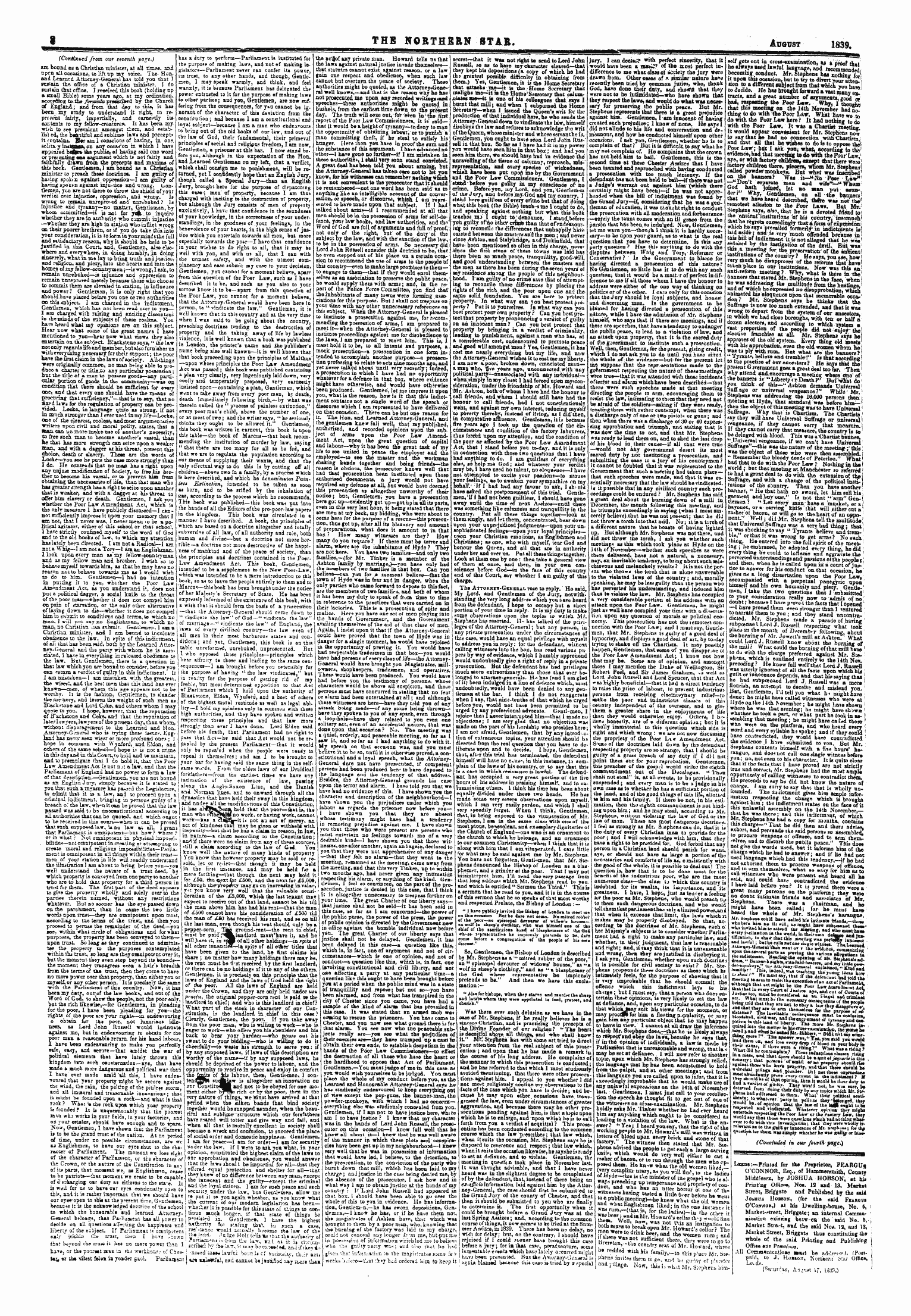
( Contttacd from cur etventh page . ) am bound as a Christian minister , at all ticisi . asd upcn all occasion * , to lift Tip my voice . The Hon . and Learned Attorney-General hxi told you that I sustain the office of a Christian minister . I do » u » 1 ain that cf&ce . I reeeived this book ( holding np a small Bib ] e ) some yean ago , at my ordination , tocoar&iiig to the fenstda prescr&ed by the Church of England ; and bozo , thai 3 * 7 to this , it hw fceeit . my imd y to understand it ri $ bt , to represent fairly , impardalir , and earnestly it * content * to my fellow-creatnre ** It has been my wi . 'h to see prevalent amongit tieao , and estabiisl ed , the "beautiful snd sublime law * apd precept * it contains . Bar am I conscious of having , in one ( Coniauied from cur seventh va ? e . )
solita jinttaao , on aar occas on m which I hare xppeaied be **** the public , of having said one word or pre * e&ting oa * argument which is not fairly and faithfully drawn from the precepts and maxims of this book . Gentlemen , ! am bound ag a Christian minister to preach these doctrines . I am fruity of hating gpoktn « gainrt oppression—I am gnilty of having spoken against injurtice and * rong . Uentlemen , yen are not there to throw the shield ofyour verdict over injustice , oppression , and wrong . I » wrong to remain unrtproied and narebaked ? la injustice and _ tjraanj—na m&teT , Ge&tlemen , by «« ffl ccmmitwsd—rt is not for yaj | .. to inquire whether they are in authority who commit injustice —whether they are high in itaiioa whoiafliet wron * :
oc tfceir poorer brethren , or if you do take tbii into yonr comaderation , it Lj to Jcreaia your mind j the full and satisfactory reason , why it should b * held to te JBsti&ed in this Court , and , Gentlemen , also else where and everywhere , in doing humbly , In doing lincerely , what in me lay to bring tmh and jaaiiee , and reEgion , and piety , into the hearts and into the homes of my felkm-ceuatryiBen ;—is wrong vl ask , tc remain nnrehnked—it injustice and oppression to remain unrepruved merely because those who choo * e to commit them are elevaud in station , in inflne jce and power ? Gentleasn , it is only right that yon ahonid hare placed before you one or two authoritipi an thii object . I am charted in the indictment , Gentlemen , -which h * s not b ^ en read over to
yoo—I am charred with raising and exciting iheoouui in the minds of the subject * of these realms . Yon tare heard what my opinions are on this subject . Hear now what some of the great names I have mentioned to yoo—hear now whit view * they also entertain on ths subject . Blackstone rays , th ' e law not only regards life and asmber , but also * furnishes us with everything necefsartfcrtheir support ; th « poor have the first claim ia the laws of society . Allying * ¦ were originally common , no man b * iog able to p : oeuce a charter or tillajto any particular possession ; but the tide of & mAn to posses * goods—any partiailat portion of goods in the cammanitr—was on condition that tfcere should be sufficient for ewy one , and that er «> ry one should have the me * as e ' r
procurmg that raiuciencT , —that is to say . that no ixfd l aw * for the regulation of property can be provided . Locke , in language quite as strong , if not m nrach stronger tnan I erernsej inmy li ' e—Locke , <*> e of the clsarest , coolear , and most ar / fumen ^ dra ¦ wntera npoa ciril and moral polity , states , that a man can uo more make x »» of another ' s necessity , to free scch . man to become another ' s Tassal , than he that has mere strength can seize upon a weaksr man , and with a dagger at his throat , present this caoice , death or slaTery . These ara the words of Locke— -you see he puts the case more strongly than I do . He contends that no maa has a right upon any nnjust modification of Society , to free his brother to become his -rassal , or to prerrnt kim froio
obtaining the ndcessaries of iife , th * n that man who haj greater strength h a * a right » » ejze upon another that is weaker , and with a dafger at his throat to oBer him slarsry or death . Gentlemen , I ask xon whether the Poor Law Amendment Ac ^ which ' is the only measure 1 hate publicly discussed—I canaot sufficiently impres * it upon your memory that I « m not , that I never was , I never mean io be a po-Ktical ajtitator , eitKer of thi » school or ttsat sctoo ] , 1 have strictly confined my * elf to th * word of God and to the aid books of law , to which my attention kaslatslybeen directed . I s . m not a Radical—I am not a Whig—I am not a Tory—I am an Englishman I look upon etery man as * my fellow-countryman and as my fellow man and brother . I wiih so to
behaTe myself towards Mm , as that he may have no reason not to behaTe towards ms as 1 woold wish to do to him . Gentlenanj—I nad no intention in pinning it to t « b , whether th » Poor Law Amendment Act , as you enderr-and it , does not pu : a political dwger , a local knife to the throat of the poor man—rheiher it does cot compel him on pain of rtajration , or th * only other altprnatiT ? © flaying dayn to die—whether it doei not compel him to jabirit to conditions and terms , te which no ffif . a , I will not S 9 . j no Englishman , to which no man , no Ciiritaan can submit . GentieBieii , I a .- » a Chri « ti 2 . a minister , and I nza brani to incolcite obedience to the law . In * pue of this indictment , of ali that has been » id , both by the Learned
Attoriiey-General and the psxty wi \ h whom he is ais- > - ciated , 1 have in eTeryihing inculcated obedience to the law . But , Gentlemen , there is a question in tiiat law which you are be-uad to consider , before yon can return a verdict of guilty in this indictment . " Ii I am mistaken—I am mist&k « a with the greateit . tile wisest , and ihe ba * t m « n ti * t thi ^ land has ever knawn^—men , of wheia thii age appears not to be worthy . It is ih « fashion , Gentlemen , to slaad « r tie meaery , and lesrsn the weight of such men as Blackitone an 4 Lord Cjke , and o : hen whom I may qiraas ta you . I hopr , kowersr , that the reputation of B " ack « tone &ni Coke , and tkat the reputation of laterUwyer * , lawyer * of the present day , than whom , without difiparafsment to the Learned and Hoa ^
AttomsT-General who l * trying thes ^ is < rce .- ' , Engisnd has nerer ssac wis ^ r or more profoumd ones ; I hope in cotmaon whh Wjnford , and Eldon , and others of the sane school—1 hope ii is cot a crime in this day and in this Coirt , to hold and x * maintain , and to pr « sialea : e That I do hold it , that ths Poor Law _ Amendmeat Act i « not n-jt a law . and that the Parliament of England had no power to form a law of that £ escripn « n . —Gentlemen , youaie not bonnd a * an Eaglisa Jorr , smpij because it is * : ated to you that sich & measure hiu pi ^ ed th ? L *« giilQare , to _ admit that it is a U . w , wsd to proce ^ i upon a criainal indictment , bringiag in persous guilty of a breach o : the law , wh-nit oun b- proved that the law passed was said to bs onoowititnuonal accenting to
all auihorities that can be qsoied , and which ougat to be receired in this oonrs—when it c&n b « proTed that such snppo ^ ed law , i * no law at alL lgran ; that Par'dajn ^ at ia omnipotent—but bow ? where ? or in what r No ; om&ippunt in phy * ieil imposiibiliti . es—not omnipotent in creeling or atwBjpdng to create _ moral aad religioui impossibilities—Parliament ii omnipotent in all thing * within their tru » tmen of your station in life will readily understand the ilhiitratioB I am aboat to bring brlore yon—yom well tEader *» nd th « nature of a trust de « d , " by which property is conveyed from one party to another who are to hold that property for a third persos in trust for thsm . The first part of the deed appear * to gi ^ e ths property wholly and folely oier to the
parties therein named , withont asy restrictioai whiiever . Bat so sooner hu the eye passed down -on the parchment , than in came the two little words upon trust—they are omnipotent npon trcst , aeeordiag to tae terms of tke trust , and then you prooee-d to p ; ni « e the remainder of the deed—you » ee , within what circle of obligatioas and fomhat purposes , the pra ^ srty has been oo £ Teyed to themnpoB trust . So lang as they continued \ o administer the property to the purposes contemplated within th * trust , so long we thjy oaai potfnt orer it , but the momsn ' . tlwy » v « n step beysnu its feonnd *—the moment they transgreu e-Tex ' a h&ir ' s brtadtk fro » th » terms of tha trust , then they come to hate no more power oter that property , than either you or
myself , or any other person . It u predsely the same with the Pwliiiaeat of tiis ewuBtry . lsow t it has beeamy daty , oatrof th # law b » oks , and out of the "Word of G » d , to shew die peoplf * , not the poor enlr , but the rich likewiie , —for Gtntlemen , in pleading for the poor , I haye been pleaiing for yoa—tha rights of the poor are yonr rigaU—in endeavouring o obtain for ta * poor , not luxuri » as idleness , as Lord John Rusj « ell would ia « inuaU agliESt me , bat in eadearocria ^ to obtain for the p oor man a reasonable re tarn , for hii hand labour , I hare been endeaTauriBg to make you perfecCy safe , ea * y , and Betnre—that areidw the war « f political eltmeno that hate lately thrown this kingdom ixto wch oeaJternatioa—aye , that hare aade a much mort dangerous and poli ' tical war than I h& \ e e-rer m \ de aaid all this , 1 haTe eadearoured that y » nr property might be secure agi ; u ? t the wind , tbe rain , the pelting of the itiltsi « torm
p , and all immoral aad treasonable inDOTarioVs ; that it miaht b * fouaded upon a rock—and whit ig that txjl ? Wiat i , the rocku ? o » which yoar property is founded ? It is aaquetooaabl y thit the poorest man whs works in your fields , in your factories , and oa jour estate ? , Aonli haTe enough and to ipare , ISow , GeademeD , I hare shewn that the Parliamemt is to be the grand trust ef the natjjn . At no period o / time , ttndfr EO possible circumstances , ar « we ai Englishmei , to hare our eyes shut to the character of P&rliam-Bt , Ti » moment re los « »!<« of use character ef ParHaa « nt , or tie tharacter of tks Crown , or the aature of the Constituiion in any of its parti , th * t mo » ret we , a * EnglishiB ^ n , ceai ' e to be patriots—that iaonun * we eease to be capable of dsckarginf oir totj ai citiztng to ths sta * e . h is wtfil for xu to hart our eyes TOnunualiy open to this , audit is rather important tb * t we » bo ' u ' id ha ^ e
oar ey « e = opiB to » hi « at the present time , Gentlemen , ¦ because it is the ackaowl *^ ged ioctrine of th « schosl to which the hoatarabU aud letrned Attorney-Geaeral bsloigs , that Parliaiaeat ha « all power to decide on all qneetions affecting the happ . » es » iEQ liberty of the subject . If Pirliime » t is oanip-.-tent oaJr irithia tie trait , then I b&t ; --tt : rx : that berosi rh « rra « it haa no m « re poorer than 1 hsTe , sr the p » or « it nxa ia rat T * r » rkhou . < - of Chest »^ « is * TU « t felw ia Toader gaol . P&rlijiiiaat
Untitled Article
k&g a duty to perform—Parliament is instituted for the purpose of making lawii , and not ef making legislators—Parliameat never can confer iu power , ita trust , to any other hands ) , and though , Gentlesen , I may speak warml y , and think , and feel warmly , it is Wcause Parliament has delegated the power entrusted to it for the purpose ef making laws to other parties ; and you , Gentlemen , are now suffering from the consequences , for y * u cannot be ig . norm of tbe charac ter of this demtinn from tke constitution ; and beeawe I am a constitutional and loyal subject—because I am a man who endeaToura to bring out of the old books of our law , and out of k&g a dary to perform—Parliament is instituted for
the law of God , their fundamental , their primeral princi ples ef social and religvus freedom , I am now , Gentleman , a prisoner at this bar . I now stand before yon , althou gh ia the expectation of tha Hon . and Learned Gentleman on my left , that a rerdict , which shall conrign me to punishment , will b # re . tamed , yet 1 confidently hope that an Eaglish Jury , though called a S pecial Jury—than aa English Jtry , brought here for the purpose of dupatcning this ea » # ^ men of property , because I am thu » charged with inciting to the destruction of property , but although tns Jury consist * of men of proptit j exclusively , 1 have that confidence in the soundness
of yomr knowledge , in the eorreornew of your understanding , in the goodness of your feeling * , in the beneTolesce of your hearts , in the high sease ef justice whicij you entertain towards all mea , but more especially towards the posr—I hare that confidence in your wishes to do right to all , that it may be well with you , and with us all , that I can with tbe utmost safetj , and with the utmost torn * placenoy and ease » obmit ny case to your decision . Gentlemen , you cannot for a moment believe , aparr from this question of the Poor Law , such as I hare described it to be , and suca as you also to your sorrow know it to be — apart from tkis question of tbe Poor Law , you cannot for a moment belisre , that the Attorney-General would hare b # en her * in
person , t « " vindicate the law . " Gentlemin , it ii well kaovrn that in this country and at the very time wh * n I was said to be going about the country , preachiag doctriiea tending to the destruction of property aud the taking away of life by lawless violence , it is well known that a book was published is London , the printer ' s name and ihe publisher ' s name being also well known—it is w * ll known that ihat book proceeding upon the principles of Malthus —upon wio ? e principles the Poor Lair Amendment Act was passed ; this book was published containing
a plaa very clearly , tery ingeniously laid down , very coolly and temperately prepos » d , very earnestly insUted npen—containing apian , Gentlemen , which went te take away from every poor man bj deatk , death immediatel y following birth , —by what wa » therein called the " process ef painless extinction , " eTerr poor man ' s child , above the number of one , or at mo « t of two ; and the writer cay * , " he erioiwl ? think * thev ought to be allowed it . " Gentltmen , this b * ok was written in earnest , this book ia upon thi « table—the book of Marcus—that book recom
-Eendiag the institution of murder by law , sajing " that th « re are too maay for all to be fed , and that we are to regulate the population according to our means of guppljing their wants , and that the only effectual way to do thU is b y cutting off all children—above two in a famil y , bj & process which is here described , aad which he denominates Painlet * Extinction , intended to be taken as » oon a * born , apd to be stifled "b y the inhalation of eas , accordisg to ihe process which he reooamtnds . This b * ok was published—this b « ok . vrat put iu \ o the hands of all the Editors of the pro-poor- law paper * in toe kingdom . This book was circulated in a manner I have described . A book , the princi ple * of which are b&sed on a doctrine altogether and totall y
< rabversiTe of all law , of all authority and rule , both humin and diviae—bat a doctrine not more horrible—a daotrine not more destructive of the happine « of mankind and of the peace of society , than the princi ples ana doctrines contained in the Po # r-Law Amendment Act . This book , Gentlemen , intended to b « a * opplenieni to the New Poor-Law , wcichwas intended to be a saere introduction to this book , » o m to leave the people entirely to them and to Marcus—this book baj been brought under the notice of her Majesty ' s Secretary of State . Hs has been expreasl j informed of the existence of this book , with a wiia that it should form the basi * of a prujeention —that the Attsrney-Geceral should ctme dewn to u vindicate tie law ' of God—" vindicate tbt ; lavr "
of mxrria ^ e — ' vindicate tbe Uw" of Euplaad , the laws of every civilised country—tbe Uw eten cf all men in their most barbarou * states and conditions ; and yet , Gentlemen , tkis book is on thin table unreformed , unrebuked , unproeecuted . But 1 who opposed th : > se princi ples—principles which beir aiTisiry t « ties * and leadiDg to th « same ctn-? equences—I am brought before you optensibly for the purpose of havisg " the law vindicated , " kut in Teiiity for tbe purpose of getting rid of ray feeble , but most determined opposition to that Act ef Pariiaaent which I hold upon tba authority of Blaek 5 tone , Eldon "W ynitrd , and a host of otker * of the bigkest moral rectitude as well ai lrgal ability—I hold cay oi > ioiou » » nW in cuiomvu with iliese
high authorities , and they have spoken and written respecting these principles and that law more strong ! j than ever I hate done . Lord Eidon «« . id before bis death , that Parliament had no right to pws that Act—he said that Act would not be repealed bj the present Parliament—that it would only be repea ' eJ when the people wer « teaij to repeal it themselves ; » nd am I to b « brought to yoar bar for having said th « same thing in the self-» itne word * . From the o ! den laws of « ur Druidical forefather *—from the earliest h 3 e-i we have any intimation of the existence of law , pasiini ikag the Anglo-Sixoa Liae , and th « Danisi « -n 4 Norman lines , and so onward through all the dyuastiej that hav ^ hsld their sway in this kingdom
, and nndej * * U the modifies tion * of thi * Constitution , it h a * al w ?* a 3 ee » held tkat tha p * oi "—tkat i » , tke man who pTth ^ t ^ Kno work , or havin g work , cannot ^ ork —i » g a cl t » fffc it ii not au act « f merey , an act of kindness thai may be given or withheld with impwnuy—but that he baa a claim in re * son , in law , in nature—a . claim according to the Constitution ; an < i if there were no claim fro 31 any of the » e source * , > till a claim aocorditg to ths lavr of GW . You know well ihe nature of m * ay kinds of proptrty You know that howeTer property Kay be sold or ref old , let or re-let—that Uoigh it may b « h « la in the firs ; in » tanee , and may b « held for a mera farthing—that though the next May hold it for £ 50 . tke * ext £ pr £ 600 , and the nexi f » r £ 5 , 0 £ » ,
altatmgh ihvpropjrcT iaij ^ o en increasing iav * l « r » , y- ^ t y cu know ? ery well that the valuable consideration of the j £ 5 , 00 e , whiok tke last tenant may expect to receive out of that land , eaaaot be his till ihe m « abate him has had his rent—that the man of £ 600 cannot have hij consideration of £ 500 till the man of £ » 0 has received hi * rent , and m oa till the last man , even though his rwit should only be a pepper-corn . Tjjg ground-rent—the rent in chief , mu * t be paid f «^ klandlord muM ^ luve it , and he will havo it , in s ^ p of all other holding *—in Fpite of all other tenAncieT—ia spiw of all other titles that have been given to the land , he first claims his share ; no matter how many holdings thwe may be ,
the rent most ba fi-at reoeired by the int landlord , or there can be no holding * of it to any of the others . Gentlemen , it is preciselj en this princi p le that the laws of England and the laws of God held the right of tke poor . All the laws of England are keld under the Crown , and they are only held n » der utu practu , the original pepper-corn rent is paid t » the teftiilsri in chief ; and wlio is thij landlord in chief ? What part x > f the stock in character of our Constitution , is the landlord in . chief in this case ? Clearly , Gentlemen , the poor . If you take away from the poor mas , who is willing to work—who is eager to work—who oners you hia jji » alder * and hi * back to bear yoar birdAn *—who P £ a » out hi * sweat to do your bidding—who i * wiUiag to do it
cheerfully—to waste an strength to « err » yon : if by any supposed laws , if laws of this description are worthy of the n « ne—if by any supposed laws , h § should be deprived of the power to labour , aad the opportunity to receive in peace and eajoy in comfort the jBUts of Mi labour , the > , Gentlemen , 1 oonten < fi ™ t bcAUw it altogether an innovation on our Con * titM * BB and not to be obeyed for one moment either b ^ ae rich or by the poor , thni in the venr cater © of things , weaiB 3 tha » e arrived at that period when the silken bands that bind society together would bs snapped asander , whf n the beantifnl and uublime stroctare which our fortfather * have reared will totter and give way and fall , and when all that is morally excellent in society shall become a wreck and confusion , to Bncceed th » place of social order and domestic happin ^ s . Gentlemen , I &tn for peace—I am for order—1 am for security uid ^ r tho Uw . If I wwft to ask yon what , ia yeur opinion , constituted the highfxst claim of the laws to
our approbation and ofeodisnte , you weuld answer that the law * shoal 1 be impartial for till— that they offcred * quaj protection aad shelter for all—that ib ^ y knew of no difference between aDy r » an , excep : the ianeceist and the guiltj—except the eriminal and ihe loyal citizen . I am / or « u « h ptace aad * tch s ^ cuuty xmder the law , bu » Genvl ^ meD , allow me ; te put it » yott again whether , ts you know what ; too current of our modem legislation has beenwheuer 1 ; is powiblo for thh stam of things to continue » uck longer , if that state ef things be p-rsut » d ia . Gead ? me » , I hare the highest ¦ n « t . horm for siting that , in such a case , ; res- « anc > s would ac . u ? dlT become th « ] aw of thft ! rt » land . Ju i ^ e Holt tells « s "hit th « authority ol ' - * = f : 'i * ci- n » 3 , fros tbe l » w , mi . j it j , cv . cum-: # cnt » a _ rty : a * ^ -r , ir may bo ex ^» : « 4 , and if tkev in -xc # ed iaa *» k'jrfci bojnl * cf authoslu . thvir act * kfe ailajr / nl , axd cantot b » jitifldd aay acre thai
Untitled Article
the ac \ Jof any private man . Howard tells us that the laws against natural justice invade themselvesthat statutes caanot exist against reason , or a law fain one respect and obedience , when such law cannot but overturn the peace of society . These authorities might be quoted , as the Attorney « General well knows , —and that i » tbe reason why he kaa not prosecuted me upon any recorded writu > g *>« speeches—these authoritiea might bo quoted in bushels , from the earnest time down to the pr&nrt day . The troth will ooze ont , for % » ea In ihe . first report of the Poor Law Commissioners , it is saidthat it would be a height of tyranny—to dany to man the opportunity of obtaining labomr , or topnnish a man comHjittiosr theft , if he steal to # ati » fv his the actlof aaT private man . Howard tella ns that
hunger . Hera then you have in proof the gum and the substance of this anrumeat . I have advanced no other—I have gone no farther—if I am mistaken in these authorities , I ( ball tary soon itand convicted . A great deal has been told yon about arming , but the Attorney-General has taken care not to let yon know , for his withetMt can remember s « thmg which it is not convenient to the prosecutor that it should be remembered—not one word has been said as . to anything like an intelligible account of the conversation , or speech , or discourse , which I am represented to havo toade upon that subject . If I had talked about arms—if I recommended at all that men thbtild be in the possession of arms for self-defence , year law books , and law authorities , andthn
Word of God are foil of arguments and full of proof ; not oalr of the tight , but of the datyot the subject by the law , and with the ' sanction of the law , to be in the possession of arm * . So necesi »» ry did Lord John Russell consider tail doctrine to be , that he even stopped ont of his place on a certain occasion to recommead the nse of arms to the peeyle bf this country—even to make large promises to themto engage to them—that if they would enrol themselves as an association to preserve the public peace , he would supply them nith arm *; and , in the repertof ihe Police Force Committed , you find that the inhabitants of many towns wera forming associations for thin pnrposa . But 1 shall not trespass on your time with any other unnecessary refarenees on this
subject . Wnen the Attorney-General is pleajed to institute a prosecution against me , for recommending the possession of arms , I am prepared to meet it—when the Attorney-General is pleased to institute proceedings against me for disobedience to the laws , I am prepared to meet him . This is , J mwst hold it to be , to all intents and purposes , a mock prosecution—a prosecution in one form intended to accomplish another purpose—a prosecution professing to relate to acts nine months ago and yet never talked aboat until very recently ; indeed , a prosecution in which I have had no opportunity whatever for a defence in that box , where evidence might have otherwise , and Would have otherwise been produced . Gentlemen , let me impress it upon you , what is the reason , how is it that this
indictment contains not a anicle word of the speech or discourse which I am represented to have delivered on that occasion . There can be but one reason for it . The Hon . and Learned Attorney-Gineral , and the gendeme * knew full well , that my published , authorised , atd recorded opinions upon the subject of arms upon the Poor Law Amendment Act , upon ike great question of capital and labour—wh y it has been the great task of my life to see united in peace the employer and the employed—to tee the master and the workman shaking hands together and being friends—the reuwn i « obvioa * , th * prosecutor knows well tUat had tkat prosecution Deen instituted upon those anthorieed doetuaenw , a jury would not have
required any defence at all , but would have deemed tnu prosecution as altogether unworthy of their nouoe ; but , Gentlemen , you have a prosecution here go : up—evidentl y got up—got up ia all its parts , even in thw very last hour , it being stated that there are men at my beck , my bidding , who were about to Mme here for the purpose of a rescce^—this prosecution , thus fot op , after all iU blazonry and amount of preparations , what doei it amount to in that box ? How many witnesses are they ? How many do you require ? If there must be terror and alarm , wknre are the inhabitants of H ydo ? They are not mere . You hate two tamiliet—and only two famUies , —( for Mr . Tinker is a member of tha Ashton family by marriage , )—you have only had th « me * nber » of two fajmlie * in thit box . Can you believe—can you for a moment believe—that the
town of H yde was in fear and in danger , whe * the only parties who came forward to depona to thisfact , are the members of two fatnilira , and both of whom it ha * been my duty to ipeak of from time to time in reference to the practices that were carried on in their factories . Thin i # a prosecution of spite and malice . Her * you have one set of mea plnying into the bauds of Government , aud the Government availing themselves of the aid of" that claw of men . Again , 1 insist upon it that if the Attorney-General could hate proved that the town of Hyde was in daager for a uia gle moment , he wouW hate rejoiced in Ae opportamty of pr » ving it . You would have had respectable tradesman in that box—you would have had persean of every class of life—tho
Attorneyueaeral would have brought you Magistrates , mUN owaew , shopkeepers , tradesmen , aad operatives . These wonld havo been produced . You would aave had before you tho testimony of persona , whose characters would be abov « all suspicion , and those pertouB nut have concurred in stating that no fear or alarm had been entertained at all ; and although thtse witneMM are here—have they told yon of any attack being made—of anj stone being thrownhaTe they spoken to you of any spark , even through a loop-holt^—have they Telaled to you even one solitary act , even of an accidental nature , that was done upon that eccanon ? No . The moeticg was a quiet , erderly , and peaceable meeting , « o far aa 1 aaw it , and so far as I aad anything to do with it .
My speeck on that eccaflon wa * , and you must believe it to be ro , until it it otherwise proved , a constitutional and a loyal speech , what ihe Attorney-General dare not have prosecuted , if competent person * had been produced here to have deposed to the language arm the tendency of that address . Betides , the Attorney-General grounds Lis case upon the terror and alarm . 1 have told you that we have- aad no evidence of this . I have ihown yos the character and description of the neighborhood—I have shown you the prejudices trader which you labour a * regard * the priwner now before yon—I have shown you that they are absent whose testimony mi f ht have had a tendency in removing p rein dice agaimit mo . I have sixowu
you that those who were present are perrons wko must entertain no feelings toward * me of a very desirable kind—I have shown you that thosa witnesses , on * after another , again an i again , declared to you that they were not apprehensive of any danger —tftat they felt no alam—that they went U the meetiug , remained at the meeting , c * me away from tbe meeting , aad that this very Tinker , uo to within two months ago , had never riven any intimation respecting bis alarm , or anything of the kind . Gentlemen , 1 feel no convinced , on the part of the prosecntion , justice is denied in this case , that I think it is altogpther unnecessary to trespass further on ycur time . The great Charter of our liberty saysthat justice shall aot be «« ld—it has been sold in
this case , so far as 1 am concerned—the power of the public purs ? , the power of the press , the power of pnblie opinion is directed by the Government new in office against the homble individual now before jrou . The ( jreit Charter of our liberty says that inslic * shall not b » delayed . Gentlemen , it has been deliyed iu this caw—a qur * tion like this , which is , in fact , one of argument and not of circumstance *—which ir one of opinion , and not of conduct—a question like this , which is , in fact , one iavohing constitutional and civil liberty , and aot oae affecting a party at any particular time—a qaesrion like thit oagnt to have b ^ ea bro u gh t before yo » at a period when the public mind was in a state of tranquillity and repose : bat not so—you hare been alarmed , and from what has transpired iu the city of Chester tinea you came , you have had a
sample of t * e kind of alaim that haa prevailed in this case . It was stated that an armed mob wa * coming to rescue the prisoners . You have come to Chester , and you now « ee what grsnad there it for tkat alarm . You see now who tbe peaceable BfibjseU really » re—jou » oe what tha prejudice * of tfceireaemie * are—they have trumped op a cam ) Vcr obtain their own ends , to establish despotism in the hands of the Poor Law Cemmicsioneni—to effect the destruction of all those who have tha heart or the hardihood to oppose that Act of Parliament . Gentlemen , —You must judge of me in this case a * yon would wi * h yourseWes to be judged . You mo » t place the whole of my conduct before you , as the Learned and Honourable Attorney-General * ar » he
ha * studiously endeavoured to Jreep everything out of view except the pbp-guna , the banner-man ,. the powder-monkey ? , with which I hnd no conoeraeverything else was studiously concealed from you . Gentlemen , if I am not to have justice here , wht re am I to have justice ? I knew that my character was in the hands of Lord John Russell , the prosecutor on thii occasion—I knew fall well that he knew all abont it—1 knew that he was well aware of the manner in which the ^ e plots « nd conspiracies have been got up in my neighbourhood— I knew very well that he was in possession of information that wonld har « led , I believe , to the detection , to the prosecution , to the conviction of the party who
burnt down that mill , which has been laid to my charge ; and justice in the ate being deued me , by the absence of the prosecutor , I ask how and in what wav 1 am to obtain justice at the hands of my country : If Lard Johu Russell had appeared in that box . I should hate been able ta go over the whole of this to you in evidence . He has informstioi , Gentleman . —he ha * sworn deposition * , Gentlfsu-B , —1 know he ha * , or if he have them not , » h « m » £ istrat »« of Ashton have , that which wat brought to them by a poor man , who , knowing that ihe bxtrniaf ef the factory was laid to ray charge , could not conceal any longer fr-Tn me , butcut ffie ia po » se * gioa of information which led : z
Untitled Article
secret—that it was not right to send to Lord John Russell , so as to nave my character cleared—that they kept bia depositions ( a copy of which lie had thi greatest possible difficulty m obtaining from them . ) . Yea , Gentlemen , ii if the Home Secretary that _* t taek » m *—it » the-f Home Secretary that maligni lne--it n the Home'Secretary that calumf ^ S ^ KJ" 0 B « of W » ooHeagaes that »* yg I burnt that null ; and when I subpeened the Home Secretary—when I . issued the Queen ' s writ for the production of that individual here , he who sends the Attorney-General down to vindicate the law , himself disobeys the law and refuses to acknowledge the writ of the Queen , Whose minister and whose uerranthe i > . Gentlemen , yon ought to have sefen Lord John Rusnecrat—that it ••¦ t . nf ^ At > . . » j > . i . j t « u
sell in that box . So far ai I have had it in my power you would have seen him in that box ; fend had you « eea hia * there , we should hate had in evidence the ¦ nratelnn * of the tiwue of calumny , reproach , misrepresentation , and every species of wickedness , 4 ^ L « *"» *¦ pn ^ nP ° ? »<» » T the Government and the Poor Law Commissioners . Gentlemen , I stand before you guilty in my conscience of no crime . Before you , my Lord , and yon , 'Gehtlemun of tha Juty , aaa before my . God and my conntry , I stand here gmUless of every crima bnt that of doing what thu book ( the Bible ) teaca-sme I ought to do and speaking againrt nothing but what thisboik teaebea taiij ought td ; denouuce , r stand before 70 b . guilty ofno father crftnte than tk&tof endfWir .
inq | to reconcilt ) the differences that unhappily have existed between the masters and the men ; aud sever since Ashton , and Stalybridge , astfDukinfield , that have ; baen mentioned « 6 often in this charge , never since the finrt stona of these towns was laid has there bften so muchpeate , tranquillity , good-will , and good understanding between the masters and the men as there hao been during the seven years' o ! my residence aknog the people of thi * neighbourhood . I am guilty of no crime save that of attempting to reconcile those differences by placing the nghfei Of the rich and the poor upon oue and the * ama solid foundation . You are h » re to protect property . In what way can tou test protect property ? Pat it to yourselves , la what way can you t
De » protect your own property ? Can you best protect that property by pronouncing a veriict of guilty on an innocent man ? Can you best protect that property by bringieg in a verdict of criminality , leading to punishment , against a man who ha * , at a considerable cost , endeavoured to promote peace an-i ^ ood will amongut men ? Yea , Gentlemen , it has cost me nearly everything but my life , and now the Attorney-General wishes it to cost me my liberty . I am . now « , poor , broken down , emaciated ' taan-ra mau who , "five years ago , unconnected with any political pa , r tjr-t-nnasMociated with any in-iiridualwhen rtmply inmy clo « et I had forced upon my * consideration , under the friendship of Mr . Howard and Mr . Ashton , both of whom I have had the honour to
call friend * , and whom I should still have had the honour to call friends ' , had I not con ^ cientioaaly went , and against my own interest , reducing myself to poverty thereby , instead of living , as I did ' then , in comparative afflnence . Gentlemen , it is because fire years ago 1 took up the question of the circumstances and condition of the factory labourer * , thus forced upon my attention , and the coaditiun of the poor ajr affected by the Poor Law Amendment Act , that I stand before you to-day , and it is only in connection with those two questions that I have had anything to do . I am guiltless of everything els ' , so help me God ; and whatever your verdict may be , I have used ho talent , no eloquence—I have not attempted to excite your passions—to arotisa your feelingM , as to awaken your sympathies on toy behalf . ' If I had had any iavoar to askI sh < ul « t
, have asked the postponement of this trial . Gentlemen , if I had not been guiltless , I should have gon » away antil the time el n « t Awizo *—until -there was something like calmness and tranquillity in the country . Pat all these things together—look at them Mngly , and let them , concentrated , bear down upon your unprejudiced judgments—upon your unsophisticated feelings—upon your loyal princi ples upon your Christian emotion * , as Englishmen and Christians ; as one , who with myself , tear God and honour the Quren , and all that are in anthority under her and over us . Put all those iking * together . Look at them one by one : then take a geaeral view of them at once , and then , in your own consciences before God—in the face of thi * country and of this Court , say whether I am guilty of this charge .
The Attornet-General rose to reply . He said , My Lord , and Gentlemen of the Jury , notwithstanding the very long address which you have heard from the defendant , 1 hope to occupy but a short portion of your time in reply . It ia my duty to make some observations upon the topics to wfcieh Mr . Stephens bas resorted . H- > has talked of the privilege * of tho Attorney -General ; but any person , in any private prosecution under the circumstances of thin case , would have an equal privilege with my * elt to address you in reply : for tho defendant , wictomt calling witnesses into the box , has read various paper * by way of evidence , which I humbly apprehend wbuW undoubtedly give a right of reply in a private prosecution . But the defendant ha * h » d privileges
much wore extraordinary thau those that ever belonged to attoraey-generala . H * has ( nnd I am glad of it ; been indulged in a Hue of d «» teuce which , most undoubtedly , would Lave been denied to any gentleman at the bar . I think I do not exaggerate when I say , that nine-tenths of that which he crged before you , would not have been permitted to be urged by any professional advocate . Gentlemen , I rejotCH that I sever interrupted him—that I made no objections ; I am verv glad that no objection wan made on the part of his Lordshi p who presides here ; I am not afraid , Gentlemen , that by any introd-. ction of extraneous topics , your atteution should bj diverted from th » real qteatioa that vou kave to deliberate upon and to decide . I hop » , Geutlesaen .
that , aft-r tbiit trial has terminated , the defendant himself will have no cus-, in this instance , tJ eomplain of the laws of his country , or to say that this is * ctats in whick resistance is lawfal . The defendant hai occupied a very great portion of the five houri of his address in praising himself , and in calumniating others . 1 think his time has bden about equally divided under these two heads . He has made soiae very sever * observations upon nayaelf . which I can rery easily pardon , and which I shall very speedily forget . VVh « n I think , Gentlemen , thnt , in being exposed to tke vituperation of Mr . Stephens , I am in the tamo clas * with ona of th « most $ > ious , betevoleat , and extt *> p ]» rrdigoit * riea of
the Church of England— ons who 14 an ornament to the church to which he beloajjs , and an ornament to our common CurintianHy—when I think that it is along with him that I am vitu ^ rited , I care little ' or what nay ba said again « rt me by Mr . Stephens . You hav * not forgotten , Gentlemen , that Mr . Stephens denounced tho Bioiop of ' Louden a * a blasphemer , and a grinder * t the poor . That I may not misinterpret him , I'll read the vary passage from that long addre <<« which Mr . Stephens read to y « u aad which is entitled " Sermon tho Third . " This is a sermon that he read to yos , and it is in the caarse of this 8 » rmon that he so speaks of thM most wortky and respected Prelate , the Bishoo of London : —
" I h » va pyblwlr invited tha BUaop of Load ** t « m «« t m « on thu « ccmnon Bnt he dare not eomn . N « mitred robier of tat 5001—no « pi » cop » l itreanr of widow ' x boasesn » w , ?" *¦ •*>«?'<» ei « tBing , wao m aimwlf * ne of tke hief of the iKrileglon * kind » f bl »« pken »« r « of the So 4 wb-sfr rf > pr »( entativa ha impiou » ly pretend * to be , dare eom « betore a conjugation » f the people » f hU own dioeete . " So , Gentlemen , the Bishop of London is described by Mr . Stephens as a ' mitred robbar of the poor , " an " episcopal devourer of widows' houses , " as " a wolf in sheep ' s clothing , " and as a blasphemer of the G » d whose representative he impicucly pretends to b « . " And then wo hav # this exclamation : — " AU * forbithop * , when ihry « t » rvo » nd murdiTtfea » h »» p Wid lamb * whom U « y wer » awoiBUd to f «« i , cr * t «* t , » ni ehcrUh . "
Was there ever such delusion a * we hate in the case of Mr . Stephens , if he really believes he is a aiacer ^ Christian , aad W praensiag the prnoepts of . toe Divine . Founder of onr religion ? ?* T « a heart is deceitful above all thing * and who shall know It . " Mr . Stepiiens has with some art tried to direct your attention from the real subject of this prosecution ; and upon that he has nuide a remark in the course of hi * long address . He complains of the manner in which this prosecntion i » conducted : and he has referred to that which I most studiously avoided mentioning , that there were other prosecutions , against him . I appeal to you whether I did not mo . xt rehgiouily confine toj obsena'i » Bs to the facts of the case which ydu have to decide : and
because he may upon ether oocaiioos Ime traotigre «« ed the Jaw , even under circumstances 0 ! greater aggravation , and because there may be oth-r prosecutioBs pending against him , is that a tjpic upon which he is to enlarge , and npon whi « a heis to oall forth from vob a verdict ef acquittal ? This prosecution has been conducted according to the common coarse which the law preactibes ; ihit law which , when itauiti the occasion , Mr . Stephens say * he is disposed to reverence and respect : that law which , when it suits theoccasion likewise , he Rays he ii read y to set at defiance , and to violate . Gentlemen , the meeting in qneatiin took place in November last . It was thought advisable , nnd thet I have never heard wan in the slightest degree to be complained
of by tht defendant , that , instead of there being an ex-ifficio information laid against him by the Attorney-General , the case should fir » t be submitted to the Grand Jary of the county of Chester , and thnt tfmn itshould ^ be submitted to jeu who are finally to detennino it . The fi r st opportunity whun it could be brought bef « r » a Grand Jury was at the last Spring AeaiEes ; and , according to the common course of things , it now com-n to ke tried at the Summer AseiKe , in 1839 . There has been no delay , no wish for delay ; bnt , on ths contrary , I should have rrjoieed if I could jooner bn \ e broaght this ca ? e before a j « ry ; for Km . tkat ca « t » , pw&dveuture , some ! p . Tn « otabie evtwU wVich have lately occurred might huva be « n pr ^ Teciftd . But Ike AMoraoy-Geuwsil is agui * blataisd b * c * uce thi * ca » s > ia tried by a- special
Untitled Article
jury . I can declare * ith perfect sincerity , that it would have been a mau ?? of the n . ost perfect indifference to me what clawol ¦ cckty the jury were drawn from . Other cases of a similar nature have recently been tried by common juries , who , thsnk God , have done their duty , and shotfA that they were not to be intimidated—who hate shown that they respect the laws , and would do what wa * neoetsary for preserving the public peace . Bnt Mr . Stephens represents that there u a great prejudice against him . Gentlemen , I am innocent of having created snch prejudice ; I know of none . He says 1 did not allude to his life and conversation and demeanour , and how he conducted himself upon other occasions . I ask you , Gentlemen , whether ho is to complain of that ? But it ii difficult to say what he m iy not complain of . He complains that the crown <» ,-, t „„„ j— . t-- wift < uAa » ««»»'«* ^ wTT ^ f
has not held him to bail . Gentlemen , this is the second time at these Chester Assizes that I have been taunted and reproached with having conducted a prosecution with too much leniency . If the defendant hat aot been held to bail—if there wa * not a Judge ' s warrant out against him ( which there certainly might have been)—if ho wat not apprehendtfd wh » n the bill of indictment was found by the Grand Jury—if , considering that he waa a gentleman of education , it wan tfcoustht right to conduct the prosecution with all moderation and forbearance —surely the taunt comes with an ill grace from tbe person tkat baa been , so indulged . Now , Gentlemen , Let me warn you—though I think it is hardly necessary—to be upon your guard , as to what is the real
question that you have to determine . Is this any party question ? Has this anvtbing to do with tho disputes between Whig and' Tory , ? Reformer or Conservative ? ' Is tho Government to blame for having directed a prosecution of this nature ? No Gtmtlamen j so little has it to do with any such question , that it would be a matt . r of perfect indifference tome if all those whom I have the honour to address were either of the one way of thinking on politics or of the other . I cara osly for this occ&idbn that the Jury should be loyal subject * , and honest and discerning men . Is the government to be blamed for having directed a prosecution of this nature , while I have the admission of Mr . Stephens himself , who Bays that if thero are meetings , and if
there are speeches , that have a tendency to endanger the public peace , to lead to a violation of law , and an attack upon property , that it i * the sacred duty of the government to institute such a prosecution . Well , then , Gentlemen , for the present , giving credit , which I do not ask you to do until you have antedthe whol » of the evidence—but-for the present let me suppose that the representations made to the government respecting the nature of tbes * meetings were trae— that it waa attended with these incidents of terror and alarm which have been describes—that there were such speeches made at that meeting directing the people to arm , encouraging them to resist the law , intimating to them that they need not be afraid of the soldiers—auking if they wera ready ,
treatmgthem with rather cont « mpt , when there was a discharge only of one or two pistols or guas ; and then When thtr « was a discharge 01 30 or 40 expressing approbation aud triumph , and stating tuat it Was now the time to act , and that Mr . Stephens was ready to lead them on , and to shed th « last drop of hi * blood in . their cause—if all that were true —would not any government desert its mo 3 t sacred duty by not instituting a prosecution , and submitting the case to a jary of his countrymen ? It cannot be doubted that it was represented to the Government that such a meeting had taken placethat such speeches were made , and that it waa essentially necessary that the law should be vindicated , is it passible that in any civilised country such
proceeding * could be endured ? Mr . Stephens has said a great deal about tie burning down of a mill in December , the month following this meeting , and he triumphs exceedingly in saving ( what I most sincerely believe ) that he was not present : that he diJ not throw a torch in to that mill . No ; it is a torch of a different nature ( hat he boasts of having lighted up . But although Mr . Stephens was not there , and did not throw the torch , I ask you whether such meeting * as this which took placv at Hyde on the Hth of November—whether such speeches as were there delivered , have not a natural , a necessary , nny , an inevitable tendency , to briug about snch mischievous aad melancholy result *? . It is not the person who thrown the torch that is alone answerable
to the violated laws of the country ; and , morally , speaking , he may be less guilty than tbe person who has perverted his undersumdiog , and induced him thus t * violate the law . Mr . Stephens has occupied a very considerable portion of his address witu an Attack upon the Poor Law . Gentlemen , he might just as well have occupied your time with a dissertation upon any question ot morals or political eoonomy . This prosecution has not the lemoteat connecti&n with the Poor Law ; aud 1 rn « stsay , Gen tiemen , that Mr . Stephens is giuliy of a good deal of hypocrisy , and displays a good deal of art , by to-d * y trying to shake oil tan Chartist * . It may possibly happen , Gentlemen , that none of you disappr j > e ot the Poor Law Amendment Act ; I know not how
that may be . Some are of opinion , and amongst those 1 may mention the Duke of Wellington , Sir Robert Peel , aud Sir Jame * Graham , - * well as Lord John Rurwll and Lord Spencor , thai that Act aa highly bennficial—that it had a direct tendency to rai *» the price of labour , to prevent industrious persons lrom receiving eleemosynary relief—to waka the y » or and industrious clasps ot thU country independent of the overseer , and to give them a greater share in the enjoymeuu of life than thor would otherwise enjoy . Others , I b - iieva honestly , ar * of a different opinion ; but it is wholly immaterial to this question which side is right and which wrong : we we not now discussing tbe propriety of the Poor L % * Amsndment Act .
bia « of the doctrine * lai-i down by tha defendant respecting property are so btr * nge , that I should tw guilty of a gross breach of u » y duty if I dii not point thea » ut for your reprobation . Gentlemen , this preacher of ths go « p ^ rl would strike the eighth commandment out of tha Decalogue . " Thou shalt notstdal" is , at all event * , to bi provisionally suspended ; and ev « ry man is to be a judge ia his own ease as fc > whether ho h * s a sufficient portion of the land , and of the good things ef chis lift * , allotted t * aim and his family . If there be not , in his estimation , then tht » ei g hth commandment is not binding u pon him ; and ha may steal , according tj Mr . Stephen * , without violating tUa law of God or the law of nun . These are most dangerous doctrines .
I ieol as strongly as Mr . Siephenscaa dp , that it i * the duty of every Christian maa to provide for the poor ; and I will acknowledge with him , that they have a right to be provided for . God forbid that auy person in a Christian laud sheuld perish for went , aye , or should not have as large a portion « f the nocrtssarics and comfort * of life as , c jn » isu ? ntly with the good of tho whole , it is possible to deal out * ! The question is , how that ii to be done most for the beaefit of the industrious poor , who are th * most numerous class—tho da *; tj whick this country ia indebted for its wealth , iu importance , and its greatness . I hav » , 1 hope , just as tea : era feeling lor the poor as Mr . Stephens , who would preaca up to them such dangerous doctrines , and who wonld
tell them tkat parliament has wly a limited power , » n i that when it exceeds that limit , th < , law * which it makes may be properly disobeyed . So that , aceordiug t » the doctriaM of Mr . Stephens , each o : her Majesty a <* bjects is to consider wn « ther Parliament had a right to make any particular la » , aud whether , in their judgment , that law i * reasonable and right ; and , if taey think t&at it is unreasonable turn wroag , tht * a they ara justified in disobeying it . I askyou , Gentlemew , whether upon such doctrine j it is possible for civil society to exist ? Mr . Ste . p heat propounds thm » d doctrine * a * thoso which he lutimtttly feel # , for the purpose of showing that it is v « ry improbable that he should commit the oflencj which , this indictment lays to his
chirge 1 but l . mnst say , that a person whj does entertain the « e opinions , is very likely to set tbe law at defiance , and , upon any particular occasion , to d * that whiclaaiay suit hid views for the moment , or may procflPfor him a floating popularity , or may gain , him any particular object that he rai y happen to have in vi * w . I cannot at all draw tho inference which Mr . Stephens does , —thjtt he is likely always to re $ > ecy « nd bej ' . the lawsybecause he says that if m the opinion of iadividuals , a law is mnde by Pariianent that i » nnreaJonaWIe and wrong , thatla v may be set at deliante . 1 will now refer to another topic , npon which Mr . Stephens has strongly relied , tho language tnat he ha » been accustomed to hold
lrom the pulpit , and at other meetings ; aud trom this languaiee yon are called upon to iufer , that it i » txceodiugly improbable that he would make use of any nnliawfal e 3 £ pr * A . ions oa the 14 th of Novemb . » latt . rGeatldmea , I must just call to your recollectaon the speech he thought fit to get out of one of thejwitnwsrs on c « s « -ex * mination . Mr . Stephens boldly atks Mr . Tinker whether he Lad ever heard him say any thing which oaght to be considered aa l « admg to a violation of the law . What is the answer ? ? Yea : I heard you say , that the rig \ t of the working pe . ple to Mr . Howard ' - aill w « written ia %%£$ ¦ ° v P ° * V- brick aud - tono « f &M factory The witne * . then sUted that Mr . Stephens advised the people to get eaclra largo carvi * . h ^ Sh * " ° Verywe ! 1 «^ tr t o cut f rnsher of bacon , or to run through the men wh « L !
paieu mem . He kn ^ w what the old women liked - oTH yde-this tke minister of too gospel who is sJ . So ? ^ wh u 1 P P e" «««> d Wriety of cwdoct , and _ who has an utter horror o ! o : /« of the witees ^ s having tanted a Hula b , « r before L wlm ™ p ? zfe ^ S ^^ ri- 's ;; s raH ^ F * ^*^ fteff-ss ^^ ^^ - ^ b . resided with his famil y ,-to thi , p ! ac * Mr . Stephens invitee tkcm tc go , Rnd b . . gu-iu of tf . n-Jer aud j ill a £ e . Now > ^ ^ ^
Untitled Article
self gets out in cross-examination , M a proof thai he afways « sed lawful language , and recommended , becoming conduct . Mr . Stephens haa nothing for ! it upoa thu occasion , but to try to divert your atten . 1 « ion to adherent Bsbjectfrom thatwbicL mS ' to decide . He has brought forward a vaat many S ! tracts , and a great nnmber of « rgumeats , good or bat , respecting the Poor Law . Why fK ^ , that this meedM on the 14 th November hadT thing io 40 with the Poor Law . What have we to do with the Poor Law here ? It had nothing to do with the Poor Law . It was a Chartist meetint : fc wonld appear convenient for Mr . Stephens now to say that fee had no connection withChartwta and that all that he wishes to do is to odoom ttJi „« _ - * .- __»'• _ — __ _ ... :
Poor Law - ; btft I a « k too , what , according to the endence , had that meeting ta do with the Poor' Law ' aye , or with factory children , except that there wera factory children there , pieoen , ifhom Mr . Stephenj caUed powder monkeyft Bnt what was inscribed **« *¦ . ??* ' *** ' Wm it- ^^ o Poot Law "' ^ i Do " ? r ^ 1 ? mni wife **— « Wk « xn J ^ ,, * & JoiawI kt Bo »•» pat •» nn-1 der ? " Why , ^ Gendemen , on aU ih > banW that we ha » ejieard dtficribed , time was not 1 b *' remotest allusion to the Poor Law * . Bat M « . Stephens says , a ' a ? , that he is a devoted Meed to I £ ,, * * institutions bf his country , wsomncn ' whidhhasays prevailed fortdertyin indietmehte-ii hSi !? i ? ^ * 5- 'iL- ' fe ? f ' . ' innbh « ff"noed because in ' tais bill of indicrtoont it is not alleged that he 1 the Bat
wa * M ??*/* * * ^^ oa of devil . was tois . a meeting for the preservation- oftlie atftient 1 very mufcn he disapproves of the relorms that hav » 1 taken place in onr insUtntions . Now was this an anti-reform meeting ? Why , what is there in S banners that stared ^ Mr . Stephen , in tke face , when ! he was addressing thsj multitude from the hnstinira , ^ t- , 9 * lcPl *« e < i n <> disapprobation , which animated hi 8 eloqwuce upon that memorable occanon ? Mr . StepheniJ says he think « that the Sufirage » now too much extended , aad that it was froajr ttf depart from the system of onr ancestor * in which we had dose boroughs , with ten or half a dozen electors , and accordifiir to which witom .
vasr proporUon of tke people did not-enjoy the ! e . ectjve franchise at all . Mr . Stephens W j » he approves of the old system . Every thing old meet * with his approbation , even the old women whom he ! was ta ply with rum . Bat what are the banners ? \ I !« V tanUs V » «»* «» tremble-. '" Is that according \ to tae practiee » f 6 ut ancestow ? He gays thattte ! present Oavernment goes a great deal toofcr . Then . 1 * ttend « tt 4-enconrag 9 a meeting where one of the banners 11 r »» Liberty < r Deathr " ' ¦ ¦ BotVJkt do ' you think of this- "Ashton demands Universal * anff . age or nniversal vengeance ? " While - Mr J Stephens wa » addresnng tb » 16 , 000 pertoaa then I meetmg at Hyde , that standard was before him— * then the object of this meeting waa to have Universal ' Suffrage . Why that ia Chartism . The Chartists !
say they wiU hav * Uuivirsal Snfltrago or universal ! vengeance , if thay cannot earry that measure , ! j i V ? l c"ry ^^ measure , the country is to b * 1 deluged with blood . This was a Chartist binhei , ' Universal vengeance , if we can ' t have Universal Suffrage —this traa the nature of the meatin *; ' thw i « a » the object of those who were then assembled . \ " Remember the bloody deeds of Peterloo . " Wtat had that to do with the Poor Law ? Nothing in tha I world : but that meeting at Manchester soreferred ; o had a great deal to do with the extension of the ' Suffrage , and with a change of the political insti-1 tuuons of the caunrry . Then you have another ! banner , "He that hath no sword , let himgellhisi garment and , buy one . " I * not that " arm" Geiv . Koimem uin any one . - it not that " arm"
Gen-{ : len » en ? " Let erery man have a musket , or a ! bayonet , or a carving knife that will either cnt a ra » aer of bacon , of will go to th ? heart of an opponent . Well ; dil Mr . Stephens tell the multitude ! that Universal Suffrage waa a very bad thing ; that ' it was shocking to-say « Tyrants believe and trem- ' ble , or that it . was wrong to get arras ? Nosach thing ; . He entered into the full spirit of the meet- ' ing ; be embraced , be adopted evtry thing , he did ' ewy thing h » canld to iu flame and aggravate the ' perverted nuderstacdings and : passions oi the people «) and then , when he is called upon ia a court ofW t : ce to answer for his conduct on that occasion , he gives ns a long dissertation upon the Poor Law , accompanied , with a perpetual panegyric upon himself ftndhis own humanity and piety . Gentle- ' msn , I take the two questions that JTsubsiittted to your consideration really jiow to admit of no doubt ; because I hare prOve-i the facts that I Opened —I fiav # prov # d them even stronger than I 'entered to narrate thena to you ; aad they stand nncontradicted . Mr . Stephen * » ade a paradeofhSg sub poeuaeLLoraJ . Rus sell respecting what took place in the month of Decem ^ r following , about die burning of Mr . Jowect ' s mill at Ashtonf What coul . 1 Lord J . Russell know aboat tho burnin * of the mul ? What could the burning of that mUlnave to . do with th jj charge preferred against Mr . Stephens , which h eontited entirel y to the 14 th Nov . preceding ? He knew full well ' tKat Lord J RnS was Utterly ignorant of all the f « tcta upon , which hi * pilt or innocence depends , and that hi * saying thu he had Bubposoaed Lord J . Russell w a mew Hounsh , an attempt to deceive and mislead yon . Bat , Gentlemen , I'd tell yon what h < . might have done : he mi ^ ht nava called witnesses who were at Hyde op the 14 th November ; ha might have shown where he was that evening ; he might have 8 h > wtt whether he took a part , or what part " he took in bb .
semBimg tnat meeting ; he might have called those wao were on the platform , and wko heard every word aud every syllable hi « poke ; and if they could have coatradwted , they would have contradicted the evidence , 1 have submitted to you . But Mr Stephens contents himself with a five hours' ha ^ rauguo , and do «* iiot call one single witness before you ; no not even to his character . It is quite clear th * : if the facts . taat I have proved are not strictly true and cornet , Mr . Stephens had the mant ample opportunity of calling witnt » 5 es to contradict them . He pretends to «* y h » did not know the nat « re of fiSTnTj ^ «? "y . to s * y that that is wholly unlounded . The luaictment jriven hin » kmnl * tnfn ..
mation re «» ecting the chargn which ia brough . against him ; tbe indictment states On the face of it this unlawful assembly on the 14 th November , — m ^ <* , * T i ? * f thi * i !» = icfm 3 nt , of which Mr . Stepheashwhada copj for months , conS this charge- " That h * did then ani there advise xnort , aad persaad * the said persons w assumMed ! to procure weapon * or ofleaee , and to arm themselves , and to disturb the poblie peace . " This doM not gne th * words used , bat it Jsforms him of the charge which he had to answer ; and if he bad not used language which had this Jendencv , - * he had ot exhorted them to procure weapon ' s of oflFence . aua to arm theawelvej , what 8 » easy for him as to call WitnMies who were pnwent aad heard all he il fta i i d h" * con tradicted the evidence
^ . ,,, ^ I havelaid before you ? UiT ^ i n ^^ SZ great many persons on the platform : they wese no doubt intimate frieads aad associates of Mr Stephens . There was a chairman , and £ heard th « whole or Mr . Stephens ' * harangue Mr . S « . ph «* could h « r . wiled hi * intiwmt . fri . nd ^ -tho » wao . iM » u 4 Wmto , tuiid tiw Kiting , » ad nhomuMthZZ * ' * rj ^ diaanon U th , world , in their&n StSjTSejS
mm ^ sim . r .. ' **?»? » there were n risina ? " wt .. > . ' . . - ; Tr _«
^ Sih «! . ^ V of § m * p »* £ r ^ oaian * . E&lbHW V r » f n rrnA-tEu , ^ an . henld b * ^«*^ aI ^ K ^ T « y ~» nt in tho indietaient ? If SeterU f , ^ /"' - v . Tk « y would not , he was nre t * Phe ^ hi-l ^¦ ¦ ^*» » ' * »* yfc r »» rtopJ « which llr . ' st ? wduld ' h ^ ?* > ' * K * ¦ *¦ V "'** they-faongrf , they V « -Si » ba . 01 opinion th * t th / T » w of th * 1 * J | whl to li enK 2 '" " ?^ Wh , t « ver 0 pi , ioT uiey migS wont ^ f ^ V tbe Poor Livr or the V « et « y Uw , they woBij » ay thai tho ** w « re qwmion * which b . » d nothing wh »* ever to do with thw investigation ; jhkt Oi « y were wholly » . Taievw > t . »* v , the K « iit er imioc « nea of Mr . stepV-ns fo , th « o , «« Uoii tor then was sisaply whether h « w *» Kwljy or Iium-( Concluded in onr fourth page . )
Untitled Article
O'CONNOR , Esq ., of Hammersmith , County Middlesex , by JOSHUA HOBSON « t hi « Prinfng Offio « , Nos . 12 and 13 , Market Street , Briggate and Published by the saU JOirHUA IIobson , ( for the said Feargci O ' Connor , ) at his Dwelling-houge , No . 6 , i Market-street , Briggate ; an internal C » mma- aication exisii « g betw- © n the said No . o , j Market Street , a » d the aaid Nob . 12 , aud 13 , ¦ Market Street , Briggatd thus constituting tbe whole of the sai « Printing and Publishing Ofn « tt eno Premises . All Comn « aicatioas ea ^ t be addro » -pi . ( Postpaid , to J . Hojmon , Ncrtaeni btar Oincs , LOids . ( S »' . ur > . ! i . y , Aa . ^ iHt \ 7 , ia . fi . )
Untitled Article
i THE NORTHERN STAB , August 1839 . ¦¦ ^ T ^^^^^
Leeds :—Printed For Ae Praprietor, Feargue
Leeds : —Printed for Ae Praprietor , FEARGUe
-
-
Citation
-
Northern Star (1837-1852), Aug. 24, 1839, page 8, in the Nineteenth-Century Serials Edition (2008; 2018) ncse.ac.uk/periodicals/ns/issues/vm2-ncseproduct1071/page/8/
-