On this page
-
Departments (5)
-
Adverts (1)
-
-
Text (12)
-

Untitled Article
-
Untitled Article
-

Untitled Article
-
Untitled Article
-

APPEAL FOK DR. M'DOUALL.
-

IMPORTANT TO WORKING MEN IN TOWN OR COUNTRY.
-

4jroftt)con\mg C^arltjst ^ egmajS.
-

DREADFUL FIRE IN OXFORD STREET LONDON.
-
Untitled Article
-

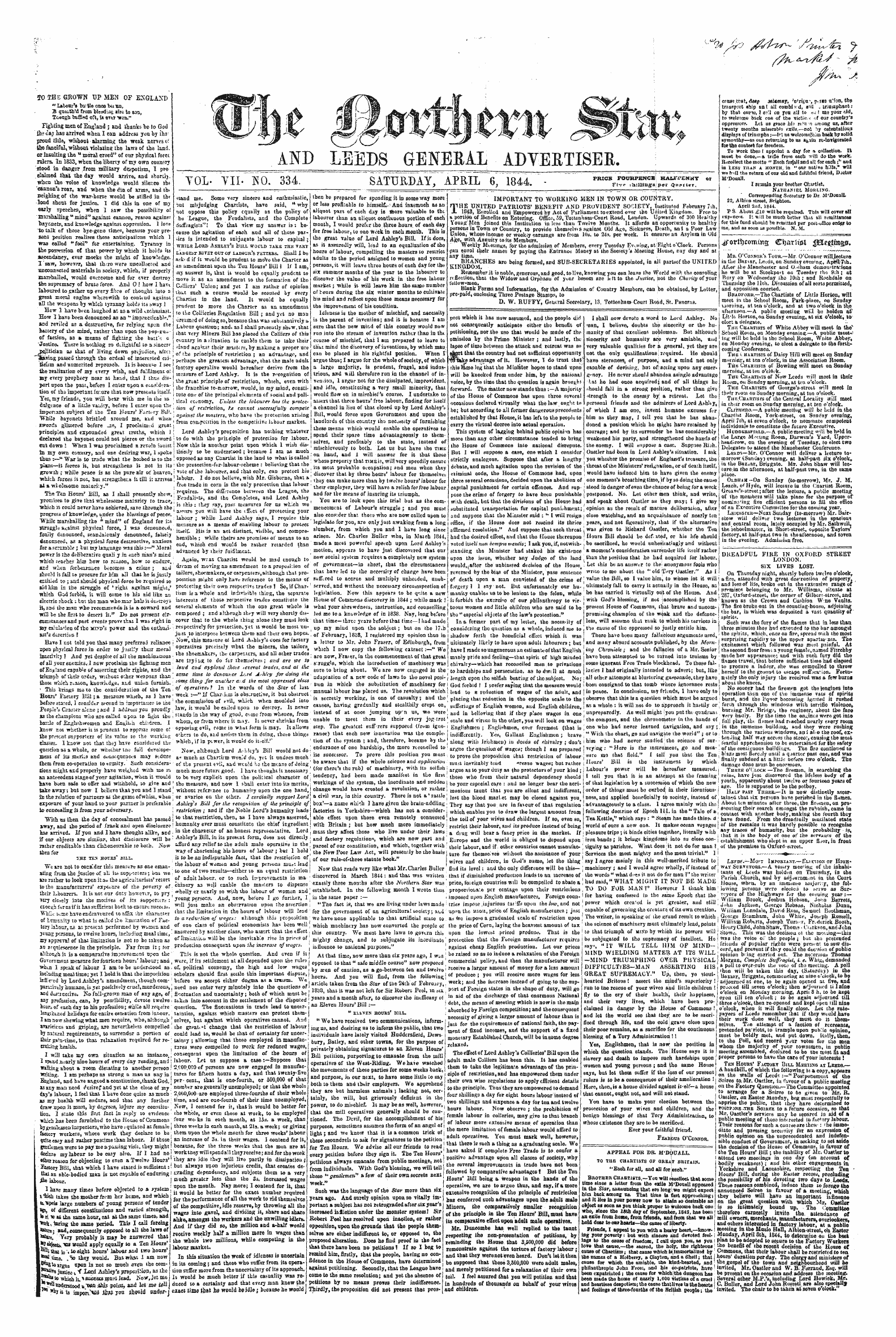
fO THE GROWN UP MEN OF ENGLAND
-

Untitled Article
-

Untitled Article
Note: This text has been automatically extracted via Optical Character Recognition (OCR) software. The text has not been manually corrected and should not be relied on to be an accurate representation of the item.
-
-
Transcript
-
Note: This text has been automatically extracted via Optical Character Recognition (OCR) software. The text has not been manually corrected and should not be relied on to be an accurate representation of the item.
Additionally, when viewing full transcripts, extracted text may not be in the same order as the original document.
Untitled Ad
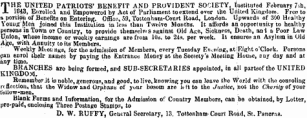
THE UNITED PATRIOTS' BENEFIT AND PROVIDENT SOCIETY , instituted February 7 uh , ICiUJ , Enrolled and Empowered by Act of Parliament to extend over the United Kingdom . Free to a portiofa of Benefits on Entering . Office , 59 , Tottenham-Court Road , London . Upwards of 300 Healthy Youiig lyleh . joined this Institution in less than Twelve Months . It affords ah opportunity to healthy persons in Town or Country , to provide them , « elv < s against Old A ^ e , Sickness , Death , ani a Poor Law Union , whose income or weekly earnings are from 10 s . to 24 a . per week . It ensures an Asylum in Old Age , with Annuity to its Members . \ Weekly Mtetings , for tho admission of Members , every Tuesday Evening , at'Eight o'Clock . Persons can enrol their names by paving the Entrance Money at the Society ' s Meeting House , eny day and at any time . BRANCHES aro being formed , and SUB-SECRETARIES appointed , in all partsof the UNITED KINGDOM , Remember it is noble , generous , and good , to live , knowing you can leave tbe World with the consoling n flection , that the Widow and Orphans of your bosom are it ft to the Justice , not tho Churity of your feilow-men . ; Blank Forms and Information , for the Admission of Country Members , can be obtained , by Letter , pre-paid , enclosing Three Postage Stamps , to D . W . RUFFY , General Secretary , 13 , Tottenham Court Road , St . Paneras .
Untitled Article
" labour ' s ba tie once by tin , B qne . th'd from bltsdiag bik to son , Tusugb baffled ofij is evti i » on . " Fighting men of England j and thanks "be to God ih * ca ? has axrired when I can address jou by tha proad title , without alarming the weak nerves tf the fanciful , without violating the laws of the land , or insulting the moral creed" of cur physical forct jnlers . In 1833 , when the libertj of my own eonnay stood in danger from military despotism , I pro claimed that the day would arrive , and shorih when the voice of knowledge wonld siler . ee At cannon ' s roar , and when the din of arms , and th » neighing of the war-horse would be stifled in the
lond shcut for justice . I did this in one of my ewly speeches , when I saw the possibility ol marshalling "mind" against cannon , reason against fcajenete , and knowledge against oppression . 1 love "to talk of those bye-gone time ? , because your present position realises those anticipations which 1 was called "fool" for entertaining . Tyranny in the possession of that potrer by which it holds its ascendancy , ever mocks the might of incwledge . 1 saWj however , ihai thrro irere nncoliecred sad unconnected materials in society , which , if property marshalled , would overcome and for ever de = tro } - t&e supremacy of brute force . And 0 I how 1 havt laboured to jj&ther up every £ bre of thought into a great lEoral eDgine wherewith to contend against all the weapons by which tyranny holds i ; s sway ]
Bgw I hare bt en laughed at as a wild < . aihusiasi . How I have been denounced as an " impracncabW » ad reriled as a destructive , for relying upon the battery of the mind , rather than upon the pop-cuuof faction , as a means of figkiiEg the bait ' c o "Justice , Tuere is fcoihlag so dili ^ bifnl to a sincere ^ ppjiiician as ihat of living down prejudice , afro " 3 » vhig passed through the ordeal of interested ciitidim and Bcmcrited reproach . It is because I set ihe realization of my every -wish , and fulfilment o : inj every prophecy near at haiid , that I thus disport upon the past , before 1 enter upon a c&a ? : deration of the important lu . ure that now presents itself .
Yes , my friend ? , you will bear with me in the id fiulgence of a litiie vaiiiiy , before I enter ujxtn the isponaiit subject of the Ten fours' F-acu-ry BJ " . While bayonets bristled around me , aid -when Ewords glittered before je , I proclaimed great principles and expounded gre&t truths , which 1 declared the bayonet could not pierce or the sword cut down 1 When I was proclaimed a revoln iouist 5 n my own couuiry , and one desiring war , 1 spoke thus : —** "War is to trade what the hoibed is to the plant—it forces » , but strengthens it not m its growth j while peace is as the pure air of heaven , "Which forces it nor , but strengthens ii till i : arrives at a wholesome maturity . "
The Ten Hours' Bill , as I shall presently shew , promises to give that wholesome maturity to trace ^ which h could never have achieved , save through the progress of knowledge , under the blessings of peace "While marshalling tie * ' mind" of England for i : s Straggle against physical force , I wa 3 denounced , foully denounced , scandalously denounced , falsely fienonnc&c , as a physical force destructive , anxious for a scramble ; iut my language was this : — " 31 oral power is the deliberative quail y In each man ' s micd which reaches him how to reason , hew to endure ,
acd when forbezraiics becomes a crime ; aid ghocl-d is fail te procure for him all that he is justly ectiiled to ; and should physical force be required to aid him in the straggle of 'right against miglit , ' which Gsd forbid , h wiB come to hb aid like ar > ekenic shock : but the man who m ^ r ills it destroy 5 it , and the E 3 E who reccniEEnds is ia a coward and will be ihe first to desert it . " Ik > not present c : rcsxzsiznses and past events prove that I was rfght in By ea-ulanon of the : m > T ) ' ' s power and the enthusiast ' s desertion i
Have I cot told you that many preferred reliance apon physical force in order to justify their moral Inactivity ! And yet desphe of ail the machinations of ail your jecemies , ! hgw proclaim ihe fighting men of Esklaud capab ' e of asserting their rights , and the tr itanpb of their order , wn ' SGu ; oiher weapons than those wliich reason , kuowkd ^ e , ai . d uaiun furnish . ¦ This brings me to the considerition of the T « n Hoars * Factory Biii ; a measure whjcb , as 1 have iefbre stared , 1 consider second ia importance to ihe People's Cnar : er alcne ; and 1 address you prendly as tee champions who are called u poa to S ^ ut tho bailie of Englishwomen and Eniiii = a children . I
ix-ow cot whether it is prudent to apprize some cf the present supporters of its value to the vrcrkins classes- I know uoi that they have considered the question as a whole , or whether tn = full dcreiopemeni of its merits and cotiscqueact-s may seduce them from co-operation to tnmity . Such considerations nn&ht and properly have weighed with me m an aatecedent Etage of your agit&tioD , when it vrould have been safe to offer a&d withhold , to give and take away ; but now I believe ttat yen and 1 stand Si the relation of partners at the game of whist , shea exposure of your hand to your partner is preferable to concealing it from your adversary .
"With as then the day of concealment has passed away , and the period of frank and open diaelosnre has arrived . If yon and I have thonght alike , aEd if onr objects are similar , ihat disclosure will be rather creditable than cistosoarsbie io boib . Sow then far
TSZ TES HOrSS B 1 VL . We are not to cosB ' . dar this measure as one emacafejg from the justice of all iis sup ^ oriers ; Lui we lie rather to look upon it a ^ the agriculturists' retort to the manufacturers' ex-poz ^ re of the porertr of their labourers . It is not eur duty ho- ^ evtr , to pry very cic-sely into the moiires of its supperier ^ : eEocghforosifiihassTiScitut back to emurc succtSr . Whiic s .. asc- have ei-deavtmred to aEs . in ? ciarsicier of hciraiity to wiat is called the liniiiation of Factory labour , as at present performed by women and yc-uag persons , to twelve honrs , including meal time , By approval of that iimuaiioQ is not to be taken as aa sfqalescence in the principle . Far frcm it ; Jor
although it is a comparative improvement npon the Government measure for fonrtten hour = ' labour ; and whui 1 speak of labour I am to be understood as including meal time ; yet I hold it that the imposition itiTfr-d by Lord Ashley ' s amendment , though compsrctiTfcly hniuaiie , is yet positively cruel , murderous , aim deflective . Ko full-gro ^ c man of any ag « , of aay proibsHon , can , by possibility , devote twelve honr of each day to his profession ; while all require lenjfiiifciied hslidays for eniire cest-alioa from iasonr . I as ao-i ? shewing what men require , who , aliboc ^ h aTaricicus and griping , are nevertheless compelled by natural requirements , to surrender a portion oi ibiir gahi-timc , to that rtlaaation required for recraiung health .
I will take my own Eiiuaticn as an instance , 1 sptid iearly nine houre of every day reading , and Walking about a room dictating to another person ¦ Writi ng . I am perhaps as strong a man -zs any in England , and have a ^ gcod a constilution , thank God , as any man need desire J and yet at the close of my iiy ' s labour , 1 feel that I have done quite as much as my health will endure , and that any further ilraw ^ npoa it must , by degrees , injare my constkutioa . I Elate this frit fs . ct in reply to evidence
¦ which has been furnished to the House of Commons by ^ eniiemea inspectors , who have rqaiiiied at female littery workers , whose work they declare to be < pcte easy and rather pastime than labour . If these gentlemen were to pay me a passing visii , they might tedsre my labour to be easy al ? o . If I had no * fiiei reason for objecting to even a Twelve Hours ' Isssory Bill , ihat which 1 have stated is sufficient & * i an able-bodied man is not capable of enduring . #£ labour .
I have many times before objected to & system X ^ tieh . takes £ he mother frcm her home , and which fe" * pek large cumbers of young persons of tender ifs , of 4 ifierent constitutions and varied strength , ^ ii ie aj tie same hour , sat at the same times , and ""fikv taring the same period . This I call forcing * teae . * sd , consequently opposed to all the laws of *« tfte , T « y probably it nay be answered that "Jtbjeeih . 'iM would apply equaZljr to a Ten Hoars ' ^^ fiat is » io ^ ight hours' laiyw and two hours ' ** uaa . . So they would . Bntwh ^ t 1 am now " ^ 5 Vr argue e P ° D is not so much sren ihe com- j ^^ e jOBtice t * Xfs £ Ashley ' s prepcsi-ii > a « as the j Jto to which it . ^ « i « 2 £ 5 mn ? t lead , Soviet m& j *^ ia > dastood a "wa ^ bis poiu ^ and let me && I 9 ! I % Uis inpori ^ A ^ joa &m& under- !
Untitled Article
stand me . Some very sincere and enthusiastic , but misjudging Chartists , have said , " why not oppose this policy equally as the policy of he League , the Feudalists , and tho Complete suffragists" ! To that view my answer is : because the agitation of each and all of those parties is intended to snbjogate labour to capital ; WHILE LOBD ^ SHLET ' S BlLL WOULD TAKE THK V £ . SY LABGEsT K 1 V £ T OUT OT LAB 9 un ' s F £ TTEK 5 . Siiall I be a-fc » d if it would be prudent to moVe the Charter as an amendment Hpon the Ton Hours' Bill I If I am , aiy auswer is , that it would be equally prudent to
move it as aa amendment to ihe formation of the GoliicT 3 ' Union ; and yet I am rathur of opinion that such a course would be scouted by ever ? Chartist in the land . It woqM be equally prudent to move the Charter as au amendment to tke Collieries Regulation Bill ; and yet no man ureioned of doing so , because that was &ubotantively a Labour qnestion ; and . as I shall presently shvw , that ihat very Miners Bili has placed the Colliers of this e « miry in a -otcation to enable them to take their Hand acains ? their masters , by making a proper use
of the principle of restriction ; an advantage , and perhaps the greatest advantage , that the male adult factory operative wonld hereafter derive from the insasure of Lord Ashky . It is the recognition of the great principle of restriction , which , even with the franchise tc-itorrow , would , in my mind , constitute on- of the principal elements cf s-ooial and political economy * Unless the labourer has the protection of restriction , Ac cannot successfully compete against the masters , who have the protection arisiDg from conipcntion in the compciitivo labour market .
Lord Ashley ' s proposition has nothing whatever to do with the principle of protection for labour . Now thi 3 is another point upon which 1 wish distinctly to be understood ; because I am as much opposed as any Chartist in the land to what is called the protection-f&r-labonr-scheme : belieTiDg that the vote of the labourer , and chat only , can protect bis labour . I do not believe , with Mr . Gisborne , that a free trade in com is the only protection that labour
requires- The difference bemeen the League , the Feudali-ts , and the Completes , and Lord Ashlej is jhis : -. hey ^ ay , pass measures for us which we assure you will have the tffect of protecting your labour ; whDe Lord Ashley says , I require this measure as a means of enabling labour to protect itaelfc . His is an act distinct , visible , and comprehensible ; wliile theirs are promises of means to an end , which end would be rather retarded than advanced by ihtir fuifilmeat .
A ^ ain , wrat Cbarrist would be mad enough to dream of Eioviig an amendment to a propeskioa of tailors , shoemakers , or carpenters , although that proposition mi ^ ht only have reference to the means of protecting thtir own respectm trades ! So , if Chartism is a whole and indivisible thing , the separave iuteresls of those respeciire trades constitute the several elements of -which the one great whole is composed ; and although they will very shortly discover that to the whole thing alone they must look respectively for protection , jet it would be most unjust to interpose between them and ihcir own hopes . . Xowj this measure oi Lord A-hlty ' s coes for factory operatives precisely what the miners , the tailors
the fchoemaktrs , the carpenters , and all other tradea are trying to do fur themselves ; and are we to laud arid applaud ihoie icverat trades , and at the sa . mc time to denounce L ^ rd A . -hley for doing tht iQmc thing for another a :-. d ike mat oppressed class of opergtive * ? In the words of the Star of last week : — " If Charaaa is obstructive , it but obstruct ihe commission of t-vil , which when moulded into law , it would be eailed upoa to destroy . It never stands in ibe way of gt > o « 3 , come from whence , from whon , or frcm where it may . It never shrinks from opp&sing evil , come in what form ii may . It allows o * - hers to do , ard assists them in doing , those things which , if in power , it would do i ^ olf . '
2 iow , although Lord Alley ' s Bill would not do a * much as Chartism would do , yet it undoes much of the present evij , aud wculd he the means of doing much more futnrc good . I have thought it necessary to be very explicit upon the political character of tho measure , and now I shall enter into its merits , without reference to hnnsaEny upon the one band , or avarice ou the other . 1 cordially support Lord Ashley ' s BUI for the recognition of the principle of restriction ; and if the 2 s ' oble Lord ' s humanity leads to that restriction , then , as I have always asserted , humanity ever must constitute the chief it-gradient in the character of an hones ; representative . Lord Ashley ' . s Bill , in its present form , does not directly afford any relief to the adult male operative in the
way cf shortening hia hours of labour ; but 1 hold it to be an indisputable fact , that the restriction of the labour of women and young persons mti ? : lead to one of two results—either to an equal restriction of adult labour , or to such improvements in ma chiaery as will enable the masters to dispense wholly cr nearly bo with tho labour of women and young persons . And , now , before I go further , I will just make an observation upon : he assertion thac the limitation in the hours of labour will lead to a reduction of vages : although this proposition of one class of political economists has been well answered by another clas 3 , who assert that the effect of Innkatioa vrillbe the inevitable rise in prirt-3 of production consequent -upon ihe increase of wages .
This is BOt the whole question . And even if it were , if its settlement at all depended upon the rules of , political economy , the high and low wages scholars should first settle this important dispute , before we accept either dogma as a truism . We need noi enter very minutely into the questions of fluctuation and nacertainty ; both of which must be tiken into account in the settlement of the disputed question . The fluctuations in trade lead to uncertainties , againsi which masters can protect themselves , but against which operatives cannot . And the gTPatt c t change that the restriction of labour
could lead to , would be that of certainty for uncertainty ; allowiug that those employed in manufactures were compelled to work for reduced wages , consequent upon the limitation of the hours of labour . Let us suppose a case : —Suppose thai 2 ; € 00 , 000 of persons are now engaged in manufactures for fifteen honrs a day , and that twenty-five per- cent ., that is one-fourth , or 500 , 000 of that number are generally unemployed ; or that the whole 2 . 000 , 000-are employed three-fourths of their whole time , aad are oae-founh of their time unemployed , Now , I contend for it , that it would be better for
the whole , or even those at work , to be employed four we > ks in each month , at 15 s . a week , than three weeks ia each month , at 21 a . a week ; or giving them upon the whole mouth for three weeks' labour an increase of 3 a . in their wages . 1 contend for it , because , for the three week 3 that the men aTe at worktney will spendall they receive ; and for the week they are idle they will live partly in dissipation ; but always upon iDJariocs credit , that creates degrading dependency , and subjects them to a very
ttuch greater loss than the 3 s . increased wages npon the month . Nay more ; I contend for it , that it would be better for the exact number required for thB performance of all the work to rid themselves of the competitive , idle reserve , by throwing all the wages into gavel , and dividing it , share and share alike , amongst the workers and the unwilling idlers . And if they did so , the million and a-half would receive weekly half a million more in wages than the whole two millions , while competing in the
labour market . In this situation the week of idleness is uncertain in its coming ; and those who suffer from its operation suffer more from the uncertainly of its approach . It would be much better if this carnality was reduced to a certainty and that every man knew the exact fcizns &aJ be would bsidle : because he woold
Untitled Article
then be prepared for spending it iD some way more or less profitable to himself . ^ And inasmuch as an aliquot part of each day iB fiiore valuable to tht labourer than an aiiquot contiKuous portion of each month , I would prefer the three hours , of each day for free labour , to one week in each month . This is the great valne of Lord Ashley ' s Bill . IfitdoeB , as it assuredly will , lead to an equalization of the
hours of labour , compelling the masters to restnot adults to the period assigned to women and young persons , it will leave three houra of each day for the six summer months of the year to the labourer to discover the value of his work in the free labour market ; while it will leave him the same number eft ours during the six winter months to cultivate his mind and reflect upon those means necessary for the improvement of his condition .
Idleness is the mother of mischief , and necessity is the parent of invention ; and it is beoause I am sure that the new mind of this country would now rnn into tho stream of invention rather than in tht course of mischief , that I ata prepared to leave to th a . ! mind the discovery of inventions , by which mau can be placed in his rightful position . When I argue thus ; I argue for the whole of Bociety , of which a large majority , is prudent , frugal , and industrious , and « til therefore run in the channel of invention , 1 argue not for the dissipated , improvident , and idle , constituting a very small minority , that would How on in mischief's course . I undertake to assert that three hours' freo labour , finding for itself
a channel in liuu of that closed up by Lord Ashley '* - Bill , would force Bpon Government and upon the landlords of this country tha neccosity of furnishing these means which would enable the operatives to spend their spare time advantageously to themselves , and profitably to the state , instead of mischievously to both . Let us but have the time on hand , a . nd 1 will answer for it that those whose property that time is , will very speedily ensure its most probable occupation ; and men when they discover that by three hours' labour fer themselves they can make more than by twelve hours'labour for their employer , they will have a relish for free labour and for tfce means of insuring its triumph .
You are to look upon this trial but as the commencement of Labour's straggle ; and you must also cons-. der that thosa who are now called upon to legislate for you , are only just awaking from a long slumber , from which you and I have long since arisen . Mr . Charles Boiler whs , in Match 1844 , made a meet powerful speech upon Lord Ashley's motion , appears to have just discovered that our new social system require ? a completely new system of government—in short , that the circumstances that have led to the necefsity of chacge have been suffered to accrue and multiply unheeded ,
uuybserved , and without the necessary circumspection of legislation . Kow this appears to be q > v . te & new House of Comraona discovery in 1844 ; while mark what your shrewdness , instruction , and counselling led me to a knowledge of in 1838 . Nay , iong before that time—three yrare before that time—I had made up my mind upon the subject ; but on the 17 ib of February , 1828 , I registered my opinion thus in a letter to Mr . John Fraser , of Edinburgh , from which I now copy tfee following extract : — " We are now , Fraser , in the commencement of that great struggle , which the introduction of machinery was
sure to bring about . We are now engaged in the adaptation of a new code of laws to the novel position in which the substitution of machinery for manual labour ba 8 placed us . The revolution whioh is secretly working , is one of casualty ; and tho causes , having gradually and stealthily crept on , instead of at once jumping up ' n us , wo were unable to meet them in their every jog ( rot step . The grea ? cst suff rers euppoetd ( from ignorauoe ) that each new innovation was the completion of tho system ; and , therefore , became by the endurance of one hardship , the more reconciled to its successor . To prove this position you must be aware that if the whole science and application
( for there ' s the rub ) of machinery , with its selfish tendency , had been made manifest in the first workings of the system , the inordinate and sudden change would have created a revolution , or rather a civil war , in this country . There is not a' rattle box' —a name which I have given the brain-addling factories in Yorkshire—wbioh has not a oonsiderable effect upon those even remotely connected with Britain ; but how much more immediately must they affect those who live under their laws and factory regulations , which are now part and parcel of our constitution , and which , together with the New Poor Law Act , will presemly be the basis of our rule-of-threo statute book . "
Now that readB very like what Mr . Charles Buller discovered in March 1844 : and that was written exaetly three mouths after the Northern Star was established . In the followiug month I wroto thus iii the satue paper : — " The fact is , that wo are living under laws made for the government of an agricultural society ; aui we have none applicable to that artificial state to which machinery has now converted the people of this country . We must have laws to govern thia mighty change , and to subjugate its inordinate influence to national purposes . "
At that time , now more than six years ago , I wjb opposed to that " safe middle course" now proposed by rcea of caution , as a go-between ten aud twelve hours . And you will find , from the following article taken from the Star of the 24 th of February , 18 i 53 , that it was not left for Sir Robert . Peel , in six years and a month after , to discover the intfficaoy oi an Eleven Hours' Bill : —
" ELEVEN HOUBS * BILL . *• We have received two communications , informing us , and desiring us to inform the public , that two individuals have lately visited Huddersfieid , Dewsbury , Satley , and other towns , for the purpose of privately obtaining signatures to an Eleven Hours ' Bill petition , purporting to emanate from the mill operatives of the West-Riding . We hate watched the movements of these parties for some weeks back , and purpose , iu our next , to have some little to say both to them and thoir employers . We apprehend they are but harmless animals ; lacking not ,
certainly , the will , but grievously deficient in the pewer , to do mischief . It may be as well , however , that the mill operatives generally should be cautioned . The Devil , for the accomplishment of his purposes , sometimes assumes the form of an angel of light ; and we know that it is a common trick of these seonndrels to ask for signatures to the petition for Ten Hours . We advise all our friends to read every petition before they sign it . The Ten Hours ' petitions always emanate from public meetings , not from individuals . With God ' s blessing , we will tell these ' gentlemen" a few of their own secrets next week . "
Such was the language of the Star more than six years ago . And surely opinion upon so vitally important a subject has not retrograded after six year ' s increased itliotion under the monster system ! Sir Robert Peel has resolved upon inaction , or rather opposition , upon the grounds that the people them * selves are either indifferent to , or opposed to , the proposed alteration . Does he find proof ia the fact that there have been no petitions ! If so I beg to remind htm , firstly , that the people , having no confidence in the House of Commons , have determined against petitioning . Secondly , that the League have come to the same resolution ; and yet the absence of petitions by no means proves their indifferenoe . Thirdly , the proposition did cot present that pros-
Untitled Article
pect which it has now assumed , and tho peopla did not consequently anticipate either tho beuufit of petitioning , nor the uso that would be made of the omission by the Prime Minister ; and lastly , the lapse of time between the attack and retreat was so abort that the country had not sufficient opportunity "ftn ^ ke advantage of it . However , I do trust that shiamme leg that the Minister hopes to stand upon will be knocked from under him , by the national voice , by the time that tho question is again brought forward . The matter now stands thus : —A majority of the House of Commons has upon three several occasions declared virtually what the law ought to be ; but according to all former dangerous precedents established by that House , it has left to the peopiu to carry the virtual decree into actual operation .
This system of lagging behind public opinion has more than any other circumstance tended to bring the House of Commons into national disrepute . But I will suppose a case , one which I consider strictly analogous . Suppose that after a lengthy debate , and much agitation upon the revision of the criminal code , the House of Commons had , upon three several occasions , decided upon the abolition of capital punishment for certain offoncea . And suppose the crime of forgery to have been punishable with death , but that the divisions of the House had substituted traasportatiou for capital puni .-hment ; and suppose that the Minister said : " I will resign
office , if the House does not rewoind its thrice affirmed resolution . " Aud suppose that such threat bad the desired effect , and that tho House thereupon voted itself won tempos ruentis ; I ask you , if , notwithstanding the Minister had btaked his existence upon the issue , whether any Judge of the land would , ( after the unbiassed decision of the House reversed by the bias of the Minister , pass sentence of death upon a man convicted of the crime of forgery } 1 eay not . But unfortunately our humanity enables ub to be leniont to the felon , while i ; forbids the excrci ^ o of our philanthropy to virtuous women and little children who are said to be tho " especial objects of the law's proteotion . "
In a forcaer part of my letter , the necessity of considering tho question as a whole , induced me to shadow forth the beneficial effect which it was ultimately likely to have upon adult labourers ; but have I made so ungenerous an estimate of that English manly pride and feeling—that spirit of high minded chivalry—which has reconciled men to privations to hardships and persecution , as to dm 11 at much length upon tho selfish bearing of tho subjoot . No ; God forbid 1 I prefer saying that the measure would lead to a reduction of wages of tho adult , and placing that reduction in tho opposite scale to the
sufferings of English women , and English children , aud in belioviug that if they p ? aco wagea ia one scale and virvue i \\ the other , you will look on wages Englishmen ; Englishmen , ever foremost ( that is indifferently . Yen , Gallant Englishmen ; brave along with irishmen ) in deeds of chivalry ; doa ' t argue the question of wagea ; though I am prepared to prove the proposition that restriction of labour must inevitably tend « rease wages ; but rather argue as to your duty as the protectors of your kind ; those who from their natural dependency should be your especial care : and no longer bear the
acrimonious taunt that you are silout and indifferent , lest the blood marlet may be closed against you , They say that you are in favour of that regulation which enables you to draw the largest amount from the toil of your wives and children . If so , even so , restrict their labour , and its produce instead of being a drug will bear a faucy price in the market . If Europe and the world is obliged to depend upon their labour , and if other countries cannot manufacture for themselves without the assistance of your wives aud children , in Gud ' s name , let the thing find its level : and tho only difference will be
thisthat if diminished production leads to an increase of price , i ' oieign countries will be compelled to abate a proporviotia ' . e per ccntage upon their restrictions imposed upon English manufactures . Foreign countries impose . injurious tariffs ? upon the low , aud not upon the high , price of English manufactures ; just as wo impose a graduated tcalo of restriction upon tho price of Corn , laying the heaviest amount of tax upon tho lowoit priced produce . That ia the protection that the Foreign manufacturer requires against cheap English production . Let our prices be raised so as to induce a relaxation of the Foreign
commercial policy , aud then the manufacturer will receive a larger amount of money for a less amount of produce ; you will receive more wages for less work ; and the increase instead of going to the support of Foreign states in the shape of duty , will go in aid of the discharge of that enormous National debt , the means of meeting which is now in the main absorbed by Foreign competition ; and the consequent necessity of giving a larger amount of labour than is just for the requirements of national faith , the payment of fixed incomes , and the support of a fixed monetary Established Churoa , will be in some degree relaxed .
The effect of Lord Ashley ' s Collieries' Bill upon the adult male Colliers has been this . It has enabled them to take the legitimate advantage of the principle of restriction , and has empowered them under their own wise regulations to apply efficient details to ( he principle . Thus they are empowered to demand four shillings a day for eight houra labour instead of two shillings and sixpence a day for ten and twelve hours labour . Now observe ; the prohibition of female labour in colJeries , may give to that branch of labour more extensive means of operation than the mere limitation of female labour would afford to
adult operatives . You muBt mark well , however , that there iB such a thing as a graduating scale . We have asked if complete Free Trade is to . confer a positive advantage upon all classes of society , why the Boveral improvements ia trade have not been followed by comparative advantages ! But the Ten Hours' Bill being a weapon in the hands of tho operative , we are to arguo thus , and say , if a more extensive recognition of the principle of restriction has conferred such advantages upon the adult male Miners , the comparatively smaller recognition of the prinoiple in the Ten Hoars'Bill , mast have its comparative effect upon adult male operatives .
Mr . Duncombe has well replied to the taunt respecting the non-presentation of petitions , by reminding the House that 3 , 500 , 000 did before remonstrate against the torture of factory labour ; and that they were not even heard . Don't let it then be supposed that those 3 , 500 , 000 were adult males , and merely petitioned for a relaxation of their own toil . I fed assured that you will petition and that in hundreds of thousands on behalf of your wires and children . '
Untitled Article
I shall now devote a word to Lord Ashley . No naan , I believe , doubts the sincerity or tho humanity of that excellent , nobleman . But although sincerity and humanity are very amiable , aud very valuable qualities for a general , yet they are not the only qualifications \ required . He should have sternness ,, of purpose , ; and a mind not only capable of devi&ing , but of acting upon any emerg' -ncy . He never Hhould abandoa asinglo advantage hat he had once acquired ; and of all things he should fall in a strong position , rather than give
strength to the enemy by ; a retreat . Let the personal friends and the admirers of Lord Ashley , of which I am one , invent humane excuses for him an they may , I tell you that he has abandoned a position which he might have retained by courage ; and by its surrender he has considerably weakened his party , and strengthened the hands of the enemy . I will suppose a case . Suppose Rish . Oastler had been in Lord Ashley ' s situation . I ask you whether the promise of England ' s treasure , the thrc&t of the Ministers' resignation , or of death itself , would have induced him to have given the enemy
one moment ' s breathing time , if by so doing the cause stood in danger of even the chance of being for a week postponed . No . Let other men think , and write , and speak about Oastler a « they way ; I give my opinion as the result of mature deliberation , after close watching , and an acquaintance of nearly ten years , and not figuratively , that if the alternative was given to Richard Oastler , whether the Ten Hours Bill should be defeated , or his life should be sacrificed , ho would unhesitatingly and without a moment's consideration surrender life itself rather
than the position that he had acquired for labour , Let this be an answer to the anonymous fools who write to mo about tiio " old Tory Oastler . " Aa i value the Bill , so I value him , to whose lot it will ultimately fall to carry it actually in tho House , as he has carried it virtually out of the House . And with God ' s blessing , if nub accomplished by the present House of Commons , that brave and uucoov promising champion of the weak and the defenceless , will assume that rank to which his services in tho cause of the oppressed so juatlv entitle him .
There have been many fallacious arguments usea , and many absurd accounts published , by the Morning Chronicle ; and the fallacies of a Mr . Senior have been attempted to bo turned into truisms : by gome ignorant Free Trade blockhead . To those fallacies I had originally intended to advert ; but , like all other attempts at blustering gasconade , they havo been consigned to that tomb where ignorance rests in peace . In conclusion , my friends , I havo only to observe that this is a question whioh must be argued as a whole : it will nov do to approach it hastily or unpreparedly . As well might iyou put the quadrant the compass , and the chronometer in the hands of one who bad never learned navigation , and say ; " With the chart , go and navigate the world" ; or to him who had never studied the science of
surveying : " Here is the instrument , go aud measure mo that field . " I tell you that the Ten Hours' Bill ia the instrument by which Labour ' s power will be hereafter measured . I teil you that it is an attempt at the framing of that legislation by a succession of which the new order of things must bo carbed ia their licentiousness , and applied beneficially to society , instead of advantageously to a class . I agree mainly with tho following doctrine of Epoch III . in the "Tale of a Tea Kettle , " which Bays : " Steam has made thiso . d world of ours a new one . It makes ocean voyages pleasure trips ; it binds cities together , literally with iron bands : it brings kingdoms into &a close
contiguity as parishes . What does ; it not do for man ? Services the most mighty and the most trivial . " I say I agree maiuly ia this well-merited tribute to machinery ; and I would agree wholly , if instead of the words " what di < es it not do for man V the writer had said , " WHAT MIGHT IT NOT BE MADE TO DO FOR MAN V * However I thank him for having confessed in the same Epooh that the power which crea ' od is yet | greater , and still capable of governing the creature of its owu creation . The writer , in speaking oi ihe « rund result to which the science of machinery roust ultimately lead , points to that triumph of miis ' d by which itd powers will bt ) subjugated to the supremacy of intellect . He any * , "IT WILL TELL HIM OF
MINDMIND WIELDING MATTER AT ITS WILL —MIND TRIUMPHING OYER PHYSICAL DIFFICULT ! ES-M AN ASSERTING HIS GREAT SUPREMACY . " Up , then , ye stouthearted Britons ! assert the mind's superiority run to the rescue of your wives and little children fly to the cry of their health , their happiness , and their very lives , which have been proclaimed in danger by the House of Commons ! and let the world see that they are to be sacrificed through life , and the cold : grave close upon their poor remains , as a sacrifice for the continuous blessing of a Tory Administration 1 !
Yes , Englishmen , that is now the position w which the question stands . The j House says it is slavery and death to impose such hardships upon women aud young persons ; and the same House says , but let them suffer if the lpss of our present rulers is to be a consequence of their amelioration I Hare , then , is a house divided against itself—a house that canuot , ought not , and will not staud . You have to make your election between the protection of your wires and children , and the benign blessings of that Tory Administration , to whose existence they are to be sacrificed . Ever your faithful friend . Feab&us O'Connor .
Untitled Article
TO THE CHAETISTS OF GEEa | t BRITAIN . 4 Each for all , and all for each . " Brother Chabtists , —You wttl recollect that some time since a letter from the write MiJouall appeared ia the Slat , announcing that ere long ! we might expect him back among us . That time is fast approaching ; and it lies in your power now to attain no desirable an object aa soon aa you think proper to welcome back ono who , fllnoe the 18 th day of September , 1842 , has been aa exile from home , from friends , and from that we all hold dew toonrheurU—tho cause of liberty .
Friends , I appeal to you with a heavy heart , —knowing your poverty : but witb sincere and devoted feelings to tho cause of freedom , I call upon you , as you lova that cause , —tbe sacred , the holy , the righteous cause of Chartism ; that cause which is immortalized by tbe names of a Holberry , a Clayton , and a Shell ; that cause for which the amiable , tbe kind-hearted , and philanthropic John Ftoai , and his co-patriota , have been expatriated ; the cause for which the dungeon has been made the home of neatly 1 , 000 vietims of a cruel and heartless despotism ; the cause thatlives in the heatta and feelings of three-fourths of the British people ; the
Untitled Article
* z &o j&Pzsf ^ '¦ J // frlwJbi t ' csuse tt ? at , desp mtmaj , ' n ' rigu ^ , pv . r « 9 u'fon , the transport ship an ! all coabivd , sMl < triuiupbant : by that cauie , I c ^ l on jrou ail to « . s ! ras your aid , to welcome back one of the victin s of our country ' s oppressor ? . Let us grace his rtVE-fi among us , after twenty months miserable exile . —do ! by ostentatious displays of triumphs ;—let us welcomo ) him back by solid sympathy—as one returning to us a ^ iiu re-invigorated for the contest for freedem . To Work then ! appoint a day for a collection . Ifc must be done , —a trifle from each v .-ill do the work . Recollect the motto " Each forjall and all for each ;'' and in LESS than A month , in " our native h'lls , " will we hiil the retain ol our old and faithful friend , Doctor M'Douall . I remain your brother Chartist , Nathaniel Morli . vg . Correspanding Sdcietary to Dr M'DoualL 22 , Albion street , Brighton . April 2 nd . 1844 . P S . About £ 10 wUl be required . This will cover all exp ^ nces . It ¦ Rill be much better that all remittances for this fund should be remitted per post-office order to me , and as soon as posaible . N . M . .
Untitled Article
Mr . O'Connor ' s Tour . —Mr . O'Connor willjeoture in the Bazaar , Leuds , on Sunday evening , Apl 0 ? th . After the Manchester and 0 ;< iham demonstrations he will bo at Stockport oa Tuesday the ikh ; afc Bury on Wednesday » ho 10 th ; and Rochdale on . Thursday the 11 th . Discussion of all Bom permitted , and opposition courted . Bbadforu . —The Chartists of Little Horton , will meet in the School Room , Park-place , on Sunday uorning , at ten o'clock , and at two o ' clock in the afternoon . —A public meeting will bs holden at ? Lit' It Horton , on , Sunday evening , at six o ' clock , to elect , a delegate . '• Thk Chartists of White Abbey will meet in the School Room , on Monday evening . —A public meeting will be held in the School Room , Wiiite Abbey , on Monday evening , to elect a delegate to the forthcoming Conference .
The i habtists of Daisy Hill will meet on Sunday mi > rninH , at ten o ' clock , in the Association Room . Thk Chartists of Bowliug will meet on Sunday morniaii , at ten o ' cio .-k . The Chartists of Now Leeds tvill meet in their Room , on Sunday morning , at ten o'clock . The Chartists of George ' s-street will meet in thw ' r room on Sunday morning , at ten o ' clock , TiiK . CHARTisrs of the Central Locality will meet in chair room on Snnday morning , at ten o ' clock . Clithkeo . —A public meeting will be held in the Chartist Room , York-street , on Sunday evening , April 7 th , at seven o'clock , to nominate competent individuals to constitute tbe future Executive . Huddersfikld . —A public meeting will be hold ia tLe Large M > tung Room , Darweu ' s Yard , Upperhead-row , on the everting of Tuesday , to elect two Delegates to attend the Manchester Conference .
Leeds—Mr . O'Connor will deliver a lecture tomorrow ( Sunday ) evening , at half-past six o ' clock ,, iu the Bazaar , Bripgate . Mr . John Shaw will leoture . iu the afternoon , at half-past two , in the same place . Ol » h * m -On Sunday ( to-morrow ) , Mr . J . M . Leach , of Hyde , will lecture ia the Cnartist Room , Greave'e-street ; after the lecture , a public meeting of the members will take place for ihe purpose of nominri'ing five efficient persona to fill tbe office of an Executive Committee for the ensuing year .
LEicesrER—Next Sunday ( to-morrow ) Mr . Bairsfcow will dolivor two lectures in the spacious and _ central room , lately occupied by Mr . SathweH , the 3 ohooimast « r , in Short-street , opposite Titylora factory , at half-paat two in ihe afternoon , and saven in the evening . Admibciun free .
Untitled Article
SIX LIVES LOST . On Thursday night , shortly before twelve o'clock , a fire , attended with great destruction of property , and loss of life , broke out in the extensive range of premises belonging to Mr . Williams , situate at 287 , Oxford-street , tbe corner of Gilberr-street , and known as the Crown aud Cushion W . ne Vaults . The fire broke out in the counting-house , adjoining the bar , in which was deposited a vast quantity of spirit ? .
Such was the fury of the flames that in less than three minutes they had extended to the bar amongst the spirits , which , once on fire , spread with tho most surprising rapidity to the upper apartia' nts . Tho excitement which followed was most painful . At the second floor frono a young female , named Fisrchby made , her appearance ; and with * such fury did the flames travel , that before suffieieat time had elapsed to procure a ladder , she was compelled to throw hersolf to the ground to escape euf £ > ua * ion . Fortunttely tho only injury the received was a few burnl about the knees .
No sooner had the firemen got the { engines into operation thsn one of the immense vats of spirits burst , and the rq > ior becoming ignited it rushed forth through the windows with terrifio violence , burning Mr . Bridg . ? , the engineer , about the faoe vwy bauly . By the time the engines ware got into full play , thf flimes had rt ached nearly every room in the imtneuse building , and they were rushing through the various windows , ao j al ; o the roof , exten Jing half way across the strecr , causing the most /' earful apprehension to be entertained for tho safety of the contisuous buildings . The fire continued to b ! azc ? mos& fiercely until a qjarter past one , and waa finally subdued at a little before two o ' clock . The damage done mus . be enormous . Thkee o'Clock —The fireman , in searching the riling , have just discovered the lifeless body of » youth , apparently about twelve or fourteen years of age . Ho is supposed to be the potboy .
Half past Three . —It is now distinctly ascertained that six persons bave perished in the fUmes . About ten minutes after three , the firoiaeu , on prosecuting their search amongst the rubbish , came in contact with another body , making the fourth they have found . From the dreadfully mutilated state of tbe remains it was hardly possible to recognise any traces of humanity , but the probability is , that it is tbe body of one of the servants of tha establishment who slept in an upper fl ^ or , in front of the premises in Oxford -street .
Appeal Fok Dr. M'Douall.
APPEAL FOK DR . M'DOUALL .
Important To Working Men In Town Or Country.
IMPORTANT TO WORKING MEN IN TOWN OR COUNTRY .
4jroftt)Con\Mg C^Arltjst ^ Egmajs.
4 jroftt ) con \ mg C ^ arltjst ^ egmajS .
Dreadful Fire In Oxford Street London.
DREADFUL FIRE IN OXFORD STREET LONDON .
Untitled Article
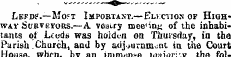
Lefd ? . —Moft Important . —Election of Highway Surveyors . —A vestry meeun ^ of the inhabitants of Lcuds was hoiden on Thursday , in the Parish Church , and by adjournment in the Court House , when , by an immense wajoriiy , the following persons wrro electea to s-erve as Surveyors of the Highways for the ensuing year : — William Brook , Joshua Hobson , Jo ^ n Barrett , John Jackson , George Robsod , Nicholas Dunu , Wiiliam Lonsdale , David Ross , Samuel Boothman , George Bramham , John While , Joseph Russell , William Roburts , Joseph Turin .-r , Frederick Booth , Htuiry Child , John Shaw , Thorns- Curkson , and John Stowo . This was the decision ot the meeting—ibis was the voice of the people ; but the preteaded friends of popular rights were ' presr . nl to sow discord , and prevent if they could the dscsioa of public
opinion b ; ing carried out . The no : or ; ouo Thomas Morgan , Complete Suffragist ^ i . e . Whi « , demanded a poll to ovyr-rule tht > you of tha raeetiug . A poll then will be takon this day , ( Saturday ) in the Bazaar , Briggate , commenciug at nine o'clock , to ba adjourned at one , to be again opened at five , and proceed till seven o ' clock ; then adjourned ti Inine o ' clock on Monday morning , April 8 h , to be kept opon till ten o ' clock ; to be agaiu adjourned till three o ' clock , then re-opened and kept open till nine o ' clock , when it will finally close . Let the ratepayers of Leeds remember that if they would have their work dune well , they must do it themselves . Tlie attempt of a faction of recreants , pretended pa'riots , to trample upon pub . 'ic opinion , must be boldly met , and put down . Rally , then , to the Poll , aud record your votes for the men whom the majority of your townsmen , in public meeting assembled , declared to be tne most fit and proper persons to have the oare of your interests !
Ten Hours' Facxort Bill Meeting at Leeds . — A handbill , of which the following ia a copy , appeats on the watlB of Leeds : — " Postponement of the Soiree to , Mr . Oastler , ia favour of a public meeting on tbe Factory Question . —The Comojitteo appointed to arrange for a Soiree to be given to Air . R . Oastler , on Easter Monday , beg most respectfully to apprise the public , that they have determined to postpone . thb Soikee to a future occasion , so that Mr . Oastler ' s services may be seoared in aid of a public meeting of those iritrreeted iu frtc ^ ry labour . Their reasons for such a course are these : rhe immediate and pressing necessity for an expression of public opinion on the unprecedented and indefensible conduct of Government , in seeking to set aside
the decision of tho House of Commons , in favour of the Tea Houra' BUI ; the inability of Mr . Oastler to attend two meetings in one day ( on account of bodily weakness ); aud his other engagements iu Yorkshire and Lancashire , respecting the Tea Hours' Bill , during the Easter recess , precluding the possibility of his devoting two days to Leeds . These reasons combined , induce them to forego tha announced Soiree in favour of a meeting , which they believe will have au important iufluenee on the great question with which Mr . Oastler is so intimately bound up . The Committee therefore earnestly invite the attendance of
mm owners , merchants , manufacturers , overlookers , and others interested in factory labour , at a public meeting in the Music Hall , Albion-street , oh Easter Monday , April 8 th , 1844 , to determine on the best plan , to be adopted to secure to the Factory Workers the benefit of the peceflt decision of the House of Commons , that their labour shall be restricted to tea hours' duration per day . The elergyand ministers of the gospel of the town and neighbourhood will be invited , Mr . Oastler and W , B- Ferrand , Esq . will be present on the occasion and address the meeting . Several other M . P . ' s , including Lord Bowiefe , Mr . C . Buller , and Lord John Russet !^ are also specially invited . The chair to be taken at seven o ' clock .
Fo The Grown Up Men Of England
fO THE GROWN UP MEN OF ENGLAND
Untitled Article
TOL- VII- RO . 334 . ~ SATURDAY , APRIL 6 , 1844 . - " PRtcs ^^^^^ f "
Untitled Article
AND LEEDS GENEML ADVERTISER .
-
-
Citation
-
Northern Star (1837-1852), April 6, 1844, page unpag, in the Nineteenth-Century Serials Edition (2008; 2018) ncse.ac.uk/periodicals/ns/issues/vm2-ncseproduct1259/page/1/
-