On this page
-
Departments (3)
-
Text (9)
-

" £$* Csn&ttton x>f ^rnglanfc *' Lsvrs grind the poor, and rich men rule the lvw."
-

Untitled Article
-

tfoveign EnUlUctenu.
-
Untitled Article
-

Untitled Article
-
Untitled Article
-

Untitled Article
-

(gharttet SuteUtseuce.
-

Untitled Article
Note: This text has been automatically extracted via Optical Character Recognition (OCR) software. The text has not been manually corrected and should not be relied on to be an accurate representation of the item.
-
-
Transcript
-
Note: This text has been automatically extracted via Optical Character Recognition (OCR) software. The text has not been manually corrected and should not be relied on to be an accurate representation of the item.
Additionally, when viewing full transcripts, extracted text may not be in the same order as the original document.
" £$* Csn&Ttton X≫F ^Rnglanfc *' Lsvrs Grind The Poor, And Rich Men Rule The Lvw."
" £$ * Csn&ttton x > f ^ rnglanfc * ' Lsvrs grind the poor , and rich men rule the lvw . "
Untitled Article
BIRMINGHAM AND ITS T 1 GINITY . Birmingham is indeed & remarkable place , in the midst of remarkable and interesting Bcenery—so dose to other counties than an hour ' s walk 'will carry you into the lovely and luxuriant Worcestershire , or tbt » densely populated Staffordshire , interesting alike from its smszing mineral resources , and for its industrious , patient , ill-paid people . A aile from our busy town , and we come-upon the Toad to Hales Oven { or Yell's as it is called by the natives ) and in view of the loveliest valley in the "world , albeit there are many : as far as the charmed eye can
reach , are soft , B-welling , green hills , ^ aiet shady lanes , little valleys with the bright sparkling waters of a canal glancing now and then in a blink of sanshine , Tillage spires peeping np from groTes of trees , ¦ while here and thfire the curlinj ; smoke arises from firm-houses 50 remote , and 50 secluded , that wandering only a hundred yards from the turnpike road , we can scarcely fancy ourselves in busy England ; the startled hare and rabbit dart across our path , the wood-pigeon cooes in the tall trees , while , in the back-groandr giving an exquisite finisa to the scene , arise the blue-tinted hills of the Lickey , dent , and MalYem .
Here Shenstonb wrste—here he lired—Tor here are iis far-famed Leasowes , aperfeet garden " of beautywith eTery diversity of landscape stretched out to the admiring © ye : in this aoft and lovely climate people ve , too , to a good old age ; and if or there is a reverse $ 0 thiB picture ) " here , people—too -many alas—live until life is a burden , for here , in the midst of God ' s bounty and loveliness , stalks the carse of poverty—the whole population of this beautoua region being , without distinction of « jc , nailers , a name at once descriptive of all poverty ani wretchedness . Everywhere cottages and mud hovels meet the eye in the most picturesque situations , built up of such incongruous materials , and in such dilap idation , as would rejoice the heart of a paintertut to plain prose , appear neither more nor less than utter distress snd poverty .
Toeach of these cottages or hovels is attached a shed foriheiorge ; and here may be « een tfce maid , the matron , the yonng , the old , the strong and the -weak , "Working from early dawn till long after " dewy eve , " —perhaps not able to sell tkeir day ' s work at any price ; perhaps , next day , wandering with a bagful to our town , begging at every shop door that we would l > uy them , or ia the majority of cases receiving from fourpence halfpenny to sixpence for their long days ¦ work-This state of existence , for it cannot be called living , precludes instruction , —that blessing being confined to the inhabitants of this " happy valley" while children -, they are , "while children , taught at Sunday Schools imperfecily to read and write , but ther * their education ceases—for from the time that they have strength enough to hold a hammer , their doom is fixed . Many
% slight and graceful girl have I seen wielding a hammer , who would have much better become the benches ol a day-school , both from her tender age and delicatetorm . dad in a coarse woollen petticoat , a rough handkerchief covering her bosom as protection from the sparks of redhot iron , and sufficiently disclosing her stays and shift sleevts . The only little display of feminine vanity attempted , iaiathe arrangement of her hair : no time to spare for curling and braiding , she is a gainer in appearance from her smooth unadorned tresses ; and the poor niHer girl m « y be forgiven the bit of coquetry with which she keeps the door half shut to hide her poor attire , while she peeps cut en hearing the sound of approaching wheels . Alas ! poor girl , well she knows , despite her now graceful and flexible form , before she is thirty years old , she will be bent to the shape of the anvil at which she now worki singing with all the light-heartedness of youth .
She cannot extricate herself—for all the girls round her are nailers , or , until very lately , work in coal-pits . She cannot be a servant—for her hovel never required . household work , and she knows nothing of it ; while her talents as a cook have never been tested farther than potatoes snd bacon . She has no alternative ; she exists , and works on , as ail the district do , until she becomes & crippled , starred and miserable object , living in the midst ef beauty with the slightest appreciation of it , iB the midst of plenty without partaking of it , and with no other notion of the power * f God than that he is the inflicter of her present hard fate , which if she bears without murmuring , she may , by possibility , obtain some future reward .
And with all tba boast of superior intellect , the men are the same ignorant , hardworking , helpless , starred objects as the women ; from the constant habit of stooping over their work , they are not ab / ve half as tall at fifty as they were at twenty . In the close neighbourhood of some of the finest saline springs in the kingdom , they are dirty aad neglectful of th eir persona . Thus they vegetate on , with no i nstruction , no amusement , no relaxation , no luxury but tobacco , which is used by bothsexea and all ages . Sauntering alsng one of th * lanes , 1 stopped at a wel known smithy , and asked the girl if she had ever iieard of Shenstone ? " The oald conjurer , ha has made song 3 and verses , and put up seats under the trees for folks to sit and look at the fields •" " 1 suppose you mean the same—do you ever walk through his Leasowes on a Sunday ? ' '
*• 2 « et L I bin so tired , and my arms aching s » with my week ' s work , that I mostly lies abed Sundays , toll toward night sometimes 2 goes to meetin . " She picked up a short black pipe . 1 remarked , " was sorry to see so young a girl smoke . " " Perhapsyou'd smoke too . if you feadn't nothing * l « e . " God knows , perhaps I should . •* But I thought women ' s luxury was lea ? * " Yes , when they can get it ; hereabouts we drinks peppermint tea ; real tea is deur , you know , and we earns no money sc&roe : I Bometimes think I'd better Jang myself than live to grow old . " "But I heard you wereaboutto be married ?"
"Well , and it ' s time : he ' s but a rough soit of blade , and I dire say 1 shall have to work as hard then asnow , but 1 than perhaps get more to eat ~ for I don't mind , telling j ? o»—and I ' m sure it is no sin , like thieving any thing else—but he often catches hares and them ttings . that swarm about here , and so he gets a little more than always TtaUir . 3 . Th > yon think it wicked ?" "I can't say J think it wicked ; but be might be found cut , yon know . " " Ah , so be might—well , we mun take eur luck ; we « an * t go on in this way . " A whole senson on the sin of poaching would not make me believe it was a sin , if , like this poor girl , 1 never tasted aTrimni food from one year ' s end to another .
How easy for wise men to make laws , and how easy for virtuous men to declaim upon the necessity of obeying those laws ; but ho-w frail a barrier are they , When hungry desperation stands arrayed against them . The character of the scenery entirely changes on approaching the confines of South Staffordshire ; and with it , also change the occupation , habits , xcd- manners ol Joe people , iases , instead of being pleasant and ahady ,. become mere ravines , as if in some convulsion oJ the earth tbe solid rock had been rest asander ; the land
becomes broken into little abrupt round hollows , clearly i ndicating the nature of the snbtennnean operations going on all ro « nd ; fields , though &U hill and hollow , are exceedingly fruitful—tbe heat of the soil producing tbe best and most luxuriant" crops ; and though now advancing into a manufacturing district , all-soundB and signs of bustle are shut out in the calm peacefolness of the fccene , until mounting a short hill , or turning a sharp comer , unexpectedly apppears one of those hires of human industry and « fc'H for which the wholecwmty is celebrated .
J » o longer do "hedge-rows green" divide the . fields and fence in the garden plots . Cinders piled one jipon the other supply the place j not cinders such as we see in parlour graces—but huge masses of calcine from which the iron ore has been extracted . Instead of mudbuilt or thatched cottages , the sheds and oat-houses are built up of this material , and often roofed with platesof ' iron ; and when the chinks are well filled ap , are certainly more comfortable , and are not unsightly to the eye . Here and ihera are small brick buifdings some- aing like beehives , t * mm the heedless from approaching , for they indicate tbe mwrth of an exhausted ! mine , j and the earth is always treMhercus even after many years . y ,
Similar structures of a larger ate are placed near the opening of every coal-pit for the accommodation pi the miners ; tram-roads intersect the ground in every direction ; and in many piaces , steam issues from fissures and holes in the basks , so hot as to make it painful to hold the hand in it fora moment Such is tie difference in general appearance within four miles , —and in the iBhabitants is a * great a change . Instead of rude cottage buildings , the bouses are decorated with staring- eoloaraj window-shutters are painted ia tbe . strongest contrasts of blue and brickdust ; iron scroll work painted green serves for eortain , while a range of garden pots of the brightest red are generally placed on a shelf half way up the window .
Instead of the mild , low accent in which the nailers of the valley speak , the tone ia land and harsh , and the dialect scarcely to be understood except by long acquaintance with the county . I remember , when a * hild , being electrified by a smart alap on tbe sheulder , awempanied by " Ou ' se na ate , wancfe J" which being Interpreted meant an hospitable inquiry , why I did not eatmore . . " ^ Maifcez , " bawls a damsel fpon a haase 4 oo » to bermottwr in tt » fields opposite , " whae * * aij feytbert portage cup i - _ "O ' er nuut ti » ateaki , - ahouta th . aateoa in
Tfce b » of nicknames Is aniTersal , and the droll applkabiiity of many of them speaks much for the n * - ] taral htanour possessed by the natives , while tieir i » ffl ^ ia proverbial ; so high ia its tone of moral JeeUng [ except In one small corner of thia region , the ! limit * of which are so clearly defined , tkat even mar- ! rages oat of it are rare ) , that no attempt at palliation 4 ) r extenuation of it ia ever TmyHp How sorrowful to rtfiect Qoi such a people should neither receive a fair reward Sot their labour , cor more inftrastida than they can gaiter while cbMreBitthe Brad s * actooolMl .
Untitled Article
Heavy indeed is tfce satire presented by South Staffordshire to that false philanthropy which sends teachers and aids of all kinds to distant lands—forgetting to look at home . —Illuminated Magazine .
INHUMAN CONDUCT OF THE MASTER OF A UNION WORKHOUSE . About a month ago a poor man , named William Hearnden , a vendor of writing paper , called at the office of the DUpalch , in an agony of mind that cannot be described without harrowing up the feelings of our readers , and related that his little daughter Emma , an inmate of tbe Blean union poor-house at Berne , had , by order of the governor , been locked up in the deadhouse of the establishment , as a punishment for wetting her bed . This statement was corroborated by a letter the poor fellow held in his hand from another daughter ( Elizabeth ) , who had visited Emma in the union , and learned from her the ill-treatment she had experienced . The Editor of the Dispatch at once communicated with the Poor * law Commissioners , at Somerset-house , through j the medium of Edwin Chad wick , Efq Ia his letter i the matter was briefly stated , and tbe Commissioners ,
i greatly to their credit , at once directed tbe Board of , Guardians to prosecute an ijrvestigatien into the buti-| ness , and acqnaint them with the resalt The Board : accordingly instituted an inquiry—what an irqairy ! ! and came to the conclusion that Emma Hearndeu had ' never been within the walla of tbe dead-house either j by day or night , and that the Board of Guardians j were perfectly satisfied that such were the facts 1 Of coarse such a conclusion a this sagacious Board j arrived at was sufficient to throw discredit upon our ' statement ; bat , after the lapse of a few days , having in j tb * meantime made further inquiry , we again thought ; proper to biat to the Poor Law Commissioners , that > not only wa » our statement corroborated by some obser-^ vations made by the editor of the Kati Herald , but that I that spirited Individual had stated that too great seve-, r ity was ased in punishing the boys and girls in the house ' ¦ ¦ by flogging . "
The Commissioners were dissatisfied with the Guardians' report . They placed no faith in its correctness , and accordingly they appointed an investigation to take place before Mr . Hall ; and a more searching inquiry , we believe , was never instituted . Our reporter was present during the whole of the proceedings , and by that gentleman we have been placed in possession of a foil sod faithful report of the investigation ; but the following outline will be found sufficient to establish the truth of our statement , and confirm the guilty , criminal , and atrocious conduct of the master . The inquiry took place in the Board-Room of the ILiion House at Herne Common , on Monday , and the meeting was declared by tbe Commifcaionef , at the request of several of the Guardians , to be an open one ; in consequence of which the room throughout the day was crowded by persons from Herne , Herne Bay , and surrounding places .
Mr . Walker , solicitor , of Canterbury , attended to watch the proceedings on the part of the accused , and Mr . T . T . Da Lasaux , Coroner for East Kent , kindly stepped forward on behalf of the poor friendless child . The following Guardians of the respective parishes were present : —Mr . Rammell , Chairman ; Mr . G . Goddard , Yice-Chsinnan ; Mr . Hyder ; Mr . "W . F . Hilton ; Mr . Isaac Sladden ; Mr . Wootton , Chislet ; Mr . Wootton , Westbere ; Mr . Knight ; Mr . W . Denne ; Mr . Bedwell ; Mr , F . Neame ; Jdr . Wacher ; and Mr . G . Austen .
Mr . Hall briefly opened the business , after which Emma Hearnden was called in and examined . She stated that she was between nine and ten years of age , and that up to Friday but , at which time Mr . De Las » ux took her away , she had bees an inmate of the workhouse , and had lived there nearly two years , during which pariod she had often been shut up in a room called the dea ^ -house , by order of tbe master , who would often , when be came up to read prayers to the children , ask if she had " wet her bed ; " and if the other girls said yes , he used to say , " then she shall go down to the dead-room . " Sometimes she w&s taken there , and sometimes she went on being told to go , as she dared , not refuse . On one occasion , about a year ago , she was taken there by the " young
mistress" ( the daughter of the master ) , at which time the body of Mrs . Ing let on , who had died the day before , was in the room ; the body was covered over with a sheet , but the face was not ; it was lying on a board , and some straw under the bead , and two carpenter ' s stools ( trusties ) supported it from the ground . She cried very much , and begged to be let out ; she was placed in the dead-house shortly after breakfast , aad Wia released just before dinner time ; and on the following day , in tbe afternoon , sba was again placed there , and the body was still lying there . On this occasion she was not let out till it was " darkish ; " tbe women and children were about going to bed . Sametimes sh » wss locked in and sometimes not . One or more times she slept there , when there was a bed
carried in for her , and on these occasions she was locked in , but when she was not , she did not dare to come ont , and if she cried , ker young miBttess would bring a cane and beat her on the back . Witness believed that she had told one of the gentlemen present (' meaning the guardians ) , but could not identify which ; but not when she was examined by tbtm a short time ago , as she was afraid to de so , as if she h&d she would have been punished , not by iho guardians—they bad never punished her , or ordtred her to be punished , but she was afraid of the master , who has often slapped her with his hands for the offence alluded to , and he said if she said anything about him when she went our , he would give it her wben sbe came home again .
Mrs . Holborn , now residing at Herne Bay , was , in March , 1 & 43 , an inmate , with five children , of the workhouse . Remembers Mrs . lugleton dying on a Sunday , and she helped to lay out the dead body , and assisted in taking it to the dead-house . It was put in a shell , and some straw laid under tbe head , a sheet was thrown over tbe body , but not over the face . On the following morning , Emma Hearnden was locked in the room by Sarah Bailey , the master ' s daughter . The child cried very much , and witness , with another woman , went to the window and endeavoured to console her . Bhe was clasping her hands together and begged to be released . The room ia question w&s known by the name of tbe " dead-housa "
Mrs . Browning , also an inmate at tbe time , was next sworn . She gave tbe same facts in evidence as the above , but said that the body ms not in a shell , but only on the li d ef one . Mr . Walker asked her if she had any conversation with the child af ler she came out ef tke r # om , to which the witn « ss somewhat sharply replied , •¦ No , I dared hardly to spesk to my own children . " Sarah Overy , also in the workhouse at the same time , csrroborited the last two witnesses . She also assisted in removing the body of Mrs . lnglston ; she went twice to the window to pacify the child , and persuade her not to cry bo . On the second day , tbe Court was opened at eleven o ' clock , and was again soon filled by au anxious auditory . Previous to tbe examination of tbe witnesses ,
Mr . Austin said that the rate-psyers of the ville of tbe Archbishop ' s Pdlacs bad come to the resolution ef engaging Mr . 3 > . Lasanx , professionally , to watch the case in their name on behalf of the child . A number of witnesses were examined on be > . alf of tbe master , the principal of whom wss Mary Walker ; who seated that Emma was never punished . Never kept on bread acd water . Never locked up . Never punished in any other way . Emma was in the habit of wetting her bed , but never punished for it . Had been reprimanded , as the other girls had complained to the mistress about it . and she bad been threatened to be
sent down to the straw-room to sleep , but she never waB sent down . The threat was only said to frighten her . The straw-room is one of the lower rooms away from the other sleeping rooms . It had been formerly tbe dead-room , but not for the last twelve months . The dtad-room is now two doers from it Mrs . Ingleton died on tbe 12 : h of March . No girl could be shut np without witness knowing it . Emma Hearnden waa once shut up , it was in April , but does not remember what day of the month Jt was , for wetting her bed . The school mistresss shut her up ( Miss Sarah Bailey acts as upper school mistress ) only about one hour .
[ This witness , like all the others for the master , had evidently been well " crammed" before wming into " court . " ] Mr . Hall asked if they intended to produce any further " evidence ? Mr . Walker said , " No ; " it had been intended to have examined Sarah Bailey , " the yonng mistress" so often named , but he should decline doing bo . Mr . Hall remarked , that Mr . Walker had been well advised . Mr . Hall thanked the Guardians for their attendance , and tiated that the evidence would be bud before the Commissioners .
This is the evidence to support our statement ; and the public may glean from it that , but for the exposures ol the press—when that engine is fearlessly employed , ; and arrayed on the side of truth—what gross inhu- ] manity would prevail in our public estabUshment ? , and bow much poverty would be exposed to the bruto nature of nu in authority . Here we have the case of a poor child , -whose parent , to our knowledge , has j seen better dtya , thrown into a dead house , as a punish- JBcnt , because the b ' ttle creature wetted the bed on I which she slept J Never was anything half so inhuman i —*» monstrourip brutal—as the conduct of th « master ) boa proved , if ^ er man possessed a demon heart , Uaefioveraar of thB Blean Union ia that person ; ' his conduct to E-ims Hearden must be execrated ! of 1
by parsons » I colours and ereed «; and no- i thing ahort of txpulslon from hi . situation wixl ! satisfy an BUtraged peblic Mrs . Holboro'a evidence as U the fact of finding tbe child in the dead-house , i with the corpse of Mrs . Ingleton , affords a dreadful i proof of the shocking treUmeat to the jnvenUe paupera . j Mrs . Holbora said * little Emma was locked up in the ' dead-toase bj Sarah Bailer , the mas ter * daughter ;! wben she saw the poor thfctg , she waa clasping her hands and begging to be released ! ' The witnessi Browning corroborated Mrs . Ealbdrn ' s statement ; but ' she did not speak to tbe little prisoner , seeing ¦ that > she hardly dartd to do so to her own children ! ' What ' a very hell upon earth must a ooion workhomse be , where motherly womtn and children , if they look
awry , are liable to be punished . ' We sow come to the evidence for the defence ; and , i In the Snt place , a girl named Mary Walker la called . She declares that Ensta waa never locked np , and asya , moreover , that Emma Hearnden'a slater released j her . Another witness , one Sarah White , told so many j lie * for Mi&t Bailey and hei father , as to < i « tro / iei j
Untitled Article
credibility . In fact , tbe evidenco for the defence waa a weak invention , and went far to support tbe charge . We have no wish to triamph over a man whose guilt had now b # en proved beyond the possibility of doubt ; but we must take credit to ourselves for having brought the matter to an issue most satisfactory to the ends or justice , but most damnatory to the reputation of tbe master and his amiable daughter . These exposures are calculated to do Immense good . They tend to curb the vicious , and rein in those whose natures , if they were left alone , would outrage and disgrace humanity .
Our reporter has especially noticed the conduct of Mr . De Lassaux , GK Austen , Esq ., and Mr . Sharp , of the CasUe Inn , who have been indefatigable in tbeir endeavours to promote the ends of justice . Indeed , uuch has been the excitement at Canterbury , Herne Bay and their neighbourhoods that persons of all ( hades of politics , warmly , pressed forward in behalf of the littl * girl who , it has bow been proved , was so brutally treaUci ; at tbe instance of the master and his daughter Betsy . — ' Abridged from the Weekly Dispatch . i Horrible Pbofligacy in the West London Ukion Wobkhouse . —Not long since , a porter named ; Crowley—we may as well give the name of the man—1 walked about the precincts of the Workhouse in a state of loathsome disease : this fellow communicated the
complaint to three or four girls ; and notwithstanding the fact was notorious , the Guardians suffered him to remain in his situation , to do more mischief , if be thought proper ; and Crowley did not leave until he was fined £ 5 for ill-treating a policeman , when he bolted , in order to avoid paying the flue . Another porter , whose name is Stroud , enacted an equally vile part A poor deaf and dumb girl , not long since , was missing from one of the wards . Inquiry was made to ascertain her hiding-place , but without tffect for some time ; at length the superioress of the ward , as though Bhe had reason to suspect Stroud ' a conduct , intimated tbat the affixted girl might be concealed in the porter's lodga . Two or three stout matrons volunteered their Bervicea to search Stroud ' a room ; and there the dumb girl was discovered in his bed ! Scenes of the greatest profligacy have been brought home to parties ; yet we do not bear that they were even admonished for their conduct Stroad ' sbehaviour was iafcmous , but was he dismissed ?
O , no ; his crime was considered of so trifling a character , tbat he was suffered to remain in hia situation ; and it was not until the lapse of a considerable period tbat he was discharged for another 1 fiance . We defy the Guardians to contradict these statement *; and we ask whether they can reasonably expect any hotter conduct in the establishment controuled by them than that recently exhibited by Ashplant ? We truht the Poor Law Commissioners , for tbe protection of the females who may become inmates of the West London Union—for their own honour—for the sake of public morals and decency—for religion ' s sake , and all that is sacred upon earth , will throw the shield of protection around a parcel- of unprotected girls ; and instead of allowing them to be trained to the path of vice , wil have principles of virtue , morality , au 4 religion instilled into their youthful minds . We may add , that wheu the Guardians become a reforming body , we may expect things to be better looked after . — Weekly Dispatch .
Tfoveign Enuluctenu.
tfoveign EnUlUctenu .
Untitled Article
FKANCE Pbogress of Republicanism . —The correspondent of the Dispatch states tnat the Republican pa « ty is gaining great ground , and is rapidly augmenting its numbers and its influence . Wiih all the vigilance of the police , and all the activity of tho spy system , secret meeiings are held frequently in Pans ; and an active correspondence is kept up , not sOuly wuh provincial associations of a similar kind , but also with the Republicans of Italy , Spain , and Germany . The Republicans in Paris possess an immense secret fund , to which some of the leading individuals of French society , such as Arago , the celebrated
astronomer and Deputy . ; David , the famous t-oulptor , and others , —not forgetting Armand Marrast , auoble disciple of Carrel , —contribute . —The efforts of the French Republican agents in Germany and Italy have produced an immense effect ; nor have recent events in Greece been altogether independent of the same springs of action . Defeatof thbMisjstby . —The Ministry sustained a defeat on Wednesday , in the Chamber of Deputies , on a clause of tbe Recruiting of the Army Bill . Ministers were anxious to increase the time of service from seven to eight years ; but a majority of seven negatived the proposition .
The Pbiests . —The excitement got up by the clergy on the subject of education , is becoming every day more alarming , and it gives threat uneasiness 10 the Government . On Saturday , tho Minister of the Interior received despatches from the Prefects of Morbihan and Fimskrre , which give a most unsatisfactory account of the state of these provinces . Tne smaller clergy are doing all they can to excite the people ; and a great number of instances are giveil in which the priests interrupted divine servioe to harangue the people on tbe attempts made to destroy religion , and oblige their parishioners to sign protests against the Education Bill w ,. ich is now before the Chamber of feers . The Government is placed in a complete dilemma by thete demonstrations , and it is difficult to say how the conduct of the clergy is to be met .
Is ' tw French ; Tariff . —The Monitcur of Wednesday contains the ministerial project of law regpecling the customs as laid before the Chamber ot Deputies on Tuesday . One of its principal provisions is to raise the duty upon all machinery imported into France from foreign countries . The present duty is thirty per cent , ad valorum on steam engines , and fifteen per cent , on other machinery ; and these duties are to be greatly increased . There is very little change made with respect to the importation of thread and linen cloths , and the opposition papers attack the government severely for not baring afforded additional protection to the home manufactures of France .
SPAIN . Qieen Christina made her public entry into Madrid on Sunday , the 24 tfi inst . Senor Muuoz , who btdl remains at Paris , has bees raised to the peerage , preparatory to a regular marriage with the Queen mother . The affair is thus given in gome ot the Paris papers : — " M . Mun&z , Chamberlain to the Queen of Spain , an old superior officer of the G . iard , has received the titles of Duke of Riatzares , aud ot Grandee of Spain of tho first class , " Cakthagena . — A telegraphic despatch dated Madrid , March 27 . h , states that Carthagena surrendered at discretion on Che 25 th uit . Moke Blood . —The work 01 vengeance is not yet over at Alicant : " woe to the vanquished" in Spain . A letter from Orihuela of the 16 . h inst ., published in the ministerial Castellano , gives the tallowing additional executions : —
" The day before yesterday seven of those who took an active part in the rebellion were shot at Alicant . It is said that up to fifty are to suffer this terrible punishment , imposed by the military commission , and that more than 200 will be seat to the presidios" ( put to hard labour . ) "Othtrs have also been shot in their respective villages . " The above seven , not including the " others" shot and not kept account of , amounts already to fifty since the siege of Alicant began ; besides two women sentenced on the 18 ^ h at Barcelona 10 two and six years' hard labour respectively , for being privy to their husband ' s treasons aud not informing against them !
in addition to the sixty five individuals denounced at Alicant a few days since by Genoral Roncali . the Madrid Ministerial journal publish a list of thirtynine others , all of whom are sought for to suffer the penalty of high treason ; and similar denunciations of being pas ; dos par las armas ( shot ) are levelled at all who niuy secrete them !
ITALY . Serions disturbances have taken place in Naples . According to a latter from that capital of the 1 . 8 . ih inst ., a movement has also taken place at Cocenza , in Calabria . The people attacked the residence of the Prefect and the soldiers' barracks . In making the attack , their cry was " Down with the Government ! ' * * ' Long live Liberty and the Constitution !" Three men were killed on the side of tho people , and a great number wounded . Of the troops upwards of thirty were killed , among whom waa Captain Galuppi and an under officer , besides a great many
wounded . The Government has taken active measures to put down these disturbances , and great bodies of troops are now marching into Calabria . Several battalions have also been dispatched to Sicily , where disturbances are apprehended . Considerable alarm prevailed at Naples , as the movement had extended over the whole of Italy . Numerous additional arrests had taken place in the Romagna , and among others the Canon Brasa . Letters from Leghorn state that the sentence pro . nonnced by the Military Ccmmifsion on the insurgents , lately tried , had been confirmed by tho Pope . Many of them h&d been condemned to tbe galleys
Untitled Article
for life . These disturbances , of course , are exciting the anxious attention of Austria , and as the miserable ayatem of Government under the Pope renders it impossible to suppress domestio insurrections without foreign aid , a good plea will be made out for marching troops to Rome , aad possibly also to Naples . More Revolts . —A letter from Rome , of the 12 ch , in the Leipsic Gazette , says : — " A great excitement continues to prevail at Ravenna and Bologna . A < ew days ago a conflict took place between the population of Faenza and some gendarmes , who were killed , and their bodies were mutilated . It appears that similar excesses have taken place at Rimini . " The Augsburg Gazelte t ot' the 24 th , states that a few Jays previously an attempt at insurrection was made it Imola . It was put down , and several of the rioters were arrested . Some were wounded , aad others saved themselves by flight .
The Church in Danger . —In letters from Rome of the 18 th , it is stated that tho Cabinet of Vienna bas intimated to the Pontifical Government , its intention of sending a body of Austrian troops into the Legations . At the time that this transpired , a courier extraordinary arrived from Naples , bringing accounts of the troubles which have broken out at CooeLza and at 'Irani . It was said that the insurgents at Trani bad marched upon Foggia , and that the Marquis del Carrotio , the Minister of Police , had proceeded at the head of a large body of gend'armerie to put down the revolt . These accounts put tho people of Rome into a state of great excitement , and that excitement was greatly increased when a Pontifical ordinance was issued , ordering a public mourning of three days , during which every one is obliged to fast and to offer up public prayers , supplicating God and tho Virgin to save 1 ho Church from the storm with which it is threa
tuned . Lntkrfereuce op the Austrian Despot . —A variety of . rumourt ; are abroad as to the intentions of Austria to interfere in favour of the Italian governments , by marching an army to Rome aud Naples to their assistance . By some it is baid that both the King of Naples and the Pope have demanded assistanoe from the Cabinet of Vienna , which hesitates what to do . Others say , that Austria has offered assistance , which has been accepted by the Pope , but deoJined by his Majesty of Naples . fiRCA ' SiA . —A letter published in the Gazelle a"Augsburg Btates that the people of Caucasus havo recently gained some successes over the Russians , and that the famous Dschamil , whom the
Tschetchons find the Kkzes venerate as a prophet , bas made himself master of the whole of northern Daghestan , and at the same tiuie has opened the road from Kishin to Balla , besides taking possession of tb . o town of Tarki , on the Capsiau faea . The mountaineers have taken several- forts by assault , and the garrisons , after defending themselves desperately against an enemy twenty times moie numerous than themselves , havo been shot or bayonetted . On the other hand , the towns which have joined the Russians were subjected to tho same fata . The people were either murdered or oarried into slavery , On the lo ^ h of December ,
General Kludge and Colonel Pakitsch rescued the garrison of the fort of Scrano , which was closely invested by the enemy . Dochamil was obiiged to betake himself to the mountains , carrying with him the guns which he had taken . In spriug the operations against the mountaineers are to rec mmence . The Russian infantry will be increased to 134 battalions . There is no word of the recall of General Yermolloff . The Genoral alleges that it will take half a century to conquer the Caucasus , but he adds , that it is necessary for the Russians to possess that route of communication with Central Asia , and that they will end by having it .
TURKEY . Private correspondence from Constantinople of the 13 th ult . announces , that on that day the Porte delivered a reply to the note of the British and Freuch Ambassadors , respecting the execution of relapsed renegades , which was believed to be of an unsatisfactory nature .
UNITED STATES . The packet-ship Virginian , Captain Allen , which sailed from New York on the 11 th ult ., arrived at Liverpool on Monday afternoon , bringing papers to the date of her tailing , or five days later than had been previously received . The most important news brought by this arrival is that on Friday , the 8 th of March , Mr . M'Kay handed in to the House of Representatives a new Tariff Bill , as reported by the Chairman of tho Committee of Ways and Means , proposing that the maximum duty on imports shall be thirty per cent , until the 1 st of September , 1845 ,
and afterwards twenty-five per cent ., and that tbe valuation shall be the cost and charges at tho p lace of exportation . Tho duties not fixed by the new bill are to be the same as that of 1842 Mr . Calhouu , one of the foremost of AmericaH politicians , had accepted , under Mr . Tyler , tho office of Secretary of btate , vacant by tho death of the former Secretary , who was killed on board the Princeton . This will not make much , if any , difference , in the telative position of the candidates for the Presidency , as it appears t /> be understood that Mr . Van Buren is to be the next democratic candidate
The Presidency . —The Democratic Convention at Harmburg , Pennsylvania , bas nominated the Hun . Henry A . Muhlenburg , of Berks , for the office of Governor of Pennsylvania . On the Presidential question a vote was taken , Martin Van Buren receiving 91 , R . M . Johnson 36 , and Lewis Cass 1 . Van Buren was therefore declared their choice for the Presidency , and Colonel Johnson was then nomiaated by acclamation for tho Vice-Presidency .
CANADA . The Canada papers say that an amnesty has been received from the Home Government , pardoning all Canadian rebels , but not extending tbat pardon to strangers . INDrA AND CHfNA . Teleobathic Di path , Malta , March 20 th . — " The Indian Mail of the 1 st Murch adds nothing to the events of Gwalvor , but the return of the army within the British territory / with the artillery and ! other contributions obtained from thit State , and ' the formation of the subsidiary contingent to be com- ' manded by British officers . The rievrs from China , which is dated the 12 th of January , is purely commercial . "
FOREIGN MISCELLANY . The Tbaitob of the Barricades—It ia rumoured that the contemplated visit of his Maj « ty King , Louis Philippe to this country will take place early ' in June , and that his Majesty will be accompanied ' by tftt Queen and the Prince and Pnnce 3 des Join- ; ville Standard . ] Thr Pkess in Fbance— " There are at this mo- ' men > in France , " says tho Reformt , " this ancient , land of liberty—27 editors of newspapers confined 1 in prison . Since 1830 jjurnahsm has paid 7 , 600 , 000 f in fines ' , and incurred judgments amounting to im- j prixunment for 184 years and 10 months . "
Marshal Soult—By the death of . the King of Sweden , Marshal Soult has become the sole survivor j of all the eighteen Marshals of the Empire created 1 by Napoleon in 1804 , at the camp of Boulogne . Death of Thohwaslden thej SciaproK . —Copejj- j hage . n , Makch 26 " . —The celebrated Thonvaslden ' died suddenly the day before yesterday . He was j taken ill : in the theatre , carried out , and died immediately . He was 74 years old . From the Rhine , March 20 . —Accounts from Copenhagen , which may be depended on , confirm the ntws from Washington , that the Americans threaten to interfere by force in the affair of the 1 Souni duties . We hear that Great Britain and Russia have been requested to intervene by diplomatic negotiations in this matter . ' :
The Whig State Onvention of Pennsylvania has nominated General Joseph Markle for the next governor- ; and tho Democratic Convention has nominated Mr . Muhlonberg . The latter will succeed , as the majority of the Pennsylvaniansaredemocratic . The New YorK ; ' Native American Association" is increasing , aud intends nominating Jas . Harper , one ot the Kr « sat and rich publisher ! 5 , as mayor . Me . W . Siraiford , laie of Eugland , was accidentally killed on Friday , at Lewjstowu , Pennsylvania . The Governor ot Mississippi states , in & late address , that only one person in fifteen , in that state , of the white population , can read . At Now Orleans , on the 24 th ult ..
Colonel D . H . Twogood was killed at a political meeting , by C . Hornsley , Esq . JDr . Brisbane , of South Carolina , has stated his intention to free all his slaves , and settle them comfortably on some lands in Ohio . The University a * . St . LouiB was much injured by tho populace a few days since , owing to the improper exposure of some mutilated bodies by the medical students , having excited popular indignation . A bill abolishing imprisonment for debt has passed the Legislature of Maryland . A female clave has been arrested in Richmond , charged wtt > h poisoning three of her own children and two white children of the family in which she was living .
Untitled Article
BRIGHTON . —A special general mee ' . ini ? waa held at tbe Cap of Liberty , on Sunday evening last , Mr . Roaer in the cbair . j Mr . Page nominated and Mr . Najlor seconded Feavgua O'Connor , Esq ., Thomas M . Wheeler , Philip M Grath , Henry Ross , and Thomas Ciuik as fit and proper persona to eerve as tho Executive National Charter Asaociation . The meeting waa addressed by Messrs . ^ Foist , Divey , Giles , Virgo , and others , who spoke Very bigtily of the above named gentlemen . On the motion being put , it was carried unanimously . We are happy to state the i ? ood cause is progressing in this town ; now members are enrolled almost evtjry meeting inigbt .
BlLSTON—The Chartists of this locality held thuir usual weekly meetiDg in the large room ? in Stafibrdetreet , on Sunday evening " last . After tbe busings * of the meeting was ended , the committee expressed tbeir anxious desire tbat Air . O'Connor she aid pay this locality a visit , on bis read home from tbe Conference about to be held in Manchester . They are assured that much good wo » id be the result to the Chinist causa . A letter was read from T . Thornlay , E > q , wlaich had been written respecting a memorial again * t the fourth clause of the ! Masters aad Sorvants B'il . Mr . Thornley expressed his satisfaction of theproceedir . gaof the working classes of BilstvH at the same time promising that Mr . Villitjrs and himself would pay every attention to tbe Bill on its next discussion after Easter . DUBLIN — A placard having been posted throughout the c'ty , on Saturday , headed " Tna State Tri . ils and the Repeal of the Union , ' and announcing that the Chartists of Dublin would meet at their Hall , No . 14 , North Anne-atreet , at one o ' clock next day , when a motion for tbe Repeal of the Union would be submitted to the meeting , there was a considerable attendance of members and others at the appointed hour . As usual upon such occasions two of the iiwpectors of the Metropolitan Police presented themselves at the dour , and were invited by the president to walk in . take seats , and ht-ar wbafc was going on , Tfcey politely declined the invitation , and s . iid that they had b < jeu aur&c ' ed there by the placardsiand tho crowd . The police havo ^ been heretofore ) in the habit of tearing down the placards
as fast as tkey were posted ; but in the present instance they did not meddle , with them . The following note was appended to the placards . " N . B . As copies of tbis placard have been sent to all the police offices and Station-houses in Dublin , the police have no excuse for tearing thorn down or meddling with them . " Tbis precaution had the desired effect . Not a placard was touched . At half past one o ' clock Mr . Patrick Moran waa called to the chair . The Chairman stated the nature end intention of the resolution of which notice had been given the previous Sunday . Hfi said that be had joined the Chartists in Eu ^ laud in 1841 , ami thnt independently of the principles of the Charter , with which no honest man ; could find fault , but on tbe contrary approve , he would have joined the Chartists
because he found them every where , in public and , in private , tho sincere arid honest advocates of the ri « fets and liberties of tho people of Ireland—icheere . ) He knew that these vilified and calumniated people petitioned ParJtiment to disarm the Orange Yeomanry of the North of Ireland , or to arm thb Catholics so as they should be on a perfect equality with their Orange neighbours —( hear , hear ) . Now he wouki ask did that look like hostility to the Irish , as was otated over and over again by a certnin great personage whom he should not nameju 8 t at present ? . ; He ( Mr . Moraui could noc see either the wisdom or the honeaty in makintt the people of Ireland believe thatitheir real trun hear'ed friends , tbe Chartists of England , were thfi-r emiuits . What good oHdct was to be achieved by tfce u « ver-ended
repetition of this \ atrocious calumny ? The author of it knows it to be falsa ; and yet , ha continues to repeat it , and at the same time nfF . cts a gie-t regard for religion and morality . The public htvinij beorat disgusted with this falsehood , a new charge tqjiliy false and mme despicable has been got up againut the Chartists They are now accused of being the worst enemies of Keform ; that they disturb and upset nli public meetings for Reform . Now he ( Mr . Moran ) would tell the ineetingithe kind of Keformers th * y overthrew . There is a gentleman of tbe name of R cu » rd CoMen , the leader of the Anti-Corn League , who wrote a pamphlet some years since , which pamphlet he ( Mr . Moran ) held in his hand and from which he should read a few extracts . [ TheChairniantheureadsever . il
parts of Mr . Cobdeu ' s pamphlet , in whicd fee describes the Irish , people as a low , filthy , degrade ! race , addicted by instinct to all manner of vice , and bring iu ^ tbeir low abominable habits into every country in which they got a footing , contaminating society wherever they went . In another part be eays that the Catholic religion Is a disgrace to human nature 3 Now this is the libeller whom the Chartists oppose ; and Mr . O'Gonnell accuses them of being enemies Of Reform , because tuey will not cheer this libeller of bis religion and bis countrymen—( shame , shame ) . It is a shame . Walter of the Times has been assailed , while Cobden bas not only been passed over , but when ' Mr . O'Connell was Lord Mayor of Dublin he invited tbis Bame Cobden to Dublin , to deliver lectures a' the Mansion-house for a Repeal
of the Corn Liwa , which means low wages for vhe working men and greater profits for tbe manufacturers and spinners . Besides , ' tbe Repeal of the Corn Laws , unaccompanied by otner measures of far greater importance , would , if carried , have tbe tfll-ct of turning adrift upon tbe world thousands of small tillage farmers ; because catt ' . e would then be more profitable than corn , and consequently the landlords , who are itching to get rid of the small farm tenantry , would convert all th « tillage farms into pasturag * . This turning out would be nearly as bad as the destruction of tbe honest forty shilling freeholders —( bear , hear ) . He ( Mr . Moran ) could not comprehend how it was that Mr . O'Connell always threw himself into tbe arms of tbe enemies of his country . Why has he tieated with contumely nnd
scorn tbe honest Caartieta of England , while he takes by the hand and i-xtols to the skies the Auti-Curn Law League , the sworn enemies of the Repeal of tbe Union ? He baa now be < n forty-tbree years coquetting with tbe Whigs , and what has he obtained f-r irdaud from them ? a Coercion Act , a Tithe Act , a Municipal Reform Act , vesting -all the political power which formerly belonged to the old corporations in the L > rd Lieutenant ior the time being , a Rural Police Act , aucl a Poor La , w Actj' which excludes the catholic ; clergy from the guardianship of the poor , and mabea the enemies of tbe poor , the magistrates , ex- < . ilicio guardians . These , and { many more similar beniil ' . s , he got from the Whiga : aad now , after all , he is working heaven and earVh to get thiB deceitful faction back
again Into power . By what authority did be subscribe £ 100 of the Repeal Rent to the Anti-Corn Law Leagne Fuud the other day ? Is this one of the purposes for which the hard-earned pence of the poor ir eh labourer was subscribed ? The ! poor Irishman subscribes his money in the hope of helping thereby to Rspeal the Union , little thinking tbat that money will be banded ovar to help to tu < n him oat of his little holding . ( Hear , hsar . ) He ( Mr . Moran ) had nearly forgotten to state that the cit zans of Dublin were saved , thts shame and disgrace of having cheered their traducer , Mr Richard Cobden , by that Association . When the Irish Universal Suffrage Association heard that Mr . Ojbden was about to come btre . jtbey placarded what be wiote « f the Irish people and their religion ; tbe consequence
waa that he w&s afraid ; to come , and the citizens were saved the disgrace of cheering and , supporting hinu The question to bu submitted to the meeting was a very important one . Hwjuld prove th ' vt we are r « ul Repealers and no mistake . A discussion upon the merits of Repeul in ti ? B Hoaso ot Commons would do a great deal of good . { The House of Commons Wus the proper place to agitate the question ; and tie hoped tbat Mr . Duncombe would bring It forward . Before Le sat down he would say that every one present , whether members or not , should Shave an attentive bearing , if they bad apy wiah to address the meeting . Mr . Moran , resumed hia seat amidst Joud and long continued plaudits , f he secretary ; Mr . Dyott , having read th « rules and objeets of the j Association , and the minutea of the Isut day ' s proceedinge , called opoa Mr . O Hi ^ ins to proceed with the motion of which he had given notice the previous Sunday . Mr . OHiggirs rose , aud "
and an ablo statement of the origin . and progress of th « Repeal movement from the period of ita revival in 1830 , when it was got up by Mr . O'Counell to thwart i Earl Grey ' s Government because tbat Government 1 made * Judge ot SolicitorrGeneral Diberty m opposi- { tion to Mr . O Com . ell , down to Uia present period j shewing that the agitation ; of that measure waa better ! and more profitable than ; a landed estate to those who { undetto « k the peculiar patronage of the movement . 1 Nothing , he said , could vex them more than tho cany- < ing of that mtasure into law . At present some of them i were £ 10 00 d worse than nothing . Ttiey paid thoir debto i out of the Repeal rent . It was an act of justice to the poor Irish dupes to bring the question forward in Parlathent . It will be len years next June since Jdr . F . argus O'Connor brought forward the Repeal question ' j Mr . O'Conneli said it » ii piematunjly brought be- [ fore Parliament ; and he ;( Mr . O'Higgins ) eatd that it ' would be always premature , wbil © Mr , OConuell got
Untitled Article
£ 20 , 000 a-year by the agitation ef it—Ibear , hear ) . Mr O'Higgins concluded amidst cheers and disapprobation , by moving tbe following resolution : — " Tbat recent proceedings in Dublin and in London , between the Whigs and the Repeal leader , indicate the abandon * ment of the R epeal movement , for the purpose of forming a coalition of Whigs and Repealers with a view to restore tbe Whig party to power . Tbat in ihe opinion of this Association such a coalition would not only be fatal to Repeal but to public liberty , becauwthe Whig * whom Mr . O'Connell jnstly designated as base-, bloody , and brutal , passed , while in office , the English Poor Law Amendment Act , the Irish Coercion Act to put down Repeal , and several other acts calculated snd intended to sap the foundation of public liberty ; , that
while in power they have been the most insidious enemies of tbe people ; that in order to prevent this deceitful faction from getting into power again by affect * ing sympathy for the wrongs and sufferings of the people of Ireland , or under the pretence of being the advocatesof the vague and indefinite term , "justtoetolreland " . and with an earnest desire to accelerate the Repeal of the Union , test the sincerity of those who cheered th& Repeal leader on entering the House of Commons , aud prove whether those Whig cheers for the man shall bec « rried inta votes for that measure , the agitation of which elicited such unequivocal marks of their approbation ; the Chartists of Great Britain are requested to use their influence with their parliamentary leader , Thos . S . Dvrocombe , Esq ., to cause him to bring
forwarda motion for tho Repeal of the Union between Great ; Britain and Ireland on as early a day as possible before the 15 th of April next ; to move a call <* f the House for the occasion ; and in tbe event of being in a minority , to divide the House upon the question . " Mr . H . Clare said that it afforded him great pleasure to sscondHha motioD . The man must be wilfully blind who does nob see tbat the House of Commons is the proper place to agitate the Repeal question ; and the man who lacks the moral courage to bring forward these is a very un&fc person to be its leader . Ten years is a very long time to keep a question in abeyance . How is Repeal to be obtained except by a majority in its favour in the House of Commons ? No display of either moral or physical
force outside the House will ever convince the members inside . It is by discussion aod reason they must be convinced . Have any means been taken to convince them during the last ten years ? What has become ot all the money that his poor duped and basely-plundered countrymen subscribed to Repeal the Uaion ? Rivers of blood have been abed by the agitation of that mea * 8 are !_( hear , hear , hear ) . Think of tho thousands of families who have been turned out of their holdings for refusing to vote for any but Repeal candidates —( hear , hear , hear ) . Is not the author of their sufferings answerable before hich Heaven for all the lives Vbat have been lost by following his advice ? "Remember your G > d and your country , " said the simple
, enthusiast , Mrs . Prunty . at the Longford election . I There are tho « saud 3 of Mrs . Pructys , who have , after 1 the elections , been left at the mercy of their landlord ? , j . and driven out upon the high Toads , without a place on earth to shelter them , still clinging to hope in all their sufferings till fever , induced by cold and want , pat a period to their existence ; and this , fer&ooth , is " jiot t shedding one drop of human blood . " Out upon Bach cant ' and hypocrisy ! It is time to put an end to it The j object of the Repeal movement was then , and is now , I to resiore the Whigs to power , noshing more . Alexander Raphael was not a Repealer . Why were the ; electors of Carlo w forced to oppose their landlords for this Raphael ? Who was he ? , What did he care for I the miueries he entailed upon the electors of Carlow . O ! yes , he gave £ 2 000 to the Liberator for nominating him for Carlow ; £ 1 . 000 T » aid down for merely I nominating , tbe other £ 1 , 000 for election ex pence * . But what did the dupes , the electors , net ? They got
soft words , which cost nothing ; and got also turned put of their holdings . But the base Irish Whig press wili not publish these things , lest , as they say , it would make the " Liberator" unpopular . It would have been well for Ireland if he had been unpopular before he tecommeuded the disfranchistiuient of theforty shilling freeholders . These honest dupes were turned out , and died in tba ditches by thousands . Is not tbe blood of every one of them to be laid at the door of Mr . O'Connell ? Yes , he is steeped to the chin in the blood of his innocent confiding countrymen ; and still be punues the old carreer , promising the Repeat ia six months , er his head on a block ; and tbe stupid dupes believe in this false prophet Ten years should have proved to them that it was all delusion . " Is it enough ; or shall he , while a thrill " Lives in your sapient bosoms , cheat you still ?"
He ( Mr . Clark ) hoped and trusted that Mr . Buncombe , with his characteristic love of honesty , would bring the question forward with as little delay as possible . Ha heartily concurred in the resolution , and regretted his want of tileut to do justice to his own feelings in favour of the proposition and the object of it He loved fall dealing , and would be stow to forgive the man whoshuuld dare to make a dupe of him . He felt for bis countrymen who weie reduced to the lowest pitch of political degradation . The poor honest creatures actually imagine that Mr . O'Connell will get the Uaion repealed . Some of them say be is infalllable ; that when he was born there was a green cross on his back with th « words "Ja hoc signo vinces , " which means tbat be is infallible—( roars of laughter ) . It was fanny enough ,
to be Bure . Did it not degrade those who believed it , and tend to bring inio contempt tbe religion which they proposed —( hear , bear , ? Wben Mr . OC > nnell was Lord Mayor , he went to Marlborough-street the first Sunday , where a very eloquent clergyman preached a sermon , in which , amongst other things , be said that O'Connell was a god upon earth compared to his fellow man . This waa going a little too far ; and such sayings lead the people too far . Mr . C . then sat down amidst cheers . Mr . Dyott said be had great pleasure in supporting this motion ; there was an earnestness in it which he liked . He was not going to inflict a speech on them on that occasion ; he had to speak too often perhaps in that room —( no , no ) ;^ but they had as yet a paucity of speakers , and he thought it would be a modesty of
which he ought to be ashamed , if be did not , in the dearth of eloquence which he regretted , take every opportunity of speaking to the glorious principles which th > y professed . Mr . Dyott then ably commented on the again threatened coalition of the Whigs and Repealistsr which could only terminate in the latter placing the Irish question in abeyance , in obedience to the behest ol that •¦ base , bloody , and brutal" faction , tbe members of which had traduced Ireland [ here Mr . D . read an extract from a pamph et by the notorious Richard Coi > riei . J . passed the Coercion Act , prosecuted O'Connell first and then corrupted him ; who had shouted " finality , " after bamboozling the people with a rotten Reform Bill ; who had sought to deprive Canada of hex Constitution ; who hud granted £ 70 , 000 for
dojr-kennels , while they refused to grant more than £ 30 , 000 for education ; who bad sought to give £ 50 , 000 a-year to the Queeu's husband , while the population were in unexampled distress ; who had overrun the country with a Protean police , who , like the D ^ vil , assumed every shape to enirap the wretched people on whom they lived : this denpicable faction , the sinister arm of the aristocracy , which upheld every monopoly and injustice , was conciliated and propitiated by O'Connell and bis dupes , while tha honest Chartists of England , to whom they we o obliged to go for a Chairman at the late London manifestation , were vilified and abused with a ricklets and vindictive mendacity unparalleled in the corrupt annals of political jugglery—( hear , hear , ana cheers ); but Irdand would , dad out the truth ere
long . The democratic press of France had assailed the imposture ; and the late significant proceedings in Cork showed that Chartism was deeply seated in more hearts than its opponents reckoned on . A Gsntleman said he wished to say a few words . On being asked his name and address , fce said that his name was William Kelly , that he lived in the Longlane , and was a gardener . He was not a member , bub if allowed to speak he would soon prove to them that Chartism was founded in error . The Cnairinan ; proceed , Mr . Kelly , we shall be most happy to hear you . Mr . Kelly . Chartism has for Its leading object what is called Universal Suffrage , but what tbe father of his country , the great Liberator of the Irish people all over the gl jbe , more properly calls manhood suffrage with a
fixed residence . N j w Chartism would gi re more political power to property than to persons . And is it fair ,, or just , or reasonable , that a poor man living in a tea ponnd house should bave a vote as well as Mr . O'Connell , the father of his con&try , or Mr ~ Rie , the late Lord Mayor , men who bave upwards o ! £ 1009 a year real property ? and is thi 3 property not to be represented ? You see Chartism is wrong there . You will admit that . But if yon will allow ma to apeak at your next meeting I will prove to you that yon arewrong in many points , as well as in that one . Mr . Mauion said he hail never spoken at a public meeting in his life ; but this proposition of Mr . Kelly ' s was so ridiculously absurd , that a mere donkey should be ashamed if he could not expose its pert and self-sufficient
shallowness . Universal Suffrage is based upon principle ; and that principle is , tbat man is the representative of property , not property the representative of man , as Mr . Kjlly would have it . God made man in his own likeness and image , and-He gave him the earth for his inheritance . He waa to live by the sweat of his brow . Dj the brows of those sweat to whom Mr . K-jlly would give a plurality of votes ? Ia not wealth and its comforts sufficient for the rich , without robbing the labourer of his vote , and giving it to inanimate property ? Besides , Mr . Kelly ' s proposition would le-. d to anarchy , confusion , and all manner of folly . Every principle Has a right to be tried by its extremes . Now be would ask Mr . Kelly , how many votes would he give to a man worth £ 1000 ; how many to a man wortb £ 10 . 000 a year 7 and if the
property were mortgaged , bow would he ascertain the number of votes the man in whom the title existed should have ? According to Mr . Kelly ' s enlightened plan , a man werth £ 1900 a-year ahould hive one hundred votes , if the man worth 410 ahonld have tut one ( hear , hear ; . Wow , Mr . Kelly are yo « answered t HtM the labourer no property In bis skill ? Hss the young doctor no property iu his knowledge and learning ? Has the poor Cv . holic curate no property in his learning , piety , and z ^ il —( hear , bear >? Mr . Kelly : " I dont think I ' m answered at all . " The chaitman : well , Mr ; Kelly , we shall be happy to hear you ou the Sunday uf . er Easier . The meetings of tbis Association will le udj turned till Sunday the Hth of April , at one o ' clock . The question was then put , and carried unanimously * Mr . Woodward was called to the chair , and thanks having been given to Mr . Moran the meetiM separated .
Untitled Article
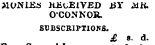
> WNIES HJicEtVED BY MH . O'CONNOR . SUBSCRIPTIONS . £ S . d . From Swan wick ......... 0 3 0 Lswisham 0 5 0 Hebden Bridge 0 9 7 CARDS . Swan wick 9 I & TfilBUTX . Prom Bolton , per Wm . Howard , from John Wittiker ' s book .... 0 6 6 ^ Junes Lord , do 0 3 3 Peter Cullson , do 0 4 8 Robert Hedge . 006 RECEIPTS BY GENERAL SECRETARY . SUBSCRIPTIONS . Weavers ' Arms 0 4 4 Northampton 0 5 0 Working Man ' s Hall . „ ... 0 2 6 Brighton , C ap ^ of LUgrtj 0 10 4
Asnwu-undcr-Ljno 0 7 6 BriBtol , Bear-line 0 6 0 Mottram 0 6 0 Halifax 0 3 4 Si > werby Lo&groyd 0 1 10 Do . Helm locality 0 3 4 Lower Warley 0 I 3 Carlisle 0 6 0 Ovenden 0 0 9 Siddal ,... 0 0 8 NewcMile-upon-Tyne ...... 0 IS 0 Cannon Coffee-house 0 2 t , Crown and Anchor , W . T . 0 4 0 Stratford 0 2 0 Jdr . Browett , thirteen weeks 0 1 1 TRIBUTE . Standardof Liberty , Bricklane 0 7 i > Bath , per T .-Bolwell 0 2 b Mottram , per W . PattUou 0 0 6 CARDS . Bromsgrove 0 3 8 Working Um ' t HaJJ a 4 2
Bristol , iieai-iaue 0 6 ' 8 Bristol youths 0 3 4 Birmingham , Ot . White ... 0 4 8 Somere Town 0 4 2 1 Glasgow 0 12 0 ; Saffron Hill 0 3 4 White Horse 0 1 0 ' Stratford 0 2 0 St . Andrews .. 0 2 Ol VICTIM FVH 9 . I Standard of Liberty 0 S 4 \ A Friend 0 0 « J MB . RICHARDS . j ilf . Brewett ...... 0 l oi MR CI . A . UK . S CARD ACCOUNT . | Tiverton 0 8 3 ' Abergavonny 0 0 8 Kotterinp 0 6 4 . Oullijmpton 0 1 2 Wellingborough 0 5 Errata . t ^ FoiViebtoa , 7 « 7 d , nal Oldbam ,- for Mary Richardson . — Prestoo j 3 . ) . re * i | Mary Bichardson , Oldham .
Untitled Article
Death of a celebrated Akcuitfci . —The eminent academician , Luigi Canonica , has just died at Milan , aged 77 . He wasthearchiteot of tho Royal palaces at Milan and Monza , is well as of numerous superb buildings in tha northern Italian cities . Monza itsituated eight miles Vest of Milan , and is celebrated for its treasures of Cjatholic relics , and was for many centuries the resting-pla « e of the iron crown of Lombardy . Charlemagne waa crowned tbere with it in 774 , as were the Emperors of Germany in eubseqnent ages , and Bonaparte followed this example in 180 . 5 Impobtaht Discoveby . —We find the following in the Senlinelle of Marseilles . This is the age of inventions . We learn that M . Daniel Borme , a
navigator , twenty-three years of age , has recenUy invented a warlike machine of such powerful effect , that , defended by it , towns can no longer be carried by assault . This machine , truly infernal , of which gunpowder forms no part of its composition , would , it is said , be capable of destroying by an explosion without noise all 1 he enemy ' s troopB at a distance of 1 , 000 yards from ihe town to be attacked . If tbis be a tact , the gredt Archimedes , whose inventive genius so long contended at the siege of Syracuse ,, against a Roman army , would have been a mere , infant in comparison with M . Bormo . This young man has written to the Minister of War , requesting to be authorised tor make an experiment with this prodigious invention .
(Gharttet Suteutseuce.
( gharttet SuteUtseuce .
Untitled Article
6 THE NORTHERN STAR . April 6 , 1844 . _
-
-
Citation
-
Northern Star (1837-1852), April 6, 1844, page 6, in the Nineteenth-Century Serials Edition (2008; 2018) ncse.ac.uk/periodicals/ns/issues/vm2-ncseproduct1259/page/6/
-