
On this page
-
Departments (1)
-
Text (6)
-
Untitled Article
-

THE ROETHEKN STAE SATURDAY, AUGUST 3, 1844.
-

Untitled Article
-
Untitled Article
-

Untitled Article
-

Untitled Article
Note: This text has been automatically extracted via Optical Character Recognition (OCR) software. The text has not been manually corrected and should not be relied on to be an accurate representation of the item.
-
-
Transcript
-
Note: This text has been automatically extracted via Optical Character Recognition (OCR) software. The text has not been manually corrected and should not be relied on to be an accurate representation of the item.
Additionally, when viewing full transcripts, extracted text may not be in the same order as the original document.
Untitled Article
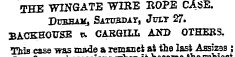
THE WINGATE WIRE ROPE CASE , Dub&uc , Satdsdat , Jtjly 27 . BACKHOFSE v . CARGLXL AND OTHEB 3 . Hub case was made a remanet at the last Assi es ; and onfreqneni occasions when it became thesnbjact of diEcasaon was generally known as " The Wingate "Wire Rope Case . " It -was tried before a special lory , of whom eitht answered to their names ,-viz . — B . J . Ellis , of Rndon Cottage , Esq 4 Frederick Backhouse , of Stockton , Esq . ; 6 . H . Ramsay , of "Winlston , JEsq . ; 3 . C . HopMns , of Darlington , Esq . ; Edarand Graham , of Gateshead , Erq . ; G . W , Tdod , of Stockton , £ sq . ; G . T . Pox , of Durham , Esq . j and J . C . Backhouse , of Darlington . Esq . The other fonr were taken from the common jury .
The plaintiff was 4 bound hewer at Wingate Grange colliery , situated about 7 miles to the southeast of Durham ; and the defendants were the owners of thes&id colliery . He bound himself to them from the SHx of April , 1843 , to the 5 th of April , 1844 ; but op the 7 th of Jun « 31543 , he , with a large number of his fellow-workmen , declined to proceed to work , on the ground that a wire-rope , by means of which they descended and ascended the mine , was insufficient , and dangerous to human life . On the 3 rd of July hs was summoned before the magistrates at Durham , when , finding there was no likelihood of agreement , they discharged him from his contract ; and tho present action'was brought to recover the amount of his 'wages , as per the stipulations of the pit bond , from June 6 to July 3 . The defendants pleaded a number of pleas , in some averring that they did provide the plaintiff with work , but that he wrongfully absented himself therefrom ; and pleading the general issue is to the sufficiency of the wire rope .
The coHnsel for the plaintiff were , Messrs Granger , Addison , and Warren—attorney , Mr . Roberts ; for the defendants , Messrs Snowies , Watson and Unthank— attorney , Mr . R . P . Philipson , of Newcas tle . Mr , Waxrb ? opened the pleadings , and Mr . Gbasgxr stated the ease . There ware numerous points in the declaration and in the pleadings ; but they would from the course © f the ingniry , resolve themselves into the simple question whether the wire rope was or was not alt and safe medium of communication with the mine . There were two pits , at "Wingate Grange Colliery—the "Lady " pit , and the lard" pit . In the former , the Jurat wire rope , consisting of ninety-six wires was used in the month
of November , 3842 . It was removed on the 26 th of the ^ ame month , in consequence of the wire lacing Which kept the strands -together giving way . Tie zueo entered into a new contract on the 5 ; h of April following ; and on the 25 th of the same month , two wire ropes were placed on the Lady pit ; viz . tee old one of ninety-six wires , and another of 144 wires—the litter , however , from the wires being thinner ,. corresponding with the former very near in bulk and weight . The men did- not complain of ihe ropes until the 6 th of Jane , when an accident Occurred to the 144 wire rope , - which struck against £ ie band stone , and had several of its wires broken , —not at one place , but at different places in the length of the rope . On this result of the eoncnssion
becoming known , the men determined not to trust their lives in cages" suspended by wire ropes ; and , accordingly , a large majority of them refused to go to work until tbev were removed , and hempen ropes substituted in their stead . "Various experiments , w test the strength-of the wire rope , were subsequently Bade ; but not with the effect of satisfying ibe workmen ; who continued "out" till the month of September , when they resumed work with hempen rope ? , under an agreement that the question regarding the wire ropes , should in no manner be prejudiced thereby . Por the plaintiff , thirteen witnesses were examined namely , John Drnmmond , of Wingate , hewer ; Thomas Button , of Wingate , banksman ; dohn Chicken , of Wingate , hewer ; George Pratt of
Wingate , hewer ; Richard Camming , of Wingate , hewer ; tiames Jobson , of Wingate , hewer ; Robert Embleton , of Wingate , hewer ; Robert Wetherby , of Wingate , hewer ; Richard Wilson ( who "iarrsd the wire ropes ) ; John Atkinson , of Jarrow , hewer ; William Palmer , of Wingate , hewer ; Mr . Thomas Chicken , ofMonkwearmonth , engineer ; and Mr . John Galloway , of London , civil engineer . The evidence of the pitmen went to prove the facts already briefly stated ; and most of them agreed in ihese three particulars—th 3 t they made no complaint against the wire rope until they saw the
consequences of the concussion on the 6 th of June ; that they thenceforth determined not to trust their lives upon the wire rope ; and that they willingly returned to work when the wire ropes were" removed . Mr . Thomas Chicken , who had been for sixty yeare an engineer , said he had carefully examined the ninety-six " wire rope when in the shaft , and found idneteen of its wires broken . There were likewise splits ( or openings between the strands ) in several places , some feet in extent ; and altogether he considered the rope much inferior to * ' a bit of good mew hempen rope , " and not at all s * fe enough to trust with human life .
Mr . Galloway entered into a detail of iuore scientific objections to the wire rope . His calculations ( which were a good deal founded on hypothesis ) went to show the force which wonld tear the rope under ordinary circumstances ; and how much it would bear when subjected to a conensaon with a weight of 3 ^ tons suspended , and ascending with a Telocity of nine feet in a second . But the most remarkable opinion he gave was , that if in a twisted strand of wires , comprising s ! x wires , fire of inem were broken at different places , that strand wonld carry no more weight than would the single wire which remained whole ; and consequently , the Binelj-Bix wire xcj > o tud , ty the fcrp ^> a >?«> nf ninflfp ^ n of its wires , though in difftr-Et parts of us length , lost nineteen parts of its strength .
Mr . Kxowxes then addressed the jury for ihe defendants . He said it was r ; , i 3 question of pecuniary consideration wiih them , but one in which they were called upon to relieve ihemselve 3 from the imputation of exposing tho 21 res of the workmen to unnecessary risk and danger . He described the wire-rope as labouring tidpr ihe prejudice which often attached to new : approvements—just as chain cable 3-were stigmatized vraen first proposed for n 36 instead of hempen ea . elo =. Hs tksn detailed tfco history of the -wire-rope , ia regard to its application to the Lady Pit at Wiusate ; and said he should prove by distinct ieiurBeny that it was perfectly consistent "with safeiy to tinman life . It had , in
actual experiments , borne a test of adverse force amounting to about twenty tons before it broke ; and it would not have broken under that pressure , save from circumstaiica 3 of iDJary sustained by the wires from the pinching of the cla . mp 3 by which the ends of the rope were held . When drawing coals , the total weigot suspended did not exceed three-and-ahalf tons : while , in all cases where men were ascending or descending , ihe opposite cage was empty . He denied Mr . Galloway ' s assumption that a twisted wire rope was weakened in proportion to the number of isolated broken irires ; and contended that its strength waa scarcely at all affected by nineteen of the wires having been broken at different ports of the entire rope .
Mr . Armstrong , the viewer at the colliery , wa 3 the first witness called for the defence . . He gave a long detail of all the circumstances connected with £ he ~ nse of tbe wire Tops , and vindicated its Eupsrior utility , iirthis mine , to ropes formed of hemp . The Tarious tests to vraich single wires , strands of wires ( comprising 6 each ) , and portions of the ropoa , in iulk , had been subjected , were particularized ; and Statements were given of the interviews he had held with depaiaiioas of the workmen , 10 show the unreasonable tests which they demanded to have applied tc the ropes . Several other witnesses related the experiments they had made with the rope 3 in qne ^ tion , which showed their power to remiss a force of 20 tons .
Mr . Stephen Robinson , engineer to the Hanlepool Dock and Railway Company , gave aa opinion diametrically opposite to that « f Mr Galloway , aB to ibe effect of broken wires in different parts of a coil of wires formed into a rope . It was his opinion , that 11 a wire rope of SO yards in length , and consisting of SO wires , had one oi its wires broken at every 3 feet Of Us entire length , its EVrentth would not be matenallv effected , In proof of this , he had taken a twisted strand of 6 wires from a rope in court , and after breaking epe of the wires , suspaided the strand from a snuth ' 3 vice , the broken part being below the ¦ nee . By means of a hook , two four Etone weights were . apphed to the other end of the broken vice ; and on a third four-stone weight being added , the Bhook brake the wire very near to the hook , and did not pull it out of the twist above—thereby Bhowing Uiai the resistance afforded 05 the twisting was greater than lbs force rtquata to break the wire . This resnlt appeared to snrprise many in cdurt .
It being now after S , and the case having , so far , occupied 11 honis , the Learned Judge said he Ehould adjonzn it tall Monday morning .
Mosdat , Jurr 29 , The Trire-xope case was resumed this morning , and several witnesses , engineers and viewers , were examined to show the utility and safety of wire-ropes i fcy experience , and from experiments expressly instituted for the purpose . At eleven o'clock , Mr . Ghaxgeb commenced hia reply for the plaintiff , which occupied nearly two hours . He diieaniod serereJy on the conduct of Mr . Armstrong , the viewer at Wingat *; and insisted scat ail the experiments were unsatisfactory in the way of proof that wire ? ope 3 were fit for use in cases where toe safety of human UfB was the main consi derauon . He concluded , with a warm appeal to the jury to . forget that some of them were interested in eollienesj and that their rank of life was the same as that of the defendants ; and return a just verdict jolely upon ihe evidence .
In summing np , Mr . Justice Gbesswell strictly confined himself to the evidence on both Bides , and to an elucidation of what he conceived to be its real meaning . The Jury retired aS twenty miunte 3 past two ' , and in the course of twenty xaiantes returned a verdict fox the defendants .
Untitled Article
Fatal Accident in a Mill . —On Fria » y evening , at the Manchester Royal Infirmary , Mr . Chapman beld an inquest on the body of a young -woman , named Frances Kenyon , nineteen yean of age , "whose death was occasioned "by injuries received from machinery , in the mill of Messrs . Watkin and Lees , cotton spinners , Dafeinfield . Robert Wrigley , overlooker in the mill s stated , that the deceased was a weigher in the blowing , room , had been employed in the mill about eighteen months . On tbe afternoon of the 17 th instant , witness was repairing one of the blowing machines at which tbe deceased was employed , when hearing a sfcrieJc , he loofeed round , ant saw her with her left hand fast between two cog-wheels attached to the same machine . Ee threw the wheels out of geer aa soon as possible and liberated bei ; after which Nix . Orm , Burgeon , dressed her injured hand , and next day &he was conveyed to
tke inlrmary . Tbe wheels were not boxed off , though they easily Blight be . There were none boxed off in tbe room . Fsur or five yean ago a female was caught in the same manner , and died in tbe Infirmary . There had been netr machinery put up Since then , and the sew vrzs more dangerous than the old . Mr . Tomlinson , house Burgeon to the Infirmary , stated that the deceased was admitted on the forenoon of the 18 th instant The fore finger of her left had been amputated and there was compound fracture of the middle and laceration of the two otbei fingers . Loctcjiw ensued on tbe 23 d , and she died on the morning oi Thursday last . The injuries to the hand were tbe cause of death . Several of the jurors expressed a btrong opinion as to the impropriety of allowing tbe machinery to remain uncovered ; and eventually a verd \ el " Accidental death" -was returned , accompanied with a deodaud of £ 10 upon the machinery .
The Roethekn Stae Saturday, August 3, 1844.
THE ROETHEKN STAE SATURDAY , AUGUST 3 , 1844 .
Untitled Article
GREAT BLOW AT RELIGIOUS INTOLERANCE . THE " PENAL ACTS" GIVE * UP . ANOTHER LEG KNOCKED OUT OF MOTHER CHURCH'S STOOL . "When the course of events , in 1829 , forced the Ibos Dukb and Sib Plausible Peel , to " come down" with a " handsome" measure of Catholic Emancipation , to save the conntry , as they said , and truly said , from civil war , the great political
teacher of the day , William Cobbett , characterised their measure as one , in effect , to Repeal ihe Protestant Church ; one , that would inevitably pnt down that Pxotebtant Ascendanct which had cost oceans of blood and tears to establish and maintain . Subsequent events have proved that Cobbemt was right . The hold that Old Motheb had even on the affections of the people of England , received , by that measure , a severe Bhook ; and the respect paid to her , and her influence in other matters , have ever since been visibly on tbe
wane . Many simpletons , and a great many of them churchmen too , who were led to acquiesce in the enactment of the Catholic Relief Bill because it had been proposed by church-loving Wellington and Peel , imagined that the H settlement" of tbe " Catholic question" by the staiutary recognition of a portion of the civil rights of the Catholic people would tend to consolidate the power of the Church ; would seat Ol > Motheb more firmly on her stool . They reasoned , that if the major portion of the ostensible complaints of an importuning and
troublesome foe were but hearkened to , and a sweeping measure of " relief conceded , the annoyance and danger would be removed ; and the principle , for the establishment of which the rack , the thumbscrew , the halter , and the Etake , had been so plentifully employed , would still exist in all its integrity , with a far greater chance of its being maintained inviolate . Pools ! they did n&t see , that in acceding to the demands of the Catholics , —demands backed by every friend of freedom , —they were , in fact , giving up the very principle of Pbomsiant Ascesdasct itself ! They were reading an Act-of-Parliament-condemnation on all the means that
had been employed to establish that principle : and had they possessed but a glimmer of common sense , they must have seen , that , once the principle gone , the Church itself must follow ; the question resolving itself into one of time , and time only . The Church is but an Act of Parliament Institution . It sever was anything else . Acts of Parliament can only be maintained , can only be operative , so long as tbe grounds ^ the reasons , the necessities , which called them into being , exist . Let those be superseded ; let a new course of events bring about new causes , develope new wants , create other
necessities—and the old causes , those which had been paramount in former times , cease to operate ; and with them go the legislative effects whioh they had produced . Both cease to be operative : the cause , the necessity , no longer exists ; and therefore the Acrs made under the one set of circumstances fall into disuetude , if they are not indeed wholly repealed , nnder the other . In the case of the Church , its very existence , to say nothing of its well-being , —if such a phraEe can be employed towards an Institution founded on the prostration of all public right and liberty : but its very existence
depended on the inviolate maintenance of the principle of Pkotestakt Ascendakct . This was eo apparent to the fonnders of the Institution , that they passed almost innumerable acts , dealing out all sorts of " pains and penalties " , even to death itself , to those who should care to call that principle in question . They knew full well , that if the impious principle of tolebatiojj only was , by them , recognized , the Protestant church would thereby be undermined , and her * ' blowup" at some period or other , inevitable . They therefore , for themselves , wisely resolved on no
compromise ; no toleration ; no recognition ; no " peace with Rome : " they edged themselves round with statute after statute , denying the right even to question Old Motheh ' s pretensions , and compelling the people to acknowledge and reoeire as truth that which was . established by Act of Parliament . But all this ' vantage ground was abandoned by the passing of the Emancipation Act . Emancipation from what 1 —from religious thraldom ; from civil disabilities on account of religious tenets . In fact . EsuNciPATioN was a statntary recognition of another church , besides oub Act-of-Parliament one . It tolerated another
persuasion , and declared the votaries of the antagonist faiih legally fitted for civil office , in this , Pbotestant Ascesdasct wa 3 givsn up ! and in such giving up , was virtually included the Establishment itself . From the hour of the passing of tbe Emancipatios Act to the present , has the Btmggle between the two partieBj the upholders of the Establishment , and the assertors of full religious liberty , been unceasingly continued . It has now resolved itself mainly into a struggle for tho property of the Church . Fight on pbisciple there is none : at least on the part of the soldiers of Old Motheb With them the principle is given np : and all they can now hope for , or aim at , is the retention of the
gold , and that which brings the gold . There is the principle involved on the other side , of belioious rqcALirr and full Jreedom of discussion , which can only ba established by tho total Repeal of the Actof-Parliament-Church , and tbe employment of its immense revennes for national stato purposes therefore it is , in fact , on this side alse , a contest for the pbopebtt op the Chubch . his is , in truth , the main character of the contest : and in every diversion of it , Old Moi » eb comes off the worst . Let her be assailed from whatever point it may happen ; muster her forces as she -will—storm and fume as she m » y—down on her knuckle bones she comes at last , and accedes to whatever demand is made .
She was once secure . Her old stool had its fnll complement of legs . The tripod , though high , was firm and safe . One leg was drawn out of it when Emancipation was granted ; and Old Motheb has ever since been trying to balance herself on her seat of two legs . Having only two ; having lost that which was the stay and support of the rest , she has been compelled to manifest all the TTiywarduess of a drunken old fish-wife , rolling on her seat , unable to exhibit the least appear-
Untitled Article
ance of steadiness . And now the time has come when another leg of the stool is to be withdrawn : and poor Old Motheb is to be left on her seat with only one leg , a pitiable object to all the world . There Bhe will he , stuck up on high , exposed to the gazs of all , with only one poor , rotten , tottering old crutch left under her 1 How long will it be ere she is " down" f With the principle of Photestant Ascendancy has cons the necessity tor the Aots passed to maintain that principle : and , therefore , we now find our " maintainers of the Churoh-by-law-Established " hard at work in ridding the Statute Book of some very gross and palpable incongruities . The Criminal
Law Commissioners , in the course of their inquiries into the state of the Criminal Law , have pointed out the existence of a number of " Penal Acts , ' directed against those who should question the propriety of our Established Church , and particularly against tho Roman Catholic portion of our Nonconforming brethren . Lord Beaumont , himself a Catholic , thinking that as the necessity for these Penal Aots had been done away with , in the abrogation of the principle of Pbotestant Ascendahcy , it would be well to do away with the Acts themselves , introduced a Bill into Parliament for that purpose . It is almost needless to add , tbat such a measure received the opposition of tbe Church , in the
person of that most delectable representative of the iatolerant and fanatical spirit of olden-time , the Bishop of London ; though what either he or Old Motheb herself could hope to gain by the retention on the statute-book of what was manifestly useless , unless as a record of former greatness HJ—does not very plainly appear . However the Government , — composed mainly of those champions of the Church who served Mother tbe good turn in 1829 !—came to the rescue of Lord Beaumont ; took his measure under their protection ; and on Tuesday sight last , when the proposal to take the second leg out of Mother ' s stool was made , the Lord Chancellor Ltndhubst thus discoursed : —
Tbe Lord Chancellor Baid—My Lords ,, I feel it necessary briefly to advert to the history of this measure . It was introduced by & Noble Lord ( Lord Beaumont ) early in the month of May last . Its progress was however , delayed by that Noble Lord under the impression that some measure would be brought in on the subject by her Majesty ' s Government . My Lorda , when my attention was subsequently called by the Noble Lord to the subject , I told the Noble Lord that I would look over the bill , and that I would strike out every Act recited in it the propriety of the repeal of which there was reason to doubt , and to which repeal itroog opposition might of course be expected . The subject is , my Lords , one of a very complicated
and intricate nature , as it embraces a great many measures enacted at various times . I , however , turned my earnest attention to It , and I also' consulted the Criminal Law Commissioners and other parties who were perfectly competent to consider and advise upon the subject . Having dono so , I Btioofe out several clauses of the bill ; and I think I may justly say , with respect to what I have done , that no clause has been left in the bill as to the propriety of which any reasonable doubt can remain . I shall now draw your Lordships ' attention a little in detail to the contents of this measure , and I will ask whether you can put a finger on any enactment -which it proposes to repeal , and say that it ought to be preserved on the statue-boos ?
The first enactment which it proposes to repeal is the first Act of Uniformity—the act of the 1 st of Edward YI . That act declares , tbat a certain form of common prayer shall be used in all churches , and tbat any person who sbali attend in any place where any form of prayer is used difforent from that authorized by tbe Act of Parliament , shall , for the first offence , be punished by a heavy fine ; for the second offence with imprisonment for a year ; and for the third offence with imprisonment for life . But you tolerate the Roman Catholic religion ?—( hear , hear ) . You allow Catholics to attend their own places of warship . If you forbid ! them to follow that form of worship , will you not be practically preventing them frwni going to
any place of worship whatever ?—( cheers ) . The bill which I bow submit to your LorUsbips" consideration -will enact that the attendance upon their own form of worship shall not subject Roman Catholics to a penalty . My Lords , can any one doubt the propriety of such a decision ?—( loud cries of " bear , hear" ) . Will any of your Lordships—will any prelate upon the reverend Bench , say that it is not most desirable to repeal such a statute ? If yon think otherwise , why , njy Lords , you had better repeal the 10 th George IT . —the Roman Catholic Relief Act—( cheers ) . But , without saying a word more , I am sure nothing can be urged against tha repeal of such a statute . I proceed , therefore , to the next act with which we deal—the 1 st of Elizabeth ,
chapter 1 . By that act , if any one within this realm denies the supremacy of the King or Queen in spiritual or ecclesiastical matters—if any one assumes that any other authority or power has any ecclesiastical or spiritual jurisdiction within the kingdom , be is subject to penalties of the severest bind : —for the first offence , to tbe forfeiture of all his goods and chattels , and , if those goods and chattels do not amount to a given sum , to imprisonment for a year ; for the second offence , to a prmmunire—ihaX is to say , not only the forfeiture of all his goods and chattels , but to imprisonment tnr lifo , and to bo incapacitated from taking any proceeding in aoy court of law or justice ; for tho third offence , my Lords , be is subjected to the
penalties for high treason ; and what makes this the mote extravagant is , that the 31 st of George III . and the Roman Catholic Relief Act admit , under the form of an oath , the right to hold the spiritual jurisdiction of the Pope , because tbe oath there prescribed only goes to deny the Pope ' s temporal authority . Thus , your Lord , ships will see , whilst you allow the propriety of swearing one thin /? , yon beep on your statute-book this act of pains and penalties against those by whom that very thing is admitted . Why , is not this most extravagant 1 —( hear , hear ) . What ia the course I have takon ? Yon will blame me , my Lords , I am sure , for not going far enongh . Instead of repealing the act altogether we have limited the penalty to tbat prescribed
for the first offence . Surely , that is a , sufficient punishment Surely , it is not too much that we have done away in such coses with &uch penalties as the f . mmunirc and the punishment for high treason—( bear , hear ) . I ask your Lordships , is that too much to do ? is there anything in such a course inconsistent with the principles of tbe Protestant establishment and the Protestant religion—to both of ¦ which I am as firmly attached as any man in the kingdom ?—( hear , hear ) . My Lords , I believe we shall be best doing our duty by onr church and by our faith if wo get rid of these barbarous enactments directed against our fello-w Christians—iloud cheering from the Opposition benches ) . But what is the next act we propose to deal
with 1 It relates to tbe attendance of tLe people at tbe parish church . By this act , the l 3 t of Elizabeth , chapter 2 , —it is the act immediately following that I have just epofeen of—by this act every person ia obliged to go-to a Protc-Btanl piace of worship ones , at least , in every vreek , and oi . ee en evuy Sunday , My Lords , can a Roman Catholic do this ? Can you subject him to a penalty for not attending ? I am sura no one can contend for any such thing ; and therefore , there is a c ' r . u-e introduced into this act exempting Catholics from the penalty consequent upon their neglect—( hear , hear , and cheers ) . But , my Lords , there is another aot—the 6 th of Eiizabeth . Itrnns in the same direction as the latof Elizabeth ,
which I have alraady quoted , and , therefore , I will only advert to it in order to remark that it makes the penalty still more severe , Inasmuch as it subjects the first offence to the punishment of tbe pramunire . Of course , we gel rid of that But , bfcBides , there are in this act provisions for administering certain oaths-Commissioners are to be appointed to make every suspected person take certain oaths therein prescribed . What are the penalties ? For the first offence , pi as munire ; for tbe second offence , the penaity of high treason . Havel done wrong , my Lords , in consenting to repeal such a eiatuto at this—( loud choers ) ? Bat there is still another statute—a statute which renders every party who is reconciled to tbe see of
Rome guilty or high treason and liable to its penalties . Any one who is conscientiously convinced ef the justice of the divine origin of the Roman Catholic faiih is to be deemed guiity of high treason . I say notliug about tbe error of such a person ; but am I w / ong in getting rid of ench a penalty—( hear ) ? Why , by tho same net , any priest who administers mass , privately or publicly , within these xealms , is subjected to a penalty of 200 marks , and any one who attends such mass is liable to a penalty of 100 marks . This at a time when yon profess to tolerate the Roman Catholic religion —( hear , hear )! Why , my Lords , such a thing , in these days ; ia an extravagaat absurdity , —and I hesitate not to strike such an act from the
statutebook —( loud cheers ) . My Lords , I have already Btated that any one who does not attend church once a-week is subject to a penalty . There is another act which subjects to a penalty of still greater amount all who do not attend church once within a month . I have struck that act out of the statutebook also ; and I hope such a atop will meet whb your approbation—( cheeis ) . But , my Lords , I go still further , —and I enter into these points , let me say , parenthetically , because I am liable to be attacked for this conduct—because , in truth , I have ken attacked about tbiB matter , and learnit is necessary tbat I Ehould
explain my position . I eay I go still further . The next act which . I deal with is the 27 ib of Ei : zabetb , the act relating to Jesuits . Under that act any party being a Jesuit , and continuing within these realms for a longer period than so many days , is subject to the penalties of high treason . I believe , my Lords , that under any circumstances I ehould have struck the greater part of thiB act from tbe statue-book ; but when I find that the 10 th Gtorge IV ., the Roman Catholic Relief Act , embodied « very necessary arrangement upon this point , I felt it more imperatively necessary to take that step . But there Is Btill mote . iXJnder this act
Untitled Article
anyone who goes abroad to be educated in what is called " a seminary institution , " if be does not return within the realm within six months after proclamation is made for his return , he Is deemed and taken to be gujlty of high treason . Any one who goes to any college abroad—any one who is sent to St Omera , for example—is guilty of high treason , if he does net return within six mouths after proclamation is made . That statue , my Lords , I have also thought it desirable to repeal . A law such bb this was no doubt passed at a time of great political excitement—at a period wheu great alarm was felt respecting the influence of the Pope and of Roman Catholics within these realms , and therefore to a certain extent the act is excusable .
But , what , my Lorda , ia there to warrant the vetentien of such laws npon the statue-book of the present day ? What excuse have we for such barbarous enactments now ?—( bear ) . My Lords , there 1 b another act by which it is laid down that any one within these realms who relieves by money a Jesuit or a party in a foreign seminary , snail be BUbject to pmmunire—to Imprisonment for life , and all the penalties I have previously described . Tour Lordships , I am sore , will be of opinion that I do right to repeal this law —( cheers ) , But there is still more . The 35 th of Elizabeth requires all persons to conform to the established religion . If they do not conform they must abjure the realm : if they do not leave the realm , they are gnilty of
felony ; and if they go abroad and return again they are guilty of felony—( a laugh ) . Under the same act , if you profess tbe Roman Catholic religion , you must not be found at a distance of more than five miles from your usual place of abode . In this travelling age , sorely , my Lord , this statute ia truly ridiculous —( hear , hear ) . Have I done tight in repealing it?—( cheers ) . Well , then , I pass to the next law—an act passed ia the first ; year of King James I . By that act , no one can send his son to be educated abroad , in the Roman Catholio religion , without incurring the heaviest penalties . Any gentleman who thinks hia eon can be better educated abroad than at borne , and who in consequence sends him to receive the
advantages of instruction at a Roman Catholic college , is liable to penalties of the heaviest description . I have repealed that statute —( hear , hear ) . Then there is the 3 rd of James I ., chap . 4 and 5 . They prescribe punishments for recusancy—most severe penalties . If a man does net go to church , he is a recusant : if be is a Catholic , he is a Popish reeusaut , and , on complaint , he becomes a Popish convict recusant , and is subjected to penalties of the severest character . Surely , my Lords , the whole of this ought to be repealed—( hear , bear ) . Then there is the 7 th of James I . That act prescribes a certain oath , and those who omit to take it are subjected to the penalty of pramunire . Next I so to the statutes of Charles I . Under
one of these , if you aend your children to any place of education on the continent , you cannot , such is the singular state of the law , ; maintain any suit in any court 1 of law at home—( bear , hear ) . Then there is the 25 th of Charles II . Your Lordships will bear with me whilst I glance at all these acts , for the importance of the subject and my own position really require it —( cheers ) . There is the 25 th of Charles II ., uuder which it is enacted that any one who becomes a convert to tbe Popish religion Bhall not be capable of holding any office or place of trust or profit whatsoever within these realms ; and if be educates bis children in that faith they are also incapacitated from holding any such place of trust or profit . That , my
Lords , is another act which I strike from the statutebook —( hear , hear ) . Again , in the reign of William and Mary a statute was passed which enacts tbat no Catholic shall come within ten miles of this great metropolis , under certain heavy penalties . I propose to strike out that—( hear , bear , and loud cheers ) . By an Act in the same reign no Catholic is permitted to bear arms , and , which will strike your Lordships as peculiar , if he has a horse of above the value of £ 5 it is to be seized and disposed of as any justice of tbe peace may think proper —( a laugh ) . And now , my Lords , I believe 1 have pretty well run through the catalogue . Ia there any one amongst your Lordships who can object to the repeal of any of these laws
?—( hear , hear ) . I appeal to that Right Reverend Bench , and to tbe Right Rev . Prelate who is seated on it ( the Bishop of London ) . Let him tell me if he is not satisfied in his own conscience tbat every one of these Acts 1 ought to be repealed . ' If he is not satisfied—if he can point out a single law which in his conscience he thinks ought not to be repealed , I ask him to show me a valid reason for retaining it on the statute-book , and I promise him to except it from tbe operation ef the present measure—( hear , hear ) . Well , then , my Lords , I want to know what is the real objection to this Bill ?—( hear ) . It is said , I understand , that the operation of the i 3 rd George III ., and the 31 st George III ., will be affected by this Bill . What ia the 43 rd
George , III ? It points out , my Lords , an oath to ba taken , in erder to entitle Roman Catholics to inherit or to possess land . I understood from what the Right Rev . Prelate said the other night , that the effect of this law would b 3 to repeal that Act of Parliament . I waa , therefore , somewhat astonished to discover , on looking into the matter , that the Act was in reality repealed by the Roman Catholic Relief Bill—( " hoar , " and a laugh ; . But , it la said , the Act will , constructively , repeal tht 31 st of George III ., of which the 43 rd George III . was a Bill in furtherance . What is the Slat of George HI . ? At the time that Act was passed parties were not prepared , as I hope we are now prepared , to repeal these penal Acts of the Parliament . A kind
of compromise was consequently entered into . A form of oath and a declaration was prescribed , and it was said , if you take that oath and subscribe to that declaration , you Bball avoid the penalties consequent npon the infringement of these laws . Now , the fact is—that this Bill does not repeal that oath Bnd declaration , though of course it renders them inoperative . You cannot , my Lords , do away with the cause for such declaration without doing away with the declaration itself . But , why should we not do away with the declaration?—( cries of "hear , hear" ) . What an extraordinary mode of legislation it is to say , " we will impose severe penalties—most outrageous punishments—on an individual , for a certain offence ;
and yet if he goes and takes an oath , he shall be absolved from the consequences » f committing snch offences !"—( hear , hear ) . Why , what does it come to ? To this , my Lords—that the penalty is imposed for not taking the oath —( loud cheers ) . By one of these actsit is really almost laughable to reflect on the anomaly , — if you do not take an oath you are guilty of high treason ,- by the other act , if you do not take the oath , but take Bome other oath , you are not gnilty of high treason -, but , then , if you should omit to take either oath , why then you are guilty of high treason—( loud laughter and cries of " hear" ) . Such ia the absurdity . The Act of Giorge III . waa passed with a good intent , no doubt ; but the effect is to put the Roman Catholic
in' this position—that if from accident or negligence be omits to tako somo oatb or another , he is iiable to the penalty for high treason— ( cheers ) . Surely , if your Lordships consider these thing ? , you will be satisfied that we might even go further than we have gone ifl dealing with these laws . I have pressed my Noble Friend ( Lord Beaumont ) to permit this Bill to stand over until we have an opportunity of further considering the sut JBct , and dealing with the enactments en masse . I do not htbitate to say that , were we to do so , I should be strongly inclined to iltal more stringently
with all these lawa ; but upon that point I am in the hands of tbe Noble Lord . He may follow or not follow my counsel . If he dooa not regard it , I can only say that I feel myself pledged , and that I deem it an imperative duty to vote for his bill in its present form —an imperfect form , I admit , but imperfect , at any rate upon the ri # ht side . Having said thus much , I move your Lordohips that •« the report be now received . " ( Tho Noble and Learned Lord resumed his seat np ^ n the woolsack amid loud and very general cheering . )
On , the principles of common sense , the speech of the Lord Chancellor is perfectly uoanswerable : but what is it worth when tested by the principle of Ascendakcy ? Is the principle of Ascendancy right i The Lord Chancellob says it is . Then how can ho maintain Ascendakcy but by putting others down . The thing is impossible . Ascendancy cannot be maintained without . Tho natural law of freedom says one man's religious opinions are entitled to as much respect as another man ' s . Ascendancy says , not so . One opinion is alone true : the » ' esUbiisheri " ono is the truth : all others must be annihilated . Thus persecution becomes necessary . If you will maintain the principle of Ascendancy , you
must use tho necessary means . If nou-conformity cannot be prevented by one means , it must be by another . If persuasion will not do , force must . If a little force is inadequate , more must be used And thu 3 tho principles of Ascendancy will justify EVEitY means , no matter how " barbarous" or revolting . Every one of the Aots so eloquently and so forcibly condemned by the Lord Chancellor , was necessary and justifiable , as long as the principle of Protestant Ascendancy was maintained . His conduct , in proposing their Repeal , can only be justified on the ground , that as the principle itself whioh called them into being is abandoned , the laws themselves are unnecessary . But
then ,. where does this lead to 1 IC the principle on which alone any religion can be establishedby-law as the truth , is abandoned , what becomes of the Establishment itself ! The very essence of an Establishment is ascendancy . Without that , it has no life ; no soul . It is dead , in principle . It becomes a mere corporation ; and its existence , as a corporation , is a manifest injustice to others who are not so incorporated , and who are debarred from the USE AND BENEFIT OF THE PUBLIC PROPERTY in the hands of the incorporated body , from its having once been the ascendant church . Lord LYNDHtfRsr should therefore have gono further : he should , in his list of repealed Acts , have repealed theoue that establishes the Protestant Church as the Church of
Untitled Article
England . Hia ; principle necessarily goes that length ; and though he has not seen it meet to carry out to its legitimate extent , as surely aa that he has been compelled , by State reasons , to remove tbe monstrous " barbarities " enumerated in his awful catalogue of crimes against the sacred rights of conscience , so surely will either he , or some one else for him , have to go the whole hog , and Repeal even Old Mother herself Down to the ground she mast come ! The one peg , the only peg—th ^ property—the one likely to cause the most severe and unceasing contest , is sure to be
knocked from under her ! Having given up what she has , she cannot retain the rest . The question of her possession and non-possession of the revenues she now enjoys , 13 merely one of time : and the lime when she will be deprived of all she has is nearer than she now even dreams of . It is possible that the noxt ten years may see every atom of the public property now in her hands resumed by the power that conferred it upon her , and applied to the State purpose of paying that debt old Mother was so mainly instrumental in incurring ! The love we bear to the Old Beldame , will prompt as to lose no opportunity to cause this to be the case !
Meanwhile , the work goes bravely on ! The eecond leg of the [ three-legged stool is to be knocked out I Lord Beaumont did not follow " the counsel " of Lord Lyndhubst . He took the House and " the Chancellor , while they were " i ' th vein . " In vain the Bishop of London implored a respite . In vain he sued for more time ; ia vain be took up the concluding note of the Lord Chancellor ' s speech , and begged that the House would sot press forward to a hasty conclusion : \ in vain he
" Reminded their Lordships , that from the Reformation down to the present time the constitution of the Church ef England bad not only been a Protestant constitution , but tbat it bad bees as aBti-Popish constitntioD —tbat tbe Church had not only protested against Rome , bat that she bodj lost no opponvnity of hedging in the profession of the Roman Catholic faith in this counlrv ;"
m vain " He warned their Lordships that all these enactments were links of one great chain , and that though some of them might be rusty and scarcely trustworthy , yet that they mast proceed very warily and cautiously in removing what they could not replace—in breaking away parts which might render the whole useless : It ] teas impossible to see to what extent they might not go ) hereafter if they once made this breach : " already ihe Noble and Learned Lord on the woolsack talked of " going further ; " let their Lordships then wait and see how fax he was prepared to go , and let the Noble and Learned Lord , if he had considered the whole subject , bring in a bill which treated of the whole subject j "
in vain all this : Lord Beaumont saw the effect that tha Lord Chancellor had produced by his unanswerable speech ; and wisely determining to take all advantage of it , he pressed his motion on ithe House , which was agreed to without even a division ! And so goes the leg oat of Old Mother's stool ! And so the great cause of free discussion receives another help ! Ascendancy is given np " Pains and penalties" for exercising the birthright of man are withdrawn—abrogated . One persuasion is , almost , as good in the eye of the law as another There needs but one other peg drawiDg out of the
seat of Mother Church , —the property one , —and then we have full ; religious equality : then we have a " a fair field , and no favour ; " then we have the rights of conscience and freedom of speech fully recognised ; and then we are in a way to put down religious bickering , want of charity , ill-will , with all the attendant heart burnings and inveterate hatreds ; but never till then . Let us trust that the day of our full deliverance from the curses that flow from the " settlement" of truth by the bludgeon and sword is drawing nigh ! The sign of the times , contained in the speech of the Lobd Chancellor , is portentous indeed !
Untitled Article
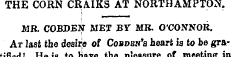
THE CORN CR , AIKS AT NORTHAMPTON . MR . COBDEN MET BY MB . O'CONNOR . At last the desire of Cobden's heart is to be gratified ! He is to have the pleasure of meeting in public discussion , ) before an audience of his own seeking , the man , ; whom he has described as the " greatest obstacle in the way of tho League . " He has affected for a long time , a great eagerness to meet Mr . O'Connjor ; though whenever proposals have been made for arrangements for such purpose he has always declined them . For this we have rated him soundly on many occasions : and we have reason to know that his fast-and-loose conduct ; his affected desire , j and his prudential scheming to prevent the gratification of such desire , have worked him considerable damage .
At length , however , the meeting is to be had The two men are to face each other . Cobdbn is to have an opportunity of proving , if he can , that the principles and notions of the " greatest obstacle " are unsound and worthless ; and Mr . O'Connor is also to have the opportunity of examining the premises laid down by the Leaguers , and to dispute their conclusions , j Mr . Cobden will further have the opportunity he has eo long panted for—of proving that " Mr . O'Connor ia in tbe pay of the Tories . " He will have the man himself before a considerable number of Englishmen ; and if he have the documentary evidence he has so ^ often mysteriously hinted at , or indeed any " evidence" at all , no doubt he will use it . He would be a knave indeed if he did not . The full opportunity will be given him .
But though this [ meeting is to take place , and opportunities are thus to bo given , it is not in consequence of arrangement to which either Mr . Cobden or the League aro a ; party . The last time that . Mr . Cobden was pressed about the fulfilment of his own challenge , he stated that he should be holding county out-door meetings '! during the summer ; and Mr . O'Connor could , if he liked , meet him there or any other man . The League have called a meeting in Northampton , for the Shire . The good folks of that city , not liking to have only one side of the Corn Law question discussed in their hearing ; disgusted , also
at the conduct of the League in shirking discussion though arrogantly affecting to court it ; and aware , moreover , of tho disreputable conduct of Mr . Cobden himself in relation to Mr . O ' Connor , determined to take steps to bring the two gentlemen together . Cobden had avowed his intention to visit and instruct them : this he had done of bis own accord : and while they felt sufficiently grateful to him for his disinterestedness and zeal , they thought it would conduce no little to a due understanding of the question itself , if they heard , along
with Cobdent what ; could bo said in opposition to Cobden ' s views . They therefore sot Up a requisition , Bigned by a considerable number of the inhabitants of the city , to Mr . O'Connor , inviting him to bo present , and to take part in the meeting . This request Mr . O'Connor has signified his intention to comply with : and \ thus will be brought about a meeting between the two gentlemen already named , which meeting might , ought , and would have taken place long since , bad Mr . Cobden acted the part of a true man .
It ia not for us , now , to speculate on the result . It is enough for us , and for the working people of England , and particularly those of Northamptonshire , to know that the meeting is to be held . Those who know anything of the circumstances ; who know of the locality ; the influence that can ' be brought to baar \ in that locality ; the nature of the League machinery , with its vast fands ; the efforts made by the ] League with that machinery in this particular instance ; the determination to come off YiciOEiODS at all cost , and at all hazards
those who know of ; these things , will know sufficient to warrant the conclusion that Mr . O'Connor ' s appearance , ji » such a spot , under such CIRCUMSTANCES , IS j INDEED A BOLD AND DAHINf step ! But , armed ] with a conviction that he b- , i the truth on his Bide ; and inspirited with the kn / _ ledge that his efforts , even if erroneous , are hoD' ^ prompted by a desire to serve the wobkinp , ^ the Champion of JLabocr ' s Rights -will appea under all disadvantages ; throw ' nimself on the goo judgment of the assembled thousands spe ak ( 0 j L ^
Untitled Article
hearts ; and show them , that even if he has erred in his estimate of the nature of Corn Law Repeal , he has done so from a sincere apprehension that the measure would be destructive to Labour ' s interests . In some respects the locality will be a favourable one for Mr . O ' Connor ' s view of the question . A great portion of the population in Northampton and its neighbourhood are engaged in the boot and shoemaking business : a peculiar home trade for
home consumption . Many of the markets of one chief cities and towns are supplied from this very Shire ; or rather have been ; but now that Sir R . Pekl ' s Tariff has let in French and other Foreign boots and shoes , at a low duty , to compete with tha manufacture of Northamptonshire , the HOME-mada articles are becoming a drug in ihe market ; and tha native workmen are in a fair way to experience some of the blessings of Free Trade , in manner like to the silk weavers of Spitalfielda and Macoles field !
These facts will , therefore , furnish a case of illustration exactly in point , as to the opera " tion and effects of Free Trade ; and it will be one that will speak home to the men of Northampton . In this case we fancy they will be inclined to say : " nothing like leather , " when manufactured into boots and shoes at HOME . Tha transition from this case will be natural and easy If the workers in leather are not disposed to have the produce of the foreign workmen , —who pay hardly any taxes , and whose wages are considerably lower than English wages , —brought into direct
competition with the produce of their own bandS f because such direct competition mu 3 t inevitably drive their produce out of the market , from its necessarily higher price , they surely will not be disposed to say that the hbour and the produce of the labour of tho most important and most weighty order of labourers in the commonwealth , shall be exposed to a similar competition , whioh must necessari . ' y have similar results ! This fact , then , connected with the particular locality in question , may serve to counterbalance some of the influences that otherwise might be brought most directly to bear against the pleader for Labour ' s Bights .
To the good people of Northampton , therefore , the question has to be submitted . On them devolves a great , a tremendous responsibility ! On them will the eyes of " all England be fixed but especially the eyes of Labour ' s sons . Much will be expected of them . It will be expected tbat every worker , whether of leather , metal , wood , wool , or clay , within a day ' s march of Northampton Market Place , will be present on the occasion ; and that he will well perform his duty to his own order . It will be expected of them , that they see
faib plat ; that they countenance no undue advantage on either side ; tbat they stick up for the right , ' that they hear both sides ; that they let the appeals to their judgment have their due weight ; that they discard all passion and all excitement ; and thai they coolly decide between the two sets of principles expounded , according to the evidence laid before their better sense . All this will be expected of them ; and if less than this is manifested , the working men of Northamptonshire will live in the memory of their order but to be condemned for their treason to their class !
On the working men , therefore , we emphatically call ! To yodr duty !
England expects it of you ! Be at the meeting . Be in time . Be orderly ; ba serious . It is a serious matter you have entrusted in your hands . Countenance no clap-trap ; no trickery ; no evasions . Suffer yourselves not to be played with . Insist on fair-plat . Hear all sides ; insist on all sides being heard . Show the world that' yon can listen ; can discriminate ; can
DECIDE . In your hands the question is for the present placed ; show the world that you are worthy of the confidence placed in you .
Untitled Article
MARCH OF DEMOCRACY . THE "GHOST" OF CHARTISM AT SHEFFIELD Or all the isms that ever disturbed the ease of the ruling few , or annoyed the supporters of things & 3 they are , the ism of the Charter is the most troublesome , and the most portentous . Twice has Chartism been strangled—twice has it been declared to be dead ; and twioe has it , phoenix-like , sprung anew from its ashes . Campbell .
Melbourne , Russell , and Co . were its first executioners and grave diggers ; while Pollock , Peel , Graham and Co . officiated at its second obsequies . The answer to the Whig note of triumph waa the national demand for the Charter made by three and a half millions of the devotees of a dead principle (!)—a demand whioh showed that if bodily Chartism had been murdered by Whiggery , its spirit waa even more powerful and more to ba dreaded than it had ever been in the days of it first existence .
Though the Chartist party may not yet have fully recovered from the blow given to it by the famous strike of 1842 , and the persecutions resulting therefrom , still are the indications sufficiently numerous and striking to convince all but the most superficial observers , that there is an indestructibility and vitality about Chartism which compels its activity , and tells plainly that the day of its overwhelming power cannot be far distant . Unthinking persons , who now hear but little of great processions , or of much noisy agitation , imagine that therefore Chartism is making no progress . Such persons should have seen tbe " monster" demonstration at Sheffield this week . It would have cured them of their eceofcioism .
The truth is , that it is not so much the Chartists who are just now working for the obtainment of their great object , as that the principles professed by them are making rapid head-way among all other parties and olasses . The " Young England" of tho Tories , and tho Social Reform principles of the more enlightened of the Whigs , such as Lord HowicK , are proofs of the march of Chartism . They testify that the far-seeing of both parties are conscious of the progress of the democratic principle ; and hence would arrest its triumph by concessions whioh they mistakingly deem would arrest the onward march of democracy .
The most significant sign of the times is the advance towards political knowledge made of late bj the Trades , and Trades combinations . From the very nature of these bodies , they are prone to shut themselves up , each within its own circle , and to mistrust all attempts that may be made to induce an universal combination of their entire order . Each Trade , intent on only its own aggrandisement , looks only to the success of its own peculiar objects , without regard for that of the mass . Perhaps there is no place in England where greater talent and energy in the pursuit of Trades objects , « r a greater aversion to aid in the obtaining of organic politioal changes , has been shown , than in Sheffi / Jd . Vet , true it is , nowhere yethaa there beexv -exhibited a
greater triumph of political principles , a more eathusiastic gathering of the Trades to do honour , to the Legislatorj ' al Champioa of Labonr than was exhibited in Sheffield on Monday last . The 29 tb of July will be an ever-memorable day in the history Q ? that town . In proportion to the populati on , gatherings second to none in Eng land have r iefoire-time , and repeatedly , been seen within its # . teats : but never one which approached to tn « o ^ ilonday last ! Upon the memorable day whentne Martyr Holbkrry was consigned to bis last
restingplace , there waa present , according to the local press , i a multitude of from thirty to fifty thousand persons We will not pretend to estimate the BUj to jrj last Monday : hot all admit that eren the gathering at Holbe **?' s fnneral was far inferior £ * W * the monster-assemblage of Monday last . J **^ a procession in the usual sense of that wom bat » moving mass of densely-wedged human be ^ dsting apparently of the jtoj tf * » That there were present . the entire t »
Untitled Article
m THE NORTHERN STAR . August 3 , 1844 .
-
-
Citation
-
Northern Star (1837-1852), Aug. 3, 1844, page 4, in the Nineteenth-Century Serials Edition (2008; 2018) ncse.ac.uk/periodicals/ns/issues/vm2-ncseproduct1274/page/4/
-