
On this page
-
Departments (4)
-
Text (17)
-

Untitled Article
-

Untitled Article
-
Untitled Article
-
Untitled Article
-
Untitled Article
-

Untitled Article
-

Untitled Article
-

Untitled Article
-

Untitled Article
-
Untitled Article
-
Untitled Article
-

*3anftntpt& St.
-

MARKET INTELLIGENCE.
-

dpoeiviy.
-

tarfcute
-

Untitled Article
-

Untitled Article
Note: This text has been automatically extracted via Optical Character Recognition (OCR) software. The text has not been manually corrected and should not be relied on to be an accurate representation of the item.
-
-
Transcript
-
Note: This text has been automatically extracted via Optical Character Recognition (OCR) software. The text has not been manually corrected and should not be relied on to be an accurate representation of the item.
Additionally, when viewing full transcripts, extracted text may not be in the same order as the original document.
Untitled Article
STASZAS YOB THE BTTBXS FESTIVAL . BT DELTA . ( From BlackwooS ' s HcLytzincJ Sib the beal-fire , -ware tbe banner , Bid the thundering cannon sound—Bend tbe sides -with acclamation , S ' . nn the -woods and -waters round—Jill tfce echoes of onr gathering Turn the "world's &djaiik > g jjszs To this act of duteous homage Scotland to her poet pays . Fill th » banks and braes with music , Be it lond and low by
tarns—This we owe the deathless glory , That the hapless fate-of Bums . Bora -within the loaely cottage To a , defcllny ohsenre , D ^ om'd throosh jonth ' s exciting spring time Bat to labour and endnre—T ^ t Despair be elbow'd from him ; Mature breathed with holy joy , In tbe hues of morn and evening , Oa the ejaliSs of the boy ; And his country ' s Genius bound him TiM > t »*» lor his sun-buro'd brow , "Vfhto in » pvr = d and proud » be found Mm , like Eiisha , at the plouso .
On . exnliitg in his magic , Swept the gifted pes ^ ant on—Though "his feet were on the greensward , 1 'gb . t from heaven around him shone ; At his conjuration , demons Issued from their darkness drear ; HoTering round on silver pinions , Angels stoop'd his songs to hear ; Bow'd the Passions to hw bidding , Terror gaunt , and Pily calm ; Xike the organ pour'd his thunder , Like the lnte his fairy psalm .
Lo , when clover-swathes lay round him , Or his feet the furrow press'd , He could mourn the severM daisy , Or the mouse ' * ruin'd nest ; Woven of gloom and glory , visions Hauntin ; thxong'd bis twilight nour ; Birds entbrall'd him with sweet music . Tempests with "their tones of power ; E * sle-winged bis monnting spirit Custom ' s rusty fetters > pnm * d ; T-iso-like , ior-J « sn be melttd ; "Wallace-like , for Scotland bura'd !
Scotland 2—dear to him "was Scotland , In her sons anft in ber daughters , la her Highlands—Lowlands—Islands—Regal woods , and rushing waters ; In the glory of her story , ¦ When her tartans fired the field—Scotland ! oft betray'd—beleasur'd—Scotland ! ntver known to yield ! Dear to him Her Dj : 5 c Language—TtrDl'd bis heart-strings at htr name;—And he left her more than rabies , In the riches of his fame .
Sons of Enslind!—Sons of Ens i Te who , jonrnejing from afar , Thronf with us thb * hire of Coils , Led by Bonn ' s guiding star—ProHd we greet jod—ye will join U 3 , As , on this Jrrumpbant day , To tbe champions of bis renins Grateful thanks we duly pay—Currie—Chambers—Locihart—Wilson—Cailyls— -who his bones to save Prom tbe w ^ olflsb fiend , Detraction , Couch'd like lions round his crave .
Daughter of the poet a mother 3 Here we hail thee witk delight ; Shower * d by eveiv earthly blessing On xhj locks of ailrer white 1—Sons of Earns , a hearty welcsxne , "Welcome home from India ' s strand , To a heart-loved land far dearer , Since your glorious Father land : Words are worthless—look around you labonr'd tomes far less could say To the sons of « uch a lather , Thau the eight of such a day !
Judge Dot jb , "whose thonjjhts are fingers Of tie hands that witch tbe lyre—Greenland has its mountain icebergs , . SJtiia has its heart of fire ; Calculation baa its plummet ; Self-control its iron rnles ; Genius has its sparkling fountains ; Dolnesa has its stagnant pools ; Like a hilcyon on the -waters , Bama ' fi shirt disdsin'd s plan—In his soarings he was heavenlv , In bis » HTiViTipii he was
-ynvn-As the sna from ont the orient Pours a wider , warmer light , Till he floods both earth and ocean , Bl-z ng from the zsnith ' s height ; So the glory of ear poet , In its deathless power serene , Shines—as rolling times advance!—"Wanner felt , and wider aeen : First Dxin's banks and braes contain ed it , Then his country form'd Its span ; Uow the wide world is itn tsapire , And its throne the heart of man .
Home returning , each will carry Proud remembrance of this day , "When exnlted Scotland ' s bosom Homage to onr barf to psy ; "When oui jubilee to brighten , Eglinton with "Wilson -ried , " Wealth's regards and Rank's distinctions Pur the season set aside ; And tbe peasant , peer , and poet , Each pnt forth M equal claim , Por tfce rwining of his laurel In thB wreath of Bums ' * fame . '
Untitled Article
TAIT'S MAGAZINE . —Septexbse . _ The opening article of this imiEber gives a descripti ve account of the recent Burns' Festival , written in a fr « e and rattling ftyle , and containing some Tery preuj p 2 E 5 ages . The writer , howeTer , evidently wiaces order the lash of i wnci , aBd takes no pains to conceal his constqnest ill-temper . His fliup at tie ** literary gatfties , " among whom he has the modest assurance to class lie well-known &ad highly popular writer of the J ' irneh article , is poor aud phiful , and quite iinKorLhj fimhei notice . The following extract pays a just and beanrifnl t"ibn-e to the class from whom Burns sprung . We feel much pleasure in copjing it into our columns : —
"Look at these men , who aie passing before us now —the farmers and shephr-rds of the country—and say if ^¦ sese are men tbat wonld let worth and jenius go to ihe gjare , without stretching out to them a helping band , a noble body of men they seem , as they bare their brows—brows that on the solitary hills , l « neath rain and mnshine and etorm , have grown thoughtful in looking upon the beaTens—and g- ^ ze earnestly npen the Bon » of the pott , to aee if , upon tbeir fecea they can read the familiar lineaments Gf their father . Look at tfcem Inere , yonog and old , all manly men , proud ef their order , and ntTer prouder of it than now , each of them ** ie centre of a circle of sympathies and iome ties "; and th'rk why is it tbat tbey are here ? It is because in Bcrns the throbbing of tieir own manly heartB , "which bad eke been mute , have found utterance . They have nugbed and wept with him . "With him they bare
^ endiefi uifcii band , and pressed tbejr loot more fiinfly open tie bea ' -l » T , tijinfeirg of the freedom which , in-T&der BfcTer wrested from their beloved land . He tas 5 fiJekeBfcd the natural glow of honour and independew * in then breasts . Tbtir streams and woodi and cdls haTe brighttned to them under the light of his ong . They jj ^ ^ f 0 Obd and won tjjgjj , brides in I ™* Tertfes ; and they kiiow that poet of ancient or aodtrn time Dever sanj to coble lady strains of more fprent tenderness , cenefced in the sweetest Trords h&t tnihlfcd them to pour in the inspiration of their ? 2 T > m ' ° * k e Bot unwilling ears of those who are now the mothers of tbeir ehjldren . There is not a man among ittm , but feds that he has been a better man , 2 nd had . somethiag more to H- ? e for , from tbeiom that be became familiar with the noble thoughts , and was elevated by the World-Wide armp&thies , of Robert Butts . "
_ Onr Hearth and Homestead , " by John M 1 II 3 , 25 excellent description of & fine old English gentlenujj ^ and that home of generous hospitality and good eheer , an English mansion of the olden « nie ; we have seldem read anything that has more £ te rested as than"Onr Hearth and Homestead . " j ihe principal of the remaining anicles are on the farocbial Schools of Scotland j" a reriew of Mr . Xwiss ' s w Life of Lord Eldon , " and the annual * piernb £ r melange , the " Feast of the Poets . " ¦ f » ffl this last we Hire the following : —
THE BEAUTIFUL AXD TRUE . ^ he Bra « tifnl and True , fiear loTe , ThB Beautiful and True , Oft they meet to part , bnt yet They nerer * ay » Adien . ' 3 he stars , how gloriously they greet . ' But thin , as morn comes on , B *« ea *» pavement to their glittering feet , - I » echoelen and lone . BrighUy they dance away , bnt still Such p&rfings yield no pain ; xaz ne ' er ^ y K ^ aaiea , anffl ^^ heyTe » Tro : n to meet again , Dear Iotb , TheyTe swors to meet again J 1 t- »« birds , Kke faith on winns , Meet o ' er the waters blue j u ^ <» nld part like hop-fol thirgs , ^ wfceatheaJaat adieu .
Untitled Article
I saw a warrior , armed for fight , Quit ois lady fond and bus , Bat their lips first held a meeting brlgkt , A ' -d Pivs they bade adien 1 I saw two ships part company , O ' er the ocean ' s sparkling foam , And the " OutwaTd Bonnd" rang a song of glee , And the " Homeward , " a Bong of home , Dear love , And the " Homeward ' a aong of homa . O Minnie , thy words may breatbe , " Farewell 3 " But tby voice bath a binding thrill /
Whose latest sound shall wreathe a spell To keep thee present BtilL The touch of thy hand when kind and fond , And tby smile , and thy waving hair , And tby Boft deep eyes , with their hopes beyond The gloom of each passing care , Shall haunt me still , and when ttiou art gone I "will live in & dream of thee , And with thee will rove when the night comes on , Through the grove to our trysting tree , Dear love , Through the grove to onr trysting tree .
SONG OF BERANGEK . O > ' THE CEAD 1 E OF A BABE . 11 Toyfz . amis , cette barque legere , Qui de la vie easaie encore Its fluts , " &C . See , Friend , this little bark , it scarcely darea To try the untravtra'd waves of life ' s wide sea ; Frail is the passenger , methinka , it feears ; Come let us guide it in its first assay . Mark bow the waves around it dash and foam ! Mark , from tke shore they bear it light along ; Come , comrades , we who see it lesve its borne Will cheer its vojage by our joyous song . Already blows tbe breiza of Destiny , Already Hr > pe has sped the swelling sail , Bright are the stars tbat twinkle in the sky , And calm tbe sea , unruffled by the gale . FJy far away , ye birds of evil doom 1
All in this boat to Love and Joy belong I Come , comrades , we who see it leave its home Will cheer its voyage by our joyous BODg . The Loves hang wreaths of flowers in joyfulneas Around the mast , and ply their busy hands ; To tbe chaste Sisters we our vows address ; And , at tbe helm , Bee , gentle Friendship stands . Bacchus himself , with all bis train , is come , And sportive Pleasure haBtes to join the throng ; Come , comrades , we who see it leave ite home Will cheer its voyage by our joyous song . And see ! while thus we speed our voyage on ,
Thus Fortune comes and blesses Virtue mild , And praya that all the good that she has done IMay be repaid upon this gentle child . Sore , then , £ rom this , that , wheresoe ' er we roam , Just heaven will guard our favour'd boat from wrong ; Come , comrades , we who see it leave its home Will cheer its voyBge by our joyous Bong .
Untitled Article
enware pipes . The aqueduct , however , i » open—in fact , a mere ditch , and the watei is , consequently , -very impure , and lukewarm In hot weather . The drinking-water of Te-uan is supplied from a small river that rrns sear tbe tows , being carried in pitchers to the town on asses ' s back . In some of tbe gardens around Tangier there are wells from which the water is raised by means of an endless rope passing over a wfeeel , with earthen vessels attached to tbe rope at suitable distance ? . The Roads of Mobocco are mere horse-tracks , and there is not a wheeled vehicle of any kind in the length and breadth of tbe land . There are no bridges , and in the rainy reason , when tbe rivers are swollen , travelling la impossible . The towns have to lay in a stock of provisions against the wet season just as If they bad to undergo a siege . Meat is preserved for these seasons , not by salting , but by boiling it in oil and hanging it up to dry in the sun .
Structure of the Houses —The houses are built of stone or bricks and lime , an ) have generally an open court in the centre , around which the rooms are disposed . They are invariably constmcted with flat roofs , which ate made tight by depositing npon a flooring of boards , clay beat down to a hard consistency , and tben covering it with mortar , which is kept whitewashed . There are no chimneys in the h&uses , the climate not being such as to require artificial warmth , and the cookery is accomplished npon an earthen vessel of ignited charcoal . The floors of the houses are , for the most part , covered with gUzsd tiles of varions colours disposed in various devices . The rooms are generally lofty , but narrow , as there is a great scarcity of timber in the country , and it would not in general be convenient to procure beams of sufficient dimensions for wide rooms . There are very few glazed windows to be found in the country . Some houses are fitted with wooden shutters , bni , is general , there is no perforation in tbe walls except tbe door .
AGRICULTURE AND HORTICULTURE . —The Whole land in tbe empire is supposed to belong to the Sultan , who makes grants of land to whoever he thinks fit ; but with the exception of the gardens near the towns , there is very little of tbe land inclosed , and not much of it cultivated . The manuring of tbe fields is a thing nnheard of ; butatTetuan , tbe contents of tbe SBWers are conducted to the ; gardens around tbe town , and Btimulate , to a wonderful degree , the fertility of thesoi ) . Tbe best oranges in the world are grown in these gardens ; but tbe Moors have not the art of packing them so as to render them available in tbe European markets . On the coast of Reif , between Tangier and Tetuan , ochilla weed is produced in much abundance , but it is inferior in quality to that brought from Angola and other places .
Untitled Article
A BOWL OF " PUNCH . " LORD NON-CONTENT . Lyttdhurst— Contont or Non-content ? Brougham—Q \ Non-content , of course I 0 ! no , I say ; don't mention it , . 'Tis really too absurd ; 1 don't admit a single thing ; I won't believe a word . From all that Noble Lords have said , l In toto I dissent ; Why , doesn't everybody know
I ' m always " Non-content" ? They tell me I ' m an obstinate Impracticable man ; I ' m open to conviction—But Convince me if you can , I blame your viewa , deny your facta , Dispute your argument : Then why the question put to me ? Of course I ' m Non-content . " Content , indeed ! I never was ,
From childhood ' s dawn till now ; And I should greatly like to see The statement I'd allow . To differ only I'll agree ; Op that I ' m firmly benh I am , I will , I must , I shall , Be always " Non-con ten ' . "
Untitled Article
DOUGLAS JERROLD . A BIOGIU'lllCAL SKE 1 CH . Douglas Jerrold ' s father was tbe manager of a country theatre . Douglas did not , however , take to the stage , owing perhaps to Wb inherent energies , which , causing him to feel little interest in fanciful heroes , impelled to seek his fortune amidst the actual storms and troubles of life . He went on board a man-of-war as a midahiptnan at eleven years of age . On board of this same vessel was Clarkson Staufield , a midshipman also . The ship was paid off in two yean time from Jerrold ' s joining her ; Stan field and he parted , and never saw each other again till sixteen years afterwards , when they met on tbe stage of the Drury Lane Theatre . It was on the night that Jerrold ' s Rent Day was produced .
But to return to Jerrold ' s early days . His sea-life Esing at an end , he found himself , at tbe age of thirteen , with all London before him where to cboose—not what he thought best , but what he could obtain . Ed learned printing , and followed this during three or four years He then began to write dramas for minor theatre ? . Ho met with more than what is usually considered success at the Surry Theatre , where he waB the first who etarted , or rather revived , what is now known ai the English domestic drama . In speaking of it somewhere , he says , "a poor thine , but mine own . " It was certainly greatly in advance of the gory melodramas and groBS extiavagarzw then in vogue . Tbe Rent D > y was produced in 1 & 31 or 32 , and was followed by Nell G wynne , The Wedding Gown , The Housekeeper , &c . All these were in two acts , according to the absurd legal compulsion with regard to minor theatres , but which he endeavoured to write in the spirit of five .
About the Year 1836 he published Men of Character , in three volumes , most of which had previously appeared in Blackwood , and he also contributed to the New Monthly during two or three year . " In 184 ? appeared his Bubbles of the Day , soon followed by a collection of epsays , &c , entitled Cakes and Ale ; and in 1843 , Punch ' s Letters to his Son . Mr . Jerrold has also written heaps of political articles , criticisms , and leaders without number . His last productions , up to tbeprepent date , are the Story of a Faatber , published in a series by the Punch , and the Chronicles of Clovernock and the Folly of the Sword in the Illuminated Magazine , which be edits .
Of writings so full of force and brightness to make themselves seen and felt , so full of thorough-going manly earnestness for tbs truth and the right—and so interspersed with tart Bayings and bitter irony , touched up with quills of caustic , in attacks of all abuses , viciouBneBa , ar . d selfish depravity—writings so easily accessible , so generally read , and about which there exist no disputes , and seldom any difference ef opinion , it is impossible to soy enough without saying much more than the majority need ; and the only proceeding is obviously that of saying very little *
Brevity is no more tbe soul of wit than a short stiek is the essence of comedy ; it must hot , therefore , be fancied tbat iii uttering only tne fewest words atout such productions as The Bubbles of tbe Day , tbe Prisoner of War , & . c , we tbiuk the best comment has been made upon them . Bat in truth they are of a kind tbat require to be read , and seen , and felt , rather than to be discoursed about ^ Mr . Jerrold never writes anything without a good leading idea , and this he workB out chiefly by sharp dialogues , and striking exhibitions of tiutbful , clearly-defined , valuable characters , all full of lire , and of themselves . He is not a good Band at the conducting of o story , and worse in the construction oi a plot . ' In tbe Bubbles of the Bay there is wit and character enongh for two or three five-act comedies ;
but there is not story enough , nor action enough , for a good one-act drama . He always succeeds , in spite of this utter deficiency , which is fatal to everybody else . Nothing can more forcibly attest the presence of other striking powers . His wit , and his abundauce of lifelike-character , are irresistible . Except , perhaps , a very few productions , such as the beautiful and melancholy sketch of The Painter of Ghent , the Lord of Peiresc , ant ) some general criticisms and miscellanies , all his works may be regarded as pungent moral satires . Thrown early upon life / a mere child , with all the world before him and around—his bean and brain still tumultuous , fresh from tfce black seas—with nothing but those two little unaided hands to ^ work out his own immediate ' maintenance and future fortunes , and
without a guide , except his own natural promptings , Douglas Jerrold could not fail to pea and ^ uffer , aad accumulate experience of a kind to turn much of the " milk of burann kindness " into gall , and the hopefulness of youth and manhood into shadows and sorrow . But nothiDg ever quelled his energies and his belief in good ; and a passage through early life , of a kind sufit cient to have made a score of misanthropes , and half-adcaen yet more selfish apathies—only served to keep alive bis energies , and to excite bin » to renewed indignation at all the wrongs done in the world , and to unceasing costests with all sorts of oppressions , and evil feelings . In waging this battle against odds , it is
curious to observe how eatirely he has been let aloes in i his course . This may be , in part , attributable to the greater portion of bis writings appearing in periodicals , ; which are m > t generally eo fiercely dealt with by adverse opinions , as when a work comes compact in ita efence before them 1 and partly to the non-attaebment of their juBt weight to dramatic productions : ' : but it is also attributable to the fact , that while be is known to be thoroughly honest , out-spoken and teaitesa , fee has at his comaiand auch an aimouiy in biawit , and auoh a power of bitterness in bis Bpleen , that neither one , nor man y * have ever relished the chances qf war in crossing his path with hostility—Netv Spirit of Jfo Age .
Untitled Article
PaoPOSEn Homage to Shakspeare . —As " woer of the tuneiul nine" we regarded the late Burns ' Festival in Scotland with feelings Of high pleasure and approval . But we also have a Poet , as y « t " unhoBoured" ( properly and nationally so ) , aithouji ! i neither " unwept" nor " unsung . " We perceive that it is proposed by some of our contemporaries—the first and foremost among them , our excellent friend the Editor of the Leamington Spa Gsumr-rthat
the example of Scotland should peso far followed , and that a National Testimonial or Commemorative Festival Bbould on the twenty-third of April next take place at Stratford-on-Avon , in honour of our Immortal Bard , William Shakspeare . "Webeartrty re&pond to the" proposition—we cordially wish buocess to the glorious undertaking . Did we suppose that anything we could say might by any possibility enhance the fame , or help to blazon forth the merits of th | t great man , whose powerful mind Charmed , instructed , and amazed mankind ; *
cheerfully , indeed , would such humble service be at once rendered . But the praises of our Shakspeare have engaged the most able pens of England ' s literary worthies . Our public writers , more especially those of the last century ( and there were giants in those days ) , haye really exhausted , and then imagined new
Untitled Article
themes of praise in their efforts to do his mighty geuius not honour indeed , * but justice . Peerless SnaksperiB brightly shone , With a lustre all bis own ; While with eloquence divine , Nature sptaks through ev ' ry line ; O ' er the Bubject pabsion reigns , Reason charms an > 1 judgment chairs , And with unresisted sway , Steals each captive sense away . i How then should our feeble pen take up with any tffect such a matter ? It is , we feel , too high for us , and we shall content ourselves with recommending —fervently recommending—to our countrymen the payment of this just debt—the debt of due homage to the Poet of Nature , the highest intellect and Me master-mind . We call J upou our Metropolitan
brethren to give publicity ; to the prevalent feelings in this county—feelings which we doubt not will rapidly and increasingly ( spread , and produce the consummation devoutly to ; be wished . —If we might venture to suggest a measure as in our opinion likely to further the unity and completeness of the design , it would be this : —That a committee of influential gentlemen be formed in Birmingham and in all large towns , aud especially in London , to cff . r to the Cani . ral Committee , which should be at Stratford on-Avon , such aid and assistance as their respective localities might afford in | the way of spectacle , decoration , or other help suitable to the leading features of which it may bo settled this National Shaksper an Movement shall consist . The merits and the faults of the Garrick Jubilee might go far to guide as to what should or Rkould not form a part of the contemplated proceedings . —Birmingham Advertiser
The Sea Serpent has again returned to the New England coast , having been seen several times lately near Nahant . We were under the impression that the first appearance of hi" isnake-ship on our coast , was somewhere about 1817 ; but it appears that he was seen as far back as 1793 . and it is impossible to say how long before thac period . He may have escaped from the ark for j aught we know , and remained since in these latitudes . The editor of the Baltimore Cl ' pper has in ; his possession a file of '" The Baltimore Repository" published in that city in the year 1793 . In the paper of August 20 th of that year , under tha head of " Portland , August 3 , " is an account of a Sea Monster seen by Captain Crabtreo , in which he saya : — "On the 29 , h of
June last , being on my passage from the West Indies , in the morning halving just made Mount Desert Island , distant nearly ten leagues , I suddenly got sight of a serpent of an enormous size swimming on the surface of the ocean , its head elevated about six or eight feet out of wa'er , rather prone forward . That part of the body was out of water , I judged to be about the sizs of a barrel in circumference , but the head larger , having some resemblance of a horse ' s . According to the most accurate computation which I made in my mind , of his length , I think it could not be less than from fifty-five to sixty feet , and perhaps longer . That part of the body which was not elevated , but of which I had a distinct view several times , was larger than the part out of water .
The body was oi a dark brown . I was within two hundred yards of it near an hour ; during which time , as it discovered no inclination to molest us , myself and tho whole crew , observed it with the minutest attention , nor was its attention less fixed on us . The eye ] was perfectly black , sharp and piercing . I | was so near it as to observe clearly that there were no fin 3 or external appendages to the body ; but that its motion was by the writhing of tha body , like other serpents . During the time it was with us several flocks of birds &ew near which it eyed very narrowly . I observed in it the greateat agility and quickness of
motion . There is no doubt bat this is one of two which have been seen in these parts . All accounts agree respecting their 8 ' " z 3 and appearance . Twoof them ( perhaps tbe same )! were once seen op the shore of the Cranberry Islands but immediately took to the water on being discovered . These are the first ever seen in our seas , that wo have any account of , though they have been seen on the coast of Norway , more than a 100 ieet in length . ' Thus we see , that as far as the Sea Serpent is concerned , it is " nothiug new under the sun ; " but we are surprised that no method has been devised of securing one of these Sea Monder ? , as it would make the fortune of the fortunate possessor . 1
Cottage ALLOXMENis .-rAbout thrte years ago I selected two pieces of land , together about thirty statute acres , from a farm of Lord Crewe ' s , which land bad been very bard tilled , ! and , lying more than a mile from the homestead , had not for many years received any support in the way of manure—beaides which it was naturally a weak light soil witb a bad fcubsoil ; and so little did the tenant prise it , tbat be said I was quite welcome to take it from tne farm if I would re-ease him from the rates and taxes paid in respect of it , and iunke any deduction from his rent I might think proper : this I did to his satisfaction , and set it out in proper allotments , averaging about half an acre each . I allowed tha poor men draining shells , which they put down themselves under my directions ,
and cbaisttd them as much rent as was just sufficient to covet the rent formerly paid , by the fanner , together with all levies , tithe , tent charge , &c . ; and although the land has only undergone this superior method of cultivation for tiree years , and was in the lowest condition to commence with , and consequently will improve for years to come , yet notwithstanding these disadvont ges tbe crops growp upon these thirty acres of poor land last summer jwere as follows : —1497 measures of potatoes , 298 measures ot wheat , twentytwo measures of Barley , ten [ measures of vetches , and seventy measures of oats ; which crops , after paying the rent , poor-rates , tithe , and all other charges , amount to nearly £ 250 , even calculating them at the pre-ent low prices of agricultural produce . It is , therefore , impossible tbat this amount of produce could be distributed amongst these poor men without adding greatly to the comfort of themselves and their families ; besides
which all these necessaries of life were procured by tha application of those leisure hours which would , most likely , have been spent in tbe beer-bouse , and might have produced the bitter pains of domestic strife aud wretchedneBB , instead of making the cottage a peaceful and happy borne , and the allotment a healthy trainingschool for the children . I am extensively concerned in the management of cottage property , and necessarily come in contact with some hundreds of cottage tenants ( and , I hope , I pay some attentiou to their habits , wants , and feelings ) , and I am decidedly of opinion tbat no able-bodied labourer ought to have less than half an acre of land , which will enable him to raise potatoes sufficient for his own consumption and to fatten a couple cjf pigs , besides growing a little bread-corn ; and I think it would be for the general goed of the agricultural community if every cottscer with a family ¦ was enabled to keep his cow . '—Mr . Palin on Cheshire Farming , in the Etwlhh Agricultural Society ' s Journal .
Poor's Allotments . —The- following is a report of tho advantages of the allotment system upon the estate of Mr . Daniel Suttonj , in the parish of Wigginton , nearTring : —About ] twelve months 6 ince a field of arable land in a convenient situation was divided into thirty-four allotments , varying from twenty to eighty poles each , ! and let to labourers for £ 2 per acre , including tithes ^ rates , and taxea . The land lo b j cultivated after the first time by spade husbandry . The land was in a foul state , although naturally good corn land . The rent to be paid once a year . Monday last being I the day appointed , the tenants assembled aud paid their rent , with , ' ooe exception , and that was a case where a man took rather more than he could manage , late in the season , and had not been able to gather any of the produee . After the rents were paid , arid the tenants had partaken of some good old English cbeer , prizes were distributed for the best specimen of the produce , and whole of the
for the best aultivated allotment . The m expressed their thanks for the benefits conferred , and the lenant who gained thej latter prfza , Charles Smart , who-has a wife and five children under fifteen years of age ,, thus alludes to itr— "I consider my rood of land has done me a great deal of good and filled up mj leisure time , and I hope next yea ? to do still better . This year I have gathered peas for my own use , and have dug uji several rows o ? potatoes , by which I can safely say I shall have seventy bushels altogether , which I consider worth Is 4 d per bushel ; besides this , I have part in turnips which I would not take £ 1 for , making the value of one year ' s produce upon a quarter of an acre between £ 5 and £ 6 V' The parish of Wigginton has ranked foremost ia the list of thieves and poachers , and gained tho appellation of " Wicked ] Wiggintoo , " but it is gratil ' jiDg to observe , that not one of the occupants of the allotments has been oonvicted of a theft or misdemeanour , and the parish has been very cgiiet and peaceable , and a great improvement is visible .
Saying of seed Wheat . —At a meeting of farmers held lately in Yorkshire , Mr . Laoe Fox , a Tory landlord , said , " It bad been tbe custom in this couatry , in sowing wheat , to sow as much as three bushels pet acre . It was now found that they could get a heavier crop by sowing only three pecks to the acre * He had been told , and he believed it was the fact , fiom calcula tions that Lad been made , that the difference between sowing only tbree pecks instead of three bushels to the acre would amount to a saving of nel only 200 , 000 quarters of wheat , but of all the wheat that bad been imported for tbe benefit of the ! people . With regard to thin sowing he would not drill at all , but he would dibble ; and he had at tbat moment on his farm an instance of what might be accomplished by dibbling .
He bad about a rood of ground which was dibbled with common barley the first week 1 in May , the rows being two feet apart and the grains three inches apart ; and after it came up , to see what would bathe consequence one half of it was thinned to six inches apart ; and at tbe present time tbe amount of corn growing on tbat rood of land wan beyond conception . Any gentleman who wished to see it was welcome . He was there on the previous day witb a friend who was now within hearing , and who got off Ihifl horse and took the trouble to measure tbe ears ] of grain , and the first that be took hold of measured from sis to eight inches in length j and be had been told by a gentleman who understood these things perfectly well , that from the appearance of that com it was likely to yield to tbe extent of tea quarter * per acre . If , then ,
Untitled Article
by tt'in sowing nnd dibbling they could prodnca ten quarters per acre , how easy would it be for the tananfe not only to pay his rent , but to put something into h' » pocket ! " Tnis is in conformity with the experience of Mt . Hewitt D-svis , who says in his pamphlet , " onthe injury and waste of cornt" " tbe practice throughout England is to sow two and a half or three bushels per acre , and the yield seldom reaches forty bushels , and more commonly less than twenty bushels , so tbat oneten tb at least of the crop grown is consumed aa seed . " He adds , " I have gradually reduced my proportioa of seed from three bushels per aere , which wai my practice to sow , down to about three pecks . " If this newpractice becomes general , Mr . L 3 ne Pox probably under-rates the savins ; of food which will accrue , f s well as tbe increase of produce from the improvement .
Untitled Article
From the London Gazette 0 / Friday , Sep . 13 . BANKRUPTS . Duniel D * vies and Henry Diviea , rosd-contractors . Asylum Kuad . Old Ksnt-road—James Simpson HolmeB , ship broker , Liverpool—Thomas Joneaand John Jonea , soap-boilers , Liverpool—Joan Sugden and David Sugden , fancy cloth manufacturers , Springfield , Yorkshire . DIVIDENDS TO BE DECLARED IN THE COUNTRY . F . Jordan , jun ., and R . L . Magrath , merchants , Liverpool , Oct . 10 , at eleven , at the Liverpool District Court—0 . Eiiiott , tallow merchant , Leeds , Oct . 10 , at eleven , at the Leeds District Court . certificates to be granted , unless cause be shown to tbe contrary on the day of meeting .
J . Bail , caoroet-maker , Salisbury , Oct . 6—R . Hodgson , nieicer , Bishop Auckland , Durham , Oct . 7—W . Weir , iron merchant , Carlisle , Oct 7—J . W . Robey , builder , " Upper John-street , Fitzroy-square , Oct . 4—J ' . W . Mardall , insurance broker , New Shoreham , Sussex , Oct . 1—J . Elliott , innkeeper , Caxton , Cambridgeshire , Oct . 4—J . F . Wood , surgeon , Oxford , Oct . * —A . Portway , tea dealer , Braintree , Essex . Oci . 4—B . W . Blake , City-road , Oct . 4—W . Dathick , lima merchant , Temple-street , Whitefriars , Oct . 4 .
PARTNERSHIPS DISSOLVED . R . ParkiDSon , jun ., and J . H . Parkinson , woolbrokera , Leeds—R . Casson and W . Bettison , printers , KinBTBton-upon-HuH—E . Re veil and J . Wood , jun ., merchants , Deabydnle , Yorkshire— W . Jackson and T . M . Mackay , shipbuilders , Liverpool—John Leea and Jh . Lees , cotton manufacturers , Manchester—H . Croft and J . S . Wooller , dyers , Bradford .
Untitled Article
^ From the Gazette of Tuesday , Sept . 17 . bankrupts . Thomas Jones and John Jones , tallow chandlers , Liverpool—George Rossiter , jeweller , Bridgewater—Francis Cnarles Hopkins , commission agent , Tottenbam-conn-road—Samuel HaJ field , file n > anufactnrer , Manchester—James Simpson Holmea , ship broker , Liverpool—William Trombie , licensed victualler , Liverpool—William Hyett Darfce , chemist , Birmingham —James Crich , tuabter , Shtffield .
Untitled Article
London Corn Exchange , Mondat , September IS —Last weefe . up to Saturday evening , the arrivals of English Wheat for our market were gome what large for tbe time of year , and of superior quality . Of all other kinds of grain , both English and Foreign , the receipts were but moderate . From Essex , Kent , and Cambridgeshire , coastwise , as well as by land carriage and sample , a full average quantity of Wheat of home produce came fresh to hand , and the demand for most descriptions was tolerably steady . The show of fine Foreign Wheat was by no means large , and a fair amount of business was doing at prices quite equal to those obtained last week . la Wheat under lock scarcely a sale took place . Of
new English Barley abou > . 3000 quarters were on offst in fair condition . Foreign Barley being ia large supply , the trade was heavy , st a reduction in price 1 of . from 1 * to 2 s per quarter . The Malt trade was in a veiy sluggish state , at a reduction in the currencies of fully ia per qr . The show of Oats was small , at fully last week's quotations . The supply of Beans was rather limited , while the sale rukd inactive , at late rates . Maple Peas were Is to 2 s per quarter lower , with a heavy demand . Other kinds of Peas were about stationary . The Flout trade was in a sluggish btate , but no variation was noticed ia value . The market was well supplied with most kinds of Seeds , which moved off slowly at late rates .
London Smithfield Cattle Market . —For the time ot year , t tie supply of Beasts was somewhat extensive as to numbers , but very deficient as to quality . Notwithstanding there was rather a numerous attendance of both London and country buyers , no improvement was noticed in the demand for Beef . The number of Sheep ws . b extensive , and of full average quality , though a scarcity of really prime old Downs was complained of . The best qualities of Mutton were quite as dear , but for other kinds the inquiry was in a very sluggish state , at barely stationary prices . The supply of Lambs was seasonably good , but the sale for that description of stock was very inactive , at last week ' s currencies . Prime small Calves were in demand , and previous rates were readily supported , Ail other kinds of Veal were ueavy . The trade was rather active , and the best small Porkers were 2 d per 8 bs dearer than on last market day .
Borough and Spitalfields . —Since our last several caigoes of Potatoes have arrived here from Kent and Essex , in excellent condition . Thesnpply offering is seasonably large , yet the demand is firm , at from £ A to £ 5 IQs per ton . Borough Hop Mabket . —Picking has now generally commenced ia the hop districts , and several pockots of uew Hops have been disposed of here at from £ 8 8 * to £ 10 10 s per cwt ; but the general quality i * inferior . The accounts from the plantations vary but little from those to which we have before adverted . The business doing in old Hops is very trifling , and prices are barely sustained . The duty is called at £ 130 , 000 . Weald of Kent pockets , £ 6 2 * to £ 6 12 s ; Mid Kent , ditto , £ 7 43 to £ 9 ; Choice ditto . £ 10 to £ 11 10 i ; Sussex , ditto , £ 5 liii to £ 6 103 ; Mid Kent bags , £ 6 I 83 to £ 8 43 .
Wool Market . —Rather an extensive importation of Wool has taken place in the port of London since our last ,-upwards of 1 , 200 bales having been received from New South Wales , and 1 , 300 ditto from other quarters . Although the accounts from the manufacturing districts a » not quite so brisk as previously advised , a good business is doing both in English and Foreign Wools , at very full prices . Tallow Market . —This market is steady , and prices remain the same as in our last week's statement . Price at Sc . Petersburgh are without alteration , and business is progressing in about the same ratio . Town Tallow is 40 s 6 d to 41 s nett cash . Richmond Cobn Market , Sept . 14—We had & tolerable supply of grain at our market to-day . — Wheat from 5 s to 7 a ; Oats 2 s 6 d to 3 s 8 d ; Barley 4 s to 4 s 3 d ; Beans 5 s to 5 j 3 d per bushel .
Liverpool Corn Market , Monday , Sept . 16 . — About ? 2 , 70 # barrels of Flour have arrived from Canada this week ; the imports of Grain , &c , from other quarters are moderate , those of free Wheat consist principally of Iri J h , of the new crop . The only change in duties is a fall of Is per quarter or * Beans . We have to report a more active demand for Wheat ; a good quantity of Foreign has beea taken by the interior millers , whilst the local demand has taken off modt of the Irish new which bas com © forwaid , chiefly of fine quality , and in fair condition . The sales of Foreign on Friday were fally Id and thosa of Irish new Id to % 1 per bushel over our last quotations . New Oata continue to eome forward very slowly , and both old aud new are the turn dearer ; of the latter a few very good have brought 2 s- lOdper 45 ibs . Old Oatmeal 6 d a load dearer ; n 9 ' change in the value of new , or ia that of Flour Barley , Beans , and Peas remain as last noted .
Liverpool Cattle Market , Monday , Sept . 16 . —We have had a good supply of beasts at market to-day , but a smaller supply of Sheep and Lambs . Any thing prime ' met with a good demand , at a shade of advance in price . Beef 5 d to cjd , Mutton Sd to 5 jd , Lamb 5 H to 6 d per lb . —Cattle imported into Liverpool , from the 9 th to the 16 th Sept . : — Cows , 2678 ; Caives , 52 , Sheep , 4508 , Lambs , 170 i Pigs , 3789 ; Horses , 49 . Manchester Corn Market , Satbbdat ., Acens ^ H .-rWith the exception of yesterday , which was wet , the weather since our last report has been exceedingly fine . A firmer feeling was apparent m tbe trade daring the week , and a steady consumptive demand has been experienced for choice qualities of ftour . at fully the enrreacy of the preceding
market day . Both oats and oatmeal nave ntcewisa met a fair sale , at full prices . A fair amount of business was transacted in wheat at our market thia mornipg , and , in most instances , for the best descriptions , an advance of 2 d . to 3 d . per 70 lbs . vjag realised . For the very choicest sorts of extra superfine-English and Irish flour ( both old and new ) the demand exceeds the supply , and an improvement of Is . per sack is readily obtainable on such ; good general qualities were also in steady request , at » slight amendment on previous prices , whilst inferior kinds were quite neglected . A tolerably free sals was experienced for oats and oatmeal , and the latter article , must be noted 3 d . to 6 d . per 240 lba . dearer In beans but little passing , without change ia value .
Importation op Cattle . —The arrivals of foreign stock have been considerable since onr last , vizM 39 Holstein bullocks in good condition . by the . steamp aoket Hamburgh , Captain Brown ; 3 ft by the Victoria , Captain Draper jand eix by the Queen ; or Scotland , Captain Cape ; all from Hamburg h ra w * Rotterdam , 3 bullocks , 24 cows , 4 calves ,, and fia Bheeep by theJEmerald lBle , Captam £ ouea . W * w * Packet ,
Untitled Article
THE ARTIZAN—August and September . The two Is 03 . of i his excellent periodical contain many important and well-written articles , accompanied by several explanatory plates : in addition to which , the August No . has a most magnificent wood engraving of Westminster Abbey , of itself worth more than the cost of the Ko . We give the following article entire . The interest now universally felt in all that relates to Morocco , will , we have no donbl , make iis insertion in our columns welcome to onr readers .
IHB MECAXJC . il ABTS IS M 0 BCCCO . A » Morocco is jnst now occupying znncb of tbe public attention , an account of the mechanical arts there carried on may be of some interest to our readera ; and we have ifce less hesitation is giving this slight sketch as we can answer for its fidelity , for it has been executed on the spot , after a considerable length o ! residence , by one of tbe members of our own fraternity . 3 Jamtfjictcee of MusKEis . —The highest branch of mecb&niral art in Morocco la the manufacture of mnaiets . 7 beat instruments have very long barrels , and are of the rudest "workmanship ; nevertheless , they
are more piized by the Moors than muskets of English manufacture . Tbere are no muskets made at Tangier , but a great number are made at Tetuan . A bar of ircn ia troaoJ Bjnr&Vj round a mandrel , and welded , and as rbe welding operation proceeds it ia gradually drawn ont to the right dimension ? . The locks of these muskets are rare specimens of workmanship , especially the screws , and an English gunsmith would probably be incrednlous of their going off at all ; nevertheless , they answer the purpose tolerably -well , althongb tbe home-made powder used with them is of the worst quality .
Coi > agb . —There is a gold , a silver , and a copper , or rather a brass coinage . Tile first is conducted entirely at Ft * , but the le * s precious metals ore also coined at ether places . Tbs metal is first beat out , and tben clipped into pieces of something near the weight , and of a ronsdish form , after which it is impressed with some Arabic characters by a punch . T 6 e wlver used is very impure , being much adulterated by the Jews , v / ho are forced to perform the labonra of coining ¦ without being paid anything . Tbe brass for tbe lowest
coinage is melted by a charcoal fire , blown np with a bellows of very primitive construction , being something like a leathern carpet-bag—to use a Hibernicism — -which the operator cpeDs at each stroke to catch a gulp of air , and shuts it again before he begins to compress it . There are other kinds of bellows nsed , however , than this , but this is a very common variety . The brass , being melted , is poured into iron moulds , and tbe jesnlting pieces are afeont tbe size of a farthinx , of the rudest appearance , Bnd the mos : variom composition .
j £ VfEtLEBT . —There is a good deal of jewellery manufactured in Morocco , of a very rode workmanship , but the material used la , for the most part , unadulterated . The ladies' ear-rings are about the siza and shape of rams' boms , comiosed , of course , of- gold , aud ornamented with precious stones . The goodness of gold is judged ef merely by tbe appearance it presents -when robbed npon a atone , and the use of aquafortis in testing geld is unknown . The artificial gold , tbe composition of trhicQ is given in the thirty-first xmmber of the Apprentice , baa , in one or two instances , keen passed off npon the Jewellers of Morocco , and they have been unable to tell the difference .
Soap MA > "CTACTr : RB . —The soap is of a very inferior quality , there being a great dearth of alkali in it , so that it has very little po-wer . All the soap is soft soap , and is made by boiling alive-oil with a ley of woodashes and qnicklime . The manufacturers are ignorant of the -way of making hard soap ; but , indeed , the soap manufacture cf Morocco is an insignificant branch of indnstry , as there is vtry little soap used in the country at all . Maxtfactcbe op Lfatheh—Tbe preparation of ornamental leather is one or the few things in -which the -people of this country excel , and Morocco leather ia celebrated , indeed , in every country , though we believe it can bow be made better in England than in Morocco . There is nothing peculiar in the method cf tanning , -except its rudeness . The ytUo-w talour » o prevalent in this species of leather ia given by the shell of the pomegranate .
Flora aiiiLS —The grain in this conntryis threshed ont by hand , on tbe ground , -with a short thick stick , and in the state in whic ^ it ia exposed for sale , it is mixed np with small stones and other imparities , which every family has to separate for itself by band before sending the grain to tbe milL The mill consists of a pair of stones of tbe nsual description , to which motion is stiven in some cases by a horse , and In other cases by water . The horse -walks in a circular path , as in this conntry , and turns a rude wooden -wheel fixed on an upright axis end stock round with pegs on its periphery , -which pegs operate on staves upon the
spindle of the miU-stone . When water is used as the impelling power , the -wheel , -which is only a few feet in diameter , and lyin ? in a horfzjnfal position , commnnicates its motion direct lo ttie mill-stone , being fixed npon the same spindle , and the -wheel is turned by the Water sponting against ita arms under the pressure of a head of water . One ef these -wheels resembles a small cart--wheel deprived of ita rim aDd laid upon ita flit , only the spokes -widen at the end vrbere the -water impinges , and are scooped ont into a spoon-form at the » ama place . The jpokesy moreover , are cot straight , bat curved somewhat against the jet .
WEAVI 5 G . —Most of tbe fabrics worn in the conntry are imported from England , bnt some articles are made upon the spot ; and of these , ibe manufacture of hayks , a Bpecies of "white -woollen plaid , which forma a part of trie iloorith drees , is the most considerable . These articles are made in a very rude loom , in -which the shuttle is passed through by Band in a very tedions manner . Bich Damascns-fabries , -with gold and silver interwoven , are , however , also made , bnt not in any considerable quantity , and the manufacture of these is ehitfly carried on by refugees irom tbe more civilizsd state of Algiers . Bed woollen caps are made in large quantities in Fez , and are mueb esteemed ; and rich striped silks are also manufactured at the same place , tbe dyesof * ome of-which are very beautiful
aUscELLAKEOTJS Maktjfactubes . —Salt is produced by the evaporation of sea-water in a shallow pond on the sevshore by tbe beat of the aun . Snuff ia made by triturating dried tobacco "with a wooden pestle in an earthen-ware bowl , which has beea scotched -with a knife in tbe inside -while tbe clay -was soft , bo m to leave small ridges on its surface . Works in turnery are executed by means ef a very primitive specie * of lathe , in which the article ia turned round by band , first in one direction and tben in another , after tbe same , manner as a Dew-drill . Tbe lathe , if it may be bo calledj ia placed upon the ground , and upon the ground the operator also sits , turning the article by means of a bow and string with one hand , and holdins the chiBd "with th » othei . The chisel is held and guided the *« t bythe workman * foot
upon Pcblic Woeks . — These are few and frurfgnfficar-t , and relate chnfiy to the supplying of towns ftith Wer , which is accomplished by means of aquedncU . Mogodor , Tangier , Tetuan , and all the towns or any consideration , are thus supplied . The Tangier aqueduct is covered over , and the water , is of good quality , but deficient in ouantity . It ia not distributed to . the several homes , but merely snpplies eome public fountains and the moiques . In Tetuan , ho-wejer , the water is dirtiibnted to tbe seTwal hou *« t > jofc&n »<> f earth ,.
Untitled Article
THE SEQUENTIAL SYSTEM OF MUSICAL NOTATION : a Proposed New Method of writing Music , in strict conformity with Nature , and essentially free from all obscurity and intricacy By Axthch Wallbeidge . —London : Simpkin , Marshall and Co . In addition to the above very comprehensive title , we are told on the title page that this " new method" is " explained by comparison with the By stem in present use , and illustrated by five large plates , containing in juxtaposition , examples of the new notation , and translations into the old . "
When noticing the first edition of this work some months ago , at the time we stated that we were incompetent to express an opinion as to the merits of tbe proposed new system , being ourselves ignorant of the old . We do not presume like some of " the race that write , " to set ourselves up as universal knowledge-mongers , On the contrary , we must confess that Music is an art which , though we greatly admire , we have no practical acquaintance with . We shall , therefore , on this as on the former occasion , content ourselves with letting the author of the Sequential System speak for himself , leaving it to our musical readers to purchase the work for themselves , and form their own opinions as to Its contents . In the preface to the second edition , the Author saya : —
Somemontha ago I published a brief pamphlet , intended for distribution by post , which was sent to evfeiy journal of consideration throughout England , Scotland , Ireland , and Wales . In this pamphlet were shadowed forth tbe outlines of a proposed innovation upon the present system of musical notation . It just gave tbe heads of the plan , and answered its purpose , by informing the public that a chiel amang" them was " takin" notes , " and was exceedingly likely to ' prentit . ' The Second Edition , now submitted to the reader , is a matured and copious exposition of the Sequential System . Varions alterations in matters of detail , suggested by subsequent reflection , are made upon the first prospectus edition . Je&n Jacques Ronsse&u , the illustrious thinker , must
ever be esteemed ss the originator of all attempts to subvert the present chaotic musical notation . He proposed , in the year 1743 , a method of vmting music , which differed , is every respect , from that in use . It included tbe abolition of the staff , the whole of the clefts , and tbe existing means of marking degrees of value in notes , with regard to duration . The obvious defect of this method -was that , though good , considered theoretically , it was bad , considered practically . . Rousseau did not sufficiently appreciate the advantage of certain characteristics in tbe established system , which , though unimportant to the projector in his stndy , are very important indeed to the musician whe has to perform rapid and difficult music at si ^ ht . Rousseau ' s notation -would have done for simple air a , but it-would certainly have broken down in our modern pianoforte pieces .
The system herewith offered to the reader , I have endeavoured te render free from these two faults of impracticability and vagueness . Facility in reading has been attended to quite as much as simplicity and rationality in construction ; and it is hoped that tbe new method would render ererj variety of musical composition much more easy to tbe performer than is now tbe case . As respects tbe second matter , I have taken the utmost pains to elaborate all the suggested improvements into a perfectly complete system . I have complained or notfcing VfbiCU is established , without at tbe same time pointing out , and minutely explaining , something -which I think better ; nor have I , in any instance , contented myself with mere hints , and left them to be properly worked out by those who might consider them worthy of adoption . Whethen the Sequential System sink into oblivion , er rise into notice , it is , at all events , presented in a condition fit fer immediate service . * * *
It -will be urged by some ,, perhaps , that a reform of this nature should be projected by a professed musician , and not by an amateur , wboat notions on tbe subject are probably superficial -when compared with those of a man who has made the scienre bis especial study . 1 -would Btate , $ n answer to this objection , that a system of notation has nothing to do with the inner knowledge of music . It does not touch the laws of harmony and composition , which are independent of particular ferms oa paper ; and consequently no profound acquaintance with those laws is necessary . It presumes merely to deserib 3 a method of indicating degrees of pitch and degrees of duration , wbieh would 11 more easy and satisfactory both to write and to rcftd .
Bat not only is it unnecessary that a learned and professed mnsician should undextake sneb a work , but he is tbe last sort of person ever likely to undertake it . Instruc *« d—nsnally in early childhood—on tbe established principles ; commencing young to instinct Others ; and surrounded , at all periods of bis life , by brother pupils or by brother professors , it ia very improbable that a tfoubt as to the soundnesss of the By stem which he has learned , and now teaches , will ever disturb biB equanimity . But even should this occur , be is obliged to keep bis doubt to himself , unless he be prepared , by the promulgation of it , or by any attempt at reform , to tenure tbe Ioes of employment and the hostility Of former friends .
If all this be true , it follows that an individual , not a member of the musical profession , must be the one from -whom such a reform is n > ost probable to proceed ; and it follows also that- be ought not to expect much direct support at first from those in immediate connexion -with the established system . On one point I beg te be distinctly understood by the ! critics , and , in particular , by the professedly musical j critics . This -work is sot brought before the public as , a curiosity , but as a utility . The question then is , j not -whether 'he author be clever or stupid , but whe- ; ther the plan be valuable or -worthless . The proposer I is cot a subject of discussion , but tbe proposition . Comparing together the old notation and the new , — . -which cf the two is the better method of writing music ? which is tbe more rational and desirable ?
If those who take the conservative side ean convince me that the examination onght to be decided in favour of the established system , I -will never pen nor utter another syllable against clefs , fine-line staves , leger-. 1 lines , fiat and sharp keys , crotchets and quavers , a dozen different times , nor any other article of the p ' .-evailiog creed : at present , however , I am constrained to look npon ail these as absurd and puzzling a ; tiacialities , which have the effect of seriously obstro oting tbe progress of tbe student . Unless undeceiv ed by judicious advice , I * ball continue to think the pr oposed musical notation as great an improvement v pon tbe present , as tbe Arabic method of arithmetical notation -was upon the cumbrous Roman method wb tch it sopercedea . Suppose , however , that tbe critics and the publicviewing the two systems abstractedly—g » Te their verdict for the proposed method—how is it to be brought into use ? '
It seems to me that the first part of this sentence almost answers tbe second part . If' tae critics and tbe public vere willing to aid its advar > ce > the overwhelming difficulty - would be cleared awa . The wort is beautifully pr , nted , and we have much pleasure in recommen / ^ Dg \\ \ q % ne . petu&al and consideration of our mU ? icai iriendB .
Untitled Article
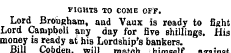
FIGHTS TO COME OFF . Lord Brougham , and Vaux is ready to fight Lord Campbell any day for five shillings . His money is ready at his Lordship's bankers . Bill Cobden , will match himself against Ferrand , the Farmer ' s Pet , for any sum the latter thinks proper ; the fight to take place on the floor of St . Stephen ' s any time during the next session . May be heard of ac Covent Garden Theatre , Lord John RusseU , Will have no objection to meet Sir Robert Peel , on equal terms , to contest for the seals of office . He holds out for the present at , the Bedford Arms . Tom Duncombe , the Finsbury Lad , will fight either Sir James Graham or the Bishop of London fora trine ; and Mr . Joseph Hume and Mr . Wakley will be happy 10 back him . A . Junius addressed to his residence in town will reach him .
Colonel Sibihorp is prepared to have a turn with the whole opposition ; one down the other come on . Particulars may be had at any respectable house iu Lincoln . John Arthur Roebuck , the Bath Chap , Bays that he will fight any man of his sizs in the House of Commons . The Royal Christening . —The young Frince haa been baptized Alfred—Ernest—Albert ! These names remind us of the old story of passing off a bad shilling between two good ones . An Alpebman Wanted . —The ward of Billigsgate will want an Alderman . May we beg to recommend a certain law lord , whose peculiar knowledge of the language of the district readers him singularly worthy of the gown .
Nothing so Certain . —We are informed by a remarkably fine officer in the National Guards—( tho gentleman , by the-bye , is also a remarkably small dealer in charcoal)—that , in event of a war , it is intended to placard the Paris fortifications wiih " lists of impositions upon English visitors , " under the conviction that , if they could not keep the British out of Paris , nothing else would .
*3anftntpt& St.
* 3 anftntpt& St .
Market Intelligence.
MARKET INTELLIGENCE .
Dpoeiviy.
dpoeiviy .
Tarfcute
tarfcute
Untitled Article
OMiNora .-Thenumbe ' . . of methodist preachers m the United States ^ and Texa 8 esceeds that of the standing army of the T Jnikd s ^
Untitled Article
Septemseb 21 , 1844 . THE NORTHERN STAR . 3
-
-
Citation
-
Northern Star (1837-1852), Sept. 21, 1844, page 3, in the Nineteenth-Century Serials Edition (2008; 2018) ncse.ac.uk/periodicals/ns/issues/vm2-ncseproduct1281/page/3/
-