
On this page
-
Departments (1)
-
Text (10)
-
Untitled Article
-

Untitled Article
-
THE KOfiTHERN STAE. SATURDAY,. KOYEMBER 16, 1844.
-

Untitled Article
-
Untitled Article
-

Untitled Article
-

Untitled Article
-

Untitled Article
-
Untitled Article
-

Untitled Article
Note: This text has been automatically extracted via Optical Character Recognition (OCR) software. The text has not been manually corrected and should not be relied on to be an accurate representation of the item.
-
-
Transcript
-
Note: This text has been automatically extracted via Optical Character Recognition (OCR) software. The text has not been manually corrected and should not be relied on to be an accurate representation of the item.
Additionally, when viewing full transcripts, extracted text may not be in the same order as the original document.
Untitled Article
"WAKEF 1 ELD MINERS' CONFERENCE . Continued from last «* £ & » " WEDNESDAY : liOBXIKG , yTSE O ' CLOCK . The president having taken the chair , and the delegates names called oTer , the minutes of the pre-? ion ? days'sitting were read and ooufirmed . The following resolutions were agreed to : — Tbit the executive council he composed of five members &s before , and to pursue ihe same coarse Of duty . That the rules of the United and Mutual Benefit Society of the Miners of Great Brii&in be read to the ¦ peering . TbtA the rales of the Miners' Mutual Benefit be laid before the men . of the various districts j and the society established immediately by all those-districts who may approve of them- . '
That a committee of four persans be ippoinleA , for * the purpose of examining the accounts , and ascertaining the amount of money paid into the general fond since the BursJem Conference ; also to audit the books of the general secretary . That E-Tftchaidson , S . Kitson , T . Shsppard , and 2 . Beveridge compose the above committee . That * the lecturers salaries remain as before : via . —One pound per week . That this meeting adjourn until nine o ' clock tomorrow morning .
THURSDAY 3 tOB 3 n > "G , 5 EfE 0 CLOCK . The delegates names being called over , and they iaring taken their places , the following resolutions "wereihsa agreed to : — THat each county have the power to pay their own lecturers , ^ . and remit the snrplus of general fund payments J © the central board , and shonld the funds " befbund Insufficient to meet the necessary expenditure , ta « Executive Council have power to lay * fur ther levy on , so thai all lecturers be properly J « ii ., * . That in order to retrieve the funds of the association , one peony ^ er week , per member , "be paid ( until the next Conference only ) , instead of onebaif-penny , * nd that particular attention be paid to this resolution "by all districts .
That all districts make their payments to the general fund , one payment in advance . That the lecturers be all called in , and fresh no * Urinations made , bni that no stranger be -elected , until the ' fonner lecturers whom the Conference approve off , are selected . That-each district or locality be allowed a discretionary power In the act of admitting new members , or such as have never been members of the Association . Teat the committee appointed yesterday give in heir report , ob the business icey were eleeied to perform . The same 4 e * med highly satisfactory . The books of the-general secretary having been audited by the coicmJuee and foono correct , were deemed Eatisf&etory .
That the projeci of stamping the Miners' Advotnie fye laid over till next Conference , but in the meautl-me , e&ch delegate and lecturerr use their utmost esdeavoors to induce the men to cause it to be stamped as soon as possible . Thai henceforth each lodge or colliery shall take * t least one copy as often as published , of the Miners ' Advocate , in order that a more extensive and persaneot sale be obtained for the same . Thai for the purpose of preventing the disastrous consequences attendant npoa the great majority of strikes , we give it as our opinion that a strenuous exertion should be made to complete the organization , of the Miners of Great Britain ; also , that T £ stt £ ciicra of labour be striody attendee to .
Thai * . oammutee he iatmediaiely appointed is » ch distract lor the porpose of obtaining sllstaiistical and other information upon the Miners grievances toT > s laid . before Parliament , euoh information to be sent by the first of January ; 1845 , to tbe executive council , ana that * acb district and colliery keep by them a copy of tbe same . That the next -conference t&ke place on the seventh day of April , J Bio , in Honh Wales . That & new card of membership be issued as soon zs convenient , printed in red . Each member to pay one penny -to . defray-, the - txpence of printing ihe same . . --
Teat no lecturer be aJIewed to at as a member on * ay cemmiuee , or vote in aoj district of the associmiiou ; but at all times when askfd msy girb his opinion or . advice , and to make himself generally useful is those districts not properly , organised . tbidat 3 tcmyntG , TrnrE o ' clock .. The Delegates names being called aver , and they having taken vheir places , the following Resolutions ^ rere then agreed to ;—
That in the © pinion of this Conference , the question of forming a Consolidated Union lay ovtr lor tbe present ,- and- that esefc trade in the United Kingdom are respectfully' requested to- meet together in their respective places of meeting , " and discuss tae ntiliiy » nd advantages of such Union above referred to ; and that they publish their opinion on ike same in the Xorikemi Slur and other London and Provincial Newspapers , so tiat a general impression may i > e got as to the utility of tbe fame . "
That ; the Twenty-First Resolution on ths Programme ; caEnot be enter&ined , bat the Delegates pledge themselvfs to urge on tseir respective constituents tbe gres . 1 importance of obtaining land , and that each District do nil they can to obtain land ¦ whereon to place their members wnen out of employment or persecuted . Thai tb& case of Benjamin Pyles vridow having fceen-considered , ii -was resolved that- a voluntary Babscriprioa be entered into at each Lodge or Colliery 5 . * soon as possible for tbe purpose of alleviating her privation and suffering . The' same to be forwarded to the General Treasurer with all speed . Thai the expulsion o ? P . M . Brophy at tbe Bnrslem ConfexeEcebe confirmed , from tbe c _ on .-i deration ihat he negiecttd his xluty . We also find there are zto wages dee to him .
LECrcKEES A ? poisTStETrrs- —Lancashire—H . Denjj ett , "W . Kalgaie , J . Price , C . Parkinson , J . Alfred , "W . Harris ^ a nd B . Etableton . Yorsshire ^ -D Swallow , S-Davis , and I ) . Shepnard . Deray , hoitingham and . Leicesierchires—S . Smith , T . Ciark , G . Ram « y- North -iad Soath SiiSor 4 shire and Shropshire ^ "V . Doro . J . Auty , G . Brown . Nonii-Dmbe « ao < i&od Darbaaj—B . Watson , W . liammoDd and 5 ^ . iialliday . Bcrwici-cn-Tweed—J . Wild . Ayr aa < 5 B * nfrew-thire&— jj . Scoit and R . M"C « 1-3 ty . --Fife and Ciackmacnanshires—T . Haii « tones . loinians—W . - Beans , Lanarkshire—J . Taylor . IJonbTWales—R . Brown . P . St—It is expected that aD lecturers wiJ ] be at their appoinrmeiiia before tne end of one month from iiis timE .
We , ine tiel ? £ aiesio the Miner ? Canference being about " to " -reiuni to our ciS ^ Tsmt cosj ^ iueEces now pledjie oarlclves to grester rcclnrnciry of . action in carryiBg oat the principles and v ^ j-cts of the zssociancn . aedb ' y an interchange o ! mmnal good-wixi aad aiffection for each o : ner , soleiualy ^ declare our firm determination to renewed extrtioiis in endea-TOuriDg : o ali&y all bickerings- and contentions among-inemenber ' j estrc : ? in £ all ib £ kfi-je&ce we iBay p ^ S'tss in proinoimK thrnnsijoui tte ^> soci £ . iion fcener&lly ihaV spirit of ami ? y a ^ d bro : herly love ¦ whicH has so " pre- ^ mineiitly charactered the deiibprstloiis " and pioct « dings of ihs present conference . ¦ ¦ " ' ¦ Johs Hall , Gen . Sec .
Untitled Article
SxArETBarSGS . —On Saturday , the 9-h isptsnt , -we had a-rtj-. per jfijfl ball in commemorat ^ c o- Hearv Hunt ' s binhday . Tiie eveEing was pa ? sed Js ' -easantlv ana bsimonioni-ly , ASHXOS-C 5 DEB-LJSS . —Ht .-vTS Bl 27 EDAT . Od &tufday-eTtiiing , N 4 iT . 9 . h , a naiabt . r ot me nro ? t entbu = iai : ie admirers of ihe principle * and person of the immorial . HeBry fiuct , met at ibe homo ul Jir . James Ashwonh , Hurat Brooks , ne 3 r Ashioiitinder-Lyae , to celebrate bis birib . wiea a rery i-ub stsntiai rt pa ~ : waus provided for the eccai-i'ai . Tue large Tocra tras- lasreraUy—decors ! ed vrilh ever-^ reai _ 3 . AtiLchs&d was » fail-Jca ^ ta ponrau of ihe iicmoiTal Hunt ; aad ainongsi tbc rtti "srere to be foqnd the poriralta of those who have ikurtd is
the s £ ffie school of politics as Mr . Hunt— -riicb a > our undanjited'champion and Hunt ' s tcecesior , u'Co ^ - Bor , triCb . CoVbttt ^ 5 IarveL Xmniei , Sydiity . Jrost , C&rzitii i jhi , H'D-vJull , Hain ' pdrn , Wasaiugtoa , , Wallace , Tell , Hoif ^ r , with a large oil painiicj ; ox Peterloo . Aft ^ r : h e , table : had been relieved of h- > Veight , Ae . Pftfcjrjcp aulhem was sung by ihe company ^ uprStaudisgi- - ~ 3 > ir , James fiiKson was ihe » calied"bEf to preade ; who , a : ter an able address , proposed the Srsttosst— " " Tie soTereiKniy of tl ^ peopl ^ tbe-oaiy souree of all power . " Mr- WiUism Aitkbfi- re » pODded , ia his usual ekqaent style . Tae ibllowrog " * oas' 3 and songs -were then . " given : —Song , by Mrv « Jsia&s -Arhworth , " Ye weaiib prndacers . * Toasti- ^ Tbe icmorta ! memory of Henry Hcnt , the jnan who never deceivtd xhe people . " Mr . Tbomas Coap responded in a " very -able mincer . Song , by Michael Roseowr * The life of Henry Hani- " Ar this p ** t of 'ibe meeting , three muaclans played ,
first , . tba * I > tad- marcli in SiuL , " and , second , ** Hunt s-rarew € irtoi Tdanenesier . " "Tne People ' s Chan ^ j iBd-fioojf-m 3 y it bxeome tba'law of the land *" " 3 Ir . aifred Barber responded- bong , by 3 $ r . Jbbri Safibrd , Peierleo "Ma 5 = acre . ? J " The 3 . 730 « leeil * I of ftreston-whd ' Hr'oted Mr . Hunt into Parlii&eoti " ' *^* -ttrriherti Star , and the freedom of th ^ press ^^^ r ^ Aitkln ir ^ aiu ^ cdme forward , and . delight-theitfdrence'fertb ' a verv"txc ' elitnt speech . Sonz £ * 'E&& SfiErffi ^ fey ^ ames Thorp . "Tfle mastMhsdeSB o ? % ve 5 T ' -Earion , wiio , by : heir acts « r def c » , ' 4 "ay 4 % briMbutecf to the cause cf . ireedom . " Jir . ^ ame ¥ ^ B ? g ? oii , the > ebairm 2 iE , resposdef , de JiTerWs " ^ ^ rnly ^ quent speech , Sting , - " Libcny Pret- ^ "bfE ^ irSr ^ BuTme . The speech of Boben ¦ EmmkV '* i * rSfe- ' -TtrraWx ^ vea by g . Raiser . Tise e 9 afp 5 i : v ^ pau a v « ry plrasins eT £ c : ng , and did iftft- ^ t ^ srf-adiil'i sc metvoi t late , cr i ^ tcerj
The Kofithern Stae. Saturday,. Koyember 16, 1844.
THE KOfiTHERN STAE . SATURDAY ,. KOYEMBER 16 , 1844 .
Untitled Article
THE TRADES ALIYE . It is with peculiar gratification that we have to announce that our short Article of last week , indicative of what the Trades of England can do , if disposed , for their own redemption from ihe slavery of grinding Cjpitai , has been hailed in all parts vrith joy , and the project of a Katioiux Trades' Coxflke . nce received on all hands wii . Ii that glad enthusiasm which is tbe sure presage of its due
accomplishment . Prom Manchester , from London , from the north , from the south , from the east , and from the west , we have communications that testify to the above facts ; and they call on us to con * tinue to set forth , in Labour ' s organ , the incalculable advantages that must result from the organization of the Trades for the objects and purposes indicated in tbe Article that hafl called forth , their commendations .
That call shall be responded to . We will continue to dwell on the advantages that muse arise from tbe firm coxsolodatioh of the power of the toilers to effect justice for their « lass : for " we believe it to be apparent to tbe reflecting mind that it can only be by such coxsotWATiox—Bneh an union of energies and purposes , that -the accomplishment of the hopes and aspirations- of the socially benevolent and the politically just can be secured .
True , there are difficulties in the way . True , there are a host of contending feelings , contending passions , and seemingly contending interests , to enconnter . True , all these have hitherto had full play against each other , and prevented all former efforts for a general union of Labour ' s order from being effectual . True , that mistrust , envy , jealousj , and darjt suspicion have contributed their share to defeat the projects of the wise the good , and the hopeful . True all this : but what of it ! Is the world where it was ! Ha 3 not
knowledge progressed ! Has not prejudice given way ! Have not the workings of machinery developed and made apparent the fact , that all sections of labourers are sailiBg in the one boat 1 that a blow at one , is a blow at all ! that the " master class" of all grades and imes can unite against the whole order of workers , boldly proclaiming that "Capital to secure its due reward is justified in seeking by every means to reduce the price of libour'M Have not the labouring many learned to do their oirn vorhl to rely not on
others ! to pat not their trust in those who have hiiherio deceived them , and naturally engendered jealousy &Bd distrust aa to the object had in view by every inciter to union and advocate for energetic action against the power that is crushing labour into tbe earth , ! Besides , if these things were not so ; if feeling and opinion had not undergone the immense change it has ; if all the bad passions of human nature were in full operation to thwart and defeat tbe efforts of Labour ' s friends to procure the full
acknowledgement' of Labour ' s rights , still would it be our duty to point out the only means by which the desired end could be accomplished , waiting for the course of time to evolve the suitable spirit and diffuse the requisite information to cause tbb ? e means to be energetically sought for . How mnch more then it is our duty at the present , to urge on the good work when the disposition to take the matter up in earnest is manifesting itself on every hand .
Sir R . Pzn . once gave utterance to the true philosophy of Labour ' s battle , when he adviEed the labourers ** to take their own affairs into their OWQ bands . "It mighrin Sir Robert ' s mouth hare meaned nothing more than a -plausible " put off" of the importunities by which lie was pressed . Still it is the root and substance of the whole matter . No power on earth can effect for Labour that which Labour requires , other than the power which Labour is itself possessed of . How can it ? In the first place , there is not the knowledge . What can the Capitalist know of Labeur ' s trams— Labour ' s reouirements ?
Ii is usual Dow-a » d * ya to sneer at what are termed " practical men /'—and not without reason either : for the vagaries of " practical men , " when dealing with Labour ' s question , have been astoundiag and eccentric indeed : stiil nothing but ** practice" can make * perfect" here . Then there is the want of disposition . To expect the employer of Labour to interest himself ( speaking generally-and as a rule ) for Labour ' s advantage , is to ask him to cot Ms « wn throat—to empty his own poefcet ! lr b all very £ ne for mouthers and spouterB to utter the silly prattle thai " th 4 . interests of employers and the employed are identical" : but fact shows
tnat socn an assertion is pure humbng . The " interest" of the employer is to get labour as cheap" as he cani the interest of the employed is to sell labour as dear as he can > and not all the powers of hea . en or hell can haiiaoafza those two conflicting interests , s « long as ' the competitive prinoiple is the foundation on which : society is built . To dream , ' rlrOTfore ^ th at . - 'ttB power of Capital wil ever set , labonrright aa < Lsecufe-its due reward , as to hope that .-r fhe ^ rain ^ iEHliLQt fall , or the lighter gases- * se « $ ; f" ^^ HofeEB * -was , right . LaBon * mn > t j&o ' its ^ S ^ pTUi , Tand ' tlie . . sooner . it Vets earn « aUy'afeeufcat » Jh , e more-speedily will it beeone the " -FESSTpaftafe ^ -iof ^ hefrnils . " .
And b < hr cm ' Esbour '/ power be brought W . bto tut throagh organization ? and how caaorganization be effected bai through representatitn ? To enable all to co-operate , aix must have a share in the arrangements . Beside , ia the multitude of counsel
Untitled Article
there iB wisdom . " Then is not the way clear ! First produce the general opinion that cdNsoLiDitioh is deBirabla . Let each Trade , or the major portion , once become convinced of that , and the means to effect it will soon present themselves . Labour ' s Parliament will soon assemble , and devise arrangements for united and systematic action , whenever the public opinion and public spirit of tbe Trades is ripe for such a course . The indications of the " Trade-wind" convince us that that time , rapidly approaching ; and it is to prepare the jclnd now at work , and thus seeking for developoment , for all that U has to do , that we now employ the pen .
The first step towards the accomplishment of a complete Union , is the assembling of Labour ' s Parliament , composed of the representatives of the Trades , to consult on Trades' affairs , and legislate f or Trades requirements . To this end should their efforts alone be directed . All other subjects , and all other questions , should be rigidly excluded . " No politics" would rightly apply to Buch a body ; for the admission of political discussions , and the seeking for political objects by mere Trade Societies , would
defeat their own purpose ; for it would bring , them within the power of the law , and arm Capital with a weapon to use to their own destruction . Every member of a Trades' Society can , and will , when he has rightly learned his lesson , act in political societies , independent of his Trade ' s confederation : but he would but badly accomplish his end who should seek to turn a mere Trades' combination , alhwed by the law , into a "half-fish half-flesh " gathering of diverB opinions and conflicting feelings , with the certainty of defeat following on such a
course . With a Tbajdks' Parliament , a plan of organization can bo devised , which will embrace and secure all the objects and purposes we indicated last week : a plan which will embrace every Trade ; place every Trade , as a mere Trades' combination , in a far superior position to any the best of them have hitherto occupied ; bring the united and undivided power of the jwhole to support each in turn , as ciroumstanoes call for it : establish a Sick and Burial Fand , on
principleB and calculations more secure than ninetenths of those now existing ; devise means of immediate temporary relief for those out » f employment ; and above all , adopt measures to obtain possession of portions of the land whereon to draft the u surplus" labour that is now acting as a " dead weight * ' on Labour ' s energies , and tumbling all into the pit of ruin . Such are the objects that would occupy tba attention of a Trades' Parliament , —objects easy of attainment , if the Trades choose , as we shall make apparent on a future occasion . Hurrah for Labour ' s Parliament .
Untitled Article
UNITED STATES . THE PRESIDENCY—THE AGRARIAN REFORMERS . —AMERICAN TIEWS OF THE "COND 1 TION OF ENGLAND QUESTION . " By the packet-ship England , Captain Bartlett , which arrived at Liverpool on Saturday last , wo have received New York papers to the 16 th day of October , that is , one day later than tbe previous arrivals . They bring election returns from the States of Pennsylvania , Ohio , and Georgia ( whioh are of importajioo as bearing upon the contest for the office of President between Mr . Clay , the high tariff and anti-Texas candidate , and Mr . Polk , his free trade and annexati n competitor . All these returns are favourable to the latter gentleman , who has now . at least , as fair a prospect of being elected
as his better-known opponent . In the great State of Pennsylvania , in which the Clay party had a majority of 343 votes at the last presidential election , the Democrats who support Polk have now a majority of 5619 votes ; in Ohio , where the Whigs had an immense majority of 23 , 657 , their majority has been reduced to 3413 ; and in Georgia , the Whig majority of 73 G 2 has been changed iuto a majority of 1155 for their opponents . From these and other returns , it is evident that the contest will be very close . The Xew Fork Herald says that the State , if not the city of New York , will give the casting vote . Both parties are making great efforts to secure that vote in their favour , and for that purpose the Whigs ar « said to have coalesced with the " native" Americans
or anti-Irish party . The Herald gives the following account of * hese new allies of the Whiga : — In the midst of one of those " native" Whig meetings , one would suppose that we were living , not in the nineteenth ., but in the middle of the fifteenth century . The language of the speakers—the exclamations of ihe ciowd—tbc peweeating taunt *—tbe bigotted outcriesthe fierce denunciations—tbe violence , intolerance , and sectarian anathemas , which characterise such meetings , make tbe scene resemble more that which centuries ago was witnessed in the cities of Europe , when the glare of faggots , instead of Drummond Lights , illuqifned tbe multitude , and the shouts of expiring martyrs ,
instead of the yells of loafers , filled tne air . And yet these are tbe scenes presented in the chief city of Republican—Christian—enlightened America , in the middle -of tbe nineteenth century . What an extraordinary > tato of things < what an extraordinary state of parties ! The Wbiga throughout the country , RtitnulaUd in relation to slavery by their leaders in and oat of Congress iuto " liberty" organisations which have brought the fortunes of Mr . Clay into extreme jeopardy ; and ths folly and indijcrtnjn of the democracy originating a " native" movement , which seized on by Whias ,
afford oot the last chance of saving their candidate ! This movement has been called ¦ ' Young America / ' and with some reason too , fot singularly enough , tbe " native " meetings are attended by crowds of the youth in every ward . Such ia the extraordinary development , combining youthful enthusiasm , religion , and blasphemy , the ory . of " The Bible and Liberty , " which has now been forced by the critical position of tbe old parties , Into aa attitude of altogether unexpected strength and importance , and now holds in its grasp the fate of the Presidential candidates .
Turning from these scenes of party strife , it is cheering Lo note the steady progress of the real democratic party , | the Agarisn Reformers . These men have hard , up-hill work ; their worst obstacle being the ignorance of the class of whose true interests they they are the champions . They are just now placed in the most unfavourable circumstances owing to the excitement of the contest for the Presidency ; but that once over , it is evident this party must and will make progress . Their Congressional and State Tickets are completed and present a noble array of toiler ' s talent .. We here present our readers with an article from the New York National Reformer , Qdited by Mr . T . A . Detyr , giving a -lucid and concise sketch of the objectB of the Reformers .
WHAT "WE TTAUT—AKD ALL WE WAXT . The Single , simple , and sele object which tbe Nationa l Reformers are pledged to , is to obtain for every citiaan of the present * day , and for . their posterity for evir , the meana of raising by their industry a living without the degrading necessity of going to " beg a brother of tbe earth To give him leave to toil . " The following sketches f ^ rth tbe materials wb have to work upon , and tbe manner we propose to go to work . .
The Public Lands comprise , oa ft rough estimate , from 1200 to 1400 millions of acres—east of the Rocky Mountains . About ninety-eight millions have been sold or parted : with by government ainc £ tbe revolution . A . great ; deal of this passed into tbe hands of speculating companies and individuals—a process which we propose to put an end to , now , at once , and for ever . Mode of Settlement—It ia proposed to settle these lauds in townships of six mile * square ( as recommended by Thomas Jefiersonj . with a town or village in the centre . Esch . boaaa to have attached a lot of ground from one acre to five , as deemed advisable , and the whole to be built surrounding & public park of forty or fifty acres . This to be embellished with forest trees , shiubbpry , fish ponds , and fountains where practicable ,
Oo thpap ; town , lots the man . wlw derides npon following mechanical pursuits will wttle down , while the country V > 6 s ( each # ne ; gaa # er section I 60 acr . es ) will be ocoupied J » S \ bb «> yiho . shalT . ' ha ^ e ' chQsenith ^ occtTpStion of the farmerV- & marfc | € , ' . | o a , con » d § is bfe . " cfftept , gHrpuld be ^ urn ^ hed Yo > ^ 18 ' prbducVby . ^^^ men . or bis own J ^ "WDs'b Jjp-- -, wiolB'ikiirwo nid be all the time employed , ' tn ~ / making . sucbT . articles as would be jieeeEsarjrtq the convenience and comfort Of the farmers . E ^ ery £ ri ? cle of farpitttre w ^ h the exceptio n , perhaps , of son-e such articles as' glas ^ wwe and hard ware , would be produced b ' y tfis skill of the mechanics ; whilit cloths of almost eiery description could be manufactured , as they are manufactured in every county of New Yoik , t « that tee , fgimer would not have to seek a
Untitled Article
distant ruartet at at ! . One trades in tbe township would canyon tell the traffic that would be required with tbe cities . Tbe advantages of this whole system we shall take a future occasion to present to oar readers . ¦ ' Means of Accomplishment—By returning to . Congress and the State legislatures , men pledged to stay all farther traffic in the public lands , and favourable to the above measure—and , of coarse , opposing and defeating all man who would shut the indigent citizens out from a home on the ; soil .
Further Means—The pauper establishments of New York and its suburb * cost 300 , 000 dollar * a year . The greater part of this sum could be profitably employed in conveying out upon the soil sticc citi&aos as may be desirous , but do not possess the means , . of emigrating—rand also to extend to the indigent citizen each loans ( in necessary articles ) as nay sustain him , until he has raised tbe articles of at least prime necessity from tbe soil . ' Still further Means—There are , many lucrative public offices Id the gift of tbe people . To those offices it is proposed to elect honest and competent men , who wil discharge their duties for a moderate fixed sum , ( say 1 , 000 dollars a year , ) the surplus emoluments to be strictly accounted for and paid over to the Emigration Fund . By public steamera employed on tbe Hudson
and the lakes , and by the State opening the canals at a moderate toll , to public boats engaged in the service , the actual cost of emigration would be brought down to a mere trifle . These things can be easily and fully accomplished by the votes of , the poor men themselves , and if once accomplished , the mechanic could , any day . even if he had not a dollar In the world , remove bis family to a western township and become independent and happy , either by taklBg up the Agricultural life or pursalng his own handicraft profession . Of this redemption thousands upon thousands would avail tbetnselvea . It weald form tbe great regulator of employment and wages . The standard of ¦ wages , 80 to apoatC , fixed \> J God himself would be quickly established throughout the whole country—those who could not realise it in tbe cities would go out and realize it on the soil .
While limiting each citiran to one farm only would nip off in tb . 6 first bud a landed aristocracy , the , wholesome effect produced o » the labour-market would check the growth of a money ' aristocracy . The peqple at large , when they had the means of going to work without borrowing , would not pay immense yearly sums in tbe shape of Interest on Money . It would also check or entirely prevent the growth of a ! Manufacturing Aristocracy . Under the above regulations wages would rise in every department to nearly , if not quite , the remuneration which a man could realize on ths soiL Thus manufacturing employers would be compelled to give a fair hire , otherwise they could not obtain bands . Wages would advance and exorbitant profits would be moderated producing a harmonicas equality throughout .
Such are the advantages , and such ( be meanB proposed to the working classes . Advantages so solid and so obvious that it is impossible either to mistake or to mystify them—and means so simple—so inexpensiveso easily within reach of the people , that it would be an insult to tbeir common teute to suppose that they will not adopt them . Mark that Englishmen : — " These things can be EASILY AND FOLLY ACCOMPLISHED » V THE TOTES OF tbe poob men theiiselves i" Do you need any other incitement to induce you to manfully struggle for those rights possessed by your American brethren ? What obstacle is thereto the
accomplishment of all desired and advocated in the above article ! One—simply one , ihe ignorance of those invested with the rights of citizenship . That removed , the power is at command to at once change the destinies of the Republic . Tho maxim of Laffayette , that " For a nation to foe free , it is gufficiont that she wills it , " is truly applicable to the United States . The men of the States have but to know in what true freedom consists , then will their freedom through the ballot-box , and forthwith they
are free . Shame on our American brethren , if regardless of the hopes and expectations of the enslaved masses of Europe , they omit the perform * anoe of the duties which have devolved ou them I that of establishing the eternity of Republicanism , and proving to the world the efficiency of democratic institutions to protect the labourer from the frauds and exactions of the myriad plunderers , wh ^ for ages have ruled the old world , and whose reign in Europe—alas for humanity—still continues .
The anti-Rent Agitation progresses j and that for Governor Dork and Free Suffrage in Rhode Island is not allowed to flig . We observe , too , with great pleasure that tho fearless and iudomitable Mike Walsh has joined the Editors of the Working Man ' s Advocate , under whose united and talented management , that excellent paper will for tho future be conducted .. In the Wotking Man * » Advocate for- the l" 2 th ult . appears addresses from the Editors announcing this arrangement . The address of Mike Walsh is a bold and able expo * sition of his views , and highly characteristic of the man ; we regret that its length prevents us reprinting it . We extract , however , the following article from the same paper , for which we bespeak the attention of our readers : —
HORK 0 HS OF ENGLISH LANDLORDISM . If the writers for the English papers were to tax their ingenuity to the utmost to invent statements with a view to exhibit in its most wdlons light the Monopoly of the Soil injQreat Britain , they could hardly produce anything more likely to effect their purpose than the actual records of facts with which thetr papers teem . For example , we give , under the bead "Condition of England , ' ' a few extracts from papers received by the Litest arrivals . First , we hare young women , in the prime of life , making shirts for from two and a half to six cents a piece , going without meaU habitually for want of food , and at last' committing suicide in consequence of inability to procure tbe means of support ;
the Coroner ' s jury rendering a verdict ot "temporary insanity , " tand exprescihg their a&uorrenoe of " the miserable manner in wbich labour was rewarded in all such cases , " but apparently without the " least Wea . of the cause of such a horrible state of things , Nexc we have an elderly woman f dying of octualstBrvation ; and then a man dying of ovj » r-exertlon in an effort to procure tbe necessaries ef life while suffering from want of food . Listiy , as if to ' call the attention '' of all not ¦ wilfulIy ignorant to tbe causes of such destitution in that fertile country , we have two gamt-keepars , one after the other , committing suicide because they were annoyed by the poachers I exhibiting tho damning fact , that in that same country , where ' Industrious men and women dio of starvation ' of commit snjcidff for want of tbe necessaries of life , other men commit suicide
because they are unable to prevent starving wretches from taking the game which they were hired totafce % te' off these other men-had been employed , one- ' a * ' ^ heait gamekeeper" and the other as guperfntetHfeat of keeper * . none * , Bud dogs" for a than who never performed u dky ' s work in his life , and who yet Is allowed to hold in his possession Vast tracts ef land on which to breed game to kill for his amusement , to aid in tbe tilling of wbich he employs ga ^ ne-keepers , superintendent of game-keepers , and a bead game-keeper ! 1 I A vast surplus of fertile land fer those who do noihliig ! Misery and starvation for those who do the work I ! Abundance of food and : shelter for the brtxte anlmala kept to minister to the Lund-Lord's aarasemsnte ! the ghawings of hunger and premature death for the human animals that produce what the rich non-prodncer consumes ! , '
There is a band of men in England , numerous and increasing , who are fast learning haw to remedy this state of things ; whose motto is , "He that ' will not work neither shall be eat ; " who , if they had the power , would allow the starving poof to * cultivate the wastes and even the deer paries , if necessary , for a subsistence ; who would let the Lord ! ive , ip biff castle if it pleased him , but who wobld secure to the labourer a cottage for his shelter . These men have not got the power as yet ; they have not the vote ; but they are struggling for it . They are called Chartists : tney were formerly ridiculed and denounced , tut are now ffared and respected by both the great parties in England ; yet , strange to say , are there straggling
imported Tories among us here' —for what reason is bard to tell—who denounce the noble Chartists ; and , stranger , yet , there are men of American birth who join id such denunciation ! Bat what true * AmericanJs tljertf who has not the head to see and the heart to respond to the sentiment , that the interest * of Labour and the cause of Kight are tbe same throughout tho globe f What political economist is ( herd that does not see that under present systems , Lsboar , like water , must ' find its level ? What statesman , worthy of the name , is there , that does notf fcnow that Republics can . pa perpetuated only by the protection of Equal Rights / and , above all . the Equal Right to the Soil ?
Most heartily , m the name of the English masses , do we thank our American , friends for the above just and eloquent defence of the muchmisrepreseated and much calumniated Chartist party ., 7 . No j we have not the vote , but we are gtrnggliiig ^ for it v 4 nd the vote we will have . WWen tjfit ¦ -aiVcpmefli aji ' dj despite ^ all persecutions andobfefruotions ^ ti . , : t '¦ .-'' Come it will fot a'tbat / J ; :.- ^ ¦ f - 'i tne masses of England - will-tsfce-care that there is not as now " a . vast surplus of , land f or tfcase who do nothing : aiid misery and starvation , for those who dalhe work . " These , things will , be altered ^ and lakdloids and labour robbera may find to their-cost , that the demands of justice too long delayed may eventuate in bitterness to th . e oppressor , and fearful retribution to thpEe who now outrage humanity , and trample on man ' s inalienable , right ? .
Untitled Article
THE GAME BEGUN . THE CHURCH DISSEVERED FROM IHE STATE , In a recent j American paper we find the following : — ; The Governor of Jamaica dissolved the House of Assembly on the 27 th September , and ordered writs for a general election in Febrnary . This measure baa been produced by the rapid increase uf the Liberal party , who desired to separate tbe Government from the Church , a measure deemed almost treusonabtet by the existing Government . It is believed the n ° . w Legislature will attempt to dUsolVe the union betwoea Church and State , as now existing in the Colony . ¦¦
We commend this "movement" to the notice of all whom it may concern on this side of tbe water . At the present time , when so much dissension rei ^ ue within tbe Church , and so muoh of opposition exists on the part of those beyond its pale , would it not be well to settle all these differences by at once doing that which tbe "Liberal party" in Jamaica seem fully resolved to efidct ? and which must , aad yet will , be accomplished in this country— -namely , the , Reparation of the Church from the State . When Mr . Gospel Montgomery says that the downfall of-the Church would be the downfall of " national morality .
private virtue , with all the bland graces and benignant charms oft those Christian homes where * faith hope , and charity * now abound , " he simply means the . downfall of aristeoratical priestcraft , tithe ? , Church-rates , Easter offerings , fat livings , and princely Bishoprics . Mr . Montgomery says "the Reformation wias an especial work for especial parposes . " True * What those '' especial purposes ' ' were , was fully explained some years ago by William Cobbbtt , in his matchless History of the Reformation . He has shewn , by facts aad proofs that caanot lie , that the " especial purposes " . were
the transfer ef the property of the Roman Catholic Church , —held \ by that Church , partly , at any rate , in trust \ for the people , and for the benefit of the poor , —to the aristocracy and for the benefit . of that aristocracy . That property was partly transferred to the aristocraey , as in the case of the Bedford family , nearly the whole of whose enormous possessions mere plundered from the Catholic Church ; while what was transferred to the new-fangled Protestant Church was intended for , and has been ] kept , as a mine of wealth for the younger sons of the great land-robbers . Such were
the " especial purposes" of the so-called Reformation . Another and a real reformation is now wanting . In the time of the Tudobs the plunder of the church property set apart for the relief of the poor occasioned the enactment of the famous Poor Law of the reign of Elizmjkth . Within the last few years the Church has assisted the Stato to abrogate this law , thuaconsummating the great State robbery of the rights of the poor commenced in the reign of the monster Henry Till . It is time , therefore , that this na . tional obstructor to national advancement was put down . It is time that we had another " especial work for especial purposes "—such purposes being the appropriation of the Church's revenue to the education of the people and the relief and support
of the unfortunate and distressed , leaving to those who choose to be members of the Church , its support from their own pockets . Such a- change , we feel persuaded is fully desired by Ihe- mass of the community ; but the question is but little agitated , because the masses have wisely set their hearts xrn first obtaining political power . Thai accomplished , all other necessary changes will advance just as rapidly as public opinion shall be prepared to welcome and demand them . Among other changes the true Reformation of the Established Church , by and through its separation from the State , must come ; and the sooner it cornea tho better for the plundered man ; , though tho worse for the plundering few . | _
Untitled Article
THE WORSHIP OF THE SWORD . " Pity the sorrow * of a poor old man ! M In a few days says a letter from Algiers , the Sword of Honour voted by the colonists of Algeria to the Marshall the Duke D'Islt will be finished . The following is the description , of the sword : — " Ia ihe front of tbe pommel , whioh is of onaied gold , appears tbe order of tbe battle of Inly , with its date of 1844 ; ob the reverse are the armorial bearings and cypber of the marshal ; a wreath of olive and
laurel on the hilt , with a palm and two marshal's truncheons ; on the right and left a fig , s mulberry tree , and a cactus ; on the reverse aa aloe in bloom , and the arms of tho marshal . On 'the guard ¦ ia a young female crowned , beating Ib her band a cornucopia filled withJTOrious fruits , and In her left haad a palDi-branch , the emblem of victory . On bet right is un European farmer , and on her left an Arab , a beehive , and wheat'sheaves . "
What a curjous association of ideas are naturally excited by the perusal of the above . Here we have a mulberry trea , figs , wheat-sheaves , aad a cornucopia filled with fruits , all harmoniously blended in the decoration and embellishment of an instrument of murder / This worse than butchers knife is dignified with thej title ot " Sword of Honour . " Honour forsooth . '; why . the stiletto of . the assassin is indeed honourable when placed in contrast with the Marshall ' s sword . The former takes due life , or at most , but the lives of a few ; but the sword of this Marshal has drank the blood of hundreds . There are certain circumstances under which the sword may become honourable ; nVutely , when wielded ' b y a brave man who offers his blood for freedom , a&d his life for the happiness of bis fellow-creatures .
Tho sword borne in the hands Of a Wallwe , or a Washington , aj Tell , a KosciuSko , becomes a holy thing ; and is henceforth freed from its hellish ; characteristics-by freedom ' s benison , and the righteousness of a good ' cause . At leafet such , is our creed : and not all jthe "political pedlars "—all the " intensely" eloquent apostates and smoothtongued hypocrites in creation , will bW able -to induce us to forsake that -CrSe'd . ' But no Buch sanctification has the sword 6 f Marshal Buckat- 'd . By him it has been used as a means to promote personal aggrandisement , bloody conquest , and merciless rapine . His sword was never drawn in freedom ' s causa ; but , on the contrary , tas
been u $ ed for the annihilation of African indepen ' dence and the enslavement of a stranger race . Is there one who remembers the slaughter of the 800 Moors at Isly , and the savage and infernal atrocities of the French razzias in Algeria , but will agree with us that instead -of the European farmer and Arab shepherd on the sword ,- the figures of a murderer and ! his victim would be much more appropriate ! And instead of the emblems of peace and ) plenty above described , emblems- of : mWd ^ r , pestilence , rapine , ' rape , and famine ' . would tell the truth , and be the only fitting decorations for the Marahal's Bword . ¦
But wo have sad news . for our . readers . The Toulonais says > that Marshal Bcg&&ud has taken the conclusion ^ " the ' treaty of peace with Morocco so much to beak , that it has made quite an ' old man of him ! If I the treaty of peace has already made an old man of the Marshal , we may conclude that any . lengthy continuance of the ' peace will" send bis grey hairs with sorrow to the grave , " which will be most distressing for the . gettert ' . up .. of tho ** , Sword of | Honour . 'V " AtEXAKnE B ^ the Gi ^ ai ' ( butcher ) , whett he bad over-ran a few countries fn J ^^ sappo ^ 1 i ^^^^ m ^ n ^ ^ i ^^ he had j coi ? quered . afl thq , wbrid ^ forthvfitK bfigau to
blubber like ajboy w&OiWflntcd . a . Bugar atiokv that J' the * e were-no more worlds to conquer / ' And so now the F ^ n 6 g Sf a ^ 8 HaI giyps himse ' lf ! u ^ to gri ef Mid despajr , Bejs ^ we , he cannot continue bia game of m , ur 4 er .- The eight : hundred men slaughtered at My , ' thd countless ¦ ' - thop ^ nds wljtf fiafte ^ efse-* $ er i *? i V $ fe \ Pmfa 4 . ^ mM&Ps the Frenfih «( ^ f j ? ici ; , ^ . tillages , gwaaoito , , the flames ; the fields of plenty mercilessly laid wasted women dishoiiowed , Wd ; ^ famine ^ Vl ^ th ^ hasT ^^ Marsiial ' s thirst for gore sand glory . He fretsj despairs , and becomes an * old mtfn" through jjrief and sorrow , becauso ' Hls ' hand is for a , time 'Stayed '
in . committing attrocities which the fiends of hell might blush to own . Alas poor Marshal BugeatjH " Pity the sorrows of a poor old man . "
Untitled Article
¦ ¦ l « ¦¦¦ ¦¦¦ i I - ¦! I ¦ » ¦ ¦ I ¦ ¦ ¦ I ^—— . 1 ^—^^ , But there is comfort for oar readers , and hope foe the Marshal . The Toulonais adds— " The treaty is , in fact , very Impolitic ; but we should not hare thought it would have bad so much influence on the mind of the Duke , for he will break it whenevvx- he fi nds it convenient to do so "! Pretty significant that I There is " hope" for the poor old Marshal yet ; hope that he will add the character of faith-breaker to the rest of his laurels 1 and this the scoundrelly writer in the Toulonais looks forward to with evident satisfaction ! ** The wish is father 16 the ihoughi . " Well , well : " Let there be light" ! said God , and there was light ! ' Let there be Dloed , ' says man , and there ' a a sea !"
We fear the world is but little mended yet ; and man little less tbe wild beast than be has ever been * At a dinner , held in honour of Fourier ' s birth * day , in Paris , on the 7 th of April , 1840 , this sama Marshal , then Lieutenant-General , Bugeaud , proposed the following toast : — "To the pacific union of the great human family , by the association of individuals , nations , and races ! To the annihilation of wai ! To the transformation of destructive armies into corps of industrious labourers , who will consecrate themselves to the cultivation and embellishment of the world 1 "
What a commentary on that text has been this man ' s subsequent career i Like Fourier , ha might hare acquired true and lasting glory , by labouring tocarry out the sentiment ha publicly proclaimed only four years ago ; but he has preferred another part —that of the military butcher , instead of the patriotic philanthropist . So be it . Let him ihug ht 9 M Sword of Honour" to his heart , and make mueh of his poor , paltry , blood-begrimed bauble . The ( future will do him , and all like him , justice .
Untitled Article
PARTIES AND POLITICS IN SWITZERLAND . The article below headed " Swiss Confederation' * is translated from a Swiss journal , published at Geneva , entitled Le Journal de Geneva ; and has been communicated to us by a friend in London . The article , it will be seen , is one of a series j and when the remaining articles are before us we shall understand the writer probably better than we do at present . But so far . as we do at present really understand him , we must certainly demur to some of his positions . His condemnation of a Radical party , when , as he
alleges a Radical Reform has been already obtained , reads very plausible ; but we doubt if it will stand the test of investigation . The Chartists are the Radical Reform party of this country ; but suppose the Charter obtained , is it likely the Chartists would be content to sit down with the mere barren investure of political franchise ! We think not . There are many vitally important changes which we need not enumerate , bat which our readers are well aware would then be sought as the consequences of the legislative Reform achieved . But just such arguments as are put forward by this Swiss writer might ba used by the " Conservatives ' '
of the then existing order of things , who would no doubt be ready to advise us to be content with the Charter and the " Radical Reform" we had gained , and not be so silly as still to call ourselves "Radicals . " This would be very plausible ; bat Radicalism meaning going to the root , however plausible such arguments might be , we should stick to our old name until we had uprooted all abuses . It strikes us that , notwithstanding this writer says there is no need now for a Radical party ia Switzerland , that there is considerable need of one , seeing that much ha 3 yet to be done in that country before real . ' equality is established ,
without which liberty has no permanent , we may say no real , existence . The persecution of Weitling , the German Communist chief , is an instance of the abuses and aristocratical spirit yet existing ia Switzerland . Weitlinq laboured to promote hiB views , and propagate his principles solely by and through the medium of free discussion . What resulted ! Why that in the Republican canton of Zurich , he was plundered of his property ; a work he was printing was seized before it left , the pressj ; and himself thrown into prison . He was afterwards tried on a charge of * ' high treason" ( I ) and though the charge could not be maintained , he was sen * tenced to six months imprisonment and eternal
banishment from Switasrland ! The term of WBrrLi > a '» imprisonment expired in May last , when he was taken from his prison , gagged and chained , -and in that manner conveyed to the frontier and handed over to the ruffianly despotisms of Germany . That was done in Republican Switzerland , by a Republican Government . Wejtung is now in England ; and so far as the peaceful proportion of his opinions g& , he may make as many Communists as he can . Thus far , at any rate , it appears even our precious Government is preferable to that of Republican Zurich . It seems to us , therefore , that there is every need of a Radical '^ utj yet in the Canton 3 .
We shonld like to understand who are the parties who are denounced by this writer as " anarehista ' and " ultra-Radicale . " Notwithstanding the viewB here expressed , we give the following article , because we are anxious to make the Star the medium through which the patriots of all nations may become acquainted with each other . If error finds a place in our eolumes free discussion will speedily correct the evil .
SWISS CONFEDERATION . Geneva , Oct * 15 , 1341 . Encouraged by the sympathy whiob the public continue to testify to us , we are afcout to increase oui efforts ia order to gratify our readers . It seems to as important to throw a new light upon ; the liberal cause , to-the triumph of which we are devoted . Therefore , believing that the Swiss democratic press ia engaged in % wrong track , apd that it misleads itself in . assimilating the position of the party of progress fn ^ thj ) cantons to that of the radicalism of England and Franee , we have resolved to ' pnfehsb several articles upon this important subject . We now commencei ; - ^ - '
ON THE STATE OF BAB . XIE 5 IN SWITXBKLAKD . It ia quite sufficient for Switzerland to be divided into tw « ctmps by the religious qnestion , -without this rS £ ult being produced , by two'political qualification * , one of which has neither sense or applicability is any ot oi r cantons . We speak of the qualifications of conservative and radical ; anditia thia last which , to us , appears improper and absurd . For what did this word " radical ? ' originally signify ? In England , tbe par * tiaana of a radical reform of tbe system of government - —of the mode of electing thai members of the 'legislative chambers . Now , employed under tkis
acceptation , at first relatively to Great Britain , the first in date aa a constitutional state , tbis term may also be appUcable in France , whore there esuts a democratic part ?; that is to say . a . patty who . wills the free and complete exerciser of \ h& sovereignty of the people , through tne means of election . It could equally , be introduced in Spain—in Belgium , and in ail tbe German States having elective chambers , because it is not impossible that there may be found men who wish to extend to the citiz 8 iw » indistinctively , the right and faculty of electing the representatives of the nation , as well as the administrators of the public wealth .
But itcaunet be thus in the Helvetic Cantens , and at Geneva jn . particular , simply forthereason-tbat they all possess . tbfr . democratic system , Universal Suffragetbe institution : Which is the aim of the Radicals of tnoBe monarchies of whom we haveVspoke . n ^ & 6 Ve . I * ' would be a folly ,, ot a . proof of ignorance ,-to crave for and to . exert oneaaelf to acquire that wbich is already possessed ; and it ia this . that we do , -we'Swiss , in speaking and in acting under the ides of Radicalism , as if we . had not already attained the end to wbich elsewhere it aspires ; and as if ,- consequently , we were not more advanced than other people in tne roaa oi Reform . ; . ¦ ¦ , - . . : •¦' . '
- What , tiien , ia the qualification , which agrees to tne citfeens of , our regenerated cantons , la order to express their . attachment to / the progress they fcave obtained , if it-igflofethabotConservfttaves- ? And ; if we « flirt upon it , they ought to , oe the veritable Conservatives , wfioi . aftee towing surmounted manyi obstacles ) have , by * -force of perseverance , accomplished the emancip 3-tfoh oXjUut . people ,,, apd fstablUbe ^ % h \ a , fegim « Equality ; Lw ^ JVA " 6 ! - ' ^ " ite * ilw * -t W 4 et i aii ; . v * x ' pferieuwi :. 'imU W ' piejudices . ' jpwi -have . JSPWft inconveniences' mnot the aba ^ s ' attached . to abwluUflni and
$ * W M ^ & $ fa ' CZ V t-. ' , ' ¦ ,-. . ¦• - _ ¦ ¦ ¦ : ¦ ¦* man . | t- ifi in icom ^ -jence of tk ( s judicionf ana j fn £ « mental distinction that we , the defenders of the Genetese c ^ n 9 t } tatipn ; pf tbe 7 tb of June , the . veritable ra * ca » udiiet the piecediBg regime , tnat we Btigmatise with tne denomination o f vllra-taiicaLa , those wbo , after aaT Jf * foiighi and conquered with «« , < J&ett in . eome » y sne common banner , in order to agitate anew ; tbeppp 8 j »" > and to tempt other baz ^ rds , in favour of what or or wbomi-of themselves , whom they jlease , In pretena-
Untitled Article
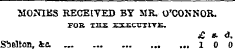
M 0 N 1 KS RECEIVED BY MR . O'CONNOR . FOS IHS EXECUTIVE . £ 8 . d . S ^ Bllon , tc . , ... 100 WoVingbam 0 4 1 Derby „ 0 10 0 Penrith ... ... 0 2 6 Hoimfirth 10 0 Piltington 0 10 0 George Marsden ... ... ... ... 0 1 8 Collected at Manchester 0 6 0 Subscribed by a few friends is the room st Mai . cheater—John Keishley £ 0 0 6 FrjDcis Jackson ... ... 0 0 9 Edward Swya 0 10 0 2 3 Lonrton ... ... ... 0 2 0
COMSIBTJTIOSS . Sbelton , fca ... ... ... 0 12 C Ctwinston , tt [ three eumt ) ... ... ... 114 Hindley 0 14 0 Hanley and Shelton 0 12 6 CARDS . Workingham 0 J 0 Longton 0 15 6 THE VICTIM AND DEFENCE FOKD . Canirjgton ( three earns ) . f ... ... ... 090 Arnyld ... 0 18 Lambley ... 0 10 Basford „ . 0 1 2 Chartists meeting at the Ship , Birmingham 0 7 0 Penrith 0 2 6 JVcrthasipton , per C . Earrison 0 19 6 TT . Salmon 0 0 6 TOU JEXKIN MORGAN . Saffron Hill locality , per Wra . Ball 0 6 0
RECEIPTS OF GENERAL SECRETARY . SCBSCB . IPTIONS . ilerthyr TydvU ... ... 0 5 0 Halifax 0 2 6 Hebden Bridge 0 4 4 Sowerby H ? im ... 0 3 i Lower Wsrley ... 0 10 Devsbnry . 034 Littietown 0 16 Bradford Central ... ... ... ... 0 3 9 Ditto , a collection 0 3 5 IMto , voted from fund * 0 4 18 City of LoDdou 0 5 i Clock House 0 3 0 T . Salmon 0 0 6 MISSIONARY FCSD . Merthjr Tydvil , a friend 0 10 Hebder . Bridge , ditto ^ ... 0 0 6 Ijtlletnira ... ... ... 020
CAXD 5 . SomersToWD 0 5 0 Plymouth 0 9 0 Tavistock , ... 9 0 6 Thomas M . Wheelu .
Untitled Article
4 THE NORTHERN STAR . I November 16 , 1844 .
-
-
Citation
-
Northern Star (1837-1852), Nov. 16, 1844, page 4, in the Nineteenth-Century Serials Edition (2008; 2018) ncse.ac.uk/periodicals/ns/issues/vm2-ncseproduct1289/page/4/
-