On this page
-
Departments (4)
-
Adverts (3)
-
-
Text (9)
-
Untitled Article
-

Untitled Article
-

MONEY.
-
Untitled Article
-
Untitled Article
-

LOCAL MARKETS.
-

#orefgn ffltofomtxitg
-

ifw Leeds :—Printed -fo»' the Proprietor, P BA:RQf% O'CONNOB, Esq. Of mmme)«njith,;p o«»J»
-

Untitled Article
Note: This text has been automatically extracted via Optical Character Recognition (OCR) software. The text has not been manually corrected and should not be relied on to be an accurate representation of the item.
-
-
Transcript
-
Note: This text has been automatically extracted via Optical Character Recognition (OCR) software. The text has not been manually corrected and should not be relied on to be an accurate representation of the item.
Additionally, when viewing full transcripts, extracted text may not be in the same order as the original document.
Untitled Ad
£ 15 , 700 , . M ONEY ready to be advanced apon Freehold , Copyhold , or long Leasehold Property , at a reduced Rate of Interest . £ 12 , 500 Upon Reversionary / or Church Property , Ac As this Money belongs to Trust Estates , the Money may be allowed to remain in the Borrower's hands for any number of Years . , £ 11 , 000 Upon respectable Personal Security alone , in Sums from £ 200 , £ 300 , £ 5 Q 0 , or not exceeding £ 700 , upon very moderate Terms . ., ¦ gg i Letters , Pos ' t-paid , directed to C . C , Old Kent Road , London , will always meet immediate and confidential attention .
Untitled Ad
DR . GRANDISON' 5 CHARITY PILLS . A RECENT DISCOVERY FOR THE NEHVES . PATRONIZED by above One Hundred of the JL Nobility . By perseverance in this popular remedy , the trembling band may become steady , the weak heart strong , and nervous irritability , ( so often , the precursor ^ f insanity ) may be arfested .., It baa secured refreshing . sleep ( without containing one particle of opiate ) to those who have , been denied that blessing : for ypars , and . ' conquered the most obstinate costiv ^ ness and indigestion . It strengthens the stomach , purifies the blood , and restores the spirits , ensuring vigour of . both body and mind .. CACTioN . ^ -The success Qf this Medicine ,, for every weakness or df-ratigemenl of , the , , nervous system , having caused imitations , jibe Publio are informed , that the worda Dr . 'Granpison ' s Charity Pills " ate en grayed in the Government Stamp j and cannot bo imitated , ' as they form a part of the Stamp itself . ' , ' - ' \ "¦ ^ ¦> , * . , ' ¦ ¦ :-. . ^ Testimos ^ ai .. —The following ; case q { . extraordinary cure can be attested , either personally . or by letter , by Mr . R . Stttoni , B 66 , k 3 el \ er , Np ^ tingham Mrs . Griffia , of Jfow Basford , near Nottingham , after abq tfefour years of dreadful neryoua suffering , which "Di . Blake affirmed would end in insanity , was perfectly restored by Dr . Grandisoh'a Charity Fills , after every known remedy had been resorted to in vain . ; Prepared ( for the Proprietor ) in London , and sold in boxes at Is . l ^ d ., 2 s . 9 d ^ , and 4 a . 6 d . each , containiDg advice to the patient , by all respectable Chemists . Boxes sent by post . Ask for "Dr . Grandison ' s Charity Pills . " 1 wonderful yefc , safe medicine . "^—Professor MOLLEN . ' .... . . . Agent for York , J . B . Simpson , Chemist , Mickla * gate . . ,: ..
Untitled Ad
IMPERIAL AUSTRIAN LOAN . Messrs . A 1 SCaWARZSCHILDandCo . take thelibertyto call the attention of their Friends and the Publio in general to this Loan , in which they have a few scrips to dispose of , at £ 3 eaoh , six for- £ 15 . and thirteen for £ 30 . No other house has remitted so mach money , to Great Britain , on account of these Loans , and they have no doubt that they will this occa sion receive the usual support of their Friends . The Distribution commences ! at ^ Vi enn a , on the 2 nd of December next ^ . . Letters addressed , Messrs ; A . SoHWABZSCHitnand Co . Fraukfort-on-Maine , care of M . Schwarzchild , Plough-court , Lombard-street , London , will be ico * mediately attended to . "
Untitled Article
wm - LEEDS TOWN COUNCIL MJ £ ETING . Tbe gn&iierly meeting < rf ibis bocy was held on Satnrday last , in the Council Chamber , at the Court ¦ House . The meeting wa 3 a Tery numerous one , only the following members being absent : —Aldermen Smith , Wiilans , Shaw , and Bebder ( four of the Tefirinj ; Aldermen ) , and Councillors John Atkinson . Moorhoriae , and Farrar . ILuier Sxassfeld . Esq ., the retiring Mayor , took the chair , at twelve o ' clock at noon , sod ibe Council immediately proceeded to the election of his sue--cessor .
ELECTION O ? XATOK . Mr , Alderman 2 tfaclea siid , he rose to propose a jjentleman for the office of Mayor for the ensuing year—a gsntleman who , he was sure , would receive the rapport of a very large msjority of the Conncil He was a gentleman in every way well qualified fcT the cfioe from bis business babits , and from his Inns experience in municipal bnsiness—a gentleman irho lie was snrewould act in the most impartial manner both in jbe Conncil and to all parties of the boxongh . He , therefore , begged to propose that Darnton Lnpton , Esq ., be Mayor of this borough for tbe ensuing year —( hear , hear ) . - Alderman Jacxsox seconded thi motion . Tfce " Mayor Tras aboxil to imt ihe uolion , "when
__ Mr . Joshxia Kobsox rose , and claimed hi 3 &tten- ; Mon- He intimated that he bad be ^ n present at a preliminary meeting , at which it had been determined to propose Mi . Lnpton far the civic cbair—a , proposition which he had opposed at tbe time he spoke of : and as he considered it neither manly i Bor fair to say Behind a gentleman ' s baek wkai be shonld bs indisposed to say befere his f ^ c *; and as the objections he had urged had noi been removed , by Mr . Lopton ' s friends , who seemingly were unable j to combat tbem , henra 5 t urge them again btfore tbe ( ¦ whole Conncil as he had already dose to a portion \ of the Council . The first objection he had to tbe i election of Mr . Lnpton was , that he wa = already j * Magistrate and an Alderman of the borough ; asd j
in those two capacities he thought that Mr . Lnpt-. n , had a scfirient amount of honour eonferml upan » ium—encash to sstssJy any one individual . Bcisdes , i the Connsil could , by tkeir * ct of ei » cnon , ; creaie a magistrate ; and , as he was one who-held i that th- election of aU magistrates on ^ ht to be by the people thcm ^ lves , he was not disposed to forego that portion of- his power on the present occasion , ; "Whieh be should do were ho to place in the civic cbair ; one already ia the commission of the peace . Tnen ¦ there was . tbe question of refponsifflity . They had ' Been it come to pas ? , that when their presiding ofiiceT bad identified Lim £ elf with proceedings deemed by tne Burgesses at large to ba detrimental ; to public liberty , and explanation sought for in the ;
Cotmcn , shelter had been taken behind yainirGE , and the seekers-for-expianation told tbat what had been done was done in a magisterial enracity ; and if any one was aggrieved , the Court of- Q-een ' s Brach "was open . Tkb aro = e from electing men already in the Commission : but if they themi * lvec created their magistrate , it tvonld no doubt recognise a ja = »; sad j honourable responsibility to the power ib&i created , i and 3 fio ? d all necessary explanation , if soushi for . i "witbou ; insultingly referring to ihe Couri of Q irfn ' s j Bench . Another ground of orjection to the eicci-on j of Mr . Lnpion was his temperament and cjhsiuu- ; Jion . Every one who had witnessed Mr . Lupioc's ' oondnc ; in ihe Council Chamber mast & % . ones ac- ' knowledge that he W 23 of an ardent and cnihusiasnc ¦
turn—very good qualities for 3 pohncal part-z-n , bnt , in his opinion , xot exactly the beat qusimes to ' qualify a chief miir . srrate . The eocsmuuon 01 : Mr . Lupton ' s mind necessarily caused him to take i strong views « n any qaestioE he might espouse ; and those strong views a _ -- necessariiy impaled to sizons , and oftentimes to is judicious acuoa : aad the fear ; in this case was , that thtir chief magistrate , > ho " . id . Mr , Ln >« on be tbe man , might be impalled to a ? erit-3 of harrasEuig andatneying conduct to a nTmsercuj and influential ponicn of the Bnrgesses , tha ? would eoi only invoiTe himself in discredit b ? : t rtflitl odjom ' -on tbe Coa&cii lor having appointed bin . It vraa ' ¦ well known thr s i&x . Luptun was an arceiu and en-: thusiasne Ti ^ totaller ; and Eiiice it became V . rn > Ttd '
abroad thai Mr . Lupron wcnld hi ]>? opo > i : t . a > Mayor , great alarm cad been created in the minds ol the > publicans ef tLe town . Thaf class knew , from fonu = r . experience , how a Clnef Magistrate couid h ^ rrits ' them by a injndicioas , and indefinable course of ' procctdure ; srd tht-y already kiew somethins of iir .. Luplon ' s exploit ? in the anti-publie-house cmsade , and naturally felt n . 7 a !* m _ He 2 utd h ~ en tcld thai , Mr . Lupton GT = ce av a public t > oiiu , uttered ine \ xemartablclaiigcaz ^ . tn&XDo rcipeciabk m ^ n wcula . be seen to enter a pcblic-houst ^; and ha thv > cgbi that , the fact of ilr . Lsptoa ' s holding snch an opinion , couplfed with his j > 'caliar temp ; ram ? nt , wonld ircpel ' him to harrassiiig tction 3 thai could jcoj- be jn = tined . He ' LTther said . that every member of the Council
must have iioiic-ed , that Mr . Lupton was m the b ^ Dit of taking Ttry strotg ground on whst he termed points of order ; and many unseemly erbibmoni , had ueOix . HwjaSHO YTAtfesei ia \ Q £ Ccautii Chamaer between Mr . Lnpi&n and the present Mayor , ind btiWctrE Mr . Lupuin aud other E ? mbtr > of tfce Cout-cil , on ihest fcrtuads ; and he h ^ d ir ^ quentiy in those cases had to bow to the decision of the Mayor , bat not till after a pretty severe contast . Tiiose crnde noiiocs of order Be ibonght won } d pto-< Inee disorder , rather than order in- the debate : of the Council . On the 3 everal grounds to which he had reA-rred , hs thought Mr . Lupion was unfit for the cfo \» of Mayor . It was ato known to every one of tuern thai Mr . Lupton was of aj : austere and hangbty turn and btfarhj ^ . Self respect and
oigraified deiaeanour became a man : bn : it was possible to carry tbe head toohi ^ h ; and then the opposite feeling to respect for tne individual was eici ' ed—< l&Bgnier > , Hq would ra . " se' the tbeity of propp-sng a gentleman who had raised himself from tee sianoa of a baker ' s boy , to a portion of wealth sad jr-fljence , and whose miassuffiing demeanour in the Council must have ~ won fcTnim tbe es ' seraof all its a-mber =. The gentleman he should name was of first-rate standing , of strict integrity , of unblemi-hed fam- ; one who had risen by his own energy , talents , aud industry f-. om the Tasks of-the mass to become one of the fir ^ t merchants of the land , fie was a mere baker ' s boy , earning his bread by sweating at the dough-trough and iheoven ; he is amongst the most
j no = rweahhv , retiring from busine ? = witb a princely fortune , and has thereqoiate time to iriliicgiy devote to public service . He ' held that the CouncJ ou ^ ' at to select such men as these , if it was enly to honour the class from wis-nce they had sprang , and to ' cSn a motive for hoaoursble emulation . Kad it not ailwavs been held mstitr of gratnisiioii thai many , and the best , of the heads of the London Corporation had attained that dl 5 Hngni = hcd ^ post from their energy and application of talent in disadvantagecn * eircumstances ! and was not the example hrld out as one which should be followed ! t ) id not the Chamberlain ' s office present to ths eye of tne London apprentice Ho ^ anh ' s inimitable pictorial lesson how
he mijjht bpeome I-ord Mayor ; and" vis not iha in-Etaitceof Whittington tangit to . erery young mind , as to what Hmail beginningSj with perseverance and nprigbtness , could lead to 1 And ought no * , the Leeds Council to honour . 'imilar merit when tiuy had it amongst them 1 Shonld they not confer civic distinction on one , who in receiving it , would nH . ci iononr on the people from whom lie had sprung I He ciaimiid the honour at their hands , for oa ^ who bad abinvy , temper , discretion , and judgment to fill the ^ sbair wnb credit alike to himself and the CouncH ; and against whom none of the objecriou ^ he had urged against Mr . Lupton conld apply . Hd proposed that Alderman John Jackson ba elected Mayor for the ensuing year ~( hear , hear ) .
Mr . Aldensa 1 3 ± cssos rose and sai J , that he must decline to take ibe oiiice of Mayor , at the same time be thanked Mr . Bobson for the iind feeling he had displayed towards him . He tiia not-hesitate to say —and be spoke ir before the whole Conccil—that he did not feei himself Qualified to £ 11 the ctsir as it caghs to be . Mt . CoBncIIlor JiCKsos seconded the nomination Of Alderman Jackson , whem he thongh ; eminently qualified for the cSre . He urged similar cbjections to those ur ^ ed by Mr . Bobson , against the election of Mr . Lupton . He asked whether the licensed ¦ victuallers and those connected with them had a
light to protection 1 Be complained tbat Mr . Lup- j ton bad degraded the oSce of magistrate by persen-. » Uy Tisiling pnblic-honse 3 to see kow they were j conducted , instead of leaving such an ufibe for tbe police and be was informed that , on one occasion , ' Mr . LuptoQ had seised some property belonging to a publican . A very respectable gentleman , worth £ 4 , WQ , had stated to him { Mr . Jack&ra ) that if ' Mr . Lnpton was elected Mayor , he would leave the town—( much laughter ) Ttom conver > au ' ons he h&d had with several persons , he btiitvgd that if Mr . ' Inpton irers elected , public house -property , in consequence of his "harassments , " would fall ten per cent , in Talne— ( laughter' ) .
Mr . "Yzwdxll rose for the purpose of making a few remarks ef an opposite tendency to those which bad been made , and took up ihe various objections to the election of Mr . Lupton which had been urged by Mr . Councillor Bobson . and by Mr . Councillor Jackson . He condemned and ridiculed Mr . Hobson as lbs objector general in the elective « f Mayor , as proved on the present occasion , and at the election last year ; and argued that &o remperameni had ever been displayed by Mr . Lupton to du ^ aalify him for the discharge of the duties of any ofaee or sitnation ( 0 which lie mighs be called —( hear , hear , and applause ) .
Mr . Juanx Ca-wood said he shonld rote for Mr Jjeksou , if that gentleman would consent to take ^ Mee . £ e ihonld do so for this reason : that , u had ^ keen stated by Mr . Councillor Jackson ,- Mr . Lnpton bad degraded the office of Magistrate by going from pnblk-hooBe topublic ^ house $ 0- see how they were # onducted—a duty which ought to have been discharged by the police . Ha had no objection to Mr . l « uptoa > bTitdii » j andhe rfionld eeriainly give his ¦ yote inATonr of Alderman Jajcksoh : . AldeHBan ; Goodman followed in some remarks s&owingth ^ Mr . 'ljupum iatd discharged bis < iniy « s a , Ma ^^ rA' ^ e in a manner eadtli = g bim to ibe ^ ^ anTffl ^ rf ih& Magistrates : he defended Mr . Lupton
Untitled Article
from the charge of beiuj ^ a . usitr « . ano nrstd : iu » z . ia e ^ « ry way ne was eminently qualified 10 fill the office of Mayor—( hear , bear ) . Mr . Johs Cawood considered that it was not the duty of magistrates to go about seeking for offendf rs against tbe law . If they did so , was it likely that they could impartially discharge their dn ; ie » when delinquents were brought before them ! It was contrary 10 human nature to expect it . Mr . Cbulten considered that the very objection taken by Mr . Martin Cawood to Mr » Lupton was a very strong Tecommendavion in , Mb favour- Mr . Lupton deserved praise for taking upon him the unpleasant duty of trying to check crime , which was nurs ? dand fostered in many low beer-houses and pDbjjc-bouses in tbe town —( hear , hear ) .
The names of the two gentlemen who had been proposed were then put from thechair , and Darnton Lupton , Esq , was carried by a majority of 33 to 18 . The votes were-recorded as follows x—For Mr . Lupton—Aldermen Willans , Oates , Gaunt , Maelea , Bateson , Goodman , Pawson . Pease , and Lnccock ; Councillors Lee , Nunneley , Birchall , Craven , Carbutt , Richardson , Beaps , J . W . Smith , Barrett , Sellers , Yeiydall , France , Broadhead , Gresham , Arthingtoa , Walker , Cliff , Whitehead , lugham , Shackleton , Hainswortb , Calvert , B , Wslson , and "Whubam . For Mr . Jackson—Councillors Jackfon , Robson , White , Hornby , Brumfit , Horner . M . Cawood , Wcddill , Beywood , J . Cawood , Dufton , Stead , Bower , Bobson , Brook , J . Wilson , S ' . rother , and Prince .
Mr . Lrpros having made the usual declarations , he was invested-with the insignia of office , and took the chair , vacated by Mr . Earner Stansfeld , the retiring Mayor . The Ntw Matok , on taking the chair , said he as- ^ ed the Council that he felt deeply the honour which they had conferred upon him . It was only due to himself to offer a few words in reference to what had falles from two of the gentlemen who had spoken —( hear , bear" ) . With regard to the observation of Mr . Councillor Bobson , who bad stated , tbat
he ( Mr . Lnpton ) , had made the remark , tbat no respectable nan would erst enter a pnblio honse , he muji say tha : ilr . Hobson ' s informant was grossly in error . Be ( Mr . Lupion ) had never made such a statement . In reference to what Mr . Councillor Jackson had said , be might observe , tbat he had never touched any property whatever , and the only object he had in view , w » s to see that tbe police did tit oir < iu : y —( hear , hear ) . He would only further remark , tbat he should use his utmost endeavonr , faithfully and impartially , to discharge the duties of the offick ;—( applanse )
Born Mr . Bobson and Mr . Jackson gave te Mr . Lupton the authority on which they had made their negative statements : Mr . Hobson in open Council ; Mr . Jackson privately to tbe new Mavor .
VOTE OF THAXKS TO THE MATOR . Alderman Goodman , after a fe * y brief remarks , pr ; po ? eri— That the thanks of the Conncil be and sjr *> hereby given to Hamer Siansfek ! , Esq ., for the distinguished ability , discretion , « ood temper , " impartialiiy , and diligence , which he has manifested in hi = performance of the daties of Mayor of this Borou » h , during the year of his Mayoralty '—lapplan se ) Mr . Jons Cawood bore testimony to Mr . St 3 nsfeld ' s impartiality , and cordially seconded the motion .
Mr . Hobsos ronld not allow such a motion to be pns wi : h ^ ut observation , especially as the moTer of ii bad stated that tbe conduct of the retiring Mayor had boen Puch S 3 to call for and obtain the unqu-ili-Sed approbation of all . He ( Mr . Bobson ) was a- $ ! oni :-n « I that sneb a declaration shonld have been hawrded in the teeth of the fact that the retiring Mijnr ' s conduct , in the case of the late as > auit on the right of meeting , had been so reprehentible as to call forth , in legitimate public meetings , in neariy every waH of the borough , direct votes of censure . Sncb = tat » -ments ooght not to beTro ^ unteered in the ideth of uotorions fact : for it was but a daubing-up with nnternpered mortar , and wi ? uld answer BO good end . To The courteous demeasour and general
urban . ty of manner of Mr . Aid . Stansfield , he ( Mr . ' Hobsos ) willingly bore testimony : but still there ; were matters during his yeaT of Mayoralty which ' coulduot bo defended , and of which he ( i& . Bob- ' sou ) intended to speak ? as he thought he should be ' bes- performing his duty by Baying at once what he ' had to say in open Council , instead ^ f silently afqnies- ' ing in such a morion as the one before the chair , and ' then muttering bis compiainw in liule coteries out of th
war 01 18 ; 2 . A motion had been made in the Council in connection with that matter ; and in the ' course of the debate be ( Mr . Hobson ) had expressed hi ? di-agreemem with the terms of that motion , and ; intimated his desire to propose another better eal-1 cnlsied to accomplish the object in view . He had ' put the question to tbe Mayor , as to whether he ; shoDid be at liberty to make such motion : and ' received a distinct assurance that such a course would be perfeciiy in order . He bad accordiu ^ y risen to make his motion , —and proceeded at some : len £ : h to establish his case ; but happening to tread : on th «; gouty toes of ihe party sheilding the ixnpli- cated Aj'ierman from inquiry , it was deemed expedient 10 " get rid of the annoyance "; and the Mayor ,
who had ruled that the moiioa was in order , now ruled : hat it could not be at all entertained . The Council oacked him in this strange vacillation : and ; the matter was ., for the time , thus smothered . Now xbis wa- a position of difficulty that no member of ! the Council ought to have been plaotd in . It wast conduct as utterly indefensible as it was unworthy : I for the truth was thai he ( Mr . Hobson ) was strictly in order on tbat occasion , and tbe proceeding against him was unwarranted . He next came to the " Mar- i kei busiucss , " when the rights and pnviieges of the j Barxes » es weresorudely assailed , and ihe principle ) of free discussion itself jeopardized . With the unjust and illegal proceedings on that occasion , the j Mayor had been mnch mixed up ; and out of them ' much of
hae 8-r ^ en inconsistency conduct , to which hs P ? r . HobsoD ) snould advert . He would grant , for tbe nonce , all tbat the assailers of tbe right of meetini ; contended for , and relied on as a justification for tht-ir rocduct ; he would grant that the mon-, straus : y m---dest claim made by the market lessee was true—i ^ at the soil of the market had be >? n leased 1 to him , and tbat the ratepayers were not at liberty to use thsir own property wilhoat his leave : he ; -mould j ^ raut all this , and even then it would be found tha : the conduct of tbe authorities was utterly in-; deiens-Me , because grossly illegal . If the people s were trespassers when meeting on their own ground , it waj > clear that they could only be proceeded : against as trespassers ; and that the employment oi
the police to disperse the meetings , by the plentifnl use of ihe truncheon and tbe bludgeon , was an illegal exercise of power , rendering every man of them liaoie 10 an action for assault and battery , and many of them to actions fpr false imprisonment . This unwarrantable exercise of " authority" naturally and risbtjy created consternation and alarm in the minds of the inhabitants . They saw that the right of meeting was infringed on ; and that if they rameiy submitted to the assault ont of doors , illegal power -would soon reach them in docra . Accordingly , they sought for an expression of publifr iad . gsation and pnblic alarm . They presented a most numerous and a most respectably signed requisition to the Mayor , desiring him to call a
meeting of the inhabitants to protect their dearlybought arid much-cherisbed rights and privileges . Tiie Mayor refused such request . Tk-ishehad a riahi to do ; and of that he ( Mr . H . ) did Dot complain . But he also refused the inhabitants the use of thia building ( the Ccurt Hou 3 e ) for their meeting . They bad been illegally beaten oni of tbe puolic market . They had been tronneed by policemen's staves , when exercising what was " aa undoubted right ,- " they soueht to protest against this flagrant abnse of power , and to seek redress . They aBked for ihe use of their own building in which to do this most necessary work ; and they were refused . Of thi 3 the inhabmnts complained , and justly . They oould not forget , tbat while they met with such refusal
in a case decidedly and intimately affeo ; ing their rights and privileges , not only had tbe use of the Court House been granted , bnt the meeting also convened , for a political faction who had sought , to use the words of Air . Baines ( then in tbe room ) , to leave tbe Quee n without a crust ; the national creditor vsithoat interest ; the army without pay ; the navy without a shot in the locker ; the officers of state wLhwu salary ; in fact , to produce Bevolction and Cojcfcsiox . The inhabitants did think thai when their building had been granted for such a purpose as that , and the meeting lUelt convened by the Mayor , it was most ungracions toreluss them its use when they wanted to defend their undoubtable right" from unjast aggressioD ifctre were several other things which he must also suude i 0 : the rejection of the memorial of t&B inhabitants
on the occasion of tbe Market bosine&s " * fTf £ t the . « l . without a shadow of a shade of thornyJot ; sucb an unprecedented course ,-a coarse which aaid snat the Leeds Town Council was more unapproachable than the House of Commons ltam ; the Iran * . down of fee monstrous " order " tbit a member of Council was at liberty to make a motion , bnt not te adduce and comment on facts in Hupport of such motion ; there were Beyeral other matters of , this nature which he would advert to and mention , not eo much in the way of complaint as in the hope that the Mention of tham would « erve as beacons for the future ; for it was bot fur and reasonable , that at th « end of a Mayor * * year of ofnee his conduct should be reviewed , and the objectionable portions pointed out , and animadverted on . As long aa he had a seat in the Council he should pursue that course : for he was determined to do his outy without fear or favour : and he could afford to speak of every man just as he found bim . HaTing delivered his conscience , bo Bbould-not oppose tbe modoa . The rsolufioa was then put , and carried unanimously , and by acclamation .
Untitled Article
Aiderman feTAriSFFLD rose to return thunks . Htf * a id sbat rho Tesoiuiion which tbe Council had just passed , was most satisfactory to himself , and Me hoped it was a sufficient reply " to the causes of complaint which Mr . Hobson had urged—( hear , hear ) . He felt the responsibility of the office when ho was elected to it ; and henow felt'deeply the v £ . lne of the resolution which they had just passed , expressive of their approval of his conduct in the chair . It had been bis earnest desire to act impartially : be might have made mistakes ; but it' so they were errors of indgtnent—( hear , heaT ) ,
THE TICA . R OF LEEDS AND THE BHBIAl GHOCNDS . The Town Cxeek read a letter from Dr . Hook , the " Vicar of Leeds , appoiutingthe Rev . j . A . Beaumont , chaplain ior the consecrated portion of the New ' . 'BurjjJ Ground at Leeds , and Rev . John Clarke , of Hunslet , chaplain to Hunslet Burial Ground , and confirming the appointment , by the council of Mr . Pickard , to the office of cl ^ rk and sexton , to the consecrated portion of the Leeds Burial Ground . In reference to the proposed alteration in the charges for interments , the Vicar said he was sorry to find that it was proposed to make an additional charge for persons buried in the consecrated ground , because it was in opposition , to the spirit of the Act , and would frustrate those hopes of peace for which , at a C 011 * siderable sacrifice on his part , he had consented to the . passing of the bill , which he certainly should not have done had he thought that any distinction in the charges would have been made .
ELECTION Or ALDEBMEN . Mr . Martin Cawood rose and Baid , that on a former occasion he had had the honour to propose gentlemen for the office of Aldermen , but they were rejected . On the present occasion he intended to propose gentlemen highly qualified for such an office , and who , he had no doubt , would give satisfaction tb the borough , if elected . In electing these gentlemen , they would but be acting on a principle which had bteu established by gentlemen on the other aide of the house—that according to the number of representatives of the people , the honour as well as the work of the Council should be divided —( bear , frwn the Tory sidt ) . Tbe prestat amount of representatives of the Conservative party in thu Council was
13 , and they had a right to a proportionate number of Aldermen . It was a principle which had been established in the mayoralty of Mr . Alderman Pawson ; and they ( the Conservative party ) , were now willing to carry it out . In proposing the names of four gentlemen , he did it without any factious motive . He had taken four gentlemen who had shown the greatest impartiality , and cordially worked on the Committees . The name of the first gentleman was Mr . Brnmley , a gentleman who had long been connected . with the Council , and had the esteem and respect of every member of that body , aud of all p&Tties in the borough —( hear , hear ) . The next gentleman , who had been connected with the affairs 0 } the town during the last forty or fifty years .
aud had assisted in every improvement , and been actively connected with many of , the publio institutions of the town , was Mr . Cavrood , senior—( hear ) . The next gentleman , one who had deserved and obtained the good opinions of all in the Council , was Mr . John Wilson . And tbe last gentleman whonj he had to propose way Mr . Slrother , whose effort ? on the streets committee eminently entitled him to the honour of being appointed aa Alderman . To these four gentlemen he considered the Conservative party were entitled as thtir proportion of Aldermen , having , as they had , one-fourth of the representatives of tbe people in tbe Council of the same principles—( hear , hear , and applause ) . The Conservatives had shown a williagne . ss to act 011 all the comraitt ^ o ?
and they were still ready to continue thai willingness ; and he considered that they were iuily entitled to a fair proportion of the Aldermen . By the Improvement Bill , the Council wore vested with extensive powers for the good not of any party in the borough , but for the whole of the inhabitants ; and ; surely then , the Conservative Bide of ibe house , who represented at leat-t one half of the weulth and respectability of the borough , and who Wtre willing to tike their share of the work and responsibility in the Council , were entitled to one-fourth of the boDourd—( applause ) . I \ Ir . Cawood next referred to a paragraph which appeared in the Leeds Mercury of the 2 nd msu , reooromending the Council to appoint , some Conservative Aldermen amongst the eight
which they had this year to elect . He read the paragraph , and said that whilst it weli bore out the arguments he bad advanced , it . did credit to the head and ihe heart of the writer—( hear ) . Mr . Baines was entitled to high commendation for it ; for it was hardly to be expected that the head of a party would come forward so nobly and so manfully as he had done , for they knew that he would : thereby forfeit the esteem of some portion of his party—( hear , hear ) . The Council had now the opportunity of eleoting feur gentlemen—Jour Conservatives—who would act cordially and amicably in tbe work of the Council , sinking all political and religious differences . If they elected them , they ( the Council ) would find that th- y would act for the
benefit of the Borough , and that tbe election would meet with the approbation of the inhabitants ; but if they rejected those four gentlemen whom he had proposed , the Council would shutout a large amouut of the community , both as to numbers and respectability , of the Borough who were entitled to be represented . These were not singular opinions . Air . John Hope Shaw had addressed a letter to the other side of the House—a letter which , as h » ( Mr . Cawood ) had observed of the paragraph in ihe Mercury , reflected credit upon the heart and the head or its author—( hear , hear ) . Mr . Sh 3 W not only strongly recommended the election of some Conservative Aldermen , but he went so far as to Bay , that if one-third of the Council were
Conservatives , they had a fair claim to have a Conservative Mayor every third year . And he understood that at the meeting to which allusion had been made by Mr . Hobsoh , Mr . Yewdall , and Mr . Barratt had actually proposed Mr . Wilson to be elected as one of the Aldermen . The Council had now an opportunity of sinking party delusiveness , and he hoped they would taka it . In many institutions in the town , it was found that gentlemen of different political opinions worked together amicably and for the good of the institutions themstlvas—( hear , heaT ) . A few years ago , each par'y struggled hard to get the aocendaDcy in the Committee of the Commercial Buildings ; but an arrangement was comb to by which each party had about an equal number o (
gentlemen on the Committee , and they had worked , together well ever since —( hear , hear ) . The absurd distinctions of party bad been carried so far in the . town that they almost separated father from son , and brother from brother—Ceries of "No , no , " from the Liberal ?) . But he knew that such was the casein some instances . If the- Council now laid the foundation-stone for fair-play , they would do away with party feeling , they would do credit to themselves , and promote the good of the public . No such party distinctions , were made on the magisterial bench . It was thought by some that when the Conservatives came into office the Liberals on the beach would be swamped ; but the renult had shewn that nothing of the sort had taken place . Tno
magistrates acted together cordially and amicably . Mr . Tottie could meet Mr . Hall there as an old friend , and without any party feeling , and Mr . Hall could meet Mr . Tottie in the same good spirit— ( Jond applanse , and * ' Hear , hear " from ilr . Tottie ) . The four gentlemen whom he ( Mr . Martin Cawood } had proposed , and who were all well fitted for the office of Alderman , ' were all ready to act if elected . If the Council rejected them , they would deprive the town of their services . The consequences of a refusal to admit the claims he so urgently pressed , might be serious indeed . It was not to be expected that the great Conservative party would quietly submit to be so insukingly treated : and thus party feeling and asperity would take a wider fling than it ever yet had done . Then there wa 3 likely to be an election for
Guardians of the Poor : and if exclusion was practised in . that Chamber because the Whigs were strong , they must expect to be excluded where they were weak ; In the event which he had supposed , the Conservatives must either leave the Liberals and their friends to act of themselves , or they would join a third party , which—( lnud cries of " hear , hear , " from the Liberals , and laughter ) . Suppose a third pauy came and said , " We will unite with you and overthrow tbe other party , " they ( the Conservatives ) must either fight manfully on their owd ground , or they must take their offer—(" 0 O ! " ) Unless they that day adopted the principle which he had laid down , they would put the Conservatives to tbe alternate of either fighting manr mlly on their own ground , or in the position to assist a third party—( hear , hear , and disapproba : tioh from the Liberals , —atuidBt which ,
Alderman Luccock rose and said , he trusted that there was not a man in the Council who would act under the threat of Mr . Martin Cawood ( hear , hear ) . Had Mr . Martin Cawood simply confined himself to a statement of tbe reasons wby Tory Aldermen should be appointed , he would havu met him manfully on that ground : but if he thought to induce him to do tbat which his conscience told bim was decidedly wrong and unprincipled ; by means of a threat , > Mr . Martin Cawood mistook the man he bad addressed , and he trusted he mistook the spirit of his ( Mr . Luccock ' a ) friends around him—( loud criea of hear , hear ) . ISo ; if they were to be influenced at all , they were to be influenced by argument , and not by so base a threat as the worthy Councillor-Mr . M . Cawood—I made use of no base threat , and I call upon you to explain thelanguge which you have used .
Mr . Lcccoc * . —I recal the word , Sir . But I feel that when a gentleman gets op in this Council , and thinks hee&n induce tne to do what my conscience disapproves , by a threat—( ones of *• No threat" and 14 , yea . " )—If 1 understand the meaning of language—Mr . M . Cawood—I used no threat . I said one 0 / two alternatives would be the result . Either we shonld have to B > j , ht manfully on our own respon * ability , or throw our weight into the Other scale . M ? . Ldccock—I know not the meaning of words if tbat be not a threat . Therefore 1 trust that if there be a gentleman holding the same political senii-
Untitled Article
m-uts as myself who bus put upon his list , tho name of a respectable Tory , that he will feel , that under the language the worthy C unciDor has used , he is ibi'oliuely compelled to strike that namo out —( hear , hear ) No man more highly respeots the gentlemen named by Mr . M . Cawood than myself ; but I feel it totally impossible that we can support them as Aldermen . Mr . Luccock then proceeded at some length to argue against the appointment of Tory Aldermen . Se thought the principle put forth by Mr . Martin Ciawood . that the Aldermen ought to- be in proportion , to the different parties in the Council , was decidedly wrong —( hear , hear , hear ) . The principle on which they ought to act , was to elect the fittest man they could find for the office , and ia
determining that , he held that it was highly important that political opinions should form an element of consideration ; for after all , the Council as now constituted was a political institution ; and ho contended that if they oould find men otherwise equally well qualified , the similarity of political opinions would , and ought to be a decided ground of preference , and for such men they ought to vote —( loud cries of " hear , hear" from the Liberals ) . In fact , without taking political opinions into ' consideration , he held thattbey could not determine who were the fittest men for the office . He further argued that as the Aldermen would be elected for a period of six years , and as they were unable to tell what changes
would take place in that period , the election of Tories would probably be a first towards a Tory Town Council . That if they were to take the opinion of the burgessea on the subject , and the question were to be brought , before the wholo of them as one body , there could be no doubt thai they would ol . ct solely persons of the Liberal party : for theso and other reasons which he adduced , he maintained that it would be unprincipled on the part of the Whigs and Reformers to choose Tory Alderman—( applause ) . He concluded by recommending the following gentlemen for election : —Messrs . Maelea , Shaw , H . C . Marshall , Gaunt , Gates , Joshua Bower , BacVson and Carbutt .
Mr . Jackson addressed the Council in favour of the Radicals having their proportion of the Aidermen ; any aaid tha . t ho thought it extremely modest of Mr . Luccock to propose that there should be fifteen Whig Aldermen and only one Radical—( hear , hear ) . Mr Cliff also vargucd against the principle laid down by Mr . Martin Cawood . The question canaa to this , ought political opinions to be considered , or ought they not 1 That was the whole question . To a great extent the Council was a political bod y ; and , in his opinion , tbe same general principles which operated in their tuiuda in choosing a national governor , ought to influence them in choosing local ones . When they considered that the Council possessed the power to tax the people , and to dispose ot tho ^ e taxes , to raise a force for the protection of
life aud property in tho borough , to appoint a chief Magistrate , to whom was entrusted the preservation of the peace of the , district , and to make bye-laws , which , when eancHoned by the Home Sooretary , had all the force of Acts of Farliement in ( be borough ; when they considered these things , it must be evident that they could not leave political opinions out of consideration . ( Hear , hoar . ) The true and correct principle was , for each individual , giving weight to political consideration as well as others , to vote for those persons whom , in his judgment , were the fittest for the office . He must say , also , that it was gross and manifest inconsistency in calling upon the burgesses to keep out the Tories one week , and then coming to the Council Chamber themselves next week , and , a * electors themselves , proposing Tories as Aldermen . ( Loud cries of " Hear , hear . ")
Mr . NflNNiiEY , in reference to the arguments advanced for electing Aldermen in proportion to t he political parties in the Council , reminded th ^ m that Aldermen were elected for she years , and asked them how they would square accounts at the end of each year , when the new Councillors were elected , and the balance of parties became changed . ( Hear , hear . ) Should the Council become altogether Liberal , would the Tory Aldermen , who might be now elected , be willing to retire and pay their fines , in order to keep the balance of parties . ( Hear , hear , and laughter . ) He nevertheless intimated that for the sake of good feeling , and because there were many other objects besides political ones in which the Council were concerned , he should have been willing to vote for some e » ntleinan on the other aide , had not Mr . Martin Cawood held out the threat of a
gross . Mr . Martin Cawood here interrupted Mr . Nunneley , and called upon him to retract the words . Mr . Nunnjelev said if they were improper he would retract them , but he must express the feeling of his own mind , and say that no man of honour would submit to have such a threat used to him—( hear , hear ) . He appealed to the gentlemen on the Conservative side of the House , whether they were willing to hold out the hand of fellowship to men whose opinions were iu diametrical contrast with their own —( bear , hear ) .
Mr . Stboiher said that for himself he possessed all the honour he desired , as a representative of the Headiugloy ward , and he had no ambition to be an Alderman . He pointed out what he conceived to be au inconsistency in the conduct of Mr . Aid . Luccock , who last year proposed that a certain number of Tories should be appointed on the CommiUees , and this year opposed the election of Tory Aldermen . With respect to the appeal of Mr . Nunneley , he said that he should appeal to his past conduct . He should exercise his own judgment , and never act on factious motives . Mr . John Wales Smith said he had previously intended to vote for some Tory Aldermen , but after hearing the speeches of Mr . Clitt and Mr , LuccocV , and more especially the speech of Mr . Martin Cawood , he had determined to do otherwise—( hear , hear ) .
Mr . Carbcttargued at considerable length against the appointment of Tory A Mermen , and cautioned the Council that they could not elect any of the gentlemen proposed without opening a door for the admission of another Tory for the ward he represented ( hear , hear ) . Mr . Hobson Baid that he had waited until a late period of the debate to see if anything could be advanced by the advocates of exclusiveness to upset the reasoning which he had adduced , at tho preliminary meeting , against tho doctrine set up by the advocates of representation—that the Conncil ought to alter its owu composition , and make it a quite different thing from what the burgesses leff it ; but he bad waited in vain . He quite agreed in the Bentiraent that Aldermen ought to be elected because of their peculiar fitness for the office ; because of their business habits , peculiar information , standing in society , and willingness to devote the requisite
time to the publio service ; and this wholly irrespective of political considerations : he quite agreed With all this , and woutd join Alderman Luccock in selecting the be . st men , though he could not understand how it was that when that gontleman set up such a prinoiple to rule his conduct , the result of his selection should be a batch of pure unmitigated Whiugery , and the ascendancy of his own political party secured . He believed that when the burgesses at large learned common sense , and understood the benefit of " measures , not ni ' n , " not only would the election of Aldermen , but also the election of Councillors , be decided on quite different grounds from those which had hitherto prevailed . Hitherto , unfortunately , the main qualification sought for was the colour ol tho candidate . If ho hoisted the blue , the orange , or the green , it was sufficient to the different sections of the electoral body ; and thus the best interests of the inhabitants
were made matters of secondary consideration . He maintained tha * . it was unfortunate for the town that such a guiding principle should prevail ; for the result was sure to be tho clothing of political subserviency with power , and the sending isto tbe Council chamber of men without mind ; those who were mere political puppets , made to danca as the managers pulled the wires . Still the fact was so . Such a ground , agreement with party notions , was the main ground of preference ; arid as long as it was so , they must deal with it . They were bound to take matters as they found them , —though they might also try to make them better . As long therefore as partv agreement did govern the selections and the elections , it was as fair for one party to act on it as anosaer . Nay indeed , they were obliged in self-defence to do so . This being the case , they
next came to the question , as to what principle ought to govern the Council in the particular election now under consideration . This he should next apply himself to , and show that the ground taken by Alderman Luccock and Mr ; Councillor Cliffa was contray to all principle and sound policy , and an abnegation of representation itself . He fully agreed with the doctrine laid down by both those gentlemen , as applied to the consttuencies outside . It was right , and fair , and proper , for each party to seek to return their men in every case , as long as political agreement was the main qualification insisted on ; and to procure as large an amount of the representation as they honestly could . This he fully admitted when addressed to the electors : bnt it was wholly inapplicable to the 6 ase before the Council . Each man sent to the Council represented a
constituency ; and in voting for Aldermen , he was not electing men to do bis work or te act for Aim . Tne relationship of constituent and representative did not eubaist between the parties : but he waa aeling as a Trustee for the wholo burgesses—to select men to do their work ; to represent them . It waa clear , therefore , that his own peculiar individual opinions could not legitimately be brought into full play : but he was bound to take into consideration the opinions and feelings of those for whom ke wa » acting . Was it hot his duty , therefore , to ««•
certain what those feelings and opfniona were I and how could that be better done than by ascertaining what the political complexion and constitution of the body was when it left the hands of the electors . To alter that constitudon , would be to change the representation ; to take from o ae portion of the constituency and to give to anothf jr . Thia , he hold , the Councillors , as trustees , had no right to do . They should make their selection tbat day on the br » ad principle of justice , to all , ; uad Mek not to iuAiot wrong on any . Witt * won ! d they think of a trustee
Untitled Article
acting for say twenty person 3 , who should so far forget his duty as to dispense his trust in favour of three-fourths of the oarty for whom he was acting , and utterlyjneglect and refuse the claims of the rest because forsooth they did agree with him in opinioni And yet thje- council were asked to do precisely a similar act ] of injustice , when they were asked to grve tho honour and civic distinction of Alderman * ship all to ; Whigs , altering the composition 6 f the Council , and making h a thing that the electors could not recognize . They ought not to forget the wide distinction that existed between the election of Aldermen by the Council , and the election of Councillors by the Burgesses . In the latter case it was representation ; delegated authority ; an acting for
the party I eleoting : in the former case it wa 3 an elevation , to poweh coequal with the power that elevated ; power not absolute , but derived ; an elevation , not ! to do the work of the elevators , but to act for , and represent , those who had conferred power on the elevators themselves . Justice therefore said that they ought to consider ( be opinions of the great constituent body , and elect men of all parties ( the other qualifications being fitting ) in rROFORTTON to the representation vrtAah . each had effected for ; itself in'tho sending of Councillors . Taking this principle w their guide , and he an ; DouDced it as the only true principle and defied successful contradiction , it followed that they had but to ascertain what the representation was
to show them their duty . There were forty-eight Councillors ! elected . That aggregate waa the representation ; and a Blight analysis would : show its component parts . Of the forty-eight , thirteen were Tories , and six were Chartists ; leaving to the Whig , or Reform section , twenty-nine-. Thus it was twenty-nine to nineteen : no very great preponderance ! after all . Gould any one honestly maintain , that because the Whig twenty-nine , ( made up as it were of all sorts , high Whig and low Whig , Radical , philosophical Radical and Complete Suffragist ) were twenty-nine to nineteen , that therefore th * y ought ; to Viaye sixteen added to their body , and the nineteen be left just where they were ? Was that justico ? Wa 8 that ; fair ? Was * that doing as thev would be doaaby ? It was monstrously unjust to
all concerned—political parties , and the Burgesses themselves . ? Ho had ever warred against the principle of exclusiveness . He maintained the principle of representation , —not representation for one party , one class , or one section—but representation for all ; ( he maintained that principle against all exclusiveness ; and hs was not to belie it on that occasion , and show that he feared to hazard its just and rightful application . Thirteen were more than one-Jourth of the representation : as such it was clearly entitled to bna-fourth of the addition to ! the entire body . Six Chartists were ono-eighth of tho whole number , —forty-eight ; and was as clearly entitled to one-eighth of . the aldermen . He finade the claim on behalf of his party . He claimed two Chartist aldermen at the hands of
the Council . It was clearly their right : and he trusted the Conncil were prepared to set in the manner that justice dictated . He should propose two men on behalf of the Chartists , whose election would confer honour on the electors , and satisfy the just claims of party . ThefiMt was Mr . John Jackson , Councillor fpr the West Ward ; a man in every way qualified for the office , whether rank , station , influenoe , businesa-habit , local knowledge , or popular approval , was asked for . Like his namesake , Aid , J . Jackson ; his ( Mr . Hobson ' s ) present nominee had elevated himself from the ranks of the labourer , and had achieved for himself , by his own industry , talents , andlpcrseverance , a position second to none in his own trade . From being a factory lad he had
become the owner of one of the first corn-milling businesses in England ; and hi& credit was ao high , that his acceptance would be discounted for £ 30 , 000 , £ 40 , 000 , or £ 50 , 000 . But there was another matter in connection with Mr . Jackson that few men in England coold boast , of . He had had to J buffet with the storm of ' adversity , as well as sail ; with the gale of prosperity . Once he was overwhelmed ; had had to arrange with his creditors ; and had received from them . protection against their demands ., Seven years after , success had made him master of some of the world ' s gear ; aud he then , though not bound to do . so , paid every man to the uttermost farthing , with interest for the money they , had so Ions : laid out of . Thia
was a instance of oorrect . principle and true worth that deserved its due reward at the hands of his fel-! lo wmen : and who was there in tbat Council better . entitled to the honour about to be conferred than tho man of I whom he had spoken / His creditors ; felt themselves bound to mark such an instance of ; genuine disinterestedness ; and they presented to ! Mr . Jackson an elegant and costJy service of silver , , which he had good reason to be proud of . They ; also presented him with a gold watch ; and th <; ; chain then , around the neck of Mr . Jackson had i more charms in his . ( Mr . Hobson ' s ) eya than i the one then around the neck of the newly-} elected Mayor : for the latter might be purchased j by political subservjenoy , while the former , was the I tribuio of grateful hearts to true worth and-sterling 1 integrity . He confidently made his claim , on . behalf of Mr . Jackson for the honour of Aldermanship at
their bands ; The other gentleman whom he should , press ^ on their notice was Mr . Robson , the newly elected Chaij'tiat for the West Ward . Withvr Mr . Robson he was not so personally intimate as he was ; with with the former gentleman of whom he bad spoken ; but , be bad been something of him , and [ could . pear jteatimouy to his capacity for business I and his ^ generaLworth . Besides he wasv elected by Uhe burgessis : aud that waa a proof that they coa-( sidered him Sitting to perform their , business . i Claiming tbe election of these two Cbariiets at their hands , ou the principle of justice to all , which he had eDunoiated , he sat down , prepared to act as he held . all ought to act : to vote for men fitted to the office ; I of each political creed ia proportion to their amount j of representation in the Council , convinced as he j was that he ] had , no right to contravene the electoral | body , and do that in their name which they would ' not do for themselves .
A'dermari Tottie said that so long as the late Chancery suit ( which had resulted in placing £ 6 , 500 into the poekets of the ratepayers ) , was pending , he thought it right not to vote for a Tory ; but now circumstances had changed , and though he denied the prinoiple of proportion laid down , he shonld vote for Mr . Bramley and Mr . Cawood , as two of the fittest of the gentlemen proposed to be elected Aldermen . Alderman Goodman thought that the prinoiple laid down by Mr . M . Cawood would b « dangerous to introduco into the Council—( hear)—and intimated that he should vote for the gentleman mentioned by Mr . Lncoock .
Mr . Barbktt said he should have been proud to support Mr . ! Wilson as an Alderman , aa he conceived that his conduct had entitled him to the respect of all parties , had it not been for the threat used by Mr . Martin Cawood . He denounced the union of Tories and Chartists as an unnatural amalgamation , and said that be could not record his vote for men who would join in such an unholy alliancei —( hear , hear ) . ¦ Black spirits aud white , : Blue spirits and grey , Mingle , mingle , uiiu ^ le , ' You that mingle may . —( Laughter and applause ) . Mr . Martin Cawood rose to explain , and declared that hid intention was not to hold out a threat to the Liberal party ; and added that he could not . in behalf of the Conservative party , gay that they would join the third party —( cries of lv O , O" ) .
The voting papers were then handed in , and showed the following result : — Cbaa G . Maelea 45 Jchn Jackson ., . . 12 Johp Hops Shaw 45 Rtehard Bramley 9 Henry C . Marsfcali ...... 43 William Smi ! h 2 Matthew Gaunt „ 36 John Holmes 2 Joseph Henry Oatee 35 Thomas White .....,.,. 2 Joshua Bower 35 George Rabaon .... » ,... 2 Jpueph Boteson 34 William Hornby 1 Francis Carbutt SO William Brook 1 John Cawood 14 Joseph Cliff . 1 John vVUsop « ... 13 Joseph Richardson ...... 1 Thomas Stzptber . 12 J The May ' or declared the first eight , who were those on the list handed in by Mr . Luccock , to be duly elected . Before suoh election was declared , but after the voting papers had been delivered up' to the Town Clerk for safe custody by the Mayor ,
Mr . M . Cawooj > took an objection on the gTound of informality . The Act required that the Mayor shonld read the voting paper in full ; the Christian name and Surname , with the residence and description of the party voted for . This he had not in the present instance done , as . he had on many occasions merely given the initials of tbe name , and never given the residence and description .. This was not a sufficient reading , and might perhaps vitiate the whole proceedings ; At all events he took the objection ihen , that he might have all advantage from it hereafter , should there bo any force in it .
IMPaOTEatEHT NEAa XEJBUg BRIDGE , On . the * motion of Alderman Luccock * tha sum of £ 480 was granted to fch « Streets . Committee * when elected , to purchase certain property of Mr . Henry Robinson ' , so as to widen and improve . the approach to Leeds Bridge . ,, The Council then adjourned untfl Wednesday , at ten o ' clock in the forenoon , having Bat nearly six houre , and got through only one-fifta of the entries on the noti&ei paper . I Wednesday , Not . l * . Thit morning the Council again assembled , and It
*« fond tbat all the newly-elected Aldermen bad qvalififtd . Thli caused two racincles in " the Hunslet and Welt jWatdi , the fortnet ^ Councillors , JsHesaa Bower and Carbutt being among those elevated to the new dignity . After business had been eomewhat proceeded with , an objection was rahed . that the Council being incomplete , whatever they aid conld not be binding j on this the Council adjourned fo « > week , when tbe vacancies will be supplied . This "we&k ^ there are no Committees or Council ; and much of the bnsinesa of ttw < Garp « ftttoB to necessarily brought Uf i standstiU- |
Untitled Article
SPAIN . . Accounts from Madrid of the 5 : h announce tbat the Court-martial on General Prim had , after two hours' deliberation , come to a decision to annual all that had been done in their first sitting , on account of the irregularity of the proceedings andthe errors in the indictment , and had resolved that another legal examination should take place , preparatory to a new sitting of . the Court , due notice of which would be given . The seventeen Spanish refugees , who were arrested recently at Marseilles , have been sent to Chaumont
to reside . Those who were arrested at Carcassonne are to be confined in the department of the Cote d'Or . As to the Generals Amettler a ~ d Santa- Craz ( says the Commerce )^ they are still in prison au secret at Perpignan . [ A letter , published in ihe London daily papers ' , denies the truth of the statement whioh has been rumoured in Paris that Espartero had left England . The writer states-that the Duke de . la -Victory has never been absent from liondoa since ho came to England , that he still remains at Abbey Lodge , Regent ' s Park , and is in the en joy ment of excellent health ) .
PRUSSIA . A letter from Bromberg , in Prussia , states that a congregation of Catholics in that place has separated from the mother Church . It refuses to acknowledge the authority of the Pope as head of the Churchy or to continue auricular confession , but it preserves the celebration of the mass .
TURKEY . Constantinople , Oct . 23 . — -A proclamation has been issued by the Turkish Government , which has caused the greatest astonishment and alarm to the Frank population . It forbade all persons , without distinction , to leave their homes or be abroad under any pretext after eight o ' clock in the evening The date of the issue of this proclamation , and that of its being put into operation , were the same , SO that numbers of persons , some of them members of the corps dipkmatiqe , others respectable merchants , and in one instance even ladies , were arrested and forced to pass the night in the loathsome dungeons of Topbauna , in the company of chained felons . Amongst the victims of this arbitrary proceeding were two respectable British merchants , whose case being reported to , S . Canning , his Excellency made such an
energetic remonstrance to the Ports that ample reparation was not only instantly made to the English gentlemen who had been imprisoned , but the order itself was retracted . At Silivria , on the sea of Marmora , a number of Turks entered the shop of an Ionian , and after having asked the price of some of his goods , they said the Giour wished to cheat them , and falling upon him with their sticks they beat him almost to death . Since then , the authors of this outrage have ; at the request of Sir S . Canning , been put in prison and otherwise severely punished . At Touzla , another Ionian being accused of murder , was , by order of the governor , put to the torture . This-cruel proceeding being reported to the British ambassador , he caused the governor to be dismissed , and the other persons concerned in the act to receive proportionate punishment .
Money.
MONEY .
Untitled Article
Leeds Cobk Makijet , Thesdat , Nov . 12 . —The arrival of Wheat has been small , but a fair sbowpf samples from Vessels near at hand ; other articles moderate . The den&n'd for Wheat has been limited and all descriptions of new Is . per ^ r . "lower ; in old I little alteration ; Fine Barley b . 6 alteration , tot : other qnalites rather lower . Mtss half-penny pe ? stone , and Beans Is . per qr . Higher . THE AVERAGE PRICES O % WHEAT , FOB , THE WEEK i " £ NDIJfG \ N 0 V £ MBEB 12 , I 8 i # . Wheat , parley . Oats . Rye * Beam . Fm Qrs . Qrs . Qrs . ! Qra . Qrs . « " 4531 7 G 0 258 0 . 274 9 . £ . s . d . £ s . d . £ a . d . £ s . d . £ s . d . £ s . d . I 2 7 4 £ 114 4 | I 3 4 0 0 0 2 1 6 | 119 ll * State of Trade in Bradford . —Every branch of business in this town , wears a gloomy aspect and fears are entertained by the operatives of having to encounter a severe winter , aggravated by the want of . employment . Upwards oi 2000 fpo"wer looms aw standing idle . ' A number of the mills are running short time ; and wooloomberd are in general , short of work , or what . is termed by the trade stinted . In numerous cases the wages of this branch of workmen is limited to &j . per-. week i ;
, Malton Cork Mabkbt , Nov . 9 . —We have to report a fair supply of wheat and barley to this day a market ; of oats moderate . Wheat of the best rnn 3 without alteration ; inferior . sorts Is per quarter lower . Barley , except of : the best quality , Is per qjlower . Oats £ d per stone , dearer . —Wheat , red , new , 44 s to 48 s ; old , 50 a to 52 *; ditto white , new , 503 to 543 ; old , 52 s to 56 i per qr . of 40 stones . Barley * 28 s to 33 b per qr . of 32 st Oats , Hd . to 10 ^ d per stone . ..-. ¦ : .- , > •; WAKEFIELD CORN MARKET . ) BFapAY , Nov . 15 . _ The supplies of Wheat continn 8 to be large , and sales could only be , effected at this day % market at a redaction of Is . "per quarter upoa the finest 'sample *; -and raiher iqbre for other sorts Barley ia alBO' from la to 2 s per quarter lower , ano in limited request * Oats and Shelling most be notea dull sale at a small reduction in value . In Beans bo Material alteration . ' - .
Untitled Article
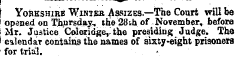
' Yobkshjrb Winter Assizes . —The Court will be opened on Thursday , the 28 ih of November , before Mr . Justice Coleridge , the presiding Judge . The calendar contains the names of sixty-eight prisoners for trial .
Local Markets.
LOCAL MARKETS .
#Orefgn Ffltofomtxitg
# orefgn ffltofomtxitg
Ifw Leeds :—Printed -Fo»' The Proprietor, P Ba:Rqf% O'Connob, Esq. Of Mmme)«Njith,;P O«»J»
ifw Leeds : —Printed -fo » ' the Proprietor , P BA : RQf % O'CONNOB , Esq . Of mmme )« njith , ; p o «» J »
Middlesex ] by JOSHUA , ; HOBSON . at tu * »* itg pn ^^ Wandl ^ Bl ^ t ^ eet , Brigga * and Published bjr the > aU Joshua bobsoUi ( for th « aaid ^ saropsCCONHOBi ) ¦* hi » D * tf * ltogtfiowe , NO . > , Market-stoet , ? rl « gatei » internal Communication ^^ exiitini between tne «« No . S , ' Market-Btreet , and tbe : wid Nob . is *»* 13 , MarkBtratree * ,,, BriggatB , tfaut conrtitutteg *? wool * of the said Fruiting ^ anp ^^ Pnb ^ &iDfil wft * one Premises . " i * ' ' iSaturdaji N ofejnVer IS , 18 ( 1 * . ) ^
Untitled Article
^ " ' TIE ' SORTHfe R N ; S f A R ' . ; November 16 , 1844 .
-
-
Citation
-
Northern Star (1837-1852), Nov. 16, 1844, page 8, in the Nineteenth-Century Serials Edition (2008; 2018) ncse.ac.uk/periodicals/ns/issues/vm2-ncseproduct1289/page/8/
-