
On this page
-
Departments (1)
-
Text (5)
-

The Second Axxiveksaryofthe Uxited Patriots' Benefit and Provident Society was held at Chalk
-

Untitled Article
-

Untitled Article
-
Untitled Article
-

Untitled Article
Note: This text has been automatically extracted via Optical Character Recognition (OCR) software. The text has not been manually corrected and should not be relied on to be an accurate representation of the item.
-
-
Transcript
-
Note: This text has been automatically extracted via Optical Character Recognition (OCR) software. The text has not been manually corrected and should not be relied on to be an accurate representation of the item.
Additionally, when viewing full transcripts, extracted text may not be in the same order as the original document.
Untitled Article
( Continudfroji ovr first pc-ge . ) - « ie United States ; and under Hie organisation of a etate in convention , tlieTC 3 crvcfi rig 1 . t 5 ofiiie rcop 1 " wtrc sum - monedto displaythdr ena ^? , ami balance the autuontjand neutralize tfie legislation of Uio central gorernment . The States were ag itated with prolongi-d exciKiucnt : the frituds of freedom throughout the world looked on with toidi-dsniiiKfUiiis . jiraving that the union of Uie States Mis litbvvcrpetua ! , au ( l also that the commerce of the world might be free . Fortniiattlv for tl ; o country , ar . d fortunately for
mankind , Andrew Jacfcwn was at the helm of state , the rclirc = entatire « ftljeiina « i > las that were to allay excite- ' intait , and to restore the hopes of peace and freedom . — 3 Jy nature , by imp-dse , l < y education , l > y conviction , a Iriend to personal freedom—by education , jiolitical sjin- ) ytaaaes , skwI the Used habit of his luiud , a friend to the ' rights of ilie States—unwilling that the liberty of the States should Ijd trampled under foot—unwilling " that the constitution should lose its vigour or he impaired , he ral- j lied fi » r the constitution : and in its name he published to j the world "The Cxiox : it arsi i : e teeseiived . " The i ¦ words wtre a spell to hush evil passion , and to remove j
oppression . Under his guiding influence , the favoured interests ivuich had straggled to peqietuate unjust legislation yielded to the voice of moderation and reform ; and every mind that had for a moment contemplated i a rupture of the States , discarded it for ever . The ' ¦ whole influence of tha past was invoked in favour of ! the constitution . J- ' rom the council chambers of the j £ t 1 litis , who moulded our institutions—from the Hall J win-re American independence was declared , the dear , j luud « -ry was uttered— " The Union : it must he pre-1 served . * " From every iatilc-lK-M of the revolution— t from Lexington and Baaker Hill—from Saratoga and : l ' orktowi : —from the fields of Euisvr—from the cane- j trakes that sheltered the men of Marion—the repeated , long jToloiiged echoes came ; : ;>— "the Union : it must be ! . reserve-. ' . " From evtrv vall' .-vin our land—from even-:
cabin on the picasmt mountain tides—from the ships at ¦ our wharves—from the tents of the hantcr in our west- j crnniost prairies—from the living minds of the livingj millions * . f American frctmtn—from the thickly coming \ glories of futurity—tlic shoat went up , lilsc tlie sound of luany waters , "the Union : it must be preserved . " The irieudsofthe protective systv-m , and they who had denounced the protective system—the stat . sinen of the Jfortli , thai had wounded the constitution in their love of centralism—the statesmen of the South , whose minds had carrii-d io its extreme die tl : eory of State rights—all conspired together ; all breathed prayjis for the perpetuity of the Union . Under the prudent firmness of Jacksonunder tie mixture of justice and ijenerciJ regard for all interests , the srrc-itest danger to our institutions was turned aside , and inaukiud was encouraged to believe that our Union , like our freedom , is imperishable .
The moral of the groat events of those Oays is thisti : atl ! : c people can discern right , and will make their v .-ay to a knowledge of right ; that ths whole human mind , and therefore with it the raindjrf the nation , has a continuous , ever improving existence ; that the appeal from the uujust legislation of to-day must be made 4 jui . tly , earnestly , peiievt-riugly ; to the more enlighteueil collective reason of to-morrow ; tliat submission is due to the iiowular vrll , iu tiie vwifitovce that the $ tovle , when in error , wi ! l amend their doings ; that in a popular government , injustice is neither to be established by force , nor 10 be resisted by force ; in a word , that the ¦ Union , which was constituted by consent , must be preserved bv love .
It rarely falls to the happy lot of a statesman to receive such unanimous applause from the heart of a nation . Duty lo the tiead demands tliat 0 : 1 this occasion , the course of measures should not pass vuuotiiiid , in the progress of which his vigour of character most clearl y appeared , and his conllict with opposing parlies was most violent and proti acted . , Froai his ho : nc in Tennessee , Jackson cams to the r . esidcucy resolved to lift American legislation out of the forms of English legislation , nr . d to place our laws ou the currency iu harmony with the principles of our Government , lie came to the Presidency of the United States resolved to deliver the Government from the Lank of the Vnitcd States , aiid to restore the regulation of exchanges 1 othcrightf . nl depository of that power—the commeice of the country . He had designed to declare his views on this subject iu his inaugural address , but was persuaded
to relinquish that purpose , ou the ground that it belonged rather to a legislative message . When the period for addressing Congress drew near , it was still urged , that to attack the bank would forfeit his popularity and secure lus futaredefeat . " It isnot , " he answered , " it is not for anyself that 1 care . " It was urged that haste was unnecessary , as the bank had still sis unexpended years of chartered existence . " 1 may die , " he replied , "before another Congress comes together , and I could not rest quietly in my grave , if I faikd to do what 1 hold so essential to the liberty of my country . '' And liis first annual message announced to the country that Ihe bank was neither constitutional nor expeuk-nt . In this he was in advance of the friends about him , in advance of CDiigress , audiu advance of his party . This is no time for - . he analysis of measures or the discussion of questions of political economy : on the present occasion , we have to contemplate fh * character of the man .
Xever , from the first moment of I 113 administratrai to the last , was there a calm in the strife of parties on the subject of the currency ; arm never , during the whole period , did he recede or falter . Always iu advance of his l « rt ?—always having near him friends who cowered before the hardihood of his courage—he himself , throughout all the contest , was unmoved , from the first suggestion of theunconstitutionalityof the hank to the uioro ^ ut when le himself , first of aU . reasomjigfromthecertav t » ndcncv of its policy , with singular sagacity predicted io unbelievizsfriends Hie coming insolvency of the institution . The storm throughout the country rose with unexam-1-ledvehemence ; his opponents were not satisfied with addressing the public , or Congress , or his cabinet ; they ¦ ihreu- their whole force personally ou Mm . From all parts men pressed around Iran , urging him , entreating 3 am to bi-nd . Congress was flexible ; many of his
per sonal friends faltered ; the impetuous swelling wave rolled on , without one sufficient obstacle , til ! it reached his presence ; but , as it dashed by in itshighest fury atits feet , it la-oke before his iinnuess . The commanding majesty of Jus will appalled his opponents and revived his friends . Jlehiaisclf had a proud cousckiUallC-SS that his will was indomitable . Standing over the rocks ef the Kip Caps , ead looking out upon the ocean , " Providence , " said he to a friend , "Providence may change my determination ; lutmannoinore can do it , than he can remove these Hip Uaps , which have resisted the rolling oce ? r from the legumiiis offline . " And though a panic was reading through tlielaad , and the whole credit system , as it then existed , was cruinMing to pieces , and crushing around Ian , he stood erect , like a massive column , which the 3 : eaps of falling ruins could not break , nor bend , nor sway from its fixed foundation .
People of the District of Columbia : I should fail of a < luty ou this occasion , if 1 did not give utterance to your ssutiment of gratitude which followed General Jackson into retirement . Dwelling amongst you , he desired your prosperity . This beautiful city , surrounded by heights the most attractive , wstci-ouby a river so ma-mnceuCthe Lome of the gentle and the cultivated , not less than the seat of political power—this city whose site ¦ Washington had selected—was dearto his affections ; and if he iron your grateful attachment by adorning it with monulv . ents of useful architecture , by establishing its credit , and relieving its burdens he regretted onl y that he had set the opportunity to have connected himself still more intimately v . itli vour prosperitv .
As he prepared to lake his iinal leave of the District the mass of the population of this city , and the masses that had gathered from around , followed his carriage in crowds . All iu silence stood ik-sv him , - , o -wish him afiieu ; and as the cars started , and he displayed his grev 3 : aJr < =, as he lifted his hat in token of farewell , you stood , around with heads uncovered , too full of tiiiotiou to sr-eak , in solemn silence gazing on liinuas lie departed never jisure t o be seen in your midst . JJehcld the warrior and statesman , his work well done , retire to the Hermitage , to hold converse with his for- ' rests : to cultivatehis farm , to gather around him hospitahis
bly fjiuias 2 Who wss like him V . lie was still the loadstar of the American people . His fcrvi . l thoughts , ihuiidy uttered , still spread the ilame of patriotism ¦ thxim-li the American breast ; his counsels were still listened lo with reverence ; and , almost alone among statesmen , lie in his retirement was iu harmony with every oiurard movement of his time . His prevailing influence assisted to sway a neighbouring nation to desire to share our institutions ; his ear heanhhefoo tstopsofthe vonriug milhofis that are to gladden our western shores ; sud his eye discerned in the Ann distance the whitening S 2 i ! s that are to enliven the waters of ti : « r « cinc with the Social sounds « f our successful coinnicirc .
Age had whitened his locks and dimmed his eye , and spread ai- vund him the infirmities and venerable emblems « jf many years of toilsome service : but his heart beat as ¦ warmly as iu his youtli , and his courage was as firm as it l : ad ever been in the day of battle . 35 ut while his affections were still for his friends and his country , his liiousiits wvre alrcauy in a better world . Tiiat exalted mind , which in active life had always hail unity of perception , auii will , which in action had never * fahere « l from < U > ubt , : > .: it < which in council had always reverted to fct iirinciples and general laws , now gavj itself up to
« . mninn ::: j , - with the Infinite . He - . \ :. s a believer : from ieeling , from csperieuci ' , from co ! ivirti < . n . Xot a shadow 01 scetticism e \\ -r diunned the lustre of Us mind Tivu . ; jMlosoi-herJ will you snsile to know ih ? t * Andrew Jackst-n jwrused revcrtnUy his rsdtc-i- . and Pravcr-book , :: nd UiUc ? K :: o-. v ihat Andrc- . v Jae ? c 5 ou liad faitii i : i Oie eternity of trails , in ilia imperislsalk power ospopt-Jai-3 ' rec-iloni . in the destinies of huuianhy . in the virtues ami capacity of the ja-cj . lc , j r . his eounti-y ' s instimtions , in Uie l » ing and ovaTnEng Providence of a merciful and ever , living Ood .
The last in « . mr-n t of his life on earth is at hand . Jt is ttie £ al > l-3 ; hcf she Lord : tlie brightness and beav . tv of summerdo :-ie thelields around him : nature is i :: * ] it-.-glory ; b :: l the iublhaest spectacle on that day , 0 : 1 c .-irtii , iras the victor . - of jji 5 Bnl ) lciic ] : iii ^ spirit ' over ( loath itself . "When ] , t-first felt the liana of death upon hnn , "Mav sny eaeisues ^ he cried , "find peace ; may the Jlb-rt ' es o * i my couutry endure for ever . " When his exhausted system , under the excess of r . ab sens foramiciunt , from debility , "Do not weep , " c "id those of Christ upon the cross ; " for he , too , as a ( Siscinle mantana . ledlllg llis end he < J family oneemore ; and he spoke to them , one bv one £
Untitled Article
: . i ] words of tenderness and alVcction . His two little grandchildreu were absent at Sunday School . He asked for tiiein ; aud as they canu > , he prayed for them , and kissed j them , aud blessed them , llis servants were then 1 admitted : they gathered , soms in his room , and some on the outside of the house , clinging to the windows , that they might gaze and hear . And that dying man , thus snri rounded , in a gush of fervid eloquence , spoke with inspiration of God , of the Kedecmer , of salvation through the . atonement , of immortality , of heaven . For he ever
thought that pure and undeliled religion was tlie foundation of private happiness , and the bulwark of republicaninstitutions . Having spoken of immortality in perfect consciousness of his own approaching end , he bade them all farewell . "Dear children , " such were his final words , " dear children , servants , and friends , I trust to meet you jdl in heaven , both white and black—all , both white and black . " And having borne his testimony to immortality , he bowed his mighty head , and , without a groan , the spirit of the greatest man of his age escaped to the bosom of his find .
In life , his career had been like the blaze of the sun in tlie fierceness of its noon-day glory ; his death was lovely as the mildest sunset of a summer ' s evening , when the sun goes clown in tranquil beauty without a eloud . To the majestic energy of an indomitable will , he joined a heart capable of the purest aud most devoted love , rich in the teuderest affections . On tlie bloody battle-field of Tohopeca , he saved au infant that clung to the breast of its dying mother ; in the stormiest moment of his presidency , at the imminent moment of his decision , he paused iu his way , to givegoodcouuselto apoor suppliant that had conic up to him for succour . Of tlie strifes iu which lie was engaged in bis earlier life , not one sprung from himself , but in every case he became involved by standing forth as the champion of the weak , the poor , and the defenceless , to shelter tlie gentle against oppression , to protect the emigrant against the avarice of the speculator . His gcutrous soul revolted at the barbarous practice of duds , and by no man in the land have so many been prevented .
The soriows of those that were near to him went deeply into his suul ; and at the anguish of the wife whom he loved , the orphans whom ha adopted , he would melt into tsars , aud weep and sob like a child . jSo man hi private lif-j so possessed the hearts of all around him—no public man of this century ever returned to private life with such an abiding mastery over the atl ' ections of the people . Xo man with truer instinct received American ideas—no man expressed them so completely , or so boldly , or so sincerely . He was as sincere a man as ever lived . He was wholly , always , and altogether sincere and true .
up to the last , he dared do anything that it was right to Co , lie united personal courage aud moral courage beyond any man of whom history keeps the record . Bafore the nation , before the world , before coming ages , he stands forth the representative , for his generation , of the American mind . And the secret of hisgreatness is this : by intuitive conception , he shared siud possessed ;\\\ the creative ideas of his country aud his time . Hu expressed them with dauntless intrepidity ; he enforced them with an immovable will ; he executed them with an electric power that attracted aSid swayed the American people . The nation , in liis time , had not one great thought of which be was not the boldest aud clearest expositor .
History dots not deseriba the man that equalled him in firmness of nerve . Xot danger , not an army in . battle array , not wounds , not wide-spread clamour , not age , not the anguish of disease , could impair in the least degree the vigour of his steadfast mind . The heroes of antiquity would have contemplated with awe the unmatched hardihood of his character ; aud Itapolcon , had lie possessed his disinterested will , could never have been vanquished . Jaclcsou never was vanquished . He was always fortunate . He conquered the wilderness ; he conquered the savage ; he conquered the bravest veterans trained in the battlefields of Europe ; he conquered everywhere in statesmanship ; and , when death came to get the mastery over him , he turned that last enemy aside as tranquilly as he had done the feeblest of his adversaries , and escaped from earth in the triumphant consciousness of immortalitv .
nis body has its fit resting-place in the great central valley of the Mississippi ; his spiritrests upon our whole territory ; it hovers over the vales of the Oregon , and guards , in advance , the frontier of the Del Norte . The ih-es of party spirit are quenched at his grave . His faults and frailties have perished . Whatever of good he has done , lives , aud will live for ever .
The Second Axxiveksaryofthe Uxited Patriots' Benefit And Provident Society Was Held At Chalk
The Second Axxiveksaryofthe Uxited Patriots ' Benefit and Provident Society was held at Chalk
i « arm laveni , on Monday last , the chair being occupied by Fcargus O'Connor , Esq ., and the vice-chair by Mr . J . G . Dron . The assembly was numerous , including llogci- O'Connor , Esq ., and other private Mends of the chairman , and was also enlivened bv the presence of a large party of ladies . At two 0 clock the company sat down to a first-rate dinner , including every delicacy of the season , which was served up in excellent style . The cloth having been removed , jjMr . O'Connor rose to propose the first toast , "The People , the only source of legitimate power . " It gave him great pleasure to see so many happy smiling faces around him , met for such a worth y social purpose ; and ho felt grateful for the honour they had conferred by calling on him to preside over them . The toast of the " People" was one given by most political parties , and handled by each
according to their particular interests . The Whi » s considered themselves and their middle class supporters to be the people ; the Tories considered the parsons and the high-churchmen to be the neople ; blithe , Mr . O'O ., considered those to be the people who earned their bread b y the sweat of their W \ v those who were unwilling to labour were the Drones ot the community , living upon the energies of others . He regretted that festivals like the present were not the rule instead of the exception The present company had earned the excellent dinner they had been enjoying-thcy eat their own dinner , whilst the other class of societ y eat that which they were obliged to furnish them with . It would be bad taste m him to occupy much time in opening the proceedings , he should follow the cxampli of the Speaker m the House oi Commons , who was the man who had the lout to say of any in the house . The present was not the period for talking politics , the time was
now arnveu when they saw the necessity of makiii " exertions to give themselves social power iu order to enable them to wring political power from the » ras » of their oppressors ¦; he trusted that the next Reform wonkl solve the riddle as to who were the true friends Ot the people , and in his opinion the people would lie happier and more prosperous if lringcralt and m-iestcrait were no more ; he saw in their society one of the rungs ot the ladder by which they must pull down am ocratic power , and assist each otlicf a . political as , well as a social sense . Entertaming those views he should always be happy to fill the situation he then held , or an / other Seh tlicy might appoint him to , or to attend as a private uc ? at any ot their uture meetings , and g vc them h aid towards rendering the society nniversillv ™ perm Mr . O'Connor , amid gm appS Uien proposed the toast , witk three times tSctSicl a watt as the succeeding toasts , was drank w ' i 1
Untitled Article
enthusiasm , and followed by anTi ^ ^ band , and vocal music appropriate „ ^ % Mr . Wheeler responded to the til ' C "People" in an able manner , L T * i the United Patriots' Society , by thd vc ° WCl 1 fi by the truly Democratic constitution ofVi !!! ' aid was bringing the principle of seir . « ovcr m ' ^ the everyday affairs of society , aulS ^ S ^ lowed would elevate men m their own ost ; „ ;• - lo ! . in that of their fellow citizens . Mr tv r < tl Oil Mi » l gave the toast of " Prosperity tothoii , ife ll Benefit Society , " and in so dohiS ^' pleasure that he was not the Founder of tC ^ " « or it would certainly have been assnilc r ^ quarters , but being started by working ,,,, !' ° " ! » H perhaps escape the virulence of their M"' ^ t When he again mot them , instead oflm-in * r " i - to 1200 mcnibcrsas at present , hc tnistuI i ^' name would bo legion . Mr . Workman in ' re-n , ir to the toast said , if there was one action mr . n » than another it was that of assisting their | c iu , ^ 'k who from sickness or otherwise were doriyo | "< means of existence . Of what avail to soci etv * tlle
uie warrior , uie aristocrat , or tlic miser \ •]¦ ? nothing to benefit the condition of workiii" \\\ m ? l ' relieve them when in sickness or distress ' ljut '' ° contrary , after accumulating wealth bv tliei ! " •? they left them no prospect in ai ' ter-liib In . T > horrid den the Poor Law Bastilc . Mr . \\ ZS then entered into details , showing the prosreW t '"' the society and its great accession of numbers dm ' - the past quarter . The next toast was " The m !'"'* committees in town and country , and u ^ *"' members of the past comaiittees , " Jli-, I )™ ,, , spended to this in ancxcullcntspccch . The " Jj f j " of the General Secretary of the Society" w ^ J . proposed by the chairman , who paid somo Si
meritcu compliments to tlic secretary , whom he C worked with for several years in " the Demomi i ' struggle , and thought him far mor e worthy of a « , >„ sion and a monument for his past services than in . of the titled aristocratic manslayers upon whom s ' uni rewards were lavished . Mr . Rutty , in re . snomlin » t this toast , expressed his gratitude to the member generally , and to Mr . O'Connor in particular , statin ,, that had it not been for the assistance rendered Iw that gentleman in giving the gratuitous use of nl Northern Star for the advertisements of tlie
sooiotiduring its mlancy , it never could have attained its present prosperous condition ; he also < ' -iye his thanks to Mr . Harvey for similar / Vrmir in printing for the society—they , and not him ^ ir were in reality tlic founders of the society ; so that Mr . O'Connor had more to do with the ovi « mtvu \ v ot the society than he appeared to be aware ° if . The speaker then gave an intcrestim , ' account of tlie wo . gross and condition of the society in town and country ; shewing the number of branches it possessed in England . It had also a footing in Vi \ lc < and expected to form branches in both Jrelnml ! iii " , i
Scotland . He then painted , in glowing colours , the good effected by the society , ami the advantages of union amongst men in elevating their social am ) political condition . He thanked them for their conlidence and trusted hc should never do anytluV mean or base to deprive him of it . —The folio \ vi « g toasts were than drank and responded to— " llealtfi of the sub-secretaries , country members , Air , Mark . thc lather of the society , the ladies , visitor ,- ! , and friends , and chairman and vice-chairman . " Messrs O'Connor and Dron responded to the latter
toasts in excellent . ' speeches , which space will not permit us to give . Dancing , interspersed with soncs and recitations , then commenced , and was kept up until an early hour , the greatest harmony and good feeling prevailing . An excellent band was engaged , and in addition to this the members from Wimbledon also were accompancd with a band , and a flag painted expressly for the occasion . Several sub . secretaries , including ilr . G . Wheeler , of lieadinar , were present , and took part in the proceedings of tiiu day . "
LJxited Patriots' Benefit Socikiv . —The first anniversary of tlic Sheffield branch of this young ami nourishing institution , was commemorated by a din , ner at Mrs . Franks ' , Three Cranes ; Queen-street , J uly 28 th . On the cloth being removed the following toasts were given from the chair , " Prosperity to the United Patriots' Benefit Society , " " The Founder of the Society , D . Y . Huffy , may he always merit the esteem of the members , " "T . S . Duneonibc , Esq ., M . P ., and the Patrons of the Society , " " The Pec pie , the source of all wealth , " "The sub-secretary and members that established the Shcllield branch /' " The Queen , her rights and no more ; the People , their [ rights and no less . " These toasts were ably responded to by Messrs Hall , Goddard , Clayton , Gallimorc , and Jones . There were some excellent songs sung , and , the company separated highly de . lighted with the evening ' s entertainment .
Untitled Article
THE CONTRAST ; IN THE DEEDS OF THE ENGLISH WHIGS UNDER LOED CREV s ADMIXISTUATIOX . Nov . 22 nd , 1 S 30 . Lord Grey , alluding to the riots umongst the labourers in the South and West of England , saiii , " It is only within the last three hours tli . it we liave been installed in our respective offices as members of llis Majesty ' s Government . I here declare for myself , and also for my colleagues , that it is my determined resolution , Khercter outrages arc perpetrated , or excesses committed , to svppreis tlteu with SEVERITY AND VIGOUR . " On the very same day that Lord Grey made tliisdcclaration , there was a proclamation issued , in tlie name of the Jung , offering a reward of ose bu . nskgd i'ou . vds to any nerson causing another lo lie cmticlcd of any net of violence , and of
FIVE HUXDKED POUNDS for cawing amj onclobe convicted of tilting fire < Oj ) rojici- ( t ; . The Boi-setsliire magistrates had just agreed to the allowance of TWO SUIL . LIXGS AXU SEVEX-PEXCE A WEEK , for a man to v : ork on and to Ike on , when Lord Grey wade the declaration above-named , and when tlie King ' s proclamation above alluded to was issued , containing such an enormous inducement to perjury for any one of the poor labourers , as would give him for the committing one act offidse swearby , so large a sum of money that the interest alone of it would be nearly four times as mucli as lie could get for labouring jcori , according to tho scale of allowance agreed toLy tlie Dorsetshire magistrates .
Dec . 4 , 1 S 30 . A special commission was appointed to try the agricultural labourers who had been taken up for rioting , of " whom , iu Hampshire alone , there were : Transported , mostly for life 135 Hanged , one of them for rioting , and the other for striking Bingham Daring , without doing him any Laini ! o Wives bereft of theiv husbands 73 Children bereft of their fathers 243 Parents to bewail the loss of their sous 210
Total CC 3 Being more than two to tacit parish hi the xcholc county : and these incn were thus prosecuted and thus punished , although it was given in evidence on tho trials that the labouring men went to work vnih miking Imipolt-loes in fltcir hags , and that the people who were compelled to go to the parish for relief were set to drawcarts like cattle , and that OLD MEX and WOilEX were thus compelled to work ; aud in ene case ; i WOMAN WHO WAS AX IDIOT ! Dec . C , 1 SS 0 . The Whigs voted twentt-five thoi :-sasb pousds for the repairs of Windsor Castle . The original estimate was £ 150 , 000 , and sums of money liacl been voted from time to time , to the amouut of NINE HUNDRED THOUSAND P 0 UXDS , to which tlie Whigs added the above £ 25 . 000 .
Dec . 1 C , 1 S 30 . Lord Aithorp announced to the House of Commons , in answer to a question put to him , that SIX THOUSAND men were added to the army ; but his Lordship said that it was done in the cheapest possible manner J At this time there were more than sisieej ; thousand MlLlTAItT OFFICERS IS PAT . Feb . 4 , 1831 . Lord Grey said , on taking office , "We kUI eiA off , v-itli an unsparing hand , all that is not demanded for ilie ixTEitESTS , tiie iiosonr ., and the welpahe of tue cousiky . " ] 5 ut Lord Aithorp said , this day , in the nouse of Commons , "IdonU if ice Jtace any equitable rviht touholUhamj of tin pension } onthccmllist "; althou"h " he
well knew tliat Mrs . Arbuthnot ' s name was put on that list by the llUKE OP WelLISJCTOJJ , on the dag that liexveut out of ojice , to the tune of nearly £ 1 , 000 a year , and asiedated ten yeaks ; so that the niomcnthername was written on the list , the nation was her debtor nearly ten thousand pocsBs ; and that for sereins known to no person in the kingdom , except perhaps the Duke himself , who might liave been able , himself , to pay for her services out of Ins own purse . insteadofoutoi ' thatofthe nation , sec-ing that he is iu the enjoyment of more than £ 40 , 000 per annum , granted to him by the Government for an " accidental victory , " for which we are told that we cannot be tufficicntlygratefnV ! . '
May 23 , 1 SS 1 . Ths hliigs made Wellington Lord Lieutenant of Hampshire , and a judge , to sit on the bench , in that " special commission" that was appointed totvy persons charged with rioting in the agricultural districts . 1 S 31 . They ifotcd an additional £ 12 , 000 a vear to the Duchess of Kent ; £ 100 , 000 a year , as ad « wer for the Queen ; £ 14 , 000 for the expense of the Ihitish Museum ; £ 100 , 0 ! iU to half-pay officers at Hanover , and other parts abroad ; and £ 50 , 000 for the expenses of the coronation of William IV . ; amounting in the whole to more than the whole of the poor-rates for the juji « counties oflJceford , Berkshire , Cumberland , Huntingdon , Hertford , JIoumoutli , XortbiunberJand , Rutland , and Westmoreland '
iow 21 , 1 SS 1 . The Whigs caused to be issued a royal proclamation against political unions , although they had accepted addresses from such unions , and had written gracious answers to those very pclkic .-il unions ; and had , as was proved by Mr . Maurice O'Connell , even -i' -cn " orncE nuxKs"to Mr . " 1 'isaV . e ,- " Parkes , by which papers of a pound weight may be sent bv the post , in order that he might , by that means , circulate papers to rouse the j-oliikal unions in favour of Lord Grev and the Whigs !
The Wi ; i caused prosecutions oftlienrcss under one of the " . ?( . ? .-lefc , " which acts they so furiously railed against when out of office . These prosecution ' s were earned on with such " vigolt . " that , in seven months , in Lonuon alone , there were SSrt individuals prosecuted and imprisoned for selling cheap pnUications , whilst the Lord Chancellor lSrougliam was sending the cheap publications of a society to which he belonged , all over the country , by means of " oiticcfranl-s" ; and whilst we were , by { his same Government , stunned with the Cry of "edll . f . on" and " cheap knowledge" !!
1 S 0 I . The Whig " Jfeforni . " Government allowed a statue of Caming to be erected on a piece of land belonging to the public ; of that Canning who had always been tlieiiiosf strenuous opponent of reform , both when in and when out of place : of that Canning who , in tlie nouse of Commons , made a cruel jest of the suffering of the "REVERED AXI ) RUPTURED OGDEN , " whose sufferings were caused by the brutal treatment that he received at the hands of the Government of which Can . uing was a member : of that Canning who , in ilav , 1 S 27 ,
Untitled Article
a few days after he had become Prime Minister and Chancellor of Vie Exchequer , on being asked \ vhat he would do with the question of parliamentary reform , said , "I will oppose parliamentary reform in whatever shape it may api-eab , to the last hour of my life . " And at that very moment he had Uurdett , Drouuuam (" avocat ethomme de telfres" ) , Loud Jons HnssEii , and other " reformer * , " Bitting at his back ; all of whom had the incomparable meanness to remain on the ministerial benches without saying a word in favour of reform ; and , indeed , those three above-named worthies , called Canning their bight uo . nouhable FRIEND , and had the indescribable
baseness to state broadly that " ths % mblie now carai Wile or nothing afoul reform : that the Government was now carried on in s-uch a satisfactory manner , that the peop le were grown quite lukcicam in the cause of reform . " Finally , of that Canning who had spoken and voted in favour of the "GAGG 1 NU AND DUNGEONING BILLS" for silencing the reformers in 1 S 17 ; who had impudently declared that / ze would preserve Galton and Old Santm ; and who , though the Iv . slnnl son of a play actress himself , l ^ d saucily declared that HE would "MAKE A STAND AGAINST DEMOCUATICAL ENCROACHMENT , " and who had contemptuously called the advocates of parliamentary reform "A LOW , DEGRADED CKUW . "
January 1 'U , 1 SS 2 . Lord Aithorp informed the House that it was the intention of Uie Government to appoint a fast-day . Into this stupid intention they had been badgered by the incessant and awful denunciations of two or three furious fanatics , members of that House ; but more particularly by oue Perceval , a pious pensioner , and a most bigoted and crazy disciple of the bigoted and crazy parson Irving . The fast-day was held on the - ' 1 st of March , 1 SJ 2 , and on that day there was a procession of the different bodies of the productive classes through the
streets of the metropolis , who went peaceably along ; but , when almost at the end of their march , the new tolice soldiehs fell upon them with their bludgeons , aud dispersed them , without any attempt at opposition on their parts , they not having even a walkingsikk amongst them , being determined not to give rise to any suspicion of their being likely to cause a breach of the peace . Throughout the remainder of the day large bodies of these i-olice soldiers were to bs seen prowling about , as if watching for their victims , ABMED WITH BKOAD-swoitDS itr the WHIG GOVERNMENT !! '
April 13 , 1 S 32 . The Whig Premier , Lord Grey , who had declared that a less measure of reform than that contained in the bill which was brought forward by him , for parliamentary reform , never should have his support , and that he icohM not suffer the principles of the bill to be altered , yet ou this day he saitl , "Although 1 think 50 boroughs ought to ha disfranchised , and although 1 think the ten pound franchise is not loo great an extension of the qualification , StUlTUESE PROVISIONS ill SO TAM OP 'DUE MtlK . CIPJ . ES Or THE HILL , ASD THESE PROVISIONS MAY BE ALTEltED IN 1 'EKl'ECT CONSISTENCY W 1 TI 1 ITS PIUN . C 1 W . ES" ! !
August 1 , 1 S 32 . The Whigs proposed to tlie Parliament to give , a vetiving pension , to the Speaker of tlie House of Commons , the Tory Sir C . Manners button , of £ 4000 a year for his life ; to which proposition the Parliament agreed ; and also to give his son a reversion of £ 8000 a-year for his life , although that son has a sinecure place already , as Registrar of the Prerogative Court of Canterbury for which he has i' 3000 a-year , which he is to hold in addition to the reversion of his father ' s pension . Mr . Hunt , the representative , par excellence , of the people of Preston , and of "all the unrepresented people of England , " supported this measure by saying that "»/ the vole had been for . £ 5000 a-yew he icouM have agreed to it . "
March 29 , 1 S 33 . The Whigs carried the " Inisn Coercion-Hill , " a bill which was known by the title of "Ihebnital and bloody WU , " which subjected the people of Ireland to BE TRIED BY COURTS MARTIAL . In opposition to this bill Mr . Cobbett moved the following resolution : — "Resolved , That this House , seeing in this bill the substitution of military courts for courts consisting of judges and jurors ; seeing in it the abrogation of all the most precious institutions of the country ; seeing clearly that its main purpose is to keep in the hands of the present aristocracy the plunder of the ancient church aud the poor , which the ancestors of that aristocracy obtained by apostasy , and which has been retained by the cruel penal laws and by the shedding of innocent blood ; and suspecting , moreover , that this bill is intended as a prelude to the adoption of similar measures in Great Britain , this House will read thisbill this day six months . " This resolution was negatived , and the bill was passed ; Mr . Stanley , tlie then Secretary for Ireland , declaring thut
" the govr . exmf . xt must he fea 11 ed uivoke it can be loved !!!" April 2 fl , lS 33 . The House of Commons agreed to a resolution for taking off half the malt-duty , and on the following Tuesday , April 30 , thc-y , on the motion of Lord Aithorp , the Whig Chancellor of the Exchequer , rescinded that vote by a large majority !!! April , 1 S 33 . The Whig Ministry opposed Mr . Grote ' s motion for voting by ballot at elections . Lord Aithorp , who had spoken in favour of the ballot , at Northampton , when before his constituents , opposed it in the House of Commons , as became a genuine Whig Minister . As did also the Right Honourable Edward Ellice , Secretary at War , althoughhe had solemnly pledged himself to his
constituents at Coventry , that he would vote for that motion ! ! May 2 , 1833 . Lord Aithorp , on the subject of the renewul of tlie Bank Charter , proposed to the House of Commons to make JJank-of-England votes a legal tender , mid that , in peiu-etl-itv ; although he had , only one short month bsfore , objected to Mr . Matthias Attwood ' s motion for inquiring into the state of the nation { and proof was offered his lordship that the distress amongst tradesmen was so great , that within five teaks the proportion of banlruptcies , for Regent-street alone , was more than one in three ; and that , mind , independent of compositions , of which three , at least , take place for each bankruptcy ) , principally , because one i > art of that honourable Member ' s plan was , an issue of paptr-money and ihe making such papeh-MOSET A LEGAL-lENDERi !
May 3 , 1 S 33 . Mr . Cobbett brought forward his motion in the House of Commons , for the equalization of the stamp-duties , and complained that under the law as it new stands "thevarious duties owlegacies , and on property coming by intestate succession , are imposed applicable io different degrees of relationship between the legatees and the successors aud the deceased , beginning at one pur cent ., and going on to tenper cent , ; but that freehold properly i 3 wholly exempt from tliis lax , and that , of course , the large estates of the nobility and landed gentry ( including ndvowsons andlay-tithes ) are exempted ; while if a deceased leave a thousand pounds to a distant relation , that relation will have to pay one hundred pounds , " The honourable Member said that " If a man leave property above the value of twenty pounds , his successors have to pay a stamp-duty of two per cent . ; but if a person leave from thirty thousand to half a million pounds the duty is but one-and-a-half per cent . "
He complained that "In conveyances the duty on any Vang of five pounds value is ten shillings ( or ten percent . ) , whilst if the property conveyed be of five hundred Wiohsand pounds value , the duty will be onl y one thousand pounds ( only three-sixteenths per cent . ) , aud in such a case the pook mas would have to pay more than forty times as MUCH A 3 THE BICH MAN Oil the S « lil 6 SOft of property . " After showing that the l'oou man is made , under tho present stamp-duties , to pay , in some cases , seven timcs more ( nan the men man , and in some cases a THOUSAND TIMES MORE , the honourable gentleman concluded by moving the following resolution : — " That this House will , with as little delay as possible , make such an alteration in the several acts , imposing duties on
stamps , and on sales at auctions , as shall cause the Peers , XoWes , IMroncts , and other great landowners to pay , in proportion to the amount of their property , as great an amount in those duties as is paid by Xhcfundholders , annuitants , tradesmen , manufacturers , farmers , mechanics , and the rest of the industrious classes of the kingdom : and shall cause , in all cases , the rich to pay the said duties in the same proportion as the poor . " The Whig Ministry , true to the breed of the first Whig that the devil spawned , opposed this resolution , nnd it was , consequently , lost . Uut Mr . Spring Rice , a member of the administration , declared that he had a bill ready to lay before the JToxisc to remedy these evih ; which bill , although he ivas repeatedly called iqmi to lay it before the House , never was produced , and the evils have not been remedied .
May 13 , 1 S 33 . Near Calthorpc-street a meeting was held , for the purpose of discussing the question of the " propriety of forming a national convention in the present crisis of the affairs of ihe nation . " A few days prior to the meeting bills were posted about the metropolis , cautioning the public not to go to the meeting ; but these bills were not signed by anybody , nor had they any appearance of being issued by any of the puWie cmlhorlties . The meeting therefore took place ; and scarcely had the business for which they met commenced , when about Odrteen hundred of the roncE soldiers , armed with bludgeons , Avlio had been secreted in some extensive livery-stables in tlie neighbourhood , and who , il was proved , had been suppliedlargely with beer and spirits , were let loose upen the assembled multitude , when a dreadful scene took placethe
, policemen knocking down «»«! , women , and children iiiduenmmaidy , and , in their fury , absolutely knocking down casual passers by . Tho whole of the particulars were deposed to before a coroner's jury , which was called together to ascertain the cause of the death of one of the iWaemra who was killed in the fight , which jury returned the following verdict : "We find a verdict of justihaiile homicide , on these grounds : that no hiot act was read , no / any proclamation advising ihe people to disper'c that ihc Government did not take the proper precautions to prevent the meeting from assembling : and that the conduct of THE POLICE WAS FEROCIOUS , BULTAL , AND UNPROVOKED ut the people ; and we moreover express our anxious hope
that the Gota-iimailwill , in future , lake heller precautions to prevent ihc recurrence ofstwh disgracesl-l transactions in this metropolis . " Notwithstanding this verdict , which was published in all the papers on a Tuesday morning , the Government had the decency to oiler , in the Ga : elte of the Tuesday evening , a reward of one hundred pounds to " any person giving information , so that the perpetrator of the MURDER may be apprehended and convicted thereof , " which was signed " Melhourne , " who was then Home Secretary . And , in addition to this , the Whig Goyebsjsest causcfl tlie Attorney-general to move , in the Court of King ' s Bench , for the quashing of the above verdict , which the independent judges of that court actually did , on the 30 th of that same month !!!
June 10 , 1 S 33 . Mr . Cobbett presented a petition to the House of Commons , from the freemen and electors of Sandwich , complaining that Sir E . T . Troubrid"e M . P . for that borough , hn& fraudulently obtained his commission as lieutenant in the navy ; and that there were more than two hundred other officers in that service , who had also fraudulently obtained their rank , by producing talse certificates of TnEiR ages . Sir James Graham , the first Lord of the Admiralty , did not attempt to deny the
Untitled Article
truth of the allegations contained in the petition . He himself produced a list of tfiirtjHiiiic officers , who had Obtained their commissions in 11 similar way , at the head of whom was Lord Nelson ( the hero of the buy of Naples ) . Elliott , the Secretary of the Admiralty , declared that he himself had obtained his promotion in like manner , and said that he was " proud to belong to a list of persons wiiomthese UNMANNERLY PETITIONERS had thought proper to accuse ! " Sir Edward Codrington stated as tho apology " the great DEARTH of lieutenants at the time the practices complained of were carried on ; " although there were , according to returns then on the table of the house , at that very time , no less than eleven hundred lieutenants who were not afloat ; yet this gallant admiral had the confidence to say that there was a " dearth of lieutenants , " and seconded the molion for tho rejection of tlie petition , which rcjectionhadbeen moved by Sir J . Graham , a Whig . Minister ; and the petition was rejected accordingly !
July 1 , 1 S 33 . A select committee was appointed , on the motion of Mr . Cobbett , to inquire into the allegations of a petition presented by him to the House of Commons , from Frederick Young , James Price , and others , inhabitants of Camlrerwell andWalwortli ; which committee ascertained the following facts : namely , that the Whig Government used the hcio police as spies at public meetings , whither they were sent , dressed in plain clothes , and distributed amongst the crowd ; they were even sent tojxiroeMal meetings as spies , and one of them , whoso name was Popay , used to be sent to the meetings of tho "l ' olitienl Union 0 / the Working Classes , " whose society hc joined wider a feigned name , it not having been dreamed of that he belonged to the " police force , " and he having represented himself to
them as being a person in groat distress , and who picked up his living by miniature and landscape painting . This follow , during nearly a whole year , belonged to tlio "Politieal Union of the Working Classes , " but was never seen in the uniform of the police during the whole of that time . He was , of course , a constant attendantnt their meetings , and constantly uvgud the members of the Union to use stronger language than they did in their resolutions and papers ; he sometimes altered them with his oion hand , in order to introduce stronger language . Ho suggested to one of the petitioners the establishing a shootinggallery , and for ( 7 ie » i to Uarn the use of the broadsword . , He railed against the Ministers and Government , damned them for villains , and said that lie would expel them from tlie earth . He said to some of the members of the Union
that " IT WOULD HE A DAMNED GOOD THING IF SOME ONE WOULD TAKE AND ASSASSINATE THAT 11 L 00 DV VILLAIN Stanley" ( one of the Ministers ) . He attended the Calthorpc-strcct meeting in plain clothes . He urged the Union to purchase fire-arms , and did every thinghe possibly could to incite the members to somo violent and unlawful net ; and used , after every meeting of the Union , lo / oraawl an account 0 / cwry tMnp t / ml took place at such meeting , to the Commissioners of Police , and these accounts were regularly forwarded to the SECRETARY OP STATE 1 'OR THE HOME DEPARTMENT , from whose departwent money was paid to VovXxfor the spy-services performed b > j fciro ; end as soon as the Unions discovered that they had a spy amongst them , and had exposed him , the Police Commissioners raised / limiii rank , and augmented his pay ! On the select committee making their report to the House of Commons , confirming the statements in the petition , ropny was removed from the situation that lie held iu tlie " force , " but weiU unpunished , and his employers
unroproved . July 23 , 1833 . The Whig Government successfully opposed Mr . Tennyson ' s motion for shortening the duration of Parliaments . In the course of the debate , Lord Aithorp stated that he "had formerly supported a proposition for shortening the duration of Parliaments , and should now do so were Parliament in the same state in which it was when he had so supported the proposition . " Lord John Russell ( u Whig of the first water ) objected to the motion , because it "SEEMED TO INTIMATE A DISTRUST OF PUBLIC MEN . " Mr . Stanley said that it was an " impracticable question , " and said that ho had
on the hustings , at Lancaster , made a statement from which he was not disposed to depart . " The statement , to which this right honourable Whig alluded , was the following : " If , therefore , it should bo attempted in another Parliament , to bring forward any of those sweeping motions for shortening the duration of Parliaments , and extending yet further ihe elective franchise ; or of introducing that which I believe is falsely styled tho protection of the ballot ; to thosa measures we , as individuals and as members of the Government , are wound ( and I announce it at once and openly ) to give oun determined and decided opposi-• nbx . "
Jul y 31 , 1833 . The Whigs passed a vote tor twenty mil . lions of immds sterling fb be given to indemnify the owners of slaves for any loss that they may sustaiuin consequence of a . partial abolition of slavery ; in consequence of a partial abolition of that sort of traffic which , they said , was " a i-ioZtiKoii of ilie laws of God and man . " The Minister , at lirst , proposedlending the proprietors of slaves ten millions of pounds : after a while he said that he should propose the lending of fifteen millions ( and , mind , this was a proposition to lend money to the slave-owners to co ' mpensato them for the loss of slave-labour , whilst the Government had Rndcnvourcd to prove , to the owners of slaves , that free-labour was more productive than stoielabour ); but , after the presentation of a petition signed by 278 , 000 females , he boldly proposed the GIVING Ol ' TWENTY MILLIONS ; and that proposition was carried by a greatmajority , and must be paid , in part , by poov labourers of Dorsetshire out of their TWO SHILLINGS AND SEVENPENCE a week !
July , 1 S 33 . The Whigs proposed and carried a vote for £ 1 , 000 , 000 out of the taxes to be paid to the Protestant clergy in Ireland , in lieu of arrears of tithes which they were unable to collect , although they had the assistance of a large army and courts martial for the trial of criminals , both of which were provided for their aid by the Whigs . August , 1833 . They passed the "Anatomy Dili ,, " giving to overseers and parochial officers the power , in some cases , of selling to the surgeons , for the jmrpose of dissection , thebodks ofpersont who die in poor-houses ! but were cunning enough not to insert in that bill any clause consigning the carcases of state-paupers to the dissectiiij / - knife .
1 S 33 . Tho Whigs refused to abolish flogging in the army ; and Sir J . C . Ilobhousc , who had always professed ( Ac principles 0 / radical reform , and had most loudly de-Claimed against flogging , but who had become a member of the Whig Ministry as Secretary at AVar , how strongly opposed the abolishing of that disgusting and horrible practice , and supported , in their opposition to the putting an andto it , that very Whig party whom he had formerly described , both in speaking and in writing , as a party always " iwnicioMS to England , " and always " aodiafed by selfish motives ; " as always having been " arrogant , " " overhearing , " " selfish , " "false , " " boasting , " "interested ; " "tricky , " " mean , " " shallow , " "deceitful , " "jealous , " aud "impotent . " How true is all this ! Yet lie joined this party , became renegade to his principles , and voted against the motion for abolishing flogging in the army !
March , 1 S 34 . The Whig Government prosecuted six agricultural labourers at Dorchester , for having administered oaths of secrecy to persons on becoming members of a society called the " Trades Union ; " which society was formed for the protection of the class to which they belonged , against the arbitrary reduction of the price Of their labour by their employers . Theso poor fellows were found guilty of the charge alleged against them , and , to t / ie astonishment of the whole kingdom , were sentenced by Williams ( a new madejudge ) to SEVEN YEARS' TRANSPORTATION !!! The nation wondered where the judge found law for his purpose ; but faith . he did find it , and that too in an act passed in the 37 th year of George the Third , being chapter l'J 3 of the year 171 ) 7 , the wholo of which act relates to oaths administered , or taken for t / ie pmyose of seducing persons serving his Majesty by sea or by land ; and which was passed in
consequence of tho mutiny in the fleet . And yet under this Act it was that this judge sentenced these men , whose only crime was combining lo raise their icages ; and it was proved on their trial tliat one of them hail but / i-e shUlingiaweek lo line upon ; and that another of them had but seven shillings a week t * Ike upon and to support a WIFE AND SIX CHILDREN ; neither of whom had ths smallest notion of doing anything illegal , nor of having anything to do with politics . Petitions for the pardon of these poor men were signed by upwards of five hundred thousand of their fellow countrymen- ; the Whigs would not listen JO tlie prayers of those just and humane petitions , but immediately ordered these six hapless victims to be tram ¦ ported beyond the seas . Mr . Ilutt , M . P ., on presenting a petition for the pardon of these men , from Kingston . upon . Hull , deplored the conduct of Government towards them , and said that it was clear that they were not punished for taking or administering a secret oath , but for havin » been members of the "Trades' Union . " °
May 5 , 1 S 14 . Mr . D . W . Harvev made a motion in tho House of Commons with a view to the abolition of all unmerited pensions , many of which nro , of course , given to females , and , in some cases , for quite unknown services rendered by them , Lor Aithorp , tho Whig Chancellor of the Exchequer , opposed the motion , as being one " calling for that to be done which no man of gentlemanly fueling would consent to do . He said that persons on the pension list had a right , established by custom , to be continued on it ; and tlie present Government had , when they came into office , recommended that they should be . " He said that he "did not intend to defend each individual grant ; " that an inquiry into it " could not fail to be a DisuiTsTiNG ixQuiKY to any gentleman who took a part in it j" " that it was calculated to wound the feelings , as well of those who conducted it , as of those who wcre ' thu
objects of the inquiry , and that he felt himself bound to vote against the motion . " That was the sort of opposition given by a Whig Minister ; by : i man who , and whose party , came into power on the breaking up of the Tory Ministry ; which breaking up was occasioned by the Whi"s having moved , by the mouth of Sir II . Pavnell , " That ° a select -committee bo appointed to inquire into the various items connected with the civil list , and to report thereon . " We must also boar in mind that Lord Grey , who became Premier of the Whig Ministry , declared on ( akinofliee , that " a reduction of all unnecessary expense is the firm resolution of myself and my colleagues , and that we will cut oil ; with an unsparing hand , all that i s not dc niaiuled for the interests , theiioxock , another , pake of the country . " It is scarcely necessary to add that the Whigs voted against the motion , and Unit it was lost .
July , ISSi . Tlie Whig Government carried the " Poor Law Amendment Bill . " They had had a band of eommhsioners ¦ prowling about the country for the pretended pur poseo ( inquiring into the state of parochial affairs- but all the inquiries were made from uori * officers , dergLm and gentlemen , andnotin any eau \ of ihe poor t J 01 , no . that was not to be thought of for a momen The objec was , andthatwas apart of the instructions given to the ( ommifnonw . / fr fammUtflfytoa to be " MADE
Untitled Article
TO LIVE ON COARSER FOOD ! " " . Coarser food than the poor Dorsetshire labourers could procure for themselves , a , tvifc , and six helpless children , out of seven shillings a week . ' " Coarser food" than the magistrates of Wiltshire ordered as parish allowance for an able-bodied labourer to live on and to work on—namely , a gallon loaf and threepencehalf penny a week ! The Whig Chancellor ( "Brougham , hommes dc leltres ct avocat" ) , who is reputed to be the real author of the measure , declared , from the woolsack , that " no relief ought to be allbrded , even to toe aged and iNi-iiiM roon ; that they ought , during their health and strength , to save enough out of their earnings to keep themselves duringsiCKNESs and old age ; " although that same Lord Chancellor , so far from setting an example of such a mode of guarding against want during sickness and old age , as soon as ho got himself seated on the
woolsack , brought forward , and caused to be passed , a bill , raising Vic retiring allowance for himself , from four thousand pounds lo viva thousand ronsDs a veaii . And this is the great supporter of a bill , which is , according to the report of the Poor Law Commissioners , to pave the way for completely and entirely abrogating all right to relief for the poor and necessitous . The operation of this measure is dreadfully felt , even by unmarried men , in the agricultural districts ;• where ( owing to the horrible amount of fiscal exactions preventing the farmer from employing a sufficient number of labourers to cultivate the land ) the want of employment is so great ( and the farmers and parish ofiiucrs naturally provide work for those who have families ) , that unmarried men cannot find employment , nor will parish oflicers either provide it for them , or give them any relief : they tell them that now
they have no more claim vpon Ihe parish than any common beggaks . If these unfortunate men apply to the magistrates , they are told , that they have no power now to order any relief for them . If they wander about in a body , and , being in want of food , demand aid of those who are able to give it , they are siti-e of transportation , or perhaps of death . If they take wild animals for their support , they are liable to be transported : and it " , whilst pursuing these wild animals , they be caught by the gamekeeper , aud resist his taking them into custody , they ARE LIABLE TO BE HANGED !!! What have these persons done 1 AVhat monstrous crimes have they committed that they should l ) e placed in such a horrible dilemma ? Xo crimes at all , only , that they , whilst tlie law remained unaltered , were entitled to relief from tin land , if they were in wont ; and the Whig MiNis-mis declared , that "the poor-rates would
swallow up the land , " although onu of those vevy Ministers , Sir James Graham , proved when he was out of office , that tt Aundred and thirteen privy councillors swallowed up annually six hundred and fifty thousand pounds , being more by c ' tglity thousand pounds a year ( and that , mind , i ' 01 only one hundred and thirteen persons ) than the whole amount of the poor-rales for the twelve counties of Wales , and the six counties of Bedford , Cumberland , Huntingdon , Monmouth , Rutland , and Westmoreland ! It ought never to be forgotten that Lord Brougham , the author of this bill , carried his hostility to the poor and unfortunato so far , as even to say , in the House of Lords , that" except for broken limbs , " hospitals , disi'kssauies , AND ALMS-HOUSES , ARE LITTLE BETTER THAN NUISANCUS and occiit to be AUATFD ! " The Whigs performed various other such like acts , as if desirous to retain the epithets winch have for so many years been prefixed to their name by Mr . Cobliett ; and amongst other acts of theirs we ought not to omit to mention their
malicious though unsuccessful prosecution of him . He was indicted for publishing in the Weekly Political liegister of the 11 th December , 1830 , a libel , with intent to raise discontent in the minds of labourers in husbandry , and to incite them to ' acts of violence , and to destroy corn stacks , machinery , and other property , " ifcc . Mr ! Cobbett defended himself in person , and the lashing that he took the opportunity of inflicting on tho "Greys , the Broughams , the Lambs , and the Russclls . " whom , with the rest of the Whig Ministry , he had subpoenaed , and had before him in court ; his bantering allusion to the " agrecabk twaddle" of Mr . Gurney , and compaiing him to a "truffie hunter "; the defiance and scorn with which he loaded tho Whig Attorney-General Dennian , and his "dirty b ' M of indictment , " indeed , the whole of his defence was so manly aud so powerful ; his sarcasms so withering to his prosecutors ; his invective so overwhelming , so terrible , and so blasting to that degmlcd faction , that it will never be either forgiven or forgotten by them .
The concluding sentence of his noble defence must conclude this very brief notice of this remarkable trial ; and it would be criminal to omit it ; it is this— "If your verdict should be one that will consign me to death , by sendiug me to a loathsome dungeon , 1 will , with my last breath , pray to God to bless my country , and cuvse the Whigs , and I bequeath my revenge to my cuildken and the Laiioukers or England !" Then there is to be remembered , against the Whigs , their objecting to take oil" the newspaner duty . Their objecting to the motion by which no Minister of State was to bo allowed a retiring pension until he had served five years . Their tricks with regard to Savings Banks , in order to make it as difficult as possible for the deposits to be withdrawn .
^ Their paying the Itusso-Dutch loan of six millions : Their Olho loan of two millions : In short , their extreme mildness , integrity , and j > atriollam , have been such , during the four years of ( Aeir pcsliknl tway , that more of the blood of his Majesty ' s subjects has been shed , more victims to tlie odious laws affecting the press have been punished with fine and imprisonment , than have taken place in England within the same period since 17 S 0 . Nor must wo forget their having added about forty millions to the national debt , in the four years of their baneful domination , being one-eighteenth part of the whole debt , which has taken more than a hundred and fifty years to accumulate . The reader will have been disgusted if hc have waded through this catalogue of crimes , therefore this offensive but necessary task shall be concluded by placing a few of the acts of the Tombs in jiuta-position with some of the Whigs : —
The Tones The Whins Opposed the Reform Bill . Put in the tax-paying clauses , and stultified the effect of the bill . Supported long Parlia- Refused to repeal the Sepmente . tciinial Act . Had their Sidinouths , and Had their Molbourncs and their Castles , and their their Popays , and defended 0 h , Ycl ; s- the use of Spies . Had their Manchester Had their fast-day affair allalr « and their Calthorpe-street affair , _ Had their standing army Augmented the standing 111 time ot peace . army that the Tories had left them . Declared against cheap Prosecuted and punished political publications . those who sold them Suspended the Habeas Passod the Irish Coercion Corpus Act . Bill , and trials by courts martial .
Supported the Pension Refused to revise it . List . Had their Swan River Had their Australian cmienngrationjob . gmtion job , by Wihuot Horton . Passed Stuvgcs Bourne ' s l ' assed the Poor Law Bills , giving ii plurality of Amendment Bill , glvin- the votes m vestries to the rich , rich the right to vote by proxy ; and refused to ve-.,,.,,,.. t peal Sturges Bourne ' s Bills . J ? t *! i ? , incol " - ! . "efused to repeal the malt and kept the assessed tax
on , and « £ as = i taxes and the malt-tax . for fear that they should be obliged to lay on a property tax . Ill and out of pl .-. eo object- In favour of vote by ballot ed to the vote by ballot . when out of place , but „ , , t , , „ „ against it when in place , 1 ut about onchalf of the Put the other half of the names on the Pension List , names on that list . andwould allow of no inquiry into it , saying , that it would be "disgusting and ungentle , manly" to do so !
Untitled Article
Lekds Cloth Markets . —During the p ; ufc week there lias been a sli ght teutkney to imnrovemcut , luid , m some descriptions of goods , prices have shown 111 upward tendency . In the halls , business lia < been rather dull . Lehds Conx Maukkt , Tuesday , July 20 . —AVitk a good arrival , and llio weather move seitlcu , out millers buy cautiously , the finest wheats at nit ! " * over the rates of last week ; secondary sorts and those 111 chamber arc slow sale at former ' prices . ItorW nominal . Oats are scarce , and held at more i : i" » , ' but tlie trade slow . Leans are not so much iu request , but we make no alteration iu their value , at in that of other grain . Yoiuc Conx Market , Jlty 20 . —In consequence ' the weather this day being remarkably fine for tl | li operations in tlie hay harvest , we liavebut a slcnA * attendance of farmers at market , consequently ' small supply of grain . On account of ihe short * ply , we have a stead y sale for Wheat , at fully «! ' { week ' s rates . Other articles without any mater " alteration . '
Maltos Conx Market , July 29 . —We have a gj ^ supply of wheat offering at this day ' s market , M " moderate of other articles . Wheat Is . rcr qr . tefV barley nominal ; oats same as last week . " \ V " * r £ red , 50 s . to 53 s . ; white ditto , SCs . to 02 s . per < lv > d 0 stones ; oats , lid . to 12 d . per stone . Richmond Corn Market , July 25 .-W > I' - " , ' lair supply of grain in our market to-day , a » . ! , j prices were a little higher . - Wheat sold iioiu tvi ; , to Ss . ; oats , 2 s . 10 i \ to 3 s . Cd . ; barley , to , W «• *»" leans , 4 s . Cd . to 5 s , pey ba&heL
Untitled Article
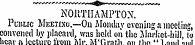
NOllTHAMPTON . Public Mketixo . —Oil Monday evening a meeting , convened by placard , was held oii the Market-hill , to hear a lecture from Mr . M'Gratli , on the " Land and its Capabilities . " Mr . Mimday was appointed chairman . The lecturer , in the course of a long address , clearly demonstrated , by arithmetical calculation and from the admissions of the ablest political economists , that the cultivable laud of Great Britain and Ireland is capable of yielding sustenance to support ibia times the present population , lie concluded by showing that the land was the only asylum upon which the people could find protection from the ravages which , the capitalist , aided by machinery , was making on their industry ; and invited all desirous of location upon the land to investigate the rules of the Chartist Co-operative Land Societv .
A Public Meeting was held on the same place on Tuesday evening , for the purpose of forming a branch of the Chartist Co-operative Land Society . At eight o ' clock Mr . Cairns was voted to tho ' chair . The meeting was an excellent one . The chairman having lucidly slated the object of the meeting , and promised a t ' aiv heaving to all desirous of expressing theh opinions , called upon Mr . lloll ywcll to move the first resolution , the purport of which was that it was the people ' s duty to exert every energy to elevate themselves to that position in society which God ami nature intended them to occupy . * It was seconded by Mr . Stammers , and unanimously adonted . The
next resolution was proposed by Mr . Munday , to the ellect that the Chartist Land plan was sound ami practicable , and fully entitled to tho confidence and support of the working classes . Seconded by Mr . Williams . The chairman then called upon air . M'Gratli . who spoke for nearly two hours in support ot the resolution , expounding the Land plan , and dehiung the benefits that would accrue to Trades ' Unions from its adoption . The meeting received every sentence with approbation . Many copies of rules were disposed of , and several shares ' taken out . These meetings have done much good . AVe shall soon have a strong branch of the society in Northampton .
WELLINGUOEOUGU . Lecture . —On Wednesday evening Mr . M'Gratli delivered a public lecture on the Land in the Marketplace . Mr . Parish was in the chair . Several hundred persons were present , who paid the most marked attention to the speaker . Tho thanks of the meeting having been voted to the chairman and lecturer , the meeting separated . PETERBOROUGH . Mr . M'Giuth delivered two lectures on " Universal Suffrage" on the evenings of Thursday and Inday , in the Assembly Room . They were * tolerably well attended , and a favourable impression seemed to be made as to the justice of the Charter and the necessity for its enacJmont . Several cards of membership were disposed of .
SALFORD . The Laxd Society . —At a meeting of the shareholders of the Chartist Co-operative Laud Society , hold on Tuesday last , the following resolution w ' a-s passed : — " Tiiiit a meeting of the members ami friends take place on the last Sunday in each month , for the purpose of auditing the accounts ; also that the committee meet every Sunday evening , at half-past six o ' clock , for the purpose of receiving subscriptions . " OT / DIIAM .
Lecture . —On Sunday last Mr . C . Doyle delivered si Tory energetic address in the Working ' Man ' s Hall in which he gave a brief account of the money expended by the Missionary Societies , and the money deposited in savings banks , Ac . The lecturer showed in tho most argumentative manner the creat advai ' : ta < res that might be derived from the application » l such an amount of money in the purchase of land , and the allocation of the surplus population thereon .
Untitled Article
'" . """ ' ' ' *' THE NORTHERN STAR . AuGUST a - ' -i 1
-
-
Citation
-
Northern Star (1837-1852), Aug. 2, 1845, page 2, in the Nineteenth-Century Serials Edition (2008; 2018) ncse.ac.uk/periodicals/ns/issues/vm2-ncseproduct1326/page/2/
-