On this page
-
Departments (4)
-
Text (14)
-

Untitled Article
-
Untitled Article
-
Untitled Article
-
ftnpm'al ipaiiiammr* -
-

Untitled Article
-
Untitled Article
-
Untitled Article
-

Untitled Article
-
Untitled Article
-
Untitled Article
-

\Miu h\ttl\i%sntu
-

Untitled Article
-

Melancholy Occijihekce at a Gentleman' *
-

lYiuti'ii i»v uoua.xL ji'UOWAS, .,i' i«. ««i ic ..^?".; ' . l ": 1 i
Note: This text has been automatically extracted via Optical Character Recognition (OCR) software. The text has not been manually corrected and should not be relied on to be an accurate representation of the item.
-
-
Transcript
-
Note: This text has been automatically extracted via Optical Character Recognition (OCR) software. The text has not been manually corrected and should not be relied on to be an accurate representation of the item.
Additionally, when viewing full transcripts, extracted text may not be in the same order as the original document.
Untitled Article
{ Continued from our 1 st page . ) PERTT QUALIFICATION , and PAYMENT OF MEMBERS : and that our motto is , — ONWARD AND WE CONQUER , BACKWARD AND WE FALL ! THE PEOPLE ' S CHARTER , ami
NO SURRENDER ! It wonld be impossible to describe the scene tliai followed the conclusion of Mr . 0 'Conner ' s speech , and when the show of hands was demanded , only three in tie body of the vast ball ware held up for the Whig Minister , while for Mr . O'Connor , the show literally resembled a forest of barked oak . A soon as the tumult had subsided , the sheriff declared Air . O'Connor duly elected , by a show of hands which
¦ was received with reiterated cheers . Shortly after , Mr . O'Connor rose again to propose a vote of thanks to the Sheriff . He addressed them as member for Nottingham , and resigned an honour which he knew the voice of the electors would not allow him to preserre , tell' iD- ; Sir John C . UobhoUSG , tliattliat WaS only his gallop before the race that would shortly be run for the berough stakes , and that then he , Mr . O'Connor , would meet him and fight tlie battle to its close .
Sm J . C . Hojihocse rose to second the vote of thanks , and begged to assure Mr . O'Connor that the lesson he had that day learned should neither be lost upon him nor upon the Cabinet , that he would faithfully discharge the duty which Mr . O'C . had Imposed on liim , by laying his views before his Colleagues , while at the same time he could not help expressing his sorrow and regret at hearing some of Mr . O'Connor ' s principles propounded in the most powerful and eloquent speech which , he had just
delivered ; principles which , be had no hesitation in saying if carried into practice would lead to anarchy acd confusion , and principles the more dangerous when advocated by a person of Mr . O'Connor ' s commanding capacity . . Nothing could exceed the pleasure lie experienced from the treatment of friends and opponents . He cordially seconded the vote of thanks to the Sheriff , and cordially shook bands with Mr O ' Cennor , hoping that whenever they met their future contests mav be conducted in the same liberal
and gentlemanlike spirit . The Sheriff briefly returned thanks , first having announced that as Mr . O'Connor had retired from the contest ^ he declared Sir John Cam Ilobuouse duly elected to represent the'Borough of Nottingham in Parliament , an announcement that was received with a succession of hearty groans . After which Mr O'Connor proposed three ebeers for the People ' s Charter and No Surrender , and three for Frost , Williams , and Jones , which were given in a right hearty spirit . He then retired , accompanied by Ms proposer and seconder , and Messrs . M'Grath , Clark , and Doyle , amid the reiterated cheers of the multitude .
After Sir John Cam Hobhonse had retired with his friends he declared , that during his whole public career , whether in or ont of parliament , he never heard a speech at all comparable to that of Mr . O'Connor , for eloquence , matter , or spirit ; and well may behave madu the declaration , as it has infused new life into the Chartist body , throughout the whole district . Wednesday Evexejg . —A public meeting was held in the market-place , for the purpose of considering
the proper steps to be taken to ensure the defeat of the two Whig candidates at the next general election . The speakers were Messrs . 1 . M'Grath and T . Clark . The following resolution was unanimously carried : — "That the under-mentioned persons constitute an election committee , with po * rer to add to their numbers , viz . —Messrs . Lawson , Boonham , Sweet , Wall , Skerrit , Souter , Carrington , Trece , Blatberwick , Rogers , Rawson . M'Grath , Clark , Brammer , Mott , Attcrbury , Widdonson , Squires .
The committee afterwards met , when the followin ? resolutions were proposed and carried : — " That Mr . S . Boonbam be the Secretary to the Committee . " That the designation of the committee be ' The Nottingham Election Committee for promoting the return to Parliament of candidates who will vote for the embodiment of the principles of the People ' s Charter as the law of the land . "That this meeting do adjourn until Sunday morning next , at ten o ' clock , fo be then held in the large room of Mr . Smith ' s coffee-house . "
Untitled Article
CITY OF LONDON ELECTION . On Wedne-day , the nomination and re-election ot Lord John Russell , for the City of London , took place in Guildhall . After the usual formalities , Mr . Sheriff Chapijx said , rhat public noticehaving been given of tlie -issue of the writ for the city of London , inconsequence of the vacation of his sent " by Lord J . Ri : s-ell who had accepted the office of Prime Minister of the Chvwn , the Citizens present would now fulfilthedutiesoftheelectionm the gentlemanly and proper manner which had always distinguished the City of London . ( Cheers . ) Mr . S . G . Loyd proposed , and Mr . J . G . Gurney seconded the nomination of Lord John Russell .
Mr . Sbi'riff Ci'apux asr ^ ed thore was any other candidate to be proposed ?—No answer haviag been made , the Sheriff demanded a show of hands for Lord J-Russell . A forest of hands were held up , fol l owed by great cheering and waving of hats . The Slieritts iben declared tliat the election liad unanimously fallen upon Lord J . Russell , who was accordingly declared duly elected . Loud Joilv Rosseix retained thanks in a lengthy and * " Whiggish'' speech , unworthy of publication in ourcolumns . After a vote of thanks to the Sheriffs the meeting separated .
Untitled Article
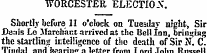
WORCESTER ELECTIO-W Shortly before 11 o ' clock on Tuesday night , Sir Denis Le Marchact arrived at the Bell Inn , brin-jiag the startling iutclHgence of the death of Sir N . C . Tindal . and beariujr a letter from Lord John Russell to Sir T . WHde , offering him the vacant place of Lord Chief Justice of the Common Pleas . Sir Thomas immediately accsptcd the oflfcr , and a few leading electors being summoned , it v- 'as determined to put Sir D . Le Marchant in nomination next morning for the representation of the City . At ten o ' clock oa Wednesday morning , the Sheriff held his Court for the election , at the Guildhall . Sir T . Wilde was very heartily cheered as he came on the platform . Sir D . Le Marchaut also was extremely well received . After the usual formalities , The M . tT . on ( Mr Lewis , ) proposed Sir D . Le Marchant , I 3 art ., of Ciiobiiam-place , in the county of Surrey , us a fit and propsr person to represent that city in Parliament . Mr . E . F . Williams seconded the nomination .
. No other person being proposed , the Sheriff then , amidst much applause , " declared Sir D . Le Marchant duly elected . Sir T . \ Yiu > z then addressed the electors and took Ms fiual leavs of them . Sir D . Le iUnciiAXT followed , autl returned thaaks for his election . A vote of thaaks to the Sheriff close ! the proeffedings .
Untitled Article
b orough of Greenwich , and resolve to adopt the most effectual means in their power to re-elect mro . The gallant admiral being much occupied , «<}««} day of election so near , this meeting also considered it unnecessary to call upon him to make a personal YoKKSIIlKE ( Wssr RlDtKG ) . - ^™ , WEDkksiuv .-Iu consequence of the YprkBbue UBUn commencing to-morrow , and being likely to last over next week , the High Sheriff has appointed the election of a member for the W est Riaing , in place of Lord Viscount Morpeth , appointed iirst Commissioner of Woods , Forests , &c , on a day not quite so early as it might otherwise have been held . The election is fixed for Saturday , the 18 th instant , at Wakefield , the place appointed by the Reform Act . Lord Morpeth's return will , for anything that has hitherto appeared , be unopposed .
South Staffordshire . —Wolverhampion , Wednesday . —No symptoms of an opposition to the reelection have as yet been manifested ; anything ol the kind would be in fact a farce in the present temper of the constituency . The hon . and gallant Colonel has not yet personally addressed the electors . The day of nomination is fixed for Friday , the 17 vh inst ., atLichfield . Halifax . —The returning officer for this borough having appointed Thursday , the 9 th instant , for the election of a burgess to fill the vacancy occasioned by the appointment of Mr . Charles Wood as the new Chancellor of the Exchequer . The right hon . gentleman arrived here on Tuesday morning , and , having had interviews with the leading membors of the Free-trade party , he addressed an aggregate meeting of the electors in the evening . No opposition was made to his return . Chesteh . —The following is the address which has been issued by Mr . Jervis to the electors of this cicy : — Gentlemen , — Her Majesty having been graciously pleased to appoint me to the office of Solicitor-General , my seat becomes vacant , and I again respectfully offer myself as a candidate for tho honour of representing you in Parliament . The repeated proofs of your confidence and kindness during the fourteen years of my connection with jour city raider unnecessary any detailed statement of my political opinions . You have watched my coarse , and have sanctioned it with your approbation . Should I again have the honour to be elected four repre . sentative , I shall pursue the same conduct , and endeavour , by a careful attention to your local interests , to merit a continuance of your good opinion . —I have the honour , &c , John Jebvis . —July G . Mr . Jems , even by the admission of his political opponents , will not have the slightest difficulty in securing his re-election . Saturday next is fixed as the dav of nomination .
South Lancashire . — Manchester , Wednesday Afternoon . —In my communication of yesterday , I informed you that a deputation from Liverpool was to meet Mr . Brown ' s committee at Manchester in the afternoon . They arrived here about four . Mr . Wilton then announced that the canvassing books were in readiness . It was agreed between the committee and deputation that it would be unnecessary for Mr . Brown to go over the whole district of South Lancashire , and that it would be sufficient to visit the leading towns . The day of election has not been
published here , thought it is probable that the proclamation will have reached other parts of the country . It would , probably , be premature to speak of the movers and seconders of the member of South from Lancashire , but it is not unlikely that a gentleman from each of the two leading towns will be selected , and , in that case , it is probable that Sir Joshua Walmsley , on behalf of Liverpool , and Mr . George Wilson , ( as Chairman of the League ) , on behalf of Manchester , will be appointed , No doubt is entertained of Mr . Brown ' s return ; nor is there hitherto any expectation of an opposition .
Stockport , Wednesday . —Withrefereace to Stockport , as you are aware , Mr . Cobden dues not positively resign , but only asks a year's release from active duty , and it is not likely that the electors will avail themselves of the option placed in their hands of supplying the vacancy for that period . The gossip is , however , that an event may possibly take place before the expiration of this year of absence , which Mr . Cobden had not contemplated , and that a general election will have seated him as member for the borough of Manchester , in the place of Air . M . Phillips , who has frequently expressed a wish to retire ; and the leading men of Manchester have expressed a strong wish to secure his services , and to elect him in his absence , with the express injunction that he shall take full time for the restoration of his health .
KiRKCUUBRiGHr . —It is said , but we bslieve without any reason , that Mr . Maitland can be successfully opposed at Kirkcudbright . The people there , agriculturists and all , are too good free-traders , we are assured , not to re-elect the Solicitor-General for Scotland of a free-trade minister . Manchester , Wednesday afternoon . —Mr . Gibson's committee met last night to make the arrangements necessary to secure his re-eleetion for Manchester . It was an exceedingly respectable and influential assemblage , and the ordinary steps adopted on such
occasions were entered upon with an alacrity beyond precedent . Nothing iu the shape of an opposition has been heard of . The precept from W . Standish Esq ., sheriff of the county , commanding the return of a member for the borough of Manchester , was only brought to the mayor this morning . Monday next , at ten o'clock , was then appointed for the election . Mr . Milner Gibson has not yet arrived in town , but is expected this evening , and will probably be the guest , until the election closes , of John Potter , Esq . lie is to address tlie electors of the borough to-morrow evening , at the Albion llotel .
Edixbcrgh , Tuesday evening . —Mr . Macaulay ' e address you have already published . On its becoming known here that Sir Robert Peel had resigned , and that he was to be succeeded in the government by Lord John Russell , it was regarded as certain , that Mr . Macaulay would possess a seat in the cabinet , and by accepting office would have to appeal to the constituents . As the right hon . gentleman ' s views on certain questions affecting Protestantism and the policy of Government regarding the support and recognition of religious truth were well known not to be in harmony with a large portion of the electors belonging both to the Free Church and the Dissenting bodies , it was considered by them desirable that steps should be taken in order , if possible , to procure a
candidate who , while espousing Liberal principles , would in religious matters command the confidence both of Dissenters and Free Churchmen . A committee was formed accordingly , and Mr . Dunlop , advocate , a leading member of the Free Church , was mentioned as the person likely to meet with the support of all the parties interested in this movement . On making inquiries , however , it was found that a large body of the electors of Greennck were unwilling to relinquish their claims upon Mr . Dunlop , who had promised to stand for that place , on the first vacancy occurring . Under these circumstances , the committee at once fixed upon Sir Culling Eardley Smith , whose high character and standing in the religious world , and whose recent movements against Catholic endowment they considered would command the
entire confidence of those who were dissatisfied with Mr . Macaulay . This resolution was come to on Friday last , and since then steps have been taken to secure his election . The movement has been carried on without any bustle . Notwithstanding the attempt that will be made , Mr . Macaulay ' s re-eleclion may however , be regarded as certain ; but there isagrowing impression that in the event of a general election he will fail in securing his seat , should he again offer himself for this city . An answer is expected to-night from Sir Culling Eardley Smith , iu reply to the requisition sent to him . Mr . Macaulay is expected in town to-night ; and lie is to address his constituents on Thursday , in the . Music Ilall , the largest public wilding in Edinburgh . The sheriff has fixed upon Friday next as the dav of nomination .
LEITII , 1 DESDAY LvKM . NG . —There IS to be 110 opposition to the return of Mr . Rutherford , now Lord-Advocate . The learned gentleman is to address tlie electors of Leith to-morrow . The nomination takes place on Thursday . Duxgarvan . —There is no likelihood of a contest in Dungarvan . The Repealers are not prepared with a candidate , and their success , if they were , is not likely .
Untitled Article
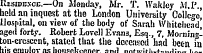
Residence . —On Monday , Mr . T . Wakley M . P ., held an inquest at tlie London University College ! Hospital , on view of the body of Sarah Whitelieadj aged forty . Robert Lovcll Evans , Esq ., 7 , Moinin" - ton-crescent , stated that the deceased had been ill his employ as housekeeper , and , notwithstanding her a » e , she enjoyed excellent health . On the niornin " of tht 27 th u ! t ., about nine o'clock , witness was " sitting in the front parlour with a gentleman when suddenl
they were y alarmed by the sen-am * of deceased , who , it appeared , had just gone into the kitchen , and having got near the lire , a licked cinder leJ irom the grate , and Ignited her dress Beiore witness and his friend , or any of the servams could « et to her assistance , she was so iri"ljtfuli » burned as to render her immediate removal " to the hospital essential The house surgeon said that death was tie result of the injuries . She expired „ ,, the oruinst Md the body presented a most .-mnnllin .. SSte . th » JU 1 " ' 1 > Cttinie ( 1 ; iVeH 3 ict of ilJ ^ -
0 ™ f J ; -A P uWlc demonstration took placo J %° V ? . ° u ! t - > t 0 cclebrato the » as < iu" •>! Sir 11 . Pee ! s measure . At the public > h : techapel . All postage must be pre-paid . "
Ftnpm'al Ipaiiiammr* -
ftnpm ' al ipaiiiammr * -
Untitled Article
HOUSE OF LORDS—Thursday , July 2 . Their Lordships met this day shortly after five o ' clock , when the Earl of Shaftesbury took his seat on the Woolsack .
FORMATION OF A MINISTRY . The Marquis ofLANsnowKEsaid , that , understanding that the noble lord opposite ( Earl Powis ) had given notice of a motion respecting the second reading of the Welsh Bishoprics Bill , he would rise for the purpose of suggesting to him some little delay in consequence of tlie late resignation , lie was authorised to state that his noble friend , Lord J . Russell had received her Majesty's commands , and had accepted the commission , to construct an Administration . lie need not state to their Lordships that if that Administration be
constructed , it would take some little time before thosft Members in the other House , whom her Majesty should appoint as members of her Government , could take their seats . He would , therefore , suggest that he should adjourn his motion to this day fortnight , and he could assure the noble Earl that his bill should receive a full consideration during this session of Parliament should he adopt the course proposed . Earl Powis said , in consequence of what had fallen from the noble Earl , and in order to suit the convenience of some other noble Lords , he would adjourn his motion for the second reading of the Welsh Bishopricks bill to Monday fortnight .
Their Lordships at half-past Five o ' clock adjourned . HOUSE OF LORDS , Friday , . July 3 . Their Lordships met at four o ' clock . The Royal Assent was given by Commission to the Sugar Duties Bill , and a number of Railway and other Bills . Their Lordships then adjourned until Monday next .
HOUSE OF COMMONS , Friday , July 3 . The Spkakeu took the c ' 'air a few minutes before four o ' clock , at which time a considerable number of Members were present .
NEW WRITS . On the motion of Mr . Tcffnkli . new write were ordered for the following places , in the room of those Members who now form part of the new Administra-Losnos . —In the room of Lord John Russell , who , since his election , has accepted the office of First Lord of the Treasury . Tivbktox . —In the room of Viscount Palmerston , appointed Secretary for the Foreign Department . Devonport . —In the room of Sir Gi orge Grey , appointed Secretary of the Home Department . Halifax . — In the room of Mr . Charles Wood , appointed to the office of Chancellor of the Exchequer . West Riding op Yorkshire . —In the room of Lord Morpeth . appointed to the office of Chief Commissioner of Her Majesty ' s Woods and Forests . Taunton . —In the room of the Right Hon . H . Labouchere , accepted the Chiltern Hundreds .
Nottingham . —In the room of the Right Hon . J . C . Hobhouse , appointed President of the Board of Controul . City op Edinburgh-. —In the room of the Right Hon . T . B . Macaulay , appointed Paymaster-General of Her Majesty ' s forces . Worcester . —In the room of Sir Thomas Wilde , who has accepted the office of Her Majesty ' s Attorney-General . Dunoarvon . — -In the room of the Right Hon . Lalor Sheil . who has accepted the office of master of Her Majesty ' s Mint . Perth —In the room of the Right Hon . Fox Maule , appointed Secretary-at-War .
On the motion of Lord Marcus Him ,, new writs were ordered to be issued for Plymouth , in the room of Lord Ebrington , appointed a Lord of the Treasury ; for the Leith District of Burghs , in the room of A . Rutherford , Esq ., appointed Lord Advocate of Scotland ; and for Kircudbright , in the room ' of T . Maitland , Esq ., appointed Solicitor-General for Scotland . The orders of the day were then postponed to Monday , and the House adjourned at a quarter to 8 o ' clock . HOUSE OF LORDS , Monday , July 6 .
Their lordships met at a quarter to five o ' clock , the Uarl of Shafiesbury on the woolsack . As the peers entered the house they took their places according to the present position of parties , the change of seats seeming to excite considerable hilarity . The Opposition benches were filled by Conservative and Protectionist peers , among them Lord Stanley , Lord Lyndhurst , and the Duke of Richmond ; Lord Brougham took his seat with these noble lords . The attendance of the Ministerialists was much less numerous ; the Marquis of Landsdowne , Earl Grey , and the Earl of Clarendon were on the Treasury bench ; the Duke of Wellington was not present . The Lord Chancellor , preceded by the great seal , entered the house soon alter five o ' clock . On takinjr Ms seat on the woolsack he received the congratulations of several peers around him .
BUSINESS OF THE HOUSES . The Marquis of I iANSDOWNK said he would take that opportunity of stating that under the merely ordinary circumstances attending a change of the Government , it might have been convenient to propose that their lordships should adjourn fora short time , the number of writs that have been moved in the other house of Parliament making it obviously impracticable and inexpedient to proceed with public business as usual till some day in tlie next week . But it had been suggested that it would be extremely
inconvenient iftne private business were postponed ( hear ); and therefore he proposed that their lordships should continue to sit , with the understanding , -however , that no public business should be transacted till tho writs which had been issued in consequence of the acceptance of office by members of the other house of Parliament are duly returned . He therefore proposed that their lordships should meet on the usual days of meeting , but merely for the purpose of receiving petitions and of swearing witnesses , This was agreed to , and their lordships adjourned . HOUSE OF COMMONS , Monday , July 0 . The house met at i o'clock . NEW WRITS . On the motion of Mr . Tupnell , the Speaker was directed to issue his warrants to the Clerk of the Crown to make out new writs for the election of members to serve for the following places , rendered vacant by the acceptance of office by their late members : — For the City of Chester , in the room of Mr . Jervis , who has accepted the office of Solicitor-General . For the southern division of the county of Stafford , in the room of Mr . G . Anson , who has accepted the office of Clerk of the Ordnance . For the Tower Hamlets , in tbo room of Mr . C . R .. Fox , who had accepted the office of Surveyor of the Ordnance . For the borough of Greenwich , in the room of Admiral D . Dundas , who had accepted the office of one of the Commissioners for executing the office of Lord High Admiral .
tor the city of Gloucester , in the room of Mr . F . H . Berkeley , also promoted to be a Lord of tho Admiralty . For the borough of Hertford , in the room of Mr . Cowper , also promoted to be a Lord of the Admiralty . For the borough of Evesham , in the room of Lord M . Hill , who had accepted the office of Controller of Her Majesty's Household . For the county of ltoscommon , in tho room of the O'Conor Don , who had accepted the office of one of the Lords Commissioners for executing the office of Lord fligh Treasurer of Great Britain and Vicc-Treasurer of Ireland . For the borough of Richmond , in the room of Mr . Rich , who had accepted the office of one of the Lords Commissioners for executing the office of Lord High Treasurer of Great Britain and Vice-Treasurer of Ireland .
1- or the borough of Manchester , in the room of Mr . T . M . Gibson , who had accepted the office of Vice-Prcsident of the Board of Trade . The motions were agreed to nem . con ., as was also a motion of Mr . ThornktjKy , directing ; the issue of ; i writ for the election of a knight of the shire lor the southern division of Lancashire , in the room of Lord F . Egerton , now Earl of Ellesmere , called to the House of Peers . A great number of railway and private bills were then forwarded a stage .
SITTINGS OF THE HOUSE . ^ Mr . F . Baking moved tli . it tho house meet on Tuesday , at 12 o'clock , for private business . As he understood from the Speaker that it would be a convenience if the house were to meet on Thursday mid Friday at 12 o ' clock , for private business , he should move to that effect . —Agreed to . Tlie orders of tho day wore postponed till Monday , and the house adjourned at C oVlnek .
CHOUSE Of LORDS . —Tubsuay , July 7 . The Marquis of Westmeatu postponed tho second reading of the Juvenile Oll ' enders Bill imtii Thursday , and said , if it should not be convenient to proceed with it on that day , he would ilx the second reading for Tuesday next . Numerous Railway Bill . 'i wore advanced a stage , ami their Lordships adjourned . HOUSE OF COMMON ? . —Tukspay , July 1 . New writs were ordered to be issued for the borough «| I . is !; card , in the mow of Charles Culler , Esq ., wlio had iicfcpttjil the ofKuo of Her . Majesty ' s Jiiduo Atlviicatc-Gcneral ; and for Edinburgh , in the room of W . G . Craig , Esq ., who had accepted tho oiliee . of one of the Lords of liie Treasury . Several Railway Bills were advanced a stage , alid the House adjourned till Thursday .
Untitled Article
THE POLITICAL ECONOMISTS . TO THE BBITOB OF TIIB M 6 BU 1 K& POST . - Sir-I ventured , in a former letter , to su ggest that tho Protectionists should cease to cavil witn'tneir foes , and set themselves to explain their Views ana Pr 3 iing is more certain than this fact . -J ^ . Jj"jj can eventually succeed , who cannot denne , auu tablish by argument , their principles and tueir uu Jfi The umpwaw triumph of the free traders Jjaa been accomplished by their unprecedented act ) vuy and their unscrupulous measures . . They have taken their hearers by surprise ; knowing how . " reau volumes on political economy , they have selected por tions from the works of those authors who urn to favour their views , and have then used such names as Adam Smith , Malthus , M'Culloeh , and oftHV " though the principles of Free Trade had been esta-Wished by them . , , •„„„_ -. The result has been , that everybody supposes those authors have thoroughly investigated tlie question , and clearly demonstrated the folly , wickedness , and disadvantageousness of the princip les ot 1 rotection « ¦ " —¦ " ™^ SSS ^ S
. . „ „ Such is clearly the impression in the House of Commons . The above names are ever on the lips of those Members who support Free Trade , and its opponents never attempt to show , that not one oi those suppoml apostles of Free Trade has ventured to declare himself satisfied with his own arguments . They , one and all ; leave the question in the same uncertainty that they found it , nnr do they hesitate to say so . Now , Sir , if from these authors' own words , I prove what I have asserted , I shall , I think , have destroyed the effect of their testimony in favour of Free Trade , and we shall no longer have the dreams of Smith , Malthus , and M'Culloeh enrolled in the speeches of Messrs . Peel , Graham , Ward , Roebuck . Cobden and Bright , as so many demonstrated and established facts and principles . 1 . As to the great authority relied upon by the Free Traders—Adam Smith , hear him speak for
himself . He says : — " The capital which sends Scotch manufactures to London , and brings back English corn and manufactures to Edinburgh necessarily replaces , by every sach operation / two British capitals which had both been employed in the agriculture or manufactures of Great Britain . , . . . ' . . ' . , " The eapital employed in purchasing foreign goods for home consumption , when this purchase is made with the produce of domestic industry , replaces also but
by every such operation two distinct capitals , one of them only is employed in supporting domestic industry . The capital which sends British goods to Portugal , and brings back Portuguese goods to Great Britain , replaces bv every such operation only one British capital . The other is a Portuguese one . Though the returns , therefore , of the foreign trade of " consumption should be as quick as those of the home trade , the capital employed in itwill give but onehalf of the encouragement to the industry or productive labour of the country . " , that in
Now , Sir , is it not extraordinary , even Parliament , nay , by Ministers of the Crown , the author of the above should be constantly quoted as the very highest authority in favour of Free Trade ? I& it not more astonishing , that the friends of protection should silently listen to such misrepresentation . Tell me , can the English language find words more clearly and positively asserting the superior advantageousness of the system of protection to native industry ? I think not . . Afterwards this great man Adam Smith , is driven by his own argument , to attempt the destruction of the protective system , and after all he becomes bewildered and steals out of his difficulty by saying " whether the monopoly of the home market tends
either to increase the general industry ot society or to give it the most advantageous direction , is not , perhaps , altogether so evident . " If Adam Smith has on any occasion , since then , demonstrated the truth of the Free Trade policythose who quote him as an authority , are bound to tell us when and where . If they cannot do that , I have proved from his own words that he has left the question unsettled . But , it it is clear , his leaning is decidedly in favour of protection . 2 . Where does Malthus prove the truth of the Free Trade principle ? He asserts , " all the main propositions of the science ( Political Economy ) have been examined , and the events which have since occurred , tending either to illustrate or confute them , have been repeatedly discussed . The result of this that
examination and discussion seems to be , on some very important points there are still great differences of opinion" ' ¦ . Malthus next enumerates those " differences oi opinion , " in doing so , he states , that every essential part of the question is unsettled—he strives to demonstrate , finds himself puzzled , and escapes by exclaiming— " Altogether the state of the commercial world , since the war , clearly shows that something else is necessary to the continued increase of wealth besides an increase in the means of producing . '' What that " something else" is , he nowhere tells his disciples . If I err , let them say where he supplied that deficiency in his argument . It is clear that the Free Traders cannot rely on Malthus as a guide ; he leaves them in the clouds of uncertainty .
___ 3 . What says M'Culloch ? He surely hat solved the problem . Else , how is it that his name is ever on the lips of the Free Traders ? We shall see . He labours hard—he praises Adam Smith—and he blames him . M'Culloch says , "Our illustrious countryman , Adam Smith , published the _ " Wealth ol Nations , ' a work which has done for political economy what tlie ' Essay' of Loeke did for the philosophy of mind . In this work the science was , for the first time , treated in its fullest extent , and the fundamental principles on which the production of wealth depends , established ueyond the reach of cavil and dispute . " So that Adam Smith has , despite his own
declaration , in the opinion of M'Culloch , settled the question ! No , Sir ; I mistake . Still there is " cavil and dispute , " and that by M'Culloch himself Further on he says— " But however excellent in many respects , still it cannot be denied that there are errors , and those too of no alight importance , in the' Wealth of Nations . '" Again— " Dr . Smith considered agriculture , though not the only productive employment , as the most productive of any , the home trade as more productive than the direct foreign trade , and the latter than the carrying trade . It is clear , however , " adds M'Culloch , " that these distinctions are all fundamentally erroneous !"
If M'Culloch be an authority , Adam Smith cannot have been a Free-trader , Well , then , has M'Culloch settled the question ? Hear him—he thus speaks : — "I shall not imitate the example of most writers on commerce by entering into a lengthened examination of the question , whether the home or foreign trade be the most advantageous . It is , indeed , quite obvious that it admits of no satisfactory solution . I now ask you , Sir , have I shown cause why Adam Smith , Malthus , and M'Culloeh cannot be quoted as authorities in favour of Free Trade ? I think they themselves have furnished me with materials . If so , my object is gained . Now , if those men , who are so often quoted by Free Traders in Parliament , and who are almost
universally believed to be apostles oft rce 1 rade , out ot Parliament , have declared their inability to decide between the Free Trade aud the Protection princi pies—we have a right to demand of Sir Robert Peel by what arguments ho has been able to untie the Gordian knot ? His speech is barren on that point . Having established , beyond the reach of successful contradiction , the fact that Adam Smith , MaJthus , ami M'Culloch , hare not only failed to establish the principle on which " the increase of wealth" is rounded ; but have each of them confessed their inability to solve the question , I am wan-anted in asserting that all who quote their names as authorities in favour of Free Trade , labour under a great delusion .
If , then , Sir Robert Peel cannot prnvo that the question ha 3 since been solved in favour of Free Trade , it is clearly demonstrated , that the revolution in our commercial code has been planned and adopted without reason , argument , or demonstration . Thus it is proved that " tho great and comprehensive measure , " involving the most serious consequences to ^ the agriculture , manufacture , and commerce- ot this empire , has been carried without any authority or any defined object . Such being tho case , where can words ho found to express tho folly—the wickedness of that Act !
Lot us inquire—Has Sir Robert Peel informed us of any authority who lias settled the question ? Tho answer is easy—none , save Mr . Cobden ! To him 1 will soon ujludc . Sir Robert I ' eel does not protein ! to have discussed tho problem—nay , when asked what ho thinks will bo its results—lio is silent—or confesses his utter inability to form any "pinion ! So with every one of his coadjutors ! It has been reserved to this " enlightened" « rc—to that " sagacious" Statesman ( . 'j—to jeopardise all our national interests on the most loose and uncertain chance . At length , he has furnished the nation with an excuse— " It is not I—it is not Lord John RiisseJl—it is ({ . ic-. li .-ml HoUIcll I" . . . 1
Theso ivre the Premier ' s words—wolds llCVOlto be forgotten—words uttered without a blush m tfie presence of those for whom ho had engaged to oppose tins self-same " Richard Cobden ! " with whom ho had finlive years kepi up a sham jhjfit , denouncing lain and his agitation in no measured terms ! At length , the chosen champion of Protection—the selected anhifjonist of Richard Cobden—unmasks himself , and informs his party that ho has sueceedud hi betniying their conlidencu ; that while they were giving ' him their aid to crush the League , lie hns butrayed them into the bunds of ltiulmrd Cobden and i . hu Klaiu-hcstor iium ) ! Tliu selected guardian ol' the Protcclioni . its , the Prinic Minister of Enjjliind , sap— " 1 have said before , in proposing thesu " measures , I have no wish to rob others of the credit which is justly due to them ; and 1 must say , tliiifc it is neither gentlemen on the opposite bench , nor ourselves , who aro entitled to ttio credit of the measures recently [ carried by a new combination of parties . The name which , ought
Untitled Article
to be associated . with , the success of these measures is ' not that of the noble lord , nor is it mine , but it is the name of a man who has been acting , I believe from pure and disinterested motives—who has pursued his object with untiring energy , by appeals to reason , enforced by eloquence , the more to be admired because unaffected and unadorned—the name of Richard Cobden . " As though Sir R . Peel had said , " We have not been able to reason on this subject , we could not demonstrate the truth of the principles we professed , whilst we have , by set and polished phrases , been urging our prejudices and proving our ignorance , the enlightened and eloquent Richard Cobden , by his ' unaffected and unadorned appeals to reason' has conquered ! He is the victor—I the vanquished ! Into his hands I have delivered the destinies of our Commonwealth—1 yield to superior intellect and honesty ! " . '
__ . ; . . „ .,. „ . Be it so . It is then the manifest duty of Sir Robert Peel to furnish the nation with Mr . Cobden ' s arguments—arguments applied to the " reason" of the people , not to their passions . If such arguments exist where are they ? I have failed to discover them ' . It is the bounden duty of Sir Robert Peel to inform the nation where that casket of wisdom is to be found I think that the Premier ' s faith in Mr . Cobden has no better foundation than Mr Cobden ' s faith in Adam Smith . If I mistake , let Sir Robert Peel or any of his supporters point out where and when Mr . Cobden discussed and settled the only uestionas far as free trade is concerned , which is
q , at the root of the science of p olitical economy , viz ., whether the national wealth is increased by an internal or an external exchange ? . Nothing is more clear than that Mr . Cobden has ( despite Sir Robert Peel ' s conversion by his reasoning" ) " sedulously avoided" argument on the subject , deprecated all discussion on the question , reiving entirely on the authority of Adam Smith and Ricardo . Read , Sir , if you will , every speech that Mr . Cobden , or any of his coadjutors have made , and show me , if you can , one single sentence containing an argument that bears upon the great question— " the increase of wealth ! " I believe that you
will search in vain . It was . as I will prove , the fixed and avowed policy of Mr . Cobden to avoid discussion—to consider the question as settled by Adam Smith and Ricardoand there to leave it . Clap . trap declamation—low abuse of Sir Robert Peel and the aristocracy—not " reason ; " statistics , not arguments , were the weapons of Mr . Cobden's warfare—and , under the delusion that Adam Smith and Ricardo had previously settled the " reasoning " and argumentative pavt of the question , he addressed
himself to tho passions aad prejudices of the people , under the promise of a " great loaf instead of a little loaf "—of "liberty and plenty in the mills , instead of slavery and penury in the field . " Thus did he raise a mist in the minds of Sir Robert Peel and the people . In that mist , under that delusion , Mr . Cobden has succeeded in revolutionising the commercial code of the greatest and most powerful commercial nation on which the sun ever shone ! The die is cast—the great venture is made—but if for good or for evil , neither Sir Robert Peel nor any of his supporters will or can tell .
I have said that Mr . Cobden ' s policy was not to " reason , " or to argue , w discuss—he taught his followers , from the beginning , " sedulously to avoid " discussion— to treat the subject as one already " clearly demsnitrated . " Here is my authority for this assertion . In the " Anti-Com Law Circular , No . 1 , of Tuesday , April 23 , 1839 , I find a manifesto , signed , " Richard Cobden ; " that document seems to be the foundation of the agitation against the Coan Laws ; it was issued when the League was a few months old , and contains the advice of Mr . Cobden to his followers . The following quotation therefrom proves the fact above stated : —
" ] At length , however , the obvious truths which Adam Smith , Ricardo , and others , had so clearly demonstrated , thntthose restrictions and prohibitions upon trade tended , in ninety-nine cases out of a hundred , to divert the national industry from its natural and profitable pursuits , into artificial and less productive channels , were re ^ cognised by the Statesmen of this country ; and partly to stimulate industry ( with the view of meeting the heavy charges of the Government and debt of the nation ) , and partly , perhaps , from a conviction of the tardy justice of the measure to that party whose interest had been , and still is , lost sight of by the advocates of monopoly—the
consumer—the principles of Free Trade were adopted and openiy avowed by the Liverpool Administration . From tliat time , the question of the justice or injustice of the' Corn Laws assumes a new shape ; it is no longer one of doubt to the honest inquirer , but presents itself simplified and dircsted of every difficulty . All attempt to carry us back in our discussion of the subject beyond the period when the principle of Free Trade was applied to the manufacturers , commerce and shipping of Great Britain- and her colonies , should , therefore , be sedulously avoided as supererrogatory and calculated only to mystify what has from that time been a plain and unembarrassed question . "
A careful perusal of the speeches of Mr . Cobden will prove that he has acted upon the plnn here laid down . He has never attempted to " reason" on the question ; he has not essayed a " demonstration" of the truth of his principles ; he has " sedulously avoided discussion , " believing it to be " obviously true that Adam Smith , and Ricardo , and others had clearly demonstrated" the truth of Free-trade principles . ' The delusion has taken root in the minds of many persons and of the ^ Legislature ; — in the "two Houses . " It seems to be universally admitted that the assertion of Mr . Cobden is true , —that Adam Smith , Ricardo , and others have settled the
question !—Oh ! that Lords and Members would read and think for themselves , and not , with Sir Robert Peel , pin their faith on Mr . Cobden ' s sleeve ! How unlucky is Mr . Cobden in these two names-Adam Smith and Ricardo J Tlie former , as I have shown you in this letter , distinctly maintains the principle of internal exchange of the products of native industry—the latter , on the contrary , asserts the advantage of external exchange ! So that Mr . Cobden , | if he and his friends believe both , has " reasoned" himself and his followers—Sir Robert Peel among the rest—into the belief of a positive contradiction .
Our ease , then , is simply this—we have followed blind guides , and have fallen into the ditch ! The steersman of the State vessel has lost his compasshe says "Richard Cobden" has found it ! "No , " says Mr . Cobden , "it is with Adam Smith and Ricardo . " The compass of the former points "homewards , " that of the latter " outwards . " Such is the condition of the State vessel now What should the crew do ? All are involved — Queen , hierarchy , aristocracy , and people , all are iu equal danger , what can they do ? I could answerwill they listen ? I remain , Sir , Yours respectfully , Richard Oastleb . P . S . The following extracts from speeches made at the meeting of the Anti-Corn Law League , in Manchester , on tho 2 nd instant , will make a good postscript—they we , just now , of deep interest : —
" They ( the Protectionists ) must raise a fresh crop of statesman to carry out their principles , for we have all the statesmen now on our side of the question . " —Mr . Cobden , " Lancashire , tho cotton district , and ( he West Riding of Yorkshire , must govern England , "—Mr . Bright . London . Julv , 1816 . R , 0 .
Untitled Article
A Duel selox les Reoles . —A letter from Minister states a duel took place close to that town , under the sanction of one of the tribunals of honour now established throughout the Prussian army . It appears that Baron de iDenkhaus , a lieutenant of the 11 th regiment of Hussars , having , when playing billiards , used some insulting expressions to Lieut , de Bounhart , of the 13 th Infantry , the latter brought the matter before the Tribunal of Honour of the p lace . The court endeavoured to induce the offending party to retract the expression used ; but findin !! this to bo impossible , it authorised a duel with sabres between the parties . The meeting took place near the town , at threo o'clock in the afternoon , in presence of an immense crowd . A stand was erected iit one end of the lists for tlicjiuUjes , who took , their seatsdressed in full nnifofm . On the arrival of the
, combatants , a new attempt was made to effect a reconciliation , but , on its proving unsuccessful , the opponents were diveetod to choose out sabres with their eves blindfolded , and then , with head bare , and in their shirt sleeves to . commence the attack . I hoy foii"ht With great determination , Mr . de Bounhart receivin" two slight cuts «» the ami ; but soon atteiwards "fviii" M . de Denkhiuis a severe wound on the tlii-li whieli prevented bis ' standing , the feht was declared at au end . After the iirst medical aid was given ihojudees recommended the disputants to be reconciled , winch they consented to , and shook hands amidst the cheering of the multitude . All the parties conci-riied then withdrew . This is the first duel authorised by any tribunal of honour , veconciliatiim haying been effected in all the other . cases brought before them .
Untitled Article
1 VOUS 11 H' STHEET .-A Gkuxas Row . —On Monday , two Germans , named Jan lirunies and lleiurich Alulir , wore placed at the liar before Mr , Wroughtim , dun-god , with cutting and wouuilwjf . i master skindresser , named lleiiirich Aruott , living at Wliitcchap « l , and inllictini ; numerous woands on his bund . It appeared irom the evidence , that » feud had fov some mouths past subsisted between two High anil Low Dutch Gorman slcimlresstrs and sugaruakors living in \\ lutoehapel ami Snitallielils , and , notwithstanding tho m-ovurbiall . v peaceful character of that nation , scoured to have been pursued aiitoti ^ tliem with as much heat ami animosity as any between m-ighljouriii £ Irish province !) On Saturday night , about twelve o ' clock , a serious ( lisiturbanco , but how originating was not by any means iuctclly explained by any of the nuinei-ous . spluttunn tf and cxeiuell witllUSKUK though iill oiii'imsitry unde : iv < . ui '«; il to do it ) , silddouly ui'OSis about sumo children ot' a German woman mimed Wulil between the two prisoners , one Kourad Schwartz , and sumo workmen in Air . Arnott ' s employ-
Untitled Article
ment ,-and some threats having been uttered against the life of the prosecutor , who had not at ( ill interfered or been even present , but was quietly paying his men at a public-hOUSein an adjoining street , he , although apprised that he would be murdered if he did go , with more cou . rnge than discretion , instantly went to the scene of disorder , called Frosty-court , to protect . his men , and get them out of the quarrel . The moment he had entered the court , however , and before he had had time to utter a word , he was brought to the ground by a blow on tha head from some one behind him , and upon nsing was im . mediately set upon by the prisoners and Konraa Schwartz , who beat him severely , and one of them , who had a knife in his hand , stabbed him " with it a number of times in the head , leaving six wounds , which he now exhibited ; but who it was that inflicted the injuries he could not tell with ar . y certainty , as the blood was pouring do . wn bis face , and prevented his seeing ; but he thought it was Mohr , as he had been most active in the attack , and be also inferred It was he from a knife being tound in „„„* «^ j onma thrAnhavinir been uttered against the
his pocket at the station- How he ultimaMy escaped from the encounter it w < is impossible to make out , but the police somehow got apprised of the disturbance , and on coming up found Arnott and one of his men covered with blood , and the prisoners being pointed out as the most violent , were forthwith secured , and after some re . sistanee , carried off to the station . _ Eneelbreeht Geffkie , the workman just alluded to , a Stolid immovable German , whose utter apathy when there was something to be excited about , and vehement tviifmtb . when there was nothing , kept everyone but the magistrate , notwithstanding the serious nature ot the charge , in inoessantlaughter . very quaintly related the share he had in the transaction ; and the substance ot his statement was , that he and bis wife were going home with a can full of porter , when a breathless boy stopped him aim master
entreated he would go back as bis was being mur- ' ered , and was smothered with blood . Ferry well ,-said the witness ; " but I shall ko home mid dis pier , and den I shall kom see into it ; " and home he actually went . He displayed some alacrity , however , in getting back , and on entering the court found four men , of whom he could only identify Mohr , " hammering" his master on the head . With some difficulty he rescuredlfr . Arnott from his assailant's , in neither of whose hands did he notice a knife ; but he felt convinced that one had been used , as Arnott was bleeding profusely , and while turning to leave he himself received a stab in the neck from somebody , to which he drew the magistrate ' s attention ; but , with his habitual coolness , although the wound did not appear a very slight one , it had not struckhun to apply " to a surgeon to dress it . Jan Jagers JjeobJung , nolice-constabfe 182 K , all deposed to the serious nature than
of rather melee , in which more i ^ r SS on the side or the other , but though each of . the »*>« £ saw hr > th the nrosecutor and Geftkie witn tne oiooa r aS doSm their wounds they were a 11 . n ^ ipa ble of throwing any light upon the origin . ° '' ^ ^ - The nrisoners throuijh a very intelligent mterpi eter , ^•^ r , ;^« Rf tK rt sssi ^^ BSs . 'SsyssS ft a Deer and Martin Greigh . and a Belgian named Jorge Pointer , as witnesses , who certainly nearly deposed to that much , entirely exculpating Brumes , who was ordered on their evidence to be discharged , and gave it as their opinion that Mohr had not been so criminal as could not who it that
represented , though they sny was had stabbed the prosecutor and Geffkie , it he had not . ' Mr Brouchton never recollected a case in which there was so much conftision and difficulty at arriving at the ; truth . It was quite manifest that the two witnesses had been severely injured but it was still a matter ot doubt who had caused their wounds , and he should therefore adjourn the case till that day week , accepting responsible bail for the prisoner Mehr ' s attendance at tha next examination ; and in the meantime the-police must exert themselves to procure more positive evidence as to who it was in reality who had stabbed the prosecutor m thG manner described . The bail was lmmedintely found , and Mohr who was very respectably dressed , was accordingly liberated . GUILDHALL . Extraordinary . CiiARGE . -0 n Tuesday , Andrew Fazekas . ayoung Hungarian , working as a turner , and residiiiKat No . 14 . Albion-buildings , Bartholemew ' s-close , was brought before Sir P . Laurie charged with threatening to cut the throats of two girls whom he had invited to pass the night with him at his lodgir . g .-James Mar . tin , a city-police constable , No . 254 , said that as he and two other constables were going off duty at six o ' clock that morning , and were crossing Bartholomew-close , they heard a woman crying " murder . " They ran across the square to the corner whence the alarm proceeded , and beheld a voune woman banging by her bands irom the
parapet of the house No . 14 , Albion-buildings , n was a three story house , and her feet had broken the top of the second-floor window . They found the street-door open and rushed up-stairs , and succeeded , with some trouble , in getting the young woman safely back to the root , ana in at the attic window . She charged the prisoner with having threatened to cut her throat , and in consequence of what she said he took the prisoner into custody . There was another young woman there , who had clambered up the roof to escape from the prisoner .-Thomas Page another officer , confirmed his statement , —Sir P . Lauvie asked with what the prisoner was going to cut their throats ?—He replied that the girls said he had opened a razor , and wi tness found one razor lying on the bed and another on the table . The girls were quite terrified , but tha prisoner was calm .-Sir P . Laurie said they had by their prompt attention saved the lite Of a fellow-creatureand they deserved some reward . He
, asked the prisoner if he wished to put any questions ? It was a very serious charge , and he was at liberty to say anything he pleased . —The prisoner said he met with the two Rirls , and after having something to eat and driuk , he took them both home with him . He saw one ot them hiding bis silver spoons , and be found he had also lost a sovereign and some silver . He asked them for it . They shrieked ont and got out of the window . He told them he should not let them go till they gare up the money , but he did not attempt to cut their throats . —Sir V . Laurie reminded him that tlie razor was found on the bed . —The prisoner replied that in searching for his money he put it there . —The two girls were then called in . One of them , Mary Ann Jone ? , lodging on Safrrou-hiH , was a native of Calcutta . She said they met the prisoner about one o ' clock , and he treated them with some beer and rum in Favringdon-street . Ee took them home , pro .
mising to five each of them half-a-crown in the morning . At six o ' clock , however , when they asked for their compliment , he said he bad lost a sixpence . They said they had not seen it . He then opened a razor , and said he should have their lives ; and , knowing the dour was padlocked by his friend on the outside , and believing him to be in earnest they rushed to the window ond escaped . —Margaret Mitchell * confirmed this statement . He caught hold of her hand to prevent her from getting away , but she crawled up the roof . —Sir P . Laurie said , these unfortunate women must be protected as well as other personi , The prisoner had menaced the . lives of these girls with a murderous weapon , and that amounted to an assault . From an assault being made wiih a cutting weapon , it was of too serious a character to be dealt with summarily , and he should not only send the prisoner to trial at the sessions , but order the City Solicitor to prosecute him . —He was committed iu default of bail .
THAMES bTREET . Bbutal Assault . —On Tuesday , Thomas Samuel Tho . mas , a coal-whipper , of 5 , Duke-street , St . George-in-the . East , was charged with assaulting Johnson Debell , a police-constable , 382 K , and Jolm Putt , 137 K , in the execution of their duty . The first complainant Dobell who had been very roughly handled , and exhibited marks of severe punishment on his head and face , stated that he saw the prisoner lying in a cart fast asleep , about three o ' clock in the morning , in Chapel-street . St . George ' s . He woke him up , and the prisoner got out of the cart , and directly he did so , struck him a violent blow on the breast , and knocked him down j while he was down , hekicked him several times . He managed to get up , and tremendous
the prisoner felled him to the ground X » y a blow on the head , and kicked him again , as hard as he was able . The prisoner also tore his hat to pieces , and then ran away . Witness pursued him , but was soon knocked down again , and while he laid prostrate on the ground , the prisoner kicked him in the lower part of his person , and completely disabled him . He was forced to go home , and was still , in very great pain . Putt , 1 K 7 K , who had also been severely beaten , described tho manner in which he had been attacked . Mr Eroderip sentenced the prisoner to two months' imprisonment , being one month for the assault on each policeman ; but as both sentences will commence and torminute together , the punishment will iu fact be one month ' s imprisonment only .
MARYLEBOSE . ExTiuoitpiNAiiv Desertion of a Child . —On Tuesday after the disposal of the night charges , Mr . SparUts , the assistant overseer of St . Maryiebone , came to the Court , accompanied by a very decently dressed boy , when both of them were introduced by Mr . . Franklin , the chief usher , to the sitting magistrate * Mr . Long , and as will be-seen from the subjoined statement , the particulars gone into were of a most extraordinary character . Mr . Sparks , after informing the mugistratu that the little boy with him had been sheltered for some nights i \ t the Refuge for the Destitute attached to the Maryl ' cbone workhouse , called upon the little fellow to tell his own story . He then said — . My father was a sergeant in the army , and as I have understood , belonged to the Sepoys . My mother is dmid . About six years ago I was placed at a boarding-school near Worcester , ami I have not seen my father f . ir " ' -reo voars . On Wednesday last mv master told me to put on down
mv cap , ami" when I had done so , I was taken stairs bvhinf , followed by the tutor . A eam ; is ° was waiting cm the outside , and on the tutor opening the door , « -e all got in , and were driven away ; 111 . 'I QliartOl 0 L an . hour , or so , my master said "Here we are ,- ' and I then ascertained that were at the Worcester station . We alighted , and entered one of the railway carnages , and after travelling- some distance , we got out ami rode the rest of tho way to London bv a four . lni'se coiuili . 3 Iy master , and the tutor were inrflle , ami I was seated on the ro » f . When the coach stopped opposite the Ship Tavern , Cli . nriuir-cross , my master told me to get down , which I did , thinking that lie was going- to alight also , but he remarked to me that as I had no friends , and as my sehoolng had not been paid for two years , he could not keep m » any longer . The coach then drove off with my master and the tutor , and I was left behind in a p lace quite strange to me , to do the best I could as to shifting for myself . In reply to the magistrate , the boy said thnt he could give no more information with respect to t ! ie coach which brought him to London than that it was driven by
four horses ; the coachman and guard wore red coats , and had "V . R . " on the collars , His master ' s name was Sitfs , and his tutor ' s Sharpe . Mr . Sparks . —How far roin the city of Worcester was the school ? r /* oy . —I can ' t exactly say ; it might be a mile . Mr . Spa rices . —0 ) o you know the name of tlie place ? Hoy . —I never heard it called by any particular name , sir . The magistrate put urtliev questions , with the view of satisfying himse whether the boy hud any knowledge of French , as ho had told Mr . Sparks that hu had progressed in that language as far as tho " auxiliary verbs , " while at this school at whiuh lio nllusjcd hu liucl dueii tdiieatutl . his replies wen ) satisfactory . The umiw of the little fellow is Uiiliam Smith , he * is a remarkably shrewd and iiitellij . 'tnt boy , apparently not more than ' twelve years of age , and lus artless manner iu making his nariMtion , was wilcuiated to leave but little , if any doubt as to the truth thereof . Mr . Sparks said that some sr < x » il Wi'fthl no doubt arise by the proceedings gaining publicity . He should himself list- his best endeavours to get further inU . nnaUon ; and iu tlie mean time the poor deserted little l .: iio \ v should remain in the worUliouse , and be pru « : rly tauen care of .
Untitled Article
street , i ^ ynuuker , i > , tho City ui . « £ » n £ " u ,. . ^ Ollkx-, in the > w . w iSti-c .-r ami , " "• • \ ., : „ , „! mem- n- ; w ;<; i ; .- '> u ' OO . NNiH" , 1 ' - ' -: anup ' -i- 'lMiea Sb ^ sa ^ -Si ^ S . s is ^ iES ^ iSi- r'S ^^ Westminster . Saturday , Ju ' . v U , I- : ! " -
Untitled Article
ELECTION -STEWS . Tower ILlmlsk . —The good folks of this locality seem to hare sometliiu ^ vke to think about than the coining election , and Colonel Fox , who continues to be the only candidate for their sulFrages , is , to ail ap . pearance ^ perfectly sensible of their desire to bs freed from the excitement of polities . Beyond the issue of an ; address the gallant colonel has taken no steps which , could at all render the electorate ks 3 indiltVrest to the coming event of his re-elesdon for their borough . A former burges 3 ofSudbary , now resident in the locality , informs us that in his opinion a Tower Uainlets election is a very stow aflair . A
man , ! iesays , like Colonel Fox , who has neither flags nor bludgeon men , placard bearers par open public Louses , not even ( as he declares iu desperation , ) " not even a committee-room , nor a single canvassing party , " does not deserve to be elected fur any place , and at Sudbury , lie confidently states , " they would not hare had Hm at any price ! " This gentleman -w .-is ' - > n Wednesday heard to assure his friends at iMite-cnsl turnpike that" lie should wiite a complaint to the Garlton on the subject . " The . returning officer has appointed Saturday next , at one p . m . ^ for the election , which wiil be held as usual on
Stepncy- ^ reen . Gueexwich . —The vacancy created in the representation of this borough by the hits appointment of Ail miral Dundas as one of the Lords of the Admiralty , seems to create little excitement here , a 3 the unojipnssd re-election of the gallant admiral will take place next . Monday , which is the day of nomination . A riiiuour w ; is afloat oa Monday' that a gentleman co'iaeeted ' with the Chancery iiar and of Conservative l « ri : ici ! sle « , would otil = r hirasi-lfin opposition to the iv-eleciioa of Admiral Dundas , but it obtained no c . e Hi . la ike ev-julng a highly respectable ami nt > - BKraus lueetia ^ of the electors was held at the ltisiug . Sau Ihh , Biaskaeath-iiill . C . ipt . Popplewell , U . N ., in the eLuiir , when it was rcsoivod , * " Tliat this inec-tinij views with unqualified admiration tl . e epuduet of Admiral Dundas whilst member for the
\Miu H\Ttl\I%Sntu
\ Miu h \ ttl \ i % sntu
Untitled Article
¦ ¦\ , . July ^ 1 * 46 . 8 TH WAPT . HB . ffW STAR . ¦ i ^»^—————— ^— . ts
Melancholy Occijihekce At A Gentleman' *
Melancholy Occijihekce at a Gentleman ' *
Lyiuti'ii I»V Uoua.Xl Ji'uowas, .,I' I«. ««I Ic ..^?".; ' . L ": 1 I
lYiuti'ii i » v uoua . xL ji'UOWAS , ., i' i « . «« i ic .. ^?" . ; ' . " : i
-
-
Citation
-
Northern Star (1837-1852), July 11, 1846, page 8, in the Nineteenth-Century Serials Edition (2008; 2018) ncse.ac.uk/periodicals/ns/issues/vm2-ncseproduct1374/page/8/
-