On this page
-
Departments (2)
-
Text (13)
-

Untitled Article
-
Untitled Article
-
Untitled Article
-
Untitled Article
-

Untitled Article
-

Untitled Article
-

Untitled Article
-

Untitled Article
-
Untitled Article
-
foxtiqn ifttoements*
-

Untitled Article
-

Untitled Article
-

Grkat Drought is Italy.—Letters from N-iple3
Note: This text has been automatically extracted via Optical Character Recognition (OCR) software. The text has not been manually corrected and should not be relied on to be an accurate representation of the item.
-
-
Transcript
-
Note: This text has been automatically extracted via Optical Character Recognition (OCR) software. The text has not been manually corrected and should not be relied on to be an accurate representation of the item.
Additionally, when viewing full transcripts, extracted text may not be in the same order as the original document.
Untitled Article
- And I mil war , « leaitin Tverdf , ( An 3—should mj dunce so happen—dee ** , ) Withal ! whowarwith Thought !" -1 think I hear a little bird , who sing » Tie people by and by mil fee the stron ^ r . "—Biion . REVEL A TI O N S OF RUSSI A . so . ec . Peiss of matter compels us this week to confine OUrselTes to the following extract . Oar readers will Snd compensation for this brevity in the " Report , " g iven b e lo w , of "The Democratic Committee for Poland ' s Regeneration" : —
5 CSSIAS 30 LDIEE 3 . In general the whole army of the line presents a -very -wretched appearance ; the dirty brownish grey great-CO » tF , the asaal habiliments of the soldiers , their sallow complexions , their half-starred meagre frames , and the mean appearance of their officers , are far from offering an imposing spectacle . With the imperial guards the case is different : His seen fertbe first time at a review , they itrike the beholder almost with awe ; for though he may hare seen many finer regiments than any which pass
before him . nowhere in the world can he have seen so large a hod ? of fine-lookinR troops together . The impelial jmard , which has always been the hobby of the Bagelan sovereigns , and 1 b so peculiarly of the present Emperor Nicholas and his brother Michael , consists of 41 , 000 infantry and artillery , and ef 15 . 000 cavalry , and , -with fhead ition of the regiments of the young guard , or grenadier corps , does not fall far short of 120 . 000 men . The force is stationed in ihe government of St . Peters-Irargb , principally in and about the capital , and is under the command of the Grand Duke Michael .
The guards , the picked men from the whale army , are all either fire feet eleven inches in height , or exceeding that stature . On the first View an observer is struck to find them all dark , and bearing to each other as remarkable a similitude as the sheep of a flock . When his eye wanders orer thousands of faces , he cannot readily point Out one man who might notpasi for brother of the one most dissimilar to him ; thoy getm as if nature had moulded them all by ukase , according to a given pattern ; and the precision and uniformity of their attitude and equipment , make one man look the reflection of the one beside him . This similitude of personal appearance lie afterwards finds to be tnuch owing to their general dusky
and sallow complexions ( probably produced by the excessive warmth of the artificial atmosphere in which ihey live , and the abnse of tbesteam-bath ) , as well as to the black moustache , of exactly the same cut and trim , 4 nd which , whatever its original colour , receive ! the same dark gbRsby being anointed and plastered with an -onctnous compound , something similar to our English . oart-grease . This is applied by order . An " ukase " alao £ xea the length of a soldier ' s or an officer ' s hair at a Bagels triith , and determines on which side it must be brushed , and how loir the whiskers may be allowed to invade the cheek . These orders are the same for the . general as for the drummer .
As long as we see these soldiers of tbe guards em . bodied , they are very imposing . High of stature—of martial , tbongh rigidly stiff carriage—they are clad in tasteful uniforms , of which the materials , though coarse , have been fashioned with all the skill of art , and fitted to each man individually ; they are worthy of having -come from the hands of the late King of Prussia , of whom ihe Empef * Alexander said that Fortune had spoiled an admirable master-tailor in giving him his crown . There is ona effect , however , strikingly ludicrous , in the attempt to improve the fignreB of brth soldiers and officer * : —their trovers are tightened so much by a band at tbe waist , that the stomach
protrndrs roost ndsracefully , particularly in the soldier , vbo eats enormous quantities of his black bread . When we com ? to examine the soldier after the review , without his " making up /' we are surprised to find bow miserable a creature be is—how meagre , narrow-chested , and ill-shaped—what a want of muscle , sinew , and elasticity to animate that great body , which reminds o ; . e of an overgrown schoolboy—how different from the healthy cheek , tbe athletic form , and tbe symmetrical figure of Our own lifr-guardgman . There is carcely in these re . gimentF , which are considered as the pride of the im"perial army , one man in ten whose shape Is not glariHgly defective .
Untitled Article
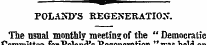
POLAND'S REGENERATION . The nsnal monthly meeting of the " Democratic Committee for Poland's Regeneration , " was held on Wednesday evening , September 2 nd , at the Bull ' s Head , Uew Oxford-street . In the absence of the President , Mr Ernest Jones , occasioned by illn «?? , Mr . Thomas Clark -was called to the chair . Two additions wre made to the Committee , Dr . M'Donail . rnd an infiuv ntial Polish patr-ot . The bringing np of the "Monthly Report" was postponed for one week . The Secretary read a communication from the continent , -which excited an interesting conversation , in the course of which much valuable information on the state of Poland and prospects of the cause , was imparted to the Committee by the Polish members . The meeting then adjourned .
On Wednesday evening . September 9 th , the committee re-assembled . Much regret was expressed at th&cinse of the President's absence—severe Illness . Mr . Christopher Doyle was called to the chair . The Secretary brought up and read the " Monthly Report , " which will be found below . On the motion of Mr . Kean , seconded by Mr . Moy , the report was unanimously adopted . It was then resolved that the report should be sent to the Northern Star for pnblieaiion . and that a pamphlet edition with the | addition of other interesting matter , should be printed . On the motion of the secretary , seconded by a Polish member of the committee It wa 3 unanimously resolved : —
ThatMr . Christopher Doyle , member of this committee , being about to visit Scotland ; and Messrs . T . Clark and P . 11 'Grath . also members of this committee , beinij about to visit different parts of England , the said members are hereby authorised to represent thwjeommittee , and are instructed to employ their effortsin making knowi its organisation and objects , obtaining the adhesion of " honorary members , " and otherwise aiding the Polish cause for the advancement of -which this committee is established . Mr . Dotle promised for himself and Messrs . Clark and M'Grath ( unavoidably absent ) that to the best « f their power the resolution should be acted up to . " It was then resolved that a copy of the " Monthly Report—No II" ( when printed ) be seat to each member of the late Chartist Convention . The committee then adjourned till Wednesday € venins , October 7 tb .
Untitled Article
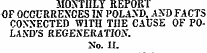
MONTHLY REPORT OF OCCURRENCES IN POLAND , A ND FACTS CONNECTED WITH THE CAUSE OF POLAND'S REGENERATION . No . II . August , —September , 1 S 4 G . Since the publication of the Cenraitiee ' s Re p ort for Julv , further revelations of the
MASSACRES IN GALICIA , € xcited by the Austrian government , have been made known to Western Europe . Letters from the survivors , and personal statements from the lips of some who have escaped frcm the scene of carnage , prove beyond dispute the guilty participation of the Austrian despotism in those organized murder 3 . The subject ha 3 attracted the attention of the British parliament , and the atrocious acts of the Austrian government have been unanimously condemned by both houses . In the course of the debate in the House of Peers , on Tuesday , August 11 th , Lord Beaumont , speaking of the proclamations issued by the authorities of the circle ot Tarnow , offering rewards for the noble 3 dead or alive , said : —
The result of the proclamations he had alluded to was , that the peasants rose , not immediately against tlieir ' ovm masters , hat peasants not in immediate connexion with the proprietors rose against them , and people from a distance marched to attack distant castles , merely for" reward . Xnmbers of peasants traversed the countrv , attacking castle after castle , inassaereing men , -women , and children . lie had seen letters from some of the survivors , describing these horrid scenes ]; one from the only surviYins memtiersfa&inih ( the daughter ) who bad seen her father and mother murdered . Another was from an individual whose wife and a ! l his children had been murdered . He had a list of names of families who had thus suffered : in one no less than SO or GO individuals , including servants , had been put to death , one alone surviving . Lord Kinnaird in the course of an able and patriotic denunciation of the oppressors of Poland , said —
When in April last this subject had been brought before the house , confidence in the character of Prince iletternicll was pleaded as a reason for disbelieving such atrocities . Ye t now they were admitted to have taken place ; and it was established that horrors had occurred wowe than anything which had happened in the French devolution . The government of Vienna had conferred rewards upon those who had issued the orders which authorised the atrocities , and bjsd doing th # v had rendered themselvesresponsiulefor the atrocities themselves . It appeared that the prisons were ' opened , and the
peasantrv were encouraged bj the local authorities to massacre the nobles . He would mention one of these atrocities , to show that the perpetrators were instigated by the authorities to commit those acts , and that the ? had Since been rewarded . A gentleman of large property in the neig hbourhood of Tarnow observed a multitude approaching his place of residence . He at first thought this was some insurrectionary movement . He was soon undeceived . The first attack was made upon hU steward , who was murdered . They then attacked his house . Hii wife rushed down to appease them . They knocked her down . He . rushing to her assistance , was struck down .
Untitled Article
A child , too , was slain , and the assailants were on the point of slaying a lady who was with the family , when , taking her fop the lady ' s maid , they suffered her to escape ' and desired her to lead them through the house that the * might search—for what ! For knivesnhich tht prefect ofTarnawhadtoM them thU and other Tidbits had to cut tht throats of thetwuant * . Such horrors as those were ftar ' ful to describe or contemplate . One of those unfortunate victims , the wife of the owner , had to drag herself a abort distance from the house . The multitude afterwardj
returned with carts for the bodies . Why ? That they might obtain tbe price offered for every head . They were accompanied with gendarmes , and the living having been thrown into the same cart with the dead , and removed from the scene of slaughter , the perpetrators of this outrage dug a larg e grave , and were on the point of casting the owner ' s body into the grave when symptoms of Ufa were discovered ; his wife implored them to save him . AH this took place in the presence of gendarmes . But thev cast him alive into the grave : they buriedhimalivf . Had notthe Gawrnmentat Vienna rendered themselves
parties to such deeds , by rewarding those who first stimulated the outrages This subject also occupied the attention of the House of Commons , on Monday , August 17 th , when the Austrian atrocities were denounced by several members of that home . Mr . Monckton Milnes quoted the proclamation issued by the authorities ot Tarnow : — Would the house believe , that an order to such an effect as the following had been promulgated on this occasion I " I call upon the inhabitants of this district that th ? y take possession of all tbe turbulent spirits therein —that , armed with their scythes and their hatchets , they shall deliver up such parties to the government ; and I am anthorised for this service immediately to gite to
those who so deliver these parties up a sufficient recompense . " Could they wonder , therefore , that such an order as that would be followed by tbe most disastrous and injurious consequences I But that was not all . The peasantry were told to bring these people to the government , if the 5 could , by fair means , but to bring them at all events ; and the local authority who gave this order , declared that he bad been fully authorised to do so . How had that order been followed % No less than 1 , 478 proprietors and individuals had been brutally murdered and brought to the government . Of these there were between seventy and eighty priests , the teachers and religious instructors of the people of the district . A large portion ef them also were ladies . These were historical facts , and they were uncontradicted .
Lord Palmerston admitted the truth of these atrocities , and added , that " they were without examvl in tbe modern history of Europe . " In proof of what was asserted in these debates respecting the rewards conlerred by the Austrian Government on the directing assassins , we refer to an order of the Emperor of Austria , dated the 18 th of July , conferring on the prefects of the districts of Tarnow and Przemysl , in Galicia , MM . BreineVon Wallerstern . and Gzetch Von Lindenwald , the cross of the Leopold order , frei of the usual tax . The same order elevates the prefects of Wadowitze , Bochnia , Sandetch , and laslo , MM . Von Loserth , Bernd , Bochinski , and Przybyl-9 ki ( without paying the tax ) , to the rank of
"Noblemen . " Well may the Reforme add to this " order " : — " Tarnow , Bochnia , laslo ! what frightful recollections they evoke ! These dens of assassins wanted for their hellish renown nothing but this official consecration by Government . The civilised world may now know that the Austrian Government has officially honoured and ennobled the prefects of Galicia who ordered and directed the slaughter , received the corpses of murdered Poles , and paid the assassins . " The latest accounts from Galicia assert the discovery of a new conspiracy , and the arrest of three "French emissaries , " who are incarcerated in ihe prisons at Lemberg . The
MILITARY COMMISSION AT CRACOW , headed by the Austrian general , Castiglione , appointed to investigate into the events at Cracow in February last , has given notics of the termination of its inquisitorial proceedings . 1250 prisoners were examined . Of these 830 were set at liberty ; 200 have been delivered up to Austria and Russia ; aud 220 remain in prison in Cracow , to undergo a trial before a Civil Commission . This commission will be c o m po sed of two Prus sia n , two Austrian , a nd two Russian members , with an Austrian functionary acting as Chairman . Each member will have thus to invtstfeate the case of thirty-six accused . It is supposed that a whole year will elapse before the termination of the trial . This would be very serious ,
if the judges were impartial ; but , when the trial is to be conducted by enemies , the length of " prevent i ve im p risonmen t" may prove a benefit in comparison with the dreadful captivity by which it will probably be succeeded . It 13 stated in some of the German papers that a correspondence has been discovered at Cracow between the prisoners and the emigrants . " A spirit of discontent" is said to " reign" in that city , and the Austrians , who still occupy the city , are constantly on the alert to prevent an outbreak . Fraro Posen we have but very meagre intelligence . M . Jarkowski , the Director of the Establishment of General Credit of the province of Posen , was arrested on the 1 st ot'July , and taken to Sonaeburg . M . Kournatoffski , who was arrested and put in prison
at Sonnenhurg , just after the last insurrection of Posen , for publishing a revolutionary lithographic print , attempted to commit suicide by stabbing himself in four places , but was expected to recover . The Prussian Minister of the Interior haa refused his sanction to the publication of five monthly journals in the Polish language . From Dresden ( Saxony ) we learn that Tyssowski , ( member of the provisional government in the late outbreak , ) is still in prison , and still the object of an interchange of notes between the Saxon , Austrian , and Russian cabinets . Russia demands his extradition and banishment to Siberia , or at least his detention in a Russian fortress until the entire pacification of Poland , which means imprisonment and torture during his life . We have now to notice the DESIGNS AND CRUELTIES OF THE RUSSIAN TYRANT . It has long been the established pofty of the Tsars to represent themselves to Europe as the friends ot the peasantry , whom in their own dominions they were anxious . to emancipate , but were prevented doing this by the opposition of the Russian nobility . It is notorious , however , that the Russian nobility were long since coerced by the Tsars , and that since tha failure of their ^ insurrection in 1825-26 , they have been reduced to utter impotency by the present Emperor . If , therefore , Nicholas desired the desj truction of Russian serfdom , he has but to will it , and the work will be forthwith accomplished . But instead of this we find him the largest slave-holder in the world . The whole number of serfs in the
Russian empire amounts to forty-five millions , ot these twenty-one millions are " owned" by the Emperor as his " private property , " the remainder being the " property " of the Russian landlords . The Ru-sian serf is as much a Slavs as the negro worker in Cuba . The Rus s i an Emperor has s h own no i nc l inat i on t o liberate his own serfs ; on the contrary , he has watched every opportunity to add to their number , bv confiscating the estates of the disaffected and suspected amongst the proprietors , and adding the serfs of those estates to his own immense stock of miserable slaves . Remembering these simple facts , the European public will be better able to comprehend the motives of the Autocrat in putting himself forth as the liberator of the peasants of the " kingdom of Poland . "
For some time past the German papers have contained rumours respecting tne intended liberation , by Nicholas , of the Polish peasants throughout the " " kingdom of Poland . " This " Report" was already prepared when we became informed of the following facts ;—The Warsaw Gazette , of the 23 th of August , publishes an ukase , signed by Nicholas , abolishing certain feudal services to which the Polish peasants have beeu hitherto subjected , and setting forth other provisions relating to them . The following are the principal clauses : —
Peasants in towns or villages , who cultivate to tke extent of at least three acres of laud , shall henceforth , as long as they fulfil their obligations , enjoy a life interest in those lands . and the proprietor shall not take the land from them , or increase the charges thereon . The peasants shall be free to move from one estate to another , provided tUey fulfill the police regulations , and give three months notics of their intentions . The proprietor of the estate shall , within two years at the farthest , place other peasants en the lands thus abandoned , and shall
notincorporate the said lands with those which constitute his signorial estate . The Council of Administration shall suppress in private domains all feudal services which are not established by law . The Council shall recommend to the authorities to watch that the obligations enforced towards the lords do not exceed those winch , after the suppression of the feudal services , not established by the law , are founded on valid titles , ana which , existed previous to Jan . 1 , 184 C . Tkey are also to see that in trials between the lords and the peasants just ' ee is equitably administered .
This pretended " liberation" is a fraud , not intended to benefit the peasants , but to deceive Western Europe . We must defer until our next Report an exposure of this imperial juggle . We are confadert that from the best sources , and by the revealment of " facts , " wo shall be able to prove that this ukase confers but little good upon the peasants , while in some some things it adds to the restrictions previously imposed upon them ; that it adds to me power of the police , who will uso that power to oppress still more both nobles and peasants ; and lastly , that the great object of the ukase « s to impose upon Europe the false idea that Nicholas uesi * ns the elevation of the Polish people .
If anything more ia required to exhibit the profound hypocrisy ef the tyrant Nicholas , s uffic ie nt proof will be found in the following facts . The Ruusianised Polish provinces of Volhynia , Podolia , anil Lithuania are , at this very time , under martial law . What atrocities are going on in those unhappy provinces we know not , but there can be no doubt that the usual barbarities attending Russian martial law
Untitled Article
are not wanting . In the " Kingdom of Poland " from thr . e to four hundred prisoners arrested at tbe « ime of ins late iT- nts at Cracow are suffering und < r the infernal tortureg to which the patriots are invariably subjected . Some idea of the fate of theBe , < ur unfortunate brothers , may be gather d from the following extract from a letter from Warssw , of the 27 th of Augi-s : — Yesterday the Warsaw Conner published a new ukase from the Emperor , which states that all persons condemned to hard labour for life in the Kingdom of Poland , and even all those condemned to hard labour and to imprisonment for stated periods , if their imprisonment has yet five years to run , shall be sent to Siberia . The first-named shall he employed for 20 jeara in the mines . and shall be colonists for the rest of their days . The others shall be employed in mines or at fortifications for the half of their time which their punishment would have lasted in Poland , but they are also to remain for the rest of their lives in Siberia .
We must here warn the friends of Poland against the plottings of certain emissaries of the tyrant Nicholas wh » are prowling over Europe preaching up what they call Pantlavisnm , that is the unity of the w hol e of the Slavonic nations under the sceptre of the Tsar . We understand that this idea is also propagated by a few miserable Polish aristocrats who have the astounding effrontery to recommend a voluntary union of Poland with Russia , ! Some of these are rather to be pitied than condemned , being frightened out of their wits by the lamentable excesses in Ga li ci a , and therefore ready to throw themselves into the arras of any power capable of affording them protection . Some , however , have a worse m o tive for their p ractical tre a son t o Pol a nd ; t h e know that the rest o ration of P o lish n a ti o n a lity must be accompanied by the ascendancy of democracy and the destruction of " caste "; and , rather than see this ,
some of the Polish aristocracy would for ever renounce their nationality , and own themselves slaves to the Tsar . In justice to the Polish nobles , we must add our conviction that the above sections of Pllilo-Russian Poles , both combined , number but a miserable minority of their class . We do not think it necessary to do more than allude to this subject , and that chiefly with the view of directing the attention of the Polish democrats to the machinations of these emissaries and traitors , so that their abominable conspiracy may be nipped In the bud . Further comment from us cannot be neoded . The idea of an union of Poland witn Russia is too preposterous to ho seriously entertained ; we might as rationally suppose the union ef the lamb with the wolf ; or the dove with the vulture , as suppose the possibility of Poland voluntarily uniting with her relentless and merciless enemy and oppressor .
We must now briefly glance at the recent occurrences in other countries connected with the cause of Poland . The recent tour of the Sultan of
TURKEY through his Danubiaa provinces , was followed by a letter from Nicholas to the Sultan , in which the Tsar inveighs against the Poles located in the European provinces of the Turkish empire , asserting that they are engaged in a conspiracy for " the destruction ot all law and order . " This attempt to enlist the Sultan in a line of policy eminently Russian , for the pretended maintenance of bis own authority , had been preceded by an imperial protest against the hospitaity whiek distressed Poles received inServiva . The Porte is well aware that it is not Polish , but Russian intrigue that it has to dread . It affords us sincere gratification to record more reverses of the Muscovite arms in the Caucasus , and renewed
VICTORIES OF THE CIRCASSIANS . The late splendid enterprise of the renowned Schamyl has been ( as is the invariable rule ) represented by the Russian gazettes as a "defeat . " Letters from Constantinople show the falsehood of this tatement of the Russian papers . Schamyl descended from the mountains of Daghestan , with 30 , 000 men . lie has entirely swept away all the Russian colonies alonsthe river Terek , which have been established for forty yeara . He ha 3 crossed the Terek , and opened a free communication with the chieftains of Great and Little Cabardah . which has ended in a
complete fraternization , and an extensive insurrection against Russia , of provinces that have been long under h e r q uiet domini o n The apathy of the British government as regards this war of Russia against Circassia , is as criminal and suicidal , as it is dishonourable . Should the independence of Circassia be ultimately overthrown , there will be no obstacle to the march of Russian supremacy in the East . As that supremacy could only be based upon the ruin of prostrated nations , we hail with joy every success achieved by the gallant Circassians over their ruthlos s invaders .
We should here state a fact not noticed by any of the English journals . Schamyl recently published two proclamations , the one was on the occasion of Uis learning of the recent Polish outbreak ; when addressing the Poles in the most fraternal spirit , he urged them to maintain the struggle against their common enemy ; the other proclamation was addressed to his own people , decreeing the suppression of all hereditary inequalities . Those two proclamations prove Schamyl to be no mere barbarous warrior , but on the contrary the worthy leader of a nob ! e race fighting for independence , fre e dom , and pro * press . Address to the Electors of
FRANCE , whichi besides appearing in the Northern Star , was also published in the He / orme , National , and several other Trench journals . The 200 , 000 electors of France have elected such a body of representatives as for corruption and political profligacy , never before assembled in the Chamber of Deputies . From these deputies Poland may , therefore , expect nothing but lip sympathy and practical enmity . Nevertheless , this Committee regard their " Address" as having been not is 3 ued in vain , if it effected nothing more than the informing our French and Polish brethren , that the Democracy of England do heartily sympathise with Poland . Tliat this sympathy is appreciated
by our Polish brethren , is proved by the address of " The Central Committee of the Polish Democratic Society" established in France , to this committee , which was published in the Northern Star of August loth . To the "Democratic Society" we return our acknowledgments , and pledge ourselves to unceasing : exertions to aid their holy cause . We must also notice the generous sentiments of the Refornic and National , which journals hailed the address of this committee as unfolding "the basis of those democratic ideas on which the future much-to-be desired union of the people of both countries ( France and England ) is to be founded . " May such a union be speedily effecte 1 ; one of its great objects must be the restoration and freedom of Poland .
As regards the DEBATES IN THE BRITISH PARLIAMENT on the occupation of Cracow ( from which we have above quoted ) , we have to complain that nearly all the speakers expressed views of the Polish question far too limited to be either just or generous . Mr . Hume insisted that England for her own honour ought to insist on the maintenance of the treaty of Vienna towhich she was a party . Now we recognise the treaty of Vienna as only another " act of partition , " to which England to her own dishonour was a party , although she reaped no share of the spoil . We re p u di ate t h e treat y o f V i enna , and further , we assert that the British Government is longer bound by it . Lord Palmerston said , "It was impossible to denv that the treaty of Vienna had been violated
in the late transactions at Cracow , and he hoped that the Governments of Austria , Russia , and Prussia would recollect that if the treaty of Vienna was not good on the Vistula , it might bo equally invalid on the Rhine and on the Po . " Now , if two parties enter into a mutual contract , and the first part ; wilfully violates the engagements of that contract , it is clear that there ia an end to the contract , and that the second party . is no longer bound by it . This is exactly the position in which England stands towards the " three powers" in relation to the treaty of Vienna ; ' and we trust that the Parliamentary friends ^ . of Poland will insist upon thi < incontrovertible fact . The British Government boing released from all further recognition of the treaty of Vienna , the Government is certainly at liberty to question the original acts of spoliation under which Poland was dismembered , to which the British
government was not a party , and which the British people have never failed to protest against . Unlike some of the Parliamentary advocates of the Polish cause we cannot express our satisfaction at the speech of Lord Palmerston , we are , therefore , g lad to learn that it is the intention of Dr . Bowring to bring the question o { Poland ' s full and entire national restoration before the next session of Parliament . Before Dr . Bowring introduces his intended motion , this committee purpose to take measures to obtain an expression of public opinion of the British people on this question , through the medium of petitions . We trust that our friends throughout the country will bear this in mind , and that when Parliament again assembles they will be prepared to aid in procuring such a manifestation of the public sympathy , as shall convince the government of the pro-> riety of obeying the national voice , in demanding
THE RESTORATION OF POLAND , AND ENFORCING THE RIGHTS OF THE ENTIRE POLISH PEOPLE . Ernest Jones , President . G . Julian Barney , Hon . Sec . London , September 9 th , 181 G .
Untitled Article
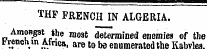
THF FRENCH IN ALGERIA . AmoBgat ; the most determined enemies of the b ! £° V n n- lca ' are t ( > ^ enumerated the Ka byles , rSfT *^ ^ , ? ran 2 M of the Le 33 er AtlM , * TL «! " Mor ° cco . Of different race from the Aratw , they are believed to be the aboriginal inhabitants Of Northern Africa . Secure in their wild valleys , they have ever preserved their independence Carthaginians , Romans . Van d als , Arabs , all faile d to subdue them ; and although some of the tribes , whose territory is the least inaccessible , are now partially under the rale of the French , the maritime range , from the east of the Metidjahto Philippeville , remains unconquered . Their numbers are inconsiderable , roughly estimated at eighty thousand . This would give a fighting population of at most from
sixteen to twenty thousand men ; but that small force has been found efficient to preserve from foreign domination the almost impregnable fasteneasea in which they dwell . Although the tribes wage frequent war amongst themselves , a common enemy unites them all . The attachment of the Kabyles to their country and tribe is remarkable . Like the Swiss , or the Spanish Galicians , they are accustomed to wander forth when young , and seek their fortunes in other mnd 9 . Kabyle servants and labourers are found m all the towns and villages of Northern Africa . But if they learn that their tribe is threatened or at war , they abandon their situations , h owever a d vanta g eous and h as t e n h o me , and to arms . They are very brave , but barbarously cruel , giving no quarter , and torturing their prisoners
before cutting off their headB , Their weapons are guns six or seven feet long , pistols , and yataghans , chiefly of their own manufhcture , and the materials for which are found in thpir mountains , where they work mines of copper , lead , and iron . In their rude way , and considering the badness of their tools , they are tolerably ingenious . Amongst other things , they make counterfeit five-franc pieces , sufficiently well executed to take in the less knowing amongst the Arabs . Their industry is great , and , besides the valleys , they cultivate the steep mountain Bides , forming terraees by means of walls , such as are seen in the vineyards on the Rhine and in Switierland . Possessing few horsey they usually fight on foot ; and in the plain , their untutored courage is unable to withstand the
discipline of the French troops . Their charges are furious but disorderly ; and when beaten back , they disperse to rally again at a distance . In the mountains , where the advantages of military organisation llftYe less weight , they are sturdy and dangerous foes , fighting on the guerilla plan , disputing each inch of ground , and disappearing from before their enemy only to fall with redoubled fierceness upon his flank or rear . No foreigner can penetrate into their country , and even Arabs run great risk amongst them . Not long ago Captain Kennedy informs us , a party of Arab traders suspected by the Kabyles , of being in the French interest , were
murdered to a man . Most of them understand ami speak the Arabic , but they have also a language of their own , called the Shilla or Sherwia , whose derivation it has hitherto been impossible to discover . They profess Islamism , but mix up with it many superstitions of their ancestors , and ascribe certain virtues to the symbol of the cross , which they use as a talisman and tattoo upon their persona . " It would seem from this , " observes Captain Kennedy , " that at least the outward forms of the early Christians had at one period penetrated into the heart of their mountains . " That , however , like all that relate to the p arly history of the Kabyles , is enveloped in doubt and obscurity .
A barbarous practice , prevalent in Algeria , before the French invasion , is still , Count St . Marie tells us . adhered to by the Kabyles . The ampu ' ation of a limb , instead of being surgically performed , is effected by a blow of a yataghan . The stump is then dipped Into melted pitch to stop the bleeding . The barber is the usual operator . Until tbe French came , re gular physicians and surgeons were unknown in Algeria . Besides the Zouaves , the French have raised various other corps expressly for African service , Conspicuous amonjjst these are two regiments of light cavalry , composed of picked men , and known as the " Chasseurs d'Afrique . " They are mounted on Arab horses : and in order to obtain a sufficient supply , each tribe has to furnish ahorse as part of its yearly
tribute . The arms of the Chasseurs are carbine , sabre , and pistol ; their equipment is light ; their uniform plain , and well suited to the nature of the service . Wherever engaged they have greatly distinguished themselves , and are proportionately esteemed in the army of Africa . The reputation of the Spahis stands less high . These consist of four regiments of native cavalry , under the command of the Arab general Yussuf , whose history as related by M . St . Marie , is replete with romantic incident . It has be ^ n said that he is a native of the island of Elb , i , and was captured when yet a child by a Tunisian corsair . Sold to the Bey ,, he was placed as a slave in the seraglio , and there remained until an istrigue with kis master ' s daughter compelled him to seek safety on board a French brig , then about to join tho fleet destined to attack Algiers . He made the first campaign as interpreter to the General-in-Chief . His talents and heroic courage rapidly advanced him , and when the first regiment of Spahis was raked , he waa
appointed its colonel . Previously to that he had rendered great services to the French , especially at Bona . when that town was attacked by Ben Ai ^ su . Landing from a brig of war with Captain d' Armamly ami thirty sailors , be threw himself into the citadel , then garrisoned by tho Turkish troops of Ibrahim , the former Bey of Constantina , who professed to hold the town for the French Government , but had left his post . The Turks rose against their new leaders , and would have murdered them , but for the energy of Yussuf , who killed two ringleaders with his own hand , and then , heading the astounded mutineers , led them against the besiegers , who were totally defeated . The exterior of this dashingchicf is exceedingly elegant and prepossessing . When at Paris he vsa called "le beau Yussuf , " and caused quite a furor , especially among the fair sex . His portrait may still be seen in the various print shops , aide by side with Lamariciere , Bugeaud , and the other " sreat suns" ( if the " Armee d' Afrique . "
The first foreign legion emp loyed by the French in Africa was transferred to Spain in 1835 , and there used up , almost to a man . Another has since been raised , composed of men of all countries—Poles , Belgians , Germans of every denomination , a few Spiniah Carlists , and even two or three Englishmen ; the legion , like most corps of the same kind , is remarkable for the reckless valour and bad moral character of its members . The Polish battalion ia the best and most distinguished . The others are not to be trusted ; and only a very severe system of punishments preserves something like discipline in their ranks , where adventurers , deserters , and escaped criminals are the s taple commodity . Bad as they are , they are eclipsed by the condemned regiments , mown bv the sl ang name of'' Lea Zephyrs . " These
are punished men , considered ineligible to serve again in their former regiments , and who are put together on the principle of there being no danger of contagion where all are infected . A taught hand is kept over thf m ; they are insubordinate in quarters , but dare-devils in the field . It will easily be imagined that the duties assigned to these convict battalions are neither the most agreeable nor the lonst perilous . At present , however , a detachment is employed on no unpleasant service , the care of an e . xlerimental military farm near the camp of El Arrouch , in the district of Constantina . Here they cultivate a c < nsiderable tract of land , both farm and garden , breed cattle , and supply the colonists with seeds , fruit trees , and so forth . Workshops are attached to the farm , for the manufacture of
agricultural implements . The men who work as artisans leceive threepence , and the field labourers three halfpence , in addition to their daily pay . " Since the commencement of t « c experiment , " says Captain Kennedy , " the offences that have been committed bear but a small proportion to those that formerly occurred during a similar period in garrison . " In these < iays of reform in our military system , might not some " hints be taken from such innovations as these ? If employment is found to diminish crime amongst a troop of convicts , it might surely be expected to do as much in regiments to which n < i ¦ stigma is attached , and the vices of whose members are often solely to be attributed to idleness and its concomitant temptations . —BUtckwood ' s Magazine for September .
Untitled Article
THE CAFt'RE WAR . The South African Commercial Advertiser of the 20 th of June , received by the Guard , Captain Paiue , arrived at Liverpool , which on her voyage from Zanzibar called at the Cape , contains the following official dispatches relative to the engagements with the Caffces on the frontier .
OFFICIAL DISPATCHES . Fort I'edilie , June 8 , 184 G . Sir , —I have the honour to acquaint you , for the information of his Excellency tho Comniander-in-Cliief , that hairing directed sixty waggons to proceed this morning to Trompetter ' s Post under an escort of 250 mra , I felt it necoisury to make a diversion with tho troops in the direction of the Iirnals of the chief Stock . I accordingly detached u force of 300 native infantry , under CaptainSize , 100 Fingoes under Field Captain Syraons , accoii )|> ai ) icil by i body of the Fort I ' eddie Fingoes under the cliiel" Tan > 5 » u > into this 151 ui > River last night , with orders to nioru at Jaylitfhl up Ihu valleys of Touka mill
Miinciraftnii streams , between Trompotter a and Oommittus . I moved with two- gans under C »() t : iin Drown , Reyal Artil e » y , one troop 7 tli Dragoon Guards , -under Capt . Sir II . DdrrelJ , 100 Cape Mounted Hitles under Captain Napier , Field Captain Lucas , Free Troop , and 100 of Commandant Miller ' s Burghers , to the uead of the Tocka stream , in the direction of Stock ' s kraal , at six a . m . This morning , and at half-past seven o ' clock 1 observed a largo l / ody of the enemy at a short distance below us , having horsos and cattle with them . 1 immediately advanced the guns and Cape Mounted llilli-s to the attack , supported by the troop of 7 th Dragoon Guards , detaching U \ c Burghers tQ my left ttank , and
Untitled Article
having thrown out a strong body of skirmishere of the Cape Mounted liifles , Captain Brown opened his guns on the enemy with effect . The enemy commenced a sharp fire against the advance , which was returned by the Cape Mounted Rifles , and the attack was continued for Borne time . Observing the enemy endeavouring to escape to our right I moved with one gun of the 50 th Cape Mounted Rifles , and one division of the 7 th Dragoon Guards , towards the kraal of the chief Stock , to intercept them , and about ens hundred and fifty of the enemy ,, who were posted there , retired into the bushy kloofs iu
the rear . I destroyed the chief ' s kraal , leaving the burial hut of the late chief Eno untouched . At half-past seven o ' clock the infantry I had detached to the Manenzana kloofs made their appearance on tbe heights and passed over Into the Tocka valley . Whilst tUe movement was going on , Captain Donovan headed a gallant attack on the enemy with a small body of the Cape Mounted Rifles and some of the Free Troop , rushing on the enemy , ho was immediately surrounded , but being well supported , he cut his way out , killing five of the cuemy and taking all their sung .
The Native Infantry and Flngoes , having got into the valley , attacked the enemy in the most spirited manner , killing several and capturing twelve horses . The enemy made several attempts to escape to the right , but were immediately driven back b y the George Burghers , who behaved with great spirit , taking four horses ana two guna from them . At half-past 12 o ' clock , finding the fire slackening , and the enemy beaten and retiring , I assembled the force , and proceeded up tbe Tocka , crossing the small neck of land which separates the Tocka from the Gwanga itreain , in order to off saddle and refresh the horses . Immediately on rising the ridge , the flankers obnerved some of the enemy running across the flaU , and on moving rapidly ' with the troops I came suddenly on a lar £ « hoiy of Caffres , al leasi 500 strong , who were evidentlv
proceeding to join the others in the Tocka valley . I im . mediately advanced with the whole of the troops . Major Gibson . 7 th Dragoon Guards , who commanded th « cavalry force , with Sir II . Parrell ' s troop , made a brilliant charge upon the enemy ' s column , the Cape Mounted Rifles , under Captain Nnpier , flanking them , and riding in amongst the enemy . The troop were « o mixed with the enemy that the gun could only open once upon them effectually . The enemy retired across the flat as fast as they could , endeavouring to seek shelter among the thick thorns of the Gwanjja , at Buck-kraal , but the attacks of the troops was so vigorous and well-directed that it was inpossible they could escape , and the enemy was de . fented with great loss , leaving upwards of 200 dead nn the field . About 100 stand of arms , 20 horses , and a very large number of bundles of assagais were cap . tured .
The troop of the 7 th Dragoon Guards , under Captain Hogg , and a party of the Cape Mounted Rifle * , undci Ensign Philpotts , who ivera sent out from the Fort b , v Lieutenant-Colonel Lindsny , made a diversion on our flank , and turned those of the enemy , who were endea . vouring to escape by the Kieskamtna , killing six strag . glers and taking four horses . The loss on our side has been 3 officers wounded , 7 privates of the 7 th Dragoon Guards wounded , 1 corporal of the Cape Mounted Rifles killed , 1 Free Troop wounded , 1 Finpo killed and 3 wounded . . Total—16 tvouuded ant ] 2 killed . I have the honour to be , Sir , Your most obedient servant , H , SOMRSET , Colonel , CommamHiv ; , ' the Second Di . vision of FieM Fon e . Lieut .-Colonel Cloete , K . H . D . puty-Quartermaster General . Graham ' s Town .
Sinca the receipt of the above dispatch , Colonel So . merset has reported that the enemy attacked by him on the 8 th inst ., in the Fish River Bush , has evacuated it , and retired across the Kieskamma . Our patrols had eaptured a few head of cattle and two horses .
Untitled Article
RELIGIOUS DISTURBANCES AT MADEIRA . Madeira , Aim . 17 , —The religious agitation which has been carried on in this island for some years , has at length led to the committal of some serious outrages against Dr . Kalley , and other Protestant British and Por . tuzuese . On the afternoon of the 2 nd of August , the Canon Carlos Telles , accompanied by a mob of the lowest rabblu in the town , assaulted several individuals , men and uro . men , who were said to have been in the housu of the Misses Rutherford { two English ladies residing fat'i'e far their health ) , for the purpose of rending the Bible and praying . The priest , with a crucifix in his hand ,
commenced the affray by beating one of those persons who was quietly walking home . At night the same mob broke into the house of th ; Misses Rutherford , and und-r the pretence of searching for heretics , rummaged all the premises , * ven to the chamber where one of the Indies was lying dangerously ill . The pjlice , on being called to interfere , entered the house and pretended to endca . Tour to restore order , but it was evident that it was their intention rather tn encourage than queil the riot ; tluee men only out of nn immense crowd who filled the house , were taken up , and even these were allowed to escape umierthe plea that they were quietly passing by at the moment , and were only accidental spectators .
On the Monday and subsequent days it was publicly talked of In town that a large mob intended , on the Sunday following , to attack the house of Dr . Kalley , destroy and burn his property , and put the Doctor forcibly on board the English steamer , which was expected to arrive on that day , and thus expel him from the island ; the signal fnr the gathering of the mob to be a rocket fired from a certain house in tho town . Sunday noon the expected rocket was fired , anri an immense mob , armed with clubs , began to gather on the Praca Constitucional , and very soon afterwards commenced their march to Dr . Knlley ' a house . It is hardly credible , but not the less a fact , that they were accompanied in their march by the civil governor and police-mastir , the brother of the latter being one oftlie principal rioters . Arrived at Dr . Kalley's house they forced open his doors , broke into tliehouse , destroyed his furnitxre , opened every chest , drawer , and closet in the house , threw all his li . brary and papers into the street , and set fire to tliem . The soldiers offered no resistance—th « mob had evertliing
their own way ( the civil governor and policemaster being present , and in the house all the time ); and such a scene of ontrage ensued as would disgrace the darkest age of monkish persecution . Fortunately the doctor had luft the premises some time before , owl find while they ware engaged in the destruction of his house , fcffeeted his e . icape on board th » English packet steamer . When the mob were informed that he was already safe on board , they compelled the English Consul t > pvocetd on board and produce the doctor , that they might be convincoil of the fact , threatening violence to his ( the Consul ' s ) person and property if he refused ; the consul , thus compelled , accordingly did go on board , and induced Doctor Kalley to appear to those who had gone off in boats . Since then no inquiry has been made , no proceedings liave taken place against the authors and perpetrators of this most infamous act ; and such is the panic , in oonscquence of the shameful apathy and connivance of the authorities , that several English families have already gone on board the vessels in the roadstead , in order to be secure from insult . —Chronicle .
Untitled Article
¦ 1 UH" PROSPECT OF AN EUROPEAN FAMINECRITICAL STATE OF FttANCE-SCARCITY AND ISCENDIAltlSM . The Pretse states , on the authority of a private correspondent , that—Wo arc about to outer on one of those calamitous years in which the ordinary resources are not sufficient for the food of the people . The wop of 1845 ( adds thu Pnsse ) is entirely exhausted , and that of 1 S 46 has produecd less than n fair average . The rye harvest lias so completely failed throughout Franci ? , that it will scarcely produce sufficient for the ensuing year . Some fiiniKTii have not thrashed their crop , as they found it WOUld not pay the expense . Wheat is , in general , of
good quality , out , contrary , to the expectation of the farmers , tho produce is less than that of the year 1845 . The oats have been scorched by the sun in several d < - partments . They are inferior in quantity ar . d quality everywhere , but particularly in the departments where they serve for the food ot the inhabitants . Dry vogo . tables , such as pens , beans , and lentils , will no * produce a sufficient supply for the ensuing winter . Cabbages and carrots are exceedingly scarce . Potatoes have , been , attacked with the prevailing disease in twelve departments , and cause serious npprehvnsions far the future , So much for France . Let us now ctnminu tbe prosum
in foreign countries . In Uelgmm there are no coin , plaints of the harvest , but it will not produce any oyitplus for exportation . In Holland no decline in the >> riee of provisions is expected . It is further > ai < l , that in the opening of the States General , the Government will demand an extension of tho bill passed last year to . ? iicouniBC the importation of foreign « rain . PortusaJ is in .- , inued with an approaching famine , ami Spain is . loo poor to assist her neighbours . Switzerland will be ciniipt-Hed . to seek provisions ft om abroad . Amongst tUa countries which commonly export corn , Poinerania hiss no whesi > to spare . Mayence cannot suffice for the flunnnds ar Switzerland and of Alsace . Ali-sandrla snd Odtsaa have no wheat in their stores , and the piic * s were j ^ nc rally rising even before the failure of ilu ? potatoti crop in Ireland was known . It may , therefore , be asserted as a . general proposition , that Europe is . placed in a aim-CUlt position with respect to the supply of hen-
populntioM . France , partieuWly , has ruitstai to be . scriousl } 1 uneasy , lid us suppose , in tact , that the present harvest is merely bad , and that even if we do not take into account the loss of potatoes and other vegetables , we should require , accoi ding to tho calculf . tions of M . de Muiuveran , li supply of CQyn for MUi > , rt » ys , But to this deficiency of fifteen days , we nius c add at Icist fifteen days more taken by anticipation from the crop uf 1845 . Franco must , therefore , ti ' . nl a month's supply from abroad . We must , I'onscqn-ji . tly , import during tlu > course of the year , 0 , 000 , 000 hectolitres of grain . Hut nil Europe has iievtr colleuteil iu he * stores move thun 14 , 000 , 000 of hectolitres for sale—merely a ti-ifl .- more than double the quantity j \ which Fiance has need to c . mplctc her stock of com . lint let us admit that fi > - vc un countries can supply us with the graia nccrssar ) until next harvest , " > nd lot us see whether our merchants are capable of fuelling the duties of a national purveyor . Wa can refit ; to oue year iu which the imports ap-
Untitled Article
proached to the amount required at present . In 1832 , we imported food for twenty-one days , amounting to * , 7 G 7 , 796 hectolitres of corn , weighing 3 J , 5 G 3 . OO 0 metrical quintals . There irero 3 . S 75 ships , of i « least 100 tons each , employed to convey this grain . This year wa must import one-third more , and we may add that this immense enterprise will require a capital of 120 . 000 . OOOf ,-and that the consumer * , nu » t » opport :. surpl us of expense to the amomnt of 30 . 000 . 000 f . Had we wished to pene . jtrate into the details of the com trade-bad we taken into calculation the influence ot tho deficient mode of communication , or tho poverty oMhe small comumert , and of tha rapacity of speculators—the picture would appear overcharged , and we shonM defeat our object ; but it is sufficient for us to have demonstrated that the situation of the country is grave , imd merits the anxious attention of tne Government . A firm and provident activity will be sufficient to overcome all lirHieul ' . ies aud tocarry us to the next harvest .
The Ji ' eforma states that the progressive rise in the p rice of wheat has caused a corresponding rise in the price of flour in the Paris market . Letters from Paris state that Irish appears not in the market . Meat is- extr » va < Rantly hu * h . The finest piece ( fi ' eld ' aloyav , the ' Sunday sida" of tho sirloin ) to Us 36 sous ( 18 ' , 1 U' 9 pound . ; pood veal , 'J 2 s-ua . Bread 19 rising ; Ve » et : iblt ; s ( jujuild price—the best potatoes , for example , are three francs ( half-a-croivny the boisseau , or stone of 14 d . ; epgs , 14 d . the dozen ; everything else in proportion ; and bear in mintl that we are yet only at the commencement of September . The most alarming incendiary fires lirtvR lately ravaged the north and east of France , and tin evil seems to be on the increase . The Constitutional
says—Incendiarism continues to scatter deeolation througft a very extensive portion of France . Alter having been for a long time concentrated in the basins of tbe Saouna and Yonne , it is penetrating gradually into the surrounding provinces . Catastrophes multiply , and sometimes under very singular circumstances ; now an isolated divelliriff becomes a prey to the flames , and nw half a village is consumed—again a five brinks out unaccountably in a wood . Districts which , after hnvins suffered frightful ravages , seemed to have been relieved from tlm scourge and restored to peace am 3 security , suddenly becomes the theatre of renewed visitations . At times thu progress of the tire is stopped by prompt ? . nd judiuious measures , but too often the disaster is complete . The Quotidien 7
iesnys—The scourge of fire is / jrndunlly gaining ground , and , like the march of the cholera , sevmi to spare nothing ia its way . From the Yonne , whireit caused such great ravages , it has passed on to the Cote-d"Or , and has now reached the Cher , ft invaded the srat of tiie Countess deMontalivet , and we now learn that it has deTnstnted a forest belonging to the Count de Chambor . l , in tha Haute Marne . At the present day , as in the first months of 1830 , thtre is a deep mystery in these fires—on ¦ of those hideous seer ts which defy all the intelligmce of honest men to discover . The drought of the summer .
the imprudent use of uhemiual matches , iti fuct all kinds of secondary causes have been suggested as a reason for this Btatii of things . This might suffice to explain rites when they ar » scattered up and down , but which give * no explanation at all uh » n the Hamps : > re seen to devcur a department , and where tliis is preceded bj written threats . For a tew letters sent by Imaiin : ? school-boys , er other silly people , there are a great many others that bear a serious character , and betray a guilty origin . Up to the present day , the police have noi been ablo to maka any discoveries , nor the armed force to prevent tha evil .
Untitled Article
DEGENERATE STATE OF PERSIA . Tabris , ^ June 30 th . —The Government is in a most woeful stnte , and it has here become almost proverbial that no Government , properly speaking . cap be aaid to exist . The Shah is a weak , invalid prince , who ia governed by his Prime Minister , Hadgi-Mirza-Aghassi , in whose hands tbe pow -r of the State has fallen , and who plays tl-. e part of a rodent . He has also a number of favourites , ehitfly Makulis . i . e . natives of Maku , a fortified plnce on the Turkish frontier , whence the Ilailui himself comes . The most important offices are ¦ riven to these Malkulis , who often , under his influenco , are appointed to high places , even in their childhood .
The Court of Teheran is at present divide *! into three parties , who are each at enmity with one another . These are—the party of the Walint , or heir to the throne ; that of the mother tn the Shah , which is believed to be the most influential in the country ; and finally tho Madia ' s party . It may thus be believed that the power of the latter is not quite so unlimited , and that he cannot effect everything . However , this division of parties explains the state of anarchy , of disorder , and internal dissolution in which the country ia p ! un » ed . M . irrovrr . tl !
of these , Bebram Wmm , the successor of Karnmun Mirza in the important post of Governor-Genera' of Aierbijan , has lately given a proof of this , he having cut down the magnificent trees at Kelat-Puscl-fin , a pleasure castle belonging to the Crown , a farsang and a ha'f from here , and pub'iuly sold the timber for , 800 tomfins , and pocketed the proceeds . The m ilitary administration is in as miserable a state . While S 00 pieces of cannon are headed up at Teheran for the pleasures of 'he IJ ; ld » i , there Are only three pieces here at Tiibris , the mo » t pnpuioua and most important town in the kingdom , and the nearest point to the frontier ; and these guns even are kept in the old fortress , the Ack , where they are not the least earthly use . The garrison here numbers about 200 Serba < $ e 9 ( theiv a > ' 6 » o other tf » oj > 3 . ) who usually do duty in the Shaiizide-Mek ' fm , tb . 8 court yard before the paUice of the Prince Governor , In , bearing , clothes , equipment , and even arms—for
the arms are of native manufacture , and a ba > i imitation of European . inns—nothing win bo imagined more lamentable and unsoldierlike than them , and I have not the slightest doubt that the regular troops oi the Khan of Iiockara would make a far more imposinii figure . There is not a proper number of soldiery here for the defence of the town , and yet the state pays about 1 G 0 . 00 O Servnsso-s at the rate of a tonifui ( Us . ) a month to the privates , or rather tho state grants the money therefore . As , however , scarcely 20 , 000 of these so-eallcd regular troops are in active service in the whole kingdom , the rest being allowed to stay at home , and nominally called out once a week to exercise , a great part of " the pay remains in the hands of the Sirdars , Mimba » lii- - , and other Makulis , or favourites of the lladgi , or probably even comes to the iiadgi , under the rubrics of uniform , equipment , &c .
Untitled Article
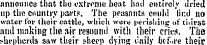
announce that the extreme heat had entirely dried up tho country parts . The peasants could find no water for their cattle , which were perisliing of thirst and nuiking the air resound with their erics . The s-hepherds saw their sheep dying daily b ( -f- > re their eyes for want of pasturage . The govmnmnt was occupied in dispatching water tn the dist'icts which suiVeivd most from tltfr drought , at a certain rate , of quantity per family . In some parts of t '; e country water was sold at the price of w ' u e . The capital alone was exempt from the Pi-ifterin . s of this ox ' raordinary drought , which had already led to tumultuous movements among the people . A vulgar oi'iniop had spread that . Mount Vesuvius had dried up all the water in-the country sin-rounding it . The volcano was emitting neither iire nor s < mfkr , and this cave rise to the fear of a sudden and humble eruption . Jtwasstatodth . it she volcmui was throwing up from time to time quantities of boiling water .
A 1 ttiA'ca Kissed in a D < : kl .-- Guatz ( S-itria ) , Auq . 23 i . —Owing to > nn ulti rcatinn which took plnoe at » ball between the Prince of Tour ; ind Taxis , Lieutenant-Col , of Hussars , and Captain Selsnedt , df the Infantry , a meeting with pistols tr . ok place , and the former-was killed on the ! -pi > t , Inning re » ceived the bullet of hismivsrsary i » U ebrenst . The event caused a painful sensation at tir . iiz . DRKADF'JIi . A-GGIDUSS AT UiMBl'ltOH . — dl th& morning of ' the 31 st ulc , while thu wuikme at tli& Hamburgh Theatre were imisving to its ; lace & splendid bronzechaiidielierior . ' . nr , ikhts . just roughfc to London ,. nnd-wftigliLug aU-vft . lit . Sllljli ! - ' ., tllO llVia broke , and the enormous-mass , filling to tht roi !» cL wns broken to pieces , critshimr two hiii ^ u-mum who had gome over to superintend its beins ; suspcii led .
PviHSiDENT we- - the ( ITkjjfki * States . —The following description of tilts ofHce iitnL ^ ualilicatioiM n ijuiriid tW ttie Presidentship of the tniteii States , way be fannd of inJciTst ,. as . it describes tbe p : \> viy ,, | . rivi-. feges , anil profits , attaint ! ' * ' to that vosiiinn . It is noted from Kaight ' s- Pditicol Dictiuimi v : ¦—The ¦ execut ' nci } -pnwun-is-seated in ii President , w ' jo is comlnandorsn-chiuf of the lumy and navy , collects and disburses the kcvlmiiw according to law ,, ami makes treaties with foreign natim ? , but in tlis-t-x-ivise of tho treatj-waking power , the cuncuneiiti : cftvotjiiirds . o £ the senators present is squired , lie nominates and , with thu advice ami mms ' iit of the SenatCj appoints ambassadors , othev public- min-. istcrs , and consuls , and judges t \ the Supreme Court , and other inferior uUiem .. lie has also a qualified negative on the laws tuacted by the two
Houses , which becomes absolute uidos it U subsequently countervailed by two-iainls of each Ilnuse . He is provided with a readj-ftiwiishrd house , : tod his salary is 25 , 000 dol ' ars . \ ifi is chosen by a determinate number of electors ; lilt ? voteis in on-h S : ; ito elect as many electors as nrei'fjuiU to-ilo members which such State sends toboili Houses of Gi-iijress . Every State has its own electoral collete . inul all the colleges give thciv \ oles on tlio sunn ; day . aud UV ballot . The votes arc aent sealed to ti . e Piv . iai .-nt ot the Semite . If no person has a majority of the electoral votes , tho election devolves upon the House of Representatives , when all the reprrtenlaiivwota State give but one vote . Tlio President inustba thh ty-livevcars of age , and he is re-ehgibo tor . hte but the t » me has been never to electee « una person for wire than two terms ot lour j « a » eucll .
Foxtiqn Ifttoements*
foxtiqn ifttoements *
Untitled Article
Trisce CzABTOhTsiu . —Lord ]) uuley Coutts Stuart has contradicted the statement published in the Frankfort Journal , to the effect that the sequestration which hid been laid on the property of the Princess Czartoryski , in Gallicia , had , in consequence of au august mediation ,, been withdrawn , but that the Prince , her husband , was to sign an engagement not to interfere henceforth iu Polish affairs . His Lordship says , " Those , indeed , can know but little of him ( the Prince ) wha can suppose for a moment that he would close , by the barter of his conscience for estates small in comparison to those he haa already surrendered at the call of duty , a life spent in the service of his country , andro aae Uj , 6 f saerificts in her cause ;
Untitled Article
September 12 , 1646 . ¦ THU NORTHERN STAJ ?
Grkat Drought Is Italy.—Letters From N-Iple3
Grkat Drought is Italy . —Letters from N-iple 3
-
-
Citation
-
Northern Star (1837-1852), Sept. 12, 1846, page 7, in the Nineteenth-Century Serials Edition (2008; 2018) ncse.ac.uk/periodicals/ns/issues/vm2-ncseproduct1383/page/7/
-