
On this page
-
Departments (2)
-
Text (9)
-

imperial saruamttii*
-

Untitled Article
-

Untitled Article
-
Untitled Article
-
Untitled Article
-

Untitled Article
-
Untitled Article
-

Untitled Article
-

tnu Printed by DOUGAL M'fiOWAN, of 16, Great Windmill-
Note: This text has been automatically extracted via Optical Character Recognition (OCR) software. The text has not been manually corrected and should not be relied on to be an accurate representation of the item.
-
-
Transcript
-
Note: This text has been automatically extracted via Optical Character Recognition (OCR) software. The text has not been manually corrected and should not be relied on to be an accurate representation of the item.
Additionally, when viewing full transcripts, extracted text may not be in the same order as the original document.
Imperial Saruamttii*
imperial saruamttii *
Untitled Article
HOUSE OF LOUDS—Feb . 19 th . The report of the Committee oa the Destitute Relief reland ) Bill was brought up , and , after a few remarks am Lord EUeuborough , received . Bill to be read a ir J time on Monday . THE CIVIL WAR IN PORTUGAL .-In reply to a lest'oa from Lord Beaumont and gome remarks from le Earl of Aberdeen , The Marqueisof LiSsoowsE said that no initractiom ad beta given to the British envoy in Lisbon , or to th « ritish officers on the coast of Portugal , which had not ir their object the strictest impartiality , whilst nothing ad been done which could either directly or indirectly ive any countenance to the insurgent * , or to the unour that the canie of tbe insurrection was favoured
y the Government of this country . PRISOS DISCIPLINE . —Lsrd Biocohah concurred ith the noble carl , and then presented a petition from le major and magistrates of Liverpool , comp aining of le present system of prison discipline , particularly in eference to juvenile offenders . The noble and learned > rd then in an elaborate speech pointed out the defects f the present system , and on concluding suggested the ropriety of the appointment of a committee to inquire no the subject . E * el Gbei said the subject was under the considerson of the Government , and he had great pleasure in iforminp their lordships that a bill would 80011 be rough * ia the other House of Parliament providing for te necessary legal power for making the required rerotation in tha lair . He also stated that the whole stem of transportation was about to undergo consider . ) le alterations , in fact , which would amount to its alost total abolition .
The other busine * s on the paper was then disposed of id the House adjourned . HOUSE OF LORDS . —Febbuaky 19 th . Bbewikg prom Scoar . —The Earl of Clarendon moved le committee on the Brewing from Sugar Bill , id entered into an explanation of the reasons which iduced ' the Government to propose this as well as the istilling from Sugar Bill . Lord Starlet moved , as an amendment , that the Bill e referre . 1 to a select eommittee . Their Lordships divided . For going intocommittee—Conteuts 35 Non-Conteuts 27 Majority for the Government 8 Tbe Brewing from Sugar Bill and the Distilling from ugar Bill passed through committee , and were ordered it a third reading on Monday . HOUSE OF LORDS . — Fib . M
The Brewing from Su < ar , and the Distilling from ingar Bills were reads third time and passed . Tbe Marquis of Lahsdowki : moved the third reading f the Destitute Persons ( Ireland ) Bill , but in contei uenceof some objections taken by tbe Earl of Elltnorougb , the farther consideration of the bill was postoned . Their Lordshi ps then adjourned . TUESDAY , Feb . 23 . The Destitute Persons Bill was amended , read a third ime , and passed , after a conversation in which Lord IrcUjbain , the Marquis of Londonderry , the Marquis of andjwne , the Earl of Ellenborougb , the Marquis of restmeath , and Lord Campbell took part . In the coarse of this conversation , Lord Brougham emewed his attacks on the Iran landlords , absentees , cd others .
Tee Marquis of Londossebby tauntt * the noble ana SMn . Lorl Wlth bein 5 bimself an absentee , spend . g Vs time In France , and amusing himself with hunting Lard Biocghih admitted his residence in France luring the months when " nobody was in London , " but lenied that he ever " amused himself hunting bar « out tf England . " Tfce rojal assent was given by commission to the Back Wheat , &c , Importation BUI , the Brewing from Sugar Bill , the Distilling from Sugar Bill , and the Clielsea Pen . sioners Poundage Bill . ., Their Lordshi ps adjourned to Thursday . HOUSE OF COMMONS , Feb . 18 th . Forty members not being present at four o ' clock , the House adjourned . HOUSE OF COMMONS , Febbcabt 19 .
Teh Houbs' BitL . _ Hr . Hem asked the speaker to explain why he had received the report cf the tellers on the division upon the Factory Bill after six o ' clock on Wednesday ! TheSPEAKEK explained that as the doors were locked during a division , it was absolutel y necessary for the tellers to repor t the result of the division to the chair ; Ither wise the Speaker could not leave the chair . IRISH LABOURING POOR BILL . —On the motion to go into committee on the Labouring Poor Bill , Sir B . Hall reiterated his charges against the Irish landlords . He said he should not hare again addressed the house on the subject , had he not received
accounts confirmatory of the truth of his previous statements . In all the Irish debates which he had listened to during the last seventeen jears , he had heard continually two assertions from Irish members : one that all the evils of Ireland were derivable from the Legislative Union ; th « other , that English members were totall y ignorant of Irish affairs . He ques-Honed the sincerity of those Irish proprietors who made pathetic speeches on the subject of Irish distress , but who closed their pockets all the time . Large sums of money had been received at Conciliation Hall while this famine was impending , yet its funds were not expended in alleviating the suffering people .
After some discussion the House went into committee on the Bill , and ail it * clauses were agreed to with amendments . The report was ordered to be received OB Monday . On the motion to have the Factories BUI read formally a second time , Mr . Leader objected , on the ground that a division on a Wednesday did not fairly represent the opinion of trie House . The Bill was read a second time amidst loud cheers . Leave was given to Lord J . Russell to bring in a Bill to provide for the appointment of a Board of Commissioners for the suprrvisioa of the administration of the laws for the relief of the poer in Ireland . The other orders of the day were disposed of , and the House adjourned at five minutes te one o ' clock . HOUSE OF COMMONS —Feb . TC . After the private business was disposed of , LordJ . Rcsacu moved that the house resohe itself into a committee of ways and means , on which .
Mr . Edwabd Eluce drew the attention of the house to the destitute condition of the people on the west coast of InverueiB . 6 b . ire . He would trouble the house with a few facts which he had extracted from the report of Mr . Prazer , sheriff substitute of the county of Inverness , that gentleman having at tbe request of the relief board in Edinburgh undertaken to visit the distressed district ! . Mr . Frazer had visited six districts , and in all had found a very considerable portion of the population in a state bordering oa tt&rration . In the first , out of a total of 91 families , 82 were utterly destitute . These families contained in all 480 persons , 138 of whom were children under 12 years of age . They had , when Mr . Frazer visited them , tut four days' consumption of all sorts of food . This was s district in which the Poor Law was not in operation . In the next district there were 30 families in independent circumstances , and 138 numbering in persons 671 destitute
The latter had onl y 10 bolls of meal , or two days' consumption amongat them . The proprietor of the district mploytd 18 men , butbehadmadenoprovisioBforpaying them , nor had he found them food . In the next district there were , in one village , 660 souls in the greatest distress . Some supplies had been sent by the Free Church Committee , but they were exhausted , and if relief did not came soon the majority of the inhabitants must perish . In another district , containing 1 , 100 souls , 900 were in a state of destitution . In the districts he had enumerated the proprietors had dona nothing , nor was hnything to be expected from them . He also gathered from other letters he had received , that the seed corn , the only thing to which the people could look for support next year , was rapidly being consumed , so tbat next season might be expected to be even more disastrous than the present ( Hear , hear . )
Sir G . GBEr stated that the attention of the government was anxiousl y directed to the state of thincs on the west coast of Scotland . Mr . Bailue corroborated the statements made by Mr . EUice . * TUE BUDGET—The house then went into committe . Of ways and means , when The Chamellob of the Exchequee rote to lay the financial state and prospects of the country before th » committee . After briefl y adverting to the prevailing dearth in Ireland , the right hon . gentleman observed that the finances of tbe country were perhaps never in a state when they could better bear the extraordinary demand Which that dearth would make upon them . The balances in the Exchequer for this y « ar were nine millions . For the first time , within the recollection of tbe oMest among them , there was no deficiency in the finan . ces of the quarter , the balances in the Exchequer being sufficient to
pay the dividends . The Customs rectipt on every article of import , with tbe exception of those upou which the duties had been reduced , had been higher this year than during the corresponding period of the preced . ing year . With the exception of soap , the produce of ev « ry material article paying Excise duties had considerably increased . From the 5 th of January to the 13 th of February there was an increase in the receipts of the ordinary revenue over those of the corresponding period last year of half a million . He should be holding out however , fallacious hopes to the house , if he were to say that we were likely to have a continuance of this prosperous state of things . Circumstances , obvious to the most unreflecting mind , led to the conclusion , that we had come to the time when oar onward progress might be checked , as it had been in the year 1825 , and again in the year 16 % . He did not , however , expect that it would be accompanied with anything like the revulsion which had
occurred upon those occasions ; first , because the experience of former times had not been lost upon us ; and next , because trade was now conducted upon sound and aot u pon speculative principles . We had now truer nOtiO M of currency , and , instead of purchasing Mississippi stock and Pennsylvania Bonds , had been inverting our capital in works of great importance at norae . ite was , thwefore , confident that no such results ™ JZ ™ h t occurred fonnerly would now foUow any temporary check in our onward progress . But it would becoatrar , * « u « perUuM UtEfhprSof
Untitled Article
food did not trench apon the comforts of all classes « f the community , and did not thereby diminish their means of purchasing the same quantity of those articles which were subject to duties of Excise or Customs , and which therefore contributed essentially to the national revenue . Unfortunately , with the high price of food there had also been a concur rent high price of cotton , which had led to diminished employment in the manufacturing districts . This had produced in the last month an entire stoppage of small mills , the diminution of tha number of others which had been working full time , andthe increase of the number of those which were working only short time In the boroigh of Manchester alone 2 , 658 labourers had been thrown out of work in that time ; and there were now 2 , 900 bauds less employed in working full timeand
, 1 955 more employed in working short time in that town , than at the commencement of January . Such a diminutton of wages must occasion distress , and consequently a diminution in the amount of the revenue . Bullion , too , had been exported for the purchase of food , and that had produced a pressure on the money market , which , in its turn , checked mercantile enterprise . Hitherto the demand for bullion had not been very formidable , for there was only £ 1 , 200 , 000 of gold less in the Bank now than there wa& on the 13 th of February last year , Mr . Goulburn had anticipated last year a surplus from the Customs of £ 76 , 000 , and from the Excise a surplus of £ 700 000 , making a total surplus , anticipated from Customs and Etcise , of £ 776 , 000 . But subsequent legislation , which bad admitted foreign sugar into the English
market , had given rise to an increase In the ordinary revenue , which could not have been anticipated by Mr . Gonlburn when he made his statement , to the extent of £ 301 , 000 . Had this been foreseen , tbe increase would have been set dovra at about a million . But if they referred to the balance sheet up to the 5 th of January this year , they would find that the excess of income over expenditure was no less than £ 2 , 816 , 000 . Since that period , too , tbe produce of tbe revenue had exceeded that sf the corresponding quarter last year to an unexpected extent . But the statement which he was about to make would be based upon the produce of the revenue up to the 5 th January last ; and he wonld now proceed to state what would be the probable income from the 5 th of April next to the 5 th of
April , 1818 . The produce of the Customs up to the 5 th of January last was £ 20 , 510 , 500 . Of this a no less sum than £ 793 , 000 had been received from importations of corn . For the first six months of the coming year they could expect no income from tbat source . But he was not prepared to make a deduction to the whole extent of the duties received from corn , because he had reason to be lieve that a considerably increased revenue would be derived from increased consumption of sugar during the ensuing year . He believed , then , that he was entitled to assume that the customs receipts for the coming year would not be less than £ 20 , 000 . 000 . As to the Excise , the produce from this source of revenue was , up to the 5 th of January last , £ 13 , 988 , 000 ; and he thought tbat they might reckon , for the ensuing year , upon receiving
from this eourc « £ 13 . 700 , 000 . Since the beginning of the present quarter the increase in the excise duties had reached the sum of £ 106 , 000 . Even in Ireland the excise duties had been on the increase for the past six weeks . Tha stamps had produced , up to the 5 th of Jan . £ 7 , 505 , 000 , and he assumed tbat they would yield about the same amount next year . The land and assessed taxes had , last year , produced £ 1 , 272 , 000 ; and he calculated upon receiving from the same source , during the coming year , about £ 1 , 270 , 000 . The property tux , up to the 5 th of January last , yielded about £ 5 , 395 , 000 . Since the 5 th of January the increase of this tax had been £ 169 , 000 ; but he would only assume it to produce for the coming year the sum of £ 5 , 300 , 000 . The produce of the Post-office and Crown lands be would assume to be the
• ame as last year—the former having yielded £ 815 , 000 , and the latter £ 120 , 000 . From certain miscellaneous sources of revenue they had last year received £ 127 , 000 ; but he would only anticipate from these sources £ 339 , 000 for the ensuing ytar . Taking all these items together they would make the orditiarj revenue for the next financial year amount to £ 52 , 065 , 100 . He would now call the attention of tbe committee to the contemplated expenditure . The interest of the debt , funded and unfunded , would be £ 28 , 015 . 000 . The estimate for charges en the consolidated fund was £ 2 , 622 , 000 . the charges for the | lrish constabulary £ 175 , 000 , making a total of £ 2 , 700 . 000 , which , with the interest on the funded and unfunded debt , made a grand total of £ 30 . 745 , 000 . The estimate for the army was £ 6 . 110 , 071 , including militia and com .
missariat charges ; that for the navy was £ 7 , 561 , 876 ; for the ordnance , £ 2 , 679 , 127 ; and for the misctllamous votes , £ 3 , 750 , 000 ; making tha whole ordinary expenditure for the coming year amount to £ 51 , 576 , 000 . In tha foregoing estimate expenditure , he had omitted to state the sums which would probably be required for the relief ef Irish distress , and it was now his duty to state what was likely to be the extent of the demand upon the Exchequer for the relief of that country . Up to January last , the expeaseof the permanent staff of the Board of Works had been £ 20 500 ; that of tbe comtnis . sariat officers employed £ 27 , 500 . Dp to the present time the expenditure for the purchase of grain had been £ 225 , 000 . Up to the middle of Fe . bruary the issue from the Exchequer under
the Labour-rate Act had been £ 2 , 100 , 000 . Such being the case , he feared tbat the monthly expenditure for some time to come would not fall much short of a million of money ! As it was probable that the ex . penditure for Ireland would continue until next harvest , and to some extent even beyond that time , he could not estimate tbe total probable charge upon the Exchequer , for the coming year , for the relief of the Irish distress at less tbat £ 8 , 000 , 000 . This , with the sura already advanced for this purpose , would make the whole expendi . tare from August last to next harvest , amount to about £ 10 , 000 , 000 . And it was on account of this euormoui and necessary expenditure that he had , amongst other reasons , resisted Lord G . Bentiock ' * scheme for advancing £ 16 , 000 000 for the completion of Irish railways .
Consiuenng the extraordinary additional burden which the state of Ireland threw upon the Exchequer , i t must be evident to all that he must go into the market to borrow . Were be inclined to add to the taxation of the country , be thought that no increased taxation would suffice to provide the necessary means in time . If he went to the market it was not as a matter of choice but of necessity . As to the amount to be borrowed , if he borrowed only a part of tbe required £ 8 , 000 , 000 , the mult would be to reduce tbe balances in the Exchequer . That , therefore , was a course which he was unwilling to take . Exchanges were on the turn , but they were not now so adverse to us as they had been some time ago . But the chief reason why he was indisposed to reduce the balances in the Exchequer was , the uncertainty which existed of our having
a good harvest next year . He thought , therefore , tliat the wiser and more prudent course was to borrow the whole amount . He did not think that it should be added to the permanent debt , inasmuch as a large proportion ofit would be chargeable upon Irish property . Tbe next question was , whether , in borrowing so large a sum , it was necessary to report to increased taxation to meet the interest npon the loan , and to pay , from time to time , portions of the principal . He thought it unadvisable , daring the coming year , to propose any alteration in the taxation of the country . It would next year be indispensable for Parliament to deal with tbe question of the renewal of the income-tax . It would be unwise to prejudge , this year , the course which a " new Par . lioment" perhaps might take on this subject next
session . It would be a better course to pursue to provide for the interest of the proposed loan out of the ordinary revenue , and leave the questions involved in the re-adjustment of taxation epen for discussion next year . The difference between the revenue and the ex . penditure for the coming year would be about £ 189 , 000 . Assuming that they borrowed eight millions , tbe interest upon that sum at 3 per cent , would be £ 210 , 090 ; at 8 } per cent . £ 280 , 000 ; and at 3 per cent ., £ 320 , 000 . He believed tbat they would be able to borrow the whole amount at 3 J per cent ., making the whole interest payable upon tbe loan £ 280 , 000 . But that would not be the only demand upon them in the shape of interest , as he feared that they would be under the necessity of raising the interest on Exchequer bills . Exchequer bills were
now at three halfpence per day , and he proposed to raise them a halfpenny a day , the annual cost of which would be £ 112 , 000 . This , with the interest of tbe proposed loan , would raise tbe increased interest on the whole debt for the coming year to £ 422 , 000 . The total expenditure for the year with the addition of the interest upon the loan , and increased interest on Exchequer bill * would be £ 51 , 998 , 000 , deducting which from the total estimated receipts of the year would leave a balance of £ 67 , 000 . In addition to this balanc * he anticipated torecaive from China a sum not yet paid to the extent of £ 150 , 000 . But with this additional receipt he had to couple an additional expenditure to tbe amount of £ 185 , 000 , which was necessary to cover the excess of naval expenditure during the financial year ending the 5 th of April last . Adding , ) therefore , thejextraordinary receipts to
the ordinary receipts , and tbe extraordinary expenditure just noticed to the ordinary expenditure of the jcar , the total would be as follows : — Total income , £ 52 , 515 . 000 ; total expenditure , £ 52 , 183 000 ; leaving a surplus of 332 , 000 . If it were necessary hereafter to take more decided measures , he would not shrink from proposing such as would bring the income of the countha charges and the report thereon . Also , a cop « f the try to bear a more favourable proportion to its expenditure . It was evident from all he had stated that it was not in his power to spare any revenue this year , which was tbe most effective answer tbat he could give to those who had urged him to reduce the duties on tea , coffee , paper , to * bacco , & « . The right honourable gentleman then regretttd the unfortunate circumstances which had
interrupted that commercial and . fiiiancial policy which they had for some time pursued , and which , for the last four years , had been attended with such success , and concluded with reading a statement showing the increase which bad taken place in the comumptionof coffee , but . ter , cheese , andcnrrantB , from 1843 to 1816 inclusive , as affording linking evidence of the beneficialj tendency of that policy . He concluded b y moving a formal vote , that £ 8 . 000 , 000 be gra ntedoutot the ConsoUeated Fund for the relief of Ireland . Mr . Huke was surprised that the government , whilst expending ten millions npon Ireland , had made no provision for the distress existing in Scotland , and regretted that the Chancellor of the Exchequer had not come for . ward with a proposal for tbe reduction of many of the imposts which yet pressed soinjurioiisly upon our trade Mr . Williams objected to the Increase proposed to the annual expenditure , independently of tbe extraordinary advanses which were to be mads to Ireland .
Untitled Article
Mr . RoiBucx . insisted upon accompanying the granting of any advances to Ireland with a stringent and effective poor-law , and upon extending the income-tax to that country . Lord J . Russell did not agree with the honourable and learned gentleman in advising the extension , at the present moment , of the income-tax to Ireland . He concurred with him , however , in thinking that , under ordinary circumstances , the property of Ireland should support the pauperism of Ireland . He hoped that the Irish landlords would not interpose any opposition to a proper poor-law for that country . Lord G . Bentikck obierved that he well understood why it was that tbe Chancellor of the Exchequer was not disposed , at the present moment , to resort to additional taxes , as tbat would be a course which might seriously compromise the popularity of a government , nith a general election very near at hand .
Mr , Shaw was not opposed to the principle of a poor , law for Ireland , although he could not agree with till the details of the plan of the noble lord . Mr . Goclbdbn thought that the government had acted dWcreetly in resorting to a lean for the proposed advances to Ireland , instead of to increased taxation , in the present circumstances of the country . Tbe conversation then became desultory , and was con . tinued by Mr . V . Smith , Mr . Alderman Thompson , Mr , Moffatt , Mr . F . T . Baring , Mr . Muntz , Mr . B . Escott , Mr . Ewart , Mr . Bankes , Mr . M . J . O'Connell , and J ! r . Finch , when Tbe vote for eight millions out of the Consolidated Fuud , moved for by the Chancellor of the Exchequer , was agreed to , aud tbe Chairman reported progress . The report on the Labouring Poor ( Ireland ) Bill was then brought up and received .
The HouBe then went into committee en the Landed Property ( Ireland ) Advanses Bill . The bill passed through committee , and the Chairman reported . The Agricultural Tenant-right Bill was then read a second time—to be referred to a select committee . The Loud Advocitb then moved for and obtained leave to bring in bills for the registering of births . deaths , and marriages in Scotland , and to amend the law of mar . riage in Scotland . The other business was then disposed of , and the House adjourned . TUESDAY , Feb . 23 .
Mr . T . DnNcoHB * presented a petition from Warring , ton , in Lancashhe , complaining that no notice had been taken of the petitions presented on the 2 nd inst ., praying for inquiry into the proceedings on the trial of James Gerrard and others at Warrington , on a charge of having absented thsmselrei from the tervlce of their matter , and repeating the prayer that the house would interfere on behalf of those persons , and inquire Into the fact as to whether they had been fairly and formally tried , and if it should appear that they had not , to recommend Her Majesty to grant them immediate pardon . The hon . member also presented a petition which had been agreed to at a [ public meeting held in the Crown and Anchor Tavern , London , on the 17 th iustant , and which was signed by his hon . colleague ( Mr . W « kley ) as chairman of the meeting , praying for the repeal of the ratepaylng dances of the Reform Act ; alao a petition from Leicester to the same effect .
On themotienof Mr . Homi a select committee was appointed , to continue the inquiry into the private business of the house , the expenses attending the obtaining of all private bills , including all the expenses of the opponents as well as the promoters of bills , and the taxing of expenses thereto . Mr . Ellice moved tbat all railway bills in the present session be referred to the Railway Commissioners for their report to the house upon the amount of the capital proposed to be raised and the loans proposed to be authorized by the bill , and upon tbe provisions of such bill giving power to raise further capital or loans , or to alter and extend existing lines , or to subscribe to the capital , or to guarantee the capital of , or to amalgamate with , other companies , < tc , and that their report be referred to the committee of that house appointed to consider the bill to which the same may relate .
After a few remarks from Mr . Hudson , Sir R , Inolis , and Lord John Rdbsell-, approving the usefulness of such reports as were embraced in these resolutions both to the house and to the committees appointed by it , tha motioa was agreed to .
RATEPATINO CLAUSES OF THE REFORM BILL * —Mr : Domcombi then rose to move for leave to introduce a bill for repealing the ratepaylng clauses of the Reform Bill . He understood Government had no objection to bis introducing this bill , but that some hon . gen . tlemen opposite had an objection to it . Now , he did not wish to urge either government or the gentlemen opposite to give him permission to introduce the bill , if it was done only with tbe . view of more effectually strangling it on a future day . ( Hear . ) If the bill was admitted by them to be good in principle , then he would at once , without discussion , ask the leave of the house to introduce it . The object of the measure wa ? to repeal those portions of the Reform Act which made payment of rates and taxes necessary for a qualification to vote . That was the simple principle of the bill ; and if it was admitted to be a good one he would at once move for leave to bring it in ; but , if not , he was prepared to go on with the discussion . ( Hear . )
Lord J Russell said , if his hon . friend thought fit to introduce bis bill before the house in order tbat the house might know what its clauses and provisions were he had no objection to that course , and should not oppose his hon . friend ' s laying the bill on the table . But , if the bill was , as his lion , friend stated , merely to repeal the provisions of the Reform Act as to the payment of rates and taxes , without substituting any other provision for that pur . pose , he would state at once that to the principle of such a bill he was opposed , Mr . T . Duncombe said , he was aware that the noble lord had , on a former occasion , opposed the principle of this bill ; and if they were to havo a discussion upon it , he thought it was best to fight it out at once . ( Hear , hear . ) The chief objections to this part of the Reform
Act were these : —First , that It was unconstitutional in principle ; and , secondly , that it was most vexatious in its operation , and opened a door to all sorts of bribery and favouritism on the part of the parochial officers . As to its being unconstitutional in principle , he had the noble lord ' s own wotds , in introducing the Reform Bill , when he said that "the constitution of this country declared tbat no man should be taxed for the support of the state who had not consented by himself , or by hia representative , to the imposition of such taxes . " But the part of the Reform Act which he ( Mr . Duncombe ) proposed to repeal completely revesed that principle , for it declared not only that a man shall be taxed , but that he should pay the tax by a certain day , before he could claim a right to exercise the power , —in the absence of which ,
according to the position laid down b y the noble lord , no tnx should be imposed . The Reform BUI , then , had not answered the expectations of those who introduced it , according to the declaration of the noblelord at tbe time he introduced the measure , who stated that the clais to whom he expected it would give the franchise would amount to nearly 500 , 000 persons , —namely , tbe English counties , 100 , 000 ; Scotland , G 0 . 000 ; Ireland , 10 , 000 ; towns already represented , 50 , 000 ; and the metropolis , 85 , 000 ;—and that it would add that number to the persons then exercising the right of sending members to that house . What had been tbe result t In the metropolitan boroughs , the noble lord stated the number of new voters would be 95 , 000 . If , however , he looked to the state of the registers in those boroughs , he found this expectation by no means realised . In Marylebone there were 32 , 210
houses rated above £ 10 , whilst on the register there were only 11 , 625 persons entitled to vote in 1816 , out of which a great number were duplicates . In Finsbury there were 32 , 580 houses , and only 12 , 971 electors ; in the Tower Hamlets , 61 , 896 houses , and 12 , 551 electors ; In Lambeth , 17 , 379 bouses , and the aumber of electors 6 , 517 ; in Greenwich tbe number of houses were 11 , 536 , and of electors 3 , 610 —and in Greenwich almost all tbe houses were abovo £ 10 , the tenants of which were entitled to rote ; so that the metropolitan boroughs added very little more than 15 , 000 voters , and tho duplicates were one-fifth of the whole number . So that , fifteen years after the passing of the Reform Bill , the constituency had not increased ; in fact , it had diminished in Westminster , the city of London , and Soutbwark . In Westminster there were 23 , 295 houses , and ' only 13 , 806 voters on the register . At this moment Westminster was in a much worse situa .
tion than before the Reform Bill , for the first time Sir Francis Burdett was returned for Westminster , in 1607 , 18 , 000 electors voted . In Southwark it was the fame : — there were 16 , 213 houses , and 5 , 047 votes on the register . In Liverpool there were 42 , 024 houses , and only 14 , 970 electors on the register . In Manchester , 12 , 059 houses , and 12 , 150 voters ; in Birmingham 36 , 121 houses , and only 4 , 612 names upon the register . In the city of London the constituency had greatly diminished since the Reform Bill , and he believed that this diminution had been owing entirely to the operation of the clauses in the Reform Bill called the rate-payiug clauses . Looking to one of the statements of the Conservative Registration Association , he found it asserted there , that 7 , 000 electors of the city of London had been deprived of their franchise , owing to the omission of tenants' names from
the rates . He understood that in the city of London fourteen parishes had refused to put any man upon the register unless he claimed to be rated ; and he must also claim to be put upon the register . There was another great reason for the repeal of this clause given by the Court of Common Pleas last year . It was well known that in a great number of boroughs , landlords frequently compounded for rates ; it was a great object to parishes to get the landlords to compound , anil , according to the Court of Common Pleas , it would not do to make a single claim to be rated , but that Court decided in the Stockport case that , where there were eight rates in one year , the voter must make ei ght separate claims in the year to keep his vote npon the register : so that , in tho words of Lord Chief Justice Tindal , "It is like keeping up a right by continual claim . It never could have been the intention of the framer g of tbe Iteform Hill th » t this
inconvenience should be cast upon voters ; he did not believe that anything so vexatious could have been contemplated . The obligation to pay the rates by a certain dato threw too much power into tho bands of the parochial officers . Last year , in Marylebone , 1 , 200 electors were disfranchised because there was no collector within seven days of the 20 th of July . The collector had died , and no one was appointed in his stead at that time . These 1 , 200 electors who were disfranchised were without remedy . He found last year that , in Lambeth , a squabble having taken place between the collector and the overseer , the poor-rate collector was dismissed , and persons applying to him to pay their rates were referred by him to his successor , who was not put in possession of the
Untitled Article
books until alter the 20 th of July , and he referred tbe applicants to the vestry clerk , who referred them to the overseer ; and there was no person to receive the rates , In St . Mary , Islington , in July , 1845 , there were 2 , 000 houses , the rates of which were compounded for , and every one of the tenants of these 2 , 000 houses was disfranchised , owing to their names being excluded from the rates . In a great number of parishes the object was to prevent , in many instances , the right of settlement , to which the payment of rates entitled tho party . But he had said that this provision for the payment of rates led to favouritism aud bribery on the part of collectors and overseers who belonged to a political party , who , in order to disfranchise persons of a different party , did net call for payment of the rates till after the 20 th of July . Tliis was constantl y done . In some cases the collector had torn the receipt of the party out ' of his book , and
kept it out until after the 20 th of July ( parties being entitled to inspect the collector ' s receipt-book ) , and when the day had patsed he stuck the receipt in again—he ( Mr . Duncombe ) had got one which had been so stuck in—and when the elector came to vote he found himself disfranchised . Was this the intention of the Reform Act ! And he would ask honourable gentlemen whether tbey bad never seen in their election expenditure an item for payment of rates ! He believed there was an association for tbat purpose in some places ; he knew there was one in Cambridge and one in Bristol . These were not the objects of the Reform Bill . The house would find in the pages of the Journals of the day proofs of this , and he would refer it more particularly to an extract from the Timei of the 16 th of October , 1831 , com / menting on some few paragraphs which appeared in tho Leeds Times : —
The subjoined statement from the Leeds limes is carious , and stimulates curiosity the more for being no meagre and imperfect : — "In the township of Leeds , the names of 118 , and in the out-townships the names of 93 , Whig voters have been struck off the list , forming a total of 511 votes lost to this party , " In the township of Leeds the names of 219 , and in the oat-townships the names of 19 , Tory voters have been struck off the list , forming a total of 268 lost to this party , ' Here , then , tbe Tories have gained an advantage over the Whigs tantamount to 213 votes . 'But this is not all . " In the whole borough 15 now Whig claims have been altowed , and 76 Tory claims , giving the latter an advan . tage of 31 votes . "The whole advantage of the Tories , therefore , amounts to no less than 271 votes . "
( The Leeds Timisconcludes its enumeration by adverting to this memorable fact—that the Whigs and Tories , in their mutual squabbling , have succeeded in disfranchising no leas than 822 inhabitants of Leedsl ) "Kovr . the unsatisfactory meagreness whereof we com . plain in the above five or six short paragraphs from our Leeds namesake , consists in the absence of every fact from which might be inferred the causes of rejection , as influencing the revising barristers in their treatment of the several claimants , whether Whig or Tory . It appears indisputably , if the account be correct , that on the new registration of voters for the township and out . townships of Leeds , a much larger number of Whig votes have been struck out of the list than of TorleB ; also , that as respects new votes , a smaller number of
Whigs have been admitted than of Tories , making a total difference in favour of the Tories of 271 . One of our contemporaries alleges it broadly as a charge against the working of the Reform Bill , that so vast a body of constituents should under its operation have been deprived of their votes ; and so far we are disposed to agree with him , but not when he extends his grievance to the fact that the revising barristers' court has in tbe present instance disfranchised a greater proportion of Whigs than of their adversaries . The law of registration being the same for both parties , it is plain the surplus of rejection falling upon one of them must have been produced by something extrinsic to the law , and arising out of the different conduct or ci cumstances of the individuals ; but nothing can be more obvious , without going into details ,
than the mischievous structure of the law itself , in the gress amount of the disfranehisement which it has effected , exceeding 800 inhabitants of a single borough in a single year ; and that without the slightest criminality or fault on their part , as regards the exercise of their franchise . But the truth is , tbat a very disputable policy has been exhibited in the framing of that portion of the Reform Bill which specifies the limitations to the enjoyment of the elective franchise . It does not tetm to us that any natural connexion exists between a man ' s right of voting and his punctuality in paying the King ' s or parochial taxes . Are there no means of enforcing the demands of the tax-collector but by makiag the deprivation of a high political trust the censequence o any delay , however short or unavoidable in
discharging them ! If no such thing as a distress-warrant wereknown to the law of England , or if the honest pride of voting were a more powerful agent in the recoverj of a debt for Cr » wn or parish than tbe dread of seeing one ' s furniture sold by auction , something might bo Baid for this harsh innovation upon the usages of a free people . Tbe question is not whether the tax shall be paid , or left unpaid ; it is merely a question of punctuality , » hether the tax shall be p » id a few weeks sooner or later , for its ultimate recovery is well enough secured already , and better by the old and acknowledged law , than by this new-fangled political process . We ask , would it be no misfortune to the State if , through the crabbed and obtrusive intermixture of fiscal obligations with political functions , half the kingdom—as there is no difficulty In supposing—were to be disfranchised on the same day , and that day six months a dissolution of Parliament were
to be desirable ? It is clear , and we do not deny , that some test may bo necessary to prove the ' continued poi . session of a certain class of qualifications , but we are sure that proof of having paid a man's taxes , when by a hundred tricks of the tax-collectors the payment night be [ most innocently and unavoidably ( on his part ) delayed , is mest harsh , most ill-judged , and unconstitutional . Why was Buch a thing never thought of before in England ! " This in itself formed a much better speech than any observations which he might be able to make to the house , and it came , too , from the present organ of the present government , aud he hoped that organ would do their best iu assisting to carry the government through any struggles that they might have to make . He therefore hoped at all events that , if the government were opposed to the bill , th * y would yet take a different view of the case and deal with the counties as with the
boroughs ; and he trusted that he had stated sufficient , not only to induce tho government to give him permission to introduce this bill , but also to hold out some hope that they would give him their support , which if they did he should look with great confidence on this measure . The hon . gentleman concluded by begging leave to bring in a bill" To repeal so much of an net passed in the reign of William IT ., entitled , an Act to amend the Representation of the People of England and Wales , ' as makes the right to registration in cities and boroughs , conditional on the payment of poor rates and assessed taxes . " Mr . Roebuck seconded the motion .
Lord John Russell : His hon . friend had read a paragraph from a newspaper , stating that this was entirely a new principle introduced by the Refot m Bill , and that the payment of rates was never before deemed a necessary preliminary to registration . That was altogether a mistake . The ancient right of voting in counties arose out of the possession of property to the amount of 10 s . a year , which was considered as a sufficient guarantee to the state that the person so possessed was worthy of being entrusted with a vote . There was likewise in boroughs what was called the common law righ t of voting , when there was no particular charter rsstricting it—and that was the right of all householders paying scot and lot—the mean * ing of which was , tbat they should be persons paying the poor rates , as interpreted by our courts of justice . Such
was the ancient law and the ancient constitution respecting counties and boroughs ; and the principle was not therefore a new ono introduced into the Reform Bill , but transferred in an altered form to the provisions of that measure . His hon . friend complained that the Reform Bill had not extended the right of voting as much as he ( Lord J . RusBell ) had promised . The calculations he had made when stating the geaeral provisions of the bill were , of course , formed upon rude and vague estimates , and could not be expected to be accurately borne out . But b e thought his hon , friend had proved that there had been a very great extension of the franchise under the Reform Bill . lie had admitted that Lambeth , Marylebone , Finsbury , and the Tower Hamlets contained 15 , 000 electors , which , as these places returned no members previous to
the Reform Bill , mutt be regarded as a very considerable extension of the franchise of the country . But in thus extending the franchise to £ 10 householders In many towns , as Manchester , Leeds , and Birmingham , and to Bath , and others in which the electoral rights had hitherto been confined to five or ten persons , it was intended that £ 10 householders ' should be subjictto a test similar to ths tcot and lot franchise by the payment of poor rates and assessed taxes , He thought this a wise and constitutional provision , and in conformity with the ancient law , and it was wise to ascertain that persons to whom the franchise was given , should be thoBc who were possessed of certain property . According to his belief , it was better to entrust tho franchise to persons of property , than to adopt a universal suffrage . If it was laid down as a principle
tbat the franchise should be obtained by the possession of property , there should be a test by which they could be known to have that property ; that they were sot merely inhabitants of houses , but that they paid the usual and regular assessed taxes and poor rates , and , in the case of counties , were subject to tbe expenses of gaols and the lilt * expenditure , by means of tho county rates . If they did not take on themselves the obligations to pay rates nnd taxes , but by tbe occupation of houses at £ 10 a year were qualified to vote , it would be difficult to resiut the nrgument . thattheinereoccupation of houaesslioulci not be the only qualification , but that the right should be extended farther , and no distinction be made in the cato of
lodgers , But the payment of rates and taxes not only showed that the persons claiming the franchise were solvent , but also that they contributed something to tho state , and were interested in the maintenance of the laws and constitution of the country . His hon . friend said that there were many occupiers of houses excluded from voting , who possessed the right , and that when persons paid rates and taxes for others , they were not able to secure their votes at an election . In that respect there hal been an improvement on the system of scot and lot . Whon , under that system , it was required that no ene should vote unless the rates were paid , it happened that three or four days before an election two or three hundred persons would say to a candidate , " We are
Untitled Article
ready to Tote for yon , if you will pay our rates . " This gave riss to much bribery , and votes wero given to the first candidate who would pay the rates . It was intended to alter this , and have the registration fixed at a particular period of the year , and not at a time noar an election . This was calculated to prevent bribery , for a candidate would not bribe by paying rates in July , inee he was not sure that in December or January the perions for whom he had paid them would show their gratitude for voting for him . His hon . friend said as much as this , for he had stated that some candidates complained that they had paid rates in July for voters who would not vote for them in December . This was what was intended , and he ( Lord J . Russell ) hoped it would be a lesson to them not to bribe again —( hear ,
hear )—and he hoped his hon . friend would advise them that , seeing it was of no use to attempt to gain votes by paying the iates of electors , they would leave them to pay for themselves , and trust to their political principles for their support , whether they were Whig , Conservetive , or Radical . It was said that it was a defeot in the Reform Bill tbat the period of registration came too suddenly after the time that the rates due should be paid up , and votes in boroughs were often left out of the registration from no fault of their own , but from not having notice of the non-payment of their rates . Since then , there had been an alteration in tbe law , and by 6 and 7 Viot ., 0 . 18 , s . 11 , overseers were required to give due notice that the payment of rates was necessary to secure registration . So , that if a person was anxious to secure his vote , and was willing and able to pay the usual rates , be would find , that on the 20 th of June a notice would be posted up in . his borough that the rates due on tbe 6 th of
April must be paid before the 20 ih of Jul y , or his name would not be registered . This was a fair and sufficient notice , and any man whe was anxious to vote , who meant to pay his rates , was possessed of a home of the value of £ 10 a year , and had a month ' s noti ; e , was inexcusable , if he was solvent and able to pay , if he did not do so . If , on the other hand , he was unable to pay tbe rates on a house of the yearly value of £ 10 . he had no right to claim a vote for it . Any ene who looked for others to pay his rates was very likely to be corrupted ; and every person not paying his rates should be contented to forego bis vote . He did not think this bill aas defensible on principle . It wo * a far greater invasion on tho constitution than the Reform Bill , for it was a great innovation that any one who had not paid his rates should be entitled to vote . His hon . friend having been desirous that the discussion should take place , he ( Lord J . Russell ) had stated the reason why he was opposed to this bill , and he should object to its introduction . ( Hear , hear . )
Mr . QisBORtii would support the introduction of the bill , The occupier of a house of the yearly value of £ 10 . was required to pay his rates before he could vote , and there was a power of distraining for them , and what more was to be desired ! If in committee on the bill any hon . member should propose that when a distress for rates had been levied , and a return ofnuKa oonowas made , the vote should be disallowed , he would agree to such an amendment , but he could not see on what principle more was asked . Sir De LacT Evans said that the avowed object of the rate-paying clauses of the Reform Bill was to shew the solvency , of voters , but it appeared from returns on the table of the house , that they did more , for they deprived many Jnna fide electors of their votes . No less thaa 100 , 000 persons in the metropolis , not only holders of £ 1 C but £ 50 houses , had been deprived of their votes by the operation of this clause .
Mr . P , Howard observed , tbat one of the first duties of an Englishman was the cheerful payment of his poor , rates . If you had not a rate-paying clause , you would have universal suffrage in all the large towns . Mr . Home said that the law had provided means for collecting rates and taxes , independent of the franchise . If tho noble lord refused to agree to the removal of this impediment to the free exercise of the franchise , he ought to redeem that pledge . The day was not far distant when the people would not be satisfied with the present state of things , and ho recommended that some means of conciliation should be resorted to , which this bill would go far to effect .
Sir B . Hill wished to call attention to the favouritism exhibited by tbe collectors of taxes . Iu the borough of Marylebone 1 , 033 voters were disqualified on account of the non-payment of assessed taxes , and only 381 by tho non-payment of parish rates , and this not by the unwillingness or incapacity of the parties themselves but the wilful carelessnees of the collectors . If this bill was rejected , he hoped the government would take the matter into consideration , so that ample time might be given in which persons might pay their rates , and that tbey should not be p ' aced so much in the power ef the collectors .
Mr . T . D'Exhcoom said that the collectors ought to make a demand for the pajment of rates at every house , and if they did not do so the vote should not be lost . There were 200 , 000 voters leBS than were intended by the Reform Bill ; and while the population had increased tbe electoral body bad falleufar short of it . He trusted this Bill would be allowed to be introduced , or some other measure to relieve the constituent body of this country from the glaring evils which exist Captaiu Pechell observed that he gathered from tbe close of the speech of the noble lord the member for tbe City of London , that " finality" was to be the order oi the day , and that in order to obtain a redress of grievances , they must as heretofore take up tbe matter into
their own hands . With the speech of tho noble lord , he ( Capt . Pechell ) confessed he was grievously disappointed , He was sure that large classes of the community were not only discontented with the state of the representation , but also were disappointed with the fruits the Reform Act had produced , and jet now , when , an opportunity was afforded for effecting a Bort of compromise with the large bodies who have sent petitions fron ? all parts of the kingdom , praying for a far more extended species of suffrage , the opportunity was neglected , and , on the contrary , the noble lord refused to allow a measure of a less extended cbarauter , but which the people were willing to accept , to come even to a first reading . He should give his support to this measure obb means of ensuring a fairer representation of the people in that house .
Mr . Waklit hoped that if the bill of his hon . colleagua was to be opposed by the government , a division would be taken at this stage , as it would be a perfect waste of the public time to introduce the bill , and after a repetition of the arguments adduced to-night that it should be rejected . The noble lord at tbe head of tbe government had shown great talent but not much discretion in hit opposition to this bill . He had wholly failed to show that the measure was either of an unjust or unconstitutional character . The case in favour of tho measure was , that under the Reform Act no such qualification was imposed upon the county voter as was affixed to the electors in cities and boroughs , and it was for the opponents of the proposition of his hon . colleague to bbow wby one principle should prevail in a county and another principle in a borough or city , The only reason for the difference was , tbat the county voter was of the richer class , while the borough electors were for tbe most part poor men ; but the fact that they had been
rendered so by a long course of bad legislation , afforded no reason for refusing them a voice in the election of their representatives . He was surprised at the silence which , on the present occasion , prevailed on the Treasury bench , many of the present occupants of which had , on a former occasion , supported the proposition now re . peuted by hia hon . collcaguo . It appeared to him , that having pretended to give the people a £ 10 franchise by the Reform Act , it was a mean , paltry trick , and most dishonest on the part of the concocters of that ; scheme , to rob them by the operation of the rato-pajing clauses of the right which it was pretended to bestow upon them . ( Hear , hoar . ) Under these clauses , not merely the poor , but the higher classes were not unfrequently disfranchised , and he might imtance the cases of the governor of Antigua and of the right honourable baronet the member for Tarn worth . He trusted that the division would not be postponed , but that the question would be got rid of at once one way or tl » e other . ( Hear , hear . )
Sir G . GbeI observed that the silence of the Treasury benches was by no means extraordinary , after the clear ¦ nd full speech of Lord John Russell in vindication of the present state of the law . He enforced the reasoning of his lordship , and contended that the arguments of Mr . Duscombe , if they did not go the full length of universal suffrage , would at Uast establish a most arbitrary extension of the suffrage . Sir 0 . Napiis was delighted that Mr . Wakley had uniealed the lips of Sir G . Grey . He wished be could uueeal the lips of Admiral Dundai , of Mr . Ilawes , and of Colonel Fox , all three members of the government , and all three representatives of the metropolitan boroughs . He reminded them that another election was fast approaching , and called upon them to support in office the objections which they had urged against this rate-pajiag clause in Opposition .
Mr . W . Williams said that be could not understand thi anomaly of requiring a money qualification fora £ 10 householder and none from a freeman or burgess . In the borough in which be resided , 2 , 611 voters had been disfranchised , from the fact of having forgotten or overlooked tbe payment of rates . Much discontent prevailed on ths subject throughout the country , and tbe time wot not far distant when the noble lord at the head of the government would be compelled U abandon his adoption of "finality"principles . Lord G . Bintinck should support Lord John Russell on this occasion , because he found him standing on the firm ground of thnt great measure of which he was the father . As the country was appealed to in 1838 on the ground of " the bill , the whole bill , and nothing but the bill , " and as the rate . paying clause was then inserted in it , he conceited that all the members of tbe Parliament then elected were bound in consistency to support it now and ho should therefore vote against the proposition of Mr . Duncombe .
After a few remarks from Mr . B . Escott nnd Colonel Wood , the house divided , when the number ! were— For ths motion gs Against it ' <
20 Leave was therefore refused to introduce tbe bill JUVENlLEOFFBNDERS . -SirJoHNPAKlNQTo « then moved for leave to bring in a bill for the more speedy * ri » l and punishment to juvenile offenders . The object oftho bill wa » to substitute lu certain cases a summary jurisdiction , in lieu of the right of trial by jury , which would « o away with imprisonment before trial , in case * In which such imprisonment was far mote commensu . rate with the effeuce committed , at the same time that it was calculated to have the very worst effects upon the tuppoud culprits ,
Untitled Article
Lf ^ hm "" , ? , 9 wlUln' a"ent * thB tatwduotta , ?« £ \ 1 ^ P * S ' ¦»"" . however , by ? doing . to the principle involved in it . ° After some remarks from Mr . nume , Mr . Sbaw ana Colonel Wood , leave was given to bring in the bill ^ * LAW OF MORTMA 1 N . -Lord Johh Mahw ,, then moved for leave to bring in a bill to alter and amend tha laws relating to the disposition of property for pious , na charitable purposes . The primal features of tho bill were , that it proposes that alt wills containing bequeit . for pious or charitable purposes should be signed for t hree months before the death of the teitator ; and also that when such bequests were made , the property should not go as the land to the charities , but should be sold , md the proceeds handed over to them . Leave was riven to bring la the bill .
WOOLWICH ARSENAL . —Mr . Ddncoksk then motea for a copy of the evidence taken before the court of In . qulry , instituted in the month of April , 1815 , by the Board of Ordnance , at tbe Royal Arsenal , Woolwich , to-Investigate charges preferred by Daniel Toner against William Jones , deputystorkeeper , together with a copy of the charges and the report thereon . Also , a copj of the charges preferred , and the evidence given agutast Daniel Toner , late a labourer in the Royal Arsenal , Woolwich , by Mr . Reed , a elerk in the Storekeeper ' * Department , before Lord 31 oomfield , Colonel Blaony , and Mr . Cheetbam , In August , 1845 , with their report thereon . This motion rave rise to a brief conversation , In which Colonel Anson , Mr . Hume , and Captain Bolrfero took part , the first-named refusing the returns asked for .
The gallery was then cleared for a division , when on Its being found that forty members were not present , thehouse was adjourned . WEDNESDAY , —Fibbcart 91 . Mr . T . DoKcoME presented two petitions , agreed ts at a public meeting la Leods—one for the repeal of the rate , paying clauses , and the other for the alteration or amend , ment In the Reform Bill itself . The boa . gentleman moved that the petition of the file-cutters and tradenmen of Warrlngton ( presented Feb . 23 ) be printed with the votes . —Agreed to . The hon . gentleman also moved for copies of the correspondence between the Qovernmtnt and the officers in charge of the convicts at Woolwich , respecting the charges he had made against tht > officers of that establishment . He wished also to know wby the annual reportof the establishment at Woolwich was not laid upon the table of the house prior to this time I Sir Q , Grit had not yet received tho annual report from Woolwich .
The Labouring Poor ( Ireland ) Bill was read . % third time and passed . The report of the money resolution of Ike Laided Pro * perty ( Ireland ) Bill was received . CATHOLIC RELIEF BILL —Mr . Watsor moved the second reading of the Roman Catholic Relief Bill , and enumerated the various Acts which were designed to be repealed by it . The first of these was the Act of Iliza * belli , whleh imposed the several penalties of imprison * ment . premuntri , and death , on the offence for disputing the supremacy of the King . Also the act * which prohibited the introduction of Bulls , which enjoined unU formlty in religious worship , and which prohibited re . ligious ceremonies . He called on the houie not toreit satisied with the argument that these acts were praeti . callyobulete ; but to insist upon expunging them from theStatute . bank .
SirR . Inglis , Mr . Shiw , Mr . Fincb , Mr . Spooner , opposed the bill , which was supported by Mr . Sscott , Mr . Macauley . Mr . S . O'Brien , and Mr . J . O'Connell . Lord G . Bbhtihck could do no less than support tke bill , having ever been the consistent advocate of the removal of Catholic disabilities . The noble lord then pro * ceeded to detain what he considered to be the practical grievances of the penal laws , and repudiated the Idea that the act of 1829 , embodied any compact which the bill before them would violate .
Sir R . Peil said that the bill contemplated a doublo object—the repeal of certain clausts In the act of 1839 and to supply aay omisiioBs in an set of last session , a , well as in another act passed in 1811 , for the removal o » penalties , which he considered a disgrace to the statute book . Mr . Law and Mr . Goclbdbw opposed ths bill . The Earl of Arukdel supported it . The houio divided—For the second reading 1 * 2 Against it ,. ... 91
Majority in favour of the Bill ... 3 The BUI was read a second time . The Lords ' amendments to tho Destitute Persons | Bill were agreed to . Some unopposed bills on the table were forwarded aitage , and some returns were ordered . The house adjourned at 6 o ' clock .
Untitled Article
COMPLETE REGISTRATION OF THE LAND COMPANY .
I have now the most heart-felt pleasure in in . forming you , that nothing but your own indifference stands in the way of the complete registration of tha Land Company . I did not expect the Deed from the Registrar for at least a month , and I have great pleasure in informing you that the government officers , so far from throwing any obstacle in our way , have afforded every facility , and I believe hare gone out of their way to expedite the business . Now here is the next step , and praj attend to it , or blame your own local officers , and not the directors , if your negligence should delay the final settlement of the question . What you have now to
do is this , to see that your local officers transmit , without a day ' s delay , the names of the shareholders in full , trade or occupation , p lace of business ( if any ) , and the address in full , giving the county . Now , this is very simple , and must be done at once . We have about 7000 transmitted and engrossed . Scotland has been most punctual , while Manchester and Leeds have been culpably negligent . The deed cannot be executed till this work is performed , and then the Directors will take it to the several localities for the signatures or stamps of three-fourths of the members , and when that ' s dono , your property has all tbe security that the most stringent law can give it ; and if you are robbed from the non-performance of your own duties , blame yourselves , and not me . F . O'C .
Untitled Article
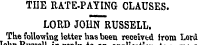
TIIE RATE-PAYING CLAUSES . LORD JOI 1 N ~ RUSSELL . The following letter has been received from Lord John Russell , in reply to an application to name a time for receiving tho Deputation appointed . it tho public meeting on Wednesday last , in reference to the repeal of the Rate-paying Clauses in the Reform Act . Dow ning-street , Feb . 19 , 1817 . Sir , —Lord John Russell has desired me to inform you , that his time is too much occupied to enable him to fix a time for receiving the Deputation , on the subject of tbo repeal of eertain clauses in the Reform Act . * I am , Sir , your obedient Servant , Geo&qe K ? mt >» Edmund Stallwood , Esq .
Untitled Article
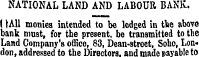
NATIONAL LAND AND LABOUR BANK . (( All monies intended to be lodged in the abovo bank must , for the present , be transmitted to the Land Company's office , 83 , Dean-street , Soho , Lon « don , addressed to the Directors , and made payable to Feareus O'Connor , Esq . AH accounts of monies over five pounds will be answered by private letter on receipt , all sums under that amount may be acknowledged by initials in the Star , and all will be acknowledged quarterly by private letter , containi ng a balance sheet of each account .
Untitled Article
Robbery of Jewels . —On Friday evening , the 19 th inst ., the residence of Alderman Wilaon , No . 3 , Euston-temce , Brighton , was plundered of nearly JE 300 worth of jewels . At twenty minutes before eight o ' clock in the morning three men had been oa the root of tho houso mending the pipes , which had burst in tho late thaw , and they lighted a fire in one of the bed-rooms , for tho purpose of melting tho lead which it was necessary to nBO . As soon as Mrs . Wilson heard that labours were iu the house sho ordered her maid to go into her bed-room and remain there while the workmen remained at their task , once in the course of the morning one of the men entered the
room and asked for a candle , and tho maid dcBired him to go down stairs for ene . She remained on tke spot till one o ' clock , when the men left the house , stating that they should not return , and that they were going to do a similar job at No . 0 , the Duke of St . Alban ' s . At half-past seven o ' clock everything appeared to be safe , but at twenty minutes to eight the lady ' s maid , bpon ascending the staircase , heard the door of the wardrobe creak , and sho soon discovered that the shelf on which the jewel , boxes stood , was quite empty . When the family were informed of what bad taken place , the Alderman directed the servants to watch the backs and fronts
of the houses , to prevent the escape of the thioves , and ran up stairs upon hearing a cry that the robbers were above . lie found that two oi the windows , one of which had been just heard to be shutdown , wero unfastened , and while he was descending the staircaso out walked two well-dressed men from the empty house , No . 2 , next door to his residence , one of whom had a caso under his arm , and both of whom were allowed to pnss without hinderanco or question by the stupid crowd who gathered together to render assistance . These persons , who no doubt wer o tho thieves , pulled the door after them with the greatest confidence , and talked to each other in a loud tone as they passed along .
Untitled Article
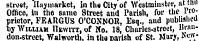
street , Iliiyinarket , in th « City of Westminster , at Office , in the sumo Street and Parish , for the 1 « - prietor , FEAUGUS O'CONNOR , Esq ., aud published by William Hewitt , of No . 18 , Charles-street , Urandon . street , Walworth , in the parish of St . Mar » , w \ - ington , iathe C « unty of Surrey , at tho Office , So . l *» Great WindmilUUeet , Haymarket , In tho City of n « tminster . ¦ Saturday , Frtraary 27 th , 1847 .
Untitled Article
* THE NORTHERN STAR . Febbpaby 27 1847
Tnu Printed By Dougal M'Fiowan, Of 16, Great Windmill-
tnu Printed by DOUGAL M'fiOWAN , of 16 , Great Windmill-
-
-
Citation
-
Northern Star (1837-1852), Feb. 27, 1847, page 8, in the Nineteenth-Century Serials Edition (2008; 2018) ncse.ac.uk/periodicals/ns/issues/vm2-ncseproduct1407/page/8/
-