On this page
-
Text (2)
-

Untitled Article
-

Untitled Article
Note: This text has been automatically extracted via Optical Character Recognition (OCR) software. The text has not been manually corrected and should not be relied on to be an accurate representation of the item.
-
-
Transcript
-
Note: This text has been automatically extracted via Optical Character Recognition (OCR) software. The text has not been manually corrected and should not be relied on to be an accurate representation of the item.
Additionally, when viewing full transcripts, extracted text may not be in the same order as the original document.
Untitled Article
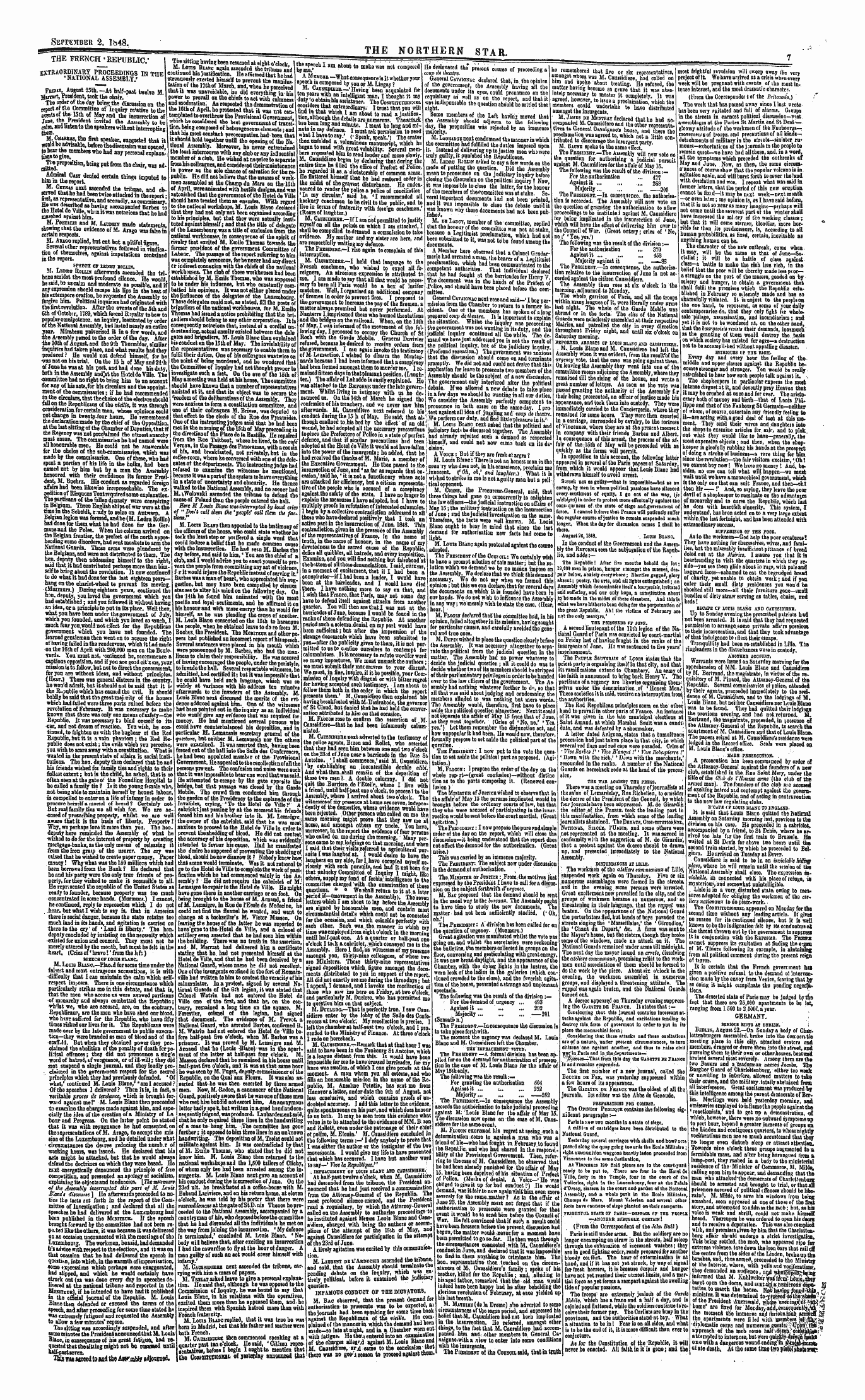
THE FRENCH 'REPUBLIC . ' EXTRAORDINARY PROCEEDINGS IN THE NATIONAL ASSEMBLY '
Fbhuy . August 25 th . —At half-past twelve M jbrriL't , President , took the chair . The order of the day being the diBcussionon the jeporUf tie Comnuttee of feqoiry re ' atWe to the e Tsntsof the 15 Ui of May and the insurrection of Jane , the President invited the Assembly to be cilia , and listen to tha speakers without interrupting them . wonld be advisable , before thediscnssion was opened tioM S * Je ? lcmbei 8 WlIOIiad ^ y p ^^^ W DS Pt 0 P 5 dK 0 D ' bSlBg ^ fr ° tbB CWr « WaS **" mISSS *"" " ^ ^ imputca to
JLa £ *? Z oert ascended the tribnae , and obserred thathehad bsentwiceattackedin thereport - first , as representative , and secondly , as comSxy ge ! L « f ^ r . bed ashatiDg accompanied BariS to M . Poot « i 8 and M . Lacdrijj made statements , showing that the evidence of M . Arago was faUeii certain respects . M . Abago replied , but cut but a pitifnl figure Several other representatives followed in vindication of themselves , against imputations contained in the report * __ _ * PKCH OP ISDBU SOLLW .
M . Lhjrtj Rollh afterwards ascended tha tribone amidst th
4 he 10 th of August , and the 9 th Tfcermidor . similar inquiries had taken place , and what results had they -produced ? He would not defend himself , for he « jras not on his trial . On the 15 h of May and 2 i-h of June he was at his post , and had done his duty , both in the Assembly and > tthe Hotel de Ville . The ¦ oommUtee had no right to bring him te an account for any of his act ? , for his circulars and the appgintment ef the oommissarieB ; if he had recommended in the circulars , that thechoice oi the electors should tall on the Republicans of the vieUle , it was through consideration for certain men , whoa opinions could cot change in twenty-four hours . De remembered thededarafionmade by the chief of the Opposition , at the last sitting of the Chamber of Deputiesthat if
, the Regency was not proclaimed the utmost anarchy must ensue . Tha commissaritB he had named were all honourable men . He could not be answerable for the choice of the sub-commissaries , which was made by the commissaries . One of these , who had spent a portion of his life in the hulks , had been named not by him but by a man the Assembly honoured with their confidence its former President , it . Buchez . His conduct as regarded foreign attain had been likewise irreproachable . The expedition of Risquons Toutrcquired some explanation . The partisans of the fallen dynasty were conspiring in Belgium . Three English ships of war were at the fame in the Seheldt , r .-ady to seizB on Antwerp . A Belgian legion was formed , and he ( M . Ledrn Rolling
had done for them what he had done for the Germans and the Poles . Wfcen tha column arrived on the Belgian frontier , the prefect of the north apprehending gome disorders , had gent muskets to arm the National Guards . Those arms were plundered by tha Belgians , and were not distributed to them . The hon . deputy then addressing himself to the right , said that it had contributed perhaps more than himself to bripg about the revolution . It now continued to do what it had done for the last eighteen yearshang on the chariot-wheel te prevent its moving . ( Murmurs . ) During eighteen yens , continued ths nan . deputy , you loved tha government which you had _ established ; and you Mowed it without having an idea , or a principle to put in its place . Well then
, what you have been under the government of Jnly . which you founded , and which you loved so < auch , I much fear you , would not effect for die Republican government which you have not founded . The learned gentleman then went on to accuse the right of having failed in the rendezvous , which it Lad made on the 16 th of April with 200 , 000 men on the Bcule-Tsrds . You must not , "on'inued he , recommence a captious opposition , and if you are good cifzm ? , your mission is to follow , but not to direct the government , for yon are without ideas , and without principles . ( Hear . ) There was general distress in the country he would admit , but it should not ba said that it v the Republic which has caustd the evil . It should boldly be said that the great majority of the houses
which had failed were three parts ruined before the revolution of February . It was necessary to make known that there was only one means of safety—the Republic . It was necessary to bind oneself to its -car , and not dream of reaction . You wish , he continued , to frighten us with the bugbear of the Red Republic , bat it U a vain phantom ; the Red Republic does not exist ; the evils which you perceive , you wish to 3 care away with a constitution . What is wanted in the present state of affairs is social institutions . The hen . deputy then declared that te and his friends wished fot family ties and ~ rigbi 3 to their fullest extent ; but is the child , he asked , that is so often seen at tha gate of the Foundling Hospital to be called a family tie ? It it the young female wh ) ,
cot being able to maintain herself by honest labour , is compelled to enter on a life of infamy in order to procure herself a moraal of bread ? Certainly not . Bnt real family ties wa all wish for . We are accused of proscribing property , whilst we are well aware that it is the basis of liberty . Property ! Why , we perhaps lova it more than yon . Tha hon . deputy here reminded the Assembly of what he -wished to do for the interest of property by creating mortgage-banks , a 3 the only meins of releasing it from the iron grasp of the usurer . The cry was raised that he wished to create paper money . Paper money ! Why what was the 150 millions which had been borrowed from the Bank ? He declared that
he and hii party were the only trus friends of property , for they wished to make it accessible to all . fie represented the republic of the United States as ready to founder , because property was too much concentrated in some hands . ( Murmnre . ) I cannot , he continued , reply to reproaches which I do net hear , but what I wish to say is . that in America there is social danger , because the state retains too much land in its hands , and agitation is carried on thereto the cry' of 'Land is liberty . ' The hpn . deputy concluded by insisting on the necessity which existed for union and concord . Tney must aat ba merely uttered by the mouth , but must ba felt in tha heart . ( Crie 3 of'bravo ! 'from the Ufj )
iPZJCH OF LOUIS BLAKC . M . Loeis Blanc . —Placed for some time under the falsest and mo 3 t outrageous accusations , it is with difficulty that lean maintain the calm which selfrespect imposes . There is one circumstance which particularly strikes me in this debate , and that is , that the men who accuse us were avowed partisans of monarchy acd always combatted tha Republic ; vbrlat we , who are accused , are , on the eontrary , Republican ? , are the men who have shed our blood , who have suffered far the Republic , who have fifty times risked our lives for it . The Republicans were made over by the late government to public execration—xhey were branded as men of blood and of the scaffold . But when they obtained power they
proclaimed the abolition of the panalty of death fcr political offences ; they did not pronounce a sing ' e word of hatred , of vengeance , or of ill-will ; they did aiot suspend a single journal , and they loudly proclaimed in the government respect for the sacred principles which they had previously defended . ' Of what , ' continued M . Louis Blanc , ' ' ami accused ? Of the speeches I delivered ? Then it is , in fact , a veritable proas de tendance , which is brought forward against me ! ' M . Louis Blanc then proceeded to examine the charges made against him , and especially the idea of the creation of a Ministry of La bonr and Progress . On the latter paint he stated that it was with repugnance he had consented , on theiepresentationsofM . Arago , to accept the mis
lion of tha Luxembourg , and he detailed under what circnaitances the decree reducing the number of working hours , wa 3 issued . He declared that his acts might be attacked , but that he would always defend the doctrines on which they were based . He Efxt energetically denounced the principle of free competition , and presented an apology of socialism , explainiog its objects and tendencies . [ The nVtmun ¦ of the Az&embly interrupted this part of M . Louis Ji ' anc e discoune ] lie afterwaidsproceeded to notica the laots tet forth in the report of the Committee of Investigation ; and declared that all the speeches he had delivered at the Luxembourg had been published in tha Mikitstjb . If the Bpeech brought forward by the committee had not been repa Jed like the others , it was because it was delivered on an occasion unconnected with the meetings of the
Luxembourg . The workmen , be said , had demanded bra advice with respect to tha elections and it was on that occasion that he had delivered the speech in question , into which , in the warmth of improvisation , « ome expressions which perhaps were exaggerated , tad slipped , and which he would certainly have struck out ( as was done every day in speeches delivered at the national tribune and reported in the Mosihur ) , if he intended to have had it published in the official journal of tha Republic M . Louis Blanc thtn defended or excused the terms of the speech , and after proceeding for some time stated he was extremely fatigued and requested the Assembly to allow a few minutes' repose . Tee sitting wsi accordingly suspended , and after some minutes the Prasidentannounced that SL Louis Bianc , in oanseqoenca of his great fatigue , a » d requested that tha titling might not be reused until half-past seven . 7 us wh meed to uA the Aiarmbjf adjourned .
Untitled Article
The sitting having been resumed at eight o ' clock M . Loms Blakc again ascended the tribune and emtinued his justification . He affirmed that he had strenuously exerted himself to prevent the raanifestatum of the I 7 th of March , and . whea he perSed that it was unavoidable , he did everything in ' his power to prevail on the chiefs to act with calmneis K 5 S ? r i i A 8 rei ? 1 t « l fte demonstration of the 16 th of April , he protested that it was not contemplated to overthrow the Provisional Government , which ha considered tha brat government of trenail tion . being composed of heterogeneous elements ; and ttathu most constant preoccupation , bad teen that it should hold together nntil the opening of the National Assembly . Moreover he never entertained
, the least intercourse with any club or any influential member of a club . He wished at no price to separate from his colleagues , and considered their maintenance in power as the sola chance of salvation for the republic . He did not believe that the masses of workmen assembled at the Champ dn Mars on the 16 th of April , wereanimated with hostile designs , and was astonished that the government of the Hotel de Ville should have treated them as enemies . With regard to the national workshops , M . Loms Blauo declared that they had not only not been organised according to his principles , but that they were actually instituted against himself ; and that the title of delegate of the Luxembourg wa 3 a title of exclusion from the national workhouse ? , in consequenee of the spirit of
rivalry that excited M . Emile Thomas towards the farmer president of the government Committee of Labour . The passage of tha report referring to him was completely erroneous , for he never had any direct cr indirect connexion with the chiefs oi the national workhouses . The club of those workhouses had been established by M . Emile Thomas , who was supposed to be under his influence , but who constantly combatted his opinions . It was not either placed under the influence of the delegates of the Luxembourg Those delegates could not , as stated , fill the posts of brigadiers of the national workhouses , for M . Emile Thomas had issued a notice prohibiting that the brigadiers shonld belong to any other corporation . It ia consequently notorious thatinstead of a cordial
un-, derstanding , actual enmity existed between the dele gates and brigadiers . M . Louis Blanc then explained bis conduct en tha 15 th of May . The inviolability of the representatives was necessary to enable them to fulfil their duties . One of his colleagues was twice ob the point of being murdered , and he wondered rhat the Committee of Inquiry had not thought proper te investigate such a fact . On the eve of the 15 th of May a meeting was held at his house . The committee should have known that a number of representatives assisted at it , and that its object was to secure the freedom of the deliberations of the Assembly . They were anxious to form a constitution committee , and one of their colleagues M . Brivee , was deputed to
that effect to the circle of the Rue des Pjramides . One of tha instructing judges said that he had been met in the morning of the 15 th of May preceedin R in the directionof the Place de la Bastille . He repaired from the Rue Taitbout . where be lived , to the cafe Veraoa , in the Passage des Panoramas , with acousin of his , and breakfasted , not privately , but in the coffee-room , where ke conversed with ene of the delegates of the departments . The instructing judge had refused to examine the witnesses he mentioned , because it wasapartof the system toleave every thing m a state of uncertainty and obscurity . He thence walkfid to the National Assembly , and no sooner had M . iWolowski ascended the tribune to defend the cause of Poland than the people entered tha hall .
Sere II Louis Blanc teas interrupted by hud cries of " Don ' t call them the ' people call them the fac tioiu . " . . ' M . Loms Buse then appealed td the testimony of tha officers of the house , who could state whethee he toek the least step or prtffereda single word that could induce a belief that he made common cause with the insurrection . He had seen M . Barbes the day before , and said to him , ' You are the chief of a club , and I would advise you to exert yourself to prevent the people from committing any act of violence , f- r it wonld injure the Republic instead of serving it ' Barbes was a m » n of heart , who appreciated his suggestion , bnt may have been compelled by circum stanoea to alter hi « mind on the following day . On
the 14 th he found him animated with the most pacific and loyal sentiments , and he affirmed it on his honour and with more energy thaa he would for himself , as he was pleading the cause of another . M . Louis Blanc consented on the ldih to harangue the people , when he obtained leave to do so from M . Buchez . the President . Tha Mohitbub and other pa . pera bad published an incorrect report of his speech . Several seatenoea were placed in his month which were pronounced by 51 . Barbes . who had the manliness to claim their responsibility . He was accused of having encouraged the people , under the peristyle , to inyede the hall . Several respectable witnesses , he admitted , had certified it ; but it was impossible that he could have held such language , which was so
widely at variance with his address ten minutes afterwards to the invaders of the Assembly . M . Lquib Blanc next discussed the merits of the evidence adduced against him . One of the witnesses ha 4 been pointed out in the inquiry as an individual who woald give any evidence that was required for money . Ha had mentioned several persons who could have counterbalanced his depesitios , and in particular M . Lemacsois secretary general of the queiture , but neither M . Lemansois nor the otheis were examined . It wa 3 asserted that , having been forced out of the hall into the Salle des Conferences , hehad been appointed msmtxr of the' Provisional Government . Heappealedtotberecollecticnof all the person ? present . The confusion and noise weie such
that it was impossibleto hear one word that was said . He attempted to escape by the gate opposite the bridge , bnt thst passage was closed by the Garda Mobile . The crowd then conducted him through the garden of the Presidency to the esplanade of the Invalides , crying . 'To the Hotel de Villa ! ' A eabriolet just passing by at tha moment his friends forced him and his brother into it . M . Lems jgre the owner of the eabriolet . said that be was moat ' anxious to proceed to the Hotel de Ville in order to prevent the shedding of blood . Ha did not contest the accuracy of his deposition , wfcich wa 3 evidently intended to favour his causa . Had ha manifested the desire he supposed of preventing the shedding of blood , should he now disavow it ? Nobody knew how
that scene would terminate . Was it not rational to ' go to the Hotel de Ville to complete the work of pacification which he had commenced vainly in the Assembly ? He did net require the cabriolet of Mj Lemaigre to repair to the Hotel de Ville . He might have gone there in another carriage or on foot . On being brought to the house of M . Arnaud , a friend of M . Lemaigre , in Rue de 1 ' EcoIe de Medecine , hi could not find the flannel he wanted , and went to change at a bookseller ' s M . Victor Masson . On leaving the house of the latter he was reported to have ' gone to the-Hotel de Ville , and a colonel of artillery even asserted that he had seen him within the bnilding . There was no truth in the assertion , and M . Marrast had delivered him a certificate
stating that he . had not presented himself at the Hotel de Villa , and that ha had been deceived by a National Guara , wkoss name he did not recollect . One of the insurgents confined in the fort of Romainville had written to hint to contest the veracity of his calumniator . In a protest , signed by several National Guards of the 6-h legion , it was stated that Colonel Watrin had not entered the Hotel de Ville one of tba first , and that he , on the contrary , remained a long time on tha square . M . Foiestitr , colonel of tha legion , had signed that document . The evidence of M . Prevot , a National Guard , who arrested Barles , confirmed it . M . Watrin had not entered the Hotel de Villa before half-past five o ' clock , when M . Barbes was a
prisoner . It was proved by M . Lemaigre and M . Arnaud that he ( Louis -Blanc ) was in the apartment of tha latter at half-past four o ' clock . M . Masson declared that he remained in his house until balfrpast five o ' clock , and : it was at that same hour he was seen by M . Puget , deputy-oommissioner of the Republic , ou the Quai aux FJenrs . It was also asserted that he was then escorted by three armed men . Now , M . Redon , s cannoneer of the National Guard , positively swore that h » was one of those men who met him bntdid not escort him . An anonymous letter badly spelt , but written in a good hand andeqnsequentlyfeigned , was produced . Laubardementsaid , that he only required three lines in the handwriting of a man to hang him . The committee has gone further ; it opposed to him three lines in an unknown handwriting . The deposition of M . Trelat could not militate against him . It was contradicted by that
ofM . Emile Thomas , who stated thst he did not know him . M . Louis Blano then returned to the national workshops and the 1 , 500 tailors of Clichy , of whom only ten had been arrested among the in * eurgents . M . Louis Blano nextgave anacconntof his conduct during the insurrection of June . On the 23 rd n ! t . he breakfasted at a coffee-house with M . Baband Lsriviere , and on his return home , at eleven o ' clock , he was told by his porter that there were raisembkmcns at the gate of St D ; nis Thence he proceeded to the National Assembly , accompanied by a countryman of bis , who deposed before the committee that he had dissuaded all tha individuals he met on the way from joining the insurrection . ' My defence is terminated , ' concluded M . Louis Blano . ' Nobody will believe thaft , after exciting an insurrection I had the cowardice to fly at the hour of danger . A man guilty of such an act would cover himself with infamy . '
M . Cabssidierb next ascended the tnbtme , carrying with him a mass of papers . M . Trilat asked leave to give a personal explanation . He said that , although he was opposed to the Commission of Inquiry , he was bound to say that Louis Blanc , in his relations with the operatives , excited them more than he appeased them , and he inspired them with Spanish hatred more than with French fraternity . M . Louis Busg replied , that it was true he was bom in Madrid , but that his father and mother were both French . . ...
M . Caus-idikbb then commenced speaking at a quarter past tan o ' clock . He said , ' Cit ' ien repregentaUres , before I begin I ought to mention that tha CojtxnoiKStai . of jwtepl&v wjianacwl that
Untitled Article
by ^ m * ° * ° mak 6 wa ' composed A Mkmbke —What conBequenceis it whether your Bpeech is composed by you or M . Lingay ? tJrL Cads " « srii ..-. ' Having ' been acquainted for XUTj " - \ 5 wteUigent man , I thought it my SaJl ? . ? ? \ ' 8 tance . The Constituiionnbl «? Jis ! "i ^ at " ^ ordinary . I trust that jou will t £ n jffc fll ^ A am aboafc to "ad a jtiatificahn hi , tb ^ deteils are numerous . Tneattack fau . been long and minute . I nut be long and miw ^ jf ? nce ; l mMt a * Permission to read SSif i ? 5 * 8 ay < , S P eak - P eak - '» The orator then unfolded a _ voluminous manuscript , which hs began to read with great volubility . Several members . requeued him to read louder and more slowly . M . CausBidiere began by declaring that daring the entire time hei filled the office of Prefeot of Police , he regarded it as . a diotatorihin of cnmmnn sense .
tie flattereU himself that he had restored order in the midst of the gravest disturbance . He endeavoured to render ths police a police of conciliation 'In my circular , ' said he , « I reeommended all hackney coachmen to be civil to the public , and to live m terms of fraternity with foreign coachmen . ' ( Roars of laughter . ) M . CAtSEiBttBB .-If I am not ; permitted to justify myaelf on all the points on which I am attacked , I shall be compelled to demand a coEmission to take evidence . My mother and my sister are here , and are respectfully waiting my defence . . ThePHE 8 iDESx .-I rise again to complain of this interruption .
M . Caihsimbiu :. —I held that language to the Freaoh coachmen , who wished to expel all . foreigners , An atrooious expression is attributed to me . I am made to aay that all that would be necessary to burnjril Paris would be a box of lucifer matches . Well , I organised an additional company of firemen in order to prevent fires . I proposed to the government to increase the pay of the firemen , a matteralwajspromised but never performed . At Nanterre I imprisoned thoBe who burned thestations and the bridges on the railroad . When , on the 14 th of May , I was informed of the movement of the following day , I proposed to occupy the Church of St Roch with the Garde Mobile . , General Duvivier refused , because he desired to reoeive orders from
the government . I can again invoke the testimony ofM . Lamartine . Iwished to diaai m the Montaenards because I had been informed that a conspiracy had been formed amonRst them to murder me . I remained fifteen dajs inthatpleasant position . ( Langh ? ter . ) The affair of Lshodde is easily exphiced . He was attached to the Refobmk under the late government . Whilst living in intimacy with us he denounced us . On . tha 14 th of March he signed the confession of his treachery , and we never saw hira afterwards . M . CawBidiere next referred to his conduct during the 15 h of May . He said , that although coBfined to , his bed by tha effect of an old wound , he had adopted all the necessary precautions to place the Prefecture of Police in . a state of perfect
defence , and that if similar precautions had been adopted at the Hotel de Ville it would not have fallen into the power of the insurgents ; he added , that he had received the thanks of M . Marie , a member of the Executive Government . He then passed to the insurrection of June , and' as far as regards that occasion , ' said he , ' it is not a functionary whose acts are attacked for efficiency , but a citizen representatire of the people who is accused of a conspiracy against the safety ef tha Btate . I have no longer to explain the measures I have adopted , but I have to multiply proofs in refutation of interested calumnieH . I begin by a collective contradiction addressed to all those who have declared positively that I took an active part in the insurrection of June , 1848 . This
contradiction , given in the presence of the Assembly of tha representatives of France , in the name of truth , in the name of honour , in the name of my devotedness to the sacred cause of the Republic , defies all quibbles , all hatreds , and every inquisition . Examifie , and you will find nothing but faleehood at the bottom of all thoM denunciations . I said , citizens in a moment of excitement , that if I had been a ' conspirator—if I had been a leader , I would have been at the barricades , and I would have died there . I have nothing more to say on that , and I wish that France , that Paris , may not some day have to defend itself againBt attacks from another quarter . Ton will then see that I was not at the barricades of June , beoausB I would be found in the ranks of those defending the . Republio . At another
period Buch a solemn denial on my part would have been sufficient ; but after the impression of tho strange documents which have been submitted to you—after tho publicity given to them , it ia not permitted to us to canfine ourselves to contempt for calumniators . Itisnecessary to refute wordfor ward so many impostures . We must unmask the authors ; we must submit their mar . ceuvres to your dis » ust . We jauBt , in fiae , inspire , if it be possible , your Commission of Inquiry with disgust or with bitter regret for having accepted , such testimony . I am about to follow them both in the order in which the report presents them . ' M ^ Caussiiiiere then explained his having breakfasted with M . Disirabode , the governor ef St Cleud . but denied that he had held the conversation attributed to him on that occasion .
M . Flqcoji rose to confirm the assertion of M . Caussidiere—that he had been infamously calumniated . . M . Cau 38 idiebe next adverted to the testimony of the police agents , Bczon and Rollet , who asserted that they had . seen him between one and two o ' clock on the . 23 rd of Junenear a barricade in the Rue St Antoine * . 'Ishall commence , ' said M . Caussidiere , 'by establishing an . incontestable double alibi . And what then . shall remain of the deposition of those two men ? ., A double , calumny . I did not quit the Barriere de l'Etoile , where I live with a friend , until half-past one o ' clock , to procee 1 to the Assembly , where I arrived about two o ' clock . The witnessesof my presence at home are seven ,
independently of the domestics , whose evidence wonld have beeurejepted . Other persons who called on ma the same morning might prove , that they saw me at home , and amongst others my uncle . You have moreover , in . the report the evidence of four persons . who called on . me during the morning . Many persons came to my . lpdgiugs on that morning , and when I said . that their viBits . referred to agricultural pnrsuitslwaalaugliedat . I would desire to have the laughers on my Bide , for I have occupied myself seriously with Buch puratuts , and had it not been ftr that unlucky Committee of Inquiry I might , like others , supply my fund offeebla-in telligence to the committee charged with the examination of those questions . * « We shall return to it at a later period if—( movement in the Assembly ) . The seven letters which I am about to lay before the , Assembly are signed by honourable men , and contain most circumstantial details which could not be concocted
for the occasion , and which coincide perfectly with each other . Such was . the . manner in which my time was employed from eight o ' clock in the morning until half . past one . At a quarter or halt-paBt one o ' clock I toik a cabriolet ,. which conveyed me to the Aasembly . . Here I find , as witnesses of my presence amongst you , thirty-nina colleagues , of whom two are Ministers . Those thirty-nine representative ^ signed depositions which , figure amongBt the documents distributed to you in support of the report . All did not exactly see me during the three days ; but I appeal , I demand , and I invoke the recollection of those who saw me here on Friday , at two o ' clock , and particularly M . Ouclero . who has permitted me to question him on that subject . M . Decline—That is perfectly true . I saw Caussidiere enter by the lobby of the Salle des Confe . rences at two o ' clock ; My recollection is precise . I left the chamber at half-Bast two o ' clock , and 1 procseded to the Ministry of Finance . At three o ' clock I rode on horseback .
M . Caussiduksb . —Remark that at that hour I was said to have been in the Faubourg St Antoine , which is a league distant , from this . It would have been impossible fcr me to have crowed barrioades , far my knee was swollen , of which I can give proofs at this moment . A man whom you all esteem , and who fills an honourable mission in the name of the Republic , M . Anselme Petetis , ha 3 sentme from Hanover a letter , under date the 9 th of AngUBt , not less conclusive , and which contaiss proofs of undoubted accuracy . I add this letter to the evidence ,
quite spontaneous on his part , and which does honour to us bath . It may ba seen from this evidence what value is to ba attached to ths evidence of MM . B . zon and Rollett , even under the patronage of their chief of police , M . Etouin . ' M . Caussidiere concluded in the following terms : — ' I defy anybody to prove that I was either the author or the instigator ef the two movements . I would give my life to have prevented that which has occurred . I have but another word to say— ' Vive la RepulUque . '' ' ,. IMPSACHMBNT OF LOOM BtANC AHD CAUSSIBIERB . ;
At half-past twelve o ' clock , when M . Caussidiere had descended from the tribune , the President announced that he had just received a communication fern the Attorney-General of the Republic The aost profound silence ensued , and the President read a requisitery , by which the Attorney-General called on the Assembly to authorise proceeding to bo instituted against Messrs Louis Blanc and Cans-8 diere , eharged with being the authors or accomplices of the attempt of the 15 th of May , ana against Caussidisrefor participation in the attempt of the 23 rd of June . A lively agitation waB excited by this commoBwation .
M . Laurent dk i'Ardechb ascended tbe tribune , and said , that the Assembly should temroatethe pending debate on the inquiry , whieh wia entirely political , before it examined the judioiary question . JHFAMOUS CONDUCT OF THE DICTATORS . M . Bac observed , that the present demand for authorisation to prosecute wa « to be expected , ai the journals had been speaking far some time baoK against the Republicans , of the vieiUe . He complained of the manner in which tha demand had been mide—so late at night , andia a Chamber worn out with fatigue . Hs the / a entered into an examination of the charges alleged agaiast M . Louib Blano ana M . Cftatiidiere , ar . d came to the conclusion ^ that there was no go ^ i teuton to proceed against them .
Untitled Article
He designated the present course of proceeding a coup de theatre . General Cavaionac declared that , in tho opinion of the government , the Afsembly haviug all the documents under its eyes , could pronounce on the requiBitory as woll as on tho report , and that it was indispensable the question should be settled that sight . Some members of the Left bavin * moved that the Assembly ahould adjourn to the following day , the fropo 3 ilion was rejected by an immense majority . M . Laoranob next condemned the manner in which the eommittee had fulfilled the dutiei imposed h ' pob it . _ Instead of delivering un to justice men wh » wava
truly guilty , it punished the Republicans . M . Lbdru Rcxlin asked to say a few words on the mode of putting the question . Did the Assembly mean to pronounce on tha judiciary inquiry before closing the discussion on the political inquiry ? Now it was impossible to dose the latter , for the honour of the members of the committee was at stake . Severalimportant documents lad not been printed , and it was impossible to close the debate Wl it 5 Jjnow" those documents had not been pubft , - 'Z \ " > me mberof toe committee , replied that the honour of the committee waB not at stake because a Legitimist proclamation , which had not dSmente d * > WM Mt ^ fount * S «*
AMember here observed that a Colonel Gandarmerie had arrested aman , the bearer of a Legitimist proclamation , winch had been communicated to the Sfftt ' -TW ?"; J u ^ dividual deKd that he had fought at the barricades for Hem y V The document was in the hands of tho P S o Po ice , and should have been placed before the committee .
General Cavaionac next rose and said- ' I bog permiesion from the Chamber to return to a former incident . One of the members ha 3 spoken of a lone prepared crap de theatre . It h important to explain the Bituation . Whilst the inquiry was proceeding the government was not wanting in its duty , and the judioial inquiry continued all the while . The de . mand we have just addressed you is not the result of the political inquiry , but of the judiciary inquiry ( Profound sensation . ) The government was anxious that the discussion should come on and terminate promptly . We did not and epuld not desire that th h application for leave to prosecute two members of the
Assembly sbsuld be the subject of a new discussion . The government only interfered after the politioal debate . If we allowed a new debate to take place in a few dajs we should ba wanting in all our duties . We consider tha Assembly perfectly competent to pronounce in both caises on the same day . I protest against all idea of juggling acd coup de theatre . i Wa perform our duty , and find little pleasure in it . ' \ M . Louis Blahc . text aBtod that the political and judioiary fact * ba discussed together . The Assembly had already rejected such a demand as ' respected himself , and could not aow cenw baok on its
decision . A Voicb : But if they are fresh oharges ? M . Louis Blanc ' : There is net an honest man in the coun ' ry who doss not , in his consciencai proclaim me . inuocent . ( ' Oh , oh , ' and laughter . ) What it is withed to strike in me is not aguilty man but a political opponent . M . Cobnb , the Procureur-General , said , that three things had gone on concurrently to enlighten the law officers—the judicial instruction on affairs of May 15 ; the military instruction on the insurrection of June ; srnd tha judicial investigation on the same . Therefore , the iacts were well known . M . Louis Blanq ought to bear in mind that since the last demand for authorisation new facts had come to li'ht . M . Lodis Bianc again protested againBt the course adopted ;
The President of the Com en ,: We certainly wish to have a prompt solution of tais matter ; bnt the solution which we demand we by no means impose on the Assembly . We declare that we think this demand necesBajy . We' do not say when we formed this opinion ; but this we can declare , ' that for several days the documents on which it is founded have teen in ourhanda . We do nst wish to influence the Assembly in any way ; we merely wish to state the case . ( Hear , hear . ) M . Flocon deo ' ared thafthe committee had , in his opinion , failed altogether in its misBion . haviBg sought for particular causeB , and carefully avoided the general and trne ones .
M . Dupin wished to place the question clearly before the Assembly . It was necessary altogether to separate the political from the judicial question in the matter . The Assembly had no power whatever to decide the judicial question ; all it could do was to decide whether two of its members should be stripped of their parliamentary privileges in order to be handed over to the law tffieers of the government . The Assembly had nothing whatever further to d * , bo that all that was said about judging and condemning the membets alluded to was nothing but mere words . Tho Assembly would , therefore , firat have to place aside the political question altogether . Next it could not separate the affair of May 15 from that of June , ; rs they went together . ( Cries of 'No , no , ' 'Tea , jqb . ' ) Let them remember the disjunction act , and how unpopular it had been . He would now , therefore , formally propose to set aside the political part of the question .
The President : I now put to the vote the question to set aside tbe political part as proposed . ( Agitation . ) M . Flocoh : I propose the order of the day on the whole rep > rt —( great confusion)—without distinc tion as to the parts composing it . ( Renewed con * fusion ) The Minister of Jcsticb wished to observe that in the affair ' of May 15 the persons implicated would be brought before tbe ordinary cpurta of law , but that they who were accused of participating in the insurrection would be sent before the court martial . ( Great agitation . ) The Pre-ideni : I now propose the pure i > nd simple order of the day on the report , which will olose the disouBsion—it being understood that the report does not affect the demand for the authorisation . ( Great
noise . ) This was carried by an immense majority . The PttBEiDSKi : The subject now under discussion is the demand of authorisation . The . Minister of Jcsiicb : . From the motives just expressed by the President I have to call for a discussion on the subject forthwith d ' urgenee , f M . Bac proposed that the demand should be eent in the uBualway to the bureaux . The Assembly ought to have time to study the pew dsouments . The matter' had not been sufficiently Btudied . ( 'Ok ,
Thg Pebsidknt : A division has been called for on the question of urgency . , ( Murmurs . ) Great agitation was manifested whilst the vote was goiag on , and whilst 'he . secretaries were reckoning the bulletins , the members collected in groups on the floor , conversiEg and gesticulating with grett energy . It was now broad daylight , apd the appearance of the Chamber , with the dying lights in the lustres , the worn looh : of tbe ladies in the galleries ( which continued crowded to the close ) , and the feverish
agitation of the house , presented a strange and unpleasant spectacle . The following was the result of the division : — For the demand of urgency ... 493 . Against it ... 292 . Majority ... ... ... —201 ( SensatKn . ) The President . —Inconsequence the discussion ia to take place forthwith . The moment the urgency was deolared M . Louis Blanc and M . Caussidiere left the Chamber .
THE IMPEACHMENT VOTED , The President —A formal division has been applied for on the demand for ' authorisation of proaeou-. tion in the case of M . Louis Blano for the affair of May 15 th only . The following was the result : — For granting the authorisation 504 Against jt ... e 252 Majority ... ——252 The President . —In consequence tie Assembly accords the authorisation to take judicial proceeding against M . Louis Blano for the affair of Ma ; 15 . The discussion now opens on the case of M . Caussidiere fer the same event .
M . Flcgon expressed his regret at seeing . suoh a determination come to against a m » n who was a friend of his—who had fought in February to found ( he Republic , and who had shared in the responsibility of the Provisional Government . Then , referring to the case of M . Caussidiere , he observed that ho had been already punished for the affair of May 15 , having been deprived of bis situation of Prefect of Police . ( Marks of denial . A Voice— 'He was obliged to give it up for bad conduct ! ' ) . He wonld demand , wasitfairio now again visifhim even more severely for the same , matter ? Ab to the affair of June 23 , the Asssmbly mast not forget that ; if th « autborieatioa to prosecute were granted for that
event it woald be to seed him before the Council of War . Hefelt convinced that if fluoh a veralt could have been , foreseen befc ** the present , dimBskn bad begun , tb * matter wouJA . nevecfor a moment have been permitted to go Bofar . lie then went though tbe oiresmBtauces coanected . -with ML Cauasidiere ' a conduct in June , and deolared that it was impossible to firsd in them anything to criminate bin . The aon . representative then touched on tha circumstances of M . Caussidiere ' s family ; spoke of his brother , killed for the Republic ; and , alluding to hisaged father , remarked that the old man would indeed have been happy had he after beholding the glorious revolution of February , at enoe yielded up his last breath .
. M . Matbikv ( de la Drome ) a ' so adverted to Borne circumstances of the same period , and . expressed his belief that M ., Causaidiere had not been implicated in the insurrection . He referred , amongBt other things , to the faot that M . Cauesidierp had accompanied , him a « d > other members to * General Cavaignao . witha . view to ester into some conditions with the insurgents . The PnjtaiDMi oi the Council Mid , that in truth
Untitled Article
» L n eill ? w Bred th ** fiT 0 ¦«* s'x representatives , amongst whom was M . Caussidiere , had called on ¦ m 3 f » h . - I abtmt treatin S- He refused » the matter having become bo grave that it waa abBo-IS 1 ° e 88 My ¦*? master ifc ° <« npletely . It was Si fu ' T , P ° laaW which the SXlVeS ^ h ™ di 8 tributed ¦ M . JamebdeMomtbay deolared that he had accompanied M . Caussidiere ana the other representstwes U Gneral Owi giw * hoUB e , and there the proolama ion waa agreed to , which not a little contributed to discourage the insurgent party . M . Baune spoke to the same effect
The PRKsiDENi .-The Assembl y will now vote on the _ question for authorising a judicial purBuit againBt M . Caus 3 idiere for the affair of May 15 . The following was the result of the division : — For the authorisation ... 477 Against it ... 268 Majority 209 _ I he President . —In consequence , the authorisation iB accorded . The Assembly will now vote en the question of granting the authorisatioo . to allow proceedings to be instituted against M . Caussidiere for being implicated in the insurrection of June , which will have the effeotef delivering him over to the Council of War . ( Great outcry ; cries of 'No , no ; " Yes , yes . ') The following waa the result of the division : — For the authorisation ... 370 Against it ... 458
Majority against it ... - —88 # President . —In coHsequence , the authorisation relative to the insurrection of June is not accorded againBt the citizen CausBidiere . The Assembly then rose at six o ' olock in the morning , adjourned to Monday . The ffhole garriaon of Paris , and all the troops within many leagues of it , were literally under arms last night . The whole of tho Garde Mobile was abroad or in the lorts . The elite of the National Guards were noifielosnly assembled at their respective Mairies , and patrolled the cit y in every direction throughout Friday night , and uatil six o ' clock on baturday morning .
REPORTED . ARRESTS 07 LOWS BLANC AND 0 AU 8 PIDIERE . . M . Louis Blano and M . CausBidiere had left the Assembly when it was evident , from the reauU ' of the urgency vote , that the case was going against them . On leaving the ARsembly they went into one of the committee rooms adjoining the Assembly , where they remained till the rising of the house , and wrote a great number of letters . As soon as the vote was passod granting the authority of the Assembly f .-r their being prosecuted , an officer of justice made his appearance , and took them into custody . They were
immediately carried to the Conciergerie , where they remained _ for Borne hours . They were then esoorted in a carriage , surrounded by cavalry , te the fortress orvincennes , where they are at the present momett ia company with their friends Barbea and Albert . In cpnaequence of this arreBt , the process of tbe affair of theilgth of May will be proceeded with as quickly a ? the formB will permit . . . In opposition to this account , the following letter appeared in several of the Paris papers of Saturday , from whioh it would appear that Louia Blanc had withdrawn himself to avoid arrest .
Strack not as gatlty—that fa impossible—but as an enemy , by men In whom politioal passtonB have silenced every lenrlment of equity , I go oat of the waj , [ jt m ' eloigns ) ia order to protest more effectually against the conasqamcea of tbe state of siege and . gavernimnt of force , I cannot b ; Iteve that France will patiently lufifer tbe regular course of justice to remain impended much longer . When tho day for discussion comes I shall be there .
August 26 , 1818 . . Iodis Blinc . In the conduct of the Government and the Assembly the Rbfobme sees the subjugation of the Republio , and adds : — The Republic ! After five months behold the lot ; 19 , 001 men in prison , hunger cmongBt the maaaes , deBpair beloir , aoxiety everywhere ; liberties gagged , glory absent ; poetry , the arts , and all lights eztiDguietaed ; an Assembly which denominates itaelf a lourgeoitie , irritated and Buffering , and our only hope , a constitution about to be made in the midst of these disaBtera / And this is what we have hitherto been doing for tbe perpetuation of the great Republic . Ab ! tho vlctima of February are not the only martjrs . ' '
. THE PRISONERS OF JONS . A second lieutenant of the 11 th legion of the National Guard of Paris was convicted by court-martial on Friday last of having fought in the ranks of the insurgents of Juno . Ha waa sentenced to five years ' imprisonment . , The Phuplb Sotjvsrain of Lyons states that the priest party is organising itself in that city , and that ito ramifications extend to Chamber / . An army of the faith ia announced to bring back Henry V . The partizans of a regency are likewise organiting themselveB under the denomination , of * Honest Men . ' TheBe societies it is taid , receive no interruption from the authorities . , The Red Republican principles seem on the other hand to prevail in other partB of France . An instance of it was given in the late municipal eleotionB at Saint Amand , at whioh Marahal Soult was a candi . date , and was defeated by a Bhoemaker .
A letter dated Avignon , states that a tumultuous procession had juBt taken place in that city , in which several red flags and red caps were paraded . Cries of ' Vive Barbes !'' Vive B ' anqui / ' Vive Bobesphne !' ' Down with the rich , ' * Djwn with the merchants , ' resounded in the ranks . A number of the National Guards on horaeback rode at the head of the procession .
THE WAR AGAINST THE PRESS . There was a meeting on Thursday of journalists at the salon of Lemardelsy , Rue Richelieu , to oensider the decree of the President of the Council , by which four journals have been suppressed . M . de Girardih the editor of , the Presse , took the leading part in this manifestation ' , from whioh acme of the leading journalists abstained . The ' DsBATS , CoNtxiTimoNNBL , NationAii , Siecle , 1 'Umom , and some others were not represented at the meeting . It was agreed in conformity with the suggestion of M . de Girardin , that a protest against the decree should be drawn up , and presented immediately to the National Afieembly . :
DISTURBANCES AT HUG . The workmen of the ateliers commimaux ef Lille ' , suspended work again on Thursday . Five or six numerous assemblages were formed in the streeta , and in the evening some persons were arrested . Great excitement now prevailed in the city , and the groups of workmen became so numerous , and' so threatening in their language , that the rappel was beaten . On the nppe&ranoe of the National Guard the perturbitors fled , but bands of boys paraded the streets singing the « Marseillaise , ' the Girondins /
the ' Chant du Depart , ' &c . A force was sent to the Mayor ' s house , but the rioters , though they broke some of tbe windows , made no attack on it . The National Guards remained under arms till midnight . The next day tho mayor issued an arreie , dissolving ( he ateliers comnmnaux , promising relief to the workmen until associations of them should be formed to do tko work by the piece . Abaut bix o ' clock in the evening , the workmen assembled in numerous groups , and displayed a threatening attitude . The rappel was again beaten , find the National Guards
turned out . A decree appeared on Thursday evening suppressing the GmiTE de Frakcb . It Btates that : — Considering that this journal contains inoeopant attacks against the Republlo , and exeltations tendiDg to destroy this , form of goverment In order to put in its place the monarchlal form ; . Considering that these attacks ani these excitations ara of a nature , under present circumstances , to turn oitizsns one againBt another , and thus to raise civil yarin Paris and in , tbe . depdrtmenta—Tj ' aoreeB—That from this day the Gazette se Fbahcb is and remains suspended . The first . number of a new journal , called the Bouche de Fbr , was yesterday suppressed within a few hours of its appearance . TheGAz&TiK ps Frame waB the oldest of all tie journals . Its editor was the Abbe de Genoude .
PREPARATIONS FOB COMBAT . The Opinion Pudliquk contains l \ a following significant paragraphs ¦ •—Paris is : t « w two months in a state of liege . A milli-n of cartridges have been distributed to the NatioBal Guard . Yesterday several carriages with shells aedhoRl'zeis passed along tbe quay going towards tbe Eoole Militalre ; fight ammunition waggons heavily laden proceeded from Tindetmes to the same destination . At Vinoennea 260 field pieces are In tho court-yard ready to be pui to . There are- four ia the Hotel de Ville , forty in the Temple , four in the court of the Tailtrles , eight ! n the Lnxombourg , four at the Palais d'Orsay , sixteen in the court and garden of the Natloaai Assembly , and a whole park in the Scole Mllitalro , Champs de liars . Mount Valerian and several other forts have rannons of siege planted on their ramparts .
FiuamruL biatb of parib—despair ep the people —ANOTHER &TBl'G 8 LE . CERTAIN ! ( From the Correspondent of the John Buli ) Paris is still under arras . Bat the soldiery are no longer encamping on straw in the streets , half asleep through the exhaustion of incessant watches ; they are in good fighting order , ready prepared for another bloody ooLfliot . The hour of extermination ia at band , and it' it has not yet struck , by nay of signal for freBb . horrors , it is because despair » nd hunger
have not yet reached tbeir utmost limits , and a martial force as yet forms a rampart against the swelling tide sf popular passions . The troops are extremely jealous of the Garde Mobile , which has a frano and a half a day , and is cajoled and flattered , while the soldiere continue 18 receive their former pay . The Carlists are busy in the provinces , and the authorities stand at bay . What a situation to be in ! Fear iB on all sides , and what is to be the end of it , it is more difficult than ever to conjecture . As for the Constitution of the Republic , it will never be enacted . All faith in it is gone ; nnd the
Untitled Article
most frightful revulsion will sweep away the ver > project of it . We have arrived at a crisis when every week will be pregnant with events of the moat intense interest , acd the moat dramatic character . ( From the CorreBpondei t of the Britannia . ) The week that has passed away since I last wrote has been very agitated and full of alarms . Gteups in the streets in earnest political discussion—vast assemblages at tbe Portes St Martin and St Deni — g ' . oomy attitude of the workmen of the Faubourgsmovements of troops , and precautions of all kindsdetachments of military in the aireete—sinister rumours—exhortations of the j jurnals to the people to remain quiet—we have had all these , and , in a word .
all the Bjmptoms which preceded the outbreaks cf May and June . Now , as then , the same circum * a ' ances of course show that the popular volcano is in BRitation again , and will buret forth tecever the land with desolation and woe . I repeat what wa 3 Baid in former letters , that the period of tbia new eruption cancot be fixed—it may be next week-next month —or even later ; my opinion is , as I have said before , that it iB not so near aa many imagine—perhaps will not come until the severest part oi the winter Bhall havelinoreaeed the mlery of tke working clatsea ; ti 3 . come slerner i Woodier , more hor * nble far than its predecesBore , is , according to all human probabilities , as fixed , certain , inevitable ai anything human can be .
The character of the new outbreak , come whea . it may , will he the same as that of June—Socialist ; it will be a battle of class against class—a battle to make the rich less rich , in the belief that the poor will be thereby made Igbb pcora Btruggle on the part of the masses , goaded on by misery and hunger , to obtain a government that Bhall fulfil the promises which the Republic established in February so Bolemnly made and has bj shamefully violated . It is unjust to thepeaplaon the one hand , to represent , as some of your daily contemporaries do , that they only fight fer whole-Bale pillage , assassination , and incendiarism ; and yet it ia not to be wondered at , on the other hand , that the bourgeoisie mitts their demands , inasmuoh as the granting of them would destroy the , basis on which Bociety has existed for ages—a destruction not to be accomplished without appalling disaster .
INTRIGUES 0 ? THE RICH . Every day and every hour the feeling of tie middle and upper cla ? sea against the Republic be * comes stronger and stronger . Yon wonld be reallj astonished to hear how suoh people talk against it . . The shopkeepers in particular express the most intense disgust at it , and devoutly pray Heaven that it may be crushed at onoe and for ever . Tbe aristocracy both of money and birth—that of LouiB Philippe and that of the Faubourg St Germain—neither of whorQj of ceurfo , entertain any friendly feeling to it—are acting wit |\ . a good deal of tact at this moment . They send their wives and daughters into the shops to examine articles for . ealr , and to pick oat what they would like to have—generally , tha
most expensive objects ; and theD , when the shopkeeper is gleefully rubbing his bands at tbe prospect of doing a stroke of business—a rare thing for him since the revolution—tbe fair visitora exclaim , ' Oh ! we oannot buy now ! We have no money 1 And , besides , no one can tell what will happen—we must wait until we have a monarchical government , which is the only one that can suit France , and then—oh ! then Mr - —! ' And , bo saying , they leBve the pom ? devil of a shopkeeper to ruminate on the advantages of monarchy and to corse the Republic , which last he does with heartfelt sincerity . This sygtem , I understand , has been acted on to a very large extent within . tha last fortnight , and has been attended with extraordinary success .
BDFFSniSOS OF IBB POOR . Ab to the workmen—God help the poor creatures ! They have nothing fbr thensRelves , wives , And families , but the muerably . insufficient pittance of bread doled out at the Mairies , I assure you that it is heartrending to visit the quarters in which they reside—you see them glide about in rag ? , with pale ami haggard faces—ashamed to eat the begrudged bread of charity , yet unable to obtain woik ; and if yea enter their small dirty residences you wou'd be shocked atill more—all tbeir furniture gone—small bundles of dirty straw serving as tables , chairs , a&d beds !
ESCAPE CF LOl'IS BLANO AVD CATTSS 1 DIBRE . Up to Sunday evening the proscribed patriots had not been arreBted . It ia said that they had requested permission to arrange . Eome private affairs previous to their incarceration , and that they took advantage of that indulgence to t fteot their escape . m Tranquillity had been re-established in Lille . Tto ringleaders in the disturbances were in custody .
ANOIHBR ACCOUNT . Warrant were issued on Saturday morning for the apprehension of MM . Louis Blanc and Cauasidiera by M . Bertrand , the magistrate , in virtue of the re . quisitory of M . Pinard , tbe Attorney-General cf the Republic . Several commissaries ot police , attended by their agents , proceeded immediately to the red . dance of M . GauBaidkre , and to the lodgings of M . Louis Blano , but neither CaunBidiere nor Lou Blano was to be found . They had quitted their lodgisga theprevionB evening , and bad not returned . M . Bertrand , the magistrate , proceeded , in presence af the Attorney-General of the Republic , to Bearch tha apartment of M . Caussidiere and that of Louis Blane . The papers aeizsd at M . CansBidiere ' s residence were lodged in the Record office . Seals were placed ca M . Louis Blanc ' s office .
- - MOKB PERSECUTION . . . A prosecution has been commtneed by order of the Attorney-General ajminat tbe founders of a new club , established in the , Rue Saint Mery , under ths title of the Club de VHomme arme ( the club of tha armed mao ) . . The founders of tbe cJub ate accused of exciting hatred atd contempt against the government of the Republic , and of acting in contravention to the new law regulating clubs . E-rCAPB ( F tODIS BIiANC TO SNOiAHD . It ib said that Louia Blacc quitted the National Assembly on Saturday morning last , previouB to tbB diviaion on his case . He proceeded in a cabriolet , accompanied by a friend , to St Denis , where he armed too late fcr the first train to BruBBels . Ha waited at St Denis for above two hours until the second train started , by which he proceeded to Belgium . He arrived on Tuesday at Dover .
Caufsidiere is said to be in an ixvbhbU hitii 8 § place , where he will remain until the session of the National Assembly ahall close . The expression rnviolable , as connected with his place of refuge , ia mysterious , and somewhat unintelligible . . Lisle is in a very , disturbed state , owing to met * surea adopted for obliging the woikmen . of the atehers nationaux to do piecework . The CoNBTiipnossBi . appeared on Monday for tha Beoond time without any leading article . It gives no reason for its continued silence , but it is well known to be the indignation felt by ita conductor * at the threat thrown out by the geveroment to suppress it in conjunction with tho Rbfobme . The Pass ? cannot suppress its exultation at finding the organ of M . Tbiers following its example , in abstaining from all political comment during the present reign of Urror .
It is certain that the French govertment liu given a positive refusal to the demand oi intervention made by the envoy from Venice , fearing that Iff bo doing it might complicate the pending negcefft * tions . - ! ; The deserted state of Paris uay be judged by the fact that there are 25 , 000 apartments to be let , ranging from 1500 to 2 500 f . a year .
GERMANY . SERIOUS RIOTS AT BERLIN . i Berlin , August 22 . —On Sunday a body of Clitt . lottenburgers assembled , broke into the derxocrttio meeting place in this city , attacked oratcra and meaberB , dragged or drove them into the street , and pursuing them to their own or other houses , beat and bruUed several most severely . Among them ara tla two Baners and a tradesman named Jacobs . 31 e Burgher Guard of Charlottenbnrg , either too weak or unwilling to intarfere , allowed matters to ttko their course , and the military totally abstained from all interference . Great excitement was produced Iw this intelligence among the parent dtmoorats of Berlin . Meetings were held yesterday mornin ? , and
emissaries employed ton , flame the people againat the reactionists , ' and to get op a , demonstration , of which , however , there were no outwatd ByrijptomBnp to poet hour , beyenda greater increase of groups tm theJLinden and contiguous quarter * , to whose nightly vociferations men are to much accustomed that they bc- longer even disturb sleep or attraot attBntien . Towards nine e ' oloek these groups augmented to a fermidable mass , aad after being harangued from a lamp-post , they rushed in a body to the ministerial residence of the Minister of Commerce , M . Mild ? , calling upon him to appear , and demanding that Un rnen wha attacked'the ideraecrats of Charlottenbnig Bhould be arrested and brought to trial , or that all prisoners ageneed of politioal ( fences Bhould be
liberated . M . Milde , to aave his windows from bah « smashed , BO 9 D appeared at one of tfco ? e ef the first story , and attempted to address the mob ; but , as hii voice is weak and shrill , could not mako himsaHT heard . Thereupon he was ordered to open his dsors and to receive a deputation . This was also complied with , andpromiaeBMvea by him that the Charlotten . burg affair should undergo a strict investigation . This being settled , tbe mob , who appeared ripe for extreme violence , tore down the iron barB that rail ( iff thecentre from the sideB of the Linden , broke up tha benches , and , thua armed , proceeded to the Minntrr ot -the Interior , where , with Telia asd vnciferntiim *
they demanded an audience , and wiietelTpbTTHeiBe informed that M . KoMwItw-wV ^ KSB burst open the doors , and Bent-Ma ^ nahJeions ' denotation to search the honse . HpB having fouBdlbk minister , it was determined to-pfojseftoHheiibife ^ of the President Auerswald , w > o > e ievenings ) iif f »{ nome are fixed for MpEdayrandr con 8 eqiienHy , ^ t the moment the immense and l ' uriohs : ino j ) arriren the apartments were filed withVknejntars ra' / ptj diplomatic corps and numerous gueats ; ' pljppta '' t&S approach of the mob tome half \ d (? en , ; coB ^ tae » i attempted to interpose , but Were quicj ^ ly-dmren d } wW one with a dangerous wound ending ' m iw ^ sVimoifc oi ate death , At tbe same time tw > piUoTpIutiftrac *
Untitled Article
011 Ut September 2 , Ib 48 . THE NORTHERN STAR .
-
-
Citation
-
Northern Star (1837-1852), Sept. 2, 1848, page 7, in the Nineteenth-Century Serials Edition (2008; 2018) ncse.ac.uk/periodicals/ns/issues/vm2-ncseproduct1486/page/7/
-