On this page
-
Text (1)
-

Untitled Article
Note: This text has been automatically extracted via Optical Character Recognition (OCR) software. The text has not been manually corrected and should not be relied on to be an accurate representation of the item.
-
-
Transcript
-
Note: This text has been automatically extracted via Optical Character Recognition (OCR) software. The text has not been manually corrected and should not be relied on to be an accurate representation of the item.
Additionally, when viewing full transcripts, extracted text may not be in the same order as the original document.
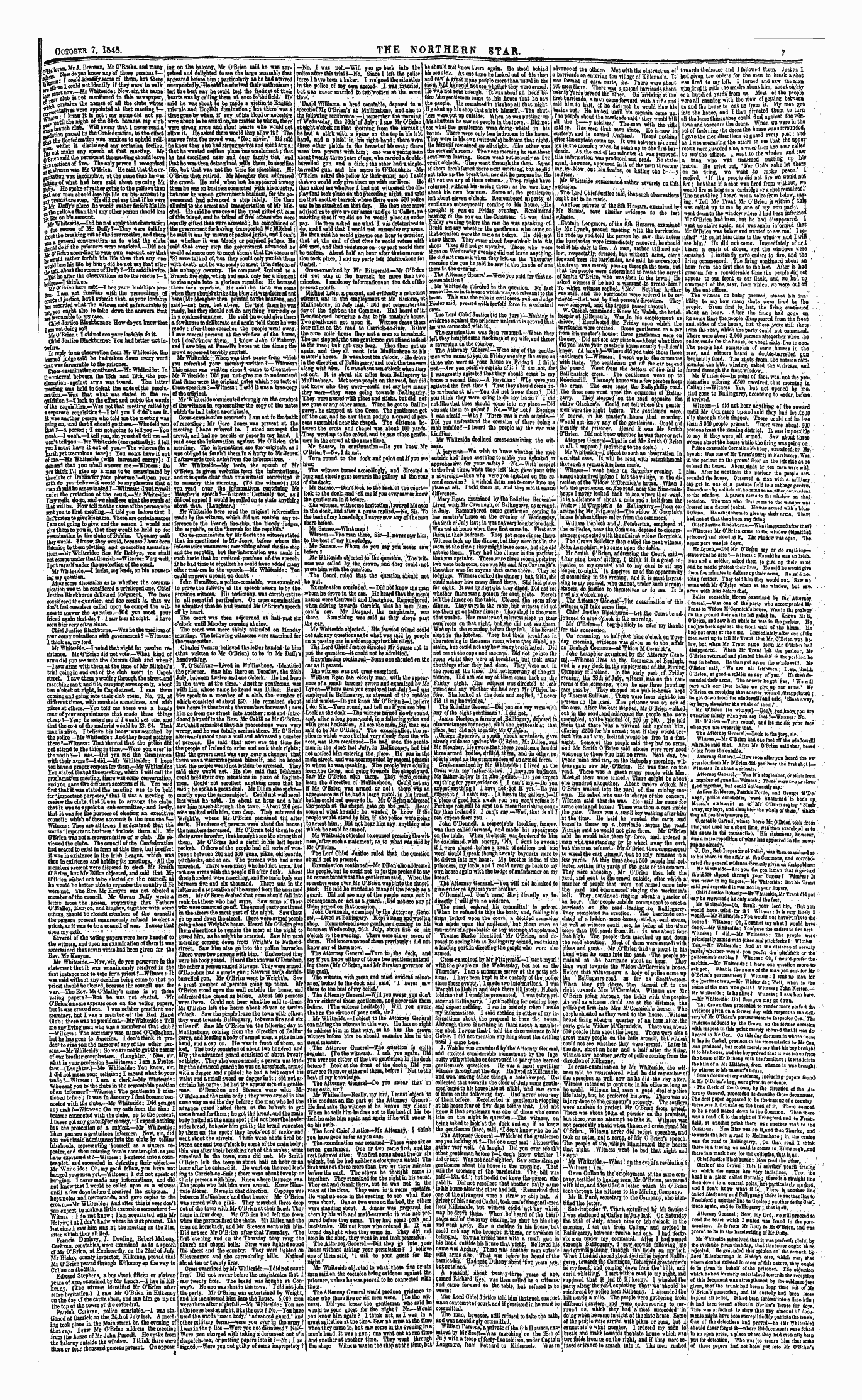
Untitled Article
^ Jlorim . Mr J . Brennan , Mr O'Rotk ., and many v ^ KowdoyoakDowanysf thoa persons?—! W&Z .. I ooaldidaBtUy ^ oms of them , bat there ffit 2 bers I could notIdentify if they were to waHc ; FiVourtnow . —Mr Whttedde : Now , at . the nuns i jfl »^ dab is not mentioned in this newspaper , ' Uh contains the names of all the elaba whose ** sents tives were appointed at that meeting ?—iSKf ess * I know it is not ; ray same did not ap"Tuntilthenrghfc of the-21 « t , becaute my clnb ^* i branch dab . Williwear that I never read a Nation passed by the Confederation , to the effect 2 ? t the Conf ederation was anxious to uphold reli- ' j ^ a , whilst it disclaimed any sectarian feelintr . fSnotmake any speech at that meeting . Mr fv'Brien eaid the persons at the meeting should leare a in sections of five . The only person I recognised lle hiirmanwas lib O'Brien . He eaid that the errtjisation -was incomplete , at the sane time he
puff . HegpokeofrataergoiagtotnegaUovsthaa mX any man ahasld lose his life en his aceosnt by ^ t premature step . Hedidnotuythatifkewere ^ j ! r DnfiyTs plies is wsnld rather forfeit his life Z , the gallows nun tint any other person ekould lose y life on his account . ¦ - * llr "Wbitesrde . —Did he not apply that dbserration to the rescue of Mr Dafty *—They were talking ! Lat the breaking out of the insurrection , and there rt » a general eonversatios as to wkat the elubs 5 T aM do if the priscners were conrieteo . —Did not u-O'Britu according to jtrar own account , say that CTwoald rather forfeit bis life thva that any one
vonld lose his Me by nra ? did be sot say Wat after a . talk abaot the resowtrf Drily ¦ ' —He said ittwice . jqH he after the cbwrvations as to the rescue !—I r ^ e—Ithink so . ^ . jfj O'Brien here ftt . J I beg yens lordship ' s peiv g . . I « a aoi fasrilis * with the proceedings of I jarts of justice , bat I submit that , as your lordship vj ^ je corded what tba witness said nBiarourabldto me , you ought also to take dawn the answers tfc&t ^ favourable to 07 ease . C hief Justice Blaekburce-: How do yon kcow &at jun n ot doing so ? jlr O'Brien : I aidnot eee your lordship do ft . Chief Jastiee Ekekburne ^ Ton had better not intarftre . _ __
In reply to as observation from Mr Whiteeide , the learned judge eaid he hadtaken down every word Hat was faro&nible to the prisoner . Cr os-examiaatiancontraued . —MrWhitesiSe : In the interval between the 15 th and 19 A , * ha pro * elsmation against arms was issued . The latter meeting was held to defeat the ends of tfce proclamation . —W&s that what was stated m fea requisition ?—3 . look : to the effect and nottoihe words of the requisition . — "Wat not that meeting called by a separate requisitioni—I tell you i didn ' t see it . It was another person who told me the meeting was going on , snd fiat I should go there . —Who t # ld yon that ?—A . person ; I an not eoiag to tell yoa . —Ton most . —I won't—I tell yon , sir , yonshaUteU me —I
won't teuton . —Mr Woiteside ( eBergeticallj | : I tell yoa I must have it out of yoa . —The witness ( in a harsh yet tremulous tone ) : Yon wont hare it out of me . —Mr Whiteaide ( with increased euergj ) : I den > an 3 that yon altall answer me . —Witness : Do yen think IM giro up a man tote assassinated ty the clubs of DubEnftryour pleasure?— 'Upon your oato . do jon -believe it would be toy pkafttre thst a osasfioaldbaaefiifiinatedf- ^ WitBesB * I : potmy » elf coder the protection of the court . —Mr White-idet Very wd !? 60-so , asd we shaftsee what the retult or { hatwiUbs . KowteUmetheoameofthepenonwho sent you to that meeting . —I told yon beloretbst 1 dontmeantogtvefcisname . There are certain names Ism not going to give , and the reason I woold not
gheifiemtojoni ? , that they would be held ap for assassination bv the cluba of Diftlin . Upon my oath they woold . Iknov , they would , because I tare been listening to them plotting and concocting assassinations- —Mr Whiteside : See . Mr Dobbyo , yoa sfasll not-escape under tbatflrarieh . —Witness : Very well , I pnt myself under the protection of the court . Mr Whitende . —I insist , my lords , on his answering ay questisn . After some discaaion as to whether the eoeafflunication wh to be considered a privilegedine , Chief Justice Bl&ckhurne delivered , judgment We have considered the-qaestion , and tie result is , that we dotft feel ourselves called upon to compel the witness to answer the question . —Did ysn meet four friesd again that day ? I saw hia at night . I have eeea hits very often since .
Chief Jostioe Blackburoe . —Was he the mediamof your commnnication 3 with government ?—Witness : Ithkk 80 , mylord . Mr Whiteside . —^ 1 voted that sight for passive re-Hitance . Mr O'Brien did not vote . —What kind of arms did yon see with the CurranClub and when ! —I saw arms with them at the time of Mr MitcheTs trial goingin and cut of the club room in Capel-Btreet . I saw them pvsdicg through the street , and marching rank and file , carrying arms openly , about ten o ' clock at sight , in Cupel-street . 1 saw them coming and going into their club room , No . 93 , at different times , with muskets sometimes , and with pikes at other ? . —Yon told me there was a bandy man of jour acquaintance that made these things
cheap !—Yes ; he asked me if I would eet one , and that the co-t of ( he material would be 13 = 6 i . That man is alive . I believe his house warsearched by the police—Mr Wfaiteside : Andtheyfonndnott&g there?—Witness : That showed that the police did rot attend to the thice ia time . —Were yoa ever * in the north?—I was . —Did yon see the Orangemen with their anna?—I did . —Mr Whiteside : I hose yon have a proper respect fox ; them . —Mr-Whiteside : You stated toat at the meeting ,-whieb . I will call the proclamation meeting , tnere was some conversation , and you gave five different aa * nnts of it . Yoa said Sratthafit was stated the meeting was to be held fcr'important purposes , * that it was . a meeting' to review the dubs , that it was to arrange the dubs , that it was to appoint a sub-committee ,- and la * tly , that it was for the purpose of electing an executive council : which of these accounts ia the true « ne £ —
Witness : They are all bee : I understand tbat the words ' important business * include them all . Mr O'Brien was not a representative of a' club . He reviewed the clubs . The council of the Confederation had ceased to exist in form at this time , but in effect it w&s in existence in tbe Irish League , which was then ia existence and holding its meetings . All the members present were disposed to eleet Mr Smith O'Brien , but Mr Dillcn objected , and Eaid that Mr O'Brien wished not to be elected on the council , as he would be better ab ! e to organise the country if he were not The Rev . Mr Kesyon was not elected a member of the council . Mr Gavan- Duffy wroteletter from the . prison , requesting that Fathers O ' Mallefi Ken ? on , and Hughes , together with some others , B&culd be elected members of the council i tbe persons present onammepsly refused to elect & priest , as it was to be a council of war . I swear that upon my oath . - ¦ = ' ¦ - •• " ¦ ' ¦ .: • • - ¦ : .: ••< :
Several of die voting papers were here handed to the witness , and upon an examination of them it was ascertained that seven votes had been given for the Rev . Mr Kenyan . ¦ Mr Whiteside . —Now , or , do yon persevere in the statement that it was ananimously resolved in tbe first instance Eot to vote for a priest '—Witness : It was said without any deeidon being come to that no priest should be elected , because the council was for war . —The Rev . Mr CMalley ' s name is on these voting papers ?—But he was not elected . Mr O'Brien ' s name appears once en tbe voting papers , but it was crossed out . I was neither president nor secretary , but I was a member of the Red Hand Club : there was no president—Mr Whiteside : Tell
me any living man who was a member ot that club ? —Witness : Tbe secretary was named O'Callaghan , but he has gone to Aaerica . I don't think it prnden » to eive yon the nsmea of any of the other , per-Bern—Mr Whiteside : So we are not to get tbe names of our brother conspirators .. ( laughter . ; ' Now , sir , what is your profession ' —Witness : I am .. » Protestant —( Laughter . )—Mr Whiteside : Yon know , sir , I did not mean your religion ; I meant what is your trade?—Witness : I am a clerk . —Mr Whiteade : Who sent yon to the dubs in the respectable position of an informer I—Witness : The gentleman I mentioned btfore '; it w&s in January I first became connected with the clnbB . —Mr Whiteade : Did ypn get any cash?—Witness : On my oath from the time I
became connected with the clubs , np to the present , I never got any gratuityWfiffljey . - iexpestnothing bat the protection of s subject . —M * Whiteside : Then yon are a gratuitous informer ; Now , eir , did yoa not obtain admittance- into the clubs by telling falsehoods , representing yourself as a sincere repealer , and then entering into ' a cannter-plot , as you have expressed it ?—Wimess : I entered into a counter-plot , atd succeeded in defeating their objeet ;—Mr Whiie-idet Oh , my eo : d fellow , yon have not hanged your men yet . —Witness : I did not speak of hanging . I never mads any informations , and did not know that I would be called upon as a witness
until s few days before I received the subpesoa . I kept notes and memoranda , and gave eepits to the crown —Mr Whiteside : And after tins ia over don ' t yon expect to make a little excursion somewhere \—Witn- -: I do not know ; lam acquainted with Mr HafrV I at 1 don't know where he isat present . The hsttiise 1 saw him was at the meeting on the 2 Ut , alter which they all fled . ' ¦ Francis Danlevy , J . Dowling , Rcberfc Mafcony . Corkran , constables , were examined as to a speech of Mr O'Brien , at Ecniscerlhy , on tbe 22 nd of July . Mr Blake , county inspector , Kilkenny , proved that Mr O'Brien passed throogh Kilkenny en the way to CuTauontheMih . _ _ " . _
Edward Stephens , a boy abant fifteen or ekteen yeara of age , examited by Mr Lynch . —I live in KilkeLny ( Tne witness identified Mr O'Brien after terse heotatien . ) I eaw Mr O'Brien in Kilkenny on the day of the cattle show , End saw him go uj on the top of the towet of tbe cathedral . Patriek Csrkran . police constable . —I was Bta . tionedat Carrickon the 2 ^ ih of July l ast . Ame ; tinz took place in the Main street on the evening of that cay . I « w Mr O'Brien address the meeting free ihe howe of Mr John Parcel ] . He tpoke from the fcalcoDy outside the wicdew . I thiE& there were toree or four thousand FeiMM present . On appear .
Untitled Article
ins on the balcony , Mr O'Brien said he was surprised and delighted to see the large assembly that appeared before him ; particularly as he had arrived bat the best way he could test the feelings of their hearts was by calling them at encetothe field . He said he was about to be made a yiotim to English misrnle and English domination ; but there was a time gone by when , if any of his blood or ancestors were about to be seii'd on , no matter by whom , there were strone arms and iwut hearts who would not allow it . He asked them would they al \ ow it ? The answer from the crowd was , ' No ; never . ' . Bj& said he knew they af » had strong nerves and stoat arms , ; that he wanted neither place nor emolument ; that
ha had sacrificed near and dear family ties , and that he was then determined with them to McriSea life , but that was not the time for Bpeeohimtl Mr O'Brien thea retired . Mr Mesgher then addressed the crowd . He eaid- when last he appeared among them he wm on buskess connected with his country , but now ke was on government business , for the government had advanced a step lately . He then alluded to the arrest and traasportation of Mr Mitehel . Hetaidhe wasoneof thi ? most gifted t ^ tiz 9 ns of this island , and he talked of five " others who were equally gifted that were arrested ; , he complained of the £ ovenimentfor havmg transported Mr Mitchel ; ' he said it was by mean of packed jurie-s sad I can't say whether it was tioody or periured jadgea . He
sad that every step the government advanced he would advance one to meet them ; that the ' scenes of * 93 were talked of , % nt they could only'pvtuslrthem with death , and he was ready to meet itiadefenceof his unhappy country . He compared -Ireland to a French fire-ship ,-rhich had susk only fer a moment to rise again into a glorious republic : He hurraed them fora republic He Midiha tice was come when they sbcuM-strike the b ! ow ; itmsa decreed not here ( Mr Mesgher then pointed tothe heavens , and said)—not here , but above . He'toH them he was ready , bnt they should not do anything hurriedly or in a confusefhnanner . He said he would give them a fewhonn to deliberate and asain "told them he was
ready ; after these speeches the -people went away . i I saw Eererd persons attbewinflcw of tbe hoaae , bnt Idorft-know then . X toow John O'Mahomy , ' - and I saw him at Puroell's honse at the time ; the crowd appeared terribly exoited . Mr Whiteside—When was thst paper from wttioh yon refreshed your memory written?—Witness" : This naper was written sieca H < oame to Clonmel<—Mr Whiteside : Didyaa not ^ give me to understand that those were the original notes which yon todk of thosef&eeches r—Witness : I eaid it was a tree copy oftbeonginal . Mr Vhiteside commented strongly on the conduct of thswitae ** in representine the copy of the -notes which ^ te had taken as « rigmsls .
Crofs-examfoation resumed ; I am sot in ibe-habit of reporting ; Mr Gore Jones was present « t the meeting I have referred to . I stood amongst th « crowd , and had no pencils or paper in my hand . I read over the information against Mr O'Brien this morakg . The infornmtioM are the orighrals , as I was obliged to furnish them in ai hurry to Mr Janes ; I afterwards took nnte ! from the informations . ¦ Mr Whiteside—My lords , tae speech of Mr O'Brien is given verbatim from the informations , andit is quite clear that this witness' committed it to taemory tbia oonunfr . (^ 6 the witaesi ») j Did youTeid over the informafioiM © mtearmg Mr Meigher ' a speech ?—Witnets : Certainly not , as I did not expect I wonld be called on to state any thing xbont that . ( Laughter . i ) " Mr Whiteside here read the original reformation made fey the witness , which did not contata any reference to the French fire-ship , tbe bloody Judges , tbe republic , or the' hurrah for the republic '
• Qfl te-exammatum bf Mr Scott tbe witness stated that he mentioned to Mr Jones , before whom , the information was sworn ; something about the fire-ship and the republic but the'information was made in such haste that he omitted portions of . tfae apeechi If he had time , to recollect he could have added many other tnat'ers to the 'speech—Mr Whiteside : You ceuM improve upon it 00 doubt ¦ .- ¦ ' . John Hamilton , a police-constable , wsg examined to prove the delivery ef the speech-sworn to by the previous witness . His testimony , was corroborative in all essential particulars . On cross examination he admitted that he ind teamed Mr O'Brien ' s speech off by heart . The court was then adjourned at half-past six o'clock until Monday raorning at nine . The court was more thinly attended on Monday moraing . The following witnesses were examined for the prosecution . - ¦¦
. Charles Vemon believed the letter handed to him ( thai written to Mr O'Brien ) to be in Mr Doff / a handwriting . ¦ ¦ T . O'Sullivan—Lived in Mnllinahone , Identified the prisoner . Saw him thereon Tuesday , the 25 th July , between twelve and one o ' clock . He had been in ihe town at the time . - Another gentleman was with him . whose name he heard was Dillon . Heard him speak to a member of a club , the number of which consisted of about 150 . -He remained about two hours in the street ? t ' ae numbers increased ; saw him go from one street into another ; met and - introduced himself tothe Rev . Mr Cabil ! a 9 Mr O'Brien . MrCahill remarked that bis proceedings were very wrene , and he was totally against them . Mr O'Brien
afterwards stood upon a wall and addressed a number of persons . - Ho said that aow > was the time for the people of Ireland to arise and seek their rights ; that the goveramen& « as very near a change ; that there was a warran&agarast himself ; and he hoped that the people wenldnot lethim be arrested . They said they would not . He also said that Irishmen could hold tkeir own situations in place of Englishmen . Gould not recollect anything more that he said ; he spoke a great deal . Mr Dillon also Bpokemostly upon the samesubject . Could not well recollect what he said . ¦ In about an hour and a half law him march through . the town . < Abe ' nt 200 persons walked with him , two deep . They returned to Wright ' s , where Mr O'Brien remained till after
dusk . Hnodreasofi persons were about the house ; the numbers increased . Mr O'Bnen told them to get their arms in -order , thst he . might see the strength of them . Mr O'Briea had a pistol in his left breast pocket . Others of the people had all sortB of weapons ; between 200 and 300 guns , pikes , old swords , pitchfor&F , and so on . The persons who had arms marched . There were many who had not arms . Did ¦ not we arms with the people till after dusk . Absut three hundred were marching , and the main body was between five and six thousand . There was in the latter and a separation of the armed from the unarmed men . Mr O'Bnen desired that nose should fall into rank hut those who had arms . Saw some of those who were manned gooff . The armed party continued
in the ttreat the mcit put of the night Saw them go np and do « a the street . Tbera were aimed people going about Wright's sense . Heard Mr O'Brien give them directions to remain the most of the night to guard him , as he might be arrested . Saw him next morning coming down from Wright'a te Fethaidstreet . Saw him also go into the police barracks . There were two persons with him . Understood they were his body guard . Heard that one was O'Donohue , the other a person samed Stevens . They were armed . O'Donobue had a sinele gun ; Stevens faad ^ a doublebairelled gun . Mr O'Brien went to Wright ' s . Siw a ercat number of ^ persons going np there . Mr O'Brien stood upon the wall outside the house , and addressed the crowd as before . About 200 persons
wf re there . Conld not hear what he said to them . Mr O'Brien left the house about eleven or twelve o ' clock . Saw the people leave the town with pikes ; they went towards BaHingany , between five and six miles off . Saw Mr O'Brien on the Mowing day in Mullinahone , comiag from the direction of Ballingarry , and leading a body of armed men , a pike in his hand , and a cap on . He was in front of tbera , on foot . The indy consisted of ab rat two hundred and fifty ; theadvasced guard consisted of abint twenty or thirty .. They also were armed ; apersoa wa 3 leid > ing the advanced guard ; he was on horseback , armed with a dagger and a pistol ; he had a belt round his waist and a small sward or dagger in it ; did not ascertain bis name ; he had the appearance of a
gentleman . O'Donohue and - Stevens were with Mr O'Brien and the main bedy ; they were armed in tbe same way as on the day before ; the man who kd the advance guard halted them at the baker ' s to get some bread for them ; be got the bread , and the main body halted at tie same spot ; did not hear the leader order bread , but saw him get it ; the bread waB eaten by them on the spot ; they broke ' out of racks and went about the streets . There were 8 hots fired between one and two o ' clock by some of the main body ; this was after their breaking out of the ranks ; some remained in the town , some did not . Mr Smith O'Brien left the town in about half in hour or an hour after he entered it . He went on the road leading to Carrick-on-Suir ; tbere were about twenty or
thirty ptrsota with hire . Knew where Cappage was . The people who left him were armed . Knew Ninemile ff ocse . Is was in that direction . Csppage was between Mullinahone ' and that house : Mr O'Brien was armed with a pike . They marched three deep out of the town with Mr O'Brien at their head . - The ; came in four deep . Mr O'Brien had left the town when the persons fired the thota . Mr Dillon and the man on horseback , and Mr Stevens went with him . Did sot see Mr O'Brien after that Thursday . The first evening and en the Thursday they rang the cknrch and chapel bells ; Fires were lighted round the street and the country ; They were lighted oa Slt ' evenamoa and . the sorroacding hills . Noticed about ten or twenty fire ? . •• . >
Crots-examined by Mr Whiteside . —I did not count fires ' . Did not swear before the magistrates that I eaw twenty fires . The bread was bought at Cop--way ' e . No one was shot in the tows . ' I did not join thepsrty . Mr O'Brien was entertained by Wright , and his ton stowed him into the house . 5 , 000 men wera there after nightfall . —Mr Whiteside : You are able to see beatat night , like thecats ? No . —Yen have used the words ' main bed ; , '' advanced guard , ' and other military terms—were you evtrin the army ? I was in the p lice . —Were you tol dismissed ? No ' . ^ - Were yon charged with" taking a document out of a despatch-box , or putting papers into it?—No ; I re signed . —Were you . not guilty of some impropriety ?
Untitled Article
—No , I was not . —Will yan go back into the police after this trial ?« -No . Since I left the police force I have been a baker . I resigned the situation hi the police of my own accord- Xwm married , but was Eever married to two women at tha same time '/ '' .: :... ' . . ; . .. ¦ . < v ; ..., ; . David Williams , a head constable , deposed to a speech of Mr O'Brien ' s at Mnllinahone , and also to the following occurrence : —I remember the morning of Wednesday , the 26 th of July ; I saw Mr O'Brien at eight o ' clock on that morning from the barrack ; he had a stick with a spear on the top in his left hand , and a pistol fc hia right hand ; there were three other pistols in the breast of his treat ; there were two persons with him ; ' one was ayoune nan
about twenty-three fears of age , who carrieda , doublebarrelled gun and a dirk ; the other had a singlebarrelled gun , and his name is O'Donohue . Mr O'Brien asked fie police for their Arms , and I said that we would only give them ap with our livei . He then asked me whether I had not witaened the display that took ? lnce on' the preoaSrag night * and told me that another barrack where tfcere were 500 police was to be attached on that day . He then once sort advised in to give on our anna and go to Callaa , re marking ; that if we did so ho would place us under pay . He tken asked me what I was determined to do , and t-said that I would not surrender my arms . He then-said he wonld giveme one hour tooensider , that at the end of that time be would return with
690 men , and that resistance on our part would then ' be useless , Abent half an hour after thatoonversation took place , I and tsy party left Mullinahone for Cashel . - ' - Gross-examined by Mr Fitzgerald . —Mr O ' Brien did not stay in the barrack for more than two minutes . I made my informations on the $ ; h of the present month . ' : ¦ ' - '¦ . : Hichiwl Tibin , * peasant , and evidestly a reluctant witnets , waa in tin employment « f Mr Kiokam , at Mullinahone . in July last . ' Did aot remember the day of the fighton the Common . Had heard of it . "Remembered bringing aiar to his master ' s house . Two gentlemen got upon it . Witness drove then four miles on fee road to Carricfe- « n-Snir . = Below the nine mile feonse they met * man on horseback . The oar stepped , the two gentlemen got off and talked
to tne man ; trat not very loeg . They then got up atain , and they all went into Mullinahone to his master ' s house . It was aboattea o ' clock .. He drove ia tbe direction of Ballingarry , and toskthe two wen along with aim . It was about ten o ' clock when they vet out . It is about six miles from Ballingarry to Multinaho&e . Met some people on the road , but did not know who they were—could not say hew many they were—they were going towards Ballingarry . They were armed with pikes and sticks , bnt did not see guns or any other arras . When he got to fiallinearry , he stopped at the Cross . The gentlemen got off the oar , and he saw them go into a crowd , of persons assembled neat the chapel . The distance between the cross and chapel was about 100 yards They went ap to the crowd , and he . saw other gentlemen in the crowd at the eame time .
Mr Sausse , in continuation—Do yon kttsw Mr O'Brien ? -No , I do nol . , Turn round to the dock and point out if yen see him : . . .. ' -.. The witness turned accordingly , and directed a long and steidy gass towards the gallery at the rear ofthedock :. ; . ¦ Mr S&uBte . —Don't look to the back of the courtlook to tne dock , and ( ell me if yon ever saw or knew the gentleman in it before .. ' . ,. ' . ' . - The witness , with some hesitation , bwered his eyes to the dock , and after a pause replied , —No , Sir . To the best of my knowledge , I never saw any of the men there before . . .. Mr Sausse . —What men ? " ' Witness—The man there , Sir—I never saw him , to the best of my knowledge . ,.
.. Mr Sausre . — Whoa do yon say you never saw before ? Mr Whiteside objected to Ihe qaeation . The witness was called by the crown , and they could not press him with the question . . The Court , ruled that the question should hoi he nut . ¦ ¦ : ¦ ' ., ' . ' ,.. . Examination continued , —Did not know the man whom he drove in the car . He heard that the men ' s names were Cantwell and DaHaghue . ' Remembered , " when driving towards Canick , that he met BiancoHi ' s car . Mr Deapard , the magistrate , was there . Something wsa said as they drove past . the car . . ¦ ¦ . .. .. ' . " .
Mr Whiteside objected ., His learned friend could not ask any questions as to what was said ' by people on a pacing car in evidence against his client The Lord Chief , Justice directed Mr Sauase not to put the question—it could not be admitted . Examination continued—Some one shouted en the car % s it passed . The witness was not cross-examined . William Egan ( an elderly man , with the appearance of a small farmer ) sworn and examined by Mr Lynch—Where were yon employed last July ?—I was employed ia BaUinearry , as steward of the outdoor relief works . —Do you know Mr O'Brien ?—I believe I do . - Sir . —Turn round , and tell me if you see him ? Look at the dock —The witness turned slowly round , and , after a long panBp , said , in a faltering voice and with great hesitation , , \ 1 see the man lxSir , that was said to be Mr O'Brien . * The examination , the . re . plies to which were elicited very slowly from the
witness , was then continued—He had * seen tha gentleman in the doofe last July , in Ballingarry , pot had not noticed him entering the , place . He was in the main street , and was accompaaied by several persons to whom he wa ^ speaking . The popple were . cp ' ming from . the Cross , and going towards , ttie . chajpel-jard . Saw Mr O'Briea with them . They jere , coming from the direction of Mullinahone , : Cqul < t not 8 » 7 if Mr O'Brien was armed or . pot ; there " was an appearance as if he had a large , pistol . , in his breast , bathe conld not swear to it . Mr O'Brjen , addressed the ' people at the chapel gate . on the , wal \ . Heard some of what he said ; he . wanted to know if the people would stand by hini if the police were going to arrest him .., Did not hear him say . anything else which he could be sure of . ,. ¦' . ; Mr Whitesidfe objected tocoutsel pressing the wit ness , after . such a statement , as to what was said by Mr O'Brien . ; " T .
The Lord Chief Jastioe ruled that the queition should not be pressed . > . .. Examination continued—Mr Dillon also addressed tbe people , but he could not in jnttice pretead to say he remembered what the gentleman said . . When the speeches were over , Mr O'Brien wentjnto the chapelyard . He said he wanted so manyqf the people " a « a guard . ' Did not see any of tfo people come out in consequence , or act as a gaard , ¦ , Did not see any of them armed on that ocoaiion . ¦ , ¦•/ . . ' John CftTaoasb , examwied by ft © Attorney . General , —Lived atBallingary . £ ept a linen and woollen shop . Remembered s « me gentlemen cpmijig to his house on Wednesday , 26 : h July , about five or . bix o ' clock in the evening . There were six or seven of them . Hadknownuoneof them previously : did net know any of thea now . . '
The Attorney General—Turn to , , the dock , and say if yon know either of those twe gentlemen stand ing there ( Mr O'Brien , and Mr Straban governor of the gaol ) . .. The witness , with great , and most evident reluctance , looked to the dock and said , 'I never saw them to the best of my belief . ' The Attorney General , —Will yon swear you don't know either of these gentlemen , and nevereaw them before . ( The witness hesitated ) . Will yoa swear that on the virtue of your oath , air ? , ; . \ Mr Whiteside . —I object to the Attorney General examining the witness in this way . He has no right to address him in that way ,, as he has the crown witness before him he should examine him in the
uiual manner ; . . . The Attorney General—The question u quite . regular . ( To the witness ) . I ask yoa again , Did yoa ever see either of the two gentlemen in the dock before ? Look at the front of the dock :. Did you ever see them , or either of them , before ? Nut to the best of my knowledge . . : The Attorney General-Do yon swear that on yaur oath , sir ? - , Mr Whiteeide—Really , my lord , I must object to this conduct on the part of the Attorney General-He first 8 sks the witness if he knovis my client ? When he tells him he does not to the best ot his belief , he asks him again and again if he wUl swear it onhi 3 oaths . _ _ .
.... Tiw Lord Chief JniKce-rMr : Attorney , I think you have gone as far as yon can ; The examination was resumed—There were six or seven gentlemen . One or two came first , and the rest followed after : The first oame about five 1 or nx o ' clock , but he had neither a dock , nor a watch ; The first was rot there more than two or three . minutes befere the next . The others he thought came in together . They remained for the night in hu house . They eat and drank there , but he was not in the room at tbe time . They were in'a room npstaiw .
lie went np once inthe evening to see what they wereaboutv One or two were on the bed , the others were standing about . A dinner was prepared . for them by his wife and maid-servant : it was not prepared before they came . They had some pots and beefBteaks . Did not know who ordered it . . It was broad daylight when they came in . They , did not stop in the shop , they went in and took possession . The Attornej > Gener 9 l . —Did they go into your house without asking yonr permission ? I believe one of them said , * 1 will be your gaeat for the niRht . ' ¦ . . . . ! . .. , .... . _
Mr Whiteside objected to what those 6 ve or six men said on the ooeasion being evidence against the prisoner , unless he was proved to be connected with them . ¦ ' ., . The Attorney General would produce evidence to show who thoae five or bix men were . ( To the witness ) . Did 70 a know the gentleman whoaaidne would be your gaest for the night ? No . —Would you know him again ? I think not , as I was in a great agitation at tne time . Saw no arms at the time when they came iu , but eaw some in the evening in a man ' s band , it waB a gnn ; one went out at one time and another at another time . They went through the Bhop ; Witness was in the ihop at the time , bat
Untitled Article
be should nyt know them again . He stood behind hit 1 oountev At one time he looked out of his shop - ** k ? 1 ? ? . * ny People more than usual in the toWj-W * . mm \ LM . t , BeiB . whether they were armed . He w » A not oear emmgh . :: Tt was about an ' hour be-Tore inegentlemen oame to . his house that he saw the people . He remained in his shop all that . night . H * shut up hiB shop thit night hioBelf . MThe shut-? . ers were put up outside ; When he was putting ¦ up hi » shutters he saw no people in the town , Did , not see what the gentlemen were doing whilst in his bouse . There were only twobedroomB in the house .. They were in hiuown ( witness ' s ) . bedroom that night . He himself remained no aHi night . fThe other was the servant ' s room . The next morning he saw those gentlemen leaving . Some went out as early as- five OTsixo ' clook ; They went through the shop . Some ; of them breakfasted there next morning , bii ^; he did
not take up the breakfast , nor did he prepare it .- He ' did not see any of them return . jThey might have returned without hisfieeinp them , as he , wsB , bu ? y about his own business . Some of = the gentlemen left about eleven o ' clock . Remembered a [ party of gentlemen subsequently oomin ? to his bouBe , . He Ihenght it was oa Friday evening . Recollected hearing of the row on th * Cmnm « n < It was that Friday evening before the row he was speaking of . Could not say whether the gentlemen who came on that Occasion were the same as before . He did ¦ not know them . They came about four o ' clock into hie shops Tfeev . didnotgoapsta . ir 8 , ThoBe who were thereon Wednesday evening did not leave anything . He did not remark when they left on the Thursday morning the gon he said he saw in the hands « f one them in tbewenng ; The Attorney General—Wer « you paid for that accomrflOQation ? '
. Mr Whiteside objected to the question . No faot wasevidence in thiB caae wMck yrzs not relevant to the insde . Thia was the r « kin civilcagfea , and , *? Jadge Foster said , pressed with tenfold force ia s criminal ca « . ¦ . . . " ' .. ' . '• ¦ ' " : ¦ ¦ ¦ ¦¦ .. The Lord Chief Jaattpe'fto the jury ) . —Nothing is evidence sgainst the prisoner unless it is proved that he wm connected with it . . ' , The examination waithen resumed . —When they left they bought « ome etoofringa of my ^ wrfe , and threw a Bovereien onthe « ouvter .,.. The Attorney ' . General--rWere any of < the gentle . to
men who came ypu . on Friday evening the same as those who were at your house oa . Friday ? I think not . —Are yonposrtireoartainofii ? lam sot , for I was greatly agitated that they should come to my house a second time . —A juryman : ' Why were you agitated the first time ? That they should come into my house at all .. —You did not know them ? Die } ! you think they were wing to do any harm ? I did I not like that they should come into my place—Did you ask them to go out ? No . —Why cot ? Because ¦ I waa afraid . —Why ? There was a mob outside . — ' Did you understand the occasion of there being a
mob outside ?—I heard the people say tbe war was kindline . .. Mr Whiteside declined croaa-examining the witness * ' . , . • A juryman—We wish to know whether the mob outside had done anything to make you agitated or apprehensive for your safety ? No . ~ With respect tothefirst time , when they , left they gave your wife a sovereign—then why were you agjtated on . the second occasion ? I wished them not te come into my place at all . I told them so , and theyaaiditwaano difference .. . ,...., . . . . ..... 1 Mary Egan , examined by the Solicitor General-Lived with Mr Cavanagb , of Balliugarry , as servant ; , in July . Remembered some gentlemen coming to her master'tfiouee on the evening of Wednesday ,
the 26 th of July last ; it was not very long before dark . Was not at home when they first came in . First saw them in their bedroom . They got seme dinner there Witness took up the dinner , but they were riot ' in the room at the time ; they might have come , but she did not Bee them . They had the dinner in the parlour ; that was upstairs . There . were three rooms . upstaira ; two were bedrooms , one waa Mr and Mra Ca ' vanagh's , the other was for anyone that came there .. They let lodgings . WitnesB cooked the dinner ; but , faith , she conld net say how many dined there . ' . She laid plates for eight . It was by . daylight they dined . Did not see whether there was a . person for eaoh . Vplato . Merely left the dinner on the table . . Cleared the room after dihner . They were in the roem , but witness did not
see them go ontafter dinner . They slept ; in thejroom thatwaslet . Her master and mistress slept jua their own room on that , night , but . ehe did iaot eee them . Was up in the morning : before they left . Sho herself slept iu thekitohen . They had their breakfast in the morning in the same room where they dined , upstairs , bnt conld not say how many breakfasted . Did cot count the caps and saucers ! Did riot , go into the room whiht they were at breakfast , . but , took away the things after they had done . They . wero not in the room at the time . Did notkBowany of the gentletnen . Did not see any of them come back on the Friday night . ; The witness was directed to look round and say whether she had seen Mr O'Brien'beore , She looked at the dock and replied' I never
, did to my knowledge . ' , . ..... ( V , ,.. ' ¦ . The Solicitor General—Did yon see any arms with any of the eight gentlemen f . I did not . . , ,., . . James Norton , ^ arm ' er , at ^ allingary , deposed to , circumstanofs connectedI . with the outbreak at that place / but did not identify , Mr O'Brien . . ' . .. . George . Sparrow ^ a youth about ' seventeen , gave Btrong evidence against Mr O'Brien , JVIr Dillon , and Mr Meagber . He swo / e that . these gentlemen headed three armed bodies , drilled them ,, and ; in . other re "¦ sifebts koted as thecommandera of an armed force . Crdss-exarainedhy Mr Whiteeide : I jived at the Cross ; with my ' father-in- | aw . , I have . no business . My father-in-law ia in , the , ' police , —Do you expect antthitif for vflnr evidenr . B ? . I nniiV onr —Dn «' nn
, expect ' anything ? I have not / got it yet . —Do you . expectlt ? Ican't say . ( ft . hies in the galiery . )—If " a ' piece of good luck await yon you won't refuse it ? Perhaps you jwill be sent to a msre flourishing country than Ireland ? . I , pau ; t say—Well , that is all I can expeot from you . , . John O'Dinnell , a respectable loaoking . farm . er , was then called forward , and made his appearance oh the table . . When . the book wasteEdered ; to him he exclaimed with energy , 'No , I wont he sworn ; if I were placed before a rank of soldiers not one word would I . speak though twenty , bayonets were to be driven into my . heart . My brother is one of the prisoners , my lords , and I could , never go back to my own house again with the badge ef an informer on my breast ; • ... . . ...
ThejAttorney General . —You will not be aBked to give evidence against your brother . O'Doanell , —I don ' t oare , Sir directly or indirectly I ' will give no eVideBce . " . ' : The court ordered his committal to prison . [ When he refused to take the book , and , folding his arms looked upon the court , a decided sensation was raiade upon the . audience ^ bat there were no murmura of approbation or any attempt , at applause , ] ' Thomas Burke identified Mr O'Brien , and depoud to seeing him at Ballingairy armed , and taking a leading part in directiDg the people who were also armed . ' " ' . " . . . ' . ' ., Crosi-examinedbrMr Fitzzerald . —I went mvsel !
with the people on the Wednesday , bat not on the Thursday . I am a summons server at the petty aes-Bions . I have been kept in the custody of the ! police since these events . ' . I made two informations ' . I was brsnght to Dublin and kept there till lately . Nobady told me that I woBld ' be proseouted ,. I was taken prisoner at Ballingarry . ' I got nothing for comm s here , and expect nothibg . I was in custody When I made ray informations . I said nothing in either cf my informations absut the proposal to burn the house . Although there is nothing in them about a manbeing _ shot , IBwearthatl told theoiicutns ' tanco toMt < Goin ? . I did not mention anything about the drilling until I oame hero .
. J . Walshe was examined by the ' Attorney Genera ) , arid excited considerable amusement by the ingo nuity with which he endeavoured to parry the learned gentleman ' s qaestions . He was a most unwilling Witness throughout the day . Helived at Killenaule , and was , among other things , a hotel-keeper . Recollected that towards the close of' July some gentlemen came to his house late at nikhfc , and saw some of them on the folWwing day . Had never seen any of them before . Recollected' a gentleman stopping at his house four or five days before that . Did riot know if that gentleman was one of those who came late on the night in question . —The witness , on being asked to look at tha dock and say if he knew the gentleman there , said , 'I don't know who heist ' The Attorney General —Whioh'bf the gentlemen are you looking at ?—The one next mei I know the gwler very well . ' ( A laugh . ) Did you ever see th ' V other gentleman before ? -I don ' t know whether 1
did or not . Was net near-sighted . Saw some strange geatlemen about his house in the morning . That was tha morning of the barricades . * The bill was paid—lS 3 j . 6 d . ; but he did not know the person who paid it . Did not recollect that another party came to his home after the other had left , -Remarked that oneof the stranger ' s wore a straw or chip hat . A J ^ KP * , ™ 1 natned Cashel , took oneofttie genilamen frpmKillenanle , but witness could ' nbt ' say which way he drove them . When he ' heard of the barncades and of the army coming . 'he shut ' up his eliop andyent tVray . Saw a carbine in his house , but could not jay who brought' it there ; ortowhom it belonged . Saw . an armed man ' with a smaU gun in his band outside his house that night . Believed his name was Archw . ' There was another man outside with arms also . That was before'he heard of the barricades . .. Had seen Djheny " about two yearB ago , butnotsiuce . J '' ¦ '" " ¦ J A Peasant , about twerily-three years of age , named Richard Kee ; was then called as a witness , and came forward to the table , bnt refused to ba
sworn ; • . The Lord Chief Jdstice told him thatsochcosduct wasa contempt of court , and if tewisted in he muit be committed . ¦ The man , however , still refused to take tbe oath , and was accordingly ootEmitted . ! William Parsons . a privateof tbe 8 : h Hussars , exarniaed by Mr Scott-Was marching on the 28 : h of July with a troop of forty-five soldieis , under Captain LoDgmore , from Fethard to Killenaule . Was in
Untitled Article
advance of the othere ; Met with the obstruction of a barricade on entering the village of Killenaule . It ¦ J £ 5 Syfe S 6 . .. There > waa a gewnd banicade about twenty yards beyond tho other . - Oa * amving at the tu X&i t ' , ! " » ««»» forward with a rifle and £ BiZ ! ° ^\ t ^ ; not he ^ ouw blow ws ¦ S ™ 5 i * ' ^ 'A ^ «»»« his oaptain came up . : rhe people about tbeharricade said 'they would kill Sdst liir / a 8 al * w' The ^ an with the rifle said so . Il » 8 > eeen that man since . . He ia now in SSk ^ f 1 ? D 8 rned Orch » ri- Heard nothing ten inOo atoning when he came up to the first barripado ^ , At : the end often minutes itTa " removed . , rlis . mtan » tum .. wu produced and read . KatesofdrSs B | M killing the b ~^ y
o f ? f . WhitesWe . coamenteA rather severely on this ' Th ? ^ f Ojiief Justice Baid , thatsuoh observations ougnc not to he made . ; - Another private of the 8 th Hoeaars , examined by Mr oausse , g * ve similar evidence to the Jest witness . , ¦ ,. tl . . Captain Longmore , of the 8 A Hussars , examined by Mr Lynch , proved meeting with the barricades . He rode up and told the person he saw . that unless the barricades wero immediately removed , he should teel ljhis duty to fire . A m «» , rather tall snd Ballow , respeofaWy ; dreBS « d , bat without arms , oame forward fwm the barripades , and Baid he understood the imp was merely passhii ? through the town , but that the people were determined to resist tho amst
of . Smith 'O'Brien , who was ; then in the town . ; He asked witaesB if he had a wanant to arre 3 t him ? To which witness replied , * , No . ' Kfothing further was eaid , and the barricades were ordered to be reni 6 J ? ed—Ittttw&ti WthatperaonVdlreotion . The ? were removed , and Ike troops passed through . W . ¦ Ca shel , examined ; Knew Mr Walsh , the hotelkeeper at Killenaule . ; Was . in his employment as driver . Recollected the Friday upon whioh the barrioadea were erected . Drove gentlemen on a car from Wsmaster ' s house ; three gentlemen were on the oar . Did not see any pistols ,- ^ About what tirao did you leave your master ' s house exaotly ?—I don't know . ( A laugU-Where did j ' ou take those three gentlemen ?—Witness : I went hd to the ooromons
with them . Tho Reritlernen gat oft the car beyond the ' pouid- Went from the bottom of toe-hill to BajlinaBtjck cross . fhe gentlemen went np to Keockadill . Tieroey ' s house was a fewperohes from the cross . The cars " came the Ballyphilip , road . The three oars went upon the coinmons of Ballingarry . They , stopped on the road opposite the widow Glacken ' s . Could not tell where tbe gentle men were the night before . The gentlemen were , of course , in Mb master ' s . honee , that moraing . Would not know , any of the gentlemen .- Could nnt identify the prisoner . Heard it was Mr Smith O'Brien . Did not know whether he was there or not , Attorney General ^ Thatiu not Mr Smith O'Brien at all , I Buppose , ? ( pointing to the dock . ) .
Mr Whiteside—I objeot to such an observation i » a capital case . It , will be read with astbniahment chat each a remark has been made . : Witness—I went home on Saturday evening . I heard shots fired before I left the village , in the direction of the Widow M'Gormiok ' s house .. When I left the gentlemen on , the load . near the Nine-milehouae I neye ' r looked . bapk . to ses . where they-went . It is a distance of about a mile arid a half from the Widow iM'Cormjck ' fl to Ballingarry . —Cross examined by . Mf j ^ Fi ^ jerald—The widow M'Coripick ' B house is about ' three mile 3 from the commons , ; William Penloct and J . Pemberton , employed at the collieries , near . the , Common , deposed tocircumstances connected with tieaffair at widow . CormiokV ) .
., Ihq CrawB aplicitor then called the next witness , J . ohjfi Lamphier ,, who came upon the table . Mr Smith ' p'Brign , addressing the Court , Baid— , After nine , hours' sitting , 1 think it ia agreaf injustice to ! mYcounsel and to my caae to Bit any longer : to-nighi . ' It , deprives us of the opportunity of consulting in the evenipg , and it is most harrassing to myoourisel , who cannot , undar such circumstances , do justice to themselves or 10 me . It ia pwt six 6 ' clook now . ,. , . ,, ,, . The Attorney GeneraKThe . examination of this witness will tako some time . Chief , Justice Blaokr ^ ur ' ne—Let . the Court ba adjourned to nine o ' clock in the morning . Mt O'Brien—I beg ? , publioly to of « my thanks for this concession . >
On resuming , at half-past nine o ' clock on Tuvsday . morning , evidenoo waa given as to the affair on Baulagh Common—at Yfrdo * MCormiok ' s . , John Lamphier examined , by the Attorney Gena-, ralI . —Witness livea at ,. the Commras , of Boulagh , and ia a pay clerk inthe employment of , the , Mining Compatiy of Ireland . In the early part , of ' , Friday evening , the 28 th of July witness . was oh the conperns of the , compaBy , when he saw three jaunting cars pass by . They stopped at a public-house kept by Thomas Sulliyan .,,. There were from eight to . ten persons on the . ^ cars .. The prisoner , waa on one oi the oars . After the pars stepped , Mr O'Brien walked out in the . rosd 1 , andaddreJ ! sei the . people who were assembled , tolhe amount of . 200 or 300 . He told
them that there was a warrant but against him , offering £ 600 for hiB arrest ; that if they would protect him and arm , Ireland . would be free in a fortnight . Some . of the people said they had no . arms , and Mr Smith O'Brien said shraes were very good weapops to those who hid no arms . Next day , betw . een ; nine and ten , ; en the Saturday morning , witness again saw Mr . O'Brien . ; He was then on the road ... There was . a great many people with him . Mostjof them were ; aimed . ; There anight be about one hundred altogether . About twelve o ' clock Mr O'Brien walked into the yard of the mining concern . He asked who . was > in charge ofthe . concern . Witness said that / he was . He said . he came for some carts snd boxew There was then a cart inside
tbe , g * te . There waa a small boy walking after him at the . time . He said he . wanted the carts and boxes , to throw up a barricade . across the road . Witness said he would not give them . Mr O'Brien Ba'd he would take . tkem byrforce , and ordered a man who . was standing by to wheel away the cart , but the man refuted .. Mr O'Brien then commenced to wheel the cart himself , 'but he only removed it a few yards . At this time about 500 people bad col . lectcd within fifty yards of the gate of the concern . They were shouting .. Mr O'Brien then left the yard , and went to ihe crowd outside , after which a number of people that were not armed oame into the yard . and commenced ringing the workmen ' s bell . They continued ringing about a Quarter of
an hour . The people outsido commenced to erect a barricade oh the road , leading to Ballingarry . They completed its erection .. The barricade consisted of a ladder , some boxes , , sticks , ^ and stones , as well as witness oould . see , he being at cte time more than lOO . yardsfrom it .. ; It wasabout four feet high . The people then marched up and down the road shouting . Most of them were armed ! with pikes ' and guns .- Mr . O'Brien'had ' a pUtolin his hand when he came into the yardi The people remained at the barricade about an hour . They then went towards the Widow . M'Oormick ' s house . Before that witne 33 isaw . a . body of police come up ths ' BaUiogarry-road , as far as Scott ' s-crose .
When they got 'there , they turned off , to the right towards Mrs M'Cormick ? . WitneBg saw Mr O'Brien going through the fields with the people . A * well as witness could tee at tho distance , the police got first . into Mrs M'Oormiok ' s house .. The people Bhouted as they went . to the house .: Witness heard firing abaut-a quarter ef an hour . after the party g . > t to Widow M'Cqrmick ' s . There was about 500 people then about the heuaei There w . ere also a great many people on the hills arourfd , but witness could not see whether they were -armed . Later in the day , about an hoar and a half after the firing , witness saw another . party of police coming from the direction of Kilkenny , , . i ,. ¦
Ia cross-examination by Mr Whiteside , the witness said he remembered what he did remember of the speeches as well now . as he did the day after .. Witness intended to continue in his office as long as he oould . . Witness , had , seen a good , deal of . police life lately , but , he preferred his own . There was no injury done to the companfs property . ThecottierB were anxious to protect Mr O'Brien from arrest ' There was about fiOlba . of powder on the premises , butthere , wasno attempt to take it . Witness was not personally afraid when the crowd came round Mr O'Brien ., Witness never did report speeches , and took no notes , no ^ a scrap , of Mr 0 Brien ' s speech . The people of the ,. village , illuminated their houBes that nighs . WitneB 3 ., went to bed that sight and slept . ' . of
Mr Whiteside .-V ^ hat ! on the eve a re volutioa f ' -Witness : Yes . " ,. ' " , Owen Gulleninthe ' employment ofthe same compiDy , testified to , having seen Mr O'Brien , conversed with h ; m and , identified a letter whioh Mr O'Brien Bent through the witness to the Mining . Company . Mr R . Purd , secretary to the Company , also identified the letter . . . ' Sub-inopector T , Trant , examined by Mr Sausse : I was stationed atOallariin'Ju . ylast . On Saturday the 29 th of July , ' about nine or ten o ' clock in the morning , I set out from Callan , - and arrived in Ballingarry ; between ; twelve and one . I had ' fortysix men under my . oornraanil . After I had passed through Ballingarry ,-rsaw . crowds following me and crowds ' pasgini' through t&b fields ob my ' left .
When I had advanced abput twd miJe ^ beyond Ballingarry , t 6 wara * B , the Commoris / IbjbaervelgreatcrqWs ib my fropt , and coming down i ' ro m the' hills ' , arid sbrill whistling . I met With a road to my right ' , and aup ( Joaed that ft Jed to . Kilkeriny . I wheeled the party along the rb&d . expecting that ' we thould be reinforced by police from Kilkenny . I ascended the hill nearly a mile . ' The people were gathering from different quarters , and were , endeavourjng to . -surround us , whioh they had almost succeeded ; in doiog when be came in Bight of the slate house . Some of the people were armed with ' pikes or guns , ' but I cannot Bta ' e what number . I ordered my men to break arid make towards theslato house whioh was two fields from us on the right , and if they were refused entrance to smash into it . The men rushed
Untitled Article
towards the house and I followed them . Justna I had given tbe orders for the men to break a shot v ? as fired to my left . I turned and saw tiie aian who fired it with thf smoke about , him , absat eighty ora hnndie ' d ' Vartl 8 " from-n 9 . Most ofthe psople wore all running with the view of getting between usandtbehuuseto cut , us town it . My men got into the house , and I then directed them to ami all the loose thinRs they could M . agaifli * the wadows and tosecure the doors . When we were to fla aot of fasttning the doora tke house was 8 « " ™ : I gave the men direotiens to guard every pnt . and as I was ascending the stairs to see that the upper rooES were guarded also , a voice horn the rear caiieo to see'the oificer . I wcit . to the window and sav
a man who was unarmed putting . « P n f hands . He oried out , 'For God ' a sake let theffl be no firing , we want to mske peace . 1 replied , 'If the people did not fire we would not fire ; but that if a shot was fired from without , we would fire as long as a cartridge r , r a shot remained . Ihe next thing I heard wasa voice from below ,, saying , 'Tell Mr Trant Mr O'Briea . is withini this was called up to me by one of my own party , I went dnwn to the window where . I had bees informed Mr O'Brien had been , but he had disappeared . I went up stairs again , and was again informed that Mr O'Briea was below and wanted to Bee me . ' I replied 'If Bodet him come to the window and I will , see him . ' He did not come . Immediately aflsr I heard a orash of stones , and the windows -were smashed . I instantly gave orders to fire , and the firing commenced . , Tho firing oontinucd about an
hour from the firBt shot to tboltst . After it had gone : on fora considerable time tho people did riot appear to our , front or our flank , and we had no command of the rear , from which , we were out off by the out-offices . The witness on being pressed , stated his inability to say how many shots were fired by the people . From first to , last , the firing continued about an hour . After the firing had gone on for some time the people disappeared from the front and , sides of the oouee , but there > were still shots trom the rear , whioh the party could not command . There were about 3 , 000 persons altogether wheu the police made for the house , or ibbut sixty-five to one . The people had possession of some houses in the rear , and witnets heard a double-barrelled gun frequently fired .. The shots Jrom the outside commanded the lobby window , raked the staircase , and forced through the front window .. . ..
Mr WhiteBide—In . point of fact , was . not the proolamation offering £ 50 . 0 received that morning in Callan ?—Witness : Yes , but not opened by me . Had gone to Ballingarry , according to order , before it arrived . Witnees—I did net Hear anything of the reward until Mr Cox came upand taid they bad let £ 500 slip through their fingers . ; There ceuM not bs less than 3 . 000 people present . Taere were about 500 personB from the taming district . It wa » impossible to Bay if they were . all armed . Saw about three women about the house while the firing was going on .
Police constable Cornelhu Mshony , examined by Mr Lynoh : Was one of Mr Trant ' u party at Farricrory . Was In tho parlour on the ground floor en the left side as he eatered t&o house . About . elght , or . tea men were with him . After he went Into tho parlour the people but . rounded the howe . Observed a man with a ., military cap get to out of . a pasture add ton cabbage garden , Came down by a ditch tillho came to an office convenient to tha window , k penon cams to tho wludow on that oeoBBion . The man who first came to tha window waa dressed fa 0 £ « nael j « ck « t . He was armed with a fctan . derbusB . He aikod them to give up their nrmB , Tktre bad not at that time been any firing .
Chief Jd 9 tice Blaokburno . —What happened after that ! —Witness Mr O'JBrUn came to tho window ( identified prisoner ) and stood at it . The window was op » n . The upper part wai let down , Mr ljncb . « -I ) id Mr O'Brien gay or do anything— . tate what he said ?—Witness : Be laid he was an Irlih . man and a soldier , asked them to , give , up their arms » na he would protect their lives . He laid he would give them five minutes to deliver np their arms . He said np . thing further . They told him they wonld not . Saw no arms with Mr Q'Brien when at the wladew , but saw . arm * with lilnj feefora that .
Folioe oonstable Moran ' examined by the Atterney General . —Was one of the part ; who accompanied Mr Trant to Widow M'Cermick ' s home . Wos in the pnrloor on the ground flobr « u the left going in . Kaowa Mr 8 . O'Brien , and saw him while ho was in the parlour , He had > U back against the front wail of the house . He bad not arms at the time . Immediately after oae of tbe men went up to tell Mr Trant that Mr , O'Brlsn w&s below , but when Mr Trant came down Mr O'Brien had disappeared . When Mr Trant loft tbe parlour , Mr O'Brien returned aad planted himself tit the po-i ' . ion he wai in befere . He then got np . on the .-w ' ndomUJ . Mr O'Btlea said ,. We are all . IrUhmen j I , am , Smith O'Briep , as good a loldier a » any of ' you . ' Hflthende * manded their arms . The answer he gpf' ^ aB , 'We will part with our lives before we give up our arms . Mr O'Brien on receiving that answer . " seVmed . dlsappoiated ; he got dawn from the wiodamlll ' &ud said ; ' Slash away , my bpys , slaughter tbe whola of them . '
Mr O'Biien ( to wltne ^) , —Dgu , ' * , ou know you are swearing falsely whehydu ' » aj that 1—WitsesB : No . ' Mr O'Brien . —Torn round , ond let ine 8 * 86 your face when you are swearing that . ' ¦ The Attorney General . —Look to tha jary , sir . Witness—Mr O'Brien had ose foot off the wlndbwslU whenhe said that . After Mr O'Brien said that , heard firing from the outside . ' Attorney General—How soon after you heard tho ex » pressionfrom Mr O'Brien did jou hear the first jtot !—ffltnejs : In tbo « t a minute . * ' ' - Atterney General . —Was ita single shot , or shots from a number of gnns !— W / tnm ; There were two or three fired together , but could not ' exactly say . ' ArtfiorRobiaeon , Patriek Forde , and George M'Dortgb , police constables , We examined to back np Mean ' s . statement as to" Mr O'Brien saying ' Slash away , my'boye , and slatfghttr the whole of them , ' which they all positively swore to .
OjnsUble Carroll \ whoio horse Mt O'Briea took from him , and used for a short time was th « n examined as to hl « stare in tha transaction . Hi ' s statement , however was a mere repetition of what has appeared in the newt ' paptraalready , " •'' . ' ¦¦ ' ' ' " J . Oox , 3 ub . lB » peot 6 r of PoUo ' % was then examined as to his share in the sffalr at the
, Mr Wnlteelde-Oh , thaak-your lord . Wp . But you ' would have Uiti for it J Wltneea : It Is very likely I wouia . —Mr Whiteelde ; Yoa wouW not hBverun ' imo the toouBB ! WitneH ; Ob , I cannot say what I would have done . i-Ms WUitesMe : You " gave the orders to firs first Witness : I did . —Mr WnlteBide : The proplo were ' principally armed with pikes and pitchforks f Witness Yes . — -Mr Whiteeide : And at the dlstanee of seventy yards / whother-would you prefer the plteh ' fork cr the policeman ' * carbine t Witness : Oh , I wouldprefer ih « carbide . —Me Whiteside : I have one questionmorfrtoask you . What Is the name of the maa you sent for Mr O'Brien ' s portmanteau ? Witness : I seat no ma » for the IportnunfcaH . —Mr Whiteside : Well , what is the name of tha man who got it » Witness : John Horton — Mr Whiteslde : Is he aliv «» Witness : I saw him acre . —Mr Whtterfde : Oh J th « n you mBy go down
. Tho Cronn then proceeded to render more perfect the evidence given on » former day with reBpect to the dell * verybf Mr O'Brien ' s perttaanteau to Inspector Ca . The evidence adduced by the Crown on the former occasion with Aspect to this point merely showed that it was delivered 10 Mr Cox . On this day th e man In who « e r ouse It lay in Caehel , previous to its transmiseion to Mr Cox ffaB produced , but could merely say that his boy brought It to his . house , and the boy provsd that It was taken from the houBe of Mr Doheny with his furniture ; it was left ia thekllaofa Mr Littleton from whence It was brought by wltnesBteklg master ' s home . ' ' Some documentary eridenoe , including papers found 1 in Mr O'Briaa ' ebBg , were given in evidence . ¦
The C . erkof the Crown ^ by ihe dtreotloa of tbe At * torn » y GeaeraJ , proceeded te describe those dooutneatt The flrst . paper appeared to be the traoing of a , country there was KUlenanle en the head . of It .. There seemed to be ft road traced down te the Common . Then there was a road eff to the right of TJrllngford nnd to Fresn . field , at another point there waa another road to the Common . New Birr was on it , and then Thurits and towards the . left a wad to MuUinahone ; in , the centre was the road to Balltagarry . , 0 n that road I think there is a tracing en until it comes to . Kllmtmagb , end there is a mwk here for tho collieries , that Is all . :. Chief Justice Blackburne : Sow read tfre other
Clerk of the Crown : This" ia aBOtherpenoll tracing on whioh the names are very Indistinct . Upon " the head is at place called Dnrrati ; ttfere Is a straight line thea down to a central point / not p « rtlculatjy marked , and I do » 't know what it is ; .,, There is another " line caJfed Ifadonney and Ballygrajr ; ' there is . auctharllno to rr * shford ; another line to Goolen ; . another to the Com . mons again , and , . to BalHogarry ; thatis all . ; . ' Attorney General : Now , my lord , we . will procesd to road the letter which I stated was fcund in the port , msnteau . It Is from Mr Doffy to Mr O'Brien , and was proved to be in the handwriting of Mr Duff ; .
Mr ffhlteslde eutanltfcd that it was perfeotlj plain , by tbe evidence glvtn that day , that thia letter ought "to be rejeoted . He grounded this opinion on the remark b > Xord Ellenborongb in Hardj '« oa « e , whlon was th at where doubts existed In oases of this nature , they ought tbb e given ' 'in - ' -behalf ofthe prisoner . The objection , whioh he had formerly entertained towards the reoeptloa of this document was strengthened by th ' o evidence jbbI gl » en , that the trunk had bten a long time out of Mr O'Bilen ' spoBaeiiBlen , and Its custody hai been lsote beyond all belief . It tad been throwninto a Hme . kiln it had been tessed about fn Norton ' s houso for fleyg ' This was sufficient to show that any amount of doca * mentB might have been surreptitiously put into the tiunk . One of the detectives kad proved—he ( Mr Wniteeide ) should risver forget it—where 400 documents were found in an open press , a plaoo where they had evidently bun put for detection . Who was | to assure him that some of those papers had sot been put into Mr O'B / ltn ' g
Untitled Article
October 7 , 1 & 48 . THE NORTHERN STAR . 7 ^^^^ g ^ g ^^ M ^ SSMSi ^ SJp ^ Sr ^ g ^^^ g ^ M ^ E ^^ .-. -
-
-
Citation
-
Northern Star (1837-1852), Oct. 7, 1848, page 7, in the Nineteenth-Century Serials Edition (2008; 2018) ncse.ac.uk/periodicals/ns/issues/vm2-ncseproduct1491/page/7/
-