
On this page
-
Departments (1)
-
Text (4)
-
Untitled Article
-

Untitled Article
-

genratraik Uefeitnis, PUBLIC MEETINGS, &c.
-

Untitled Article
Note: This text has been automatically extracted via Optical Character Recognition (OCR) software. The text has not been manually corrected and should not be relied on to be an accurate representation of the item.
-
-
Transcript
-
Note: This text has been automatically extracted via Optical Character Recognition (OCR) software. The text has not been manually corrected and should not be relied on to be an accurate representation of the item.
Additionally, when viewing full transcripts, extracted text may not be in the same order as the original document.
Untitled Article
tares of world of commerce have however teen fl ona difterent scale They have begun with small funds , hastily got together , often under the necessity for im mediate action , and they have neither been able to spare the time for tedious formalities nor to bear the expenses paid lw their more wealthy masters . l y In sceldng to form an westmentor Banking Society , those for whom we- write would occupy a very different position It would no longer be ten or twenty men hazarding perhaps a hundred pounds in tue endeavour to form a littf store or to set up a small factory , to carry out a merely local obiectbut hundreds or thousands , commanding in addition to their own contributions , the funds of trade and benefit societies of which they are members . The capital which they would represent would exceed the funds of nine-tenths of the me sent Joint Stock Companies ; they would be able to procure the best legal advice and assistance , and the fees and ex penses spread over so large a surface ^ yould not individually be heavier than those incurred in Building , or Freehold Land Societies , or Co-operative Associations . What a few cannot do at ah , a great number will be able to effect with comparative ease . x
The thug then is possible . Is it safe ? It would be worse than cruel ior any man or any set of men to induce those who live by labour to enter into an undertaking hi which they might , probably , not only lose the sums they have accumulated as a provision against sickness and want of employment but also involve themselves in personal liabilities and difficulties We should shrink from such a course with repugnance and regard those who advised it , with disgust , and contempt ' But we feel assured that the undertaking is a safe one—nay Diore , Jfiai it would be profitable both directly and indirectlydirectly by producing a higher rate of interest than the Commissioners for the -reduction of the National Debt can « ive or than private speculators will offer— and , indirectly by placing capitalin a healthy and just relation to labour , and elevating the industrial and social condition of the masses . The
safety of the undertaking Spends upon its good management and that is to be ensured by a careful selection of the men who are placed at its head . Persons proper for that position the workers can find both in and out of their . own body and their integrity may be secured not only by their liability to the criminal law , but by adequate security . With a fair amount of caution and circumspection no danger can arise from that source .
The experience of the last few years has taught us many tilings with which we were before unacquainted . It has demonstrated the power of numbers to raise capital and to make it profitable . Building Societies have shown that it is possible for a man in a few years , by the payment of yery little more than the rent , to purchase Ins own house . Freehold Land Societies have made it clear that those just above
me poorest may , out of their scanty savings , purchase for themselves plots of lands . Large sums to begin with have not been called for for these purposes , for people possessed of money have not hesitated to lend it upon the security of the periodical contributions to be paid in future . Surely if men cau buy houses and plots of land by small monthly payments , they can secure business premises and machinery and materials to carry on trade and manufactures by the same
means , and if capitalists can safely lend money for such ob ects , so can the managers of a Peoples' Investment Society . But then it may be objected that in the case of Building and freehold Land Societies the money lent is invested wholly in real property , which always prevents the possibility of loss ; wine in the case of Co-operative Societies , . part at least of the capital would be expended in materials and risked in trade . Some of the Societies who become debtors may fail , and then part of the funds will be lost . That is no doubt
possible , but it is only what happens now in the ordinary course of-business . Firms and single traders fail and become unable to meet their liabilities , and bankers and other creditors suffer . Those are events looked for , expected , calculated on as among the common contingencies of trade . A certain percentage of loss is found to attend upon all transactions , but losses being deducted , profits still remain . This would no doubt be the case in carrying out a Co-operative system without preventing great and general benefits from being the result .
As to the possibility of the shareholders in the investment society being involved in debts or liabilities , that is totally ° ut of the question . The Society from its very nature would ajj vays occupy the position of creditor , never that of debtor . I lie worst that could possibly happen would be that all its debtors would prove insolvent , and that is a possibility so remote that it is utterly beyond the bounds of probability . Admitting that a Co-operative Bank would have the same e-iance and be equally safe as one conducted asia matter of pri-A ^ speculation , one assertion we have made , that the Co-opejative Institution could afford to pay larger interest , may seem 0 require proof ; a little consideration , however , will make it ear taat that is the fact . In trade , conducted as it is now , a ? reat niany profits for different people have to be made out P th ^ poney employed before it reached the workers . There s interest to the investor , say of three per cent ., the per if JmP ? ^ % the banker for superintending and managers the investment , and the profits of the manufacturer , who Reives accomodation in the shape of advances . But
Coloration would require only one profit—that which would be wo jved for by those furnishing the money . *> e think that those who consider calmly the whole bearj ugs of the matter , who look at the unlikelihood of loss , the proba bility of large profits , and the certainty of great social . 0 ( 1 , will , -with us , earnestly desire the csablishinent of a ^ nt btock People ' s Investment Society . The many , howhp i ' CaT 1 * < % t > e expected to take the initiative . It must ^ cione for them , rather than by them , and therefore we hope fe 7 * IV ° ^ 8 taa&ng an influence , in whose integrity per-^ confidence may be placed , coming forward to begin the tor ^ ? j aiKl ai ^ ta - S &Q preliminary steps towards the aeif p ° of 9 , company , call upon the workers , who are so *\ h-I * at rested , to aid ' in the consummation of an effort ' " * « Promises to emancipate , labo ^
Untitled Article
port on the Health of Towns in 1841 , was followed in 1342 by tliatti Mr . Ldwin Cludwick ; and in 1843 , Sir Robert Peel appointed a royal commission » to enquire into the causes of disease , and the best means of securing the public health in grciu towns . ' Tins commission consisted of 13 members , and included tno Duke of Buccleuch , the Earl of Lincoln ( now Duke oi iWcastle ) , Mi-. Slaney , Sir H . T . de la Heche , Drs . Reid and Lyoniiayiair , 1 rofessor Owen , and Mr . Robert Steplienson . Mr . felaney ( wno from 1841 to 1847 was out of Parliament ) served tor tnree yoavs as an unpaid commissioner , and personally examined and reported on the state of fifteen towns , chiefly situated m the Midland counties , and including Birmingham and Wolverhampton . ° °
In 1848-49 , he twice renewed his motion for " a standing committee or unpaid commission , to consider measures ( apart from political subjects ) from time to time , likely to improve the condition ot the working classes . " Failing on both occasions , he directed his attention to the legal obstacles preventing safe investments and associative partnerships , and . obtaincd ° committees m 18 oO and 1851 to consider these subjects Thoir result , m the shape of a bill legalizing industrial associations is too well known to our readers to require further comment . Mr . Slaney retires from Parliament at the age of sixty , after labouring unceasingly and disinterestedly for thirty-lour years in and out of the House , to secure for the labouring classes ameliorations in their social condition of the most enduring and permanent character . The records of his indefatigable perseverence , his unflinching energy and zeal , his extensive practical knowledge , must he sought for , as we previously remarked , in the blue-books and reports of the House of Commons ; the outward results may be observed in measures affecting and operating on the people , inciting to self-reliance , to independence , and to their moral and mental advancement .
I : i addition to the various reports mentioned above , and others which space prevents our alluding to , Mr . Slaney is the author of a lew works , among which are " An Essay on the Employment of the Poor ; " an " Essay on the beneficial direction of Rural Expenditure , " and an " ' Outline of Smaller British birds . " * A STUDENT . irtidehflL /?' " 5 f f' ? onta V ucd iu m * «** Wh , w > arc indebted . to an aiticie m tho Illustrated Mws of some mouths ago . '"¦ ' ^ "gg ^ agMagBi Bi atvjuminjuoa
Untitled Article
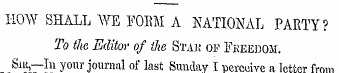
HOW SHALL WE FORM A NATIONAL PARTY ? To the Editor of ike Stak of Fkeedom . Snt—In your journal of last Sunday I perceive a letter from Mr . W . Newton , late candidate for the Tower Hamlets , recommending a National Fartij having for the basis of its agitation manhood suffrage , without the necessary details embodied in the 1-eopleh Charter . With the letter , ' and the desirability of the object I most certainly agree ; in the sincerity of " the writer I also have the fullest confidence . But , sir , we have something more to consider—the moans necessary—the tools to work with ; how are we to achieve that object ? Does Mr . Newton mean the present scattered chartist party should be brought together again , and thus constitute the manhood suffraW society ? If this is meant , allow me ( and that in the mo ^ fc friendly spirit ) to say I think it will most signally fail .
Let me give the reason for such an opinion . After fourteen years' agitation for the charter , all sincere men must admit , after carefully surveying the past and viewing the present , we have no earthly chance , with our present materia l s of obtaining our object . Many lay the blame of our failure to the treachery of leaders , others to the rashness and folly of some few of our members . Now , sir , I believe both these reasons to be without point . An association of the people possessing numbers and intelligence , combined with a" sound
and active policy , can never be influenced by one , two , or three of its members , however plausible or eloquent they may happen to be . The same will apply to the objection of rashness , or folly . Men are generally acted upon bydho company they may mix with ; and the dignified attitude of a large body of intelligent men would always be an efficient check to the over zeal or undue warmth of some few of its members . The two necessary elements to success in political agitation , namely numbers and intelligence , we have never obtained . Let me be
understood or , this point . I mean not in sufficient numbers Well , then , I contend , the party powerless for ' its own miruoso would be equally so for the attainment of the reform proposed . Now , could Mr . Newton point out some means by which some new blood could be infused , there would be room for hope . Could he by his influence form the nuclus of a party with new men ? When I say . new men , I mean those who have not taken a prominent position in the chartist or middle class movements . I say this because it would be the means of preventing
any jealous feeling that might arise were the old leaders of tho one or the other to be the promoters . The advent of such a party would , I feel confident , be hailed with delight by thousands of the working , and a considerable number of the wellmeaning middle classes . By that means the chartist would not be accused of deserting his principles ; he could still advocate the six points , and be perfectly consistent in advancing the great principle of manhood suffrage . Should such a party be raised , sir , the past must be forgotten . No sneering at the warm-hearted ( though , perhaps , not discreet ) workman who in times past suffering from poverty , and smarting under bitter persecution , had notions of physical force . Let there be no talk about the aristocracy of labour , or the crucifying middle class as they have been some times designated , ^ o , sir , it must be truly a national party , not only in numbers but in mind : its ranks open to the good from all classes ; its attitude as dignified ^ U cause is ™ t IN o petty squabbles-n o vituperation . Its council formed of men known for their earnestness and rectitudfi-its policy conciliatory , not antagonistic ; saying with open countenance and mauty ; pride to the bitterest Foe 7 if you will not subscribed my principles , you must respect my conduct . Let , sir , sucli a party be once formed and put in motion , and l believe there are many of us may live to seo the day when tue greatness of our country may be spok-on of—not for us ancient aristocracy , its extended commerce , or its wealthy church , but for the political freedom and social happiness enjoyed , by the whole of its people . * Wishing health to yourself , and prosperity to the paper , I remain truly yours , TOM PINCH ,
Untitled Article
SStS ^ , departments of national polic v , and to miSS fc ^ * - ? and , f stel T of their details and S ? l * " ^ i ? ? tl ] em in ^ House , leaves aothmg to ba desired . Such members are looked upon as 11 A ^ fi ^ ^ - ^ - 18 qU 0 ted with confidence . Thus -itW 7 iJ * ? ™ ^ olesworth may be said to be onnn ; tlT / aeCOi TS ? ISf 1 > S- Gkd « tone and Horsman , on C Uiurch Reform or Church abuses ; Lord MeWnd on Ed-imS ? ScOt T lai 1 V md Ml \ W" J" Fk ' $ * £ Mr . ^ S irin ° r ^ nmur ?>) ™ tlie Administration of India ; Tvniie Mr . Mdncr Gioson is leading advocate of County Kate Expenditure , and Mr . Kcrslmw represents the Diss te ^ ,
THE PUBLIC SERVICES OP MR . R , . SLANEY . To the Editor of the "Star op Fbeedom . " and ^ oT ^ T Comm , is esseilti a % a deliberative , ana not an executive assembly ; and it is therefore of -wi-mrv gotoce that its memberJ ^ hould haveS ^ ct ^ ' ^ thev ^^^^^^^^ P ^ w questioiis whereon a £ s ; YnAr llct it ? v decide ' - u caimot **** ^ p ^ th 0 or Sfv 5 P 011 ICal ° bseiVer ' . tl 2 at durin & & <> to twenty BeWffV * ! ° re GS r Cially Shlce the P ^ <> f the meX-s vUl " ffl -T ^ f binary pvacfice ofcertain membe s , whether official or otherwiseto attach themaelvc * to Tm . ™™ , „„ ^ Z ^ ZTZ ~ =::=:== = ^
jections to the Eegiiun Donum . When such is the case , members of the House may expect to receive from the statist , a complete view of the principles and fcicts of the case before tnem : their deliberations are materially assisted , and the debate is conftned to criticism upon the motion in its relation to the immediate policy of the country . But when questions arise upon which no sufficient body of information has hitherto been collected , the usual recourse is had to a select committee of the House ; or a commission , is appointed by Ministers , to enquire antl collect evidence in such manner as may be deemed most efficient . The blue-books , which are the result of these committees and royal commissions are among the most valuable of state documents ; but the student who endeavours to form his opinions from them , must possess some of the mental requisites ot a lawyer , m analysing their contents and balancing their conflicting evidence .
It is chiefly among blue-books and parliamentary reports that we must look for and balance the services of My . Sianey lhose members of the House of Commons who devote their labour to these committees , and whose labours there are valued pass an almost unnoted existence , not the less to be appreciated ' however , though their voice be seldom heard in the more popular debates of the House . Practical knowledge of the subject m hand , indefatigable attention , patient investigation , powers of analysis , are qualities not to be undervalued because less showy or popular than those of the orator .
Mr . Slaney's course of study at Lincoln ' s Inn , and his subsequent practice during nine years as a barrister on the Oxford circuit , eminently fitted him for the duties he so frequently performed as chairman of select committees of the House of Commons . He entered parliament on the Liberal interest , as member for Shrewsbury , in 1826 , a year of great distress among all classes , and while the country was slowly recoverin g from the
commercial panic of the previous year . His attention from the first was devoted to social reforms . In June , 1827 , he delivered an able statistical and argumentative speech on the evils resulting in agricultural counties from the administrations of the Poor Law ; it produced , however , no immediate result beyond an increased attention to the subject among the members ; -and in the following session he obtained a select committee to e , \ v
quire and report . This committee after a lengthened examination of the evidence , fully supported Mr . Slaney ' s statement of the existence of serious evils and abuses , especially in the southern agricultural districts . The period of the Poor Law Act of 1795 , which continued in operation until 1834 , is known as the most disastrous in the history of the English Poor Laws . Its operation depressed wages , increased intemperance , encouraged imprudent marriages , and destroyed the moral energy and
independence of the labourer , at the expense of the rate- payers . In view of these social disadvantages , of this deterioration of the moral character of the labourer , the extraordinary expenditure in Poor ' s-rates , which rose in 23 years from three millions to £ 7 , 870 , 000 , was merely a secondary consideration ; but it was one that forced itself on the attention of the country , and caused the new Poor Law of 1334 , which , however defective , is greatly superior to its predecessor .
In 1830 , Mr . Slaney obtained a select committee on Manufacturer ' s Employments . He had observed that the riots and disorders among the operatives in the manufacturing districts , and much of their misery , destitution and suffering , arose , mainly from the irregularity of their employment . The report of the committee showed that in the chief manufactures , cotton , woollens , and hardware , the average wages of several years were amply sufficient to afford all requisite comforts to tho workmen employed ; but the irregularity of this employment , and the constant alternate recurrence of slack and busy periods ,
prevented the operative from fully participating in the average advantages . The report as might be anticipated , could offer nothing but suggestions towards a better regulation in the payment of wages ; and this effort among many others , has been produced to show the inability of Mr . Slaney ' s endeavours for the advancement of the working classes . ' That many of his measures have been ineffectual , cannot bo denied ; that they have fallen short ; and appeared feeble in conception compared with the great evils requiring redress , may be readily granted ; but we may reflect with admiration on the perseverance which
characterised every effort , unsupported save by a very few coadjutors among tho members of the House , and looked upon with indifference by the great majority . The development of the co-operative principle , coupled with increased means of education , has shown in these later years what powers are within the reach of the working classes themselves , to secure by prudence , forethought , and association , what legislatures cannot confer , and only remotely assist—that more uniform happiness and comfort which is at once the hope and reward of their successful labour .
A committee on Public Walks was obtained in 1833 , by Mr . Slaney , and the establishment of the additional public parks of Primrose-hill , Victoria , and Battersea , in London , and of various public grounds throughout the kingdom , may be attributed in a great measure to the suggestions contained in its report aud evidence . In the session of 1837 , Mr . Slaney obtained a committee on
Education , and in 1840 , on the Health of Towns . Both these led to important and immediate results ; the first prepared the way for the establishment of the committee of Council on Edu cation ; and to the latter is undoubtedly due the credit of the Health of Towns Act , At some future " period , we may perhaps embrace the opportunity of examining at length , the position ot both these important subjects ; on the present occasion we can merely allude to My . Slaney ' s connection with them . His re-
Genratraik Uefeitnis, Public Meetings, &C.
genratraik Uefeitnis , PUBLIC MEETINGS , &c .
Untitled Article
carried out under the protection of its provisions The ven J the labourers in the Sebt embbr 18 , 1852 . m-u-- ~—~—^^ mm FREEDOM . n car [ ied out . under fte protection of its provisions . The ven-
-
-
Citation
-
Northern Star (1837-1852), Sept. 18, 1852, page 11, in the Nineteenth-Century Serials Edition (2008; 2018) ncse.ac.uk/periodicals/ns/issues/vm2-ncseproduct1696/page/11/
-