On this page
-
Text (2)
-
Untitled Article
-

Untitled Article
Note: This text has been automatically extracted via Optical Character Recognition (OCR) software. The text has not been manually corrected and should not be relied on to be an accurate representation of the item.
-
-
Transcript
-
Note: This text has been automatically extracted via Optical Character Recognition (OCR) software. The text has not been manually corrected and should not be relied on to be an accurate representation of the item.
Additionally, when viewing full transcripts, extracted text may not be in the same order as the original document.
Untitled Article
Tbe Hon . J . & WOBTLET thai came forward , and vu received vitk cheers by the Blue party . He said fit * Whig Government had new been in office for eleven years , and during the whole time they have never Tentared to make any proposal on the subject on which they iiow choose to agU&te tbe country . Itiaonly at the fcst moment , when they find themselves sinking in the ^ tarnation of the country , to the lowest step in the scale . ( A shoot of " Will you do it then ? " ) It ii only when they find their own House of Commons rejects them , and tells them they are bound in principle to resign their situations ; it is only then they throw 0 O& this question as a bait for popularity , and in order to keep their situation * . What kind of question is this on which , they think agitation , justifiable to raise the passions of the people—for I can call the attempt
nothing else , though it hat failed ? What is the question ? A question on which the first and most intelligent authorities differ almost as often as they write er speak on it Let us look to the authorities on this Tery subject—the Corn Laws . At the present moment , we haTe a nobleman whose son now appears before you as a candidate , whose private character we must respect—my Lord Fitzwilliam , who bat taken a prominent and leading part in the attack en these laws . { Cheers . ) What does be tell us ? That if these laws were repealed , you would not hare oorn cheaper than at present ; that the farmer need aot be afraid , because the price of corn would rextain the same as at present A pamphlet has been written by Mr . MKJulloch , another of these great authorities , and what does he say ? He Bays the same
thing . ( Shouts of " What do you say ?") He attempt * to prove that there would be no reduction in the price of corn . Then we have Mr . "Villiers , an advocate for the repeal of the Corn Laws , and certainly bo partisan of ours—whit does he say ? He says that the sole object is to reduce wages . ( Disapprobation . ) He says that wages must be reduced in order to enable ur manufacturers to compete with our rivals . Another authority , no less esteemed , Colonel Torrens , who has liven bis life to the consideration of these subjects , says on the contrary , you would get nothing from it , because it would raise wages , and raise rents . Is this , then , a question on which any Government is justified in attempting to impose on the great mass of the people ? ( Hear . ) I contend that the attempt is nothing else than an electioneering dap-trap . And
for this reason . When we look back to the history of the Government , we find that for eleven years they proposed nothing on this subject , but not only that , for we find the first Minister of the country , the principal organ o f the Government , has more than once declared in the most positive terms against the change In March , 1 & 39 , he used these words : — " When you find , " ( said he ) "my noble friend Earl Fitxwilliam proposing to leave the whole agricultural interest without protection , I declare before God , I think Ik the wildest and the maddest scheme that ever altered into the imagination of man to © oneeive , and it is my opinion that it is not wise to depend on foreign countries for a supply of food . " This , gentlemen , is the assertion of Lord Melbourne not sore than two years since , but be comes a little nearer than that ,
for it was only last year that he said , when it was urged you will be able to get an increase of trade , in consequence of the repeal of the Corn Laws , what did he say to it ? He said , " you will never get into the markets of the continent whether you repeal the Orn Laws or not" These are the sentiments expressed by Lord Melbourne , and I say when a government , having treated this question in this style , for eleven years , acid now when it is known to be at the last gasp , of it * existence , throwing overboard the principles it bad expresed before , on the eve of its dissolution putting forward these measures . In reference to the retiremeat of Sir Geo . Strickland , the Hon Speaker asked , why has he been withdrawn ? Was it because he wanted to retire from Parliament ? No such thing . He does not want to retire from Parliament . At this
moment he , your old and Radical representative , Sir George Strickland , is engaged in a popular contest far Preston , in Lancashire . Why did he not fight in the battle here instead of at Preston ? 'Cries of " question , question . *) It is because my Noble Friend here , to whom I have the greatest possible respect , is to bring the great influence of his noble bouse into the contest He is to serve the purpose of a budget in Yorkshire . He , Gentlemen , is our Yorkshire budget , and he is brought here to produce the same effect as the Government Bought to produce by their budget He is to carry it by the influence of his noble house . It is in order that the deficiency of infiuesce of Sir fieorge Strickland may be supplied , and in order to obtain enough assistance for the electors to win the election . Gentlemen , allow me then to state my viewB of the
Corn Laws . My firm belief is , and I proclaim it without hesitation , that a material reduction or repeal of those duties would have the effect » f distressing and raising the agricultural community of these countries ( Disapprobation . ) It is not , then , for the interests ef the coantry at large . I an speaking to the manufacturers . I deny that even the manufacturers would gain by such a consequence , and I will tell you how I prove it I do not think it is the interest of any man to thrive , if he should thrive by ruining his neighbour . But , Sentiemen , I deny that he would even thrive . ( Cries « f " Its the aristocracy that thrives . ") We must recollect that large portions of land in this countrythe brother of Lord John Russell ssid no less than two millions of acres—are not susceptible of profitable
cultivation , except under a protection . If those lands were thrown out of cultivation , what must necessarily follow ? Why , the cultivators must be ruined , their labourers would be thrown out of employment , and what iito become of this mass of labourers ? I do not speak this on my own authority . I will take an authority certainly not aristocratic—the Radical Member for Birmingham , Mr . Muntz . Did he not tell you , and surely be has no bias to the aristocratic landowners , that the repeal of the Corn Laws was a mere delusion , and that the vpf * 3 i't > lo effect must be to reduce the rate of wages ? { Great disapprobation . ) And I will tell yon another authority , and that is , a member of the Chartist body , who has lately printed a letter to his associates . Those gentlemen standing near me , I doubt not know both the name and the individaal Mr . Hick
has lately published a letter , and in that letter you will find the most explicit assertions of the same kind , and that the repeal of the Cam Laws would not be for the benefit of toe working clasaes . The fact is not even concealed by the advocates of repeal What do yon bear from the Manchester Chamber of Commerce ? What does Mr . Villiers tell us ? That the bjeet of the repetJ of the Corn Laws is to cheapen manufactured goods . I will ask any man here of common sense how the repeal of the Corn Laws is to cheapen manufactured goods , except by reducing wages ? The consequence is inevitable . It would take place in tins way . There is a superabundance of labour , as you all well know , in the manufacturing districts of this country . You know that there are more labourers than there is employment far . So long as there are
superfluous labourers , wages will fall accordingly . If you can prove to me—if you can shew to me , that there is a sufficient supply of labour here at present , and that persons cannot obtain operatives and artisans enough for their manufactories , I will b = silent and drop the argument But I am perfectly aware if the supply and demand are in such proportion as to render the supply insufficient for the demand , you will get better Wages together with your cheap loaf . So long bj one labourer ia superabundant , the reduction in the price of labour must take place , according to the rate of susi * Tnm »« Let us not forget another effect that must aggravate this consequence . It is infallibly true , that if large portions of land are thrown ont of cultivation , the population of those districts must fctk employment here . If they do not go back to the Union workhouses ,
they must , as they have done before , come here to find employment I am not even here talking irithout authority . I am able to tell yon where the thing actually occurred a short time since- There was a great superabundance of labour , or supposed to be so , in the South of England . Certain masters , Messrs Ashworth , in one of th" manufacturing towns in Lancashire , who thought that they could get labour cheaper by sending to these agricultural counties , did send fur them , and these labourers were actually brought into Lancashire . What was the result ? It had an effect on the rate ef wages , and if the opposition on the part of the operatives of the country had not been so determined , as it turned out to be , these persons -would have occupied the places of the manuficturiag labourers , and wages would have been reduced . Once more . If I do
not support this assertion by argument , I am content that you should think it a mere clap-trap . I have one word more on this subject Look , to examples elsewhere , and why , I want to know , are you to snppose this favoured country ia to be exempt from the fate of those where labour is superabundant , and food cheap , and where thB universal consequence is a rednction in the rate of wages , and the standard of living of the labourer . I speak again on authority—an authority which will not be suspected—that of Mr . Gregg , of Manchester . In bia evidence before an . inquiry in t £ e House of Commons , he stated that from inquiries he had made as to the rate of wages of different countries where corn was cheap , the wages were 6 ^ d a-day . 'Cries of "America . " ) We know that those labourers live on different scale or standard of sustenance ; they feed net
en wheaten bread , but on black rye bread , and inferior vegetables . Every body who has been in those countries knows that that is the cosimon food of the labourer . ( Another cry of "America . ") I will touch upon that in a moment . In a comparatively prosperous country—Prance , where you would imagine , that though they have Com Laws they wosld be better » ff In a report presented to Government a short time past , it was deliberately stated , that scarcely a third « f the population as * that country eat wbaaten bread . I will tell yoa haw H is ia America . In America , we most reeoBwt , i » the irst inBtanm , that there are immense tracts of Ine an-•¦ Itivated , unoeeupieA soil . The Anrrlcxaii hsva
• aormous tracts of soil , sot only UBotvmpied , rat extremely fertile , and therefore , of course , the supply ef orn is abundant Whenever any m * n eas show me n this country , large extensive tracts of the same kind , fertile and unoccupied , tt « n I will say you may repeal the Corn Laws , and you will get an abundant supply here . I will tell yon something more on this subject of America . In spite of the abundant supply , in spite of Ihe great resources they possess , perhaps yen are not aware tha ; at this very moment the people of the United Siates have a duty on the import of foreign corn Higher than that now proposed by the Government of this country . It was only a few months sine * the Pre-¦ ident of the United States—the chief magistrate of
Untitled Article
thai gre » i republic , told his fellow-countrymen , in a written address , prepared with great care , that ha thought it the duty of every country te see that it did sot depend on foreign countries for the supply of food . E , B . DENISON , Esq ., then presented himself , and was received with uproarious cheering from his sup- porters , and with some hissing from the liberal party . He said that during the eleven yean which the Whigs have been in office , the Noble Lord ( Morpeth ) has been a Member of the Queen ' s Government for a considerable time . He appeals to you in his own de- fence and that of his fellow statesmen , and he asks you to send him again to Parliament one of the vaunting champions of the cause which he advocates . (" We wont have him , " followed by cries of "WewilL" ) Permit me just to call your attention to a common sense question . Try the Government fcy-what they have promised and by what they have done , and if , on a calm and dispassionate review of this proposition you find . them worthy of your support , then , in God ' s name , return my opponents to Parliament , and Bend us about our business . ( Shouts of " We will . ") But I will not believe Out Yorksbiremen will be so gulled . I know perfectly well that the great majority of you are in the habit of looking into your ledgers , of casting up your accounts , and of taking stock at the end of the year , in o ^ er to see whether your affairs are in a satisfactory state or not , and I also kuow perfectly well that you are in the habit of calling your managers and chief clerks to account , if you find they have been mismanag- ing your busin- as . ( Hear , hear . ) What did those who compose the Government commence their public career by promising you ? First of all , they said that peace was to reign throughout the world under their bene- ficent rule . ( Laughter . ) Well , have they kept their
word ? ( No . ) Why , they themselves fomented a rebellion in Canada . ( Cheers . ) They have been very nearly at war with every European power , and they are now prosecuting a war in China , -which nobody in the world knows how it will end . ( Hear , bear . ) The standing army is larger than they found it The naval establishment is more expensive than it was , and all these- expenses have been created by their own absurd acts and deeds . ( Cheers . ) And still , notwithstanding this , the electors of the West Riding are appealed to by a Government which , a few years ago , was so popular that it could command almost any majority in the House of Commons , which could every night raise the laugh against its opponents , and turn them into ridicule . ( Hear , bear . ) But how has the tide changed ! ( Hear , hear . ) We have seen these
majorities gradually dwindle down to nothing , and at last they are in a minority en the m « st vital question that can ever be discussed in the House of Commons—I mean the question of confidence . ( Loud cheers . ) Yet , notwithstanding this , instead of retiring like gentlemen —( cheers )—when they found they could not longer carry on the government , they say— " No , we will appeal to the electors of Great Britain , and we will appeal to their passions and mot to their cemmon sense . * ( Cheers sad cries of ' N » , no . " ) They throw out the bait of cheap corn , cheap sugar , and cheap timber , and they are attemping to gull the people by what I will call their humbug of free trade . ( Cheers and hissing . ) Why , Gentlemen , they arrogate to themselves all the credit of free trade . Why , will they tell me of one article in which we hav « free trade . Is a
fixed duty of eight shilling * per quarter on corn free trade . ( " >' o , no . ") Do they tell me that it is free trade when they propose a reduction on sugar of 27 s . or 29 s . a cwt ? ( " No , no . ") Is teat free trade ? ( " No , no . ") They propose to alter the duties on timber . Is thai free trade ? (" No . no . " ) Then away wi \ h their humbug , for it is nothing else . ( Cheers . ) Who was the original author of an alteration and modification of the protective duties ? Why , the man whom they so often quote , Mr . Hnskisson . ( Hear , hear . ) He was a Tory . - He led the van with respect to the modification of the restrictive system . He was supported by Sir Robert Peel , followed by Lord Stanley—( Hisses )—and backed by Mr . Goulburn . ( Hear , hear . ) The Whigs promised you retrenchment and ecosomy Have they fulfilled the promise ? ( Cries of " No , no , " and " Yes , yes . ") Their predecessors left them in office with a surplus of two millions , besides having paid off a portion of the national debt ( Hear , hear . )
In what situation are they now ? Why , notwithstanding that they have been bolstered up by the editors of the Leeds Mercury , those celebrated financial doctors—( cheers and laughter )—we find that at the end of ten or eleven years , during which the sinews ef every man whom I- now see before me have been exerted to the utmost , they find themselves in a woful deficiency , which is almost an annual one , for it has existed for three or four years , besides not having paid off a single fraction of the public debt , but , on the contrary , rather added to it ( Cheers . ) I say , try them by -what they have done , and if you think that the mode in which they have conducted the affairs of the country is such as you would wish to have your own affairs conducted , then send our opponent * back to Parliament ( Shouts of " Never . " ) But what else did the Whigs promise ? They promised to govern without patronage . ( Laughter . ) Why , of all the men that ever existed , they have exercised the most patronage . They have created offices out of count , and they have endeavoured to thrust every one of their dependents into them .
Mr . BRIGGS , a Chartist , next introduced to the meeting Mr . George Julian Hamey , not as an esquirenot a » one of the aristocracy—but as a man whose conduct had always met the approbation ef his feilowmen . Mr . HEAPS for some time caused an interruption , by his desire to put some questions to the previous speaker , and Mr . Hamey made one or two unsuccessful attempts to proceed . Between Mr . Heaps and Mr . Gardner , and the Chartist chairman also , some warm expressions were exchanged—Mr . Gardner applying to Mr . Heaps the term blackguard . The confusion continued for some minutes , and Mr . Hatton St&nsfeld made the matter ¦ worse by his interference .
Mr . HARNEY at length proceeded . He said he appeared before them as a working man , younger than any others of either party . He w&s unblessed with that liberal education , which they had had the good fortune to receive , and he hoped they would bear with him for any imperfections of manner his address might possess—he asked no favour for the matter . The gentlemen who had preceded him , had addressed them as the freeholders andjeleetors of tie West Riding , whilst they appeared to have forgotten that there was such a body as the non-electors in existence . ( Cheers . ) He appeared before them at the request of thousands ef non-electors . He would rather have seen an older man , one of more experience , in his situation ; but he had consented to be brought forward at the reqest of his friends , and for 'hem he would go through the work which they had put into his kaGds . He was attached to neither of the parties which had already addressed them , though perhaps he could tell something to both of them , while he would flatter neither . ( Cheers . ) The Noble Lord
! il rpeth ) had said that there -was an era approaching ing in the politics of this country , and he ( Mr . Harney ) c-ju ! d assure him that there was an era close at hand when the warking classes would be represented—when thi-y would be no longer cortent without the Suffrage being conferred npon thtm . He had taken notes of what the Noble Lord had said , and he owed it to the meeting that he should make sjme comments on his speech . ' The Noble Lord occupied a large portion of tneir time in praising himself and the other members of the Government fur their patriotism and philanthropy , words which he thought sounded very s rangely when used by a Whig . [ A shower of rain here began to descend , whicim-nde .-ed tb e task of following of Mr . ILimpossible . j A gentleman on the platform handed to Mr . H . an umbrella , and he proceeded with his address ,
castigating the Whigs , laying bare their sophistries , and exposing them to the public gaze in all their hideous deformity . He said they had come out as advocates of free trade only at the eleventh tour , when they could find no othtr subterfuge likely to keep them in office , advocating to-day what thty repudiated yesterday , and conceding to expediency wi . a : they had almost in tbe same breath dtnied on principle . If they were sincere in their desire to repeal or alter the sugar duties now , why did they bring their official iifluence to bear , in order to defeat Mr . Ewart on the S 3 me question last year ? ( Cheering . ) He then alluded to the increase of population which had taken place , not only in Great Britain , bnt in Germany , and contended that the Germass having established manufactures , would not break thtm up now to take our surplus products : if ,
therefore , the Government were sincere in their desire to establish free trade , they should have come out with-it a little sooner—( enters )—should have shown a little more E-al and greater alacrity in tbe cause of that people whom they now professed so much willingness to serve , and whose i-texests were with them , now it served their purpose , aboye every other consideration He ahoaH like to know where were the Whigs in 1819 , ¦ w hen the peopla w * re sabred at Manchester for meeting to petition Parliament for a reform in the representation of tbe people , i Cries of "That was the Tories ; and great cheering . ) YeB , he knew the Tories were in power ; he was not so ignorant of the history of bis country aa not to know that—he was almost old enough to remember it ; but he knew also that it was the Hon . Mr . Lamb , the present Lord Melbourne , the head of
her Majesty ' s Government , who moved the thanks ef the House of Commons to the Cheshire Yeomanry on that occasion . ( Hear , hear . ) He regretted as much as any man the loss of our foreign trade , and compared the exports and imports im 1689 , when there were bo barracks , no bastiles , no rural police , and no indosure acts to rob the poor of their right to the soil , with those of tbe present period The speaker was assailed with exclamations that be was a Tory tool ; and to this h « replied that if he was , he waa afraid tbe Tories would ftfid him a very poor tool ; and not worth their purchase ; at aiy rate he could assure them that be was sharp eaongh to cut bath ways , and was very glad to ksowthat be was s * t a Whig tool . ( Laughter and
cheers . ) He continued ; he was speaking of the trade of tke country . England now traded with fifty or sixty foreign states—her merchants were traders to all parts of the world , while the working classes were worse off than at any farmer period . And what was the cause ef this ? It was because they had now a national debt of eighthundred millions , they had now a most enormous civil-list , they had now a long parade of useless pensions an * sinecures , they had the rural police , the poor law bastiles , and other Whig blessings unknown in former periods of our history , which impoverished tbe millions , and benefitted only the few who traded in human spoil ( Hear , hear , and great cheering . ) Those mes would sell the working classes
Untitled Article
t t 1 t i t t 1 \ i < t t c - \ themselves—they would not can it at tola moment they were sacrificed to their unholy gain . ( Cheers . ) The speaker then went on to contend that a repeal of the Corn Laws would not benefit tbe working classes ; he showed that before there was any Corn Law imposed there was more wages paid in the manufacturing districts , but that , notwithstanding tbe increase of trade which had taken place , there had not been a corresponding increase or manual toil , its place having been supplied sy an increased quantity of improved machinery . Some person had said that be was a Tory tool : be cared not for that cry ; for he could assure them , which ever party spoke the truth , whether Whig or Tory , should have his support ( Cheers . ) He agreed with all that had fallen from Mr . Wortl&y on the
subj i - \ i I t t 1 i j i { t i t ject of the Corn Laws—( cheers )—he fully agreed that a repeal of the Corn Laws only meant a reduction of wages ; nevertheless the repealers were determined they should have a big loaf whether they would or not ; the big loaf was to be crammed down their throat whether they would or not , as it had been at Manchester , with the truncheons of the Whig police . ( Cheers , and some Interruption . ) He bad the authority of » paper printed at Leeds for this—a paper which on some occasions professed to be a Whig and something more , on others , a Radical and something more , and when a purpose was to be served , was a Republican and something morethat paper asserted that the repealers were preparing staves to use against the Chartists in Huddersfield on that day . All he could say was , let them try it on .
( 1 t 1 i i ( Cheers , and continued confusion , during which , Mr . Harney said he would take his time , and assured them , the more interruption he experienced , tha longer he should be . ) Lord Morpeth had been asked a question about tbe Poor Laws , but he had not given an answer ; in fact , the Noble Lord contrived to be as brief as possible on the subject He said that Ministers were desirous to give such alterations as would enable them to dispense with the Poor Laws altogether ; he had no doubt they wished to do this ; he had bo doubt that tbe present Poor Law was intended as a preparatory step to abolishing Poor Laws altogether . The speaker then entered into a review of the measures proposed by Government , to show that they were not calculated to answer the ends for which
they were proposed—that they would not at all benefit toe working daues . The alteration in the timber dnties would make a reduction of about six shillings in the cost of the erection of a cottage , even if a poor man could afford to build one , and what a saving tbe interest of six shillings a year would be to him ! ( Hear , bear . ) With regard to sugar , it was stated that tbe saving would probably be to the extent of one penny a pound . But he sh » uld like to know how much even of that sum would go into the pockets of tbe poor , after it had passed through two or three wholesale dealers' bands . ( Hear , bear . ) The repeal of the Corn Laws was got up to delude the people with the fallacious cry of cheap bread , while Mr . M'Cullocb , the Whig authority , proved that under no circumstances
could we have wheat lower than 58 s . per quarter—a boon which he did not think they would feel it necessary to spend their energies in obtaining . But whether these things were productive of benefit to tbe working class or not , they must be adopted in order to raise the revenue ; not to increase the comforts of the poor , not because he had any interest in the matter , but because the revenue was sinking , and they must consequently have it speedily replenished , which resolved itself to just this , that more labour must be wrung from the tolling millions . ( Hear , hear . ) He hoped they would inquire into these things before they gave their support to the Whigs . Tbe speaker then went on to inquire how the deficiency in tbe revenue had been caused , and contrasted the difference between
the income and expenditure by the Whig and Tory Administration , the latter of whom left up wards of two millions in the Exchequer , which the former had wasted besides increasing the the national debt by several millions more . Tkis he contended they had done by engaging in unnecessary and dishonourable wars , by excessive expenditure on Poor Law commissions and bastiles , and the rural police . Two millions had been spent in Spain , one million in Canada , a large sum had been spent in Egypt , another in Syria , and more still in China , in a war of which no one could Bee the end , but which must terminate in disgrace and ruin . ( Cheers . ) In 1832 , they were told the Reform Bill was to work wonders ; the Whigs promised that it should be a stepping stone to other measures until universal justice
prevailed throughout the land . Every promise had been broken , and the fruits of refor-o had been tbe accursed new Poor Law and the fiural Police . But when tbe people took their affairs into their own hands , as the Whigs had advised them to do , they had turned round upon them and spent thousands of pounds in prosecuting Chartist leaders . This had helped them to make their deficiency ; but they had done something else . They had sent their constabulary police to Birmingham , Manchester , and all the manufacturing districts to put down the legal assemblages of the people ; they had sent well paid spies and hired traitors amongst the people to entrap them into acts of violence , and then to betray them to their oppressors , emulating the worst features of Toryism , and exceeding
in atrocity the acts of Sidmouth and Castlereagh . He ould go on further still , but it was enough ; there was a deficiency in the revenue , and the Noble Lord bad told them that it must be supplied either in the manner which tbe Whigs had now proposed , or by laying on more taxes . But he could tell tbe Noble Lord of another mode of supplying the deficiency . His mode would not add to the burthens of the people . ( Hear . ) Let the Neble Lord reduce his own salary to £ 1 , 000 a year . ( Great cheering , and an " unutterable" look from Lord Morpeth , who did not seem at all to relish the allusion to his own salary . ) Then let all his colleagues reduce theirs to tbe same standard . ( Great cheering . ) The hand-loom weavers had had their wages reduced 20 , 30 , and 40 per cent
over and over again ; and if the Ministers would reduce tbeir ' s in proportion , they might have both reduced wages and reduced taxation , and no deficiency would exist in the revenue . ( Great cheering . ) They might reduce also pensions and sinecures ; knock off 4 * 0 or bOO generals ; and when they had carried retrenchment as far as they conld , and carried out Reform to its full extent , they might fully carry out the principles of the New Poor Law , and throw tbe aristocracy , as they had thrown the people , on their own resources . ( Hear , and cheers . ) Mr . Harney went on at great length , castigating the Whigs most unmercifully , for the snail-like pace at which they advanced their measures , and exposing further their shallow subterfuge of cheap bread . He then
commented on the speeches which bad been delivered by the Hon . John S . Wortleyand Mr . Beckett Dd&ison , and complained that neither of these gentlemen , whilst stating the evils under which the coantry laboured , had propounded a remedy . He freely gave bis opiaion of the Tories , and said tbe worst measure they bad been guilty of was is supporting the Whigs in all their worst measures . He had no faith ox confidence in either party—he Btood aloof from them both . He advised the people to depend on themselves , and to stand by their own order , as the only way in which they could be delivered from the tyranny under which they had so long groaned . ( Hear , hear , and cheers . ) Tbe Whigs had violated their past promises , and he would not trust them again . The Tories made
no promises at all ; bnt judging from their past conduct , if they were to come into power to-murr « w they would only act as they had done previously , and hb would therefore aeire both parties alike , and throw them both overboard . His remedy for all was Universal Suffrage , to place all upon a footing of political equality , and to give every man a voice in making the laws which he had to obey . Thera could tLen be no cause of complaint On these principles be came forward to offer himself as a candidate for their suffrages ; he solicited their confidence , promising that be would exercise the trust for tbe well-being of the whole country . He thanked them far the comparative attention with which he had been heard , and retired amidst loud and long-con lieued cheering .
THE BOROUGH CANDIDATES . J . G . MARSHALL , Esq ., introduced Mr . HUME , who was loudly cheered by his party , the Whigs making a EOrt of constrained effort to evince tbe cordiality of their joy . He began by saying that , having been called forward as a candidate , he now appeared to state his opinions , and to say that , if elected , he would devote his services to the cause He com * plained that three of the speeches he had heard were evidently intended to call away the attentisn of the meeting from the real questions to be discussed
therenamely , the remedies for the prevalent distress . That remedy was to lighten taxation . He made efforts to induce Government to raise the deficiency in the revenue by placing the descent of landed property on the same footing as personal property ; and he went into an extended statement to show the hardships of the legacy duties ; and called tbe Tories robbers and plunderers on the ground of what Billy Pitt had done . The industry of the country , he said , paid seventy-four per cent of the whole taxation . He was in favour of the plan proposed by Government for making up tbe
revenue . Lord JOCELYN , having beea introduced by John Howard , Esq ., replied to the speeches of Morpeth and Hume , on the free trade question , in » speech of about an average lory merit . He insisted that no case of reciprocity , justifying the * application of their principles , b * d been made eut by the free traders ; that the preference of foreign to colonial sugar would be an encouragement to sJave labour , and consequently stultifying all tha coble exertioas of the Brai&h people against slavery . H « denounced the New Poor Law , and supported the Chsr « h Establishment . Mr . BROOK said he had the honour to name to them a gentleman who , though a comparative stranger , had made himself known to many who were thta present by bis excellent speech on the preceding evening . He then introduced
Mr . JAMES WILLTAMS , who stood forward , and was received in a manner which at once showed that , though a stranger to a large portion of the assembly , the principles which he waa there to advocate were reciprocated by the thousands of the " hard bands , fustian jackets , and unshorn chins , " by whom he was surrounded . The enthusiastic cheering having subsided , he commenced his address by saying , that in appearing before them he had not the qualifications to offer to which the other gentlemen who had addressed them could lay claim . He did not , like my Lords Morpeth and Milton , claim their suffrages on tie ground
Untitled Article
that ha was of ancient family ; he could not Craea fits ancestry centuries back ; nor could he , lika J . S . Wortley , offer himself as tha owner of a thousand acres , nor like Mr . Beckett Bennison as one of the aristocracy of wealth ;—nor conld he , like Lord Jocelyn , offer himself to their notice as one who had travelled over most part * of the habitable globe ; he had not the qualifications of a Captain Cook , which by-the-bye were not the necessary qualifications of a legislator ; he could not , like the Noble Lord , boast his acquaintance with tha form of a Chinese hat , or tha shape of a Chinese lady ' s foot , yet ke was willing to subject himself to a scrutiny aa that which tbe Noble Lord had received from the lady he had seen behind the lattice work in the city of Chnson . ( Laughter . ) He had not foujht Bide by side in China , with Captain Elliott , the man
who was troubled with a palpitation at the heart ( Laughter . ) He could nat boast of all these ; but although personally unknown he had claims to offer whiehhe trusted would be recognised as superior to any which his competitors had put forward . ( Hear , hear and cheers . ) He stood there as the advocate of the unlimited freedom of trade , the abolition of all monopolies—ihear )—and most of all , the abolition of that monstrous monopoly , the source of all other monopolies , the monopoly of law making . ( Hear , aad loud cheers . ) He called attention to the admissions made by bis opponents generally , of the existence of great and crying evlla . though they had forgotten to point out the remedy . He would select the mottoes of Lord Morpeth , on which ha would found the few observations he sbould make . His Lordship said that "true selflove and social was the same . " In this he entirely agreed ; what was good for a part is , or ought to be , good for all classes . His Lordship had next observed , that such was the selfishness of human nature , that
each individual was disposed when practicable to promete his own interests without reference to others , and to suppose that which filled his purse ought to be sanctioned by those principles . Now , on those propositions of the Noble Lord , he founded those views on which he rested his claims to their support . These principles were that each member of the state ought to be invested with that political power which was needful to protect him against tho Belfishness of others . ( Hear , and cheers . ) This , if conceded , being an act of justice to all , was consistent with the truest honour and highest , happiness to all . ( Cheers . ) He then alluded to statements made by Mr . Hearne , Catholic priest of Manchester , and also by Mr . Hume , as to the existence of distress throughout the country ; and passed from that to the state and prospects of trade , advocating , as he went on , the views held by the Chartists , and contended that until their principles were the law of the land , it was useless to attempt either different measures or fresh taxes to benefit tbe
revenue . The alteration in the corn , sugar , and timber duties could not possibly and materially benefit the country , even if attainable , which , without representative changes , they were not ; and whether or not , they were utterly insufficient to rescue the country from tbe perilous position in which it was placed . ( Cheers . ) He ridicaled the Whigs for having brought forward these measures on the spur of the moment , measures on which , twelve months ago , they held quite contrary opinions , but then perhaps their judgments were not sufficiently matured to enable them to judge . Misery and starvation were staring them in the face at every turn , and yet they did not . attempt to reduce the immense expenditure of the country , which Lord Morpeth had said must be maintained in „ its Integrity , and yet he acknowledged it was impossible
to increase the income by any additional taxes . ( Hear , bear . ) There was another course which appeared to have escaped the attention of the Noble Lord , which was the only practical and rational coarse by which they could extricate themselves from their present difficulties . Let them discharge the supernumerary officers in the army and navy—( hear , bear );—let them reduce the salaries of those really necessary—( hear , hear)—to an amount corresponding to the value of their services , setting the example by reducing their own salaries first —( hear , and cheers ) , —let sinecures and pensions be abolished , and a tax on property substituted for all other taxes . ( Cheers . ) That was the way to get out of their financial difficulties ( Great cheering . ) He had heard national education alluded to , and was told , when a poor man asked for the suffrage ,
that he was not sufficiently intelligent . He put it to them whether they could understand the addresses which had been delivered by tbe college-bred gentlemen who bad preceded him ; if they could , then he would say they could understand perfectly how to manage tbeir own , and would know how to manage the franchise if it were conferred upon them . ( Cheers . ) How inconsistently the legislature dealt with the people ; they allowed them the right of sending for a physician or a surgeon when ill , when life , the most valuable of all possessions , was in peril , but did not require as a qualification for that right , that they should be profoundly versed in the science of medicine or surgery . ( Hear , hear . ) They were not required to have a profound acquaintance with theology to entitle them to choose their own religious instructors ; and yet he would ask the gentlemen , if they did not regard religion and religious instruction as the most important of all concerns . ( Hear , hear , and loud cheering . ) Why , then , deny the people the right to choose their own law
makers ? ( Hear , hear . ) The want of this right was a great evil ; and he rrould do all he could to secure to all who live under the institutions of the country a voice in tbe making of the laws by which they were to be governed ., Mr . Hume was for expediency ; for giving them an instalment , and for step by step reform , while he would resist all greater reforms . It was the policy of the aristocracy to resist the introduction of the wedge as long as they could ; bow absurd then to suppose that they would permit the people to obtain instalments , which it was avowed were intended to be used to extort mote extensive changes , destructive to the existence ef the aristocracy ; but the people wero determined to raise the banner of equal rights , that justice might be done to all . He was , therefore , for the Charter , the most comprehensive and the most practical measure ever propounded , and for this he hoped they would assist him , and to support this he hoped they would return him . The speaker was repeatedly cheered during his address , end retired amidst much applause .
Mr . ALDAM , who was introduced by William Smith , Etq ., amused the meeting for some time with an enumeratiou of his olaims to their electoral support ; the chief of which were , that ^ his father had been a tradesman 30 years ; that he , Mr . A ., had travelled ; that he had been at York and Darlington ; that he had been at College , and that he was three years older than Lord Jocelyn . WILLIAM BECKETT , Esq ., was received with great cheering and some expressions of dissent When tbe applause had subsided , he said , Gentlemen , I delight in the expressions of your approbation . ( Cheers . ) I re « pect those marks of your dissent—( a laugh )—because , Gentlemen , it proves to me that in the discbarge of your important duties as electors of this Borongb , you are aware of the responsibility of those
outies—( bear , hear )—it shows to me you know what depends upon yourselves— ( cheers ) -and that you are determined , without fear of favour , to exercise those duties in an independent manner . ( Loud cheers . ) Gentlemen , it is my misfortune to have come last in this long list of speakers we have had , so that I really am at a loss to say any thing new that would either captivate your senses or instruct your minds . ( Hear ) You have heard much already ; the previous speakers have tmveiled to almost every part of the globe . ( A laugh and cheers . ) But there is one thing which I think has rather beun overlooked by them . We are met here to consult for Leeds people—( hear , hear)—and to consult for Leeds interests—( bear );—that I thiak has been in some degree forgotten . ( Cheers . ) Gentlemen , I can only appear here before you in the
humble character of a Leeds tradesman like yourselves . ( Heir . ) I have no extensive knowledge to boast—I have no claims on your attention from parliamentary experience—I have only to offor you the remarks of that common sense which I have nsed hitherto in private life , and to promise the application of it to public subjects . ( Applause . ) But it will be with me a consideration of importance , that in the exercise of that judgment I shall follow an independent course . ( Cheers . ) I will look neither to one side aor another—( cheers)—but pursue that lina of conduct which I consider to be right and proper . ( Loud eheers . ) My duty , then , in standing here before you , is to shew that it is my intention to consult the interests of the whole body of tbe people . ( Loud cheering . ) I maintain that neither tbe interests of the landlord , nor those of the
fundholder , n » r the moneyholder can ever be successful —they can never be kept in prosperity unless we also consider the contentment and good condition af the working classes . ( CLeers . ) Now , I think it is my duty to say , ia coming before you now , that no man is more deeply sensible of the distress that prevails—( hear )—and no man more deeply laments it or feels it more than I do . ( Cheers ) But whatever may be said about the Corn Laws , cr the repeal of the Corn Laws , nothing shall prevent me from telling you what my opinions are with respect to our present deplorable condition . ( Cheers . ) I do not attribute our present distress to the operation of the Corn Law . ( Hear , and disapprobation . ) The cause of the present distress is not a new one ; it has prevailed here , I am sorry to say , for years , aneV I appeal to every gentleman on these hustings whether we have not been gradually getting worse and worsa ( Cheera ) Don't imagine that lam easting blame apon individuals or Governments in speaking tkus . iHear . ) It is my duty to state that I
« ava long sees that we are getting into a worse condition . New to account for the cause of that distress lath * first place , let me tell you that our trade has bae > , tram a variety of circumstances , widely excited . ( Cheers . ) W « have made more goods than we can sell . Tbe pawer of production has overtaken the power of consumption . ( Cheers . ) And , Gentlemen , until we recover tbe just balance between the two , you and we mut suffer . ( Cheers . ) Now , Gentlemen , if that be the cause , I'll tell you why it is . There has been an undue application of capital , which has given an undue impulse to trade ; the monetary system has been employed too far . Gentlemen , there has been too much capital—( cheers )—the bankers have been too free ; wa have opened the money-drawers too much—there has been too much machinery built . ( Cheers . ) Gentlemen , the beaux of the steam-engine has made too many strokes—( cheers )—the fly-wheel has made too many revolutions , and it is only this shock which we are now undergoing , under which we now suffer , that can bring us to anything like a healthy
Untitled Article
state . ( Hear and cheers . ) Whatever tnaconseqaenees af these opinions may be , they are toy honest opinions —and I am ready and determined to state them and support them everywhere . ( Cheer *) Now , I do tell you that the trade of this country has been unduly excited . How has it been met by any of the markets which , have been spoken of . Would any gentleman on the hustings say that tbe lamentable state of the American market was not the cause of the present distress ? ( No , no , " the Corn Laws . " ) I appeal to the gentlemen who differ with me in opinion , to consider the present condition of the American markets ; and I desire them to consider what those markets have been , and what they are at present . ( Cheers . ) That is one source of the present depressed , condition of our trade , and
deeply do I lament that it is so . I appeal to gentlemen who are acquainted with the circumstances , whether , if the trade , which has for a few years back gene en with that country , bad continued , we should have been in the condition in which * e are at present ( Applause ) The home trade , too , has not been so good as usual , in consequence of our not having had good harvests for two or three years . When I deplore the consequences of these bad harvests , I behold with pleasure the gleam of prosperity which is now beginning to Bpread over the cloudy horizon of our commercial affairs—( cheers ) —and I look at the consequences of a good harvest aa of more benefit to the people of this country than any change of Administration . —( Loud applause . ) We are told that the repeal or alteration of the Corn
Law will be a panacea for all our present evils , and that will bring us trade . ( Cheers . ) Now , Gentlemen , I dispute that , and I'll give you my reasons . ( Cheers . ) In reference to an alteration of the Corn Law , it is contended that we shall introduce foreign corn , and if foreign corn is eaten in this country in place of home grain . ( A voice , " Eat them both . " ) Bat we have enough . ( Tremendous cheering . ) A gentleman on my left reminds me that we have both—we have had both , and I wish to continue both . But , Gentlemen , stick first to English agriculture , and then go to foreign agriculture . I say to you , stick fast to English agriculture . ( Cheering . ) I am 3 orry to say that words were used this day by a gentleman on these hustings which are not creditable to the gentleman who made use of them .
( Cheers . ) He called the landlords of this country monopolists . ( Laughter . ) It is strange to me that it should be left to a commercial man like myself to defend the character of the agriculturists of this country . ( Hear . ) But I will not shrink from that duty . ( Cheers . ) Why do I ask you to stick to English agriculture ? I'll prove that it is your interest 111 prove that it is to the interest of the working man to do it . New , I am not going to make assertions without giving you proof . Upon what terms are we treated by those misnamed monopolists the landowners of this country ? What do the landowners get from agriculture in this country 1 I tell you that upon an average the wheat land of this country does not pay more than 24 s . an acre to the landlords who possess it . ( Oh fi No man who lays out his money
in land can get mere than three per cent for his money . - ( Applause . ) The consequence is this , that we have the use of the wholo capital of the agriculturists of this kingdom—the landlords , the owners of the soil—we have it at the low rate of return of three per cent Now , I ask you if there is a manufacturer among us that has ever received so low a rate of interest on bis capital as three per cent ? ( Hear , hear . ) But again , look at the condition of the tenant . The tenant , it is calculate * , has about five pounds an acre for capital laid out , in what I call the moveable machinery of agriculture ; after his toil and labour , and the expences of seed and other things , he gets—what do you think ? He gets not more than five per cent Then comes the labourer ; and he gets no more than twelve shillings
a week . Do you grudge him that ? Do you say that that is too much ? No , yoa are Englishmen , and you do not grudge that small remuneration . ( Cheers and cries of " lower the rents . " ) How can the rent be made lower ? I want to disabuse your minds ; and it was the duty of those who addressed you upon the subject of the Corn Laws to have told you how the matter stood in all its bearings . iHear , bear , bear . ) Many Able arguments have been used—many books have been written—many discourses have been delivered on this subject ; but I do say this , that from the beginning to the end , it has been a one-sided argument —( hear , bear , and cheers )—and you have not been told the expences which attend the agriculture of this country , in comparison with that which is expended by foreigners .
( What will you do to relieve us ?) Let me tell you what is the matter first ( Hear . ) If I am your doctor I must understand your disease . ( Loud cheering . ) In addition to these three classes , namely , the landlord , the tenant , and the labourer , and they are the only three connected with agriculture—there is this horrid Corn Law , which robs the people of tbeir rights , and prevents them from enjoying comforts . ( Loud cries of hear , hear . ) Now what has been the actual effect of the Corn Law ? I have endeav « ured to read two books , which may be considered as acknowledged authorities on this—the one was the work of Mr . M'Calloch , and the other that of Mr . James Wilson \ for which I am indebted to a fri » nd on the hustings ) . Now from them I learn , that for forty years before the year 1815 , when
there was no Corn Law in operation , the average price of wheat was 55 s . ( Hear , hear , and cheers ) Again , the same authority informs me , that f » r the last seven years the average price of Wheat has been 54 s . lid ., being exactly one penny less , since the protective duty was put on , than whatitwas previously . ( Cheers . ) Now , I am only endeavouring to explain to yoa my opinions—I have considered it my duty , as standing here a candidate for your suffrages , to state to you the grounds for the opinions which I hold . ( Loud cries of " Hear . " ) Witb regard to tbe Com Law , I am decidedly favourable to protection , —but , Gentlemen , I am not an advocate for protection for the sake of the landlords—not for the sake of the farmer—not for the sake of the agricultural labourer—but for tbe
sake of the commercial community . ( Loud cheers . ) The agriculturists of this country demand our serious attention in every point ( Hear , bear . ) Tbe authorities to which 1 have already referred tell me this : —the climate of England is the most propitious—the soil of England is the most productive , and the English soil is highly approved for the growth of Wheat , for there is no climate or country of the same area that can produce the same amount of grain , of the same value , and of the same price as England . ( Loud cheers , and hisses . ) I want you all to live in comfort , and net to desert that which I think tends materially to increase your comfort ( Hear , bear . ) So far for tbe agriculture ef the country . I maintain that under the circumstances in which it comes to us—under which it is
offered to the commercial community of this countrywe should be blind to our own interests if we introduced Foreign Corn beyond the supply which was requisite should be had to make up any deficiency which might arise . ( Cheers . ) We are told that if we have free trade we shall immediately have large quantities of corn . ( Hear and cheers . ) Now , I ask you , where is this corn to come from ? ( Several voices " from North America . ") Yes , we are to get it from America , from Poland , from Prussia , and from tbe Black Sea . Now I would say this to you , don ' t desert the wheaten loaves of England —if yoa do , you'll make a mistake . ( Cheers and disapprobation . ) But mark tkis , and I again recur to the same respectable authority which I have already quoted . The foreign corn of doubtful quality , and
which yeu cannot meet with in any quantity of tbe same quality as native grown—this corn , if imported , cannot reach these shores except at very nearly the same price at which you eat your own English wheat . ( Cheers , and a cry of " Why oppose the alteration of the Corn Laws , then ? " ) Why , for your protection ; do you want to eat bad bread ? ( Cheers . ) Look where you spend your money , if we have tofgive the same price for foreign corn which we pay for that of England . If you want to increase the sale of your manufactured goods , dont forget the home trade—don't be led away by tbe idea of enriching your pocketsdon't lose the substance for the sake of the shadow . ( Hear , and cheers . ) Then tbe next proposition is for an alteration of tbe Timber and Sugar Duties . ( Hear . )
This subject I don't understand so well as I ought to do ; but I do think that we are bound , as the mother country , to look to our colonies . Tbe colonies acknowledge the laws of England , —acknowledge the decisions of the Parliament of England , to which yon are bound to send proper representatives . ( Hear , and " we will . " ) If the colonies acknowledge our laws , let them enjoy the blessings of our Constitution—don't deprive them of the most precious jewel of an Englishman , his independence , and hatred of slavery . ( Cheers . ) Don't let us destroy markets which we have now in our colonies , and which are increasing at so tremendous and rapid a rate . ( Hear , hear . ) Look to tbe West Indies , and to the East Indies , and we ahsM be able to procure sugar not made by slave labour , to the exclusion of those who
produce sugar by the labour of slaves . Such is the abundance of the sugar there that we have no occasion whatever to go for that article beyond the precincts of our own colonies . ( Hear , hear . ) Now , with regard to the removal of the Timber Duties , the same principle will apply . Stick to your own colonies-stick to your own British ships—stick to your own people—and if you then cannot get timber at a reasonable rate , reduce the duty . ( Hear . ) I will not address you any further upon these topics . I am not going to excite your passions on the Poor Law , but I do lament that any law should have been passed which presses heavily upon the aged , the decrepid , and the unfortunate ; and I should fee sorry to see any class of persons who could not provide themselves with work in that condition , and that they should not receive assistance to put them
into employment . ( Hear . ) I have taken the trouble to look at the first- poor law which was passed , namely , the 43 rd of Queen Elizabeth ; that law has been always recognised in every statute that faaa been passed upon the subject since that Una . ( A voice in the crowd— " What about the Charter ? " ) Why , the Poor Law Is your Charter . ( Loud applause . ) I could amuse your fancy , but I want to speak to yaur good sense . What sayB the preamble of this law of Englaad ? ( Hear . ) Overseers are there told to be careful to provide for the aged , for the infirm , and for those persons under misfortune , and to provide implements of husbandry , and materials for work , to set these people to work who cannot provide it for themselves . ( Cheers . ) Now , this is the foundation of the English Poor Law . Subsequently to this , different enactments have been
passed for the regulation of the poor ; and whether it is from the negligence of the Parliament , or from the improper conduct of tbe Poor Law Commissioners , that tbe rights of the Poor have been encroached upon , I am ready to stand up , nay friends , in the protection of your righto . ( Cheers . ) I glory in that law . I glory
Untitled Article
in the generosity of my countrymen that carried that law into effect . It shows what they thought of tbe people ; it shows that they thought tbe property of the rich man might be applied t » tbe support of tbe poor man . I hold my estate on that condition , and , gentlemen , I will never swerve from that condition . ( Loud cheers . ) We must now pass en to another subject , and that is to the conduct—( Cry of "Pious Use . ) I am not a trtutoe of the pious use fund , but 1 am connected with those who are , and I am proud of that connexion . ( Applause . ) I now come to a subject on which we shall'differ in opinion , and that ia as to what claim her Majesty ' s Ministers have to continue ia office . ( Hear , hear , and hisses . ) An indictment has been made by tho House of Commons against tbe
Ministers , the public servants of this country , that they are unfit to govern the country—that they are unworthy of the confidence of the country . That question has been submitted to the Queen , and through that prerogative of the Queen which I hope will be always supported by Englishmen—( bear , hear )—that question has been referred to you , the constituencies of thia country . ( Hear . ) You know what the acts of this Administration have been . Examine into what they have done , and if jou think that they have served you , stick to them . ( " We will , " and cheers . ) But if you think they are unworthy of your confidence , throw them from you , and employ other people . ( Cheers . ) Let me only say 'his to youjudge for yourselves . The ministers are accused of
aot doing their duty , of not beinjc able to do their duty to their coustry . 1 will say this , if they are unable to do their duty , they must be dismissed . ( No , no . ) If they cannot render tho services reqaired of them by the crown , they cannot be paid as servants of the crown . { . Great confusion . ) All that I shall say to you ia conclusion is this , recollect that we are all Englishmen . Stick fast to the interests of England—stick fast to English agriculturestick fast to English commerce—stick fast to English ships— . stick fast to English coloniesstick fast to the . English Constitution , and we shall still , with a long pull , and a strong pull , and a pull altogether , get out of the horrible misery in which we are at present involved . ( Loud cheering for some time . )
Mr . WHITEHEAD , lea-dealer , &c , came forward to question tbe Conservative candidates , but was told that he must wait till ail the candidates bad beeu heard . Mr . JOSHUA . HOBSON , in a few remarks , then introduced Mr . JAMES LEECH , of Manchester , the other Cbartist candidate . Mr . Leech spoke at considerable length * avowing himself in favour of a more equal distribution of labour , so as to prevent one-half of the country from living in in « xhaus , tless wealth , while the othtr were starving in their competition witb improved machinery . Mr . Hume had asserted that increased labour was attended by increased wages , whilst it was a fact that for the tost fifty- years , although trade had gone on increasing to an almost indefinite extent , wages had been
rapidly decreasing . ( Hear , hear , and great cheering . ) Mr . Baines , in his history of Lancashire , stated that in the early period of tbe cotton trade there were in Lancashire 50 , 000 spindles employing . 50 , 060 spinners , whilst at the present time be ( Mr . L . ) could go to one mill in Manchester in wbich feurteen spinners were now doing as much work as used to employ the whole 50 , 000 , and even these were not getting remuneration for their labour . ( Hear , bear . ) The reason was to be found in the fact that wWile protection bad been extended in every . other direction , the interests of the poor bad ne ^ pr yet been protected at all . aa anomaly which proved tbe little interest taken in the qualification of persons who bad to legislate for the people —( hear , hear)—when parties bad come their
that day to fallout about tbeir ages , and to squabble about which of them was the oldest . He thought both parties were old enough in iniquity . ( Laughter and cheers . ) It was tbe boast of the British constitution that it consisted of three branches , King , Lords , and Commons ; but now the Commons -were superseded , and the' constitution was composed of King , Lords , and Aristocracy . All the speakers bad agreed on one point , that great distress was existing throughout tbe country , that the middle classes were fast sinking to a level witb themselves ; but they agreed" not as to the remedy . Some of those who bad preceded him said we wanted foreign markets ; Mr . Aldam told them one tale ; Mr . Husie another . He ( Mr . L ) contended that the parties who had ruined
England were the middle classes ; and now that they had began to feel the screw pinch them as it bad long done the working classes , they came forward and expressed an anxftty to take off a little of what themselves felt , but said not a word about offering to tha poor a share of what they themselves enjoyed . ( Hear , hear . ) Both Whig and Tory bad laid claim to having reduced taxation , forgetting that while taxation had been reduced by fragments , wages bad been reduced by wholesale , and the poor ground down to the lowest point at wblcb it was possible to arrive . ( Hear , hear . ) He ridiculed tbe idea that the reduction in the timber duties proposed would be of any benefit to the working community . The difference it would make in the coat of the erection of a cottage , even suppose that he could
build one , would be about six shillings ; and what a tremendous sum wan the interest of this to save to the working man . Increased trade would not arise from it , while wages would be continually getting less . < Hear , hear . ) Their warehouses , it was said , were crammed with goods , for which they had no markets , and well they might be so long , as there was such aa entire absence of home demand . Gentlemen talked of export markets , let them encourage and extend their own , and then if they bad any goods to spare , they might find the best markets they could for them abroad ; but it ' was sheer nonsense to send our manufactures abroad , while tbe people were going naked for want of them at home . ( Hear , bear , and cheer . * . ) He thea went into the question of wacos on the
Continent , in America , and in England , and contended that the hi x b scale in America was not owing to the land being so very prolific , but to the fact that they were not robbed by being taxed to the amount of twenty-nine millions a year for the interest of a national debt , and from sixteen to twenty millions to carry on the government . The poor w « e often taunted by bein ^ told that tbey paid no taxes ; be bad no objection that gentlemen should pay taxes , but he should like to know who first put the money into their pockets to pay them with . Look at tbe enormous amount pail for the new police ; at the nine millions paid to support a state church , whoso priests preach passive obedience and . non-resistance . ( Marks of disapprobation on the hustings . ) Gentlemen , he eaid , did not seem to like : his allusion to their doctrines , but they were not the less true on that account ( Hear , hear . ) After some other observations , the speaker proceeded to remark in reply to the argument for free trade .
wbich would increase the markets for our manufacturers , that trade had extended rapidly enough , but wages had not impreved in the saint ) proportion ; on the contrary , increased demand bad led to reduction . Tbey were now , it was admitted , arrived at tbe very verge of a crisie ; the present was a parliamentary crisis ; and if something was not done for tbe peopl * speedily , there might arrive a bloody revolution . — He would say , then , to the upper classes , confer power on the working classes , to enable them to assist you in carrying out those measures which can alone give strength and security to the throne and the country . Let the people have their Charter teat they may have a voice in the affitirs of the nation , and in making those laws which thty were called upon to obey . By thi » would the intelligence of the working classos b « brought out , and by it alone would be secured the happiness of all . Tbe speaker concluded amidst loud cheers , after thanking them for the manner in wbich he bad been heard . .
Mr . WHITEHEAD again stood forward to propound his questions to Mr . Beckett When he first announced his intention to put questions , Mr . Beckett asked to have them handed to him , but Mr . Wbitehead said they were not written ; and yet , when he came forward this time , though he bad not in tbe interval left tbe hustings , he produced two or three sheets of paper , from which be was about to read them . Mr . JOSHUA HOBSON , however , suggested that no question should : be put to one . that was not asked of another ; and that tbe questions should be put to the csndidates in the order of precedence . Mr . Wbitehead assented , but on turning round to read his questions to Mr . Hume , he found that he and Mr . Aldam had left the hustings without hearing the speech of Mr . Leech . After waiting a short time to see if tbey returned , as they did not make their appearance Mr . Beckett and , Lord Jocelyn made their bow and retired amidst tha cordial greetings of their friends , Messrs . Leech and Williams , and their friends followed tbeir example .
Thus ended the largest out-door meeting ever held in Leeds , a meeting also which must be attended with the most important . results . The truths spoken by the people ' s candidates made a deep impression , and though they have been as usual burked in the " Extraordinary Liar , " we have reason to know that their influence has been felt , and that deep execration has been poured out on all sides on the editor of the base and tricky publication .
Untitled Article
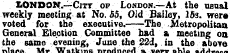
LONDON . —Cjtt of London . —At the usua weekly meeting at No . 55 , Old Bailey , 153 . wer » voted for the executive . ——The Metropolitan General Election Committee bad a meeting on the same evening , June the 22 d , in the above place . Mr . Watkins produced a very able address to the electors and non-electors , especially of this city , condemnatory of the policy of the dastardly Whigs , especial ly " Finality Jack , " who has the effrontery to attempt to disgrace this city by hia extraordinary Thug and China joggling principles Sub-Committees were appointed to assist ia the elections of Mr . Thoapuon and Mr . W . V . Sankey . The Committee sit every night bat Sunday . Let the Metropolitan Chartists see that they be not crippled for funds .
Tire Bloomsbubt Elec tion Commitibb held their usual weekly meeting at the Magnet Coffee House , Davy-lane , on Monday evening last , when Messrs . Baldwin and Hepper were appointed to co-operate with the committee ef Mr . W . V . Saiikey , the Chartist candidate for Marylebone ; collecting boakf > Mf « W |) iaJm \ mb soriptions to defray the fJPiWijjOiii pmULL candidates , ii liiniiliii iJTlilM | lfriMmfifir . inqti names on nr t i TWwmMMSMm to Monday evening " ~ flttffiiMffi ! ffiiiEffM d ^ c ^ epa nicnlarl j ^^^ p \ s ^ y ^
Untitled Article
. ' . THE NOBTHBRN STAR : - ¦ ¦* -- *
-
-
Citation
-
Northern Star (1837-1852), June 26, 1841, page 5, in the Nineteenth-Century Serials Edition (2008; 2018) ncse.ac.uk/periodicals/ns/issues/vm2-ncseproduct385/page/5/
-