
On this page
-
Departments (1)
-
Text (8)
-

Untitled Article
-
Untitled Article
-
Untitled Article
-

33annruptj^ &t*
-

Untitled Article
-

Untitled Article
-

Untitled Article
-

Untitled Article
Note: This text has been automatically extracted via Optical Character Recognition (OCR) software. The text has not been manually corrected and should not be relied on to be an accurate representation of the item.
-
-
Transcript
-
Note: This text has been automatically extracted via Optical Character Recognition (OCR) software. The text has not been manually corrected and should not be relied on to be an accurate representation of the item.
Additionally, when viewing full transcripts, extracted text may not be in the same order as the original document.
Untitled Article
BATH . MB . CBBIBK' 5 SECOND LECTURE . On Thursday evening , March 31 st , Mr . O'Brien gaTe hisseeend lecture at ttis Boziar Ro » m , Qiiet-street There 'was a large attendance this evening , of men of all parties and of all classes of society . About eight o'clock , Mr . O'Brien entered the room , and was hailed with rapturous applause . When saence was restated , — Mr . O * BR 1 EK rose andEpoke as follows : —The aspect of the times -we live in augurs that , before long , - a change must take place ; -whether for good or f , * evil , it depends upon the intelligence or non-intalligence of the people . ( Hear , hear . ) I come forward in the hope of serving the people , that tfcey may have seme share in the representation . I am sometimes of opinion that we -hall Dot succeed in establishing the Chatter as law , so long as the people follow designing men , instead of Tiiht principles . ( Chz-srs . ) I have long been of opinion if
tk ^ : ~ we had the Charter -would be of no good , mii -ss -we knew how to use it , and to -what purposes it shcu . d be applied . By a freeman , I mean a rnr-n who czn Hs idle -wken be likes ; wfco , when he works , shall esj-y , and safier-a-hen be does not work . ( Hear . ) The in ^ : « r depends upon "whether he can get profit oat of the employed . I have just been calling attention to the two forms in which slavery presents itself ; one fojm , be it observed , is that the man who wants work mn . t get it of these who profit by it ; another form is thsi he depends npon others . The poor labourer cannot ge : work withoct * otherspro £ ti 5 g by it , men who wonld disdain to sit at tibia with him . I wonld not give a fin f - -r the Chait-ar if it mud not pn * an end to this stki > of tilings . Ihe Charier is a means to an end . If the -House of Commons was re-eonstiluled to-morro-w , the question would then arise , what men should be chosen , and what laws ahenld you need ? I am here to pois . out the means of effecting reform ( with or
without tse Charter ; otherwise than by a bloody revolution j , cheers ) . From the comracncemuit of my political ; car- er up to the present tiaie , I have not heard a plain > sti : insnt given how the people could be relieved of the cu lerons evils which afflict them . I have heard advo- ; C 3 t ,- of the Charter dsclaixi against the taxation of the . country , as though it was the greatest eviL It is but j a i ^ uiil sli ce , compared to the plunder otherwise octaiac-d—( bear ) . If taxation was the source cf all our j erf- ; , Ireland ought to be the happiest ration ; she pays littio more Shan thirty millions , while England pays the i other Rfty millions . Yet we are told by Dan . O"Connell that Ireland is full of beggars—he himself being the greatest beggar—( laughter and cheers ) . I told you , last j nizhr . fifths condition of the hand-looa weavers : cf
the sreat redaction that has taken place in their wages . If : ¦ £ sweep away all the taxes , sinecures , pensions and all- Suppose yon did that , all you could do in that cm for these weavers would not enable thsm to get 7 , 8 . Cd . as before . Common sense tells ns at once that tesaiioa is tout a small corse—it serves to keep up the rest —( hear ) . izXa the taxes from bread , butter , and Bzzv , and coals , and Ts . 6 d . would not be so much as 5 s . were sometime 2 ^ 0 . Mr . O'Brien proctrfed to point out that it was all humbug to expect reli-firom the reduction of ~ taxation . Sweep away the deli , do away with all funded property , and yos throi ? millions on the pariah- Yon wonld have to support tb « s- liste * not then to the humbug ! If ths Charter would do nothing but take off the taxes , I -would not be labouring here to-night Sir Robert Peel
intend * to increase the taxes , whkh makes the . middle ckssss so wry just now . ( Hear , hear . ) Tie plunderers have k > much incurred that so much have to be set apart , for the purpose of psying the plunder . What is the blunder ? TheTent of houses and cf the land ; this 13 via positive burden . A landlord gets ten thousand a ye ; j , that is so much levied upon the land—that is the tvesitrre burden . The negative burden is greaterthe insnnar in trtucii be gets it is by virtue of the power he possesses , TFfcien enables him to prevent the bull-frog farmers from having but sueh land as he chooses to let them , such as meadows and" marshes . Bat that power amounts not to so great an evil as the taking away the power of the people using the land for themselves—( cheers . ) Of the only laws we should
require , I will tell you , as I told the electors cf Xeweasile-apon-Tyne , last they should return me at the ntx ; election . Here I must stat-e that the men at Newcastle are determined to have the Charter , and nothing less—imuch cheering . ) However much they may be luviisd , they win go for nothing but the Charter—{ reaetred cneers . j At the same time , let us be careful of ^ viat we are doing ; we mnst- warn and prepare the pf . oj . ls lest they may be taken , on the surprise , when thi Charter is obtained . The men at Newcastle-npon-1 } m agree "Bith me that the best way of getting the cLv-. tt , in case cur petition faiis , is to tak ' e it- ^ a e v , _ . ; t i-raj this , trot it -was a good one . They are Tesolv-£ C v > hive their rights , or tbat nobody else shall enjoy th-rirt . They'll ask for them first—the people are nef
cai ible of obtaining them now—they'll ask for them by petitioning , and will go on thus till they are capable of taking their Tights ( cheers ) lut I cannet say through what process . The men of Newcastle are determined to get men of determination , devoted to the Charter , and put them up as candidates at the next election , and call upes the people to support none but them . They intend to" go in procession to the Whig and Tory committees . , and ay to each of them . " You are the . least of tL = Borough , and yet you have the arrogance to have rtti ^ entafcives for yourselves alone ; we are nine-tenths of rbe Borough , and we are resolved to be represented ss ^ reli a 3 yon , wifii you if we may , without- you if we ieea- IJilesspa Whigs consent to give us a repress ..--.-tire , we Trill net vote for your man . And if the
T . 'iied will not give us man for man , we will then say , p' -i ^ ie upon oath your houses ! " This was-the way I hare advised the men of Newcastle to proceed at the 3 i s- flection ; and in case we do not succeed in this v -r- " ^ hy then , we must take ourrights ( cheers . ) This t- ^ 5 rot our way alone— "why , the other classes took H : r 7-ights ! We want to elect men of our class , and t -tive others to elect men to represent them . Bat o "_ ' the middle classes will not consent to thi 3 ! Bnt Ib-. y must ( cheers . ) The Whigs would endeavour to pot us down . How ? Can nine-tenths be giiity of h- : h treason against themselves ? The idea that mea -jrho build all the houses , make all the ahips , lay down tL- railways , bore the tunnels , fight the battles , and citfend the laid from invasion—the . idea that
thrse men could not nnderstand how to undertake tt 5 zna'aagetaeat of their own sffairs j Ifins-tenths C ^ n iiitunph against one-tenth . ' Suppose tbfry { t '~ - ^ Matter ) were to prevent you having delef&tes , why tbec , you must prevenfe-them from having delegates . 0 ! i' then , there would be s fight . '• What . ' nine-tenths ar : > jt one-tenth ? On no , there will be no fighting—(] : usiiter . ) Having asked for our rights in the shape of s ration and next in that of a remonstrance—and if tfc % -ights we demand are not then granted—why , woe be :-j ; hem who * h * "ii have aared to deny them—( cheeri ) 1 Au sot advise the people to harsh measures—I do no sn -b iking . What I want is , that in the case sup-X'ost-i representatives should be chosen by Ehow of h-- - ^ 5 to ait in Convention , and that they should go up
i- Parliament and address them thus : — " We beg to s . - . -, ach your Honourable House to allow nine-taiths ' of ' rhe nation to sit besides you in your H « ncuEibJb ; &- > £ *? . " I want for this Convention to sit for a time , s _ i < iraw np petitions and drafts of bills , and sacd j them all over the nation ; and then to ask the people to dcH ^ iid that these bills shall be carried into operation , i — ' cheers . ) This is my plan , which , no doubt , would j fc ,. 7 < = a decided effect . Yet some how or ether , the T > - 'iue have abet a-bead of me . 1 want to g ^ t them in : c -aTj'ctition with the present House &f Commona , G ' - a National Representation , and without shedding a 3 r . p of blood , or doing the least injury to any set of peer ; -, we shonld effect a decided change , with tbe
con- a ; ef both laudlor&B and the Commons—< Hea ? , hear . ; That is my mode of proceeding . Ab to the CiiiJ-ter , ure should hold it out to the acceptance -f the people , for it is the only remedy for the evils which rffliet us . ( Hear , hear . ; We shield" advise them to agitate for nothing ltis ; if they follow men , as they too often have doie , and if they suSsr themselves to be deceived- by the ixtfulness and cuuniBg cf leaders , their causa -will be ? 2 ' 3 ifice ( L It was so sacrificed befaie inthis country . At-i in Frauc * the Revolution was blastei by those ¦ who wished to live by agitation , and to raise themselves i to r-jwer and distinction—{ much cheering . ) The m » n wh-j -sill talk of nothing , no , not ot the land , ~ ne was j
aiming to deceive you , and to keep the people in igno-Tsree of what most concerns them . If you > b . ce power in the hands of the people , without their minds being pr < , rtrrly enlightened on subjects such as the land , any artful demagogue by his craf ; and gtealth , would lead a : or , § the mnltitude zt bis pleasure , and he will consider of nothing but how he can use their power to hi * own ends . 2 : had been so in all times and in all countries . The French wanted to obtain a just constituiion , and such they would have obtained had not the "N' -Honal Convention wanted to go beyond just bonnd ? - Tft " constitution of ninety-three , voted by the National C-TFtntion flid not allow the -representatives of the pt .-r ' '; e to make laws , but to prepare laws called proposes tie la hi , which were to be submitted to the Fifteen
people in all parts of France . days were alloVed , and if' in that time the people agreed wi :-b their prepared laws , they were duly carried ib : o operation . One million two hundred thou-BDr . i were armed to defend this constitution ; but owing to the ignorance of the people who were ready to listen to the charlatanirie demagogues , while speaking cf " Heaven-born liberty / ' and all such flimsy nonsense , from which talk nothing good has ever come . ( Htar , hear . ) Mr . O'Brien went on to shew how fcosery Radicals and pot-house politicians wculd spout ato-It " Heaven-bom libe . ty , " while they define it , if asied what it meant—as the privilege of doing what thev like ; the same as a slave-holder did who thought it was not liberty not to be allowed to lash , bis slaves as be
3 iied . laberty , Mr . O"Brien defined to be the allowing a man to do what he likes so long ae he does not violate the rights of others . A better definition is , " Do unto others as you would that others should do unto yon . "—( Cheers . ) Yea will not allow the middle class to have rights or exemptions you have not Every human being has two rights , —one to hie full share of the land and all that it contains , fisheries , nines , whaleiies , wild beasts of the fields : these axe the riches of nature , of Ged , ¦ w ho know * no difference between onemanjand another ; our next right which is inseparable from the other , and which appertains to civil society , is the right of every man to the free use of all his faculties , bo that the raw materials may be manufactured into articles for tke ass and plaware of society . Mr , O'Brien proceeded to
Untitled Article
illustrate his position as to these two rights , and then said , yc » have a right to the Charter ; that was a secondary and not an original right , as some suppose it was—it arose out of the necessity for government He nest spoke of the people ' s right to the land , and observed that there is n t a man in ten who possess a bit of land for his own use , nor one in ten who is permittfd to have the free nse of all his faculties . He must submit Mmself to others—he must work as they like , as much and as hard as fliey like . Now , what I want the Charter for is that you may use these two rights—( hear , hear . ) If I were elected by the men of Newcastle , I tell you what I would do . I would vote for the repeal of the damnable Poor Law Bill ; and establish in its stead , an efficient Poor Law—( cheers , )
—so that m « n wanting relief should sro for it as though it was a debt—{ hear , hear ; . I would not have the relief from the pockets of those who live by industrythe rates should not be levied on labour . I would not levy one sow on that . I would not levy rates on the renters of houses , but on the owners of bouses and on owners of theland—( cheers ) . Mr . O'B . went on to point oat the justice of those who make the poor , paying the rates for the keep of the poor : and then shewed that a man of small business is taxed aa much as a man of great wealth . The rates , instead of being levied on the occupiers of houses , should be levied on the owners Before the Reformation , the poor had a right to onethird ; another third was for the clergy , and one for the repair of the Church . The poor have as much
right to their third , as the clergy have to theiisleheers ) . Bat such as Lord John Russell now got the poor people ' s share . I would make them support the poor till the necessary changes had been effected—( hear , tear ) . Having provided thus for the poor , I would next propose a measure to provide labour for the people . Nothing 1 conceive so capable of doing that as the abolition of the Corn and Provision Laws : but as in proportion as prices are reduced , so in proportion would 1 reduce the burdens of the state . Let no man suppose that we are opposed to a repeal of the Corn Laws ; many of the Repealtrs have supposed that O'Connor and mysslf are opposed to toe repeal . We arc not ; but what we want is , that labour shall be free first — icheers . ) The Whigs want the repeal , so that a transfer
may be made from one set of scoundrels to another . Such men as Cobden want a reduction of the prohibitory taxes , no matter how high other taxes may be kept up . Mr . O'Brien dwelt on this subject ; he said it was all humbug to talk cf repeal now . Such men as Cobden -wanted to take other men ' s property without giving them an equivalent . By the repeal , if yon paid the same debt , and the same salaries , you would give them fifty millions more than they have a right to demand . Such was what Cobden ' and Craig want , and no mistake—( laughter and cheers . ) Mr . O'Brien next referred to some attacks made on him by a Northern paper , which asserted that ke was going about the country advocating the division of property . . Now , my doctrine ( said Mr . O'Brien ) has always been—let them
keep 'what they got , but let us prevent them from robbing us any more . Yet I am called an advocate cf anarchy and spoliation . Let them prove their assertion . I call Cobden and the League robbers and thieves , who went to live upon other people ' s industry . Now , if the struggle was between them and the aristocracy , I would leave them alone ; for , then , it would be between a crocodile and an alligator —( laughter . ) He now spoke of the reduction that would take place in rent and wages if the Com L 3 ws were repealed The fundholders were now entitled to receive so many millions—they would then get three loaves ¦ where they only get two loaves now —( hear , hear . ) Why , it was % complete swindle . He would defy any man to prove it was not . The object of the ChartiBU
was to repeal the Com and Provision Laws , and to reduce all taxes , and amicaWy to adjust all public contracts , entitling the contractors to receive so much out if the public taxes . We want , said Mr . O'B ., the tixes to be reduced , so that tha shopkeepers shall be bencfitted by giving increased means to the working classes . I want to effect peaceful changes—I want to see the poor I have se « n starving to be employed . He next denounced tha duties on timber , owing to which , he said , money that ought to be spent here was spent abroad . They went to the Baltic and elsewhere to buiJd ships , because they could get timber cheaper there . After dwelling for some time on this subject , on the National Debt , and some other things , Mr . O'Brien remarked that be -wanted to save the nation from
indfc ' stiYeness , to do which we must get rid of the Debt by an equitable adjustment . He wanted to bring back Moses and the prophets , who were opposed to the spirit of u ? ury . He wanted to see the National Debt liquidated as common debts are in courts of law—( hear . ) He spoke of Sir James Graham ' s mode of paying off three-tenths of the National Debt , and next of Thomas Attwood ' s mode of altering the circulating medinm . Csecar , after having conquered Pompeii , and Tyre , and Si . lon , found that there was one thiDg he could not ccnguer—the indebtiveness of Rome . He was a clever fellow ; bnt he could not save his country from the baneful effects of usury ; in attempting to do so , he was murdered on the Ides of March by his supposed son , Brutus , and a set of fellows who wanted
to live by usury . He described Attwood as being more dangerous than Cataline . What did he want to do ? Wby , he wanted the banks to issue rags of money . Mr . 0 "B . dessribed what he conceived would be the result of such a project , which he denounced in unmeasured terms . He then said , I want to give the ' people influence otbi the circulating medium and over the land , fisheries , mines , < fcc . fcc . As to the land , I want for the present holders to keep it so long as they live ; and when they die , to Becure to their heirs its fair marketable value . But so soon as the breath is out of tbeir bodies , for the land to revert to the people—( cheers . ) This is my proposition ; and yet I am called an advocate of anarchy and spoliation ! But I have challenged my accusers at Glasgow and Dundee , where
1 have held meetings ; at none of which were five hands held up against my proposition . Mr . O'Brien made observations on some other matters , and then referred to Mr . O'Connor ' s letters on the land , wherein he had proved how we could have veal , eggs , butter , cheese , and all kinds of things ; and yet at the year ' s end , have £ 40 ' s worth of surplus agricultural produce . Dd you not , then , ( said Mr . O'Brien ) Bee the great advantages of resuming the occupancy of the land ? —( hear , hear . ) He then pointed out how the people could , by peaceful means , resume the occupancy of the land ; it wonld be by the mode he had pointed out Numbers of the landlords were constantly falling off , and in the course of twenty years or so , the people "would be in possession of the land , without having done
injustice to the holders or their fceira —( cheers ) . The law of Moses was that " all debts should be paid off every seven years , and that thb lands should revert to the people every fifty years . " Now it is more than seven yeaw since the debts were paid off ; so if this law was to take effect , we all should rise to-morrow white-washed—( laughter ) . Here I am in a pretty stew ,-if I support Moses's law , I am in danger of the prison ; and if I oppose it , wby , then , I am accused of blasphemy—( laughter and cheers ) . So we are in a pretty stew indeed ! In conclusion , Mr . O'B . said , I hope , fr iends , there will ba no division among you now—, clapping ef hands ) . 2 iot at all events , till four millions have been obtained to the National Petition . Iiefc m * advi&e you net to join the middle classes— ( cheers , which la ^ tsKl for some time ) . They must join you—( renewed cheers ) . Say as Jeremiah said " the rulers
must come to the people and not the people to them . " The middle class must eome to us—( cheers ) . Let the middia class go for Complete Suffrage , and let us go f -ft a more complete suffrage—renewed cheers , and a cry of '' let them join the National Charter Association , and tike- f . nt their cards . ") Do not do away with your organisation—do not do that to please the middle class . Let me show you the power of union—a cable is composed of tiny fibres , which when separated are weak , but whrn entwined together , they cannot easily be broken . If each of you let your tiny strength bend togttli- t as do these tiny fibres , you will become stri-iii-.-, nay , all powerful . If you have sympathy for ea : L : il .-t , and act as though you felt but one pulse , and h ^ . d nu t one soul ; if you would do that , all the povr-r ¦ £ earth and hell could not prevail against you —i cheers ) .
A vue of thanks was given to Mr . O'Brien for his able lecture ; he returned thanks ; a vote of thanks was cltu given to the Chairman when the meeting dissolved . Mr . O'Brien lectured again on Saturday evening .
Untitled Article
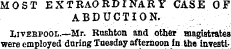
MOST EXTRAORDINARY CASE OF ABDUCTION . Livebpool . —Mr . Rushton and other magistrates were employed during Tuesday afternoon in . the investigation of a transaction concerning which there has recently been much curious gossip in this town , but which , to the parties Implicated has now assumed a very serious aspect . The affair has been already slightly alluded to in the public papers , and the investigation of Tuesday has enabled us to present our readers with a full history of this extraordinary proceeding , which we shall do by laying before them the material parta of the evidence .
The names of the parties in custody aw John Orr M'Gill , John Oiborne Quick , Thomas Wormand Roger son , Richard Jones , Margaret Jones , and Jane Clayton . The above prisoners were placed at the bar . The charge was , that the partiea bad taken Miss Ann Crellin , of this town , a lady who was reputed to possess a very large property , ( according to rumours , which have been rife , not less than £ 40 , 000 , £ 60 , 000 , or £ 60 , 000 , ) away to - Gretna ^ green , -where she had , against net C 0 n 86 ntj and while under the influence of some potion wnich had been administered to her , been married to the prisoner John Orr M'Gill . The individual last named is . a handsome and gentlemanly-looking young man , about thirty years old . Quick and Rogersan are also highly-respectable looking persons . Jones looks like a decent working man , and Mrs . Jones , hia wife , and Mrs . Clayton , are both respectable looking women .
Mr . Snowball , solicitor , appeared on behalf of Miss Crellin ; Mr . Grocatt , solicitor , attended for M'GiU , Quick , and Kogereon ; 3 nd Mr . Davenport , solicitor , was retained for Jones , Mrs . Jones , and Mrs . Clayton . Mr . Snowball said he appeared on behalf of Miss Ann Crellin , who charged the prisoners with felony in having taken her away against her consent , with the intention of marry ing her , she feeing possessed of considerable property . The circumstances were these : — Last year Miss Crellin resided in Seymour-street , where the prisoner , Mrs . Jones , was in the habit of charing for her . Mrs . Jones , in the courso of their intercourse , obtained great influence over her , and at length introduced to her a man who called himself Martin , who prevailed upon her to promise to marry him . Miss
Crellin went with biro to the office of Mr . Thompson , on Newington . bridge , for the purpose of arranging about the settlement . There she expressed her , determination to have all her property settled upon herself , upon which he refused to have her . Afterwards , with the assistance of Mr . and Mrs . Jones , they obtained from her the sum of £ 25 « , ou the ground of a breach of promise of marriage . It subsequently turned out that this was all a fraud on Miss Crellin , as Martin was a married man . She took measures for the purpose of obtaining her money backaaain ; and a short time age Mrs . Jones called npon Miss Crellin , telling her that she would take her to her Muse , where Martin was waiting to refund her a great portion of the money . She went : but Martin was not there - Joaes took her
to tha houso of Mrs . Clayton , where she was offered some brandy . She took a dose of it , and became insensible , and she recollected nothing more till she found herself in bed on one side of the prisoner M'Gill , Mrs . Clayton being on the other side , with her arms round M'Gill ' s neck . She found then that she had a ring on herfiugcr ; and they told her that « he was married , and that ahe was at Gretna Green ; but she had no recollection how the ring came there , or of anything that had transpired . Miss Crellin had met Quick at a bouse to which she went on some business , and he invited her to his house on the following evening , when they had supper , and where M'Gill was introduced . Next day he took them to Mr . Rogersotfs house , in Boundary-place . Rogerson was a brother-in-law to
M'Giil . An excursion to Egremont Hua projected , and Miss Crellin was taken off with a party , consisting of Mr . Rogcreon's sister and family , to the house of Mr . Dunlivie , at Egremont . They remained at Egrcinont all night , and ntxt morning , after giving Miss Crellin brandy in her tea , and champagne after breakfast , they pressed her most persevertngly to go to Dublin , which she declined . This was on the 2 nd of March . When they found that they could not prevail on her to go to Dublin , they brought her over to Liverpool , where they gave her more wine , and then proposed that she should proceed to the steeple-chase . Having intoxicated her , they put her in a coach , and , instead of proceeding to tbe steeple-cbase , tlioy diove
her to St . Paul ' s church . She desired tz know why they had brought her there ? She was informed that everything was prepared for her marriage . She expressed her surprise at this proceeding , and said she never would be married unless the whole of her property were settled upon herself . They then took her to the races . On the 17 th of March he had evidence tQ prove that she was in the power of Jones . She WHS rendered insensible and taken to Gretna Green , where a form ot marriage was performed ; and he should be able to prove the object of the prisoners ,, by » letter which had been sent to the Liverpool Standard with an announcement of the marriage . He should prove that Miss Crellin was in their power on the 17 th , and that on the 19 th they were married .
Miss Crellin was- called . She appeared to be about forty years of age ; is short and rather stout in person , with strong features , which have once been handsome . She was Bworn . She stated that she was possessed of property . She resided last year in Seymour-street . The prisoner Mrs . Jones used to act as charwoman at her bouse . She recollected Martin being introduced to her . H « came with a lady named Mks Shoane ^ with a view of taking her house . He said he would take her housd , because he was going to be married to Miss Shoane- Miss Shoane called upon her ( Miss Crellin ) , and showed her her wedding-dress , and asked her to be her bridesmaid . Mr . Martin called afterwards , and said it was aa untruth , he did not intend to marry her . He came a few days after , and said he wished to pay
his addresses ta her ( Miss Crellin ) . He called nearly every day . She went to the Isle of Man on the 8 th of September ; Martin followed her- there . She returned from the Isle of Man on the 10 th of November . Miss Crellin here gave a somewhat lengthy detail of her movements to various lodging-houses , her stay in each being generally about a fortnight . At length , after , by the advice of Mrs . Jones , going to live next door to her , she went to live in Nurton-street , which she was compelled to quit , because Martin and a person named Bniieley visited her , and the lady who fcept the house did not lite their behaviour . Much evidence wasgiven , apparently for the purpose of showing how far Mrs Jones bad interposed in all Miss CrellhVa affairs . At length it appeared that Martin would only meet her ab
lira . Jones ' s house ; he would not meet her anywhere else . They went there frequently together . After a time , she ( Miss Crellin ) went to stay a few days with Mrs . Jones . Martin was always looking out for lodgings for her at this time , and she went , at bis instigation , to Mrs . Clayton's , where Martin himself lodged . It was done thus : they were out looking for lodgings and , after an unsuccessful search , Martin said , " We had better goto Mrs . Clayton ' s , and look for lodgings , to-morrow . " They went there . Martin pressed her to be married . She and Martin and Mrs . Jones went to the office of Mr . Thompson , attorney , Newington Bridge . She had then accepted the addresses of Martin . Mr . Thompson had always advised her to have her property settled upon herself . When they
got to Thompson's , Martin called Mr . Thompson out , and , on his return to the ofSco , he ( Martin ) said he had changed his mind , for he wanted half the property to be settled upon him . The affair was hereupon broken off , and she ( Miss Crellin ; returned to Mr ? . J one ' s bouse , whither Martin followed her . He said she had declared before witnesses , that she had promised him marriage , and he was going to take proceedings against her for a breach of promfsa , Mr . Jones , Mrs . Jones , and Mr . Parkinson were present . Martin said if I would givt him £ 250 he would take no more proceeding ? . She gave Martin £ 250 on the following day . —Mr Snowball here produced a document , a portion of which was read by Mr . Rushton . It appeared t « i be a promise from Martin to forego any claim for a
breach of promise of marriage from Miss Creilin . Another document was also produced , the purport of which did not transpire . Miss Crellin said that both those documents were drawn out by the prisoner Jones . Martin having concluded hisnegociation , departed . Jones then said that he held a paper in his possession which would render the promise which Martin had given her nugatory , and bj which she would still b » liable to be sued for a breach of promise ; but if she would give him the £ 20 , he would give that paper up to her . He said it was a flaw which he had made , the nature of which was , that she would still be compelled to mairy Martin , bnt if she would give him the £ 20 , he would destroy that paper , and she would then be safe . She went the next day to Heywood ' s bank , and
drew out £ 250 , which she delivered to Martin , but she refused to give the £ 20 to Jones . When he was pressing her on the su > ytct , she overheard Mrs . Jones whisper to her husband , " Get £ 3 from her if you can ! " That night Jones slept , oat , and she ( Miss Crellin ) slept with Mrs . Jones . Mrs . Jones awoke her in tha middle of the night , about three o ' clock , and said , "Ah , Miss Crellin , there is another paper still against you , -which Mr . Parkinson has got " They got up at that early hour , and went to Parkinson ' s , she ( Miss Crellin ) being anxious to get the paper , that Martin might not have any hold of her . Parkinson got up and let them in , and he and Mrs . Jenes went out and returned with Jones . Jones said there was still another paper against her , which wonld be made use of if she did not give him and Parkinson £ 5 each , but if she would do so it would be destroyed . She consented , though she had not signed any papers . She paid Parkinson £ 5 down , and had to
draw more money from the bank to pay Jones , to Whom she gave £ 5 in . a day or two . She went to the houso of a friend , ¦ where Mr . Wbitty and an officer of police called . Parkinson and Jones bad given her receipts for the money . Witness here mentioned that Mr . Whitty spoke to Mrs . Jones with . great severity . When Mr . Whi' . tT had gone , Mrs . Jones wept , and hoped she would not shew Mr . Whitty the receipts , or they would be transported . She was prevailed upon subsequently to destroy the receipts . Shortly afterwards she ascertained that Martin was a married man . A Mr . Dava ] called and told her that Martin was a married man , and that his name-was not Martin ; tbat he was a Dr . CopeJand . Had seen the prisoner M'Gill twice while staying at Mrs . Clayton ' s , and that was her first acquaintance -with him . Had . never seenMr . Duval till be called and said D * . Copeland was a married man . Duval Bald h « would be at Mrs . Jones ' s that night , and he wished to see her there .
Untitled Article
She went there , and : -Mr . Duval brought Mr . M'Gill . Jones was there , and a Dr . Dryden came in and they stayed till a late hour . Mr ; Duval said , he had gone for the purpose of introducing Mr . M'Gill to her , and on that , Mr . M'Gill invited her to his sister ' s house , Mrs . Rogersen ' B , in Boundary-place , to dine . She went thither and dined . The party were . Dr . i > ryden > Mr . Duval , Mra Jones , Mr , WGilU and the Rogersons , with herself ( Miss Crellin ) , She had iio previous ac ^ quaintftnee with any at the ^ Rogersons . They dined andi spent the evening very . ' pleasantly , and sheslept there with Mrs . Jones that night On tike '' . following * morning they proposed to cross the water to Egremont . Mr . M'Gill , and witness , and Mrs . Jenes , went over the water , ami the Rogersons joined them afterwards at
Dr . Punlevie'a , where they had lunch . Mr . M'Gill called out Mrs . Jones , and on witness asking Mrs . Jones where she was going , she replied , to buy a cap for her ( MrSi Crellin . ) They went but , and were absent about an hour . On their return , Mrs . Jones said they had Dot been able to meet with a cap smart enough for her . Witness described several excuraionB which Were projected and undertaken , and at length they went to the JJgremont hotel , where she slept with Mrs . Jones , all of them taking brandy arid water by way ef a wind-up to the day ' s pleasure . Mr . Rogerson had taken with him a large bottle of brandy—more than a . quart . Next morning Doctor Dunlevie administered a glass of brandy in their tea to do them good—{ Laughter . ) After breakfast champagne
was introduced , and they each of them took some . ( Laughter . ) After the champagne they seemed to look out very anxiously for . the Dublin packet , and they pressed her very urgently to go to Dublin . She refused , expressing her astonishment at such an idea . Mrs . Jones , and Mr . MiGiU were very earnest with her on the subject , but she still refused , upon which they returned to Liverpool , and drove to Mrs . Ro ^ erson ' s , in Boundary-street , where they had lunch and some more brandy . They then proposed that all the party should go to the steeple-chase , which took place on that day . She had not paid one farthing of the expenses of the expedition to Cheshire . Instead of going to the steeple chase , they drove her to St . ' Paul ' s church . She was surprised wheri she found her » elf there , and asked , in
the name of wondor , what they had brought her there for ? They said , "To be married . " "To be married >' exclaimed she— - a pretty thing , indeed , if I am to be inairled in this way . I never heard of such a thingnothing was further from my thoughts . ' They said they had a license and the ring all ready ; but I said I would never be married until all my property was settled on myself . They had prepared everything beforehand , and all the people round laughed out-right at the ridiculous figure we cut . —Miss Creliin wont on to state thkt they drove her to the steeple-chase , and that she slept at Mrs . Rogerson ' s that night : that M'Gill and Dr . Dunlevie called upon her tiro or three tiniefla day subsequently , and that she forbade them to trouble her . At length , she went to live with Mrs .
Cbamley ; where , as they still persevered in their visits she caused herself to be denied . She was now seeking to recover theiiuoney from Martin , and one day Mrs . Jones earae to her , and told her that Martin was waiting for her at Mrs , Clayton ' s , to pay her £ 150 of the money . She went with great reluctance , as she had declared she would never again go to Mi' 8 . CIajton ' 8 hcuge . She was subsequently ^ told to go at Bix ; o ' clock < —Here the evidence diverged slightly from the main current , and the witness : proceeded to state how she was led by Jones ; to go to several places in Bearcli of Martin , without euoces 3 . At the George and Vulture ^ in Houghton-street , where she bavl gone with Mrs . Cbamley , at the desire of Jones , in . expectationof seeing Martin , she was , while waiting for Jones , accosted by Quick , who ,
on the return of Jones , invited her to spend the next evening ai his housa ' She and Mrs ; Caamlcy hesitated on account of Jones being included in the invitation , but at length they were prevailed upon . They went , and in the course cf the evening it was proposed to Send for M'Giil . Mr . Quick particularly asked her if she were willing . Jones dasired that M'CMl mfghfc be sent for , as he was so good a singer , and in so short a space of time that she presumed M' Gill must have been in the house he made his appearance . M'Gill subsequently called and pressed her to go to the theatre ; she assented , and took with her Mrs . Chamley , at which M'Gill expressed himself chagrined . It was en the 16 th of March that Mrs . Jones called and said that Martin would be ready to pay the money at six o'clock that
night , She wished her to go alone , as she said Martin would not speak to her in the presence of a third person . She ( Miss Crellin ) would not go alone , but took Mrs . Chamley with her .. Mr ; Martin was not at Jones's . Mrs . Jones ran in and out repeatedly , and appeared anxipu 3 to detain them : At length she ; entered in a great hurry , and said , " OH ! there ' s Mr . Martin at Mrs . Clayton's , and he ' s got the £ 150 ; I saw it myaelf ; he won't come here , and he won't speak to you , unless you are alone . " Miss Ctellln said she went with her , and went to the door of Mrs , Clayton ' s house , where she was determined not to enter , but Mr . Jones came out and pushed her in . When I went in , " said Miss Crellin , " Mrs . Clayton asked me to take some refreshment She gave me a tumbler containing a very
darklooking liquid . It was very blackr-it was a drug , I ' m sure . As soon as I drank it I became inseusble , and I never remembered anything more till I found myself In bed beside Mr . M'Gill , Mr ; M'Gill in the middle , my self oh one' side , and Mrs . Clayton on the other Mrs . Clayton -with her- arms round Mr . M'Qiirs . neck . " ( Laughter . ) Mr . Rushton : Where was this ? Miss Crollin : At Gretna Green ; but I did not know it at that time , nor till I found it out af cerwards . I was 'insensible' till then . I jumped out of bed quite frantic , and I exclaimed , " What is all this ? What have you been doing with me ? " Mr , M'Gill told me I was married , and then I found a ring
on my finger . "Married ! " said I * ; ' take this ring off . How is this ? " I screamed out very loud , and Mr . Quick came into theroom . He Baid , " Madam , mind and behave yourself—you are now under the power of Mr . M'Gill , and it is in his power to take all your fortune from you , so mind and behave yourself . There is nothing but the workhouse if you do not "—^( I&ughter . j I was very sick . I got Mr . M'Gill to take the ring off . I insisted , and he sawed it off—I was so determined . I was not in my senses when I Was married , you may be Bure—there ' s proof enough of thator I would not have allowed a -woman to be beside me on the night I was married . .
Mr . Rushton questioned Miss Crellin touching the appearance of the place where they were at the time just spoken of . Mr . Snowball said he bad proof enough that the place was Gretna Green . MisB Crellin then went on to state that she saw one of the daughters of the person who keeps the house at Gtetna , and told her how . she had been served , and she stated that she was very sorry for her . She aaw Mr . Jones in the coach as they returned homeward ; He was one of the party . She did not recover fairly
till they were returning homeward . She had a recollection of Quick giving her the last drop of stuff she remembered taking , and it was as black as ink . She returned , and wished to make her escape from them , but she was taken to Mr . Rogeraon's house , Where she was kept closely watched , and it was here represented to her that she was M'Gill's wife . She slept with him , but she could not avoid it . She objected to it . At length she made her escape , and went to an attorney . She slept at Rogerson ' s'two nights .
Mr . Grocotfc now cross-examined Miss Crellin on behalf of his clients . —Mr . Grocott^—What property have you , Miss Crellin ? Miss Crellin—Not £ 5 , 000 . Mr . Grocott— -What does it consist of ? Miss Crellin—Money in the bank , and money on mortgage , and one house . Mr . © rocott—How much moaey on mortgage ? Miss Crellin— £ 600 . Mr . Grocott—And how much have you in Leyland ' s Bank ? Miss Crbllin— £ 1 , 600 . Mr . Snowball objected . Mr . Rushton said , it was proper to question as to property generally , because of the state of the law ; but Mr . Grocott had no right to go into particulars .
According to the act 9 th Geo . iv . j cap 31 , it was enacted—• " That where any woman sbaH have any ; interest , whether legal or equitable , present or future ; absolute , conditional , ; or contingent , in any real or personal estate , or shall be heiress presumptive or next of kin to any one having such interest , if any person shall , from motives of lucre , take away or detain such woman against her will , with intent to marry or defile her , or to cause her to be married or denied by any other person ; every such offender , and every person counselling , aiding , or abetting such offender , shall be guilty of felony . " / /¦ ' ¦ . '¦ . * •' - . - ; \ .,- \ ' : ¦ ' " . '¦ - ' . . .. - ¦ .
Mr . Grocott said , the motive should be very strong that would move persons to place themselves in such a predicament That was his reason for examining on the point . Mr . Grocott proceeded to cross-examine the witness at great length on her evidence , particularly as to her alleged state ef insensibility . He questioned her asto incidents of the road , && , but she persisted that Bhe remembered nothing of them . The Gretna Green certificate was produced , and she was asked if that was her signature to it . She said , emphatically , that it was not . This' certificate of marriage was signed by the priest , an innkeeper , of Gretna , arid witnessed by Mr Quick . It " was alse signed by M'Gill , and a scrawl appeared purporting to be the signature of Miss Crellin . She wasdesired by Mr . Rushton to sign her name in the usual manner . She did so , and nothing could be more dissimilar than the two signatures . She admitted thai she had permitted Mr . M'Gill to put another ring on her finger , but it was , she said , nnder the full representation and impression that Bhe was bound to him .
Mr . Davenport put a few unimportant questions to the witnesses . .- . ' :. . ¦ ¦ ' ¦' - /¦ ' ¦ : ¦ .. . . ¦ ' ;/ - . ¦ . Mrs . Maty Chamley , wife of Mr . Chamley , captain of the light ship , was next examined . She had known Miss Crellin twelve or fourteen yean . She corroborated the more important parts of Miss Crellin ' s testimony , and cleared up such points as appeared douWuL She described very minutely the proceedings at Jones's house , when Miss Crellin was taken away under the impression that Bhe was to meet Martin . As neither
Miss Crellin nor Jones returned , ahe went" next day to seek ter . As she passed along Berry-street , she caught a glimpse ol Miss Crellin in a coach , which was furiously driven . She gave a man a shilling to step it , but he did not succeed till it got to the Adelphi . She there found Miss Crellin in the coach with Jones and Mrs . Clayton . She waa in a state resembling delirium , and did not know her ( Chamley ) save at intervals . She insisted on getting into the coach , and told Jones that it was a most villanous plot for Miss Crellin ' a destruction . Miaa Crellin waa qul £ «
Untitled Article
stupid and foolish . She learned that they were about to drive her somewhere in Smithfield-lane , and so she ordered the coachman to drive them to the St . Ann ' s Coffee Housa Miss Crellin ' s face was swollen , and so large and strange looking that she did not look like the same woman . At the St Ann ' a Coffee House , she told the landlady of the plot , and that Miss Crellin ^^ was a lady ;» r fortune , arid if she would suffer her to lie her down , she would be well rewarded ; The landlady did not like the looks of the parly—said the lady might haye been robbed , and she would decline it . Jones then said she ( Mrs . Caamley ) knew nothing about Miss Crellin ; what business had she to interfere , and take such an interesV in the matter ? Miss Crellin said she knew nothing * of heir . They ordered
some brandyy and gave Miss Grelliri some without her having asked for it , and against her ( Mrs . Chamley ' B ) desire . Jones then got a coach , and , in spite of her ( Mrs . Chamley ' s ) remonstrances ^ drove off with Miss Crelliri- Mrs . Chamley proceeded to corroborate MissCiellin ' B statenient as to the mode of quttting . Mr . Rogerson ' s house , She stated that she saw Miss Crellin on the Tuesday following her marriage at Mr . Rogerson's . She had been looking for her . Mr . M'George , of Everton , a friend of Miss Crellin ' s called in his gig , and tbey drove to Roby to look for herl On their return a coach was at the door , in which was Mr . Rog « rson . He said he had the pleasure of inforining her that Miss Crellin was now Mrs . M'Gill . and she
had a particular wish to see her . Ho said he was to take any things which belonged to her : ( Miss Crellin ); but he cautioned her that there must be no whispering . When she got to Mr . Rogerson's , Miss Crellin rushed ta meet her with open arms , exclaimingi f Oh Mrs . Chamley fl have been deceived : I am married and t know nothing about it . " She did all she could to console and pacify her : and , in the course of the evening , ahe assented to go to the attorney next day , to settle part of her property on Mr . M'Gill ; but she told her ( witness ) that she did this merely to make her escape . They went next day to Mr . Armistead , who ' . would not hear of any settlement , and Miss Crelliri Was taken to a friend where she would be safe .
The Rev . John Herman Stafford , clergyman and surrogate of the diocese , proved that Rogersen and Dr . Dunlevie came to him for a marriage UceriBe on the 1 st of March . Dr . Dunlevie said it was for a friend of his , and at his request the afiidavit was filled up in order to be ready . It purported to be M'Gill's affidavit , and that he intended to marry Miss Crclliu , &c . The next day the witnass attended to solemnise the marriage , but instead of the bridal party , Mr . Rogerson { brother-in-law to M'Giil ) came in and said his brother coui-i not arrive that day . A car was seen at the church gates , and Dr . Dunlevie -was there talking to a lady , whom the witness could not recognise . Rogerson afterwards told witness that the . parties had since taken a trip together to get married at Gretna Green .
Mrs . George , the landlady of the Gaorge and Vulture , in Houghton-stroet , proved that , Mrs . Clay ton had called upon her on the 10 tb . March last , and had requested permission to bring a lady there who was to ask for Martin , while the real object for which she was to be brought there was to meet with M'Gill . The prisoner Quick afterwards came in and said there was a plot " to catch the old devil , which she could not get out pf . "' Subsequently to this , witness saw Mrs . Clayton , whe said she had bsen to Gretna Qreen , that Miss Grellin was rightly served , because she had " served many a one cut . ' - Mrs Clajton bad to sleep with her on her wedding night ; Miss Crellin had made a piece of work arid was going mad , and she had to lie down with her for quietness . M'GLl slept in the same bed .
Mr . Richard Hey wood Jones , of the firm of Arthur Hey wood , and Co , bankers , of this townv deposed from his knowledge of Miss Crellin ' s handwriting , that the fiigtature of the certificate from Gretna . Green ( handed to him ) was not Miss Crellin ' s handwriting . Mr . W : Domain , paper-ruler , in Sir Thomas'a-buildinga > deposed , that in a coriversation , on Tuesday or Wednesday , he had heard tha priseuer Quick say , that he and M'Gill had been to Gretna Green getting M'Gill married to Miss Crellin . . The question was asked , " Where ? " and he said , "Oh , at Gretaa ; " and
he proceeded thus— "Oh , we ' ve had a — - — fine spree ; we put the old devil into a coach , and off we drove to Carlisle . When we got to Carlisle , we persuaded the old devil we were in Warrington . fie was asked , how was it that she did not know the difftirence between Carlisle and Warrington ? He said , " Ohj the old devil was drunk . From Carlisle we took a postchaise and drove off to Gretna Green , and got married . " He said she was worth some £ 60 , 800 . or £ 70 , 000 , or there ^ abouts . He stated that she could smoke a great number of cigars , arid drink brandy . •? till all was blue "—( loud lariehter . )
Mrs . Ei : zibetb Rutledge , who keeps a public-house in Ruscpe-lahe , next door to Mrs . Clayton ' s residence , stated , that on the preceding Wednesday , Jones , Quick , M'Gill , and Mrs ^ Clayton , were at her house , They procured a sheet of paper to write , arid wrote a paragraph ; announcing the riiarriage , to be put in a newppaper . " They spoke about the journey to Gretna , and the marriage ; and M'Gill said he would allow his wife a pound a week . Mrs ; Clayton said to witness , that she expected to be very handsomely paid for her services , for she had been the means of making this young man ( M'Gill ) a gentleman , if he would only mind himself .
John Conolly , a coachman in the service of Mr . G ^ A . Green , coach and car-keeper , Roscoe-street , preved that on a certain Thursday night , he was engaged by Quick , and that he proceeded to Oldham-street , about s ; x o ' clock In the evening , when he took up QuJck , Miss- Crellin , and another lady and gentleman , a tall man . Miss Crellin was quite tipsy , and could not get into the coach without assistance . He drovo them to Roby , where they were set down at a red brick house . Miss Crellin was quite tipsy when she got into the coach . She was assisted in by the tall gentleman . She seemed quite helpless , and was not willing to go at all . She Wanted to know where they were taking her to When they got to Roby , one of the gentlemen got out of the coach , and went into the house . He ; came out again without his Mackintosh , and came up and welcomed the lady as if he had riot been with them . She was in the same state when she alighted .
The investigation was here again adjourned , Mr . Rushton intimating that the case had assumed so serious an aspect that he could not comply with the request of Quiet to bo allowed to see his ; wife and some members of his family . On Thursday , the prisoners were again placed at the bar , and , in addition to them . Dr . Dunlevy . Mr . Rushton stated , that as Mr . Dunlevy had just been taken into custody , he wat entitled to hear the evidence that affected him . Mr . R . then read the evidence of Miss Crellin , showing that he was with the parties at Egremont arid Bidaton . He also read the evidence of the Rev . Mr . Stafford , to the effect that the prisoner took part in the negociatioss to procure the marriage at St Paul ' s Church .
The evidence was then preceeded with , and it was shown by Miss EHzii Mawdsleyj niece of Mis 3 Potter , innkeeper , Oldham-street , that on St Patrick ' g-day , about four iu the afternoon , a- coach droVe . up to their house , containing Mr . and Mrs . Jones and Miss Grellin . They remained about two hours , and Miss Crellin sat and slept all the time in the parlour , in a sort of stupor . Two men came in a-car afterwards and took them away . Miss Crellin rtfused to go . She Baid "I won't go out / ' and Jones carried her out himself without assistance . They told the carman to drive them to Roby .
Mr . Hagan , dealer in cigars . North John-street , deposed to a conversation between several parties at a public-house in North John-street , in which Janes gave a similar account of the proceedings in the trip to Gretna , with that previously given in evidence . Some person asked hinij suppose Mias C . had refused to marry Mr . M'GilU what did they intend to do ? Ho said they had got a stamp for £ 2000 , anU if she had refused , they would have made her sign that He said that if she refused to sixn that , they intended to drive her up into
the mountains , and keep her there ; The rest of the conversation was about her wealth . Jones said he knew of Ms own knowledge that Miss C . had £ 1 * 2 , 000 in Leyland ' s bank , and £ 12 , 000 in Hey wood's . By the Court—I have known M'Gill for -sis : months . He is a cigar dealer , No . 18 , Dale ^ stre&t ; an office up a court . I know Rogerson , They were in partnership together . The firriiis Finlay and Co . I have seen Rogerson and M'Giil transact business together . I know Quick . He is a surgeon and keeps a shop in Scotlandroad . .. ¦; ' . . "'¦ . ¦ ' -: ' ¦ ' : -. '' . ' : ' : . ' - '¦
Mr . Michael William Dryderi , a surgeon , deposea that he had known Miss Crellia . about 18 months , having been introduced to her by the lady with whom he lodged . Ha described a sort ot negociation which M'Gili and Duval had attempted to enter into with him to use his supposed influence with Miss Crellin to promote a ; marriage between neraelf arid M'Gill , whom he deacribed as an old woman worth £ 60 , 000 , or £ 70 , 000 . Witneas neither assented nor dissented . M'GiU Baid he wouU give £ 1000 . 1 laughed ( said witness ) and said it ought to be worth £ 5000 when there Was ao mucb . money . M'Gill said he did not thini so , as he would be making a great sacrifice to tako an old Woman with any sum of money . The Doctor then describedl-ai party at Jones ' s house , Victoria-terrace , at
which himsjelf , M'Gill , Duyal , Jones and his wife , and Miss Crellin were present , when a dinner party Was planned ' -at M'Gill ' s , at which Miss Crellin said she would be present if he ( the doctor ) would . The witness , according to his own statement , refused to go , told Miss Creilin of the plot and the offer of £ 1000 , aud even took Mrs . Jonea aside and said it was most improper in Misa Crellin to go ; ahe had got out of one scrape and was going into a worse . However , at the tiine appointed , the whoieparty met at Kogeraon ' 8 and tharealio was the doctor . " The party who dined were Mrs . Bogerson , a yonng lady , M GUI . Misfl Crellia , -Mr . Jones , Mr . Wood , Mr . Duval , and myself . Mr . Rogerson after dinner got on bis knees , and kisaed Miss C . She seemed very
happy , jjhiyed the piano , and danced and sung . Something waa frequently handed to Miss C . to drink . " Whtaa witnesa went away he ; asked Miss Crellin to leave also , but ahe refused , arid was going to stop all night . Ho did not Bee her' again till the eve of St Patrick ' s day , when the expedition In quest of Murtin ended so portentously , when he warned Mi « Crellia that there was no Martin in the case . The witness described a conversation with Jones on Friday week , in which the ^ tter told Mm about M'GiJl and himselT , arid Mrs . Caamley following them , and that he would knock out the brains of any one who attempted to get out of the coach with his life-preserver . Jones Baid ne had got a eoach , and the beat pair of horses he could
Untitled Article
get , and drove Miss Crellin off all night . He also said they had made the old devil fast now ; that she waa a great annoyance to him , and would now keep her secure . He said Dr . Quick called on him where Wood , Rogerson , and M'Gill were , and proposed to give him biHs to the amount of £ 500 , provided it Bhouia fee effected through his instrumentality . Jones ; B » id ifc would be throwing away money io buy the stamps , as he knew she would never marry any one in her sober senses .. . .-: ¦ - ; y . "' - : '¦'¦'¦ ' ¦ ' - . ¦ - : ¦• ' . ¦ . ' ... J ' ¦'" " : : ¦ >¦' : '? ' . . . ¦ Mr . Dunlevy entered into a defence of his share in the transactions , but there -sras little to alter the feaiuresofthecase . ; .. ' . - ' . ; . ' : . ; . . ;¦ : . ; . ¦ V " ^ *¦' - 'V " - ¦ ; \ V •• . .. ^ At least , so thought thB magistrate . " -
'On Friday , the case was resumed , the number of prisoners being ; increased to eight , bj the addition of Dr . Daval , ( taken it to custody on the previous evening ) , already mentioned in the evidence . This individual , ifc is understood has been heretofore connected with the police force . "" : ' .. V ..: •; '¦ " . ' ' .. ¦ : ; •¦ ' - - ' - ¦¦ ' ¦' ¦ ¦' :.- '¦ - ' . :- ¦ Tae Court was , if possible , more densely crowded than ever , and about a dozsn magistrates were oh the bench , Miss Crellin was in court , in one of the side benches , arid was , albeit not beautiful , " the cynosure of neighbouring eyes . " ' . " ¦
No " . further evidence was given , it being thought necessary to produce witnesses , in order to trace the whole affair to Gretna Green . The prisoners were severally asked if they had any thing further to say ? M'Gill , Duval , Jones arid his wife , declined" to say thing at present , but Rogerson and Mrs . ; Clayton , enterediato a defence , ' whicB did not , however , at aU alter the determination of th « magistrates . to refuse bail , which was tendered an < i refused . Only Mr . Dunlevy , who had taken no share in the second arid more serious part of the transaction , Was admitted to bail in hia own recognizances of £ 200 and two sureties of £ 75 each .- ' : ¦ •¦ . o :- ¦ ; ; .-::, - . ; . ' - . ; ' ;¦¦ . ¦¦¦ :. '¦ ¦ ¦ . ¦ ¦ .
The investigation was then adjourned till Friday UtsXt , ( yescerday , ) at one o ' clock , in order to obtain evidence as to what passed on theroad to Gretna Green , at that place , and on the way back .
Untitled Article
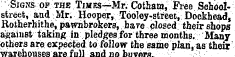
' Signs of the Times— -Mr . Cotham , Free Schoolstreet , and Mr . Hooper , Tooley-street , Dockhead , Rotherhithe , pawnbrokers , have closed their shops agaiiiBt taking in pledges for three months . Many others are expected to follow the same plan , as their warehouses are full arid no buyers . ' Vfiiir Apropos . ---The pecapants of Peel-streeL Majicheater , were surprised a short time ago , and the Tory portion of them perhaps annoyed j by finding one morning the name of the street Suddenly ^ transformed into " . SlidiDg-scale-street . " Many of * the warehousemen think tb e name rather appropriate ^ as their business has been gradoally sliding av / ay for some time \> ibSt . ~ Lwerpool Mercury .
Failure of the Renfkewshibe Bank , at Greenock . —This Banking Company ha 3 stopped payment ; This is a finishirig stroke of the most dreadful description for Greenock , as many wealthy indiyidaals hare lost their all , and are bankrupt . Several have already announced themselves down , simbrigst them an extensive shipovmer . Tee nOtBS ia Gi'eenock were first sold at 15 a , and as the day wore on , the price gradually lowered to 2 s . 3 d . A very severe run was made upon the Savisgs'Bank , in Greenock , last night ; but , of course , the parties in charge were prepared for it . There are only throe , partners in the bank , and it is said , instead of having / any capital in : the concern , they are collectively indebted to the Company upwards of £ 40 . 000 . The deposits are said to be from £ 170 000 to £ 200 , 000 . —Glasgow paper .
33annruptj^ &T*
33 annruptj ^ &t *
Untitled Article
\ From the Loiuion Gazette of Friday ' , April 1 . .. ' ' . ¦ ; ,.. . ' -i BANKEtPIS . -I . Arthur Jarrett , Castle-street , Southwark-street , hatinanufacturer , to surrender April 15 , May 13 , at one o ' clock , at the Bankrupta Court : solicitors , Messri Sheppaid , Thomas , Lepard , and WUHania / ClBak-iane ; official assignee , Mr . Whitmbre , Baainghall-itreet Francis Kirkham Fowell and Edward Thomas Graufurd , Boulogne-sur-Mer , France ; and Piccadilly , wiue-merchants , April 8 , at twelve o ' clock , May 13 , at one , at the Bankrupts'Court : solicitors , Messrs . Pering Minet , aad Smith , Lawrence Pountney-place : offieial assignee , Mr . Pennell . ¦ ' .. ¦¦ ¦ ¦ - } Samuel Garcia , Brydges . street . Coverit Garden , Bhell . nshmongur , April 7 , at eleven o'clock , Slay 16 , at twelve , at the Bankrupts'Court : solicitor , 'Mr . Lewes Albany , Piccadilly ; official assignee , Mr . Belcher .
John Blake , Bridge-street , Westminster , wine-merchant , April 5 , May 13 , at eleven o'clock ^ at the Bankrupts' ¦ ¦/ Court . ' :- ; - solicitor , Mr . Dimniocki Skinners ' - placej Siza-lane ; ofiBcial assignee , Mr . Johnson , BasmghaU-street . ¦ / ¦ ¦ •; - . - . . * ' ' ¦ :-- ' : ¦ ' ¦ - ¦ ' ' . ' ;/ .. - . - . ¦ . . : ; : ¦¦ - . ¦ . ¦ : , --T ^ t John Wright , Wolverhamptan , grocer , and Lichfield , tailor , April 13 , May 13 , at ten o ' clock , at the Swan Hotel , Wolyerhismpton : splicitorei Messrs . Clarke and Metcalf , Lincoln's-inn-fields and Mr Bennett , WolverhampVon . ' . "' .. .-- ; : Thomas Winder , Lancaster , Ironmonger , April is . Ma ; 13 , at eleveo o ' clock , at the King ' s Arms inn ^ Lancaster • solicitors , Messrs . Holme , LofCUs ; and Yowtjt New-inn ; and Messrt . Baldwin ; Lancaster . * * , Richard Terry , Cheltenham ^ common brewer , April II , May 13 , at tea o ' clock , at the Boyal Hotel , , Cheltenham-. selicitorB , Messrs . Blower and : Vizard , Lincoln'sflelda ; and Messrs . Boodle , Cheltenham .
James Nutter , Cambridge , miller , April 22 , May 13 at eleven o ' clock , at the Eagle Inn , Cambridge ^ : soli - citors , Messrs . Sharpe , Field , and Jackson , Bedfordrow ; and Messra Harris arid Sumpter , Cambridge . William Vickers , Manchester , ironfounder , April 23 May 13 , at eleven o'clock , at Uia Cominiasioners * - Tooms , Manchester : solicitorfl , Messra . Milne , Parry Milne , and Morris , Temple ; and Messrs . Crossley arid Sudlow , Manchester . . : . . . , . Christopher Jackson , Clitheroe , Lancashire , joiner April 22 , May 13 . at eleven o'clock , at the Courthouse , Burnley : solicitors , Messrs . Johnson , Son , and Weatherhaiv King ' s Bench-walk , Temple ; and Mr Hall , Clitheroe . . ; . ; . George Morrison , Nottingham , lace-manufacturer , April 8 , at twelve o ' clock , May 13 , at one , at the George the Fourth Ian ; Nottingham t solicitors , Messrs Taylor and Collison . Oreat James-street , Bedford-row and Mr . Hurst , Nottingham . - : ; *
, William and John Coull Carr , Sunderiand , merchants April 14 , at one o ' clock . May 13 , at eleven , at the Bridge Inn , Sunderlarid : solicitors . Messrs . Cuvelfe Skilbeck i and Hall , Southampton-buildings ; and Messrs Keenlyside and Harle , Newcaatle-upori-Tyne ; Bailey Hiliyard , Briatol , freestone-merchant , April 9 , May 13 , at two o ' clocki at the Commercial-rooms , Bristol : solicitors , Messrs . Clarke and Metcalf Lhl cbln ' s-inn-fields ; and Mr . Smith , BristbL Elizabeth Linstead , Liverpool , pawnbroker , April 16 May 13 , at one o ' clack , at the Clareadpn-rooms . tiver ' pool : soUcitors , Messrs . Chester and Toulmiri , Staple Inn ; and Mr . Norria , Liverpool . Samuel Wagstaff , Saddleworth , Yorkshh-e , grocer April 23 , May 13 , at two o'clock , at the Commissionersrooms , Manchester : solicitors . Mr . Wataen , St . Swithua ' slane ; and Mr . Johnson , Manchester .
PARTNERSHIPS DISSOLVED . " . - .. ' ; . ¦ , , J . Saxon and Son , Aahton-uadcr-iyne , Xaeashire , cotton-spinnew . Batler and Fisher , Dalton , Lancashire , iron-ore-merchante . B . Ward ^ and Co ., Oldham . Lancashire , hat-manufacturers . J . Collins arid E . Gripper , Salford , Lancashire , commori . bfewerr ; Wortham and Co ,, Manchester , letter press printers , J . Allen and W . Matthews , Uffington and Preaton , Shropshire , lime-burners . Taylor and Bingham , Bradfora , Yorkshire , wool-merchants . Waddiagton and Cropland , Bradford , Yorkshire , iron-founders . Shuttleworth and ^ Seap , Bumley , tancashire , ^ ironmongers . G . Fox , H . Homer , and C . Ashton , Sheffield , engineers asf « as regards CAshton . Macfle and Lamb , Xiver ^ pogl , plumbers . : ^ ' ^
Untitled Article
¦ - ¦ ¦ ' ¦ - ' ¦ ¦ . ""— ¦ m . . - . - . ¦ From the Gazelle & Tuesday , April ' 5 . '' ' : ¦ . ... -- " Bankrupts , ¦ ; ¦' , ' ' . ' . ¦ .. ' . ... '"¦ ¦ ¦' ¦ ¦ . ' : . ' / Thomas plowman , saddler , Yeovil , to surrender ; Apnll 2 and ^ May 17 , at twelve , at the Antdope Inn , Dorchester . Solicitors , FenneU and Williams , Bedfordrow , London ; Watte , Yeovil . ' " .: ^ Tfomas Firth , malteter , Elland . Yorkshire , April 25 , at four ^ amTAray 17 , at ten , at ftie White Lion Inn , Halifax . Solicitors , Emmet and Allen , Blooiosburysquare , LoHdon j Alexander , Halifax John Houghton Jonea , spirit-merchant , Manchester . April 25 Vj and May 17 , at ten , at the ( feriunisSrS rooms , Manchester . ; Solicitors , Bower and Back , Ghancery-lane ; Russell , Manchester . . ' ¦ " *>
John Bridle , grocer , Shepton MaUett , Somersetshire , April 1 Vand ^ May 17 , at eleven , at the Mitre Innt w ?; ^ sm ^ ' ^^^ John Flintiff > innkeeper , Bastrick , Yorkshire , April 20 , . at . eleven , arid May 17 , at twelve , at the White Lion Inn , Halifax . Solicitors , Rickarda and Walker , Lineoln ' s Inn-flclds , London ; Barber , Brighouse , near 'XLS-liX&X * ' ¦ -, ¦' ,. ¦ ' ' ¦¦ . ¦'' " ¦"¦¦ . ¦ .-- ¦ .- ¦ - ' - ' .... - -. > Henry _ Howard , Innkeeper ^ Waltham-cross , Hertford , Apr il 15 , at two , and May 17 , at twelve , at the Court . of Bankruptcy . Johnson , official assignee , BasmghaU-street ; Scott , St . Madred ' s-cour t , PpultrjT George I * w& , xofller , Bardwell , SttffoUt , April 15 , and - May 17 at twelve , at the Globe Inn , Bory si Edmunds . Solicitors . Hawkins , Bloxam , aridSto « ker Sh ^ stesSs ?^ «^^^
. . James Bedford , ironmonger , Westminster-road , Apnl 1 ^ , at one , and May 17 , at eleven , atthe Court of Bankiuptcy . Lackington , official assignee , Coleraan-street-buiWings ; Mayhew , JohMon , andMayhew , Carey-street , Lincolu ' s-iun . trJ ^ i ? " ^! innkeeper ; Evesham ; April 14 , and May 17 , at eleven , at the White Hart Inn , Evesham ^ v SoUcitbr , Bell , BedfSrowfSriS Cheek , Evesham . . ' ^ 7 . . - . .-. Wm iani ^ ^ Robert ^ Bayne , p aper manufacturer , Haugh ^ ton , Norftumberland , AprU 29 , at elev ^ i , arid May 17 , at one , at the Commission-room , Nfiwcaatle-npon-Tyna Solicitors , Meggisen , Pringle , ar id Man&ty » Klug ' s-road , Bedford-row , Loafon ; Broctett aad Phi » lipson , Newoftstle-upon-Tyne .
Untitled Article
The Latb Stosm . —The number of bodies thrown on tbe coasts of France , from Boulogne to Punkirk , in consequence of the storm of the lOthulfc . amounts , says the Courier du Nord , to 150 . Depasture of the Great Western . — Bbistox . April 2 . —The Great Western steamer naviDg been completely refitted , sailed on her first voyage for 2 sew Yvrk this season ' to-day , at twenty-five minutes past one o ' clock . She carries iroh her an average . cargo , and seventy-two passengers , among whom were—M . Derraine , with despatches from the French Government ; Mr . Isaiah Totvnsend , of the United States Legation in London , with despatches for the Government of the United States ; and Mr . Hillard , with despatches for Lord Ashbarton .
Rr > - won the KENTBEViHiiLB Bjlsk . —On Tuesday last orders were received from head-quarters at Edinburgh , bj the branch ol the Royal Bank in this city , to decline receiving the notes of the Renfrewshire Bank of Greenock . In consequence of this being acted upon , several of the other banks in this city adopted a similar course yesterday , arid considerable uheasiness has , as may -well De supposed , been felt bj the holders ofnous and others interested in the establishment . The agent of the Renfrewshire bank here , on being applied to , Btated that he had received his usual advices fron Greenock on
Wednesday morning , and that he was not aware upon what grounds the Royal Bank were proceeding . As , however , the notes of the Renfrewshire Bank were payable in Greenock , he did not conceive himself warranted in exchanging them for those Of other banks . A considerable quantity of the notes were in the coarse of the day sent down to ihe principal establishment at Greenock , and a ran npon the bank there took place in the coarse of yesterday , bnt we hare heard no precise account of the result . The Royal Bank acted as the agents of the RenfxewBhirewshire Bank in Edinburgh , —Glasgow Arg
Untitled Article
6 THE NORTHERN SfAR . - ___^ ¦ ' ' ; •' . ¦ . - " ' ¦ ' . ¦ . ¦ ¦ ¦¦ ' —«¦ --— ¦ . ' - .. - . '"• ' . ' . " " ' — ' ¦ —•——•——» ' - ¦ ¦ * *¦ ¦ ¦ .-
-
-
Citation
-
Northern Star (1837-1852), April 9, 1842, page 6, in the Nineteenth-Century Serials Edition (2008; 2018) ncse.ac.uk/periodicals/ns/issues/vm2-ncseproduct425/page/6/
-