On this page
-
Departments (2)
-
Text (8)
-
Untitled Article
-

Untitled Article
-
Untitled Article
-
Untitled Article
-
Untitled Article
-

9To afteafcwjs antr <£om$pott&eutg
-
TEE TsTOKTHEEJNT STAE. SATURDAY. OCTOBER 8, 1842. ^
-

Untitled Article
Note: This text has been automatically extracted via Optical Character Recognition (OCR) software. The text has not been manually corrected and should not be relied on to be an accurate representation of the item.
-
-
Transcript
-
Note: This text has been automatically extracted via Optical Character Recognition (OCR) software. The text has not been manually corrected and should not be relied on to be an accurate representation of the item.
Additionally, when viewing full transcripts, extracted text may not be in the same order as the original document.
Untitled Article
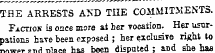
THE ARRESTS AND TIIE COMMITMENTS . Faction is once more at her Yocaiion . Her usurpations hare been exposed ; her exclusive right to power and place has been disputed ; and she has determined to prosecute and victimise those who hare the temerity to dispute her sway . I The work of silencing has been begun . Charges of
treason , of riot , of unlawful assembling , of conspiracy , and of Chartism , are as " rife as bees in a hoppet . " Arrests and incarcerations follow up the charges . The people ' s leaders are snatched from them , and cooped up in prison . And all this » n the hope to put down the cries and efforts of starring Englishmen to regain the position they once occupied , when " they were will to do , " having " WAGES FOX WOBKISG . "
And are our rulers so besoifcodly blind as to imagine they can succeed in their object ! Have t ^ ey not before learned the futility of such meaHS vo put down the spirit of freedom ? If , after the experience they have already had , as to the effects of prosecution and imprisonment in staying the demand for political power to establish political and social eight , they hope to get rid of the people ' s importunities by such means , they are astu : e indeed !
It is a curious fact , but it is no less a fact , that the askings of the people for their due share in the Government of the country have always been answered by persecution and dnngeons ! And it is a no less curious fact , that such persecuting and such dungeoning have always added to the firmness and force of the people ' s demand ; always added to their sirec ^ th , and put them in a better and better position to obrain the accomplishment of their desires .
In the year 1817 , a million-and-a-half of Englishmen petitioned for umversal suffbage . Their prayer wa 3 answered by a gagging Bill , and the poweb-of-impbisomie-vt- Bill . Their prayer was answered by the suspension of the Habeas Corpus Act . Their prajer was answered by the apprehension - of hundreds of their active leaders , and the confinement of them in distant dungeons for months together , without the bringing of a tingle man of them before a Magistrate , or the Iayiug to their charge the infraction of a single law . Their prayer was answered by the torturing of their friends while in prison , to extort confessions from them ;
and by the making of prison di ; cipjine so oppressive , that some of thevioanis , poor Eilley , of Huddersfield j for instance , were glad to resort to suicide to escape from their unbearable sufferings . Their prayer was answered by the shaking of the bowels out of the bodies of the imprisoned ; and by brutal jests in the House" of wisdom respecting " the revered and ruptured Ogden , " which set the humane assembly in a loud soar of laughter" . ! Their prajer : was answered by the sending amongst them spies , atd i > cir £ B . s to outrage and rebellion ; and by the j hanging and beheading of those who were victims j to the rPr-Ejau ' s plot ! And y i-thu answer did j not satisfy ' It did not put down the demand for Umv £ R = al SrFFBAGE It did not even \
. . cause the people to relax in their exertions to obtain j It . No . A constant and uncea < icg application j ¦ was kept up ; until in the year 1832 , the Parliament , I who had up to that time denied that any Reform in j its constitution was needed ; who had passed the i terrible laws of 1817—18 , and the doubly infamous ; SIX ACTS of 1819—20 , to put down the cry , and extinguish the demand for such Reform : in the year 18 S 2 , the Parliament who had done r / 1 this ; who had as-edin t-h- ' s terrible manner towards the
Reformers ; who red laughed with the brutal je .-temt the sufferings of the " revered and ruptured Ogde . n ; ' who had vo ; ed aesin and again that it would agree to Reform in no ihepe whatever ; in the year 1832 , from the continually increased and increasing demands of the people , the Parliament who had done all this , and a vast fual more , to prevent the accomplishment of any R . fonn , voted , PARSED AN ACT declaring thai Rltoi-u teas necessary / and that a comparatively great portion of the people should be invested witk the Suffrage . ' . ' . '
In the year 1839 , when the people had found out that the reform , though an acknowledgement of the principle , was one mora in name than fact ; and that the measures of relief from high-taxation and low wages which they had expected to result from i : were not likely to be obtained , because of the class- nt 2 re 3 t 3 alone represented in the Legislature , they reiterated their demand for Universal Suffrage , in the shape of a National Petition praying fcr its adoption , and signed by a million-and-a-half of persons . Their prayer , in this instance too , was answered by persecution
and imprisonment . They were aceused of an intention to burn , kill , and destroy ! They were accused of a desire to produce anarchy , confusion , and confiscation . Spies and i . nciters were again sent amongst them to get up emutes , and " risings " and " riots ; '' and when these had sufficiently done their work ; when the falsScations and wilful misrepresentations of the Pres 3 had sufficiently poisoned the minds of the holders of " a bit of property , " ¦ who were taught to dread the Chartist 3 as they would the devouring flame ; when the minds of the jury-class were soffisiontly prepared , charges of conspiracy , of sedition , of riot , of unlawfully assembling ,
of attending illegal meeting , and of compassing the dethronement and death of the Sovereign ! were hatched in every quarter ! and ths Juries tended the chicks with fond and motherly regard ! Transporting and imprisonments by hundreds followed No difficulty was experienced in procuring convictions . A man was arraigned . " What is he i" says & Juror . " A Chartist , " answers the crown lawyer , squinting out of each eye at once , as much as to say " beware of him i ! l " 0 1 a Chartist is he ? ' responds the Juror ; " the man who wants MY bit of property : shut him up ! he is not fit to be at large . " And , in faith , they were shut up too , and no mistake J
Bu : all the " Bhutting-up , " and all the persecution did not put down the demand for Umy . er ? al Suffrage ! They did not even produce confusion in the rank 3 of the people . As fast as one leader was snatched away , did another rise up to supply his place . Thoss who were left worked with redoubled energy . Recruits joined the standard on every side : and in 1840 , even while most of the prisons were filled wiih Chartist victims , was there presented to the House of Commons another demand , more urgent than any preceding one , for Universal Suffrage , in the shape of a National Petition , gigaed by two millions of the people ! I
The terms of imprisonment expired ; the prison doors opened , and admitted to the light of day the brave fellows who had been " shut up" to prevent them taking the "bit of property . " They came forth not only undaunted , but invigorated ! Res ' had been , to some of them , the renewing oi another lease of life . The oppressions they had been subjected to in their confinement but made them more determined to release
themselves and their countrymen from the galling yoke of the oppressor . The patriot ' s enthusiasm spread through the ranks . Leaders and people seemed to be animated with a new spirit ; & fresh and holy seal to dethrone usurpation , and establish righteousn ess in its stead ! A firm and sober determination was every where manifested to turn neither to the right hand nor to the left ; but to work out the country ' s salvation .
The effects of the prosecutions and imprisonment of 1839-40 , are to be seen in the preparation , signing , and presentation of the Natioxai PKtmoH in 18 * 2 ! The awakened spirit o ] ij-auiry , and the reactio .. consequent on the livingdown of the lies and falsifications of the factious 2 nd interested , swelled the ranks to sn astonishing cc-ref . THREE MILLIONS AND A HALF oJ Ei ^ lish subjects placed their names upon the
Untitled Article
mnster-roll ; and the demand for Universal Suffrage was made with a force of language and an attitude of earnestness never before seen ! The demap . d was still refused ' . —NOT INSULTINGLY , . THIS TIME !!! bul with expressions of SYMPATHY ! From that day to this the people and their leaders have gone on acquiring power , and enlisting and organising public opinion . Sections of the middle classes have adopted their principles , and bine talked of joining their ranks . Offices in local places have been filled with Chartist occupants . The people had indeed set upon the accomplishment of their object in real earnest ; and their intention not to be driven from their c oarse or foiled in their endeavours was but too plainly apparent .
What therefore could not be accomplished by stratagem and trick must be attempted by open force . Notwithstanding the expsrience of former times as to the futility of imprisonments and incarcerations to disperse the army of right , yet its dispersion was an object of such moment to the usurpers of power , that the chance of accomplishing their purpose was worth trying for 1 The Press was therefore set to work . Conspiracies to turn the destitution of the people to their own destruction were formed . After sundry hints about closing the factories ; turning out the hands ; general strikes ; and " arresting the wheels of Government , " by those who are
interested in keeping labour under their feet , the confederated plan was put in operation . A strike was caased . When caused , some of the Chartists were dragged into it , and the whole of the blame laid upon that body . " Riots" and " risings" followed . " It was the Chartists that did it all" was the instant cry ! " All would have been right again , had it not been for the Chartists . " The Chartists have inflamed the passions , and excited the feelings of the ignorant mob . " " Property is inseenre" ! " The strong arm of the law must be exerted to put
down those who create tumult and cause disorder . " And when the press had sufficiently played upon these strings so as to fix the tune in the minds of the " bit of property " men , out comes a cock-and-bull story abont a Chartist plot to assassinate the Queen !! and of the Ehooting at a man because he would not be a party to it ! and out comes , at the same time , tha announcement that the magistrates of Staffordshire have discovered a traitor in the person of a Chartist leader , and that they hare committed him to take his trial for HIGH TREASON !!
And thus was the " conspiracy" pot made to boil When the broth was sufficiently ready , arrests by scores were made . Look at the records in our present pages ! The arrested are committed , as a matter of course-They will have to " take their trial : " i . e . the "bit-ofproperty " -men will be called up to look at them , care being taken to keep them in a box to themselves out of harm ' s way ; and when they have seen themi and uttered the words " guilty men , " with a serious and heavy shake of their heavy heads , the Chartists will be " shut up " again ; and the "bit-of-property " - men will breathe a little more freely once more , until they are again alarmed when they are wanted to be used by the usurpers of power !
At the present , we shall not fay anything respecting the charge vamped-up against the arrested ; nor respecting tin inconceiveable scoundrel upon whose evidence they are committed ! A proper time for examining both will come : till then we forbear . Ample reports of the examinations already had appear in other parts of this sheet : to them we invite special attention . Oao fact , before we conclude , we must mention An Anti-Corn Law Facioby Master has been arrested , as well as the Chartists . We only mention the fact , and call attention to it . We say nothing respecting the charge adduced against him
nor tae evidence by which it is supported . We do not point attention to the fact that he is the only one of that party the authorities have laid a finger upon , though one of their o ^ rn body , Duffey , publicly offered to prove that the wholeof the strike , " risings /' " riots , " and all , was concocted and planned by the anti-Corn Law League . We do not oven call attention to the fact that witnesses brought against him swear that he rffered to lead the men of Ashlon on to Manchester ; AND THAT THIS WAS THE FIRST MANIFESTATION of the rioting plot . We do not point out the fact that after evidence of this nature had been given , he was admitted to bail , though a
millowner , in the sum of £ 200 , while £ 2 , 000 bail was exacted from Mr . O'Connor for striving to defeat the plotters , and to keep the people out of the fangs of the law ; and £ 1600 demanded from John Campbell , a working man ; and £ 600 each demanded from Parses , the cobbler , and Thornton , the hand-loom weaver We do not point attention to these things , though each of them loudly calls for commentary ; but we do point attention to the fact that he has been arrested , and beg of the public to WATCH HIS CASE ! !! See what the end of it turns out to be I ! Watch well ; and see whether that apprehension be only a colour for the rest , or not !
We had got to this point , intending to conclude with a word or two of advice to the Chartists generally , as to the conduct due from them under present circumstances , when Thursday ' s afternoon post arrived , and brought us the annexed letter from the Editor , which does much more effectually than we could have done that which we intended . We conclude , therefore , by echoing the SECOND VOICE FROM THE DUNGEON . New Bailey Prison , Manchester , Thursday . Morning , Oct . 6 th , 1842 .
My dear Fbiends , —The " hearing before magistrates" is over . As you will learn the particulars of it from the report which you will doubtless find elsewhere , I shall not here recapitulate them . Suffice it . we are , of course committed . You will see also from the report upon whose evidence we are committed . I shall not at present say one word upon the whole thing . At a future and a proper time I shall have much to say ; much , it may be that may surprise many of you . For the present I say only let the coals of persecution
feed the flamo of patriotism ! Let it burn fiercely ; but yet see that it be even tempered with coolness and prudence ! Keep your eyes open 1 spies are abroad-DEEP DAMNING TREACHERY HAS BEEN AT WORK . When the revelations come , some of you may be surprised ; but the time is not yet . The proceedings of this case—so far as they have gone—give you an exhibition of human nature under one of its aspects . God grant that that may be the worst exhibition connected with it . I expect that it will not : but we shall see .
Meantime , be firm ; be steady ; be prudent ; be vigilant ; watch well your leaders ; use your own judgments ; do not let passion blind those judgments ; and above all things evidence that : — " The more the cruel tyrants bind us ; The more united they shall find us . " Let ; your meetings be all held as usual . Never mind the leaders being locked up ; you can do without them , "ion have all hearts to feel , and brains to think . You know what you need , and you know that only by prudence , coolness , caution ,
| perseverance , and peacefulness can yon obtain it . ' . Beware that your boiling blood rise not too high . ! No excesses—no Tiolence—no destruction of pro-. perty—no burnings—no ** risings and riots . ' * Leave : all these things to the parties themselves to execute . who . have bo long and so industriously sought to 1 entrap and involve you in them ; while yon go on ; quietly and certainly to spread your principles ; to enlighten and encourage each other ; and to andermine the fortress f tyranny by the power of an . increased and enlightened public opinion .
. Above all things , I cannot take my present leave of you without repeating the advice I have so often ! before given yon . Spurn fromyou the big talkers , \ the ranting mouthers , who ire for carrying every ; thing in a trice , without telling yon bow ; who are 1 fond of talking about " readiness , " and being " up / to the mark , " - ^ c who are ever pouring out their frothy decl&ma- ' . 'Cn for the purpose of stirring up
Untitled Article
ill-feeling , instead of enlightening your judgments and forming your opinions . These are the plaguespots of our movement . Out with them ! Use your own sense ; seek for information and not for excitement ; and when yon find a man labouring only to produce excitement , depend upon it he is either a knave who will betray yon , or a coward who will desert you whenever the pinch comes to which his folly may have driven you . This is no hew advice from me . You have had it from me again and again ; and if I ever saw circumstances which reqaired ita emphatic reiteration , I see them now . Farther explanation I cannot now give . But the time may come when I can again speak freely . Till when , farewell ! God save you ! and speed the Charter ! ! Wm . Hill .
Untitled Article
THE "RIGHT OF SEARCH , " AT HOME
EXCEEDING THE LAW . A most reprehensible and unlawful practice has been brought under our notice through the recent arrests ; and to it we direct public attention , with a view to steps being instantly taken to assort the " majesty of the law . " Judge Tindal has told the country , through the Staffordshire Grand Jury , that he hopes the " administration of criminal justice will be such as to have the wholesome effect of teaching all who need such warning , that in this country the punishment of crime will follow the commission of it with a pace so sure , so steady , and so speedy , that the guilty can have no chance of escaping . "
We hope so , too : and it is for the purpose of procuriBg the due " punishment of crime" that we here detail Us constant commission by those who pretend , at the very time they are transgressing , to be executing the law . The practice to which we allude is that which has latterly sprang up along with that perfectly " independent" and truly " constitutional" " force , " a " standing" ARMED Police , We mean the practice of exercising the " right of search" without warrant or authority . The law used to be that before a constable or an ; other official , could search
a man ' s house , a warrant must be granted him by a justice of the peace , directing him to institute and make such search . And what was more than that : the warrant was required to set forth the particular things for which the search was directed to be made . The law used to be that a constable entering a man ' s house to make search for anything , no matter what , without a warrant from a magistrate , committed trespass ; and was liable to be visited , and many have been visited , with the heavy penalties of the law for so transgressing . Such used to be the law ; and the practice used to be in accordance with it .
The Law still continues the same . It is still expressly against all law and all rule for a constable to enter any man ' s dwelling to institute a search therein , unless he is armed with the authority of a warrant to do so . And a justice of the peace cannot give such warrant of his own accord . He has not the right , even though he should think proper to aot of himself and for himself , to enter a man ' s dwelling when he pleaseB , and search for what he pleases . He must have the complaint , and the oath , of a third party , before he can act at all . Even in the case of stolen goods , which is as strong a case
as can be put , " a justice cannot upon bare surmise make a warrant to break any man's house to search for them ; or even / oj- a felon ; for the justices being created by Act of Parliament have no such authority granted them by Act of Parliament . " [ Chitty ' s Burn ' s Justice , vol . 5 . p . 482 . ] " But in the case of a complaint and oath made of goods stolen , and that the party suspects that goods are in suoh house , and shews the cause of his suspicion , the justice of the peace may grant a warrant to search in those suspected places mentioned in his warrant , and to attach the goods and the party in whose possession
they are found , and bring them before him to give an account how he came by them , and farther to abide such order as to law shall appertain . " [ Ibid , ibid , p . 482 . J But it is only when such complaint and such oath is made , and such cause for suspicion shewn , that the Justice is authorized to issue his warrant . And further : when such warrant is issued , it must particularize the articles for which search is instituted ; and it must also particularize the place or places where the Bearch is to be made . " A general warrant is illegal and void for its uncertainty . " [ Blackslone . ] Mr . Hawkins says : " I do not find any good authority , that a justice can justify sending a general warrant to search all suspected houses for stolen
goods ; for such warrant seems to be illegal on the face of it . " [ 2 Hawkins , c . 13 , s . 10 , 17 . ] Lord Hale in his History of the Pleas of ths Crown , expresseth himself thus : " I do take it that a general warrant to search in all suspected places is not good ; but only to search in such particular plaoe 3 where the party assigns before the justice his suspicion , and the probable causes thereof . " 12 Hale , 150 . ] Nay it has even been ruled by the Courts above , that "the officer must strictly observe the directions of the warrant ; and if he be directed to seize only stolen sugar , and seize tea , he will be a trespasser ! " [ Chitly's Burn ' s Justice , vol . 5 . p . 483 . ] " and a warrant directing a search in a particular house only , would not justify a search in another . " [ Ibid , ibid , p . 483 . ]
Such is still the law in relation to the " right of search , " even in the case of stolen goods . But what is the practice ? Are the requirements of the law at all attended to \ Are they at all heeded or cared for ? Are no searches made without warrant ? Is no man ' s house entered without authority ? Are his goods or property safe from being seized upon , and removed , without the preliminaries of complaint , oath , ground of suspicion , and specification of articles to be sought for and seized ! Are all these
things so ? By no means . Searches are almost daily made without authority . The law is almost daily trampled on by constables ; and its supercession is connived at by the Magistrates . Cases ara constantly coming before them where the law has been utterly disregarded by their own officials . They know of searches being al < no 3 t constantly made ; and they know that applications to them , according to rule and law , for their warrants authorising such searchings , are as uncommon as blackberries in February !
Our attention has been directed to this matter principally by the searches which have invariably been made by the officers entrusted with the execution of the warrants authorising the recent arrests of the leading Chartists . In every case where suoh warrant has been executed do we find that a search both of the person and of the dwelling of the party apprehended has been made . In most cases , too , do we find that property has been seized and taken away . Now all this is wholly and utterly illegal .
The officers , in each of these instances , were entrusted with warrants directing them to apprehend the persons named in them . But this is all that the warrants directed them to do . They were not directed to apprehend the goods , or property , belonging to the person , as well as the person himself . It was him they were directed to take ; and not his . Whenever they do more than they are directed to do , they exceed their authority : whenever they do less , they neglect their duty : and for both of those offences they are liable to be visited with the Law ' s
penalty . Let us examine this matter a little in detail , Mr . Superintendent Beswick , of the Manchester Police , on the 17 th of August last , was entrusted with a warrant directing him to apprehend one William Turner , a printer , and to convey him before the Justices of the Peace to answer to a certain misdemeanour with which he was charged . He went to Tubheb ' s place of business , and found the man he was in quest of . He made him his
Untitled Article
prisoner . Not content with this , he proceeded to searoh the house and the printing office belonging to the man he had in custody . He found some papers , which he thought would serve his purpose ; and he took possession of them . He found a certain " form" of type , whioh he also took possession of . He removed these from the premises , and keeps them to this day ; "All right" this , if he had a Justice ' s warrant authorising him to make such
search , and specifying the articles he was to seize and remove ; for in that case the Justice himself would be answerable for any excess of authority or breach of law , in directing a searoh and seizure to be made where he had no authority to act : but " all weonq" if Mr . Beswick chose to act thus on his own authority and without warrant : for in that case he alone is answerable for the aot of trespass he committed ..
An act of trespass , in this case , has been committed , whether Mr . Beswick was armed with a warrant , directing the search and seizure to be made , or not . No Justice had any authority to issue a warrant for any such purpose . No Justice had a right or power to seiza Turner ' s type , unless some one made oath before him that he suspected it was stolen ; nor had he any power to possess himself of the printed documents Beswick removed . The law directs that every printer shall keep a copy of every paper he prints for the space of six months next after the printing thereof ; and that he shall write on such copy the name and place of abode of the person or persons who employ him to print suoh
paper , and the date when it was printed . It also directs that such printer shall produce such copy so written upon , to any Justice of ( he Peace who shall require it within the space of six calendar months from the printing of the same ; or that he shall , for every omission , neglect , or refusal to preserve , write upon , or produce such copy , forfeit and lose the sum of £ 20 . Here then was a lawful way in which the Magistrates could have satisfied themselves as to who employed Turner to print the paper in question . Here was a legal method by which they could have arrived at the information they sought for , without resorting to the illegal and unlawful act of searching the man ' s house and removing his goods .
Remember it was not felony that Turner was charged with . Remember that he was not charged with having stolen the type ; and remember that the things seized and removed were not stolen goods found in his possession upon a lawful searoh . Remember these things ; and remember too , that the only grounds upon which the seizure of these things can be justified , or an attempt at justification made , is , that they furnished that evidence against Turner which the Magistrates ought to have been possessed of beforehand , or they should not have issued the warrant for his apprehension .
Next we go to Leach's case . . He was included in the same warrant . He was apprehended the same night , August 17 th . The warrant only authorized the capture of his person . Not content with executing the warrant , the officers proceeded to search his premises . They soized and removed everything they thought likely to serve them in getting up a case against the man they had already
apprehended on a specifio charge of misdemeanour . They seized books , papers , and cards . They removed the man , whose person they were directed to Beize and place in custody , and the property which they were not directed to seize : and after they have left his premises some time , Superintendent Beswick sent Inspector Irwin back again to bring away a board that he remembered to have seen in the shop !
Now , these were acts of trespass on the part of both these officers . They did not apprehend Leach for felony . It was only misdemeanour he was charged with . The property they removed was not stolen property . No one had sworn that they suspected it to be such ; and unless some one had done bo , even the Magistrates could not have authorized the search and seizure . [ By-the-way , one of the books the " authorities "
have thus obtained illegal possession of they think a great prize . We wish them much joy of it 1 It is a record of the names and residences of some of the officers and members of the old defunct National Charter Association ! Amongst the rest are given the names of the Provisional Executive ; and Mr . Tillman is set forth as secretary . That Association was dissolved , by public meeting , somewhere about fifteen months ago !!! It has now no existence The old book will do them much good !]
Then to come to the doings of last week . Inspector Taylor arrested Mr . Hill , the Editor of this Journal , in the public street . He took him to the police-office , and placed him in confinement there , after having read over to him the warrant authorizing the capture on a charge of misdemeanour . In the course of the day he took Mr . Hill out of his cell , put him into a hackney coacb , drove him down to his father ' s house , where Mr . Hill lives , and which he had left and was on his way to this offioe when he was arrested . Arrived at the lodgings of Mr . Hill , the Inspector proceeded to
search , and to remove whatever he thought proper to take . Amongst the rest , he possessed himself of some skeleton sermons . Having finished his search and seizure there , he brought Mr . Hill to this office , prepared to begin a search here . He was only prevented from executing his intention by the firmness and decision of Mr . Hobson , who demanded his warrant , and then bid him go to work . Finding himself thus pinned , he departed without making the searoh ,
acknowledging he had no authority to enforce it ! Now , we aver that a search and seizure in this place , even after Mr . Hobson ' s threat to resist it unless a warrant was produced , would have been just as lawful as the search made either at Mr . Turner ' s , at Mr . Leach ' s , or at Mr . Hill's Father ' s . If the officers had power to enter the latter places and seize , they had power to eater this place and seize also . The one would just have been as lawful as the other : and all as illegal as illegality could make them .
Inspector Taylor seemed a little astonished when he was asked for his authority lo search ! He seemed as if he were not aware that it was needful for him to possess it . He seemed imbued with the idea , springing from the present lax and illegal practice , ' that the police have authority to enter where and when they like . The firmness of Mr . Hobson took him all aback ; and a new light seemed to open in upon him when he was told that a search would not be permitted unless he produced a warrant from a magistrate directing it .
In the case of Harney the trespass was still worse . The police entered his house with a warrant for his apprehension . They found him at home . They found also with him a number of others , met in his house on business . These parties had with them a number of books . These books , though they did not belong to Harney , and were not in his possession any more than the police were ; for both were in his bouse ; but these books , though belonging to others , and those others present at the time , did the officers seize and convey away !!
Bnt what shall we say to the case of Mr . Arthur ? He was arrested , like the others , on a charge of misdemeanour . When his body had been captured and conveyed away , in obedience to the whole and sole instructions of the warrant , * search was made in his house and some property seized and removed . When he was placed at the Bar , he could not be identified ! The charge brought against him fell to { he ground and he was discharged !!
Now this searching and seizing , in all these cases , aregroBsly and wholly ILLEGAL ! There is not a shadow of a shade of law for them 1 The parties who have bo acted have exceeded law ; have acted without authority . They have committed " crime . " They have done that which they had no right to do . They have done this knowingly and wilfully : for to suppose that they were ignorant of the requirements of the law respecting " the right of search" would be to suppose them unfitted for the
Untitled Article
posts they have been respectively selected to occupy ; and far be it from us to impugn the judgment of those who have selected them ! Is thiB " crime" to go unpunished f Shall not the " majesty of the law" be asserted ! Shall not its penalties visit the heads of all offenders ! Are they to be reserved for the poor " rioters" and " Chartist conspirators" alone ? Is it these alone who are to be taught "that in this country the punishment of crime follows the commission of it with a pace so sure , so steady , and bo speedy , that the guilty can have no ohanoe of escaping" ! Are not all " criminals" to be thus taught ! Should not those who trespass be " punished" aa well as those who " riot" !
Should not the official who transgresses against law ; who invades the home of an Englishman ; who takes away his property by force ; who keeps that property away from him : should not such an offender as this be taught , as well as the poor Chartist who " con-, spires , " that "the law of the land is too strong for him ; and that the honest part of the communitythe lovers of peace and order , will at all times unite themselves with the established authorities of the government to render his attempts futile and abortive , and to put down such an evil-doer with a strong hand'' ? Should he not indeed be "taught that obedience to the laws of the land and the government of the country is due not as a matter of compulsion , but on principle and conscience" ?
We think this teaching ought to be had . We think that if these parties do not know their duty , they ought to be ( aught it . We implore of those concerned that they be so taught . Infractions of the law like these , on the part of the authorities , when quietly submitted to , soon become custom . And thus the rights appertaining to us and guaranteed by law , are frittered away and lost ! If steps are not taken to " assert the majesty of the law" in this particular , and that immediately too , the " right of search" when and WHERE a policeman pleases , will become the customary practice throughout the
land . Now , though this may be desired by traitors to the land of their birth , we have no desire to see so much of the infamous French system of Policeism introduced amongst us . We have already a " standing" ARMED " force ! " For God's sake let us not have the Domiciliary visits !! It is not alone in the case of Chartist " conspirators" that this unlawful " right of search" has been exercised . It is daily exercised in all our large towns where the Police system exists . Houses are daily entered , and searches are daily made , without warrant or authority . Wo know that this is the
case- We know that it is one of the " regulations " of the " force" that men shall be set apart to perform this task . No longer than last Saturday we heard one of the Manchester officers declare that his " regular" duly was to walk the streets in plain clothes , and to visit all the lodging-houses and places of resort for the poor unfortunates of the weaker sex , to search and ascertain who the owner had in his dwelling . This entry and search is also made in Leeds ; and a police-officer , in either place , would as soon think of giving the go-by to all the regulations" of the " force , " as he would of asking a Magistrate for a warrant to authorize
suoh entry and search . And yet such entry and search are directly in the teeth of the requirements of Statute law ! The Statute requires that before any constable shall enter even a house of the above description , information upon oath must be made before a Justice , that there is reasonable ground of suspio ; on that the party wanted is harboured or concealed in the house in question ; and , that then , but not before , shall the Justice issue his warrant authorizing a search to be made . Unless this be done , and the warrant read when the search is attempted to be made , the entry may be disputed , and even resisted .
Let not the bawler out for the punishment of the poor when they break the law , attempt to justify or palliate these infractions of Statute-law by the administrators and executors of the law , on the plea that lodging-houses and reputed houses of ill-fame are not worthy of protection ; and that though these be entered and searohed , the houses of peaceable and well-disposed subjects are Bafe and Becure from such visits . The law gives lodging-house keepers protection : and the only guarantee that the peaceable and well-disposed can have that they will not be subjected
to the infraction of home rights is the knowledge and assurance that the lawful rights of all portions of the community are respected and maintained . Once establish the practice , that a constable or policeman is justified in entering the house of a lodging-house keeper without warrant , and make a search there , contrary to the positive requirements of an Act of Parliament , and depend upon it the mansion and the dwelling of the aristocrat and the shopkeeper and tradesman will not be long sacred from unlawful entry too ! It is in their beginnings that practices of this nature should be nipped and crushed .
Is it likely that tha law can-be respected by the great body of the people , or its requirements cheerfully obeyed , when they see it thus shamelessly trodden underfoot , by those who are entrusted with its due exeoution , and whose example of obedie . nce and strict conformity ought to be constantly before the eyes of the ^ whole community ! The practice , then , of entry and search without due authority , we denounce as unlawful , whether put in force against " conspiring" Chartists or poor lodging-house keepers . We have dwelt mostly upon the trespasses committed in the houses of our political friends , because they affect its the most and it is the nature of man to be selfish . We have
dwelt upon them , too , at good length , beoause we see in them the beginning of another system totally opposed to the principle of English law . No man amongst us is required to answer a question in any court of justice that he deems likely to criminate himself should he answer it . English law repudiates the principle that a man shall be required to furnish evidence against himself . Such is the law amongst us ; and the practice has hitherto been in accordance with it . It is a principle and practice of whioh we have just reason to be proud : and it has been another of great boast in the best days of English greatness , that , in this particular , our feee institutions contrasted so favourably with those of despotic Governments .
But what have the searchings been made for , without authority , on the persons , and in the dwellings , of the apprehended Chartists ? TO MAKE THE PRISONERS FURNISH EVIDENCE AGAINST THEMSELVES ! ! ! Permit this , and we shall soon have the interrogation of culprits in full vogue amongst us , as well as the domiciliary visits ! ! ! We do tend , most alarmingly , towards that hateful French system which all constitutional writers and great law authorities have taught us to despise !!
What we advise ia this : that the lawyers entrusted witb the defence of the " conspiring" Chartists be consulted upon this matter , and counsel taken as to the propriety of instituting an action for trespass against some one or other of the officers who have so offended , for the purpose of asserting the law . We would especially call the attention of Mr . O'Connor to the subject , as soon as he is well enough to attend to business . We think the law ought to be vindicated ; because a most valuable and valued bight is at Btake ; and we further think it as great an act of patriotism to preserve the rights we have , as it is to seek to restore back those we have lost .
This is not a matter affeoting M politics" alone . The operation of this new version of the " Right of Search" will not be confined to Chartists solely It will be general ; and all will , sooser or later , feel its effects . All are , therefore , interested with us in staying its further progress . On the Press especially have we a olaim . Dare its conductors meddle with the question , now that we have meddled , by pointing attention to it ! Will they , for once , enter the common field of right with us , and maintain the privileges of the people against the undue and alarming encroachments of authority ? Let us hope it will be even so ! I
Untitled Article
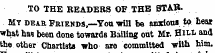
TO THE READERS OF THE STAB . My dear Friends , —You will be anxious to hear what hau been done towards Bailing out Mr . Hin and the other Chartlata who are committed with him . You will have learned that he ia permitted to pat ia Ball , amounting to £ 800 ; and that Bail for the others is fixed at £ 700 and £ 600 . I could not be present at the examination on Tuesday last . The absence of Mr . Hill baa devolved his duties upon me , till he can appear again at his old post The sub-Editor and Reporter bad to go to procure a report of the proceedings ; and it was impossible that we coald be both away at that time .
I gave Mr . Barker , a note to my good friend Mr . Hey wood , desiring him to look out and procure bail Mr . Heywood , as soon as he received the note instantly offered to become one of the sureties for Mr Hill , If the magistrates would admit of bail at alL But , he said , I must be the other surety ; for there were so many to find for , thai the friends in Manchester would have more to do than they could accomplish . 'Accordingly , when the amount of bail was fixed , my
nmmeand Mr . Heywood ' s were given in . Mr Barker informed me on bis return that I must be in Manchester on Thursday morning to perfect the Bail . But thla was impossible . Thursday is the must busy day at the office . I had the charge of the paper upon my hands , besides my own business . To get the paper to press was my first duty : and now that I nave just accomplished that , I am off to Manchester to aid in the release of my friend , and your friend , the Editor . I am one who hates , And one who will battle oppression , Star Office , Jos . Hobson . Thursday , Quarter past Four .
Untitled Article
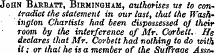
John Barbatt , Birmingham , authorises us to coniradict the statement in our last , that the Washington Chartists had been dispossessed of their room by the interference of Mr . Corbetl . He declares that Mr . Corbett had nothing to do with it ; or that he is a member of the Suffrage Asso ciation . Mr . Corbett ,. he says , has given a subscription to White ' s Defence Fund . Wm . Butler , —His address has been received . He had better state his wishes personally at a Chartist meeting . George Didsbury , Skegby . —His address to the Chartists is emitted for the same reason .
Mr . S . Beswick , Manchester . —A new edition of ' Mr . Hill ' s Progressive Exercises is *» the press It will be ready for sale in another week or so when he can procure it from Mr . Heywood . Mid Lothian . —All communications in this locality ¦ intended for the Northern Star should be directed to Wm . Daniels , St . Ann's , Lasswade . "A Few Chartists , Finsbury , " sent Is . towards . Hunt ' s monument . This is in answer to Mr , Cleave ' s inquiry a fortnight since . Chartixis — We are obliged to reserve Part 2 of the " Tale of the Emigrants . " J ., Bristol . —His , communication has been received . "A Subscriber from the Commencement .
"—Received . The Manchester Packer . —We are obliged to withhold his communication . The arrests and their attendant examinations , and the reports of Trials at the Special Commissions , claim our first attention . A Poor Freeholder .. —An attorney will tell you . The Fbiekd 3 at White Lee are thanked for the good opinion which accompanies their substantial act , in the shape of lls ., for the Defence Fund . We hope to continue to deserve it . T . M . Wheeler . —A letter from him was received at tlie office on Friday morning containing nothing later than Tuesday ' s news . It has all been left out for want of room . It might have been here twenty-four hours sooner .
Untitled Article
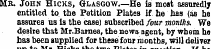
MR . John Hicks , Glasgow . —He is most assuredly entitled to the Petition Plates if he has ( as he assures us is the case ) subscribed four months . We desire that Mr . Barnes , the news agent , by whom he has been supplied for these four months , will deliver up to . Mr . Hicks the two Plates in question . If he have not sufficient , he can have more by sending to the office . This notice will meet many other cases respecting which we have been written . Every Subscriber who has taken the Northern Star for the period of four months is entitled to the Plate when it is delivered , —he paying for Paper and Plate the advertised charge . It is nst needful that be should continue to be a Subscriber to entitle him to it .
H . Earnshaw , Colne . —If the Paper is not regularly received , it must be kept at some of the postoffices after it leaves Leeds . It is always forwarded If he will point out dales when it has not arrived , . we will apply to the Po " atmaster-Q « neral , who will institute an enquiry into the matter . W . P . Williams , Chepstow . —The Plates are en . closed in the Monmouth parcel . E . Alger , London , should have given bis address . Robert Chamberlain , Independent Minister , Swanage , Dorset—We never send the Northern Star gratis to any person . We cannot afford them without pay , even to " Independent" Ministers .
The Papers he has received must have been forwarded by some one of bis friends anxieus for his conversion to the truth . At all events , they have not been sent from this office ; not should we have known that we had such an unprofitable reader had be not communicated the information . J . Saunders , Newark . —They shall be enclosed in next parcel to Nottingham , with any others that he may order before the parcel is sent . " £ . M . Wheeler . —We have not a copy of the Star left containing the engraving of Hunt ' s monument . James Heaton , Clitheboe . —Write to the Postmaster-General .
The Portrait of T . Duncombe will be given to all our Subscribers on November 19 th . They will be in the hands of all the Agents by November 16 th ; The charge for the Slur \ on the day the Portrait of Buueombe is distributed will be the same as the charge for it on the day the Petition Plate is delivered . FOR THE NATIONAL DEFENCE FOND . £ s . d . From Ly « Waste ... ... ... ... 1 0 3 ~ Stourbridge ... ... ... ... 0 15 9 „ the Chartists of Lewlsham locality ... 0 10 0 „ the Chartists of Reading 0 5 0
_ the Chartists of Little Horton ... 0 4 10 i „ A . Thomas , Bradford , ... 0 1 0 „ W . R . 6 d ., Female Id ., Leeds ... 0 0 7 „ Staffordshire Potteries ... 0 I 0 „ W . P . A . ... ... 0 0 6 Subscriptions at Airdale Foundry 0 12 11 Leeds—A Friend to Freedom ... .,. 0 2 0 From the Bisters ... ... ... ... 0 0 6 „ the Leeds Chartists , collected by Jas . Haigh ... ... 0 11 0 , „ Wm . Smith , Crown-lane , Manchester 0 1 0 „ a few enemies to oppression at Bowling , near Bradford , Yorkshire ... 0 6 10 „ the Chutists of Pendlelon , per C Marony ... 0 12 6 „ J . B ., Woodhouse ... ... ... 0 2 0 , » a few friends at Berry Brow ... ... 0 5 0 „ afriendatHuddersfield ... ... 0 . 0 0 ^ a few friends , per A . North , Huddersfield ... 0 6 . 0 ) :. ; „ a flax-dresser ... ... ... ... 0 0 3 I ~ friends at Burton-upon-Trent . 0 3 3 ¦ * . ¦ ditto at Swadlincote ... 0 3 0 „ ditto at NewhaU o 1 0 _ A . Noble , Trivet ... ... ... 0 0 6 „ a few friends at Richmond ... . ... 0 2 * „ the Chartists of Chesterfield , per W . Martin 0 7 « : ~ I ? eWaste ... 0 6 1 Stourbridge Q 9 U „ the Chartista of Yarmouth , per W . Storey ... 0 16 6 „ the Chartists of Halifax and neigh- - bourhood ... ... ... ... 2 8 « „ Dewsfcury , T . S . B 1 0 0 „ the Chartists of Holme-lane , Tong ... 0 8 ^ ~ the Chartists of Wortley ... ... 0 3 " 'i „ White Lee and Heckmondwike , per Mr . Penny 0 11 0 „ W . Mortimer , Mill Bridge ... ... 0 5 0 „ the Chartists of Morley ... ... ... 0 50 „ a working man , Leeds ... ... 0 1 ° „ John Nnter , Leeds ... ... ... 0 0 6 ., „ a few friends , B . Q . ... ... ... 0 10 0 „ the Chartists of Finsbury , per JWatts ... ... 0 12 0 . „ two engineers ... ... 0 1 ° „ the Chartists of Ouseburn and Byker Hill ... 0 8 0 „ the Chartists of Castle Blagney , per N . G . ... ... 0 i 9 „ Loughborough and surrounding places , per M . Skevington ... 2 „ the Chartists of Aberdeen ... ... 1 0 0 „ the Chartists of Nailsworth ... ... 0 6 ° FOE THE EXECUTIVE . From J . Morgan , being part profits on goods purchased at his shop by the Chartists , Deptford and Greenwich ... 0 7 8 „ the Chartists of Halifax ... ... 0 2 6 , „ the Chartists of Ripponden ... ... 0 2 8 $ _ the Chartists of Ovenden ... ... 0 2 2 j , ; Leeds . —A Friend to Freedom 0 1 0 » FOR MASON AND OTHERS' DEFENCE FUND . From Taviatock , per R . Webb ... ... 0 3 . 8 - » FOR COOPER'S DEFENCE . From Adam Easton , Hawick ... 0 1 0 ^ FOR MRS . HOLBEBET . J From the Cbartiiti of Reading ... ... o 3 3 '
9to Afteafcwjs Antr ≪£Om$Pott&Eutg
9 To afteafcwjs antr < £ om $ pott&eutg
Tee Tstoktheejnt Stae. Saturday. October 8, 1842. ^
TEE TsTOKTHEEJNT STAE . SATURDAY . OCTOBER 8 , 1842 . ^
Untitled Article
4 THE NORTHERN SJTAR .
-
-
Citation
-
Northern Star (1837-1852), Oct. 8, 1842, page 4, in the Nineteenth-Century Serials Edition (2008; 2018) ncse.ac.uk/periodicals/ns/issues/vm2-ncseproduct619/page/4/
-