On this page
-
Departments (3)
-
Text (10)
-

Untitled Article
-

Untitled Article
-

Untitled Article
-

Untitled Article
-

TO MR. JOHN LTKTON, OF SELBY, IN YOHESH3BE.
-

j&izaYlisl ZznteXlisence. \
-

oTortfjcoming C^attf0t ^jHctUns^
-
Untitled Article
-

Untitled Article
-

Untitled Article
Note: This text has been automatically extracted via Optical Character Recognition (OCR) software. The text has not been manually corrected and should not be relied on to be an accurate representation of the item.
-
-
Transcript
-
Note: This text has been automatically extracted via Optical Character Recognition (OCR) software. The text has not been manually corrected and should not be relied on to be an accurate representation of the item.
Additionally, when viewing full transcripts, extracted text may not be in the same order as the original document.
Untitled Article
My ijeab Listok , —I cannot find wordg io express ihe pleasure " that yonr letter , published in last week ' s Star , afforded me 5 and that pleasure was considerably increased by the anticIpatioB of meeting tou on ihe Sfch si . Birmingham . The great difficulty that I tare always had to coniend against vras that of applying practice to theory Having made agriculture my principal sfcndy from the moment that I was able to think , I came to the
condaaon , early in life , that the blunders of our ancestors &ad of our eotemporaries could be remedied , as if hy magic , -whenever & thorough knowledge of the capabilities of our own soil could be impressed cpoa the minds of the people . Practice , however , was the one thingrequired ; and lacking that practice , ¦ ji trasnot at all likely that those who scarcely knew ho * their focd -was produced , should all at once sc ^ aiesce in the feasibility of a plan -which opened caJ Ticw 3 so foreign to those in -which they had been reared .
Bnlj my dear Iinion , while I can scarcely complain of the caution , the ignorance , or lukewarmsess mth which the working classes receive my propositions in the ontset , 1 haTe good reason to find f&ult Triih many of their professing friendSj who , in the Taj face of such information 33 yon and others hare ftjyin ^ ied j ^ will eHU perserere in their cold-blooded oppcQtioni from 310 other earthly reason than their BD ^ ility to me . In proof of this assertion , we find jjisny policy-mongers , who hare no knowledge whaterer of the subject , straining their poor endeavours to weaken the agitation in favour of tie land , Dy its contempiible cr j that it is weakening the agitation for lie-Charter- Ii is forrnnate , linton , that yon are * Garlist—a Chartist in name and principle
It i ; also fortunate that that tinly estimable genile--jdsb , Mr . D . Weatherhead , is a Chartist , and that lie so far approves the plan that he is now engaged in esrryingit ont to & large extent . I may also meniion ilr , Thornton , of Paddock , near Huddersfield , is good a Chartist as breathes ; a man of large for-June too . I visited his experimental plot , of someiidng ^ more than two acres , within the present month ; xnd if an j man doubts the truth of my most extravagant calculation let him go and visit that plot of ground , made ont of an apparently barreB moor . % M to iceseindivio ' Eal undertakings the ^ reat eagerbes with which the working men themselves snap np every bit ^ f land that they can set at any price . TTiiBess the land bnstlein parts of Notticghamshire ,
lancashire , and Yorkshire . See the great importance attached by theircrking classes to those small plots allotted to them by Messrs . Gort and Marshall , of Leeds , regardless of the rent . VMt Koitingham on a Sunday or a holiday , or any day when there is H ^ hi after work , to take awalk to those small allotments , many ol them at a distance of more than a Bile from ihe town . See the freshness andTigonr , xnd cheerfulness with which the slave who has toiled all cay betakes him * elf to the recreation of labouring in the twilight for himself ; and many of these spots let asliigh as from twenty to thirty pounds an acre . Show me a single spot in any district in all England CvffiiBg _ within the compass of one man ' s ? aboirr for BXici fire time 3 the real yalue might not be insured frcjD the greedy competition to possess it .
Ton will at once see that my object in mentioning iiese things is to proTe that a strong desire prevails iSODg the working classes in all parts of the country topesses themselves of some land ; and that the opposition is ihe mere growling of dissatisfied politicians , ostensibly directed against me , but in reality sEoanting to censure against the gnat body © f the people . Linion , 3 haTe learned enongh to leach me that if I had it in my power to confer immediate happiEess npen all there would be no difficulty to £ nd manyrrho wonld object to the people ' s possessing set comforcs that did not come throngh the selfappointed political administrators . Is it not strange that those parties who wonld deny me any share in popiJar confidence withhold the real state of affairs
frcm the people ! They hare endeavoured to get up aa ncder growl against the land question , the whole itorm of which they wonld direct against me ; vrMie , as I have shown , the whole peoj ) le are in fiTcnr of my plan ; and not only that , bnteTery single lecturer possessing the confidence of the people has si "various times at public . meeting 3 in my hearing declared , that bnt for the expectations from the laid , they wonldnot give three straws for ihe Cbariei . Leach , West , Boyle , Hoss , Barney , White , ila ? en . Wheeler , Lundy , Clarke , Dixon , Bairstow , BoIweUjBeesley , and , not to individualize , all the leading CharfetB in London and the provinces are cue and all in favour of the land ; and see as I see , the great strength which the agitation or that quesiicn must add to the strussgle for the Charter .
M j dear Linton , how Terr glad I am to haTe an opportunity throngh you of commentingamply upon this simple subject . Now , no man will deny bnt that the disappointment occasioned "by the Heform Bill was a consequence of that great confideace which the people reposed in those who were the leaders in the reform struggle ; and the great danger of change to the people of ^«> nntry invariably arises from the fact that those who demand the change , and who literally hring it about , have at all time 3 been deceived by those ivhom they appoint as their trnsrees . Let me now suppose a very possible case . Snppose the TFiJ fiB had . been overawed by pnblic opinion in 3839 , and , in conseqnence , io nave grantrd tin People ' s Charter , in such case , I ask you , what bnt revolu tion could have been the resnlt land who wonld lave
mere deserved popular censure than those leaders wio had cried up the meritsof the Charter , and wno , wien possessed of it , were enable to = hew how It ccEld be made beneficial to the working classes ? All wculd very naturally hare looked npon the political Eea = nre as the means of ensuring social comfort . ! Ehe-depression of labour was the onegreat complaint "vi 3 e the inadequacy of the Charter to redress the s&iioral grievance , without falling back upon the land , would have been discovered too late , and would tne led to the justifiable charge of treachery sgainst the leaders .
The moment of great excitement is not just the &cs to propound a wholly novel question as a means of social redressjand had ' we waited until the Charter was achieved , to discns 3 the question of the land , the disgust would haTe led to a revolution . Can any Ban inform me , how , with an overstock of machinery preventing the recognition of Individual worth in the iibour marker , and "witiont the means of competition being placed in the hands of the labourers , any cpejgrievanee beyond that of the rednetion of taxation could be redressed ? and even what may be Bred in taxation "would assuredly be swallowed sp by the power of capital applied to a non-corisummg prtCficing power . But says the mere politician , you forget that we would have our members appointed
bj the whole people in whom wonld be vested the fairer of making such alterations as the nature of tic case would requirs . I don ' t forget it ; it i 3 the vsrj foundation of allmy thoughts ; and It is in order , to ; ocly that those very representatives sbonld have Hme feasible ground to work upon , bnt further , that ticj should not be left in a bark without a rudder , fiicrefcy testing the ignorance of those who had fetdied them , that I have thought it my dnty to create an identity of opinion between the xepresentsirti ; and constituent body , whereby no interregnum VfOLid occur between their appointment to the trust , *' - £ tbfir ability satisfactorily to discharge that trsa . With me the question of the land Is not a B ' - -Trl one . From the moment that the Northern
Star was established , I have "written treatise after tRitis ; upon the su > gect 5 and lorg before it was in es ^ tfnee I haye written and spoken npon it . During * i * tiiree years that 1 served in Parliament my Tfbole energy was devoted to the subject : and 1 if : sk 1 msy assert , without arrogance , tnat with the Er-sls fxerrion of one individual , and throughout Etfer scandalously opposed , no new scheme has ever ~ b&T to inccesEfnlly propounded to a people as that < -j * : e -i ^ -ail farm plan . The idea of mere polifc ?> - ehsnges "without the certainty of being able tf- Eiie them instrumental in producing the ne-Cc-.- _ ry social comforts , are all moonshine : while iej political change wLich wonld briDg about ¦ K ^ - > t i < called Tree Trace , co-existing vsitb the
monopoly of fictitious capital and nouconsumiDg ~ pTu ^ ' 2 tmg power , wonid but have the effect of l 3 m :: ing mai > nal labonr , and of farther reducing the 4 Cc _ : ; i of wages paid to the limited number « mplt >\» 3 ; whereas the application of the surplus 1 st" ut 10 the land would have the double effect of t ^^ ^ U . us independent of foreign states frr all the i-ers -aries of life , -Bhile , by opening the natura - ^ -3 , tbere would be no Fystein-made surplus popul 6-:-fa , uj ) on whose reduced wages the monopolists tc-ii . i gamble withonx reference to aiy single rule ^ isolation by which the conditions ol ^ trade should ^ i-rnrrsed . Tie whole process now is one of & 2 : b :. rg in an ovei-stocked labour market ; ahe tiij calculation that the manufacturer enters upon ii £
^ -. s lie pro £ t that te can ensure upon reduced * *? & i and the advantages that improved ma-^ iT'c ry g i Te ^ jm OTer jjjg neighbour . Can any man 5 ? -ae result of the French Eevolution , which , after ^ I « ars , has ^ nded in the destruction of rep ub lics , ssg iise substitution of many fortifications for the Wit BastSe , -without attaching some importance to c - " ^ pf ^ ediaod eof rem edjin g th ose gnevances cp-n wxaeh the deoand for change is based ! Can at ? ni 2 a } ooli withoHt dismay npon the present pc ^ uon of Spain , where a jnnta of bloody tyrants , *^ a proiessions of Liberty upon their lips , have Jp ^ ta sn ascendancy by the force of arms ; the ^ P acts of wlose power hare been the destruction f ev ery gari of Liberaliai that remained in those ffiSato iiODS asarnitt TcKnca tvTMnv tkev rrofessed
^ fse ? Bo ^ e mot ^ j ^ people , before the ®^ d of the last camion had been lulled , VKrtzlemng to take up arms against the g ^ te of their own creation , and crying ^ ad for the return of him against whom they w ^ £ edainost nnjas t aad nnnarnral war ? Why is " ^ ? Is it not because the Spaniards had failed to *? ree upon -what those social comforts should be , «* Price at which they had hazarded their lives stey isd nothing to propose—they had decided upon r'Oj ^ ipg—ajKj f ^ e consequence is national dis-2 pKiL ? a ; tiiT disinav , and dissatisfaction . Such CG-iv-rfi ^ Efc-t er can be the result of any future poli-Kcsj . cLsbge in England , because I fondly anticipate
Untitled Article
that the whole country will have made up its mind npon the adoption of a system calculated to remedy all the social grievances to which the old one had subjected them . My dear Linton , there is one thing peculiarly striking in . the importance , which you and all oihers , who have entered upon the practice of the small farm plan attach to the pursuit . Yon are an ironfonnder , with large premises , and employing many bands ; and yet , strange to say , yon appear to attach much more importance to a spot of land , comprising little more than three quarters of an acre ^ t > an to . your other larger calling . So it is precisely with my goed friend Thornton . He has a large mill for dressing woollen cloths , and plenty of
money ; and yet his little plot affords him greater pleasure than his large money-making concern , while he actually , pants for the moment that shall drive him from the artificial enjoyment of money making , to the natural esjoyment derived from agricultural pursuits . I de wish you saw Mr . Thornton ' s plot . It would really astonish you . There ' s not a bit of waste or weed to be Been , and I have no hesitation in saying , that after paying £ 5 an acre for it , if Mr . Thornton was driven to the election of paying that rent , and relying upon the produce , or ef receiving £ 2 a week for "his labour , that he wonld much prefer paying the £ 5 an acre and living npon hi 3 own resources . Aye , and it would be
! much , better for him too . When 1 last saw your ! spot I was dreadfully hurt at seeing no less than j 1 , 350 yards or more than one-third of your Allot-! ment under grass ; and now what I rentvre to assort is this , that if any sceptio chooses to hazard a large I wager that yon will make clear over and above the I enormous rent of £ 5 an acre more than one hnni dred pounds of the amount of land in your possession i something more than three quarters of an acre . I As you pay every year the crops are improving . Aye , ; and they'll go on improving too , in the exact proi portion in -which yon apply labour to them . Dig ! your furrows a foot deep after every crop , and turn ; the earth in them once a month ; rather sow your ¦ seed too * thin than too thick . Let no weed be seen
1 and in the eourse of five years you wonld have three . feet of soil rich enough for manure for the poorest ! ground-, and worth , if sold for that purpose , more . than a thousand pounds . You see that the correspondent of the Leeds Mercury admits , after four j years trial , that his crops are growing better aud ! better ; and after four or five years general trial of I of my plan , if I was laughed at for any thing it ; wonld be for the poor estimate that I made of the Talae of a man ' s labour when applied to four acres ; of ground . In five years a careful man might grow ; onions upon ev « ry inch of his four acres without a : shovelfnll of manure . Such is the value of labour when applied to land . By next Saturday tbe fourth number of my work upon Practical Farming will be published . That number will complete the work , which as a
whole will yet be found in every poor man ' s bouse * in this country . In the fonrth number 2 have ¦ entered into calculations of profit and loss ; I have laid down rules for the management of every inch of ground , and have allotted the necessary amount of prodnce for the maintenance of a man , his wile , and . family . " It will be seen that what I allow for the ( support of a man , his wife , and lour children for the year , is as follows : — , Bacon . - •¦ " 20 stone . , ' Floor 1 stone per week . 1 i Potatoes 8 " ' I I Milk , or butter made from 5 milk 3 quarts per day . I Eggs , Poultry , Vegetables , \ ' and Honey , as mncn as they !
i can consume . j i For clothing , 30 Ibsofwool , ! and the produce of a quarter i ofaacreof fiax . j For rent seed and taxes £ ? 4 j Leaving , after a very low calculation of profit , the , ( sum of £ 100 as remuneration for a hundred aud ; eighty ifays labour . All my calculations have been \ ; made at a very low rate ; but I have preferred being ¦ under the mark rather than lead to tho » e anticipaj tions created upon the authority of the correspondent
: of the Leeds Mercury , whose assertions I by no ' means doubt ; but I think it rather hard that the Afcr-; curt / should vonch for their truth , and yet deny tbe ! truth of my more moderate assertions . I am glad ' that you tried my plan of planting whole potatoes , ; according to the rules laid down in No . 1 of my book ; and although they were planted at least a ' gnawer of a year after the proper season , yet do IJ venture to say that if your Swedlsn turnips bare ; astonished your visitors , your potatoes will bother j them entirely . <
Now , just attend to the following rnles : —land them up well from the earth , in tbe Tallies ; don ' t dig them until they axe thoroughly ripe , which will not be until the latter end of October ; and when you dig them , weigh them , estimate their value , deduct ! the cost of seed , rent , and labour , and let ns know what the profit is ; and I will venture to say that many a hard-working hand-loom weaver has been working for six months for less than the profit of ' four aay 3 ' labonr of your man Michael will yield . Hoping to see you at Birmingham , whtther elected ' or not ; and feeBng assured that yonr practical expe- i rience will be of tbe greatest possible advantage to our cause , Eocially and politically , ] I remain , my de&T Linton , Your very faithful friend , ; Feakgbs O'Cosnok . I
Untitled Article
GLASGOW . —Mr . G . J . Harney paid us a visit ' on Tuesday the 22 nd , and delivered a lecture in the Gorbab district in the evening , to a crowded and enthusiastic meeting . He proved to demonstration the fallacy of Whiggery , and the free trade nostrums ; and shewed the quackery of Dr . Peel and his slippery sliding scale ; and he prored from Parliamentary returns , that nnder the operations of the New Tariff , the importation of many articles of foreign manufacture were increased as much ae 400 per cent . Did they expect the working classes of this country were to be benefitted by such "exten- ^
sion" of trade 1— ( loud cries of no , no ) . In conclusion Mr . H . u ~ ged the neces&ity of further exertion in tbe Chartist cause , and recommend that the people of England and Scotland should be united under one system of Organization . Mr . H . spoke for nearly two hours , and concluded amidst the rapturous applause of a delighted audience . Mr . James Livington , in a brief and highly complimentary speech , moved a vote of thanks to Mr . Harney , for his eloquent aad instructive lecture : seconded by Mr . CoJquhonn , and carried by acclamation . Mr . H . was requested to deliver a lecture in the city , but waa prevented in consequence of engagements entered Into with other districts .
Tee Ret . W . Hill delivered a lecture on the " Repeal of the Union between Britain and Ireland , and the People ' s Charter , " on Mondsy evening , in -the Chartist Church , Regent-street ; Mr . James Livingston in the chair . By the hour of meeting the house was completely crowded and many had to stand in the passages who could not obtain seats . The chairman , in a few pertinent remarks , thanked tbe meeting for the honour they had done him in appointing him to preside over such a large and respectable meeting of hi 3 fellowcltizens ; he was more proud of being chairman of that meetiEg than if he was to be appointed Speaker of the House of Commons . Those composing that meeting wer « engaged in a straggle for
the establishing of right and justice , while tbose who met in another place met to consider the best means of oppressing the people . He then introduced Mr . Hill , who was received with tremendous cheers . He addressed them as fellow Christians . In that capacity , he said , he met them . He was not there to appeal to their passions ; he meant to address them in calm and sober earnestness . After some other prefatory remarks , tbe Rev . Gentleman entered at great length into a clear and masterly difqu % ition of the manner in which the Union bad been effected , and its banefnl influence npon the condition of the people of Ireland . He contended that a Repeal of that blood-stained Union would be as beneficial to England and Scotland as it wonld be to the people of Ireland , inasmuch as it would be the means of draining from our labour market a large portion of those who are being driven from their native land , throngh the iniquitons laws nnder dwelt with
which they were suffering . He great force upon the cruelties itflicted upon the Catholics by the blood-stained , gold-hunting , Burphced monsters , the priests of the law church . In referring to the present position of the Repeal movement , he said ihe people of Ireland had but one of two courses tociooBeVaatothemejua through which to © bum the Bepeal ; thai to , throngh a House of Commons elected by , and subject to the whole people , or by force of arms , he would , therefore , earnestly recommend to ihe Irish Repealers the necessity of giving every assistance in their power to tne Chartists of England and Scotland ; and he wonld , on the other hand , press upon his Chartist friends the propriety of lending their aid to the rnsh Repealer ^ Mr . Hill spoke for npwards of two hours , and concluded a speech , during the delivery of which he exhibited , to a happy degree , toe sound politician , the scholar , and the gentleman ,
Untitled Article
amidst loud and long continued cheering . After giving a vote of thanks to the lecturer and the chairman , the meeting broke up at half-past eleven o ' clock . LONDON . —Mr . Manlz lectured at the Black Horse and Windmill , on Sunday last , and gave great satisfaction . After the lecture some business was transacted and the meeting separated . On Tuesday , August 28 th , a meeting of the Council took place , when a long discussion ensued on the best means to raise a general permanent Victim
Fund , bo that the families of the present and all future victims may be supported by the Chartist Association . Moved by Mr . N . Cannon and seconded by Mr . W . H . Bains : "That this Council is of opinion that if the members of the National Charter Association were to contribute one penny per month for a permanent Victim Fund , it wonld at all times be sufficient to provide for the victims and their families ; and they would urge their recommendation upon the attention of the delegates at the Conference , so that it may become one of our standing rules . "
South London Hall of Science . —The members and friends of this locality met on Friday evening for the purpose of hearing a lecture by Miss S . luge . Mr . Andrews was elected to preside . He briefly introduced the lecturer , who was received with great applause . She deli cered anVeloquent and instructive lecture on the " U « ea of Royalty * " She spoke for above one hour , interrupted only by frequent bursts of applause that came from the meeting . A vote of thanks was given to her at the close . Mb . Whesleb lectured on Tuesday evening , at the City of London Institution . Subject— " The fallacies of Free Trade . " The chair was occupied by Mr . Dnnn . Mr . Rathbone also addressed the meeting , which was very numerous and attentive .
Souers Town LocALiTr . —Mr . Davoc reported from the delegate meeting , Turn-again Lane , that ten shillings , or more , would be required from each locality , to defray the expences of the London delegates , about to proceed to the Birmingham Conference . In accordance with this repott , not only ten shillings were voted , but a further sum of five , to be used in the event of any deficiency arising relative to the gross sum . SOUTHWARK .-Corn Laws . —At the King of Prussia , Fair-street , Tooley-street , there has been for the last five Monday evenings , a very animated and well-conducted discussion upon the Corn Laws v . the Charter ; on three of which evenings the part of the League was defended by Mr , M . P . Haynes , late
Editor of the Statesman , &c . &-C . On the fourth evening , Mr . M'Grath , according to appointment , attended to assist the Chartists . Mr . Haynes was not then present . Mr . M'Grath gave the sophistries of the League a severe shaking . A resolution was passed , inviting a deputation of the League , who attended on Monday evening last , in the person of Mr . A . L . Saul , of the League Council , and Mr . Wickham , official member of the anti-Corn Law League . The discussion was opened by Mr . Saul , in a speech of about one hour ( being three quarters of an hour more thas rule } , with the usual sophisms of the League , among which was the Malthusian doctrine of our inability to produce a sufficient amount of food from the land . ** Why not 1 because we do not . "
Mr . Blackburn followed , ably refuting the Malthusian speech of Mr . Saul , proving the land to be capable of producing more than a sufficiency of food for the population ; and Bhowing the desirableness of falling back upon the land as a rational , wholesome , and highly beneficial employment for the now enslaved , diseased , and crippled dwarfs that are lingering a miserable existence in the fetid death hoJes of manufactories . Mr . Wickham followed in a very long speech , in which he attempted to grapple with the arguments of Mr . Blackburn ; the soundness of which was plainly proved by this very learned advocate of the League at last coming to the self-same conclusions . Mr . Reed next addressed the meeting , in which he disclaimed with indignation any union with the Buckingham Parsons , &c . as insinuated by Mr . Wickham ; and also disclaimed any union with the League : they being , in his opinion , classed with
the Buckingham pirsonB ; both being the direct enemies of the working classes . He was followed by a Mr . Wakeford " , who built upon a foundation of sand : namely , the cheap loaf that the League would bny for us by a repeal of the Corn Laws . This was proved by Mr . Gathard to be fallacious and sandy ; he showing by facts and figures that the loaf would not be " cheaper "; ( hat the cost uf tht , - prvJuction of a four pound loaf , rent , taxes , and all , was only iwotesce ; that trade would not increase by a repeal of the Corn Laws , by the fact that Peel's modification of the Tariff was answered by six opposition Tariffs from foreign nations raising their duties ; the amount of machinery already in this country was sufficient , if all were employed , to clothe , feed , aud house more than the population of the whole world . Air . G . then instanced the
rates of profits derived by the manufacturers from the labouring men , as was proved by the example of the profitmongers receiving fivepence-halfpenny out of each four pound loaf ; and that the laws protecting capital and its owners were more iniquitous to the people than the Corn Laws : the only remedy for which was political power that labour might be equally protected . Mr . Maynard followed , stating that the facts and figures of Mr . Gathard were fallacious ; but he entirely forgot to prove them so . He continued , rambling in favour of the Repeal of the Corn Laws , arriving ( as this ex- Chartist usually doe ?) at no conclusions ; but like Cook , the voyager , set off round the world , aud arrived at the place he
started from : so that neither head or tail , argument or sense , could by any possibility be made of this gentleman ' s" talky . " After some few more speeches , Mr . Saul closed , a la Mavnard . Mr . Mantz then came forward and challenged Mr . Saul to discuss this question with him , tchich Mr- ' Saul declined : but Mr . Falvey , of the League , is expected to attend on Tuesday evening next , also Mr . Mantz , &c . tc . A vote of thanks was given to the impartial Chairman , ( the landlord of the house ) , aud the numerous and respectable meeting separated . Chartists of South wark ; attend on Tuesday evening next . It will be the conclusion of this important discussion . Chair to be taken at half-past eight o ' clock .
BIRMINGHAM . Aston-Stbekt . Mr . W . Chihon gave another lecture on tv The Cora Laws and Free Trade , " on Sunday evening last ; and proved , by statistical accounts , that as trade had increased , so wages had decreased in proportion , until the workies were ground down to the starvation point . He took a rapid view of the " Free Trade nostrums" of the last t-svo yeaTs , and concluded by exhorting bis hearers to stick to the whole Charter , a 3 the only mean 3 to raise them from their present degraded condition . After the lecture , letters were read from Mr . George White on the Organization , and the duties of the ensuing Conference , which gave general satisfaction .
Mr- White . —The Committee for Mr . White ' s support have determined to take a large building , and to solicit Mr . O'Connor to give a lecture some evening next week , to endeavour to raise funds toward 3 the support of that much-neglected victim of class-made laws . The Chaetjsts or Birmingham , usually meeting in Astou-street , have taken a more comfortable and commodious room , situated in No . 37 , Peck Lane , which will be opened to the public , with a lecture , on Monday next , the 4 th inst ., on the state of the nation ; the lecture to commenca at eight o ' clock . A lecture will be delivered in the above room every evening during the Confererce .
Untitled Article
London . —Mr . Bolwell will lecture at Somers Town on Sunday next . A fvll attendance of the members of the London Victim Committee is desired at the City Institution on Wednesday evening . Mr . M'Grath will lecture on Tuesday evening , at the City of Louden Institution , Turnagain-lane . — Admission free . Londos Delegate Meeting . —Membersfrom every locality are requested to attend on Sunday afternoon , at the City of London Institution in order to decide respecting the ensuing Conference . Somebs Tow > - LocALirr . —On Sunday evening next , Mr . Bolwell will leoture at Mr . Duddridge's , Bricklayers' Aims , Tonbridge-street , New-road .
South Loxdoh Hall of Science , Blackfbiabs * Road . —Mr . Bowkett will leoture at the above hall , on next Tuesday evening , September the « th . Subject— "The best means of the working men becoming freeholders . * The CouKciLLoas belonging to the City boot and shoemaker Chartists axe requested to attend on Sunday morning next , at eleven o ' clock , at 3 , Carrsquare , Moor-lane ; aud the members and friends of the above locality are informed that the Star Coffee-House , is given upas a place of meeting . Due notice will be given o ! a new place when fixed on . Wobkjkg Men ' s Hall , Mile End Road . —A discussion will take place at the above Hall , on Sunday morning next , 3 rd inst . Subjeot— Repeal of the Union . " The discussion , will be opened by Mr . M'Grath . Admission free .
Untitled Article
Mr . Sherbabd will deliver a lecture in the evening . Marylebone . —Mr . Fassell will deliver a lecture at the Mechanics' Institution , Circus-street , Newroad , on Sunday evening , 3 rd tost ., at half ^ past seven o ' clock . ; Islington . —The Chartiata of London intend to have a concert on next Monday and Tuesday , at the Flora Tavern and Tea ; Gardens , York-place , Barnbury-park . Amusements , to begin at five o'clock in the afternoon . ¦ MxccLESFiEiD . —Ai lecture will ba delivered in the Chartist roonij Stanley-street , on Sunday , ( tomorrow ) , at six o ' clock in the evening , by Mr Thomas Clark , of Sfcookporfc . Subject , " Organization and the state of political parties . "
Nottingham .-tA public meeting will be held at Mr- Hardy ' s house next Sundy evening , at eight o ' clock , for the purpose of forming an association in congestion with the Chartist agitation . Friends to the cause will attend to give information and explain the principles of the People's Charter . Stockpokt . —On Sunday next , the Rev . W . V . Jaokson , of Manchester , will lecture here , at six o'clock in the ovening . Hathehn Ti / RNi—A camp meeting will be held at this place on Sunday , Sept . 3 rd , to commence at two o ' clock . Mr . Dormqfn , of Nottingham , will attend . A delegate meeting will be held at the same place , at five o'clock on the samo day .
Almohdbubt . —A lecture will bo delivered in the Town Hall on Monday evening next , by Mr . Henry Marsden-, of Holmfirth , on " The Social aad Political Regeneration of-Tklankind . " -To commence precisely at eight o ' clook— -Three lectures Will be delivered in the Town Hall , on the respective evenings of Tuesday , Wednesday , and Thursday , upon Elocution , by Mr . David Ross , of Manchester . To commence each evening at eight o ' clock . Mb , S . Davis will attend the following places ;—On Tuesday . Sept . 5 th , Four Lane Ends ; Wednesday night , Low Moor ; Thursday night , Dudleyhill , at the house of Mr . Farrar , Hand and Shuttle Inn ; Friday night , Bradford Moor , at the Coach and Horses Inn ; Saturday night , at Hightown ; all in the Bradford district ; each meeting to commence at six o ' clock .
The South Lancashire Delegate Meeting will take place on Sunday ( to-morrow ) , in the Council Room , under the Carpenters' Hall , chair to be taken at ten o ' clook in the afternoon . LouGHBOROUGH . —Mr . Dorman , of Nottingham , will preach at this place on Sunday , Sept . 3 rd , at eleven o ' clock in the morniag . Bury . —A public leoture will fee delivered in the Garden-street Lectuto Room , on Monday , the 4 th of September , by Mr . P . Daly , of Levenshulme , on the Repeal of the Legislative Union . Shfffield . —On Sunday evening , Mr . Geo . Julian Harney will deliver a lecture in the Fig-tree Lane Room , commencing at seven o ' clock . —On Monday evening , a public discussion will he held in the above room , to commence at half-past seven . —On Tuesday evening , a public ball will be held in the same room . Dancing to commence ^ at seven o ' clook .
Halifax . —According to previous announcement , a public meeting was bolden here on Monday last , for the purpose of appointing a delegate to the forthcoming Conference , when Mr . Benjamin Rushtoa was unanimously elected . Sowekby . —A camp meeting will be holden on Ratten-row Moor , on Sunday ( to-morrow ) at two o ' clock in the afternoon . Nottingham . —Mr . Jonathan Barber will deliver a lecture in the large room , at Dormant Temperance Hotel , Clare-street , on Tuesday evening , at eight o'clock , the 5 th inst . On Monday , the 4 th inst ., there will be a Social Tea Party at ; the above Hotel . Tickets 9 d . each , to be had of Mr . Dorman . Mr . Jonathan Brown will lecture in the Marketplace , Nottingham , on Sunday evening next , at six o ' clock .
Bradford—A camp meeting will be held at Idle Green , on Sunday , at half-past four o ' clock in the afternoon . Messrs Smyth , Alderson , and others will address the meeting . The Chabtists of Bowling Back-lane will meet in their Room on Sunday , at ten o ' clock in the morning and at two in the afternoon . The Chartists of Manningham , will meet in their P ^ om on Sunday , at two o ' clook in the afternoon . A full attendance is requested , as the discussion on the Organization will be concluded . The Chartists of the Central Locality will meet in thn Counoil Room , on GuuJay nicrrninp , at nino o ' clock . The members are respectfully requested to be in attendance at the time appointed , as business of importance will be brought before the meeting . The Chartists of Park Place will meet in the School Room , Park Place , on Sunday morning , at nine o ' clock .
Mr . J . H . Dewhirst , ono of the plot victims , lately liberated from Wakeficld College , will address the Chartists of Idle , on Suuday afternoon , at halfpast four o ' clock . A Special Meeting of the Council will be held in the Council Room , Butterworth Buildings , at ten o ' clock on Sunday morning , on business of importance . It is hoped every member will attend . The Chabtists of Daisy Hill will meet in their room on Sunday morning , at ten o ' clock . The Chartists of White Abbey will meet in their room , at eight o ' clock on Monday evening . A full attendance is expected . Littletown in LiVEKSEDGE . —Two sermons will be preached at this place on Sunday , the 10 th inst ., by that unconquerable foe to opression , Mr . Benj . Rushton , of Ovenden , when collections will be made to liquidate the expenses of the room .
Manchester . —A meeting of the members of the Manchester locality will take place in the Carpenters ' Hail , on Sunday ( to-morrow ) , chair to be taken at ten o ' clock in tho forenoon . —There will be a public discussion in the afternoon of the Bame day ; chair to be taken at half-past two . A lecture will be delivered in the Carpenters ' Hall on Sunday evening next , Sept . 3 rd ; chair to be taken at half-past six o ' clock . Miners' Association . —Mr . John Auty will lecture on Saturday ( this day ) , at Clough-side , near Ratcliffe ; on Monday , Sept . 4 th , Bradbury ; Tuesday
5 th , Hight Lane ; Wednesday , 6 th , Norbourg ; Thursday , 7 th , Hyde ; Friday , 8 th , Dukenfield ; and on Saturday , 9 ib , at Hurst Brook . Mr . Auty wishes to put the miners on their guard against an individual who is perambulating the mining districts , and professing a great deal of sympathy for the sufferings of the miners , thereby ingratiating himself into favour with the men , and always urging them to leave their employment and strike against the tyranny to which they are subjected . This person is not recognised by the Miners' Association . Miners , beware of being induced to rush into a premature strike .
Untitled Article
wages only as a criterion by whic&to judge of tbe whole ; and it is a notorious-fact , that in the list of the ten nsmes selectad by them , they have had the indecent effrontery to attach weekly wages to ; one of the names aa earned during the period of five weefc * that the workman was Laying on a sick bed . In another ease they have included a considerable aum of money , a > j earned during that six months , which they must have knovs waa earned two years before f ! j Fellow * workmen , from' the fact pf these employers having no other resource to fly to , in order to injure ua in your estimation , but that of falsehood and calumny we trust you will perceive that our present resistance to
unbearable oppression , is not founded on a mere idle whim , or momentary caprice , or concocted or got op by ONLY SO 3 B of the workmen , for eyery man on ptess work In the trade is opposed to so enormona a reduction of from 23 to 75 percent , as is proposed by these gaM employers . Instead of its being 18 s . per week , it will be less than 12 s . ; and we well know that their profits ( of which we will shortly enter in full detail ) are such as to enable them to give a fair and reasonable price for the labonr of their workmen . Other extensive foundries , Messrs Wtod and Shaitooods , A . Wilson anal ^ w , Pavyer , and several other small foundries , still give the original prices , and declare that the men ' s wages are already
too low . ; Fellow-workmen , we are well aware that on the accuracy of our statflljggnts might depend the success or failure of oar endeavours to frustrate the heart-rending attempts of Messrs . Thozowgood ] and Besley , Mr . Ce ilon , and Messrs . V . and J . Flgglus , to reduce oarselves , wivts , and families , from oar already miserable existence , to beggary and sVirvatloni In fact , the workhpuses , of which tbose gentlemen ( M * . Besley and J . FJggins are , or were Guardians ) ore most likely to be our homes ere long , for it will be impossible to provide food or homes with the scandalous { reduction bow proposed on our wages ; therefore we have hitherto adhered to tbe truth in all our statements , and will continue so to do , fa hopes that a discerning puWic will aid us in our efforts . ' On behalf of the Committee , Roland JOWEN , Chairman . Committee Boom , Ship , Glp 9 shousejYard , Aldersgat 3 Street . ]
Untitled Article
ENORMOUS PROFITS OF iVIASTEB TYPE FOUNDERS , AND STRIKE OF THE WORKING MEN . ; On Tuesday evening , a crowded meeting of the working men of London took place , at the National Association Hall , High Holborn , ! for the purpose of expressing their sympathy 1 with the Type Founders of the Firms of * Messrs ; Thorowgood and Besley , V . and J . Figgins , and Caslon . At eight o'clock , the chair was taken by ! Mr . Holborough , who stated to the meeting that if the reduction in the rate of wages proposed by -the masters had been in reason , the strike would jnever have taken place ; but the fact was , that the { masters of whom they complained now required a reduction in the rate of wages in some respects { equal to 75 per cent , under the pretence that they had greatly
lowered their list of prices to the Master Printers . All the reduction they had made' to these did not exceed 25 per cent off the old book prices , while they reduced the allowance they made for old type from 6 d . to 3 d . per 1 b . Messrs . { Wilson , of Edinburgh , sold at lower prices than jthe London Masters ; and yet could afford to give their men the old wages . He did not envy the ] masters' profits ; but when he saw them making rapid fortunes , he really thought those that toiled for their advantage should share with them . Submission in some respects might be a virtue ; and , though he for one did not approve of strikes , yet ! submission here would only bring on more imposition . He concluded by calling ou Mr . Wobb to move the first resolution , to the following effect : —
"That it is the opinion uf this ; meeting that the workmen in the employ of Messrs . ; Figging , Caslon , Thorowgood and Besley , having submitted to a xeduotion of from ten to twenty per cent , on the 1 st of July last , were fully justified in turning out against a further reduction of their : wages , averaging on the whole from twenty-three to seventy-five per cent ., as proposed by their late employers . " This speaker opened the " secrets of the prisonhouse" with a vengeance . He projved the masters ' profits , in some cases , to be above ; £ 400 on £ 100 of capital employed . He instanced ; the case of one master who began only with a { capital of £ 400 , retiring with a fortune of £ 80 , 000 , only having employed , during the majority of the years he was in business , ten casters ; while Messrs . Figgins employed forty now , with a net profit of £ 8 , 000 per annum on their labour ! ! ! A Mr . Miller retired with a fortune of £ 200 , 000 . The cost of the
materials was then very high , reguJus of antimony being often £ 18 where it was now but 50 i . per ton . Messrs . Thorowgood had published a statement of wages , so as to lead the public to believe their men had been well paid ; while the fact was , that even at the old prices a crack workman could not average more than 25 s . per week , for which his \ constitution was being daily sacrificed by the fumes of arsenic evolved from the furnace . No Benefit Society would ACCEPT A TYPfi-FOUNDER A 3 A MEMBER , their COnstl ' tUtions being destroyed frequently j after ten years ' labour . Yes , here was a small body of men , yielding an immense profit to their employers , being sacrificed to a spirit of gain unequalled in the history of monopolies . Mr . Thorn concluded a long speeoh , in which he made statements proving [ more against the cupidity of the masters than our space will allow us to give ; and the resolution , after having been abiy seconded by Mr . Herritage , was carried unanimously .
Mr . Barbrick moved the second resolution : " That the typo founders of London having been for five weeks unable , by every reasonable means , to persuade Messrs . Thorowgood aad Co . to desist from their astounding reductions , now deem further appeal to them useless , and therefore [ turn to a higher and more merciful power—the working olasses of London ; with whose generous assistance they are convinced that their object will soon be attained . " He said that some of the masters became overseers of the poor in order to get the unfortunate paupers into their employ at a reduced rate of wage . Mr . Figgins told the men that tw he cared not for them ; he must have his profits" !
Mr . Bolwell seconded this resolution in a speech that elicited much applause . He alluded to the topics introduced by the previous speakers , and said that on principle alone the working ! men of London should support this strike . If so small a body of men as the type founders could not in this instance find support , he thought little of the trades of London . They had done their duty nobly on former occasion , —let them do so now . He thought it needed no great power of oratory to induce them to come forward . Of all oppressive reductions he ever heard
this was the basest . Did the ari 3 tocrcy dare to use the working millions as these middle class tyrants had done ? Producers of wealth ! how are you treated ? Mechanics by thousands walk the streets starving , or beg their way as vagrants through the land . The last resource of the working man now is the crutch , or the poor house . Would this be the case if they all endeavoured to do each other justice ? They must unite . Apathy bow was the worst of criminalities . When just complaints are useless , because unheeded , the fault lies only at his door who refuses to sympathise and to assist . .
Mr . Killingback supported the resolution , which was carried with applause , when MrjMantz read the third resolution , viz ., " That this meeting , knowing from bitter experience , that wealth and capital have ever waged with labour an unjust cruel war , pledges itself to support the type founders ; to the utmost extent in their power , in their just resistance to the heartless oppression of their Boasters ]; and in order to break up this monopoly deem it advisable that the workmen publish a statement of thejprofita of their employers , aiid thus offer an opportunity to men of capital to embark in this lucrative ; trade- " This Bpeaker discanted at great length on ithe remarks of
the previous ones—calling oa the meeting at the same time to open their purses asj well as their hearts ; for sympathy was a poor { thing without relief . He had seen at Stockport living men feeding on the putrid carcase of an ox : and he conjured the meeting to look to themselyea in these strikes ; or his might come to pass in London . - Tho trades must unite to assist each other , and he suggested the formation of a committee , independent of the type founders present , for that purpose . The masters wanted to overflow the trade with human competition , bo that they might get their work done at starvation-wages . j
Mr . M'Donald seconded the last resolution , facetiously remarking on the suddon flights of reporters who , with the single exception of that for the Northern Star , had left the meeting . He ; advised them not to trust the press—( A roice in tJ » crowd The Northern Star" ) . That waB the people's own paper , and he knew they would always find ii bo—( cheers ) . On the Stonemasons Strike , £ 3 , 000 out of the £ 6 , 000 expended , had been furnished by the trades of London ; and he trusted the type-founders would create a like sympathy in their behalf . 1
After a few observations from Messrs . Cowan , M'Frederic , Carter , and oihers , this resolution re-08 ifed the assent of the meeting ; and ] thankshavisg been voted to the Chairman for his able conduct , ia the chair , U was dissolved , '
Untitled Article
y ^^ A / - A ^^ od Jy&n ^ a ^ C ^ REPEAL ASSOCIATION-Momht . Since the commencement of the Repeal Association , rapid and formidable as has been its progress , there has not been so much excitement at any previous meeting as that held to-day . This was . owing to the intense anxiety respecting the " eonrsa which Mr . O'Conhkll would pursue in reference to the declaration of ministers on the Repeal Agitation in the Queen ' s speech . Before twelve o ' clock , the hour fixed for the meeting , the Corn Exchange wr , s crowed to excess . The chair was taken by 6 . P . Fogarty , Esq ., of Gastle Fogarty , county of Tipperary .
Mr . Steele g&id that as it had been determined by a vote of this Association to giro as order to Mr . Hogan forthwith to execute a statue of O'ConneU , the only question that rema ' ned was whether the great father of his country should be represented presiding at Tara , or as he appeared at Mallow when uttering a fiery defiance at Peel and Wellington'in reply to their threat to attack the people of JreJiMdY The Irish people despised the threata « f the _ jwppy Peel , and the bloody old Indian Seawnr
—Wellington ( groans and cheers ) . Mr . Hogan preferred to execute the statue in the latter attitude ; , and therefore he ( Mr . Steele ) would move that thief Association give its approval to tbp suggestion . Oj 3 ' the base of the status should be ih . 9 mamoraWe wor < & utteyed by the liberator on that occasion—*•* They may trample upors me ; but it shall not be on my living ; body , but on my corpse . " The motion havtaabeen seconded * by Mr . Seonv of Edinburgh * passed with acclamation .
Owing to theoroTfded state of the-room , a good deal of confusion took place while the Secretary was clearing the reporters table of members whosought accommodation- at it . Mr . Reill ? , T . Cm ewd he was glad to- see them ? so much incommoded in > consequence of She crowded state of the room * for it proved that the" ridiculous 1 speech reported to have been spoken by the Queen had not cowed the people- of { Ireland —( load « ries of M It never will—it never shall" ) . Mr . John O'Connell , in explanation of this
observation of Mr . Reiliy , begged to say that they distinctly recognised the fact that the Queen-was ia a position of coercion- ; ( hear , hear)—that the speech in question was- her ministers' and not her own—( cheers ) . She waa nnder the constitutional coercion ' of her ministry , supported by a majority of tho present house of Parliament , and was obliged tomake that speech . It wis wrftby ot renrwkiiHwr ever , that Peel could not induee Ker ; fc 6 ttda * i » l ^ stronger phrase than the milk-and-water one of " deep concern *• ( hear ^ hear ) .
At half-past one o ' clock , Mr . Q'Counell entered the meeting , amidst the most enthusiastic acclamations . Mr . O'Connell said that he observed in tho Freeman's Journal of that morning , a letter from % gentleman who reports for the . Times . He had read that letter with the greatest attention and with much pleasure . He liked both the tone and temper of it ( hear , hear ) . Its author had asserted himself with the dignity of a gentleman , and without tha slightest ill-feeling or anything inconsistent with the strictest propriety , whilst he had oonviuced him ( Mr . O'Connell ) that he was in the wrong ( hear , man who reported should be totally neutral ; out , if hear ) . He had suddenly asserted that gentl >
he had reflected for a moment , he would have remembered that reporters act also as private correspondents for newspapers all over the world ; and would , of coarse , have seen that ho had totally forgot ton one part of their duty . He wished , therefore , to observe , that he considered th " e neutrality of reporters to be confined to the reporting of the proceedings of public meetings ; and so long as they reported those proceedings fairly they were entitled to every aid and assistance which could be afforded them . They were the most useful class of the public in perpetuating sentiments which would otherwise ba evanescent and perish with the voice of the speaker who uttered them ( hear , hear ) . He had only to repeat that he was in the wrong , and the gentlemrr . j to whose letter he referred , w * s in the right ( cheers ) .
Mr . Ray read a letter from the Repeal Association of Louisiana , United States , inclosing a remittance of £ 126 63 . lOd . Mr . O'Connell spoke in tho warmest terms of the subscriber ^ in Louisiana , and moved that the letter should be inserted on the minutes . Mr . John O'Connell read a letter from the Rgpealers of Ohio—the Repeal Association of Cincinnati—enclosing a remittance of £ 113—( cheers ) . The writer stated that slavery does not exist in the State of Ohio , but went on to assert the difficulties of getting rid of the system , which was in accordance with the compact entered into at the union , and could not be abolisbsd without violating the fundamental laws
and the national compact of the United State ? . With these sentiments , the letter stated that the Repealers of Ohio had seen with surprise the speech of Mr . O'Connell . That speech was powerful and eloquent , but they totally dissented from his arguments . They were free from slavery in Ohio ; but , nevertheless , they " despised the abolitionists . " The letter concluded by expressing sympathy for the wrongs of Ireland . Mr . O'Connell observed that slavery did not exist in Ohio , and they could not , therefore , object to receive the money transmitted . He struu ^ ly < oudemned the sentiments expressed in this letter in defence of slavery . The attacks upon the
Abolitionists were mere trash and nonsense ; and he despised the attempt to mitigate the horrors of slavery by men who boasted that their own state was free from the stain and the disgrace . It was his intention to move that this letter from Ohio should be referred to the committee , in order that a detailed answer should be returned . He denied that man could be the property of his fellow man — ( loud cheers ) . He had no compassion for the man whoLB property was negroes . Reverse tbe picture , and suppose that the yellow American were the property of the black negro—who would have compassion for
the slave-holding negro—( cheers ) . This document , which asserted much that was untrue , and conceal : i much of tbe truth , should be met promptly and in detail . Let Ireland but obtain her legislative independence , and they would have missionaries preaching freedom in every region where slavery degrad d the human race—( cheers ) . Mr . O'Connell concluded by moviDg that the letter from Ohio be referred to the . committee . —Carried . A contribution of £ 270 was handed in from Newfoundland , and . a vote of thanks was passed to Dr . Fleming , the Roman Catholic Bishop of the island , for his exertions iu support of Repeal .
Several communications were read , in one of which was a statement to the effect that the writer was induced to send in his subscription by the implied threats in the Queen's Speech . Mr . O'Connell said , that this speech was we " , described by the Morning Chronicle , which said that it deserved to be designated as the essence of stupidity and insolence' — ( hear , hear , hear ) . That speech wes not a royal authority , as the writer of the letter referred to seemed to think . It was a Ministerial authority only , and as such should it be treated—( hear , hear ) . Mr . O'Connell then proceeded to address the meeting in reference to his plan for reorganizing the Irish Parliament . He said it was
wrong , as stated in the Times , that the English House of Lords had at all times judicial authority over the Irish Lords and Commons . It had such authority up to 1782 , but in that year the great Act of Settlement was passed , which recognised the independence of the judicial authority of Ireland . la the Act for repealing 1 the Union this principle should be recognised . His plan for the reorganization of the Irish Parliament had nothing whatever to do with the next step—the Preservative Association . Full details were necessary before that Association should be formed . He was glad to be enabled to say that already a large number of gentlemen of the first respectability were ready to become candidates for
seats in the " Preservative Association . " He would not propose the plan of that Association until he had it so thoroughly arranged as to be strictly within the letter of the law . All penal Acts of Parliament affecting the liberty of the people should only ba obeyed according to their strict letter . He concluded by moving that district Repeal Wardens should be appointed for the two first towns on his list which are to-return members to the Irish Parliament , namely , Arklow and Ardee . These district Wardens will be required i 0 make out lists of all the householders—all the married men ; in short , of all the persons who will be qualified to vote for representatives under the new Irish Constitution .
THE QUEEN ' S SPEECH . Mr . O'Connell said , that from the importance of the topics introduced in the Q , ueen * s speech , it wrs thought necessary to come to their consideration with all possible deliberation , and from tho lateness of the hour , he thought it the better course to defer any remarks upon them , until to-morrow 5 but he could not help observing that that which was called the Queen ' s speech was the Minister's speeoh . ( Hear , hear . ) It was no more the Queen ' s thaa hia ( Mr . O'Connell ' s ) . The sentiments were thoee of the Ministry , and this he wished to be distinctly understood in Ireland , as h © desired to counteract that incitement to disaffection which that speech was calculated to produce . He did not think that
> more traitorous proceeding was ever adopted by any Ministry to it 8 Sovereign than that speech—a proceeding ayre likely to * estrange from the crown the love of the people eoald not be designed . It exhibited © n ihe part © f the Ministry a degree « $ profligao&ihftt , base as he believed them to be , he , aid not fcrficve them capatte of exhibiting . ( Hea * . > The Irish people were accused of being disaffected and diaoontentedi He denied that they were , disaffected , but he admitted they were discontenitd , and it would be his duty to show to-morrow that if they were not discontented , they wonld bQ the most degraded of human beings . ( Cheery ) He then moved that the meeting adjourn till , to-morrow , at two o'clock , whioh was adopted .
The week's rent was announce / i to be £ ls 380 7 s . id ^ and the . meeting separated . •* $ / X"Kf * V * . £ / - ¦ : 1 « /* / ¦ ' . ¦ ' . ¦ - - "i ^ M jSSt ^ .- ¦ ¦ : V ^** ^ I ^|/ --. >; :. -. ' ^ £ 9 St + ^ M & ** .
To Mr. John Ltkton, Of Selby, In Yohesh3be.
TO MR . JOHN LTKTON , OF SELBY , IN YOHESH 3 BE .
J&Izaylisl Zzntexlisence. \
j&izaYlisl ZznteXlisence . \
Otortfjcoming C^Attf0t ^Jhctuns^
oTortfjcoming C ^ attf 0 t ^ jHctUns ^
Untitled Article
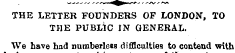
THE LETTER FOUNDERS OF LONDON , TO THE PUBLIC IN GENERAL . We have had numberless difficulties to contend with during our present resistance to one of the most enormous reductions ever known to be proposed to any body of the working classes , and which , we believe , would only be concocted by men possessing no feeling for their workmen , or union workhouse guardians ; too many of whom , ( and two of our OPPRESSORS do , or did belong , to the latter body ) at all times , show but little sympathy to the unfortunate workmen under their charge . On one of these employers being remonstra ? 3 d with on tbe injustice of his conduct , and that the men would not be able to support their families , ; &c , he abruptly replied , that that was nothing to him , for he wnuld have his profits .
There is one of the difficulties which more particularly requires your attention to , because it has emanated from parties ( Thorowgood and Besley , ) whom we never believed capable of resorting to such malignant and insidious conduct , with an intention to counteract our appeals to you for sympathy and assistance ; and thereby to have us more completely in their unmerciful giasp . They have had the hardihood to circulate a printed handbill , beifinning thus?— " An attempt having been made iiy some of the workmen employed in some of the principal London Type Foundries to excite the commisseration of their fellow-workmen in the various trades in the Metropolis , by GROSS statements , as to the rate of wages . " Now : fallow-workmen , in these few
• words just quoted from their own bill , Messrs . Thorowgood and Besley have knowingly printed and circulated two falsehoods ; for instead of our appeals being made by oux y some ef the workmen , these gentlemen (?) know they have been made by all the men employed on piece work in the trade , and that every one of THEIR OWN KEN HA . VE TUNRED OUT—this isfaiseheod the flrat The accusation of eur making GROSS statements as to the bate of waoes , i « falsehood the second ; until they come forward with a correct average statement of tbe wages of bU the men who haTe left their employment , and thus prove our statement of 18 s . per week to be ' underrated , which we now again , fearless of honest contradiction , repeat to be much under rather than above 18 s . per week .
Fellow-workmen , the above parties charge us with piopogating falsehoods ; we indignantly den ? the calumny , and thus publicly challenge Mr . V . and J . Figgins , Messrs . Thorwgood and Besley , to print , and show to the public , the list of prices , the names and wages of all their men that are out , Instead of selecting only ten , and thus , mislead the public by giving thel
Untitled Article
YOL- YI . NO . 303 . SATURDAY , SEPTEMBER li ~ 1843 . "" V ^"" fs ^ " " ' * - ' . Five Shillings par Quarter .
Untitled Article
. BX " C T M — Qly ^ - - -Jr 1 AND LEEDS GENERAL ADVERTISER .
-
-
Citation
-
Northern Star (1837-1852), Sept. 2, 1843, page unpag, in the Nineteenth-Century Serials Edition (2008; 2018) ncse.ac.uk/periodicals/ns/issues/vm2-ncseproduct666/page/1/
-