On this page
-
Departments (3)
-
Text (8)
-

3£mjim'«I 93arltam*nt
-

Untitled Article
-
Untitled Article
-

Untitled Article
-

<S^ «^ 3EntentWntc
-

23antmtpis, &t.
-
Untitled Article
-

Untitled Article
Note: This text has been automatically extracted via Optical Character Recognition (OCR) software. The text has not been manually corrected and should not be relied on to be an accurate representation of the item.
-
-
Transcript
-
Note: This text has been automatically extracted via Optical Character Recognition (OCR) software. The text has not been manually corrected and should not be relied on to be an accurate representation of the item.
Additionally, when viewing full transcripts, extracted text may not be in the same order as the original document.
3£Mjim'«I 93arltam*Nt
3 £ mjim '« I 93 arltam * nt
HOUSE OF LOKDS , Fsidat , Mat 7 th . In a ^ BTrer to Lord Ellenborouga , Viscount Mel-XOUB . se , aid , if & defectiTe treaty bad been concluded ¦ with the Chinese government accoriling to the preliminary articles that had been received , they would advise her majesty not t « ratify it , and instructions to that effect bad been sent ont to China .
In answer to the TJnie of Wellington , the Noble t cent It did seem Btrange to him that any private
Visconnt stated that he could not say whether Chosan j had beA evacuated . - j Ear ! Fitz-wii / ua * presented petitions from . BLendal , j Halifax , and Leeds , the latter signed by 25 , 000 inhabi- tants i ?; , praying a repeal of the Corn Laws . j Lord Ashbubtos regretted ber Majesty ' s ministers ' , had excited Hi-blood and agitation throughout the country by bringing forward such a measure . j The Earl of Wicklow did not think that the advo- ; eates cf the Repeal of the C jrn Laws would be satisfied ¦ with the measure , but that it -would be productive of renewed agitation . The Dike of Wellikgtok was astonished that j Interested motives should always be attributed to the j advocates of the Corn Laws . He believed they were j actuated by no such dirty motive . They were onh j « Tyri .-, in to protect the agriculture of the evuntry , and , ren-Jcr England independent of other countries for htr ' gupj >\ y of food . . ! Adjourned . ' Monday , May 10 . i of
A ^ reat number petitions were presented for and against any altsration in the Corn Laws , one of which gave rise to a short discussden . i The Lobd Ch . a > cellos informed theHonse that he . had received a letter fioai Sir Robert Stopford , in ac- kBevrledgment of the v » te of thanks passed -to himself- and his companions in arms , for their achievements in j Syria . I The Ecclesiastical Commission Bill went through j © omniirtee , and their Lordships adjourned . j
Untitled Article
HOUSE OP COMMONS , Friday , April 30 . The PoIIoc and Govsn Railway Bill , the great North of Enslaad Railway Bill , and some other private bilis ¦ we re rrad & third t . mo and passed . ilr . OConnell gave notice that in commif-ee on the S- ^ ^ ar Duties , be shcu ' id move that any reduction of > iuty be extended only to sugar the produce of free 1 z . 1 k , vt . Cj 1 oe-1 SIBTHORP gave notice that in committee on t ^ e Civil Contingencies , he should move that no salary " i > e allowed to Mr . Vizard , Solicitor t-o tie Home Dspann . -r-nt . Iniu-wrt toMr . O"CjnneU , Sir R . I : sglis said it ¦ was h : « inttction to bring forward a nseisure on tbe subject of Church Extension cm the ^ Sth instani . and he should then state the number cf additional ehnrcbts he proposed should bj erected .
P = u : k > ns in favour of the proposed re < inction of the duties 02 forti ^ n sugar were pretenied by Mr . ThoratJty from I . r . trpool merchants trading from \ h--t Brazils ; by Mr . Lj ; : ouchcre from the American Chujabsr of Commerce » : Liverpool ; by Mr . G . W . Woxl frorn thmerchiiiiTs and r . ; inuiicturcrs of Kcnual ; by Mr . LusLlngtoa i .-um all the firms engaged in the sugar trade in London ; and agiinst the measure by Mr . Gladstone from tU ii ' iand if St . Vincent ; by Mr . A . Chapman from tLr shipowners of London ; by Mr . L ckhart from the C ^ -r ^ uber of Commerce of Glasgow ; by Mr . Cress-¦ well u . rc the Wesi India macbants cf Liverpool ; by Capt . Matthew from the Colonial Society of London ; by Is-ra Stanley from merchants of Glasgow ; by Sir R . Peel m-m . 400 West India planters . aM frcm twentyseven places in Jamaica by Mr . G&ulburn .
Lord J . Russell said the alterations he meant to propose zn the duties on corn were , a fixed duty upon " Wheat i .-f Ss . per qnarter , on Rye , 5 s . per quarter , on Barley is . 61 . per quarter , and on Oits" 3 s . 4 d . per quarter . i . Cfcesr . Vi On tho ur » ier of the day for goisg into committee on the sugar duties being read , Lord J . Russell said he thought it incumbent on nim , o-H- ^ ng to the notice given by the Noble Lord rSandon ,. an-i tie attitude assumed by various parties , political and commercial , on the subject of the propt-sed measure o : the Government , to state to the House the reasons by which they bad been actuated . Lord John Russell here proceeded at length to his Tindicatiun cf Ministers from the charge that their recent i ^ ove was a *• fetch , " to whip up their supporter * -bronghont the country . Having grappled with the subjects of timber and sugar , acd beins at the same
feme aware that tb . ere was another irreat imerest , the pr ^ tt > . ^ o ;> afforded to which was .-. serious grieTaDcs to tbe pr-.-j / li ; of that country , thty cjuld aot bavsnitt ihe House of Commons with the confidence that they were propo > : vLg good and right measures which oue day would it ; nn the foundation for the continued prosperity of tee wustry , if they had shrunk from grappling with that third question . < L ^ nrl ch&erj . ; He thought th-f proposition be haa aEr . vun . ced ta the House on the subjtjt of corn would ieep it at a .= t ^ a > iy price cf i > 03 . or 6 r * ., wi : h .., ut exposing tie couiitry to rufous tiuctnatioi . i . Ciieers . ) With regini to sugar , the principle they -. ncunt to proceed upou w ^ s tie removal of p-ohibi-ioii , and the imposition of fair and honest dntit ^ . ( Cheers .- It was said that sugar could be introrlueed from ths West Indies at a rei&onable price , but they had to guarantee that the price would rtmain at a rej-Bonabic priee unless competition was allowed . The Noble Lor . i here instanced several casts in which
competition tau proved beneficial instead of being injurious . He now came to the question of emancipation , which all parties must admit hai been a most successful experiment , as affecting the interests of 81 , 0 'ji . i persons . The Nol . le Lord then referred to the msiied improvement that h ^ d taten place in the condition of the negroes in the West Indies , as shewn in the d& ? - atehea of the governors , and the . repoTts of the rtipctJiary magistrals , and contrasted it with the condition of the labouring class in Manchester and the other lar ^ e manufacturing towns . It was argued that the adoption of the measure proposed by the Government would give encouragement to slavery , and promote the cultivation uf slave grown sugar . He contended tLst she auoDtion of the resolution of the Noble
Lord "s" - _ > ul'I not advance them one step in the . abolition of slavery—the sngxr wonld still be made , and still be purchase *! in every part of the worid ; it weald be no eomfur ? to the slaves to be told that the produce of their li > -ar would only go to Germany an . i Switzerland in exch-.:. je for the manufactures of thsse coantries-The example which that country was about to set ¦ wonld be of the utm&st importance in the Brazils , the Unitetl S-ites , and throughout the continent of Europe If thit great commercial community came to the conclusion tiikt restriction aud prohibition were the best maxim ; uf commercial policy , they would be adopted
and acted upon by other countries to the detriment of Englssd . Tseir great o ^ jret should be tiw extension of thfc . r commerce and manufactures , and unless they made cr > their minds to remove all vexatious prohibitions tad restrictions , they could never carry out that princr le to the full extent . He left it to the House to adop : or reject his propositions- If they adopted them , t ; ? y might look forward to an era "* f prosperity for the country—if they rejected them , on that Hous = woulu r-st the responsibility . The Government would rest £ j . ti * ned with having done its duty by bringing forwari vhe meisure-. they considered best- ^ for the interests of the country . > Loud and general cheering . )
Lori Sa >" D 9 > " then moved , as an amendment to the Speaker leaving the chair , that considering the efforts and sscrulc ^ 's Parliament and the country had made for the abolition cf slavery with an earnest hope that it ¦ wonMlrii to the extinction of those evDsia other countries , that House was not prepared , especially with the preset prospects of supply of sugar from ' the British colonies , to adopt the measurs propos-d by'her Majesty ' s Government , for tbe reduction of the duty on foreign sugar . The Noble Lord contended that it was highly improper to give any encouragement to slavery unless under a pressing and urging necessity which at present did not exist . It wonld be mos : impolitic for the sake of the main ? difference of 1 & . 6 d . per cwt . to unsettle the whole of their relations with their West Indian possessions .
Mr . Hogg said if the measure was j > assed , that country would be inuadated with sugar , the produce of slavehoWing countries , to the exclusion of the . produce of tfeeir own colonies . Mr . Haves save his hearty concurrence to the proposition of the Government , and he thought it would be haiicd with satisfaction by tiie gre& \ bulk oi the community . Mr . J ames , although a West Indian proprietor , ¦ would iisi . ijort the measures of the Government , as he had n ^ v .-r allowed hi 3 private inserest to interfere with his public duty . ; Cheers , T > r . Li"shi > 'gtc » " ol'jecte-i to the measure , as it was e&lcalatfi iu his opinion to promote and encjurage sl 3 verr . to discourage the cultivation of cJtun in tht Brar . ' s . : L 2 i render them dependent for a sappiy upon the Uaited States .
On the motion of Mr . Ewiei the debate was adjourned till Monday . The report on the Criminal Justice Bill was agreed to . Adjourned at a quarter to one o'clock . Monday , Hay 10 . A great number of petitions -were presented fer and against aay alteration in tbe Cjrn Laws . The adjourned debate on Lord Sandon'e amendment ¦ with respect to the sugar duties was resumed by Mr . E ^ aKT , who denied that there was any reason to expect tha large supply of sugar intimated by Hoa . Members on the opposition &idi of the House , from eur own Colonies in the course of the ensuing year . The Hon . . Member entered into calculations in ortler to show that the supply of sugar would , not exceed that of 12 years back , while tbe population of those countries had increased 15 per cenj .
Mr . HkaTHCo tx oppoxed any alteration of tbe Corn Laws . He wa » opposed to any sort of compromise upon the subject , but he could not believe that even the Koble Lord iJ . Russell ) couid himself think that the ¦ proposition of a fixed duty of Ss . would ever be agreed to . B-rlieving the question of tbe alteration of the Corn | m to be intimately connected with tie question then ' before the House , and that both re ; t ; d on the same pdtioiplcs , he should vote against ^ the proposition of h « Majesty's Government . M& STaxSGXtVATS gave his concurrence to the Vtopoi ^ iioa ^ of the Govercnirnt , though he thought
Untitled Article
that Ministers irere blameable for bringing them forward without hariBg power to carry them tbroogh Parliament Mr . G&OTB contended that all classes of the community wonld derive the greatest advantages from the adoption of the line , of commercial policy proposed by the Government . The question before the House was not whether there should or should not be a protection in favour of our colonies , but whether there should , be a greater protection than a differential duty of fifty per
Untitled Article
interest could be so unreasonable as to claim a greater sacrifice than this at the expenee of tha consumer . He was of opinion that it was the duty of the House to protect the consumer from being thus sacrificed to any private interest whatever . He belitved that if sugars were allowed to come into this country on the terms proposed , London would become the centre of operations on the Continent , to an extent which was not now the ease . Much of the business transacted at Hamburg and Antwerp would take place in England , and by means of British instead of foreign shipping . The Honourable Gentleaian concluded by giving his entire , cordial , and hearty concurrence to the propositions of the Government .
Mr . Cowuhouh contended that the effect of the proposed measure would be to destroy oar West Indian colonies , and to render slavery more flourishing than ever , by the encouragement which would be thus given to its produce . The arguments used by tbe Noble Lord ( J . Russell ) on Friday night were nothing less than a defence of slavery , for all his arguments were precisely the same as were formerly u « . ed by the parties most strongly opposed to negro emancipation . The Xoble Lord might raly upon it , that neither that House nor the people of England would ever acct-pt the proposition of having cheap sugar at the exp ^ nca of grinning down the Africsn * on the soil of Cuba—they wonld not tolerate the proposition of obtaining sugar cheapened at the price ef blood . The manufacturing interests of this country would inform the Noi'le Lord that the best thing that could be dene for them would be , to preserve to them the mirkets they were already in j . osstasion of . Now , frtm the returnB quoted by the
Xoble Lord , it appeared that the exports uf Uritisb manufacture to the West Indif 8 had increased , within a shi . rt period , no leas than forty pcr cent ., and to British >' orth America sixty per cent . The ir . creu&e in foreign markets was not above half that in our c-jlon : es ; and yet the Noble Lord , by his proposition , w ^ s levelling a joint blow at two of th * most valuable of those markets—the West Indie * and Canada , and , in the tame breath , declaring that he was doing so fi , r the benefit cf the minufai . twvr . Mr . Gregg supported tbe propositions of the Government , wLich he heard with a great deal of pleasure , convive d , as he was , that they would prove , if carried out . highly beneficial to ; i ! i classes . He had hoped that the landed pr iprieturs , when a preposition wad made to a" ate all monopolies , wouid have intimated a willingness to juitigite their own ; but be found himself mistaken , and regretted that class interests were still to prevail over tlio-e t-f t / e public
Mr \\ alter said "hat the Government appeared to pr *> cee < l upon the plan of increosint ; the revenue , and , a » th- same time , lowering prices , two thijigs almost Lnc nupatible . He had spoken with a great many tspeneuceti meicantilo men , who declared that thty had no confidence in ths financial measures proposed by the Chancellor of the Exchtquer , and in ^ re particularly that one relating to the introduction of foreign sugars . With respeit to the Corn Laws , he was in favour of &n alteration in them , but the amount of fixed duty which he should support would greatly depend upon what should be dons with the Poor Bill . It was thought that the election , in which he had been recently en ^ aged , might have had some influence on the measures of Government ; and be would say that , taking its circumstances into consideration , it would be well indeed if it should produce some influence on both siiies of the House .
Lord F . EGEETO . 'f thought the relief to the consumer in tbe country "w < is of much higher interest than the consequences of either the East or West Indies , but the Noble Lord hid not shown that there would be any r . ppreciable bentfit to the consunur as the rtsult of his proposition . On the contrary , he calculated the reduction in the price of sugar as likely to be oniy Is . 6 d . per cwt . which , at the average rate of cons > uiuption , would make a difference to the peer operative of only 2 Ad . in a whole year . The Xoble Lord contended that .
oy passing this measure , England would full from the high positiun she held in the estimation of nations , and the value of tbe example she had hitherto exhibited with respect to the slave trade wonld be rendered nugatory , it weHiil be better to render the slave trade once more lc ^ al , ami to allow our ships to sail from Liverpool under proper and humane regulations , than by this meaiuro to give encouragement to slavery in quarters where it existed in its most revolting characters . The Noble Lord concluded by expressing his intention to vote fjr the resolution of his Xoble Friend Lord
Sond' > n . Mr . Labotciiere said he looked with anxiety to the decision which the House might come to , only because he saw those great interests who thought their own monopolies in danger , if the same principle skould be LppHfcd to themselves which was now sought to be applied to the protection of duties on sugar , coming forward to defeat a measure calculated to bentfit the mercantile prosperity of the country . The Hon . Gentleman reminded the House of the enthusiastic support given to Mr . Huskisson by his political opponents ¦ whtn he brought forward bis principles of free trade , and contrasted it with the reception which gentlemen on tbe opposition benches gave to the present Government when trying to carry out the principles which
Mr . Hnskisson promulgated . He was a strong party man , and wished to see his party in power , but if the gentlemen on the opposition benches would carry out those principles ot free trade , so important did he deem them , that to those gentlemen he would give aa wann aud as coriial support as he was that moment giving to his Right Hon . Friends . The Rkht Hon . Gentleman then defended tbe Government from the charge of having taken either Parliament or the colonies by surprise in the proposition which they had made , and contended that it would be better to afford a fair pro-: ection only to the colonies , instead of deluding them with a monopoly whi « k had never been found to be permanently beneficial . There was , in his opinion , very little weight in the arguments that the contemplated measure would encourage slavery or the slave trade . At present this country sent
manufactured goods to Brazil in large quantities , which goods were paid for in sugar which was refined in England in b iml , and exported to foreign countries . Surely this was giving encouragement to s avery quite as effectually as if this slave-gr j wnsugar vras consumed in England . In fact , the only question was , whether the trade should be carried on by direct or circuitous nitans . It was to be recollected thac , by the existing treaty with Brazil , the highest duty which could be placed on British goods was 15 per cent- ; that treaty wou'd expire in 1844 . It was supposed in Brazil th ^ . t it would expire in 1842 , and much irritation prevailed there at the prohibitory duties imposed by Great Britain on Brazilian produce , and unless s « me alteration in those prohibitory duties should be made , it was unlikely that the commerce with that country should be continued on terms so favourable to British
manufactures . Ministers might not , perhaps , triumph in the decision of the House upon that occasion , but there was so much of soundness in the propositions they ma'le , that they must ultimately be adopted by the country . Mr . Gladstone said that the House was not called upon on that occasion to decide upon the principles of free trade , btcause the resolution before the House was that the import duties on sngar were to be governed by higher principles than any connected with trade or commerce . The real question was , whether they were to abandon an txpcrimtnt for the abolition of slavery to which they had hitherto steadily adhered , acd towards the success of which the people of this country had made very large sacrifices . As to the benefit to the
consumer , it would be a poor consolation to the poor operative of Bolton to tell him that in order to relieve his distressed condition there should be a reduction in the price of sugar of la . 6 d . in the cwt , a rednction which could never , by possibility , reach the quantity required by the poor operative . It was worthy of remark as to the expected supply for the ensuing year from our colonies that all the estimates of the probaWe supply of sugar far exceeded the greatest consumption that had ever hitherto taken place in Great Britain in any one yeaT . The Hon . Gentleman contended that there wag a great difference between cofi ' e * and sugar , because of the former article then was not a sufficient supply ; the produce of free labeui and c-jffee was not the cause of slavery , for it requirtd of
but ii ^ tle labour any kind , while to tbe necessity foi gr * at labour in tbe production of sugar might be attributed the origin and continuance of the slave trade The object of the Government was U > increase the supply of sugar , bnt if the supply of foreign sngai was to be increased , so must be the number of hand : to produce it , and so must an additional number o : Africans be torn from their families . The Noble Lore talked of inducing the Brasils to mitigate the evils o slavery , and to take steps towards its ultimate extinc tion , but the Noble Lord at the same moment wa proposing to give np the only inducement we cook
hold out to them to do so—tbat of admitting theL sugars to our market . This country had paid twent ; millions towards the abolition of slavery , and twent ; more millions in the shape of gifts to foreign power " and in armament * to suppress the slave trade . It had besides , paid something like ten . million * in the price o sugar , making fifty millions altogether . Besides al this it had made great sacrifices in human life in ou settlements aad ships on tbe coast of Africa , and , afte all this , they ware sow called npon to stimulate tha lust of gain which had tended to keep op slaver ; &nd tae slave trade , notwithstanding all the exertUn which had been made to pnt it down .
When the Hon Gentleman eat down several membe rose to move the adjournment of the debate , whii immediately took place . Tb . 6 other orders of the 4 ay were then disposed ( and the House adjourned .
Untitled Article
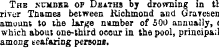
The huxBKB op Deaths by drowning in tl river Thames between Richmond and Graveser . amount to the large namber of 50 i ) annually , i which about one-third occur in the pool , principal ' among seafaring persons .
Untitled Article
THE PETITION CONVENTION . London , Saturday , May 8 tb . At five o ' clock p . m ., the members assembled in the Hall , when Mr . Lawrence Pitkethly was called to the chair . Mr . Morgan Williams read the minutes of the last meeting , which were confirmed . Dr . M'Dooall brought up tbe report of his canvass amongst Members of Parliament . He made upwards of one hundred applications . In aome instances he received favourable replies , but the majerity of tbe members were either engaged or absent from home . Mr . Skevington reported that he applied to sertnty members many of whom were from home . He met with a few who agreed to support the petition .
Mr . Barmby also reported . Amongst the answers which bo received was one frem the Chairman of the House of Commons , who said that he could not entertain the question . Sir John Mordaunt would not give an answer , Mr . T . Eastcourt would not support the petition , and Mr . R . T . Parker said that he would as soon hang himself as support the petition . ( A laugh . ) Mr . Ruffy reported ^ at Messrs . K . Hosldns and Warburton received him most kindly , and expressed much concern for the prisoners , for whose release they would de all in their power . ( Hear . )
Mr . Rose then reported , and enumerated several Members of Parliament upon whom he waited . His success was much the same with that of his brother delegates . Mr . Payne promised to support the petition and expressed his abhorrence of treating political prisoners as felons . ( Hear . ) Mr . Sheppard was of opinion that the prisoners had not half enough of punishment Sir R Peel was from home ; Mr . Turner was in favour of a general release ; Mr . Rutherford could give no answer . Mr . Wall read a loDg list of members whom he had canvassed . Some promised , others hes ' . tated , and a great number were either engaged , or were from home . The members -who accompanied the above in their canvass Wtie Messrs . Morgan , Rialey , Cullum , Collias , and Smart . A vote of thanks was passed to Mr . Wall far having devote 1 so much of his time in arranging the circulars for the Members ; of Parliament
Tile foliowii ; ^ s circular which the r . e ! e nate 3 after t ; . . : r first ai ) 'iicati <; n . should they not succeed in obtaining an inUi view with the Member : — 5 S , Oid Bailey , 4 th May , 1841 . The u-dersigned b-. ing deputed to wait upon you , by li couuiiittte aj pointed ior the purpose of obtaining the libsnuiou of ail political prisoners , meeting at this place dn : jy , and having so waited , aud found you from home , beg l-.-ave to ask , through this medium , whether the committee may expect to be honoured by your support and influence to the said object in your place in Parliament . An early anbwer will greatly oblige , Your ' s , m /> st respectfully . The Secretary ru ; ul the following letter from the Marquis of Normanby : — " Home Office , f . th May , 1841 .
" Sir , —I nm directed by the M .-irquis of Normanhy to acknowledge the receipt of yours of the 5 th instant , respecting certain memorials which have been entrusted to you for presentation on behalf of John Frost , Z ^ phaniah Williams , and William Jones ; and I am to acquaint you that the regular course , and the only Course in such cases , is to trnu&iuit the petitions to the Secntary of State , and that if you will do so , Lord Norman by wiil give them his attention . " S . M . PH 1 LLIPPS . " To Mr . L . Pitkethly . " Mr . Wheeler asked a question respecting the payment of tbe London dele . sf . ites , which , after some remarks by Mtssrs . PitketLly , Morgan , and others , was Tef « Tretl to tbe Finance Committee Mr . B ^ lis presented , through one of the members , a petition from Hawicli , signed by 1 , 046 persons , in favour of the release of all political prisoners .
Mr . Pitkethly wished to kuow how thty should ac | , respecting the memorials . Thuy ( the deputation ) were commissioned to lay thei'i before the Queen . Dr . Wade said that ho wouid go with them to Lord Xormanby , who would present them . Mr . Martin instanced the ca > o of Mr . Mason , of Bolliugton , who proceedsd to Brighton , and insisted upon his right to prtsent two petitions to the King . Oji that occasion he adduc-d several proofs and original documents , to stow that the people had a rifcht to have an interview with tbe King . ( Hear . ) Mr . Mo . gan Williams—Ye « ; and he was afterwards transported . Mr . M ; irtin—True ; he was transported . He was of opinion that the (^ ueen would uut receive them , and that it would bt ; , therefore , bitter for them to have itri interview with the Secretary of State for the Home Depxrtin rnL illear , hear . j
Dr . M'Djuall -By a receut order , petitions could not be presented at kvces . Mr . Pitketbly was of opinion that tiii > y should induce Eari Stanhope , Lord Brougham , or some other Noble Lord to accompany them . Dr . M'D u . iil—Why not Members of the House of Cv > niiiiu " .. s ' : Mr . M-. i ^ : m u -. as satisn ^ d t ;! at Mr . Berkley , Member fr > r Hri !> t- < i , v . uuai ^ restut their pe titions to the Queen . iilKsr , lu-ur . i . Mr . Martin said Mr . Duncombe would be a proper person . Mr . Pitkethly—He was not on friendly terms with the Marquis of Normanby . Dr . M'Douull—There could be no presentation at levets . If they agreed to a deputation for presenting the petition , they should apply to the Secretary of State .
Mr . Pitk-tLly—They could present their petition , if I tht >¦ only could fiud a man bold enough to do so . I ( Hear , ht : ir . ) j Mr . R . ss—In the case of the Dorchester labourers , tke petition would not be received if it were not ac- coiupanied by a body as a deputation . ; Mr . Smart was of opinion that they could not ob- ] tain access to the throne ; yet they should do all in i thtir power to effect it , aa they -were not awaru whether j thoir petition would be presented , if it was left with ; the Secretary of Stale . ( Hear , hear . ) I
Mr . Morgan Williams assured tbe Convention that his constituents felt all anxiety for the fate ef Mr . F / ost , who was belovtd by them . ( Hear , hear . ) He trusted that the most tfficient means would be adopted for the f > ucces 3 of the petition , which should , if possible , be laid before her Majesty . His constituents , especially the men of Newport , entreated of him to have the petition dirtctiy presented to her Majesty . ( Hear , UeJT . l Aft- r some farther observations from Messrs . Skevingto : i , £ > : i art , Ridley , and others , it was resolved that it should be left to the Committee to consider the best measures to adopt for securing the presentation of the petition . The Convention then adjourned .
MONDAY , May 10 . The members met this morning at nine o ' clock , Ipro forma , ar . d thea adjourned to five o'clock in the eveuing , in onier that in the meantime they might prosecute Ueir canvass . They again assembled at five o'clock , Mr . Wall in the chair . The room was very crowded , and amongst the persona present were several very respectable females . Mr . Morgan WilliamB read tho minutes of the last meeting , which were confirmed . The following letters vreie read : — " Sir Charles Brooke Tere begs te inform the Convention for the liberation of political oilenders that he cau give no opinion till the question has undergone dis cussion in the House of Commons . "
Sir , —I received your note requesting me to notuy to you whether or not I will give uiy assistance in procuring the release of prisoners now under confinement for political offences . My answer to the applieivtiou is , that I shall feel much pleasure in supporting any memorial to the executive praying for the release of those persons , with the exception of Frost , Williams , and Jones , whose conduct occasioned such faul results to the misguided inhabitants at Newport . R . Walker . Messrs . Rose and Cullen reported their convass . They made twenty-seven applications ; : nd had six interviews . Mr . Lester was favourable , but expressed great anxiety to ascertain what course would be pursued by the Chartists in the event of a dissolution . Mr . Muntz detained them a length of time , aud spoke much about the Corn L : tws , the repeal of which he wonld support , although he was of opinion that much benefit to the peopie would jut be derived itohi it ( Hear , hear . I —
He thought tbe repeal would bring more money to the market . He would support the petition for the release of all prisoners . Messrs . Quiuton Dick and E . White were favourable to the cause . Mr . Trent looked upon the Chartists as a queer set of fellows . ( Laughter . ) He would not pledge himself . The Members generally gave it as their opinion that the names of Frost , Williams , and Jones should not be mixed up with the names of tbe other prisoners . ] Mr . Ridley and Mr . Ruffy reported that Mr . J . A . Yeatts was favourable , and recommended that the terms of imprisonment , the punishment , and the exact nature of the crime of each should be specified . Above all , that where the prisoners yren conaned under ground should be stated , as he deemed such treatment cruel in the extreme aud unjustifiable . ( Hoar , hear . ) He considered it improper to unite the names of Frost , Williams , and Jones with those confined in this kingdom .
£ J ^ J ? , from *« Eari Fitewilliam , In which the Noble Earl said , that as be had nol given the subject consideration , he could not take upon himself to return an answer to the application made to him . Mr . Wall and Mr . Martin reported that they waited upon thirty-two members , and had only four interviews . Mr . Jarvifl was faTourable j Sir Charlea Barrell would give it his mart serious consideration ; Mr . Irviag considered that the prisoners were guilty , and thai they were in proper hands . Messrs . Wall and Martin pressed npon bis attention the cases of Lords Waldegrave and Cardigan . Mr . Irving replied that he knew nothing about them . ( Ob , oh . ) Mr . Wall said that Mr . Jarvis was decidedly opposed to the punishment inflicted npon the prisoners .
Untitled Article
A letter was read from Mr . Williams , stating that he was fsreuaU « , and that he would feel great pleasure in presenting any memorial Dr . M'Douall waited upon the Hon . Mr . Berkeley , who said that he would feel most happy in accom panying a deputation to tbe Queen , and that he would lay other petitions before the House of Commons . ( Hear , hear . ) In fact , he said he would do anything be could in behalf of the prisoners . ( Hear , hear . ) He also waited upon Mr . Duncombe with certain statistics of the wages paid to working men . He ( Dr . M'Douall ) went to the House of Commons to supply other members with similar statistics which , no doubt , would that night be used in the House . ( Hear . ) The following letter from Mr . Rich was read- — " Sm , —I have this day sent a petition signed by ona hundred freeholders of Holt , parish of Bramford , Wilts , to T . Duncombe , Esq ., M . P . " Thomas . Rich . "
Another letter was read from Mr . Gilby , relative to the Sheffield petition . A letter was also read from Mr . John Jones to Mr , Cleave , which accompanied a petition from Sutton-in-Asbford , Nottinghamshire , containing the signatures of 1000 males and 755 females . Dr . M'Douall as chairman of tbe committee for general purposes brought up the report . The report recommended the payment of £ 1 weekly to Messrs . Wall , Ridley , aud Rose , during the sittings of the Convention . Mr . Collins . —Is there any , and what payment made to the London Delegates by their constituents ? Mr . Wall . —The various districts were raising funds for the London delegates , for which they would pay not less than 30 s . a week . The recommendation wasconfliraeil .
The report recommended that Mr . Martin , as a member of the Birmingham Frost Committee , and as elected by a public meeting to feit in tho Convention , should , although not ballotted for , he considered us the representative uf the Frost Birmingham Committee , and as duly elected member of the Convention . Recommendation confirmed . The report recommended that Mr . Martin be paid out of the general furul according to the scale by which other members were j'aid . Recommendation c ^ nfinned . The report recommended that £ 1 a week be paid to the door keeper . The objtct of the committee was to pay the door keeper the highest possible wages that their means permitted . After a short discussion between Dr . M'Douall , Messrs . Morgan , Martin , Pitkethly , and others , tbe door keepers' stipend was left at twenty-five shillings a week .
The report recommended that the deputation appointed to present tho Memorial to the Queen should not be satisfied with auything short of directly presenting it to her Majesty or a direct aud positive refusal . Rtcommendation confirmed . The report recomiutnded that the address frcm the Fiost Birmingham Cuinmitteeshould not be published . Recommendation confirmed . " It wai also recoinmended by tho Committee tliatMr . Pitkethly be treasurer , and suggested means for collecting the funds &e ., which were adopted .
Dr . M'Duuali , in submitting the seventh recommendation of the report , said that the Committee before they had approved of it which they did , and most unanimously , that they studied and cousidereil well the constitution of the Convention and the principle upon which it was founded . ( Hear . ) The Committee were of opinion that there could not be too many members of the Convention . Hat they were of opinion that when an individual sought to sit in it that he ought to be officially announced by tho Manchester Executive and ballotted for . ( Hear . ) Mr . Letch a hiubly
reapictable man , and than whom a more efficient , a more trust worthy , or move honourable man could not be , was not b . illotted for by the Manchester Executive , because his election ha 4 not been officially announced . As for Mr . Collins he ( Dr . M'D . l and the other members of the Coinruit . ee entertained for him the highest respect ; btill when they ascertained that Le had not been officially announced to the Manchester Executive &a duly elected , and as the Executive did not ballot for him , they weru unanimously ef opinion that he was not duly elected member of the Convention , and they reported ; ic ; ordin"ly .
Air- Ruik-y moved , and Dr . M'Douall seconded , the adoption of the report . A call having been made for the letter of the Manchester Ex . < cutive in reference to Mr . Oollms ' a election , the Secretary was directed to read it , and which was as follows : — Sir , —As I made an oversight in my letter , I now send , you the numes of the gentlemen put into the ballot box—Messrs . Sweet , Nottingham . . Smart , Leicester . Skevingion , Loughborough . Morgan , Bristol . Woo iward , Brighton . Mursden , Bolton . Deegan , Sunderland . Arthur , C ; ulini ; furd . Gill ^ tt , Slitffield . Martin , Birmingham . M'DuUuIl , Sjuth Lancashire ,
Manchester , ice . &c . Mr . Simkey was nominated for Edinburgh , but could not attend . Mr . Dover for Norwich , but his modesty was such that he would not obtrude himself on public noiico , but would rather l >; t those perform the busiut ss who could do so with more tfftct . Mr . Moir , of Glasgow , couid not absent himself , in consequence of his own business . Mi * . Lovett could not attend for reasons of his own . Now , my dear Sir , more information was given me on the subject of Messrs . Leech and Collins ; they were both put in nomination , but , in consequence of my getting no official information on t ! ie subject , I left both names out of the hata . Jon : * Campbell , Sec .
Mr . Cullum was of opinion that all persons elected by a public meeting had a right , to sit in the Conveutiou . He therefore moved , us an amendment , " That all persons legally elected by a public meeting to sit in the Convention were entitled t * a seat in it . " Mr . Ridiey sakl ha might be elected by a public meeeting , but uot according to the rules of the Nortliern Star , which furnished them with the only guide by which they should go . ( Hear , hear . ) Mr . Smart said that if Mr . Cullum opened so wide a door to tho Convention they would be inundated by persons sent by Associations , not Chartist bodies i , Hear , hear . ) Mr . Rose said that certainly if such a precedent were once admitted they would have anti-Corn Law leaguers or members of the Carlton Club sitting amongst them . ( Hear , hear . )
Mr . Pitkethly was desirous of union . He was sorry that any diii ' erence of opinion ou tho subject had existed . He supported Mr . Collins because he knew him well , and was satisfied that he would be a useful and active member . Besides , thty should remember that his services were gratuitous , and that his constituents paid his expenses . ( Hear , hear . ) He waB aware that his vote on the same subject , on a previous day , had given some ctfence to his ( Mr . Pitkethly ' s ) constituents ; still he was satisfied that he was right , and therefore persevered in his course . If his constituents were
displeoaed , and wished it , he would resign ; and to that effect he had written to them . Ho always would , as he lately did , pursue a straightforward line of conduct , and without regard to differences on other points , sup port the man who would serve him in gaining a particular object . ( Hear , hear . ) Even Mr . O'Connor approved of Mr . Collins being returned . It waa only by union they could preserve their organisation , and that union they should struggle to maintain . He supported the amendment . Mr . Morgan followed on the same side .
Mr . Collins said that his name was not sent to tbe Manchester Executive because his constituents did not deem it necessary , as they paid all his expences out of their own funds ; they considered that the names of representatives of small constituencies , whose expences were paid out of the general fund , were only sent to the Executive . He waa not there to speak of the " new move . " He was sent to watch over the petitions forwarded in favour of all political offenders , and that duty he would conscientiously discharge . ( Hear , hear . )
Dr . M'Douall denied that they bad a right to introduce the Northern Star , or the nam « of Mr . O'Connor , into the debate . They had nothing to do with either . The constitution of their body was propounded to , aud approved of , by the country . That constitution was therefore their only rule . The committee were not to net on recommendations , but on principle . ( Hear , hear . ) He was astonisbed to see the people of Birmingham deviating from the constitution that formed their body , especially as they were so particular iu tbe late Convention , when Messrs . Salt , Pearce , and
Hadley sat as so many inquisitors examining the right of each member to sit . ( Hear , bear . ) Their dictum was then a law . ( Hear , hear . ) He ( Dr . M'Douall ) cared not who laid down the principle by which they were to be founded . They adopted that principle , ana should be directed by it . The Doctor again referred to the rejection of Mr . Leech , aud assured the Convention that no party , but a desire to adhere to principle and the acknowledged constitution of their body induced him to join in the report which formed the subject of discussion . ( Hear , hear . )
The amendment was then read and put It was as folio W 8 : — " That all persons elected by public meetings to sit in the Convention , and forward the objects of the General Charter Association , be considered members oi tbe Convention . " Four voted for it , and seven against it Mr . Pitkethly was still of opinion that Mr . Collins ' name should be put in the © allotting box , and that whether he waa or was not a member of the Charter Association , that he bad a right to sit as a member of the Convention . He therefore moved that the Con-Tention accept the gratuitous offer of those who sent Mr . Collins to assist them as' a member of the Convention , in soeking the release of the political prisoners . Mr . Cullum seconded the amendment . Dr . M'Douall and Mr . Skevington opposed tbe
amendment . Mr . Morgan said it would be despotism on the part of the Convention to reject a man selecfcd by the people .
Untitled Article
Dr . M'DouftU conceived it a mere begging of tbe question to accept the services of those who sent Mr . Collins ; they knew nothing of such an offer , they knew nothing officially about bis election . He -was not returned by the Manchester Executive , nor had he produced his credentials . He should not allow any thing or any man to disturb the principle of their constitution , and thus excite discord amongst them . ( Hear , hear . ) Mr . Collins . —I require that my credentials which I brought with me be read . The Secretary read the credentials dated March 29 tb , 1841 , which stated that Mr . Collins was duly elected to watch and superintend the presentation of the National Petition , adopted at tbe meeting in behalf of the expatriated and incarcerated Chartists . Mr . Ridly inquired if the amendment recognised Mr . Collins as a legalised member of the Convention . The Chairman replied in the affirmative .
The amendment was put and . lost After which the original motion for adopting the report of the committee , was carried by seven to three . Dr . M'Donall next reported that the committee would have been in the same difficulty regarding Mr . Barmby , as tbe irregularity occurred with him , and the Manchester Executive . The latter , however , removed the difficulty by recommending him as a member of the Convention . The report , therefore , also recommended that he should sit as a member of that body . Mr . Cullum moved that Mr . Coliins'a name be included with Mr .. Barmby ' e . The amendment fell to the ground , and after a short discussion between Messrs . Pitkethly and others , tbe recommendation that Mr . Barmby be considered a member Of the Convention was adopted .
Dr . M'Donall presented a petition from Rugby , Warwickshire , containing 235 names , and one from Manchester , containing 66 , 000 signatures in favour of the political prisoners . ' Mr . Ridley moved that the voluntary offer of those persona who sent John Collins to assist in canvassing the Members of Parliament , and to assist in the release of the expatriated and incarcerated Chartiste , be accepted . Mr . Pitkethly seconded the motion . Mr . Martin moved as an amendent that , as Mr . Collins was not a member of the National Charter Association , he could not sit as a member of the Convention . At the request of several members , the Chairman asked Mr . Collins if he would give his services ?
Mr . Collins said , I have been told by three resolutions that you do not want my services . I should , indeed , look foolish before my constituents , if after that I offered them . Tho original motion was put , when three appearing for , ami three against it ; the Chairman gave hia casting vote for the motion . The Convention then adjourned . It is supposed tbat Mr . Collins will confide his petitions to Members of Parliament , and then return to his constituents . Mr . Collins appeared much disappointed at the result On his departure he waa accompanied by several friends . He was a most active member for the few days be was connected with the Convention , and discharged his duty most zealously .
COBBETT AND THE CORN LAWS , TAXATION AND REPRESENTATION OF THE PEOPLE . The following petition from the lata William Cobbett , M . P ., against the Corn Bill , in 1815 , was addressed by that celebrated man to the House of Lords , when that measure was before their Lovdahips . We beg to remark that the reader will find that Mr . Cobbett was not unjubt enough to oppose the passing of the Corn Bill , without , at the same time , praying for a reduction of taxation ; the bringing down the army and navy to what they formerly were in time of pearse ; and thus to reduce the public expenditure ( exclusive of the debt ) to about six millions a year ; nor does he omit a prayer for a Reform of the Commons House of Parliament Thera are sense and hon 9 sty in this . " To the Lords spiritual and temporal of the United Kinydom of Great Britain and Ireland in Parliament assembled . •—
The petition of William Cobbett , of Batley , in Hampshire , dated on the 7 th day of March , 1815 , Humbly Sheweth , That your petitioner does not presume to be competent to judge of the precise degree in which the merchants , traders , and manufacturers of this kingdom , may be affected by the proposed law ; but , while common s ^ nse tells him that it must seriously injure these classes of the community , that it must so enhance and uphold the price of shipping , freight , and manufactured goods , as to transfer the building of ships , the employment of ships , the making of goods , together with vast numbers of our beat attiz : in 3 , to countries ' , where the necessaries of life are at a much lower
price ; while common sense tells him that to uphold the price of food is to drive from their native country great numbers of persons in search of better living on their incomes , leaving their share of the taxes to be paid by those who remain , and that , too , out of diminished means , arising out of diminished demand for their produce , their manufactures , and their professional labours . While common senso says this to your petitioner , his own experience , as an owner and a cultivator of laud , enables him to state , with more precision to your Lordships , tbe grounds of bis conviction , that any new tendency to raise , or keep up , the price of corn , will prove , in the end , to be no benefit , but an injury to the owner and to the cultivator of land .
That your petitioner has seen , with great surprise , that in certain petitions obtained privately , and sent from this county , it has been asserted tbat the expences of a farm remain nearly the same as when corn was at the late high price . Your petitioner ' s observations and experience enable him most positively to contradict this very material fact . When wheat was sold at an average of 100 s . a quarter , the weekly wages of a labourer were from 15 s . to 18 s . ; and tbat , now , when the average price of wheat is about 60 s . a quarter , the weekly wages of a labourer are from 10 s . to 123 . The price of t » riek-work , which was 50 s . a rod , or perch , ia now 40 a The price of smith ' sand wheelwright ' s work is experiencing a similar fall ; and the price of cart and plough horse !) have fallen a full third .
But there is another cpeat fund of expenee to which your petitioner is particularly anxious humbly to solicit the attention of your Lordships , as it ia intimately connected , not only with the great mass of the peop'e , but with their political , civil , and moral con duet , namely , tha poor-rates , which , in the parish of Bishop ' s Walshar a , where the land of your petitioner principally lies , have been reduced in such a degree , tbat your petitioners has bad to pay , in ths said parish , during the year just now expiring , one fifth less tban
he bad to pay during the last year , with the pleasing prospect of a progressive diminution in this kiud of expenee , and in the vast numbers of those persons who are now included under the degrading appellation of paupers ; who , in entering the pale of pauperism , havo , in general , left behind them all those sentiments of independence , of patriotism , of love of liberty , of hatred of oppression , for which tbe very lowest classes of Englishmen were , in former times , so highly distinguished , and have , along with the name and garb of paupers , assumed the tone and manners of slaves .
For the practical , the undeniable proofs that high prices have an immediate tendency towards the creating of paupers , your petitioner humbly begs leave to refer your Lordships to the documents amongst the records of your Honourable House , wheft , it clearly appears , pauperism , kept in check for a long series of years by the native spirit of the people , was let loose like a torrent over the land by the enormous prices during the late wars , which , in depriving men of their power , deprived them , and even their children , of tbat shame which had before kept them from tbe poor list ; and , therefore , your petitioner cannot but view with profound sorrow , that a legislative act should be in contemplation , having , as he firmly believes , a tendency to prevent for ever the restoration of the labouring classes to their former stats of comfort , of independence of mind , and of frankness and boldness of manners .
Your petitioner is well aware that , unUss the prices be raised and upheld , it will be impossible for the owners and cultivators of land to pay the taxes tbat will exist after tbe Preperty Tax shall have ceased ; he if well aware , that to insure them a high price for their corn is the only means of enabling them to pay these taxes ; but , then , he is clearly convinced , that a very large part of these taxes might be dispensed with ; thus the army and navy , whicb swallow up so considerable a portion of them , might be reduced to the state in which they were previous to the late war , and thus the whole of the public expences ( exclusive of these attendant on the National Debt ) might be reduced to what they then were , namely , six millions a year , and thus , without raising the price of corn , the credit , the safety , tbe honour of the nation might all be amply provided for and secured .
For these reasons your petitioner humbly prays tbat yonr Lordships will not pass any law to prohibit , or restrajn , the importation of corn ; and , as the nation , once more , happily , sees the days of peace , he also prays for the repeal of all the laws laying new restrictions on the press , passed during the late wars ; and , further , he most humbly and earnestly prays and Implores your Lordships to take into your early consideration that subject , which , in point of real importance , swallows up all others : —tha state of tbe representation of the people in the Commons House of Parliament And your Petitioner shall ever pray , William c » bbbti .
Untitled Article
Antiquities kx the Nrw ExcHi » &B .--The -workmen , iu excavating part of the site of the New Exchange , have found several Roman antiquities on the kite of a j ' ar ^ e pond , fifty feet long , thirty-four feet wide , and thirteen feet deep . Amongst these antiquities are a Roman wall and pedestal , articles of pottery ware , glass , and glass vessels , lamps , coins , stiles and tablets for writing , and a strigel such as had been ured in the baths of Pompeii . The latter is perfect . Sheep bones , and the Y o les and horns of stags , have also been discovered in the excavations .
≪S^ «^ 3ententwntc
< S ^ «^ 3 EntentWntc
CHESTEHFIEI . D AN » BBAmproiT ' ^ hundred and twelve signatures hav » K » iT * i « lil tto : N . tIimdP ^ , ^^ ttoi 5 wR were appended to the former NaUon . ii ? * * At a meeting held on Sunday , a JS ? , Sf 5 was passed , protesting againat the sittL ^ ^ Collins m the Convention , and calW vL Jo ^ member of that body to protes ? agtinst \ " ** HB ¥ WO 0 D .-Mr . Charles Connor , of m . « v ter , delivered an animated lecture to the in ffihe 8-x > f the place on Thursday evening m la ? S ^ 8 TOCKPORT .-Mr . Lewis lectured to . Sng" oa the ¦ ° Law raUac * £ 4 $ HINDLEY , ( near Wigan . )— A temp * ,,,,, ing was holden in the open air , * J ~ $ Z f ?!? , ?* Sunday afternoon . Messrs . Dixou , £ n O e l ° ck <* several o her able speakers , sustained Se caL ° total abstinence by powerful aud coavil ^ jL * !? S&- ^ * ^ ablished in thta Sl . ^ eimiii
r S room , m a room previous y occunife ? K * jerry lord , where the working man niav not y * and inform himself , by perusing , afg tho \ T the day , the Northern Star , and otheJ nl ^ J and period cals , with which the table . is SSff " by conversmg with ; his fellow workmen id thei-1 £ and sober hoar * , in the matters which &X their respective interests . 0 D S < o DUBLIN .-The cause goes on well : ournrinri pies are spreadmg and converts being S throughout the whole city . We have muchS to thank Dan : he hafj done us great rood a ^ weekly meeting last Sunday , it was deterJaSL ? take a larger room for meeting in , the ures 7 m to being too small . We received commuuiSS ^ several fnendsin England , stating that berJS ! if * called on them , professing to II SSS- ? * driven out . " There hafe yet been tn ^ JS members obliged to go , and if any should t ! e ? 5 have our laws by winch our English friend J ? distinguish them from gulls . "" "leadmaj
BARNSLEY . —At the meeting , on Mondav « were hauded to Mr . Peter Hoev v > be tnS '» S to the Star offieo ior Mrs . Frost ' A r-S ^ passed to the effect that Mr , Henry SglSZ deserves the execration of every honest ChaS , his base , cowardly , and calumnious letter to th Northern Star . w ( fl 8 The petition for the release of the Imprison * Chartists was s , gned by 3 , 296 , Char ^ ta SSJ ot the signatures from Worsbrough Commmon . Apetition to the Commons praying them to address her ivlajesty for the dismissal or' Ministers , has been adupted , and is beiug numerously sWued .
BlBMlwGHAltt . —Chartist Meeting -The regular weekly meeting was held at the room in freeman-street , on Monday evening last but lilt )! business was transacted , except enrolling the nanm of new members , -and receiving contributions . » Messrs . White and Taylor had left tottfianaDti Corn Law meeting , which hau been announced hvhe Journal of the previous Saturday , for the purpose of discussing the matter . * HYDE .-Mr . Campbell , Secretaiy to the Execuand meeting
numerous . He explained , in a most explicit manner , tho right of the people to the Chart <> r , and shewed the increase of trade since the year 1800 to 1841 , and the increase in proportion ot the miseries suffered in tho manufacturing districts . The Chartists of Hyde are true to the cause they have espoused , and will never shrink from the aeiti tion which the brave O'Connor has laid down to the people , eo long as he acts consistent with the Charter and the people ' s rights . Their meetings are held weekly in the Working Men ' s Institution , on Monday evening , at eight o ' clock .
Z . ONDOJJ .-The City of London Chartists have procured a place of meeting , well furnished with a platform , seats , &c , at No . 55 , Old Bailey . Several enthusiastic meetings have been recently held here at which Messrs Martin , SkeviDgton , Smart , and ' other members of the Convention , made strong and eloquent speeches ; aud resolutions respecting the Lovcu aud Collins move , of a sirailar character to those passed by the provincial Chartists throughout almost the whole kingdom , as well as resolutions for the liberation of Bronterre O'Brien , &c , were adopted .
23antmtpis, &T.
23 antmtpis , &t .
From the London Gazette of Friday , May 7 . BANKIUHUS . C . Cmnon , Dirkhouse-lane , Lower Thameg-street , fish-factov , May 14 , at half-past twelve , June 18 , at one , at the Court of Bankruptcy , Basinghall-street . Solicitor , Murray , Nuw London-street , Pencnurch 1 . street . C . Brown , Oxford-stveet , china and glass dealer , May 18 . at one , June IS , at twelve , at the Court of Bankruptcy , BasinghaU-streefc . Solicitors , Messrs . Farrar and Lak y , Godliman street , Doctor ' s Commons . . G . Fuller , Kegent-street , shawl dealer , May 14 , aJ two , June 18 , ac eleven , at the Cjurt of Bankrnpty , Basinghall-street . Solicitors , Messrs . Walters and lieeve , Baginehall street .
R . and J . Burgi-ss , Macclesfteld , silk throwsteu , " May 14 , at twelve , June 18 , at eleven , at the Coon of bankruptcy , BasiaghaJI-street . Solicitors Messrs Crowder and Mayuard , Mansion-housa-place . W . B . Heazell , Oxford-street , fishmonger , May 18 , at one , June 18 , at eleven , at the Court of BaDkrnptrj , . Basinghail-stret-t . Solicitor , Mr . Thomas , Fsa-court , Fenchurch-street . J . Henderson , Manchester , bookseller , May 22 , June 18 , at ten , at the Commissioners' Rooms , Manchester . Solicitors , Messrs . Kay aud Co ., Manchester j and Mr . Surr , Lombard-street . W- Marshall , Liverpool , iron founder , May 20 , June 18 , at one , at the Clarendon Booms , Liverpool Solicitors , Mr . Mallaby , Liverpool ; and Mr . Cheater , Stiple Inn .
J . Booth , sen ., J . Booth , Jan ., and S . Baoth , Leeds , Yorkshire , stuff manufacturers , May 25 , at ten , June 18 , at nine , at tbe Commissioners Kooras , Leeds . Solicitors , Barr , Lufthouse , and Nelson , Leeds ; and Mr . Fiddley , Inner Temple . J . Wilson , Leeds , Yorkshire , timber merchant , May 14 , June 18 , at the Commissioners' Rooms , Leeds-Solicitors , Mr . Robinson , Leeds ; and Mr . Strangew&ys , Barnard ' s Inn . A . F . Donovan , Liverpool , merchant , May 19 , Jnne 18 , at ten , at the Commissioners' Rooms , Manchester Solicitors , Messrs . Rowley and Taylor , Princess-street , Manchester ; and Mr . Sharpe , Staple Inn .
E . Radenhurst , Birmingham , glass chandelier maker , May 21 , June 18 , at 11 . at the Union Inn , Birmingham . Solicitors , Mr . Page , Birmingham ; and Mr . Biirfoot , Inner Teinple . W . Callum , Pattingham , Stafford , farmer , May 21 , Juno 18 , at eleven , at the Swan Inn , WoWerhampton . Solicitors , Messrs . Thur . stans and Liddle , Newport , Salop ; and MessK-Bigi ; and Goldfinch , Southamptonbuilding ? . W . Williams , Bridge , Kent , brewer , May 17 , Jane 18 . at twelve , at the Guildhall , Canterbury . Solicitors , Messrs . Sankey and SJadden , Canterbury ; and Messrs . Egan and Co ., Essex-street , Strand . W . Newall , Jun ., and A . Harrison , Manchester , grocers , May 16 , June 18 , at eleven , at the Commissioners' Rooms , Manchester . Solicitors , Mr . Hadield , . Manchester ; and Messrs , Johnson and Go ., King > bencii-walkTemple
, . . . ... T . and W . Reevts , Claines , Worcester , coach bm . Qcrs , May 21 , June 17 , at eleven , at the Unicorn Inn , Worcester . Solicitors , Mr . Corbett , Worcester ; &nU Messrs . White and Whitmore , Bedford-row . R . Evans , Liverpool , stationer , May 21 , Jane i » , atone , at the Clarendon Booms , Liverpool . Solicitors , Mr . Snowball , Liverpool ; and Messrs . Fox and W . Basinghall-street . „ . B . W . Browne , Lowestoft , Suffolk , cooper , May - ' . June 18 , at twelve , a ' , the King ' s Head Inn , Beecies Solicitors , Mr . Norton . Lowestoft , Suffolk : * na Messrs . Adlington and Co ., Bedford-row . W . Doxford , Bishop Wearmouth and Monk >* e » - mouth Shore , Durham , ship builder , May 21 , J > "w 18 , at eleven , at the Thompson Arms Inn , Sundtsraau-Solicitors , Messrs . Wright , Sunderland ; and Messrs . Swain and Co . Frederick ' s-placeOld Jewry .
, , K . Field , Marton-in-the-Marsh , Gloucester , corn merchant , May 18 , June 18 , at twelve , at «* " *" Lion Inn , Banbury . Solicitor , Mr . Atkins , Sandtn , uear Chipping Norton . DISSOLUTIONS OF PARTNERSHIP . J . N . Wood , W . Dowson , and K . Woed , Liverpool , sail makers . J . N . Wood , W . Dowson , and ii- ' Russell , Liverpool , suiil makers : so frr as regaw P . Russell . J . N . Wood , and M . P . Russell , Liverp ^ merchants . A . BirchaU and W . Griffith , Manca «« i commission agents .
Untitled Article
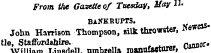
From the Gazette of Tuesday , May UBANKRUPTS . John Harrison Thompson , silk throwster , Jfewc » - tie , Staffordtbire . _ rannof William Linsdell , umbrella manufacturer , v » " » 8 tl George Sadler , linen draper , Cheltenham , ffloue * ^ nn ' vanghan Barber , banker , *** *** shire . Richard Cope , sick dealer , Staffordshire- _ John and Edward Millard , cabinet ffl » k « i , uw ^ ham , Gloucestershire . , Samer-Thoaas Guy Wake , scriTtner , Castle C » ry , ^
setshire . ' James Mann , ™ olst » Pler » N" * ^ . ,,. C ] OucesU : George Comley , clothier , North Nib . eyi »* shire . .. John Beaumont , grocer , Huddenfieia . Qeorgs Goner , grocer , Cardiff mohom ^ John Young , ship builder , Ne * F <«» » 0 B shire . . kMt&xHiz William Heginbotharo , cotton spinner , mj «« - 7 ? rUlIain Henry Bighorn , saddler , Brirtol-
Untitled Article
_ 6 THE NOUT HERN STAR ,
-
-
Citation
-
Northern Star (1837-1852), May 15, 1841, page 6, in the Nineteenth-Century Serials Edition (2008; 2018) ncse.ac.uk/periodicals/ns/issues/vm2-ncseproduct706/page/6/
-