On this page
-
Departments (1)
-
Text (8)
-
Untitled Article
-

Untitled Article
-

Untitled Article
-

Untitled Article
-

Untitled Article
-

Untitled Article
-

THE NORTHERN STAR SATURDAY, FEBRUARY 25, 1843.
-
Untitled Article
Note: This text has been automatically extracted via Optical Character Recognition (OCR) software. The text has not been manually corrected and should not be relied on to be an accurate representation of the item.
-
-
Transcript
-
Note: This text has been automatically extracted via Optical Character Recognition (OCR) software. The text has not been manually corrected and should not be relied on to be an accurate representation of the item.
Additionally, when viewing full transcripts, extracted text may not be in the same order as the original document.
Untitled Article
DEBATE O 2 s MR . DUKCOMBE'S MOTION . ( Concluded from our Eighth pose- ) ¦ very great importance to the people of England , Ireland , and Scotland . It was a msxter of great importance to ihem whether they should respect their iribnrats and their judges . He would tell the Honse that Hues Lord Abiagert appearance oa that Commission , Special ComnasAom were held in detestation and eomempt . Bnt , so far as the other judges were concerned , they had a beautifnl contrast with the Soble Lord . He had endeavonred to show to some Scotch friends that the conduct , of Lord Abicfier was the exception and not the role . Every sort of care was taken in the English court * in the
trial of a cause ; whereas in the Scotch courts they had nobody to defend prisoners except mere lads and youths . Nothing showed greater abnse than ihe Scotch criminal courts ; the prisoners were ail ready " csi and dried" for condemnation—( laughter ) . There wtre not more than two or three lawyers in a conn . a « d these were mere " spoons "—< 1 oug laughter ) Sot one man made his fob heavier or his pocket richer—( laughter ) . He loped that , if witjies ? e 3 could not be examined at the bar ^ of the Hoase , at Iea 3 t siep 3 wonld be taken to inqnire into the grievances complained of by thn petitioners and to redress thExn , and that so shuffling excuses wonld be made to prevent justice -being doae—( hear and laafihterV
Mr . Scabubit ( Lord Abinger ^ s eldest bod ) , in a low voice , and with visible emotion , appealed to the Honse whether the Learned Judge haa been fairly dealt with . Sevtral petitions had been presented against him , and it was a remarkable circumstance , that all bnt one were conehed in the very same " words . From what source these coinciding docaaent ? w ^ re produced , it was not for him to say ; but he trusted the Honse wonld not allow a pnbho sex-Tans , who had done his duty long and faithfully , to b « borae down by tjtjjusi pressure ,
Lord Johk Russell was of opinion , thai a motion of ctcsnre ought not . excrpt in the gravest cases , to be entertained by this House . To sanction snch attempts would be effecmally to destroy the independence of the Judges . Nor was Ms objection diminished by the form of this motion , confining Itself to inquiry alone . Had Lord Abinger wilfully endearouredto oppress any of the Queen ' s subjects , he nrghthare felt it necessary to make an exception from what ought to be the general rule ; but Lord Abinger ' s character preelnded such a supposition . He , however , conld not agree in the view taken by the Attorney-General . In tronbled times it
was peculiarly necessary that the charges of the Judges should be mild -and temperate , because the sentences would thus obtain the more complete and general acquiescence . Lord Abinger ' s charges were objecnonable , as mixing political with le-jal , matters , and so withdrawing the minds of the jury frem the one proper snbject of their cognizance , j Lord John RussiJl then selected some particular paragraphs as exemplifying his objection-. They proved , in his opinion , that Lord Abinger , haying ' much legal and much political knowledge , had brought his political knowiedg * to beaT wherej Ms legal knowledge alone ought to have been ex- \ Mbited . i
Sir Jakes Ghahax rejoiced in the Noble Lord ' s i determination to oppose this motion , the more i especially becanse he felt assured that , in the pre- j sent circumstances of the coiiBtr , y its success would i haTe alarmed the friends , and encouraged the ese- } mies , of law sad order . On former occasions , when i the conduct of Judges had been -impugned , the course iad been , not to propose inquiry , but to lay I substantive charges on the table . This latter mode '> had been pursued in the case of Sir Elijah Impaj , \ of Jndge Fox , of Lord EHenborongh ( wiih reference j to Lord Cochrane ) , and of Sir Jonah Barrington . j In JBaroc Smith ' s case , indeed , an inquiry was moved for and granted , but the order directing it was discharged a few days afterwards . He conld i not help conenrria ? with Air . Scarlett , who had ob- !
served that the time was not yet come when it was ' 4 o be held eulpable in an English Judge to expound : i » a Jury the advantages of the English : < 5 onsritution . It was the duty of a jndge , not only to con- ! tend against the encroachments of prerogative and ; jrivilejges , but likewise to restrain popular license j ¦ when it threatened danger to the comnion good . ! He conclnded with a warm panegyric on Lord Abinger ' s judicial character . > Mr ^ SHABMiS Grawtoxd fonnd fault wiih Lord : John Rnsseii for refusing his support to the motion . Mr . Wjiisas could not give a silent Tote on the ' present occasion , as he intended to give it in support of tie motion of this Hon . Friend the Member i forFinsbury . He would do so , for a very short and ! simple reason , drawn from a former speech of the Noble Lord the member for North Lancashire in .
the case of Baron Smith . The Noble Lord , on that occasion , said , " We impute no motives—we do aot condemn Baron Smith . We merely say thai there is a prijr . & fade case , which calls for inquiry , and the House is bound to make that inquiry "—( hear , ' hear , hear)—On this occasion he ( Mr . Watson ) imputed no motives to Lord Abinser , ha did not condemn that Learned Judge , bnt he did say-that verj grave and serious charges had betn made by his Hon . Friend 5 and ihe representatives of the people would not do their duty if ibey did not inquire into ihem . How far theinqniry was tobe earned would . depend on the evidence which his Hon . Friend might 1 be able to bring before the House . He differed with j the Right Hon . Baronet the Secretary for the Home i
Department , that to vote for inquiry was to con- demn Lord Abinger * If it were so , he ( Mr . i Watson ) wonld withdraw from voting oa ihe qaestion . But he must say there were some charges in the pamphlet put forth by Lord Abinger , and i other matters stated by his Hon . Friend , into which it was absolutely necessary to inquire . The charge made by ihe Learned Jadge , either to the giand or petty jury , was not a legal charge , He did not say that every personin this counirj Irad a const-national right to advocate any principles of Government , pro » Tided he did it by peaceable and lawful means , " bnt that those who , under pretext of advocating such principles , broke the peace , and were the cause of
public disturbance , were to be visited with punishment . The country was excited &i the time the Learned Jndgfc ' a charge waa delivered . It behoved the Learned Judge to give calm and temperate directions to the ^ rand jury and the peuy jury , who were then too much inclined to punishment , and required such calmness and temper as were evinced by Lord Chief Justice Tindal—{ hear , heart . He ( Mr Wa * son ) repeated that he did not judge upon these matters now , bat he thought they called for inquiry . He certainly thought with all respect to Lord Abinger , that he had not shown himself a very good politician . He was an instance in support oi what was sometimes said , that lawyers were very bad politicians—3 iear , hear , and laughter ) .
Mr . Cabdwell had been a witness of Lord Abinger ' s dignified conduct at the trials , and would oppose this motion . Mi . Dexcombb , inrepJy , said he had listened attentively to hear -wbctbsr anjthixsg might f&H from those opposed to the motion which should induce him to withdraw IV He was bound to say he bad heard nothing ¦ srfcicit should prevent him in the performance cf his doty to tie pnKie from taking the senBe cf the House as to whether there should ba any inquiry intt the condnct oi this Judge . Tne Bight Hon . Bart . tb < Secretary of State for the Home Department said I ¦ would ill become him to be the fulsome panegyrist o Lord Abinger , and he immediately followed up the de elaration by pronouncing the wannest nnd most foisosu panezrrle that had been delivered on the "whole coadnc of the Noble Lord—^ bear , hearj . Tha Hon . Member fo : Horaham complained that he { Mr . Dancombs ) had intro duced rtfertnee tOTecreancy and polities ! apostasy . Bu fhw Hon . and learned Gentleman miehthave recollectef
taat m hi 3 allosion to ths palitkal apostacj of a fcrmi day , he was quoting an rxpres = ion cf the Right Ho Baronei tht St ^ retsry for the Home Department , vh is sedressing tie ele ^ ora of Cumberland , denounced £ James Ssarletfc sa a recreant Whig —( hear , hear ) . T now they were told by the Right Hon . BaroEet , ths looking at the whole past life of this Learned Lord , j saw nothing to find fault with ; and he avked whefch they on his [ Mr . Dnscombs ' s ) side cf the House , won send the learned Judge , at his aavaneea age , and . Eft 1228 services tie cad performed , bt fore a Committee , in degrading ms . cner , by an angry party Tote . What c £ lenai Isagnsge frs ^ n that of the speech to which he a referred , and vhien he would bow take the liberty leading to the Hv-nsa . iLattgtter ) . The Honae -sfob
recollect thit it did not confeiin his ( Mr . Dunoombe sentiri ^ EU , bnt these of tJie Rv £ ht Hon . Baronet the £ ereUry of State im the Home Department . They cai before the pablic -with the authority of a ilinbtei of t Qown , fcr the Right Hon . Baronet was then Firstly of tae Admiralty nnder Lord Grey's Government ¦ was at the -fane of the General Election for C > cki S ! 2 ^ ~ " The lart time 1 addressed you from thi *™ n . I remember I had a vifih to know who rep : s ^ tsd Oie Boroagh of Cockermonth , and . except t Tetnraing oEca , no maa could teD me—( a langh }—a ^ who bow represents feat Borough —( a voice : Scarleti Ay ; and sorry I am to hear him nwned in that w * y i 1 » -was once a valued friend —[ I am glad ( aaid Mr Dc « mbe , he is restored to that honourXiSteS Y < tte General
Ex-Attoney- , a recreant Whii ; a follov Of 3 ? ox , a nominee of Earl PitswQHam ,- aikn honom » d lespscted until he began to wage ; au infamous ) i T ^ ttB ^ re ?^ I « 2 « ers } -lle , l say , has been obliged fly from the indignation of the peeple , and seekref , » Cockermontti under the wing fcf my Lord Lonsdj He ha . crept into toe House of Commons through 1 postern gate of -which , a reterend -ricai , now on in hngangB , keeps the key . He has skulked from the feaded . majesty of the people—lioud Janghtew—and to ^ found the representative of thosa burgage tern for whici the late Mr . Satherth-sraita showed s ? mi fondness— iA Toiee in ths crowd : How do yon 1 ihaX , my lord » - •)"— - And I » y now , " Baid Mr . D combe , looking at Sir James Graham , " how do like that , my Lord" —( loud laughter , is -which the Mi
bea on Ihe Miaifi \ enal JBsnehes , except Sir James € him ; heartily joined ) . When the Right Hon . Bam said it would ill become- him to be the fulsome pane rist of Lord Abinger . he ( Mr . Daucombt ) entirely agi * itt : Mm , and ¦ wished he had not , ly going fart ] made it necessary for him to s ] lude to the Cockermo speech . The Hon . Mtmtrsr for Bute asked whet
Untitled Article
a PriTy ConnciHor was not to have political opinions ? Of course he might , bnt ^ Judge had no business to bring his politics upontte bench , any more than a clerjrjrraan bad to bring-afijggfrinto the pulpit . The Hon . and Learned G ^ 3 t ] eraiulJM ^ feat , Lord Abinger only claimed what the Chortisls ^| Bea for themselves . Nobody thought of dtnyisc that the Noble Lord might have political party sentiments . He might indulge them in the Heuse of Lsrds .. at the Carltou Clnb , at Norwich or anywhere else ; bnfc he had no right to let them influence him on the judgment seat , when the lives or liberties of men were at stake , and' where the Nobls Lord ' s politics might do serious injustice to several iBdividuals . He ( Mr . Dancombe ) confined himself to tee printed charges of Lord Abinger , though he did not know wh" they might not as well rely on the reports of the Times or the -Manchester Guardian , which some Hen . Members seemed to 8 neer at He believed that the Times and the Manchester Guardian possessed so > oe
of the best reporters in tids country . Those reporters attended on the occasion , and he had reason to believe that they were prepared to prove the correctness of their reports . Lord AbiBgert published TersionB of the charges had never appeared until notice was given at a public meeting that they would be brought before the House of Commons . They did net materially differ from the reports in the Tima ; bnt "words were inserted here and there , which gave , in point of fact , to some sentences quite a different meaning from that of the newspaper report If the Committee of Inqniry had been granted , he ccnld have proved to them that the report , which had been so mnch quoted , was not the most correct report ; and he was surprised that when the Hon . Member for Bute had gnoted the examination of a witness by Lord Abinger , proceeding from the reporter sent down by Government , that he did not also quote the charge of Lord Abinger by the same reporter . Mr . S Woktlbt had not the report .
Mr Dcncombe—Yes ; but you might have got i — ( hear . hear ) . If he conld have got the inquiry , the parties could have been produced to shew that the report published by Lord Abingei was not a correct report-Tee report also given by Mr . Guruey was at the command of the Government , and could have been produced . He said that this was a fit snbject for inquiry —( hear , hear . ) The Attorney-General had complaiEed of these petitions . He Bald there were but six or eight of them , and thfere was not ene that proceeded from the parties aggrieved . He should like to know what wonld be the effect cf producing these petitions . He had read a letter from one of the parties ( Wilde ) stating his complaint , which he conceived to be equal to a petition . But let him suppose that he had pnseDted a petition from
Wilde , er any other of the prisoners ,. would they , on the other side , consent to an inquiry ? Would they consent to an inquiry if petitions hereafter were produced ? Not a bit nf it As they would not consent to the present motion , under the circumstances in which it was brought forward , so they wonld not consent to it under any other circumstances . Why then , throw ont your objections , whijh . if removed , cuuid ba of bo avail 1 This was a ssrt of special pleading on the part of the Attorney-General which he did not expect ; for if he produced those petitions , he would be as far removed from inquiry as erei—( hear , hear . ) And then the Hon . Member for Woodstock had said , that if they encsn-Ta ? ed petitions of this sort , they would have petitions from every disappointed suitor , who would be coming to that House and asking them for redress , and seeking for an inquiry into the conduct of the Judges—( hear}—Was thai the case at the present moment , when the
Hon . and Learned Attorney-General coajplained that they had not a petition from one of the disappointed suiters ; and if they had , then another Hon . and Learned Gentleman told them they should have no inquiry ^—( cheers ; . Why , it was utterly impossible to please these gentlemen . This was not a case of prvvate wrong . The whole nation was interested in this question , and the whole of the people were looking to it ; and they were about to see them in that House put a direct negative on the motion for an inquiry . The Hon . and Learned Attorney-GsnGral said he wonld meet this motion by a direct npgatiYc , and he xaid that he had an objection to Judges delivering ehar ^ es that had a political tendency ; but then he denied that the charges of Lord Abiucer had a political tendency—shear , heari . But then other supporters of the Noble Baron , who had spoken that evening said that his charges had a political tendency . Othtr Hon . Gentlemen were snore candid than the
Attorney-General , for they not only « aid that the charges had a political tendency , but that tbey ought to have a political tendency , because they arose out of political events—( hear , hear . ) No one attempted to answer the argument of the Honourable and Learned Member for Cork , that if the charges should necessarily be of a political character , why was it that Chief Justice Tindal , who had also to dispose of political trials , did not deliver charges of exactly the same character ? He thought that of all the debates he had ever heard in that House , there never was one in which there -was to be found so little of argument and of xeaeon Id opposition to a motion —( hear . ) They were , he said , determined to screen thi * jndge . TLe public ,
however , woul . l judge them and condemn them . He was satisfied that the public could come but to one conclusion with respect to those in that House , and that was , that they , in their desire to screen a delinquent jndge , lost Bight of that which was owing to—[ the remainder of the sentence was lost in loud cries of " Oh , oh , " from Members on the Ministerial benches . ] Ays , the delinquencies of the jndge would go forth to the oountry—tbey showed that it would not Twar that inqniry , which he challenged them to enter into . He said that the public would come to the conclusion that , in their desire to screen a judge , they lost sight of that which w ^ 8 due to the pure and impartial administration of jnstice—( cheers . )
Mr Scarlett had one word to aid as to the accuracy of what Lord Abinger had published . He might state that he knew that who : was published in the pamphlet was taken from the Times , and only some small alterations made in it—( laughter . ) such as any one would make who wished to correct the mistakesthe usual mistakes of a report- Further , he had the best reason for believing thit if that report were compared with the short-hand notes taken by Mr . Gurney , it-would mate it appear that there was less point—in many of the allusions less point , than in that report -which Lord Abinger had published . Toe Eouse then dividtd—For the motion „ ? 3 Against ~ 228 Majority ..... 155 The following names constitute the minority ef T 3 , who voted with Mr . Diracombe : —
Aglionby . H A . Gore , Robert Pechell , Captain Archbold , R . Grainger , T C . Plumridge , Capt Barnard , E G . Hall , Sir B . Ponsonby , Hon . J BeTkeky , Hon . C . Ha&tie , A . Ricardo . J . Lewis Bsrfeely . H . F . Hawes , B . Roche , Sir D . Blake , Sir V . Hsy , Sir A . Roebuck . J . A . Bowring , Dr . Holland , Robert Ross , D . E . Brotherton , J . Horeman , E . Russell , Lord E . BnsMld , Wn . Hume , Joseph Stansfield , W R . ChEpma :, B . Hutt , W . Strickland , Sir G . Christie , W . D . James , Wm . Strutt , Edward Cobden , Richard Johnson , General Thomely , Thos . Colborne , W . R . Layara , Capt Turner , Edmund
Collins , W . Leader , J . T . Tilliers , Chas . P . Cowper , Hon . W . Listowel , Earl of Wakey , Thomas Crawford , W . S . Macanley , T . B . Ward , H- G . Dawson , H . T . V . Majoribanks , S . Watson , W H . Dennistonn , J . Marsland , H . Wawn . JohnT . Dancan , George Martin , John Williams , W . Dundas , J . C MiUalfe , Henry Wood , B . Dandas . Adm . Mitchell , T . A . Yorke . H . R Eiphinstone , H . Morris , David tellers . Ewart , \ Y . Murphy , F . S . Dancombe , T . S . Fetguson , GoL Nap ; er , Sir C . Wallace , R . Fleetwood . SirP . O'Brien , W S . GUI , Thomas Paget , Frederick
Captain Pechfll , understanding that the Right Hon . Baronetj the Secretary for the Home Department , intended to rc-introduce thi 3 session a measure partly similar to that which ho had proposed during the ias ; session , and that which would involve the abolition of the Gilbert Unions , begged to move ior certain returns , wiih the view of procuring information npon the subject , which be thought that the House , bsfore it proceeded to legislate upon it , should be in possession of . He moved for a " Return of the number ^ names , and ages of all persons committed to any prison in England
or Wales for any cfrence in an union workhouse , established under the provisions of the Poor Law Amendment Act ; stating ihe nature of the offence , the period of punishment , the name of tLe union , and the number for each union and for each year , from the 25 ' . h day of March , 1835 , to the 25 th d ^ y of March , 1842 ; ' with the population of each union , according to ihe last census . AIbo , " Similar returns for offences in workhouses of parishes and unions governed by guardians , Testrymen , or parish officers under local ac » and 22 d Geo . 3 , c . 6 * 3 , known as Gilbert ' s Act , or not included in any Poor Law Union . "—Agreed to .
Mr . William Williams moved for a return of the sum expended in every Poor Law Union in England and Wales , in each of the yeara ended Ladyday 1841 and 1842 ; specifying the sum expended an salaries and establishment charges , the sum expended in in-door relief , the sum expended in outdoor relief , and the aggregate amount of the same ; also the number of pereons who received in door relief , and ihe number of pereons who received ouidoor relief in those years . Return ordered .
Major C . Bhucb , in moving that a petition , formerly presented from the workmen employed in the Lowerhill Colliery , in Fife , be printed and distributed , gave noiice that he would , on Tuesday nest , call the attention of the House to a petition from certain colliers near Danfermline , and other places in Scotland , praying for an alteration in the Mines and Collieries Act . He would also move for leave to bring in a bill to allow nnmarried females , above eighteen years of age , to be employed in mines in Scotland .
Untitled Article
EEDDITCH — The needlemasters of Redditch are beginning to make the eaters of cheap bread feel how much they rejoice at having such aa opportanity of redncing their wage 3 . Tommy Truck is alive and kicking ! any body may find him at the house of Mr . Vim . James , and Mr . Bealis ? , cf Redditch , if they iLquire . In fact , the fellow visits every petty tyrant in this locality .
Untitled Article
THE DEFENCE FUND . u By Sr . Gbobge J bui the work goes bravely onf The people have , this last week , bestirred themselves in earnest J UpwardB of £ 70 has been forwarded within seven days ! Mr . Clkavb has received £ 60 ; and this office upwards of £ 10 . This is encouraging : it shows that the people , amidst all their poverty , spare from their scanty meal a crumb to serve their friends who are in the toils of the enemy for the people ' s sake ! It is the visible manifestation of the people's estimation of , and gratitude for , valuable services rendered !
We do not give the particulars of the subscriptions this week . The crowded state of our columns is one reason ; a desire to print all the Subscribers Names together is another . For this latter purpose we shall reserve all further particulars 'till after the trial ; merely stating the gross sums raised . When the affair ia over , and the mult known , we will exhibit to the world a full list of those who have befriended the prosecuted and the persecuted . To the good work , we again invite the people ! Slacken not your exertions . Kegp up to the collar ! Work ! Work !! Work !! ! The time ' m short , and the calls are urgent !
Untitled Article
THE LEAGUE OUTBREAK •*>
RESULT OF HOWICK'S MOTION AND FERRAUD'S AMENDMENT . In last "week ' s Star we detailed , up to the time of going to press , the progress of the debate on Lord Howick's motion and Mr . Ferrand's amendment . We showed , that while the amendment included Howick ' s motion , it bound the House " to an eHquiry into the effects of the operation of Machinery upon the producing classes , and also into the origin of " The Strike '' outbreak in August last , which the mover of the amendment pledged himself , before all the people , to bring home to the door of the Anti-Corn-Law League .
There was one thing observable in the debate which ensued upon the motion asd amendment , to which we directed especial attention : tlte silence of the League M . P ' s respecting Mr . Ferrand's serious charges ; and also the silence of the Home Secretary upon the same subject . Up to the close of the debate on "Wednesday night last , not one of the members had touched upon the charge , either in support , refutation , or denial . Indeed it was not till Friday night , the night that the debate closed , that any attempt was made to grapple with the accusation . How the accusation was met ; how it was repelled , and replied to ; how it was answered , we are just now going to see .
The reader will remember that one portion of Mr . Fbrrand's amendment was , that the House should resolve itself into a Committee of the whole House , to inquire into the origin of the late disturbances in the manuftcturing districts : and that the Hon . Member openly stated , in moving this portion of the amendment , that he was prepared with evidence to PROVE that " the . Striie" was originated by the Anti-Corn-Law League . Let the reader bear in mind that this was the charge , and that tbis was the offer . Let the reader remember these things , when reading over the answer to that charge , and the defence of the League , offered by Mr . Mil . wer Gibsox , the League member for Manchester . On Friday evening he said : —
" There had been a statement made which he thought Honourable Gentlemen on that aide of the House were bound to rebut with the utmost indignation . It had been insinuated that the Members of the Anti-Corn Law League had by the violence of their speeches—tloud Ministerial cheers )—and by the insinuations which they had thrown out at public meetings—( renewed cheering ) —induced men to commit unlawful acts—( cheers , i Not ? he was prepared to say . that if there hnd been at ar . y of the meetings of the Anti-Corn Law League any remarks that could be for'one moment supposed to allude to the commission of such acts as had been alluded to . he said
at once that there were no men in this country more likely than tbe pereons who were in the habit of attending those meetings to denounce with iudignotlon the proponnder of such suggestions . ( Cheerp . ) He denied that the speeches which had been delivered possessed the character ascribed to them—( hear , hear . ) But it was said that these meetings had been the original cause of the disturbances which had taken place . If that were so , why did not the Right Hon . Buronet , the Secretary of State for the Home Department , who hart sent a Commissioner to inqohv into the origin of the disturbances , lay the report of that Commissioner on the table of the Hunse—ihear ) .
8 ir J . tiBAHAM— " I said that I did not send a Commissioner , and that there was no such report as the Hon . Member alludes to "—( cheers . ) Mr . Gibson— " The Solicitor of the Home Office hud sent Mr . Gregory into the nunufaeturimj districts ; and he had gone in two capacities : —one , professionaily to assist in the legal proceedings against certain persona i : i custody ; the other of a confidential natura What could have been the second object of Mr . Gregory ' u exertions ? Ha was sent down at the precise time of the disturbances ; he had some duty of a confidential nature to perform , and , considaring that he was the uolicitor of the Home Office , he * asked -whether it was any great tax on the belief of the country to suppose
that he had had Instructions to inquire into the origin of the disturbances which bad arisen , and that , having nothing to say on the subject that was satiifactory to the members of her Majesty s Govetnraent , it had b ^ en thought right that he should hulii his tongue- ( hoar , hear )? That , he thought , wns the fair construction to be put on these proceedings—( hear , hear ) . But he won-d ask Honourable Gsntlemen to apply their minds to the denial of the anti-Corn Law League , that they had had nothing to do with the late disturbances . The anti-Corn Law League was composed for the most pa ; t
of manufacturers ;— of n > tn who employed nearly twothirds of the population of Lancashire , and to whom the country was indebted , not for hiving instructed the people to break the peace , but tor having opposed all measures of disturbance , and he asked whether men whose property was most exposed to destruction and waste were likely to c * inmit Jscts the ten d ency of which was the creation of disturbance and a contempt for the law—( hear , heari ? Was there any property , he asked , so exposed to the operations of a lawless mob as that of the manufacturt r ? uud would not their own
interest induce them , above all others , to preveDt a breach of the peace ? Tnere was a much more plausible argument for accusing toe opposite party vt tb . V . which they laid to the charge of the League— ( che rs and laughter from the minis ' erlal benchts ) . He did not make assertions without substantiating them . He believed that the disturbances had originated in tho reduction of wages ; and tho first reduction of wag > : » had been made by Conservative firms , » Dd not by the firms -belonging to members of the Ant :-Corn Law League—( hear ) . He did not throw out this tisu char ^ o
agaiast those porsons , because there was nothing which he so much deprecattd as the iloctrins of teaching tha people that their masters could give them a greater amount of wages than that which they ree&ived ; in fact , that to reduce the amount of wages was to rob the artisan ef the fair reward of his labour . He could not think that there was any mode more calculated to bring about disturbances than this—( hear ) . The Conservatives began the reduction of wages becauBB trade had ( I > dined and their pront 3 had diniiaisheil ; indeed , he believed the cotton trade nrver waa in a worse
condition . But what did thi Conservatives say in th £ speeches they made in various places ? and , above all , what did they do by nifaus of the press ? They employed themselves in every way to excite the labouring classes against their masters —( cries of oh , oh , oh , ' from the ministerial benches , and cheers from the opposition ) . ^ He would read one or two extracts which appeared , before and after tLe disturbances , in tht Standai d newspaper , which was acknowledged to be the organ of her Majesty ' s Government—( cries of ' no no , ' from the ministerial benches)—then , at any rate , it was the organ of the Conservative party—( cries oi ' oh ') He said this without hesitation , because b < knew that at any rate newspaper editors did not writ *
articles which were not congenial to their readers—( renewed cries of ' oh ') . He did not wake the charge against gentlemen opposite , and should not have saic a word about the matter if Honourable Members hac not got up in that House , aad imputed to the mBmberi of the Anti-Corn Law League acts little short of murder Will those belonging to the Anti-Corn Law LeagU silently submit to be charged in this way—( cries o oh , oh" from tbe ministerial benches )? He fel bound to re ^ ut such accusations , when bronght again himself and his friend ? . The charge was sparingly mad that the anti-Com Law League were doing all in thei
power to work the labouring classes into a state of rebel lion , atd accused the members of that body of making speeches which almost led to tbe commission of acts € murder—( hear , hear , from the Ministerial benches Let the bouse then see what the Standard newspnpe said on the subject of the treatment of the labouno ; classes by the manufacturers . —{ loud criea of ' oh * . The Standard newspaper , previously to the breakin ont of the disturbances , said , ' Any appeal to justiae to humanity , is utterly out of the question . The die i « therefore cast , that the wages of the labourer are to h measured by the power cf purchasing what will barel support life , including the contingency of prematur
Untitled Article
destruction . '—( crtea of ' oh . ' ) This , be it recollected , was particularly addressed to the labouring classes in the manufacturing districts . Again , some time afterirardu , at about tbe pertad of the disturbances , it was stated in the same newspaper : —• There is no real excess of labour , though you , the millowners , make an artificial excess of y » ur own profit ; you violate the order of nature by working women and children in rivalship with men one year , with tha certainty of abandoning ail mon , women , and children , the next year to famine . " Again , n few days afterwards it says : — « When before have Englishmen , Englishwomen , English infants , had to work under the cudgel and thong for more than ten hours a-day ? ' He found , also , in an article of tbe same newspaper of a subsequent date , the following passage : — 'As a mere matter of policy , therefore , the course which has been pursued by the
manufacturing capitalists has been most injudicious , putting altogether aside the consideration of reciprocal moral duties or Christian feeling for the poor or oppressed . The impression continues uniform that the misguided persons that have been or may be guilty of excesses during tbe excitement of the strikes should be as leniently dealt with as is consistent with the supremacy of the law . ' ( Loud cries of ' oh , oh , ' from the Ministerial benches ) He did not deny that these persons ehould be leniently dealt with ; but were not the opinions which he had just read equivalent to teaching the labouring classes the pernicious doctrine that masters could keep up tbe late of wages tu the labouring classes , and that to reduce wages was nothing more nor less than to rob the labouring classes . He wonld ask , could anything tend more to excite tbe people Jo tbe manufacturing districts against their masters than the utterance of such sentiments as tuese
—( hear , hear ) ? He would read one more passage from the Standard , which was written after the disturbance had subsided—( loud cries of ' question' and ' oh * from the Ministerial benches . ) " A longer continuance of the turn out , however , must exhaust the savings ' banks deposits , and reduce the labouring manufacturers to utter destitution—acircumtttauce of which the millowners will know bow to take advantage in the next adjustment of wagra . The expression of feeling among the manufacturing labourers has gone already as far as it can be useful , and in many instances something too far . The attention of the Legislature must be directed to the subject next session , and doubtless a good Factory Law and a greatly amended Poor Law will be the result . Let the manufacturing labourers look patiently for these benefits . Any further active proceedings cad only injure themselves . '—( Renewed cries of
' Question . ' ) Gentlemen opposite then chose to indulge In charges which they could not justify , and they refusew to hear the defence . But did not the extract which he hud just read look vary like a suggestion to the labouring people to act against machinery ?—( cries of ' Oh . ') He would ask the Right Hon . Baronet who sat opposite whether he was not aware that mills Bad been burnt and machinery had been destroyed in the manufacturing districts in the presence of the police the magistracy , and country gentlemen , and not one band was held up there to protect this property ?—( Cries of « Where ? ' from the Ministerial benches ) . Why , in the manufacturing districts ; and he was sure the Right Hon . Bart , couid confirm his statement , if he were appealed > o . Ho could produce uvidence to show where mills had been destroyed under such circumstances . "—( Cries of Name . ')
This , then , is the atistuer of the League ! They are charged before the country with being the authors and originators of " the Strike" disturbances ; evidence is offered to bring the charge home to them ; and here is their answer ! Let us examine it . It consists , first , of " an indignant rebuttal . " Just so mucli wind in opposition to offered evidence ! Then we have a train of reasons to show that the League manufacturers could not be interested in creating disturbances and outbreaks ; because their property would be in danger . Just so much wind again , in answer to the charge supported by evidence that Qiey have created disturbances ; that they have caused outbreaks ; and that these outbreaks led to serious loss of life , banishments and transportings , and much imprisonment . In addition to these two points of defence , we have a series of counter-accusations , by which it is intended to show that the Conservatives were the
authors of " tub Strike , " and that the Standard newspaper had more than an ordinary share in causing and perpetuating it , because it described and spoke against the oppression of the operatives by the Mill-owners ; and advised that the " misguided persons that had been guilty of excesses during the excitement of the Strikes should be as leniently dealt xritii as was consistent with the supremacy of the law ! This is the whole of the answer ! Not a jot more , nor a jot less . No indignant demand for investigation ; no challenging of inquiry ; no daring the accuser to bring forward his proofs ; no offer of testimony to rebut the foul , and slanderous , and criminal accusation . ' Ah ! thfi answer is no answer at all ! It does not
explain away the meaning of Taunton of Coventry when he talked of " risings and riots , " and " advised the appointment of a Committee of Public Safety " ! It does not explain away the meaning of Bailey of ShcffieUl , when he said : — " It was not ivords would move I ' arliamfnt , bit force : this SHOULD have
fjffd , if they did not change their system . He had heard of a gentleman who , in a private company , said , that j if one hundred persons cast loK amongst them , and the lot should full upon him , he would lake the lot to deprive Sir Rol > ert I ' eel of life .. He felt convinced that no such attempt ought to be made upon any pretence , whatever ; but was persuaded of tins , that when Sir Robert Pkel Went to his giiave , there would be but
few shed one tear over him . " It does not explain away the meaning of young Finch , of Liverpool , who " advised the organising of the colliers for a general i strike , as a means of carrying the Repeal of the Corn ! Laws and the Charter . " It does uot explain away the meaning of Ar . DEiuiAN Chahpell , of Mancliester , who distinctly said in open meeting , that " tbe only plan now left to the Mill-owners was to sto p their ['• factories , " and force the hands into the streets . It does not explain away the meaning of John Brooks ,
who talked about " something terrible just about to hapi pen that would bring some folks to their senses ; " nor ' , the meaning of his brother Leaguer that talked about ¦ "ARRESTING THE WHEKLS OF GOVERNMENT" ! It does not explain away the meaning of the League organ , the Sunday Times , who boasted that the proposal for " shutting up the factories , " originated with himself ; nor his distinct avowal that the project was entertained by the League again and again ! It does not explain away the private meeting of the Leagued Manufacturers in the town of Manchester , where it was agreed that it would be unsafe to adopt the advice of the Sunday Times and of Alderman
Chappell , to " shut up the factories ; but that the same end could be gained by reducing wages , and so working upon the operative population by fit instruments as to induce them to leave the factories of their own accord ! It does not explain away the determination : then and there come to , that a general reduction of i wages should be attempted , of at least twenty-five per cent ., between that time and Christinas ; and that , though each employer was to take his own time and manner of effecting this reduction , yet it was to be effected between and the period just named . It does not explain away the overtures and representations made by a League-Manufacturer in the town of Ash ton , to some parties there , who can be named , to
induce them to infuse a proper spirit of resistance amongst the factory hands to the proposed reductions ; by working on their feelings , and showing that unless a stir was made , their condition would be deplorable in the extreme : for , if the attempted reduction was carried out —( notice of a reduction had then been given by a Cotton firm in Ashton)—all the other masters would be compelled to follow the example thus forced on them ; while a determined stand at the outset ¦ might save them much misery , and even be the means of forcing the Government to do something towards 1 establishing the Charter . It does not explain away the several meetings held between that League-Manufacturer , and some half dozen others , at the house of : ¦ , in Ashton , where the whole i-lot was entered into , and the means devised for carrying it into execution . It does not explain away the production of " An Address to the Workers in MSS . at one of these meetings by , of Ashton , for the ap' proval of the League-Manufacturer ; the tone and object of said address being to " get the people out !" It does not explain away the arrangement come to at , that same meeting : by the Leaguer and his tools , that should take the MSS . in his pocket to a meeting in Ashton , and procure its adoption by tlie ' assembly , he being authorised to state that several 1 friends had promised him donations towards the expeuse of printing it for circulation . It does not explain iwvay the fact , that the MSS . address tvss so broughf before a public meeting , and its [ adoption so procured .
Untitled Article
It does not explain away the fact , that the printing oftliat address was paid for by * the League-Manufacturer and that its appearance on tbe walls caused universal attention , and paved the way for the Strike . It does not explain away the fact that a meeting was holden in the town of Ashton , to follow up the measures thus far detailed ; which meeting was attended and addressed by the men who had been privately concerting with the said League-Manufacturer ; and who were paid by him for their services . It does not explain away the nature of the speeches made to the
assembled thousands on that occasion ; nor the recommendations opeply given . It does not explain away the fact that this meeting was adjourned from place to place , time after time , until it had nearly perambulated the whole { district , visiting Staleybridge and Hyde , amongst other places . It does not explain away the fact , that the workers in all these places were addressed by the League-Itlanufacturer-paidconcocters of the whole proceedings . It does not explain away , that on the instant that Messrs . Bayley and Sons , of Ashlov , gave notice of their intended reduction—( the other notice by
a neighbouring firm having been withdrawn ) - —the " hands" all left the mill ; and they were joined by the major portion of the factory" hands * of the town . It does not explain away the fact , that a meeting of the " turnouts" was almost immediately held , presided over by a League-Manufacturer , at which it was determined to " march into Manchester , to see the masters at the Exchange , and have a bit of talk with them about the attempted reduction ; " the said presiding League-Manufacturer offering to lead them up in person ! it does not explain away the conduct of several managers of the leading firms connected with the League , when '' the Strike" was progressing j
particularly one , the son and partner of an Alderman Magistrate of Manchester , and leading Leaguer , who went round with their own men in their own * mill , showing where the plugs were , helping them to draic them , giving them beef and ale after the exploit , and then directing them where to go to next to perform the same sort of plug-drawing operation !! It does not explain away the sending of Delegates from the Town of Ashton to the other parts of South and North Lancashire , with money found by the League-Manufacturer , te " get the people out ; " nor does it explain away the proceedings in Preston , which ended with a fearful loss of life !!
The " answer of the League" does not- explain away these things ; and till these things are fully inquired into , and explained away , we fancy that the people generally will hold with us that the answer is no answer at all ! ! These are the charges that the League have to meet and rebut ! These are the charges that can be brought home to them , if a fair opportunity of inquiry is
afforded . If the League were not conscious that they could be proven , they would be the first to demand such inquiry ; and they would not content themselves with the miserable subterfuges offered by Milner Gibson as a defence ! They would not shelter themselves from the serious and criminal accusations brought against them , by paltry and laughable counter-accusations !
When Mr . Ferrand first opened out upon the League manufacturers , and exposed the practices they so universally adopt of Truck , and of using paste and devil ' s dust , indignant were the denials , and loud were the calls for inquiry . Brotherton , Cobden , Mark Phillips , Vii » liers , Gibson , and others of the League , almost run a race as to who should second Mr . Ferrand , if he dared to move for a Committee of Inquiry . He did so dare . He procured the appointment of such Committee ; and through his labours a system of the
most tyrannical and heartless bearing upon the operatives engaged in manufacturing pursuits was laid fully bare . His charges were brought home 1 The Leaguers got ^ enough of "inquiry" ! Theyigot more than they liked . They have been very < cj | gjiul how they have talked of " inquiry " ever sinceTne close of the labour ;* of the Truck Committee ! and they took precious good care not to offer to second Mr . Ferrand's motion this time , for an inquiry into the origin of the outbreak . '
That " inquiry , " however , we must have ! The League must ; not be allowed to skirt out of the charges thus . publicly and openly made , without a thorough investigation . Those charges must be met with something more than Milner Gibson's bare word of denial , and a miserable set of counter accusations ! The " offered evidence , " that is to prove that the League originated the disturbances , must be heard and considered ! The case must be gone into , or the people must speak out !
The inquiry can yet be had . Though Mr . Ferrand , as will be se' -n by the report of the proceedings in the House of Commons on Friday night withdrew his amendment , he did not preclude himself from moving it again as a distinct motion . Indeed we think he acted wisely in withdrawing on the occasion referred to , and under the circumstances . His amendment had other objects mixed up with the " inquiry into the Outbreaks . " It included Lord Howick ' s motionj which was sure , from the course of the debate , to be rejected ; so that this fuel , would , of
itself , have secured the negativing of the amendment . Another object contemplated by the amendment was the instituting ef an inquiry into the effects of the workings of machinery upon the operative classes-This , too , was a question not likely to secure the cooperation of miany , who might have been disposed to vote for inquiry into the conduct of the League in connection with the outbreaks . Besides , one great object in moving the amendment hsid been gained . The charge had been made . The offer of evidence to support that charge ; to prove it ; had been made
also . The League members had winced under the charge . Only one of them all dare venture to hazard a denial ; arid that denial so feeble and so miserable , as to become evidence of guilt ! To have persevered in going to the vote under the circumstances we have detailed , would have been to ensure the rejection of the proposed inquiry , for the reasons above stated . This was felt by several who wished to support the demand fora searching investigation , Mr . T . S . Duncombe , amongst the number . We happen to know that Mr . Duncombh "desired Mr . Ferrand to withdraw : and
Mr . Ferrand did so , thus reserving to himself the right to move for a select Committee to inquire into the charges he has preferred , and which he has offered to prove . That Select Committee we hope and trust he will move for . Indeed we have reason to believe that he wiih He has shewn himself hitherto to be a man who is not to be turned out of his path , nor induced to lay down his charge when he has once taken it in hand . His conduct on this question , will , we hope , be in accordance with kis general conduct on former occasions . It might serve League purposes , were the matter to end where it is : but it will not serve the
people ' s ! The lives of many of their brethren have been sacrificed ; the husbands and fathers of hundreds of mothers and "little ones" have been forced into banishment ^ or condemned to the penal settlements , or to the hulks ; hundreds of others have to perform hard-labour at the tread-wheel in the hell-holes of " Correction , " where they are doomed to all the horrors of a lingering starving-to-death existence . These butcherings , and these transportings , and these imprisonments , are attributable to the League , who led them into the excesses which procured for them the " vengeance of [ the law ; " and tht vicmbers of the League ought to suffer also ! !
Yes ! the inquiry must be had ! We must know whether the charges made are trae or not ! We must not permit ; an association of this dangerous character to get up i outbreaks , which end in loss of life and liberty , and endangers the property of the co . untry ; we must not have such doings as these perpetrated with impunity ! We must not have Reverend Rascals inciting toi assassination , without being visited with " the law ' s vengeance" ! especially since the law takes such good jfcare of a poor and , comparatively , innocent Chartist "Beditionist" ! To the report of the " &K » e" at the close of the debate on Friday evening , we invite special attention .
Untitled Article
It will be seen that Cobden tried the Leagne ' s tactics of " violent and threatening language" tewards Sir Robert Peel , with considerable effect A confounded snubbing was the consequence ! He will not soon forget the castigation his impudence and insolence received What was left short in this respect was amply made up by Mr . Roebuck , who happily exposed one of the most barefaced attempts at intimidation ever made , m Roebuck had expressed his intention of defending Lord Brougham from Cobden ' s charge of "madness , " should he have the courage to make it in public , as he had then
made it in private . " You had better not , " says Cobden ; or the " League will be down at Bath , and turn you out of your seat ! " Was there ever insolence equal to this ? The members of the HouBe of Commons are to hold their voices and their seats at the will behest , and command of the League ! " Dare to defend Lord Brougham , and the Leagu « will turn you out of the House" ! The Queen and the Legislature had better " turn out , " and install the League at once as the Government , making Dickey , the bludgebn-man " First Dictator" !
But " Lord Brougham is mad . " So Cobden has found out ; and so the Leeds Mercury has , at last , discovered ! It is a pity that the discovery is so verylate . ' Brougham was not " mad" when on the side of the League : he is only " mad" when he is compelled to wash his hands of the getters-up of outbreaks and indters to assassination ! The cry of " madness , " however , will not blunt the edge of Lord Brougham ' s denunciation of the Leaped assassins ! It will only add to its force ! The League should have shown that' there were no ground * for the charge made against them ; and they would have rid themselves of it . As it is , it will stick to them , spite of all the clatter about " madness" that can bo
raised ! The threat of Cobden to turn Roebuck out of Bath if he dared to defend Lord Brougham from the charge of " madness , " reminds us of another matter connected with the League , which loldly calls for inquiry ; and which should form a portion of the matters to be referred to the Select Committee . We have heard a great noise lately , and seen a famous stir , made , about the £ oO 000
which the League have been raising for the accomplishment of their purposes . But what will the public think when they are informed that the managers of th « League confess to having spent 4100 , 000 before they asked for the contribution of the last £ 50 , 000 , about which so much bother has keen made ?! Twice fifty thousand pounds had been expended in October last In what ? what for ? HOW ?
These are the queries that ought to be answered 1 These are matters that loudly call for inquiry . It is very seldom that the League publish any statement of their income and disbursements , even the most general . . We have , however , some data furnished bj themselves that gives rise to curious and seriooa speculations . Some year ago , they published that their income and expenditure had been , for the then passed year , £ 10 , 000 * At the end ef some six months from that announcement they stated that their expenditure had been £ 100 , 000 ! So that during one six months no less a sum than £ 90 , 000 had been disbursed !
Now , on what had that immense sum been expended ? Dare the League show their accounts ? Dare they show to what purpose the money was applied ? Daw they produce vouchers for every payment made ? During those six months we had the general election and THE STRIKE ! How much of the £ 90 , 000 went to bribe the electors , and influence ths elections : and / w much to the getting-up and sustaining
of THE STRIKE ? If Parliament is honest , it will drag these facts to light . It will have these queries answered . It will compel the production of the accounts \ The present position of the question is this : tin League stand charged before the open face of day , as the authors and originators of the " Insurrec tionary Movement" in August last . An inquiry has been demanded , the party making the demand offering
evidence to prove the truth of the charge he has preferred . That demand for inquiry has not < been backed by ihe accused ! They have not ventured to second efforts which would have procured a tribunal before which their innocence or guilt might and would have been established . They have shrunk from the investigation ! A bare , simple , unsupported denial is aD they can offer in answer to the serious charge ; and that denial so feeble , so peurile , so weak , as to l ead to no other presumption than a consciousness of guilt !
There the question rests for the present . How long it will remain there depends partly npon the people . If Parliament does not institute the necessary , inquiry , it will be for the people to ask Parliament the reason tety . If Parliament are afraid and awed by the League , thank God the people are not ! If the seats of Hon . Members are only held at the beck and controul of the League , the people have not yet sworn allegiance to it . Ana u the Parliament dare not to grapple with the Leaguers , why then the people must try !
Untitled Article
THE PARTISAN JUDGE ! In another part of this sheet will be found a full report of the debate on Mr . Ddncombe ' s motion for an inquiry into the partisan ar . d " brutal" condnct of Lord Abinger , during the late Special Commission in Lancashire and Cheshire . To it we can bat call especial attention . It is impossible to add to its interest , or to set the question in a clearer
light , than it is set forth in the speech of Mr . Duncombe , by any commentary of ours . He has well and nobly done his duty ! He has been well supported by Messrs . Mubpby and Watson , two of the advocates retained for the defence of the Chartist " conspiratore" at Lancaster next week The points in Mr . Murphy ' s speech are exceeding ly well put . Mr . Wallace , too , was not lacking . He
rendered efficient aid . The defencoof Lord Abinger by the AnoENCTGeneral and Sir James Graham will also be found in the report ; and a miserable defence it was There , however , it is : let the reader judge . Duxcombe's reply wa 3 crushing ! How «« k Sir James Graham must have looked , when # obeted so completely , as the "fulsome adulator " a man he had before-time treated with tho u . nw 9 corn and contempt ! ,. ^ Mr . Duncombb has earned another measure or people ' s gratitude . He has proved himself ww * of the post he has assumed . His sorrier vail
soon be forgotten . ; , " The motion was unsuccessful . " In ^/ fV was : not in another . The majority stifled tw i quiry . They prevented the evidence from Dfflns offered , which would have established the <*« J " partisanship , blind bigotry , and excessive brow 3-But they did not prevent seventy-three- mem be ^ voting for Buch inquiry . They did not V ™* 1 ^ exp ession of opinion by these seven ly ' T ree et ( i there were grounds for inquiry ; that » - * portions of tho Judge ' s conduct that , teqri " m planation ! And however the friends <* *> pianation ! ana noweycx »¦» •*• - — - , mae j 1
may think they have screened him . » » ° . that he has to plume himself upon I a * "B . M » J remember , when nest he ascends the judgment wm that his conduct has been denounced as na minded , savage , and brutal ; and he will » 8 **™" seventythree have voted that these charges were far established , aa to make a prima fae w case inquiry . He will reflect , too , upon the ft * ti »» inquiry was mothered ! and that such smothering did not purge bim from the charges P ^ rrea . There is a rumour that he is »« £ •*«¦ « J Bench . It is better he should do bo . Tooccupy rt longer under tie circumstances would be painful w both Judge and Judged !
Untitled Article
4 - THE NORTHERN STAR .
The Northern Star Saturday, February 25, 1843.
THE NORTHERN STAR SATURDAY , FEBRUARY 25 , 1843 .
Untitled Article
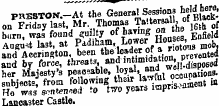
. / s ^ k ^ H ^ srssra ^ sm ji aBsrf her Majesty ' s peaceable , loyal 'and w <^ &on 3 . ¦« xjsttiszx ** " ** Lancaster Castle .
-
-
Citation
-
Northern Star (1837-1852), Feb. 25, 1843, page 4, in the Nineteenth-Century Serials Edition (2008; 2018) ncse.ac.uk/periodicals/ns/issues/vm2-ncseproduct791/page/4/
-