On this page
-
Departments (1)
-
Text (4)
-

£mapmal 33arltament
-

Untitled Article
-

Untitled Article
-

Untitled Article
Note: This text has been automatically extracted via Optical Character Recognition (OCR) software. The text has not been manually corrected and should not be relied on to be an accurate representation of the item.
-
-
Transcript
-
Note: This text has been automatically extracted via Optical Character Recognition (OCR) software. The text has not been manually corrected and should not be relied on to be an accurate representation of the item.
Additionally, when viewing full transcripts, extracted text may not be in the same order as the original document.
£Mapmal 33arltament
£ mapmal 33 arltament
Untitled Article
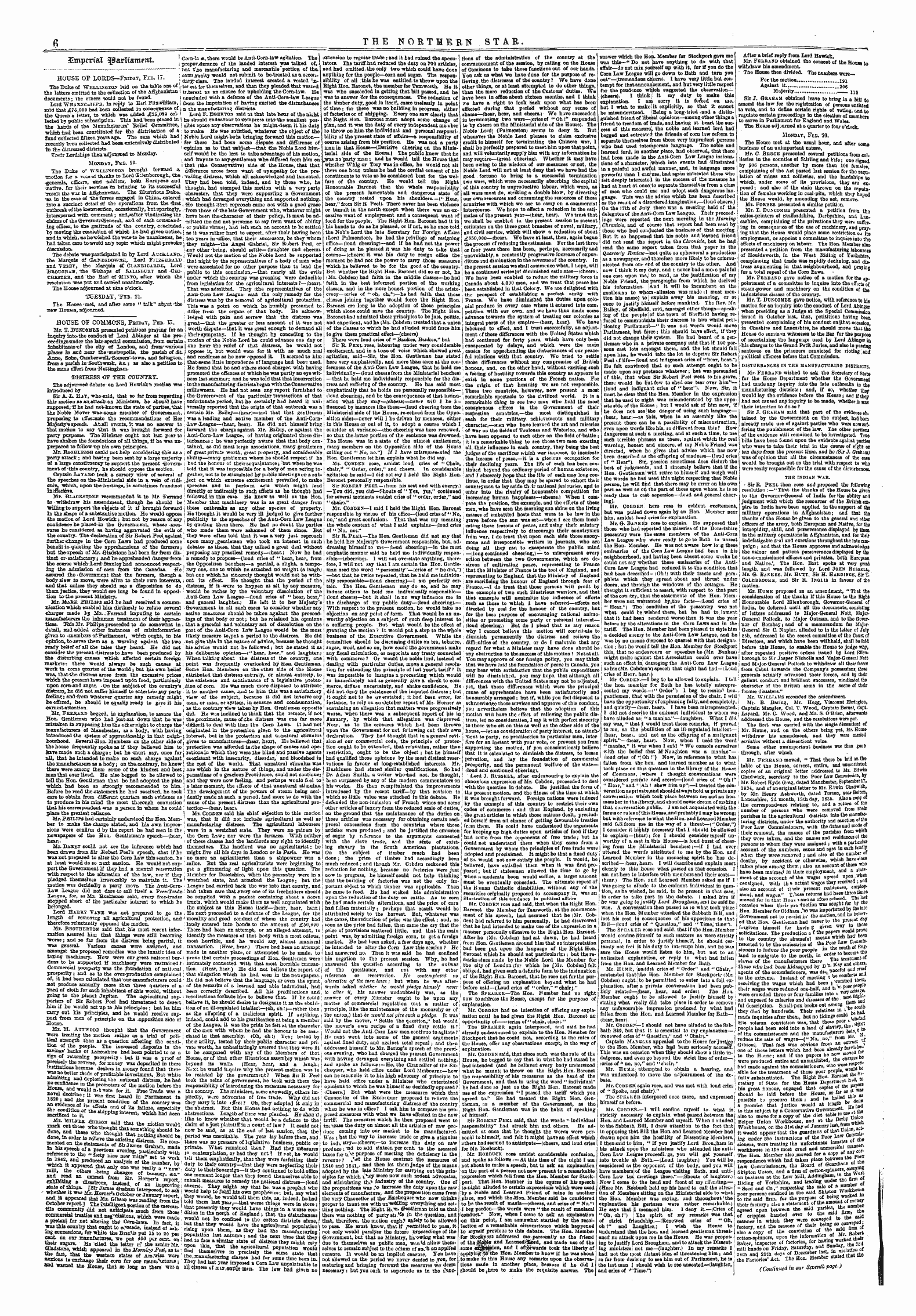
HOUSE OF LORDS—Fbidat , Fsb . 37 . The Dnke of Weixesgtos laid on the tatte one of ' the letters omitted in the collection of the Affjhanistin } documents ; > he others -could not be found . lord Whak 5 Ci . tfpb , in reply to Btzl FitssSHam , said that £ 7-5 , 000 had been collected ia conseqwsce of the Queen ' s letter , to -which was added £ 25 , 0 * 9 collected by public subscription . This had been ?* sced in tie ha = ds of the Manufacturers * ¦ Relief Csnamittee , which had been constituted for toe distribution of a fand Elected fifteen years ago . The sum -which had recently t * -en collected had Deea ^ xiensively distributed in tie distressed districts . S £ er Lordships thea ^ djofcrsed to Morday . 3 Io 5 » at . Feb . 20 .
"The Duke o Ws&xiseeos brouxSit forward a -motion for a -soieoi thinks to LordSUenborongh , tfce , - * enerala , officers , snd -soldiers , bofe European and ¦ ¦ aisSve . for their services in bringing to its successSel -result th 2 wax in Afghanistan . Th * illustrious Bcke , ^ as in thB case of "febB'forees engaged in China , entered , into a sueciEct tfetail sif the operations from tbe ^ rst , outbreak of the iasurrection , occasionally , hut spangly , , interspersed witti -comment ; and , zaf ter ¦ vindicating the ; claisiB of the GrremoriSeneral , "w : d of each coseianding officer , to fee ^ rafitude of tha conntry , concluded , by moving the reeokition of -which he had given notice , and in which , jss he wished the tote to be U" { vni" > g' » yJ he had taken cms to-avoid any topis -which might provoke discussion . ¦ i s ! .
The debate "was participated in by Lord Accs .-La . xd , j the Marquis of sXblKDSDOSPSE , lord FiIZ ££ R-ALD ' and Teset , the Marquis « £ Claaricarde , Lord ; IBko'CGHaje , 'the ^ Bishops of Salisbcst and -Cbichester , * nd the Earl of ^ JlrsTO , after winch the I resolution "was put and carried unanimously . j The Hoose-acijourned at nice o'elock . TSJESDiY , "FEB . 21 . j The House < met , and after some " tali" abyot ftbe ' sew Houses , adjourned . j : I ' I . ' j
Untitled Article
HOUSE OF COMMONS , Fxidat , Feb . IL j Mi . T . BtEBraiJBE presented petitions praying for an ] inquiry into-the conduct of Lord Abinger at the pro- j « eedings tinder the late special commission , from certain i inhabitants-cf the city of London , and from"various places is sod near the'Metropolis , tbe parish oi -St . j Anne , Soho , CamberweUz-Somers ' -town , and Islington , ; frem & parish in"Southw » k , &c ; as also a petition to i the same effect from -Nottingham . j 2
JBTBESS OF THE COUNTRY . The adjourned debate- en Lord Howicfs metiss -was ; Introduced by } Sir A . i- Hay , who ^ aid , that so far from regarding j tiiis moiieii as an attack- en Ministers , ha ahodd havs supposed , If he had nofcinown the state of parties ,-that | the 2 foble Mover 'was-some member of Government , j proposing to tfiecaiate the recommendatiDns of Her ) Majes ^ s speech . Atail events ,, it was no answer to that motion to say Mxsi . it was brought forward for j party purposes . The Minister ought not last year to t have shaken the foundations of all things , If he was un- ! prepared to follownp his own principles .
. Mr . JJjhSHXBlGH conld not help considering this as a j party attack ; and having been sent by a large majority j of a large constituency-to support the present - € ovem- ; zaent of this country , ha should oppose the saotion . j Csptsm LaTaJRC took a cursory -new of several of the speeches on the-Ministerial side in a vein of ridi-
eole , Trhidi , npon the-hastings , is sometimes fonndnot . ineffeeBva . ] Mr- BiACKSTOXE recommended it to Me ^ errand ' eole , -which , npon the-hastiogs , is sometimes fonndnot . speeches and to perfoim acts which might lead ineffeeBva . ' directly or indirectly to such effects u he thought had Mr . BiACKSTOXE recommended it to Me ^ errand ; fo llowed in this case . He knew as -well as the Hon . to - withdraw his amendment , though he should be' Member that machinery was in as great danger from
vSlingto support the © ejects of it if brought forward j in the shape of a substantive motion . He would oppose tha motion of Lord Howick ; but not by reason of any j eosfideace he placed 4 n the Government , whose -siea- " xvres he considered as having aggravated the evils of the cosatry . The declsration of Sir Robert Peel against \ Iurthernchange in the- Corn Laws had produced some ' benefit in-quieting the apprehensions of the farmers ; lint tbe-speech of Mr . -eitdstoiiB had been far from distinct or-satisfactory ; sad . he apprehended danger-from the coaj 38 which Lord-Stanley had announced respect- . ing the -admission of corn from the Canada * . He : assured the GovErnment that the farmers , theugh & body slaw to move , were alive to their own interests , j and ihxt titiIpm they should sqb a disposition to do , them justice , they would ere long be found in oppoei- tion to'the present Ministry .
Mr . »* l * . tik Phii . > ps said he had received a eoffimonlcation which enabled him distincUy to refute Beveral charges made bj Mr . . ^ Ferrand imputing to certain manufacturers ths Tn > mTna-p treatment of their apprentices . This Mr . Philipsj > receeded to do somewhat in , detail , sad added other instances of misinformation given to ^ memhsrs of-Padiament , which ought , in his opinion , to serve tb * m as a warning against tbe two ready beiief of all the tales they heard . He did net consider the present distress to have been . prednced by the disturbing causes which affected certain foreign ; . Xnazkets : there would always be such causes at ; "work in tome quarter ef the world ; but his own belief ¦ was , that < tfae distress arose from the excessive prices . "Which the present laws imposed upon food , particularly vpan cornand sugar . - On the subject of the country ' s distress , he did not suffer himself to entertain » ny party feeling ; and-from whatever quarter any remedy might be offered , be should be equally ready to give it his -earnest attention . "
Mr , JXtsuxD begged , in explanation , to assure the Hon . Gentleman who had just-sat down that he was ; mistaken in -supposing him the otter idght to charge the ' manufacture of Manchester , as a body , with having ' introduced tbe system of apprenticeship in that neigh- i bsorhobd . Several Son . Members on the other side of . the house frequently spoke as if they believed him to ; fcave made such a charge ; but he < nnrt say , once for j all , that he intended to make no such charge against the manufacUisesa 8 a body ; on the-contrary , he knew \ there were among them some of the kindest snd best j
men that ever lived . He also begged to be allowed to j tell Che Hon . Oestleman that he had adopted the plan ¦ which , had been so -strongly recommended to him . j Before he read the ¦ statement he had received , he took ' care to obtain from different quarters such evidence &b to produce in bis mind the most thorough conviction : that his correspondent was a person in -Whom he could ' place the greatest reliance . . . { Mr , Philips had certainly understood tha Hon . Mem- j ber to make the charge stated , and his own impres- ; siona were confirm d by the report he had seen in the ' newspapers of tke Hon . Gentleman ' s spasch —( hear , ' bear ) . i
Mr . Dabby could not . see the inference srbich had been drawn from Sir Sebert Peel ' s speech , that if he was not prepared to alter the Com Law this s « 3 ion , he at least would do bo next session . He would not sup- ' port the Government if they had a mental r-ecervation "with respect to the alteration of "the law , nor if they ; pledged themselves irrevocably to maintain it . The motion was decidedly a party move . The Anti-Cornlaw League did not d 2 « to eall itself a Free-Traded I ^ eagne , for , as Mr . Husiissoa said , eTery free-trader stopped siert of the partioalar interest to whkh he belonged . Lord Hab . bt Tass was not prepared to go the , length of removing aD agricultural protection , and ' therefore reluctantly opposed -&e motion . !
Mr . Bhoiherios said that . his most recent information assured him thai things were still becoming " worse j and so far from the distress being partial , it trib general . Tarious causes were assigned , aad amongst the proposed remedies was the lunatic idea of taxing machinery . How were oar great national burdens to be supported if machinery were restrained ? Commercial prosperty was the . foundation of national prosperity ; and as to the over-production complained of , it had been calculated that-our jaannfacturers could lot prodnee anaually more * h « i three quarters of a yard of cloth for each inhabitant of fiiia world , without going to the planet Jupiter . The ^ agricultural snpporters of Sir Robert Peel bad threatened to desert him if he would act up to Ms principles ; but let him carry out his principles , and he would receive support from men of principle on the -opposition Bide of Honss .
Mr . M . Ati-wood thought that 4 he Government ^ ere trea ting the motion rather as a trial of political strength than as a question affecting the condition of the people . The increased . deposits in the savings' banks of Lancashire had been pointed to as a sgn ^ of reluming prosperity : but it was a proof of precisely the reverse , for money was deposited in these institations because dealers in money found that there » as no better Aode of profitable investment , But while aannttacg and deploring ihe national distress , he had do con ^ ence the womoteis of ae mofcion ^^ &Q rW ^ d- '* ^ D ! tT 0 t 8 fOT «• *«« Trade was a lS- ^ h £ U ^ *« t heard in Parliament in SlSHE ^ S
WHS irhetta * it was Mr . Homer ' s October or ^ utrtreport : and , it appeared thai Mr . Gibsoo was readinTfromSi SS ° JlSS ^ ^^^ portion oTtife mercan ] file commmuty did xiot antaapaU much from those ! commaoal treaties and neg ^> tiattons , » Mch were made a pretext for net altering thtf Corn-laws . In fact it -was this conntry that onght to cOBeede , instead of ik
Jug eoneessions , for while the BrsiUs put li to 20 per cent oa our Huurafactnres , we put 400 per cent , on i their sugars . He cited the letter oi the senior Mr . Gladstone , whith appeared in tixsJlorniw Pott , as to : the fact , that tbe western atates of AnuTriea tfere ' anxious t « exchange tfceir corn for oar n » nnAetnreB ; and warned tie House , that jw long as there ^ as a
Untitled Article
; i Com-la m , there would be Antt-Corn-law agitation . The preporiderance of the landed interest was talked of ,. but t ' xie manufacturing and mercantile " portion of the . coed Aunlty would not submit to be treated aa a secorj . ! daryclaBs . The landed interest created a vested \ nr te ? est for themselves , and then they pleaded that vested \ tr . berest as an excuse for upholding the Corn-law . He ] toncluded with a defence of the Anti-Cora-law League 1 from tho imputation of having excited the disturbances j a the manufacturing districts . I Lard F . 3 EGSKT 0 S said at that latefcoor of the night j he should endeavour to -compress intone Bmalleat posj sibic space any observations he might ¦ deem it hiB duty ¦ to Biaka He was satisfied , whatever the object of the \ Noble Lord might beta bringing forward this
motion—; Mr there had been some dispute and . difference of ' « pinion ss to that-subject—that the Noble Lord him-¦ self wouM be the last to take advantage of his motion , ; and impute to anyvgentleman who differed from him en t that ( tke Conservative ) side of the House , that that dJffereEce arose firam want of « y » patfiy for the prevailing distress , -which all acknowledged and lamented . They had been told , indeed , and by those who , he thought , had stamped this motion with a very party character , that they were supporting a Government which had deracged everything and supported nothing . -He thought : tbtt reproach came not with a good grace froaj those of fee late Government who , whatever might hare been the « eharacter of their policy , it must be admitted ( he did not presume to say f rem want of ability or public virtee ) , had left Buch an account to fee settled
j ; j , j as it was rather hard to expect , afier their having been i ten years in -office , that their successors , be they whom J they might—the Angel ^ Gabriel , Sir Robert Peel , or j -tny other -being , should settle— { laughter end cheers ) . Weuld not the motion of the Noble Lord be supported that night-fey the representatives of a body of man who were associated for no other purpose than to lead the public to this conclusion , —that nearly all the evils under "which the conntry was groaning were deducible from legislation for the agricultural interests ?—( hear ) . That was admitted . They ( the representatives of the Anti-Corn Law Leagne > said the only remedy for tbe distress was by the removal of agricultural protection . This was a point on -which he numbly presumed to
differ from the organs of that body . He acknowledged with pain and sorrsw that the distress was great—that the greater or less amount of it was not worth dispute—that it was great enough to demand all tbeir-sympathy . If he thought by conceding to the motion of the Noble Lord he could advance one day or one hour the relief of that distress , he would not oppose it , but would vote for it with as much z : al and readiness as he now opposed it It seemed to him that-ssme little imprudence of language had bee ; used . He found that he and others stood charged with having promoted the offences of which he was partly an eye witness last summer ; and he was told that that insurrection in the manufacturing districts b * gan with the Conservative millowners . He had not seen any report furnished to
tile-Government of the particular transactions of that unfortunate period , but he certainly had heard it universally reported that the origin of that outbreak was a certain Mr . Bailey—( hear )—and that that gentleman was a leading and active member of the Anti-Corn-Law League—( hear , hearj . He did not himself bring forward tbe charge against Mr . Bailey , or against the Anti-Com-Law League , of having originated these disturbances z he was perfectly awar » that that body contained , as did most large associations , many gentlemen at great private worth , great property ,, and considerable ability—many gentlemen whom be should respect if he bad the honour of their acquaintance ; but when he was told that it was impossible for a body of men acting together , not to be stimulated by public meetings on a snbject on which extreme excitement prevailed , to make
these outbreaks as any other species ef property . He thought it would be very ill judged to give further publicity to the speeches of tbe Anti-Corn Law League by quoting them there . He had no doubt the parties who made them were ashamed of them since . But they were eften told that it was a very just reproach upon many . gentlemen who took an interest in such debates as these , that they talked a great deal without proposing any practical remedy—( bear . ) Now he had a remedy to propose —( loud cries of " hear , hear , from the Opposition benches )—a partial , a slight , a temporary one , one to which he attached no weight ( a laugh ) but one which . he sincerely thought would not be without its effect He thonght that the period of the distress , if it -were to happen at all by any measure ,
would be rather by the voluntary dissolution of tbe Anti-Corn Law League—( loud cries of " bear , hear , '" and general l&tghter . ) He left it to her Majesty ' s Government in all such cases to consider whether any active measures should be taken against the proceedings of that body or not ; but he retained his opinions that a graceful aad voluntary act of dissolution on the put of the Anti-Corn Law League would be the most likely measure to , pnt a period to the distress . He did not give this in tbe nature of advice , because he thonght his advice would not be followed ; bat he stated it as his deliberate opinion—i" hear , hear , " and laughter . }
When talking about the distress of the country , one point was frequently overlooked by Hoc Gentlemen . Some Hon . Members on the other side of the House attributed that distress entirely , or almost . entirely , to the existence and eentinuance of a legislative protection of corn . He was much more disposed to attribute it to another cause , . and to him this was a satisfactory view of the subject , because it did not intolve any men , or man , er system , in censure and condemnation , aa the contrary view taken by Hon . Gentlemen opposite did . Ha was inclined to think that the remote , if not the . proximate , cause of itbe distress was one far more drincclt Lo deal with than the Com Laws . It had not
originated in the protection given to the agricultural interest , but in the protection and umatural stimulus given -to manufactures—ibsar , hear ) . Hs believed that protection was afforded is . the shape of causes and opera tioasin which they -were ihe blind and passive agents coexistent with insecurity , disorder , and bloodshed in the rest of the world . That unnatural stimulus was one which in the nature of things , and under tbe dispensatioas of a gracious Providence , could not continue ; and they were now feeling , asd perhaps would ft el to a later moment , the effects of < that unnatural stimulus . The development of the potcars of steam being accidently made at such a period , had more to do with the cause of the present distress than the agricultural protection—{ hear , hear ) .
Mr . Cobce * said his chief © hjection to this motion was , that it did not include agricultural as well as manufacturing distress . Tbe agricultural labourers were in a wretched state . They were no gainers by the Corn Lawj nor were the fanners . With neither of these classes had the landlords any right to identify themselves . The landlord was no agriculturist ; he might live all his days in London or is Paris . He was no more an agriculturist than a Ehipowner was a sailor . But the real agriculturists -were beginning to get a glimmering of light npon this question . The Member for Dosetshire , when the peasantry were in a wretched state , had attacked the League ; but the League bad carried back the war into that county , and had taken care that every one of its freeholders should
be supplied -with a packet containing about a dozen tracts , which would make them as well acquainted wr , h the subject as this HeaBe itself —( hear , hear , hear . ) He next proceeded to a defence of the League , for the morality and good conduct of whom the conntry had lately entered into bonds to the amonnt of £ 50 , 000 There had been an attempt , or an alleged attempt , to identify the measures of that body with a most odious , most horrible , and he would say . almost maniacal transaction . ( Hear , hear . ) There bad been an attempt made in another place , or attempted to be made , to prove that certain proceedings of Hon . Gentlemen were intimately connected with that most horrible transaction . ( Hear , hear . ) He did not believe the report of that allegation which he had seen in the new gpapeis .
He did not believe that the language , or even the spirit of the remarks of a learned and able individual , had been correctly described . All his predilections and r « ollections forbade him to believe that If he could believe it , he should desire to designate it as the ebullition of an ill-regulated intellect —( oh , eh . ' )—rather tban as tiie offspring of a malicious spirit If anytking , inde » dj could add to his gratification z £ being a member of tbe League , it was the pride he felt at the character of the Oien with whom he bad the' honour to be associated in that assembly . ( Oh , ohJ ) Yes ; tested by their utility , tested by their public character and private worth , he unhesitatingly averred that they were fit to be compared with any of the Members of that House , or cf that other illustrious assembly which was
btyond its wails . ( Hear , hear , and a lsuijh . ; Ktxt be -woald inquire why the present motion -was to be resisted by the government ? When Sir R . Peel took the reins -of government , he took with them the responsibility of introducing the measures necessary for the country . The ministers , some avowedly , others impliedly , -were advocates of fret trade . Why did sot they carry it into tjfect ? Oh , they adopted it only in the abstract But this House had nothing to do with abstractions . Length at time was pleaded . Hesiond like to know whether that wonld be a defence to the claim of a just plaintiff iu a court of law ? It ceuld not now be said , as at the £ &d of last session , that the period was unsuitable . Tha year lay before them , and thfire was no pressure of legislative business , public or private . What remained then ? Had they measures in contemplation , or had they not ? If rot , he would t * ll them emphatically , that they were forfeiting their duty to their country—that they wtre neglecting their j
duty to theirSovereign—if they continued to hold office one moment longer than they found themselves able to submit measures to remedy the national distress —( loud cheers ) . They might say that he was a prophet who would help to fulfil his own prophecies ; but , say what they would , he would tell them this , as , indeed , he had told them last year , —that werse things were in tstore ; that presently they would have things in a worse condition in the north of England ; that the disturbances would not be confined to the cotton dittricts alone , but that they would have the agricultural population rising upon them ,, as they had the manufacturing population last autumn ; and the next time that they had to face a similar state of distress they might reW upon this , that the agricultural population woula find themselveg in precisely the same state that ^ . manufacturing classes had for some time been in . ¦ They had last year imposed a Corn Law unpayable to 51 J classes of mej . antile men . Tbe law bad givta no
Untitled Article
extension to regular trade ; and it had ruined the speculators . The tariff had reduced the duty on 700 articles , and had omitted . the only two which could havy done anytking for the people—corn and sugar . The responsibility of all this he was entitled to throw upon the Right Hon . Baronet , the member for Tamworth . He it was who succeeded in getting that bill passed , and he was to answer for the consequences . The reduction of the timber duty , good in itself , came uselessly in point of time ; for there was no building in progress , either of factories or of shipping . Every ono saw clearly tkat the Right Hon . Baronet must adopt some change of plan , and it was the duty of every independentmember to throw on him the individual and personal responsibility of the present state of affairs—a responsibility of
course arising from his position . He was not a party man in that House—( Derisive cheering on the Ministerial side of the House . ) The public knew that he was no party man ; and he would tell the House that whether Whig or Tory was in office , he would not sit there one hour unless he had the cordial consent of his constituents to vote as he considered best for the welfare of the country . He would tell the Right Honourable Baronet that the whole responsibility of the present lamentable and dangerous state of the country rested upon his shoulders . —( " Hear , hear , " from Sir R Peel ) . There never has been violence or tumult in the north except when there was an-excessive want of employment and a consequent want of food for the people . The Right Hon . Baronet had it in his hands to do as he pleased , or if not , as he once told tbe Noble Lord the late Secretary for Foreign Affairs
( Lord Palraerston ) , he had tbe privilege of resigning office—( loud cheering )—and if he had not the power of doing as he pleated it was his duty to take that course—( cheers ) it was his duty to resign office the moment be had not the power to carry those measures which he believed to be for the good of the country . But whether the Right Hon . Baronet did bo or not , he ( Mr . Cobden ) had faith in the middle classes—he had faith in the beBt informed portion of the working classes , and in the more honest portion of the aristocracy— ( cries of " oh , oh , ' *)—he had faith that those classes joining together -would force tbe Right Hon . Baronet ere long to the adoption of those principles which alone could save the country . The Right Hod . Baronet had admitted these principles to be just , politic , and expedient , and he ( Mr . Cobden ) trusted that a union ef the classes to which be had alluded would force him to give them practical effect —( cheers )
There were loud cries of " Bankes , Bankes , " but Sir R . Peel rose , labouring under very considerable excitement , and in a tooe of voice which showed great agitation , said—Sir . the Hon . Gentleman has stated here very emphatically , and more tban once at the conferences of the Anti-Corn Law League , that he held me individually ^—( loud cbeeis from the Ministerial benches ) —that he held me individually responsible for the distress and suffering of the country . He has said most emphatically that he holds me personally responsibletloud cheering ) , and be the consequences of that
insinuation what they may—( cheers ;—never will I be influenced by menaces like tbese—( loud eheering from the Ministerial side of the House , re-echoed from the Opposition side )—never will 1 be driven by menaces , either in this House or out of it , to adopt a course which I consider at variance —( the cheering was here renewed , so that the -latter portion of the sentence was drowned . The House was in a state of the utmost excitement , many members on tbe Opposition side of tbe House calling out "No , no . " ) It 1 have misrepresented the Hon . Gentleman let him explain what he did say .
Mr . Cobden rose , amidst loud cries of " Chair , chair , '' " Order , order , " and cheers . In considerable agitation he said—I did not say I held the Bight Hon . Baronet personally responsible Sir Robert Peel—( from his seat and with energy . ) —You did , you did—Shouts of " Yes , yes , " continued for Beveral moments amidst cries of " order , order , " and " chair ) . " Mr . Cobden—I said I held the Right Hod . Baronet responsible by virtue of his office —( loud cries of " No , no , " and great confusion ) . That that was my meaning tbe whole context of what I said explains —( loud cries of No . no ) . '
Sir R . Peel—The Hon . Gentleman did not say that he held her Majesty ' s Government responsible , but , addressing himself to me —( lwud cheering)—in the most emphatic manner said he held me individually responsible —( cheering ? . I will not overstate anything , therefore , I will not say tkat 1 am certain the Hon . Gentleman used the word " personally "—( cries of " he did , " ) —but that he twice repeated , that be held me individually responsible—( loud cheering)—I am perfectly certain . The Hon . Gentleman may do so , and he may induce others to hold me individually responsible—( loud cheers)—but it shall in no way influence me in the discharge of my public duty—( loud cheering ) . — With respect to the present motion , he would take no objection on any point of form . That would be an
unworthy objection on a snbject of such deep interest to a suffering people . But what would be the effect of granting the motion ? It would put a stop to the whole business of the Executive Government While the committee should be discussing duties on tea ., tobacco , sugar , wool , and so on , how could the government make any fiscal calculation , or negociate any treaty connected with commerce ? Or would tbe noble lord , instead of dealing with particular duties , move a general resolution for extending the principle of last year ' s tariff ? It was impossible to imagine a proceeding which would so immediately and bo generally give a check to commerce , diffuse uncertainty , and shake confidence . He did not deny tbe existence of the imputed distress ; but it ought not to be overstated ; it had been error , for
instance , to rely on an October report of Mr . Horner as sustaining an allegation that matten . were progressively worse , when there was a subsequent report of his ia January , by which that allegation was disproved Novr , as to the censures which bad been thrown upon the Government for not following out their own declaration . They had thought that in a general revision -of our commercial code , the principle of protection ought to be extended , that relaxation , rather than restriction , ought to be the object ; but be himself had qualified those opinions by the most distinct reservations in favour of long-established interests . Mr . Huskinson had stated similar qualifications . So bad Dr . Adasi Smith , a writer who-had not , he thought , been fcurtassed by any of the modern commentators on
his works . He then recapitulated the improvements introduced by the recent tariff—by that revision to which bo little value was attached in this debate . He defended the non-inclusion of French wines and some other articles of luxury from the reduced scale of duties , on the ground that the maintenance of the duties on those articles was necessary for obtaining certain reciprocal concessions ftom the countries where those articles -were produced ; and he justified the onmaion of sugar by nference to the arguments connected with the slave trade , and the state of existing slavery in tbe South American plantations . On the subject of timber much had been done ; the price of timber bad accordingly been much reduced ; and though Mr . Cobden reckoned this
reduction for nothing , because no factories were just now in progress , he himself could not help thinking that the building of factories was not the only important o ' r-ject to which timber was applicable . Then he came to food . He had stiked bis administration upon the redaction of the duty on cattle . As to corn he hart made certain alterations , and the price of corn had fallen materially ; perhaps that result would be attributed soleiy to tbe harvest But , whatever was the cause , the reduction of price was the effect ; and , as Foon as the price had fallen , then came the cry that the price of provisions mattered little , and that the main point was , by admitting foreign corn , to get a foreign market . Be had been asked , a few days ago , whether he intended to alter the Corn Law this session ? He
had answered no . Then it was said he bad confined his negation to the present session . Why , he had answered tbe question according to the animus of the questioner , and not -with any other nference or reservation . He contemplated no alteration of the corn laics ; but when he was afterwards asked whether he would pledge himself never to alter it , his answer undoubtedly was , as the answtr of every Minister ought to be upon any matter of commercial regulation ( not a matter of principle , like the maintenance of the monarchy or of the union , ) that he would not give suck a pledge . It was said by the mover , " Settle the qaestion , " but would the mover ' s own recipe of a fixed duty settle it ? Would not the Anti-Corn Law men continue to agitate ?
H- next went into some of the general arguments against fixed duty , and against total repeal ; and then addressed himself to Mr . Baring ' s speech of the previous evening , who had charged the present Government with having deranged everything and settled nothing , and spoke as follows : —He , the Chancellor of the Exchequer , who held office under Lord Melbourne—how can he reconcile it to hia . high advocacy of principle to have held office under a Minister who entertained opinions to which ho was himself so decidedly opposed ? i Cheers . ) But what were the measures which that Coanceilor of the Exchequer proposed to relieve the commercial and manufacturing distress of the country when he was in office ? I ask him to compare his proposed measures with what we have effected in the new
tariff . The measures which he then proposed went to int tease the duty on almost all tbe articles of raw produce coming into our market to be manufactured . Was t bat the way to increase trade or give a stimulus to indu stry—( cheers )—to increase the duty on raw produce i'nd to add sixteen per cent to the assessed taxes for ti ^ fi purpose of meeting the deficiency in the revenue ? x « 6 t * h e House contrast the measures of 1840 and 1841 , * and then let them judge of the means adopted by the tot * Ministry for carrying out th ' e principles for which v *» ey were now 8 Uch ardent advocates , and stimulating Uk * industry of the country . One of the propositions was »* -o fcusrease the duty upon the raw elements of manufacture .- ** d the proposition came from
the very Chancellor of the . Exchequer who now thinks proper to taunt me with un'wtUing everything and settling notbiog . The Right B . C ** - Gentleman told us that there was nothing of party sti . ^ B i n the question , and that , therefore , the motion oughJ « . fely to be allowed to pass . He must know , that if ; x ) fEiitted to pass , it not only would paralyse the future trroceedinga of the Government , but that no Ministry , knowing what was due to themselves as public men , wou ^ d allow themselves to remain subject to tbe odium of sat / b an applied censure . It would be an implied censure . You have not allowed us the period we never denied to Ton , for maturing and bringing forward tbe measures we' deem necessary : but you £ 6 ; k to tupereede us in the i ' mbC '
Untitled Article
tions of tbe administration of the country at the commencement of the session , by calling on the House of Commons to take those functions out of our hands . You ask us what we have done for the purpose of relieving the distresses of the country ? We have done other things , or at least attempted to do other things , than the mere reduction of the Customs' duties , We have been in office abeut sixteen months , and I think we have a right to look baok upon what has been effected during that period without any sense of shame- —( hear , hear , and cheers . ) We have succeeded in terminatimg two wars —( cries of " Oh ! " responded to by cheers on the Ministerial side of the House ) . The Noble Lord ; ( Palmerston ) seems to deny it But whenever the Noble Lord pleases to claim exclusive
credit to himself for terminating the Chinese war , I shall be perfectly prepared to meet him upon that point , and will voluntarily supply him with any information he may require—( great cheering ) . Whether it may have been owing to the wisdom of our measures or not , the Noble Lord will not at least deny that we have had the good fortune to bring to a successful termination two wars , which were necessarily absorbing the capital of this country in unproductive labour , which were , as all wars must do , striking a double blow , by diverting our own resources and consuming the resources of those countries with which we are to carry on a commercial intercourse . We hope to effect a reduction in tbe estimates of tbe present year —( hear , hear ) . We trust that we shall be enabled in the present session to present
estimates on the three great branches of naval , military , and civil service , which will show a reduction of aboul £ 850 , 000—( hear ) . We have at least , then , again begun the process of reducing the estimates . For the last three or four years there has been , perhaps , necessarily and unavoidably , a constantly progressive increase of expenditure and diminution in the revenue vt the country . In tbe present session we shall commence what , I hope , will be a continued series Jof diminished estimates—( cheers ) . We have been enabled to reduce the military force in Canada about 4 , 000 men , aud we trust that peace has been established in that Colot . y . We are delighted with the prospect of establishing a perfect amity with France . We have diminished tbe duties upon colonial produce in every case where it entered into com .
petition with our own , and we have thus made some advance towards the system oi treating our colonies as integral parts of the empire—( bear , bear ) . We have laboured to effect , and I trust successfully , an adjustment cf those differences with tbe United States which bad continued for forty years , which have only been exasperated by delays , and which were the main causes for apprehending the disturbances of our peaceful relations with that country . Wo tried to settle those differences without any compromise of British honour , and . on tbe other hand , without exciting such a feeling of hostility towards this country as appears to exist in some portions of the French nation . For the origin of that hostility we are not responsible . These two countries , however , now present a most
remarkable spectacle to the civilized world . It is a remarkable thing to see two men who hold the most conspicuous offices in the Government of their respective countries , —the most distinguished in each for their military achievements and military character , — -men who bave learned tbe art and miseries of war on the fields of Toulouse and Waterloo , and who have been opposed to each other on the field of-battle ; it is a remarkable thing to seo those two men exerting all , their influence In each country , they being the best judges of the sacrifices which war impoaea , to inculcate the , lessons of peace , —it is a glorious occupation for their declining years . The life of each has been continued beyond the ordinary period of human existence , and I siacerely hope tbat tbe life of each may long
continue , in order that they may be spared to exhort their countrymen to lay aside their national jealousies , and to enter into tbe rivalry of honourable competition for increasing human happiness—( oheers . ) When I compare the position , the example , and the efforts of these men , who bave seen tbe morning sun shine on the living masses of embattled hosts that were to be low in tbe grave before the sun was set—when I see them inculcating those lessons of peace , and using their salutary influence respectively to discourage their countrymen from war , I do trust that upon each side those anonymous and irresponsible writers in journals , who are doing all they can to exasperate the public mind —( long-continued cheering , ) — to misrepresent every action between the two Governments , which are
desirous of cultivating peace , representing to France that the Minister of France is the tool of England , and representing to England that the Ministry of England are sacrificing the honour of England through fear of France , —I do trust that those persons will profit by the example of two such illustrious warriors , and tbat tbat example will neutralize the influence of efforts such as those to which I have referred—efforts not directed by zeal for tbe honour of the country , but for the base purpose of encouraging national animosities or promoting : some party or personal interest—( load cheering . ) But do I plead that as any reason why I cannot believe this motion will contribute to diminish permanently the distress and relieve the difficulties of the country , or do I maintain that any regard for what a Minister may have done should be any obstruction to the success of this motion ? Not at all . You may approve of our foreign policy , you may think tbat we have laid the foundation of peace in Canada , you
may hear with satisfaction that the public expenditure will he diminished , you may hope , tbat although all differences with the United States may not be adjusted , yet , that those differences which were the principal cause of apprehension bave been satisfactorily and honourably arranged ; but if , while you feel disposed to acknowledge those services and approve of this conduct , you nevertheless believe that the adoption of this motion will bave tbe effect of relieving the public distress , let no consideration , I say it with perfect sincerity to those who sit on this as well as tbe other side of tha house , —let no consideration of party interest , no attachment to party , no predilection to particular men , inter fere for an instant with your vote , or prevent you from supporting tbe motion , if you conscientiously believe that it is calculated to diminish tbe distress , to lessen privation , and lay the foundation of commercial prosperity , and tbe permanent welfare of the state—( load and continued cheering ) .
Lord J . Russell , after endeavouring to explain the obnoxious expression of Mr . Cobden , proceeded to deal with the question In debate . He justified the form of the present motion , and the fitness of the time at which it was brought forward . Foreign nations were induced by the example of this country to restrict their own codes of commerce : and thus England , by excluding the great articles in which those nations dealt , precluded herself from all chance of getting favourable treaties fr . im them . He could have understood the arguments for keeping up high duties upon articles of food if they
had come froai tbe opponents of free trade ; but he could not understand them when they came from a Government by whom , the principles of free trade were adopted and proclaimed . It might be that a fixed duty of 8 a . would not now satisfy the people . It would , he believed , have satisfied them when it was first proposed ; but if statesmen allowed the time to go by when a moderate boon would suffice , a larger amount must be eventually conceded . Tbo ultimate repeal of the K jman Catholic disabilities , without any of ihe securities originally proposed to accompany it , was an illustration of tbia tendency in political affairs
Mr . Cobden rose and said , that whan the Right Hon . Baronet the Member for Tarn worth , at the commencement of his speech , bad assumed that he ( Mr . Cobden ) had referred to him personally , he had disavowed that he had intended to make use of the t xpreasiuo in a manner personally offensive to the Right Hon . Baronet After he ( Mr . Cobden ) had sat down , he had heard from Hon . Gentlemen around him that an interpretation had been put upou the language of the Right Hon . Baronet which be should not particularize ; but theremarks since made by tbe Noble Lord the Member for the city of London ( for which he [ Mr . CobdenJ felt obliged , had given such a definite form to the insinuation of the Right Hon . Baronet , that he rose not for the purpose of offering un explanation beyand : what he had before said —( Loud cries of " order , " " chair ) . "
The Speaker—The Hon . Member had no right now to address tbe House , except for the purpose of explanation . Mr . Cobden had no intention of offering any explanation until he had given the Right Hon . Baronet an opportunity of ( cries of ¦ " chair , chair ) . " The Speaker again interpased , and said he had already endeavoured to explain to the Hon . Member for Stockport tbat he could not , according to the rules of the House , offer any observations except , in the way of explanation .
Mr . Cobden said , that since such was the rule of the House , ho begged to say that in what he had stated be had intended ( and be believed every body understood what be meant ) to throw on the Right Hon . Baronet the responsibility of his measures as the head of the Government , and that in using the word " individual " he bad done so just as the Right Hon . Baronet made use of the expression " I passed the tariff which you agreed to . " He had treated the Right Hon . Gentleman , as a member of the Government , as the Right Hon . Gentleman was in the habit of speaking of himself . Sir Robert Peel said , that the words " individual responsibility" had struck him and others . He admitted at once that he thought the words were personal to himself , and felt it might have an effect which others had seemed to anticipate —( cheers , and loud cries for Mr . Roebuck ) .
Mr . Roebuck rose amidst considerable confusion , and spoke as follows : —At this time of the night I am not about to make a speech , but to ask an explanation on the part of a person not now present to a remarkable expression which fell from the Hon . Member for Stockport That Hon . Member in the course of his speech to-night alluded to certain expressions which were used by a Noble and learned Friend of mine in another place , and which the < Hon . Member said be considered to be tbe result of mania —( cheers , and cries of " No . " )
I beg pardon—the words were " the result of maniacal j conduct" Now , when I come to ask an explanation on this point , I am somewhat startled by the recollection of a remarkable circumstance which happened to myself previous to this debate . The Hon . Member for Stockport addressed me personally as the friend of the Noble and Learned ^ trd , and made use of the same ctgjtesBion , and I afterwards took tbe liberty of applyingf-: t » * the Hon . Member to know if he was about to make in this House any remarks upon the observations made in another place , because if he did I ehould be . here to make the requisite answer . Tbe
Untitled Article
answer which the Hon . Member for Stockport gave me waa this— " Do not have anything to do with that affair—do not mix yourself op with it , for if you do tbe Corn Law League will go down to Bath and turn you out "—( tremendous cheers ) . I have very little , but contempt for that announcement , and but very little respect for the prudence which suggested the observation—( oheers ) . I tfelnk I it my duty to make this explanation . I am sorry it is forced on me ,, but I wish to make ] it explicitly , so that it cannot be misunderstood , j Being a long-tried . and a distinguished friead of liberal opinions—among other things a friend to freedom of trade , and having at heart the success of this measure , the noble and learned lord had begged and entreated the friends of com law reform to separate themselves from those very imprudent persons who had used intemperate language . The noble and learned lord , in another place , had observed , tkat there had been made in the Anti-Corn Law League
insinuations of a character , which late events b ftd illustrated in a painful and awful manner , and , in language more powerful than I can use , had again entreated those who felt deeply interested in the success of tbe measure he had at heart at once ! to separate themselves from a class of men who could use and adopt such dangerous language . This was tbe advice which has been described as the result of a disordered imagination .. —( loud cheera ) On the 17 th of July there was a meeting held of the delegates of the Anti-Corn Law League . Their proceedings were reported the next morning in the Morning Chronicle , and of course that report had been read by those who had conducted the business of tbat meeting . But it so happened that his noble and learned friend did not read the report in the Chronicle , but he had read the same report taken from tbat paper in the Quarterly Review-jnot quite so ephemeral a production as a newspaper , and therefore more likely to be communicated from one end of the country to the other , And
now I think it my duty , and 1 never had a mo > e painful one cast upon me , ; to read , as the justification of my Nuble Friend , the ; paragraphs from which be derived his information . ' And it will be incumbent on the gentleman to whom-allusion was made * I must men . tion hia name ) to ] explain away bis meaning , or at once to justify himself before mankind . The Rev . Mr . Bailey , of Sheffield , said , amongst other things—speaking of the people ) of the town of Sheffield having refused to communicate their distress to him whilst petitioning Parliament— " It was not words would move Parliament , but force ; tbis should have effect , if they did not change their system . He had beard of a gentleman who in a private company said that if 100 persons cast lots amongst them , and tbe lot should fall
upon him , he would take the lot to deprive Sir Robert Peel tf life—( loud and indignant crieB of "hear , hear . ") He felt convinced tbat no such attempt ought to be made upon any pretence whatever ; but was persuaded of this , that when Sir Robert P < : el went to his grave , there would be but few to shed one tear over him' *—( loud and indignant cries of " hear" ) . Now , Sir , it must be clear that the Hon . Member in tbe expression that he used to night was misunderstood by tbe opposite side of the House ; but I would ask of him now , if be does not see { the danger of using such language—( beat , hear )—as tbis , when in an assembly like the present there can be a possibility of misconstruction ,
even npon words like bis , so different from this ? How dangerous at such' a meeting , and at such a time , to use such terrible phraaea as tbese , against which the real warning , honest | and sincere , af my Noble Friend was directed , when be gives ihat advice -which has now been described as ' the offspring of madness —( loud cries of " Hear" ) . Sir , passion sometimes does disturb the best of judgments , and I sincerely believe that if the Hon . Gentleman j will retire to himself and weigh well tbe words he has used this night respecting that Noble person , he will find that there may be error on bis own part as well as on tbe part of those upon whom be is so ready thus to cast aspersion—( loud and general cheering : ) , f
llr . Cobden here rose in evident excitement , but was pulled down again by an Hon . Member near him , amidst loud cries for explanation . Mr . G . Bankes rose to explain . He supposed tbat those who had reported the miseries of the Dorsetshire peasantry were the same members of the Anti-Corn Law League who were ready to go to Bath to unseat the Hon . Member . He was not aware how long these emissaries of the Corn Law League had been in biB neighbourhood , and having been absent some weeks be could not say whether these emissaries of the Auti-Corn Law League had reduced it to the condition that had been described— ( Oh !) with their tracts and pamphlets which they spread about and thrust under doors , and through the windows of the cottages . He
thought it sufficient to assert , with respect to that part of the country , that the statements of the Hon . Member were not warranted by . jthe facts—( Loud cries of " Hear . ") The condition of the peasantry was not what could be { wished there , but he bad to , lament that it had been rendered worse than it was tbe year before by the alterations in the Corn Laws and in the tariff . The Hon . Member had been pleased to style him a decided enemy to the Anti-Corn Law League , and he was by no means disposed to quarrel with that designation ; but he would tell the Hon . Member for Stockport this , that no endeavours or speeches he ( Mr . Bankes ) might make against that Association could ever have such an effect in damaging the Anti-Corn Law League as his ( Mr . Cobden's ) speech that night had had—( Loud cries of Hear , hear . )
Mr Cobden . t— I beg to be allowed to explain . I tell the hon . member for Bath he bos totally misrepresented my words—(" Order ") 1 beg to remind hon . gentlemen , that with the permission of the chair , I will have the opportunity of explaining fully , and completely , and quietly—ihear , bear ) . I have been misrepresented . I did not describe the eminent individual to whom we bave alluded as ; " a maniac" —daughter ) . What , I did say was , " that I would treat these remarks , if proved to me , as the ebullition of an ill-regulated intellect—( hear , hear ) , and not as the offspring of a malignant spirit . "—( hear , hear ) . Now , when I used the word " maniac , " it was when I said ' * We console ourselves with the belief tbat M'Naughten was a maniac "—( loud cries of "Oh ! " ) Now , in reference to what has fallen from the hon . and learned member as to what
took place on this questien in the library of the House of Commons , j where I thought conversations were considered priyate and secret —( loud cries of " Ob I " " Hear , " and "JAh ! shew him up" )—I treated the conversation as private , and should always hold as private any conversation which took place between me and an bon . member in the library , and should never dream of making that conversation public . I am not acquainted with the forms o r rules of this House , and probably I may be wrong ; but with reference to what the Hon . and Learned Member said ftll from me in the way of a threat —(• ' Order , " ) I consider it highly necessary that I should be allowed to explain —( bear ); for I should consider myself unworthy of a seat in tbis House —( a loud burst of
cheering from the { Ministerial benches );—if I had ever uttered tbe words attributed to me by tbe Hon . and Learned Member in the menacing spirit he ' has described— ( hear . jhear ) . I will describe and explain most clearly to this j house what passed on tbat occasion . I am not here to interfere with members and their seats—( hear . ) Tbe Hon . and Learned Member asked me if I was going to allude to the eminent individual in question , as he wished , he said , to be present in that case , in order to take part in the debate . I asked him if be was going to ] justify Lord Brougham , anil be said he was . A conversation then passed aa 10 what took place when the Hon . Member attacked the Sabbath Bill , and lost his seat in consequence of his opposition te that Bill—( loud cries of " Question , " and " Time ; time" ) .
The Speaker rose and said , that if the Hon . Member would confine himself to such matters as were strictly persona ! , in order to justify himself , he should certainly not feel \ t his duty to interrupt him , and he was sure ths House would listen to him , but not to an unlimited explanation , or reply to what bad fallen from the Hon . and Learned Member for Bath . Mr . Hume , jamidst cries of "Order" and "Chair , " contended thatjthe Hon . Member for Stockport ,- ( Mr . Cobden ) ought i to be permitted to enter into a full explanation , after a private conversation bad been publicly related —|( hear , hear , and erder ) . The Hon . Member ought to be allowed to justify himself by stating what really did take place in order to remove any unfavourable impression produced by what had fallen from the Hou . aud Learned Member for , Bath—( hear , hear ) .
Mr . Cobden—I should not have alluded to the Sabbath Bill , but that it is essential to my explanation—( renewed cries i > f " Question , " and " Chair ) . " Captain MaN « L £ S appealed to the House for justice to tbe Hon . Member , who had been seriously accusea . This was an occasion when they should show a little indulgence , and even go beyond the strict line of ordericries of" no , no , " and " cbair > . " Mr . Hume | attempted to obtain a hearing , and was understood to meve the adjournment of the debate . Mr . Cobden ; again rose , and was met with loud cries of " Spoke , and chair ) . " The Speaker interposed once more , and expressed himself as before .
Mr . Cobden . —I will confine myself to what ia strictly necessary to explain what passed between the Hon . and Learned Member and myself . When I alluded to the Sabbath Bill , I drew attention to the fact that in opposing that Bill the Hon . and Learned Member had drawn upon him tbe hostility of Dissenting- Members . I then said to him , " If you justify Lord Brougham in bis attack upon the ministers who attended the anti-Corn Law League proceed ! , gs , you will get yourself into trouble at Bath . —( Loud laughter . ) You will be considered as the opponent of the body , and you will have members ! of tbe League visiting Bath , and anti-Corn Law tea meetings there . "—( Shouts of laughter . ) Now I come to the head and front of my eff ^ nding . — ( Here Mr . Roebuck held up his hand to call the
attention of Members sitting on the Ministerial side to what the Hon . Member was saying , and throughout' the explanation his gestures were rather remarkable . ) He says that jl menaced him . I deny it—( Cries of " Ob , oh ! " ) | The spirit of my remarks was that of strict friendship . —( Renewed cries of "Oh , oh ? " and daughter . ) I wish the House to understand tb ^ it the hon . and learned gentleman threatened no attack upon me in the House . He was proposing to justify Lord Brougham , and to attack the Dissenting ministers ; not me —( laagbter . ) In my remarks I had not the most distant idea of threatening him ; and so far from desiring to see him out of Parliament , he is the last man I should wish to 89 e unseated—( laughter , and cries of ' ' Time . " )
Untitled Article
After a brief reply from Lord Howick , Mr . Ferrand obtained the consent of the House to withdraw his amendment The House then divided . The numbers were—For the motion ig ^ Against it .... 306 Majority , Sir J . Graham obtained leave to bring ia a bill to amend the law for the registration of persons entitled to vote , and to define certain rights of voting , and to regulate certain proceedings in the election of members to serve in Parliament for England and Wales . The House adjourned at a quarter to four o ' clock .
Monday , Feb . 20 . The House met at the usual hour , and after som& business of an unimportant nature , . Mr . C . BRUCE presented several petitions from collieries in the counties of Stirling and Fife ; one si gned by J 506 persons , another by more than 100 females , complaining of the Act passed last session for the requl lation of mines and collieries , and the hardahips to which , under some of its provisions , they are exposed ; and also of tbe stain thrown on the reputation of females working in coal-pits , which they hoped the House would , by amending the act , remove . Mr . Forbes presented a similar petition .
Mr . T . Duncombe presented a petition from the calico-printers of Staffordshire , Derbyshire , and Lancashire , complaining of the privations they ware suffering in consequence of the use of machinery , and praying that the House would place some restriction o . i its employment , or appoint a committee to inquire into the effects of machinery on labour . The Hon . Member also presented a petition from the manufacturing labourers of Houldaworth , in the West Riding of Yorkshire , complaining that trade was rapidly declining , and dis tress augmenting , in that neighbourhood , and praying for a total repeal of the Corn Laws . Mr . Ferrand gave notice of a motion for the appoiatment of a committee to inquire into the effete of steam-power aud machinery oa the condition of the industrious classes of the country .
Mr . T . Duncombe gave notice , with reference to Ms motion for an iuquiry into tbe conduot of Lord Abinger when presiding as a Judge at the Special ConimiaaiQa issued in October last , that , petititions having been presented complaining of his conduct on ( that occasion , in Cheshire and Lancashire , be should move that the House do summon witnesses to the Bar for the purpose of ascertaining the language used by Lord Abinger in his charges to the Grand Petit Juries , and also in passing senter . ee on the prisoners cenvicted for rioting ' . and political offences before that Commission .
DISTURBANCES IN THE MANUFACTURING DISTRICTS . Mr . Ferrand-wished to ask tbe Secretary of State for the Home Department whether the Government had made any inquiry into the late outbreaks in tbe manufacturing districts ; and , if so , whether they would lay the evidence before the Hsuse ; and if they bad not caused any inquiry to be made , whether it waa their intention to do so ? Sir J . Graham said that part of tbe evidence obtained by the Government on the subject , had been already made use of against parties who were now suffering tbe pnnisbment of the law . The other portions of the evidence still remained to be investigated . True bills have been found upon tbe evidence against parties who were to take their trial in the coarse of eight oi tea days from tbe present time , sod he ( Sir J . Graham ) was of opinion that all the circumstances of the case would be brought out on the trial with respect te who were really responsible for the cause of the disturbances .
THE INDIAN TAB . Sir R . Peel then rose and proposed the following resolution : — " That the thanks of the House be given to the Governor-General of India for the ability and judgment with which the resources of tbe Briton empire in India have been applied in the support of tbe military operations in Affghanistan ; and that the thanks of the House be given to the general and other officers of the army , both European and Native , for tha intrepidity , skill , and perseverance displayed by them in the military operations in Affghanistan , and for their indefatigable z ^ al and exertions throughout tbe late campaign ; and that the House approves and acknowledges the valour and patient perseverance displayed by the non-commissioned officers and privates , both European and Native . ' , The Hon . Bart spoke at very great length , and was followed by Lord JOHN RUSSELL , Mr . G . Baxkes , Mr . Hutt , Sir H . Hardinge , SirT . Colebrooke , and Sir R . Ingi . is in favour of tbe
motion . Mr . Hume proposed ss an amendment , "Tbat the consideration of tbe thanks if this House to the Right Honourable Lord Ellenborough , Governor-General of India , be deferred until all tbe documents , consisting of letters addressed to Major-General Nott , Major-Ganeral Pollock , to Major Outram , and to the Governor cf Bombay ; aud of a memorandum for Major-General Sir C . Napier , alluded to in the letter of July 8 th , addressed to the secret committee of the Court of Directors , and which have been withheld , shall be laid before this House , to enable the House to judge why , after repeated positive orders issued by Lord Ellenborough to Sir Jasper Nicholls and Major-General Nott and Mi jor-General Pollock to withdraw all their forces from Cabal towards the Company ' s possessions , those generals actually advanced their forces , and by their gallant conduct and brilliant successes , vindicated the character of the British arms in the scene of their
former disasters . " Mr . Williams seconded the amendment Mr . B . Baring , Mr . Hogg , Viscount Ebrington , Captain Mangles , Col . T . Wood , Captain Bernal , Capt . Layard , Mr . C . Wood , and Mr . a OBrien , afterwards addressed the House , and the resolutions were pat . The first was carried with the single dissentient of Mr . Hume , and on the others being put , Mr . Hnme withdrew his amendment , and they were carried seriatim without a dissentient voice . Some other urainiportant business was then gone through , after which
Mr . Ferrand moved , " That there be laid on the table of the House , correct , entire , and unmntilated copies of an original letter addressed to Mr . Edwin I Cbadwick , secretary to the Poor Law Cemmission , by I Mr . Robert Hyde Greg , dated Manchester , Septembfirl 7 , 1834 , andofanoriginalletterto Mr . E . lwin Chadwick , \ by Mr . Henry Ash worth , dated Turton , nearBolton , i Lancashire , 2 d month , 13 th day , 1835 . Also a copy of the correspondence relating to , and a return of tte number of persons who were removed from tnett parishes in the agricultural districts into the manufacturing districts , under the authority and sanction of the Poor Law Commissioners , with the dates and modeirt their removal , the names of the parishes from whica they were taken , and the names and residences of tne persons to whom they were assigned ; with a particular account of the numbers , sexes and ages in each family when they were removed ; and also of the number ot deaths , by accident or otherwise , which have since those
taken place among them ; also an account of woo have been maimeJ in their employment , and a sJfcment of the account of the wages agreed upon w&en consigned , with to e actual wages they received ; ana also an account of tl \ eir present residences , employment , and wages . " TAose returns had been three times moved fer in that Hous » and as often refused ifle last occasion when their pro -luction was soug&t-for 0 / we Hon . Member for Oldham . he was importuned by tbei taw Government not to persiat iir the motion , and he believed that Hob . Gentleman had never to the preset ; day forgiven himself for havin g gi « n ™ 1 *? . %° Z solicitations . The production o f the papers would prove to the country the shameful means which had oeen resorted to by the entries of *• Poor Law _ Comnu * sionera to indnce the poor people » the south ot tog land to emigrate to the north , in <» d <* to bewme the slaves of the manufacturers there . Tha te 1 " , ! those who had been kidnapped by B t- J f ^ «™" j ft < Tfln + O r . t fha onmmi . dn ^ ro nu rtirf . WWefal and CTOBI
in the extreme . Instead of meeting t be C 0 l ?® f ^ Z , receiving the wages which had been \ ^ on *~ " pil their wages were reduced one-half , and ti ^^ 3 , 8 , were crowded three or four families into t ~? frightand exposed to miseries and diseases of tbe SQ ( j ful description . Small-pox broke out among ™ ^^ they died by hundreds . Their relatives in 1 * ^ made inquiries after them , but no tidings could ^^ His solemn conviction was , that those poor t . peopb had been sold into a land of slavery , the ¦ ^ of the commissioners and the manufacturers Wp ^ reduce the rate of wages —( " No , no , " from wr . f Gibson ^ . That fact was obvious from an «»" ? ' ' » one of those letters which had been already for . w to the House ; and if the papers be no * ^ ° T ^ he were proluced entire and unniutilated , tae CB "J * ,. bad made the commissioners who were
against , sible for the treatment of these poor people , worn fully substantiated . Tbe Right Hon . Baronet we ^ cretary of State for the Home Department nia . bis great honour , engaged that cop ies of tne p *^ shonld be laid before the House , so » ' ™ ^ possible tj procure them ; and he haUeat " ^^ a promise that justice would at len&tn i » ^ to this subject by a Conservative Government- ^ ^ also to move for a copy of the diet table m •» Belper Union Workhouse , and at the De" ? . ^ Workhouse , on the Slstdayof Januwy lasUroni it weuld appear that the guardians of that Union , a ^ ing under the instructions of the Poor u » J * ' ^ sioners , were treating tbe unfortunate inmates 011 w workhouse in the most cruel and unmerciful mann £ The Hon . Member alsojnoved for a copy ° £° poo , residence which bad taken place between ' \ b * J responaence wmen ibu umkju r—w - ~ - - , ^ dmna ^
Law Commissioners , the Board of ^ Skipton Uflion . and a firm of wtt ^ plnww . « J ^ g on business at the Low Mill , Addingham , » . »• £ % t Riding of Yorkshire , and trading . untortte ftm « " Seed and Co .. " reacting the . sale . of a number 01 poor persons confined in the said Skipton WWg ^ to the said firm , for the purpose of being »"" £ ' their factory ; aUo a statement of the amouat ot £ oney riffS ^ s ^ i ^ Jx a s ^^^ vs ^ iA ^ si r ^ surAT isrsai ma- » ( Continued in wr Seventh page . )
Untitled Article
fi . THE NORTHERN STAR .
-
-
Citation
-
Northern Star (1837-1852), Feb. 25, 1843, page 6, in the Nineteenth-Century Serials Edition (2008; 2018) ncse.ac.uk/periodicals/ns/issues/vm2-ncseproduct791/page/6/
-