
On this page
-
Text (5)
-

Untitled Article
-
Untitled Article
-

Untitled Article
-
Untitled Article
-

Untitled Article
Note: This text has been automatically extracted via Optical Character Recognition (OCR) software. The text has not been manually corrected and should not be relied on to be an accurate representation of the item.
-
-
Transcript
-
Note: This text has been automatically extracted via Optical Character Recognition (OCR) software. The text has not been manually corrected and should not be relied on to be an accurate representation of the item.
Additionally, when viewing full transcripts, extracted text may not be in the same order as the original document.
Untitled Article
« r n ^> * BY HETHERIXGTON , HIS "NEW jIOY £ , " AND THE NORTHERN STAR . 10 THE EDITOR OP THE SOETHERS STABQueen ' s Bench , April 27 , ISil . « IR —In the northern Star of the 17 th , instant , and ^ 3 W- week , J ' k *™ i ^ ** ' proper to animad-* > npoD the Address issued by Messrs . Lovett , rSits . asd others , for tba formation of a National Vgso-iitioa for promoting the political and social im-¦ foremen ; of the people . You bare , I regret to say , -f . nned tout daty with a flippancy unbecoming the _^ ioa . and a disregard of truth unworthy of a projgjed advocate of the principles of the People ' s ^ fsa commence first by falsely asserting " that this ^ xaaiioB i « of O'Connell , Hume , and Roebuck ' s -eon-* l £ ob . * TVitb respect to yonr second assertion-, I tjjjj uot > re « ume to question yonr prophetic capibili-^ _ o _ £ you haTe , in this instance , published a preietion . ___ ^
^ TVcst Wui the people thini , Sir , of a public -writer tjj » ie cause of democracy who can commence with a ^ gfjil perversion of the truth—aye , a wilf _ perrersion ? T > : d not ' -be editor of the northern Slur , soine months « ' o . recede a copy of Chartism , -written by Lovett and / jliiss in Warwick Giol , in ¦ which a National AssocijtK > c is pivpos ? d . and the rules for governing such an Mjoosliun are submitted for pablic approbation ? DiJ 30 ; the ed :: cr publicly promise to review that work ?—^ d did Is * Ect , -when be found the -work hod elicited jfce spproba : Jon of all good Chartista , and even of the noBonena of Ctartism , m « anly break his premise , by
&XU zoiter . g it ? The editor of tie Xsrihen Skir v ^ w fall * sll , 'hen he aa ' . e the assertion hi Loveu ^ . j collie *" * " Cbartlsm " not only cont&iueil a propjaJtofora a National Association , but defined its ifricl ! and cc ntained its rules ; and now that it is intea ^ i to reJuw the proposal to practice , he meanly jjjcuipts 10 rub these -worthy men of ihe honour ^ thty j ^ Tzszij es-tJed to from their labours in the people ' s ^ jjJe , by basely asserting that it " is of O'Connell , Bcme , and K-jebuck's concoctioa" This may accord wi _ Sor ' . Um Star ' Chartism , * bnt it -will suit no ir . an wiji s sciri "f honour and honesty in bis composition .
Ta- Editor of the northern Star , through i gnorance , jt eoztomdT . g that -which emanates from Lovett ana Coliiss's ' Gr . artism" with an Association projected , and &gn about to be formed , by Dr . Black , ilr . Place , and others , among the liberal and enlightened of the middle cbses . to adopt and carry forward Mr . Hume ' s plan of Household a-. d Logger Suffrage , Triennial Parliaments , Jeiag t'J Ballot , No Property Qualification , Payment < tf Members , &nrt Equal Electoral Districts . The in--tas 2 on ~_ to form an Association exclusively of the uiddle class , that -would co-operate with tha Chartists in &li jiut and laudable measures for extending the rifhts a ^ J liberties of the unenfranchised millions , and in iciprjTixig their intellectual , sociaJ , and moral con-^ itjo n . Mr . Hume , and those who act with him , ihoMiit that the working classes Hiight be inclined to
tiopj so _ jge a measure of reform—little less , in tact , , flu £ the -whole Charter—il it were fairly and honeslj- submitted to their consideration , andi ¦ jisbtai to ascertain wheth . tr the Chartists would ' joia an Association formed for the purpose of carrying : Qar ^ r Suffrage , withont adhering to the name of the , Cfcirur . He requested an interview with Messrs . LcTen , Cleave , Watson , Hetheringten , Collins , and , TiMeEt . The two latter not being in town , could not ' i&nd ; but had a subsequent int * rri « w with Mr ; i Esais on the subject . Three of the former , Loyett , ' , CJifiTf , aad Hctherington , attended . LoTett and ' ClesTa -would not yield the name of the Charter—they ' fteoJst that Mr . Hume " 3 Lodger Suffrage was a large
jdrsnee towards the Charter , but would not consent j to iid a new agitation for anything less tban the Char- f is , or for anything not bearing the came . I differed j viili ny frifnJs , a « d thonght Mr . Hume's proposition . j ofooisndso tritensive , that , though 1 would never abtsdon the agitation for the Charter , if I saw any prospect of carrying Mr . Hume ' s plan immediately , 1 Ypalu gire it :: ij best exertions , as I considered it , in ' bd , tbe Charier with asother name . Messrs . LoTett : » d CeiTe koth set tbeir faces against the plan , as did i ] so CjIIics and Yincent ; and Mr . Hume then said Sini Bcthlsg cealil be done , and both parties must , I iheKiL're , take tbeir own course .
Tour con . ' . uct , sir , in reference to this " JfewMove , " i Kfiicts litde creiit on you as a public writer . You 1 R fnierfy dtstittite of ihat cemocratic spirit of ] Ireefl' ^ n ami equality which is essential in an advocate ot tlie rights of the people . "When the Working Ma's Association put forth an address to the -j > eople vf ' tditd , icTiticg their co-operation with the Chartists , ; > K'fv of the address was sent ronnd to all the ' AEoristioiis that we knew of , inviting the signatures d their cbiinten or secretaries—if the address met ¦ fisaiai-j .-rubati--E , and tbeir suggestions and corrsctions - 2 it did not . The northern Star then highly approved < £ the coarse taken to obtain unity of sentiment , and : to girs it pullidty . The same coarse now meets -with ' . de ^ raiiEfcd hostility . Itis ca ! : ed a " stcret move" to ;
tanard an address that refltcts the highest honour on ibe Lead and heart of him who penned it , enclosed in - » letter comm = 2 c : Eg thus : —•• Dear Sir , —Tte following Jdcifea is inttnded to be submitted TO ALL THE ILADl . VG CHAET 15 TS THKOUGH 0 VT THE KINGDOM , in order to obtain their signatures , ¥ iiis it wjll be ? iIMEQ ANB ? VBI 15 HEDAS THEIS JylKT ADDE ' ESS . " Tins yea call a secret move ! You may by sophistry - * ad Jkls ^ houd t ! e ; ud # the unthinking , and trsachereusiy teiaj iltir cacss , but yon will make no impressioc on Cs emumen sense of the working people ; ytur filseboo-i ;_ ni iiijusnce only tend to dtsir-jy the influence Job one * hzd , by opening the eyes of the people to the Tal m . 'tiTes and ohj ^ cts of the conductors of the JtrJitm Star .
yTtit can yon truly and justly -urge against the onsets cf thii Asfcciation—this " Xew 3 Iove , " as you Oil it ? Are you averse to the first objec : — ¦¦ to esub-Eih is oat general body persons of all creeds , clttssej , led oyidttu . ttLo are desirous to promote the political &Ld svcia ! improvement of the pw : ! t ? " Do yea 6 ar ti " . it win admit some few honest men from the neks of the middle class ? What do you oil Mr . JeK-iii O'CrEzor ? Is he not a middle clus * nian ? nhs : ri ^ bt have you , then , to assume tuat Mr . Fearfw O'C . TBvr t a bodies m itis ownpenoz ail thehoatsry snaiL-. tl .: g-r . ce tf his class ? There are thousands of gw-i sea ¦ u . zv . ' jzg the middle class besides Mr . O-Concor . * ho lts Qfcirvc 5 of promoting the political and social EnproTtnient of the people , but are deterred from cooperitir . g for the attainment of that object by the unpfind ] . >" rd c .-E-iact c-f the condrctors of the norUurn iSi ^ . u ; r Association opens the door to them if they « reciit ~ r-r-i totir . er .
ii - —\ ^' c" i } it ' r" ^ : < zr averse to the second object of the 1 il ' .-ve "— •¦ To create and extend an en ' . iebtenca pli'ic C-piii-jn ]>• TATOrH OF THE P . EOPJUE ' s ' CllARZ ^\^ rj - ^ ytTtrj jrsTanfi peaceful means secure R : BiCTMEM , sothit the industrious classtsmay « piit-. a in possession cf the franchise—the most ^ if ' -rrp-. step t . j all T . o : i ; icil and svrial rtforniation . ' " vr , ii it 02 iv iv . rsa tj th « z >' . .-prion ^ f Jus ! aad peaceful ^ -J * s-tsir irg the object ? Toa , Mr . Editor , « Lthis s&ou-i o ' :. js- ; t a I : sprat ta citch a jraciarek " £ nri 3 me , tr ^ l I have no doabt micy others also , ttsitb- ^_ : a-j spirit of the editorial articles in th ^ ™ * - J - '' - u-ftc-. the tVic-c : you have in view —in-tesd « Teiktiing iL = " New Move" yfcn strengthen it , ^ 2 i- ^ rr i-is success . What pretext can yen raie up f ^ T : ' ---= second object . ' Oh , " y . u will tsc ' iini , ,. " - ^ ' •' ¦ iz . g to say ag-acsc the ozjects , bu : i
" f-- -s a ^ -ea . jy a > -tic = al Charter Association in ezr-t ' Zi . ' ittre is no such tLing in existenca . Mr . tJl """ ^ . ' ¦ 2 - ~ J- has an Asi&ciation , -which is always ~ - * - ^ ' - ¦¦ -ut iL , CLaiter , bi : t dcicg Ttry little towards e ^ EJU irian . ;! :.
j » ii " . " ? ' ^ c " An ^^ ^ i ^ groncd of objection ^ ' ¦ "i- y < Ji the Xew Association , why all this out' *"— -::: ' 3-ca ^ se you fexr thit some good may bs f ^ =-I- M e-i by tie Xew Move ; " and you kno ^ that : Tr -a F- ' -j .-onio- ' : to its success in w ^ rking ^ cut i : » » v ^ v * Xi " " ' ~ = i : c"ni : lice ol ^ 2 no rthern StarticUm : ; ^' . ^^ lo say , ii cpheld ^ y delusion , and ^~ 7 ' - ' l * - the people . Otght not M \ O ' C ntC ^ ! ' : ° I ' fQrlil ^ ch baliierdflSb sj is cjh-^¦¦^ y ^ -U letter in this -week ' s paper ? Ought he ' ' ^ ^ £ -- ~ £ nir-. i of calling men " assassins" and " trs . iti . ^" r '' : ¦ -ivir-tors , " whom rc-u have been comDelJeJ ~ t
b ^ *' ~ ' -- ' S-ur of the 10 th of April , in the f- _ > l- : 17 " ~ r - ~ jjjJ * '• ~~~ -- > thr-. rge against the sir jent ^ emen whose . $ ^~\ - ~ yi- -t ~ 'i to tie doc-atnent . TVe kuow some t ^? " " ' r l ~ ^ wp ^ bls of acyihing dishonest or disej ' - -- ; " ^ d "we know nothing to the contrary tf , l ± ^< ^^ w ~ ° vin taie tte t ^ onble to read ; sijf " f ^' -r through—a letter "full of sound ; cerr "¦ '" ^ --f ying nothing "—will immedistely per- g ^ ^ - ^ " ' ~ c ^ cse of CLsnism is to be sscr-ficed to ; T - - - ' - ^ ^ ul personal maliimity of two of as greit > i
J ^' ;^? ; : T : ; :: - ' - ~ 5 astver figured in tbe p-olitical arena lriih ^" . ^ * " ' nEfel ' and Feargus O'Connor , one w . th an £ ,, •^ > " « other with an English one . O'C- -- "t :: ? iife " 7 f ^ tlie cause of Chartism , Frirgns -t-ur is Eot satisfied with humbng . He makes HVa ' - ' ^* * £ Sierti 011 ' io his letter in this weeks of-t ^ y * eTidence cf a cectkman , of a gentleman IHm ' " * cf ^^( . ur , and of station , that this ' Kew titas concocted at ilr . Hume ' s , by Mx . Hane and ^ ir&E-s p -5-g on jj ^^ p ^^ ac ( J by s . me Qf ^ g is VTv ^ Prospectus upon yenr part" That « ° * 7 « OH tV . d ri'j ** o . ^ * v * . e ** .-i * •_ . t . ^* . VTl «* *^ . ; ! ~*> 7 , 02 the part of the fustian jacketsblistered and
_ } " , ^^ m-shorn chins of England , Scotland , ili ur" '* the "fSed-backed , barefooted Irish . " ul-seoj j ^ b £ re aj ^^ d xmtrn . j , _ te has > Eaa onTi ? * ~"' 'r'g lhM " Eot ; " ^ be in : ike ^ asser " t ^ v ; - i : Tldfca ce or authority " of a gentkman of ialfcCT 3 - oa : ? ^' . and of Btation , " it is nevertheless a Ji » -J ., ~ ~ ° ' ' ^ e chtote language of the northern Saa -Tt- ~ Ll ^' ' ljCt ilT - V'Co&tivt give the gr-ntls tt i « lL- a r ~~ : ct ~ ' P rure ^ truth of his sfistr-iea , fcg » . " * t- -P = that he has cast an imputation upon tf the ' i ^ 'V ' ? " ^ > ^^^ d of promoting the riiccess SiQsJtjg , ^ , " *' 8 Ccs 2 ^ . by endeavouring to heal ani-*^» . ~ - ~ S ~ u prcmote Bnion mnnr . n tVin rjmnlo ia
can" l ^ t- ^ i * tr ' " 'g »«^ w ^ vv ^^ oj « w - — - ' "BffiaiutT * " ?* ^ ali those -wLo have for years been ^ tthT ^ v "' * * ^^ rty and tq'ia'itj—traanci tK ^ " T- ^ " 373 <* men who have ti ^ ver , in any iniiatbfed T "' U * ° ne "' tam " - ^ s cs ^ ie cf librrty , or Wjturf v sr P 6 " 60 ^ 1 " !! and opprtssioa when the « Ja people ' , caue irai to be raiuiifcd .
Untitled Article
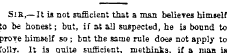
SiB , —It is not sufficient that a man believes himself to be honest ; but , if at ail suspected , he is bound to prove himself so ; bnt the same rule doe * not apply to folly . It is quite sufficient , methinks , if a man is thought silly , to bo satisfied withont publishing his misfortune- to the world .
I shall proceed , Sir , to reply fnlly to your every assertion , first tendering yen my best thanks for having sapplied every deficient link in my chain of evidence against the concoctors of tbe " new move" in general , and against yourself in particular . I commence -with the point which you attempt to make of n > y being a middle-c ' sss man . You Bay , " Whit do you call Mr . Feargus O'Connor ? Is he noi a niidd ' e-ciass man ? What right have you , then , to assume th . it Mr . Feargus O'Connor embodies , in his own person , all the honesty and intelligence of his class ? There are thousands who are desirous of promoting the political and social improvement ef the people , but are deterred from co-operating for the attainment of that oV-ject by the unprincipled conduct o { the conductors of the nori / tern Star . Our Association OPENS THE DO 0 B TO THEM IF THEY ARE DJSPOStD TO EMEU . "
I ^ ow , Sir , I ask you if language can more fully prove the fact of my assertion , that on * , and the principal , obj > -ct of yonr " move" was to get rid of Feargus O'Connor and the norMitrn Star ? Is it not admitted that the dcT which was to let in yonr middle-class coadjutors was to have let out Feargus O'Connor and the northern Star ' Sir , it matters little to what class in society a man belongs ; but , in passing , allow me to correct your
t error . I do noi belong to the middle clasi of society : ; I belong to the aristocracy , as they are called , of my . own country ; and , as I have often boasted , I have been , by hocest service , promoted from the ranks of the ! aristocracy to a commission in the democracy . Suppose that I was a mMdle man , what an anomaly to see Feargus O'Connor , the middle man , straggling ngr . inst his own order for the rights of the poor ; and to ' see , Henry Hetterington , a working man , struggling ' . against the rights of his order !
But , Sir , you forget that our Association also opens the" eloor to ail those of tbe middle class who hones !!}/ join to carry out our principles . Da we obj ct to Mr . Muir , Mr . Ross , Mr . Pitkethly , Mr . Jarues Taylor , and a thousand others ? ~ So : the only differenca is tint these gentlemen axe satisfied with equility ; while yoa require for yoar friends an ascen ' . lr . ncy ; a power in fart , as I shUl prcsenily show , to destroy us at pleas ore . Yon next say" nurV . eriiSlar . instead of promoting the .-uccess cf the Peupie ' a Charter , by endeavouring to heal animosities and promote union among the people , is constantly sneering at all those who have for years been iiiSering for the cause of liberty asi equality . "
Sir , my boast is , that I have been the first man who has ever . succeeded , in any country , in making one indivisible party of that whole class for whose rights a ' one I contend , always premising that by nD means can the rights of the other clisses be guaranteed , while lLose of the labouring classes are withheld ; and , Sir , ca , 1 me what you pltase , this in ycur eyes , and in the eyes \ ii many , very many more , is my gTeat , my surpassing , my oi . ly , my never-to-be-forgiven sin I 1 fvunil the peup ' . e , even in the several towns , split iuto sectior . s , and moved by crotchet-mongers . It has cost me y ~ nrs cf labour to unite them ia one body : but , thank G ^ d , 1 have succeeded J and now divide them who rst : ' '
¦ ¦ Did yoa eTor know ice to w . tLao ! a praise from any n : aa who deserved it . ' Have yoa noc known me to s : ep cut of mj way to bestow it upon unworthy objects , like yeurse ' ives , in the hope of coux ' wg y : > u into the pith , of virtue ' : Is not one of your present most serious charges against the Sl-ir the fact of the Editor having
praised you &li ? Ar . € here , Sir , £ , we me leave to correct an error into which you have falter . You supposo that the Editor of the Star , when writing mildly on the 10 th , was in possession of the facts which I ttated on the 24 th ; he was not , nor oj one of than . He merely learned from me that such a " niuve " was projected ; and although I received an invitation on the 31 st of March to mike one of your Provisional Council , that circular ia yet on my table ; and neverhave I to this moment , otherwise than in my letter of the 2-Jth , informed the Editor of my having received it .
Asain , bear in mind that on the 10 th he spoke as if he supposed the plot would go no further ; when beboid ! on the f » llowing weak it is published in the Sun , with a list of eighty-seven names of persons itaud by the- Homing Chronicle ta possess the confidence of the people ! Did this fact , Sir , not justify his increased vigour in opposing and denouncing the scheme ; a : d when , in the following -week , Mr . O'Cacnell op = aiy supported it , exultingly declaring its otjects , M-iS I not justified—one of those object ? being t » get rid of me , —in speaking with some degree of warmth ¦ upon the subject ?
Touiay : — " The northern SLir now begins to feel the effect of its unprincipk d cv&duct in iU declining ia-
Untitled Article
Sir , it would have been wisdom to wait for last Saturday's response to ray appeal , before you hazarded so very s 5 Hy an observation . I fancy you have felt the annihilation of your own influence . Yeu says" Mr . O > ' 0 onnor is welcome to » the ten imbecile creatures who signed , tha addres * * and then withdrew theia names at the dictation of Feargus O'Connor . "
You mucfehaTe been in a wonderful hnny when you wrote your latter ; because , had jom bestowed one moment ' sthoughtnpon the subject you wooid have foand that every one ol these names waa withdrawn before my letter appea » ed ; but , Sir , if I am , welcome to them , they are mest heartily weleome to ma- ; and if reflection was not sufficient justification for tha step which they hastily took , your letter will hasa afioided them such , and ample . You next say that : —
" Mr . O'Connor may promise Us poor deluded dupes , by a resolution of bis hiuei > Convention , that the ; shall have the C barter in threa months from the present time ; but I a in satUSed it will take a much longer time to move a nation . " In truth , Sir , I believe your greatest satisfaction to consist is the long period which you hoped to pass before the nation could be moved to the attainment of the Charter . But ooe word about the " hired Convention . " Of the ten persons -who compese the Convention , and who were elected by ballot at » public meeting , out of a number nominated at otb . tr public meetings , l > v the
people themselves , I did not oren mention the names of five ; and four of the others , Messrs . Pitkethly , Deegan , Smar t , and Skevington , sat in the old Convention ; bo that James Arthur , of Carlisle , as honest a man as breathes the breath of life , is my only nominee : just as Messrs . Rodgers , Carpenter , Lovett , Cleave , Hetherington , Moore , Yincent , and Hartwell , were nominees of " the Working Men ' s Association" in .. the General Convention ; but with this triJUny difference ,, that I merely recommended him , as a fit person to be nominated , while you would not allow any one else to be put in nomination . And what say you to the six gentlemen who wanted secretly to appoiut a whole provisional Government ?
INow , Sir , I must have a word upon the subject of "despotism and dictation" at this most seasonable time-In the National Convention it vra » supposed that about thirty-three would sit , and that thirty-nine should be elected ; and pray attend to my " dictation" of those thirty-nine . Ycm in London modestly nominated and elected ei ^ ht , barking like bull-dogs at every poor man who dared to sit for any other part of the metropolis . Attwood returned Munta , Edmonds , Salt , Douglas , Hadley , Pearce , and Collins , seven . The Cobbett Club returned three Cobbetts , Nightingale , Wroe , Richardson , Fletcher , Whittle , and Mills , nine ; making of parties
most likely to attend , twenty-four in all . When the Birmingham gentlemen ( will that word suit you ?/ resigned , Coliins cotked up his nose at poor Brown and others , and said that" they did not represent the people of Birmingham . " Now , Sir , to that Convention I never recommended a single man . I was asked , at Hyde , to propose Mr . Deagan , which I did cheerfully ; and would again , after tnj trial of him . While the elections were going on , —Cpray mark this proof of my "despotism and dictation . '" ]—Mr . Lovett wrote to a member of the London Working Men ' s Association , then at Hull , and in hi * letter was the following passage ¦ . —
" We hare decided upon sending to Norwich , to oppese , Feargus ' s man , to counteract his project of filling the Convention with hiB creatures . " Now , Sir , -who is the despot , and whose teas the hired Convaitiin 7 1 never saw a man from Norwich , to my knowledge . I never was in Norwich . I never wrote to a man in Norwich . I never heard from a Norwich man . I never canvassed a man for a vote during the whole time I was a member of tbe Convention , except fer Hiy own motion , to remove the Convection to Birmingham . Who can say that I did , or that I ever used any , the slightest influence beyond recommending the return of working men to the Convention , and in healing every difference and dispute in Convention ?
Sir , I now come to my case . With even such a Convention , constituted as I have stated that of 2839 to have been , you would not have dared , two years ago , to have proposed Household Suffrage and Triennial Parliaments , even to that Convention ; so that we stand thus : —In 1839 , you and I were parties to a compact , by which we Btood pledged to the nation to do a certain thing ; you violate the compact after two year's agitation for it , and I abide fimily by it . Have we , Sir , derived no greater benefit from our two years ' increased knowledge than to fall back twenty in our course ? Who is now tbe traitor ? The man who insolently confesses his violation of trust , or tbe man who offers to surrender his tffic © rather than violate that trust ?
Now , Sir , I corae to the ( to me ) most valuable part of your letttr . In niy address of the 24 th , I say : — " 1 have tbe evidence of a gentleman , of a gentleman of wealth , of honour , and of Rtation , that this Dew mora' was concocted at Mr . Hume ' s , by Mr . Hume and Mr . Francia P , ace upon their part , and by some of tbe signers of the new prospectus upon YOL'U Part . ' I Lave it , that ' it was to be dono while I was in prison , as it could uol be effected if I was at large . ' I have it , that its object was to ' tffect a ' fusion' of the middle and the working cbsses for tbe attainment of Huusvhu ' . d Suffrage . ' I have it , that after the Leeds Mttting it was considered necessary to hold the promulgation of the scheme in abeyance , until a ' suitable name' waa decided upon , aud uutil the principles were agreed upon . "
This statement you indignantly repudiate , and ask for the name of my witness . Sir , if I was a BhufSer , I should now say Heury Hetherington is my witness : but I do not . I pledged myself to name him ; but you have gone farther , inasmuch as you have proved every word I asserted , and much more . Just let ma bring Henry Hetherington into court , not for cross-examinntion , but merely to read over his own depositions in his presence . You say ;—" The euitor of the northern Star , through ignorance , is confounuing that which emanated from Lovott and C ) : lin- ' s ' CHARTISM , ' with . in Association projected , aii-l then a !> out to be formed , by Dr . Black , Mr . P . ' aca ,
; inii others , among the liberal and enlightened of the middle classes , to adopt and carry forward Mr . Hume's p ' au of Household and Lodger Suffrage , Triennial Parliaments , Yotiug by Billot , No Property Qualitication , Pa . yun . nt of Members , aad Equal Electoral Districts . The intention was to farm an Association exclusively of the middle class , that would co-operate with the Chartists iu all j'ist and laudable measures for extending the rights and liberties of the unenfranchised millions , and in improving their intellectual , social , and moral condition . Mr . Hume , an 4 thoss who act with him , thought that the working classes might be inclined to adopt eh large a measure ef reform—little less , in fact , than the
whole Charter—if it were fairly and honestly submitted t-o their consideration , and wished to ascertain whether the Chartists would join an Association formed for the purpose of carrying Charter Suffrage , without adhering to ilie- name of tiie Charter . He requested aa interview with Messrs . Lovett , Cleave , Waison , HetheriDgton , Collius , and Vincent . The two latter not being in town , could not attend ; but had a subsequent interview with Mr . Hume ou tho subject . Turee of the former , Lovett , Cleave , aud Hetherington , attended . Lovett and Cleave would not yield the name of the Charter—they thought that Mr . Hume ' s Lot . gtr
Suffrage was a large advance towards the Charter , but ¦ would not consent to aid a new agitation for anything less than the Charter , or for anything not bearing the name . I differed with my friends , and thought Mr . Hume ' s preposition so good and so extensive , tbat , Ihi / ugh 1 ffou \ tl never abandon tho agitation loi the Charter , if 1 saw any prospect of cairyicg Mr . Hume's plan immediately , I would give it my best exertions , as I considered it , in fact , tho Charter with another name . Messrs . Lovttt and C ^ ave both Stt their faces against the plan , as did also Collins and Vincent ; and Mr . Hume then said that nothing could be done , and both parties must , therefore , take their own course . "
Sir , are you now tatirfied either that I had the information which I professed to have , or that 1 am a witch ? What do I say ? " I have it , that this ' new move" was concocted at Mr . Hume ' s , by Mr . Hume and Mr . Place , upon the one part , and by the siguers upon the other part . " What do you say ? "He ( Mr . Hume ) requested an interview with Messrs . Lovett , Cleave , Watson , Httherington , Collins , and Vin-Ce-nt . The two latter not being in town , could not attend , but had a subseqvest interview with Mr . Hume ON
THE SUBJECT . Above , you admit , that Mr . Place and also Dr . Black , were two of the negotiators , bat you shuffle about distinct Associations ; bat do you not corroborate the testimony of my informant here to a nicety ? Again , I 6 ay , "I have it , that it was to be O . onc while I was in prison . " Now , Sir , connect this with what is to follow ; but , moro especially , with your deciaiation , that your Asi * oution would open the door for all taw of the middle el « s whom tu « Star wow
Untitled Article
excluded , and also with Mr . OConnell ' s declaration in Dublin a » to the primary object of the Asaociotion I say , I have it , that the object was to effect a fusion' of the middle and working classes for the attainment of ! Household Suffrage . '" I quoted " fusion , " as you wilt gee by reference to-, my letter . I did so , because- it -was tho very term used by my informant Now , SJjv how do you contradict this ¦? Why , by saying thatit was fer Household Suffrage and Triennial Parliaments ; and how do you exonerate yourself ? Why , by saying that you , alone , agreed to join upon the terms , © ive me leave , now , to-ask you if you dare to call youwelf a Chartist ? Why , Sir , the Leeds Association went for Annual Parliaments ; but you ate satisfied ¦ with Triennial .
I furthee Bay that tho promulgation of the plan was held in abayance until a " suitable name" waa agreed upon , and * until the principles were decided upon . You see that I quoted suitable names also . Now , Sir , at once ca \ l me prophet , or confess your guilt . Hew , in the name of common sense , could I have protested so minutely , and how could the evidence of one witness more satisfactorily corroborate that o £ another , than you do tbat ot mj informant upon thia vital point Let us jjist have your words : —
^ " Three of the former , Lovett , Cleave , and Hetherington , attended . Lovett and © leave would not yield the NAME of tho Charter : thuy thought Mr . Hume ' s lodger suffrage was a large advance towprds the Charter , bat would not consent to . aid anew agitation for anything less than the ChMter , or for anything not bearing the name . / differed voith my friends , and thought Mr . Humes proposition so good , and so extensive , that though I wou'd never abandon the agitation [ oh thou virtuous humbug ;] fer the Charter , if I saw any prospect of carryivg Mr . Humes plan immediate ^ , I would give it my best exertions , as I considered it in fdd , the Charier with ANOTHER NAME . "
Now , Sir , live for ever , and get over that if you can . What ! then , you have always considered the Charter but a thing of sound , and the real meaning was Household suffrage and Triennial Parliaments } I pray you what now becomes of the sophistry with which you commenced your paragraph , of the Editor of the Star ignorantly confounding the two Associations ? Have we not here two distinct parties , Mr , Hume upon the one part , and Lovett , Cleave and Hetherington upon the other parts ; shuffling , huxtering , tricking and scheming how you can , —( for you ere the worst ) , —by a specious trick of merely giving a plausible " name " to the " move , " direct publio attention from the real object !
Need I make a comment more upon this paragraph of your letter ? Yes , I will . You know , perfectly well , that there is no such thing as any party in Englaad advocating Household Suffrage for any other purpose than to get possession of all out ready-made machinery for carrying Universal Suffrage . You know that those with £ 10 qualification , consider all under as too low a standard , and those with £ 100 qualifications hold tbe same opinions as to all below their standard . You know tbat every Chartist in England would be rejoiced at any extension of tho Suffrage in which they were not compelled to sink ] the only just one , by joining for a clap-trap ; and yet you insolently tell us that you look upon Household Suffrage and Triennial Parliaments as the Charter , ia all but the NAME .
Sir , had I put my name to your letter my life would not have been safe ^—it positively would not ; while you will not be at all injured by it . YThat inference do you draw from thia fact ? That you are more popular , and may resort to stratagems which I dare not himrd ? No , no such thing . But that the people are not at all astonished nt your desertion , expecting no better from you when the tug came ; while upon me they have reliance ; hence my popularity will be found to measure in exact proportion to what my punishment , upon proof of my delinquency , wuuld be . The people would have no mercy upon me if convicted of treachery ; and therefore do they justly conceive , that in my many trials and contests with you and your friends I am entitled to their warmest support . Hence , their love for me , and hence my gratitude to them .
" Ignorant" as the people are , do you suppose that all the hired ingenuity in England would reconcile the above traitorous paragraph to twenty Chartists throughout the land ? Try it , and then experience will have convinced you . Now , I pray you attend to the summing up of the evidence .- —Before Christmas I inform the Editor of the Star of a certain * ' mova" which is to be made . In January , a great Household Suffrage meeting is
convened at Leeds . Mr . Collins is invited , and refuses to attend . Mr . Francis Placo iubsequently writes a letter to Mr . Collins advising him to attend , for the purpose of forming a union between the two classes . Mr . Collins and Mr . O'Neil attend , and endeavour to have all the resolutions , and the Address to the Queen proposed by the Committee of the Working-men ' s meeting , set aside . They coquette with the enemy . They denounce the Committee . They are to be found running like pet rabbits in and out of the Times office—the organ of the
Association . Ou Thursday , Collins attends a meeting of the people at which resolutions denouncing Ministers are passed . On Friday he dines with Mr . O'Connell , and the Association , at a 7 s . 6 d . dinner , and drinks the health of those Ministers , and backs the objects by a speech , which is published in the Leeds Times ; and- when attention is pointed to one of his declarations at that dinner , it is attempted to bo qualified by Collins ! Collins , in reply , a * ksus ( in the very terms of your own observation , ) to point out the difference between Household Suffrage , as he pleases to define it , and Charter Suffrage . Upon the day after the dinnor at Leeds , a meetinj takes place in the Rotunda , whero Messrs . Hume , O'Connell , and Roebuck , delivered themselves as follows : —
" Mr . Hume submitted a definition of what he considered Household Suffrage ought to be , which was to be taken into consideration by the association . He stated that the leading men of the working classes generally concurred in the definition , and had prowiised to give tlieir assistance , were an agitation for such a Household Suffrage to be set ou foot . " Mr . O'Connell cordially concurred in the suggestions of Mr . Hume . He considered it as of the first importance that the reasonable portion of tho Chartists should be got over to the aid of the rational Reformers . He urge *! the necessity of eorue central body being established in London , for the diffusion of knowledge upon political subjects . The public mind should be saturated with facts btaring on tbe present gross defects in the representation of the people .
" Mr . Roebuck said that such a body was at present in contemplation in London , and he trusted that it would very speedily be set in operation , so as to act in concert with the Leeds Association . " Now , Sir , here we have Mr . Hume stating : — " That the leading men cf the working classes generally concurred in his definition of Household Suffrage , and bad promised it their support . " Mr . Roebuck said that : — ' An Association was being formed in London , for the purpose , and would , he trusted , bo vary speedily set iu operation . "
After this , Sir , your battle must ba with Mr . Hume and Mr . Roebuck , and not with me . He says the leaders have concurred , while you and your friends are the only leaders who appear to have had anything to do wilh the subject ; so that I call upon you to contradict Mr . Hume flatly , or call upen him to say who were the parties , if you and your friends were not . Subsequently to this came the negociatior . s—aye , subsequently and negotiations : —for Uicre were iu * o ! Previous' *) io the first Vincent was in prison , and he attended at the second ; but the Leeds meeting not having succeeded according to Mr . Collina ' s instruction , the thing was placed in abeyance for christening .
Thus , then , is it not clear that in the beginning of January you were in diplomatic confederacy with Messrs . Hume and Place ; that you wera subsequently confederated in February j that you sent outyeur address in March ; and now observe that Mr . O'Connell , before it was published in any paper , announced the very terms of your agreement with Mr " . Hume , according to the precise terms of you * own letter ; but not one word of this is mentioned in your circular . He says your object is to agitate for Household Suffrage and shortening the duration of Parliaments .
Piay , Sir , keep tha latter object in view , and connect it with your adhesion to Triennial Parliaments . Then , Sir , to this add the fact of Mr . Place being the author of a bugaboo document signed " An Old Chartist , " and extensively circulated among the " leading Chartists , " to whom yonr Circular was sent ; and bear in mind that it was circulated just before the Leeda meeting . The object of that docunisnt waa to scare all from any connection with the old and established move . Then , Sir , add the fact of TiHmau , the Secretary of the National Association . recflUing letter * from PIaco , Lorett ,
Untitled Article
Collins , Richardson , and others , " plaguing his life iout , " to use his own term , about the " illegality . " Then iadd Mr . Collins and Mr . O'Neil ' s absolate refusal to ; allow a delegate to be appointed to consult with their fellows in Manchester , upon the very subject upon : which they professed to hinge their only objection . , "Bhen , Sir , add the fact , that on the 20 th- March , Mr . Roebuck did me the honour to call upon n » , and that he then told me that an Association was about being formed . I replied , that one was already fanned . He answered " Yes , but there- are some
apprehensions aa to its legality . " I rejoined , ' Of course no law will legalize a Chartist Asaoeiation . " MX . Roebuck laughed , and said , " It looks very like it , " and added , " They have sent me the rules of their new Association for Riy opinion . " Connect this with Mf . Collins' admission that HE had spplied to Mr . Roebuck for his opinion , and then say if aay doubt remains as to the identity of the persons named by Mr-Hume and Mr . Roebuck at Leeds , and Mr . O'Connell in Dublin , and to an object agreed upon , but not set forth in your address . Who told Mr . O'Connell ?
Now , Sir , I charge you , upon your own evidence , with having entered into negociation with certain parties , without any authority whatever from the people . I charge you with having , in that association , compromised every single principle contained in tho Charter . Sir , you are very "ignorant . " You speak of Household Suffrage and Triennial Parliaments as being the Charter . You are not capable of understanding that even
Universal Suffrage would be robbed of its master quill by attaching so long a lease of office as three years to it . You don't understand that our six principles are all necessary features ; and aa well may you cut off your nose to add to . your beauty , sr extract your teeth to make you a greater bite , as hope to preserve the essence and principles of Chartism by substituting Household Suffrage and Triennial Parliaments for Universal Suffrage and Annual Parliaments .
I charge you with having issued a circular with the avowed object of carrying the Charter , while the secret and real object was to destroy our cause , and the a compromise our principles . I never will submit to the Thompson doctrine that even if deceived the people are no worse off . I deny it It has been by such freaks of fancy that tyranny has been so long up-held in Eugland . Tbe people are always brave enough , informed enough , determined and able enough to beat the oppressor ; but hitherto they have been invariably beaten by the friend , just as they were about to triumph over the foe . TJ 1 EV NEVJiR SHALL AGAIN AS LONG AS I LIVE I
I go on . I charge you with having invited profligate humbugs , as members of your provisional government , to carry out your virtuous principles . You ask me to name . I do—a name that strikes terror into your coward soul—Feargus O'Connor . You invited ME as a fit and proper person to carry out your objects , while you say tbat " The ciuse of Chartism is ts be sacrificed to the private and purs jnal malignity of two as great political humbugs as ever figured in the political arena—Daniel O'C ^ nnoll and Feargua O'Connor . "
Now , Sir , have you invited Mr . O'Connell by circular f and which we must suppose you did , although you denounced him , with just as much propriety as you have invited me , whom you also denounce . You may have made him a party to your scheme , and then have denounced him , jugt as you have thus characterised one of your " chosen " government as one of the greatest humbnga that ever figured in the political arana ! Pray , Sir , what sort of moral teaching can you expect from masters thus chosen for the administration , of publio education ?
You speak of " being at work in the cause before [ was heard of . " Very flue , Sir ; but does that afford any protection to Daniel O'Connell , ( who has been at it since before you were born , * from your just and wellmerited censure ? I should pity that army , Sir , wherein length of service alone constituted worth . And then , as to sacrifices . Believe , me , I never should have mentioned the word ; but as you have , I may be allowed a passing observation . Had your conduct been consistent J should have said that you hod risked much in the lottery of principle , and had drawn a prize ; but , Sir . asyou have written yourself down as an apostate , you must pardon me for designating your sacrifices as the offerings of toil and dependence at the shrine of ease and independence .
Now , Sir , I come to the most important part of my letter . I mean the " next move" that is to be . You have endeavoured to sell us all neck and crop ; and , having failed , your next attempt is to turn the guns upon my battery , against myself , in order that you may hereafter say : — "Ah , there now , see what O'Connor has done ; he baa caused all this disuuion ; he has divided us ; he has broken us up . " From what do I infer thia ? From two sources . Firstly , because you have done it many times before ! aud , secondly , because your letter contains these words : —
•* The Northern Star , instead of prosecuting the success of tho People ' s Cmmer , by endeavouring to heal animosities , and promote union among tbe people , is constantly sneering at all those who havo for years been suffering for the cause of liberty aud equality . " Sir , this is false , from the beginning even to tbe end ! prove it ! You remind me of the passionate master , who cut his knuckles against his servant's head , and then kicking him , exclaimed— " d n your hard skull , it has cut my knuckles . ''
Now , Sir , when next you write upon this subject , pray be consistent , and say— " d n the Star , we have exposed ourselves in it" But how could the Editor of the Star heal animosities of which ho knew nothing , and of which you and your party have been tha solo originators , as I now proceed to prove , and not a word of wiich has even the Editor ever before heard from me ? Sir , pray attend to the following brief statement of facts . On Tuesday next , I shall have been eight years and a quarter before the English people . Upon the 4 th of February , 1833 , I entered the House of Commons . I sat three sessions in Parliament . I have been five years and eight months an unpaid missionary , and founder of hundreds of associations . I have been
three yeara and six months proprietor of the leaning provincial journal . I have sat six months in the Convention . I have been the whole time before the public ; and now , Sir , I challenge you , —not to charge me with a chain of errors , or with a smothering heap of inconsist . encies—but I defy you to charge me with one , even one single dishonest , inconsistent , unpatriotic , mean , or ungentlemanly-like act , during the whole period ; one , even one . Now , Sir , rather than cause any disunion , mark what my conduct lias been during that period . In 1835 I established the prs-at Radical Association . We became so powerful , that in the next year we insured the return of the Dorchester labourers and the reduction on newspaper stamps . In the following year Messrs . Hume ,
Place , and yourselves , established the Working Man ' B Association , for tbe mere and only purpose of putting us down . What was your first net ? You paid missionaries to every town where I had established a Radical Associa . tion , toconvert it into a Working Man ' s Association . It was a change ; and changes always retard . This " move ' was precisely analogous with what the present was in . tended to have been . Well , from 1836—from your incorporation till tlie Convention met—youmado London a common sewer of Whig corruption , not daring to avow Wbiggery openly , but alwaya opposing Toryism . You were dragged into opposition to the Poor Law , and by main force . What , in the name of the devil , did your humbug Association ever do beyond frightening the real working men in London from tbe cause from your incorporation to your present " move ?"
Well , Sir , from that day to the present , it has cost me hundreds of pounds to defend myself and my cause against you , by increased entrgy , rather thaa run the chance of creating the slightest breach by publio denunciation . You have run your race , Sir ; and therefore ou may be judged ; wait till I have run mine before you censure ; and if I bolt , or run at the wrong side of the post , as you have done , then do you as I have , summon Feargus O'Connor as evidence against me , as I have coavicted you upon the evidence ef Henry Hetherinjtoiu
A reconsideration of tho past astounds ; ne . For years you of tho old Association have passed for patriots . In what consisted your title ? If y « u had an entertainment , who were your guests , aud who your chairman ? Whig Members of Parliament If yon had a meeting , whtre did you hold ii , and who were your speaker * f At the Crown , * n d Anchor , which you
Untitled Article
could at any time procure , never lacking thirty guinea to pay for it ; while I was obliged to gc to pot-housea and wherever I could . Again , why were M . P . 's yeur speakers , and movers and seconders of resolutions at these meetings . You were anti-Tory , and Bufficiently anti-Whig from , the teeth out , to impose upon the confiding working men ; but you endeavoured to prevent me and others from speaking at every one of your palavers , for fear of hurting Wbiggery . Then , as to suffering : Sir , I deny that any length of suffering can justify the smallest renuniciation of principle , but , on the contrary , the " poltroon" wh » seappe tite for satisfaction it does not whet is a slave .
Bat , let us have a word which you never should hava heard hut for your " moye . " For what did Lovett and Collins suffer 1 For a resolution which , if not made matter of persecution , would not have been noticed ; but what was my conduct when the danger was attached to it , after their arrest ? Why , on my arrival at Birmingham my first motion was to move it again , and for evsry member to sign it What was xaj next ? To offer to pay one hundred guineas towards Sir C . Wetherill ' s special fee to go to Warwick , if the Convention would pay the remainder . What did the trial of Lovett and Collins cost the country T How
much think you of the £ 200—all that was subscribed for the defence of all ? Why , about £ 4 M , in Delegates and Missionaries , and God knows what ; and hew have they repaid us ? Why , ona by walking off from the men . who longed to do him honour upon his release , assigning as a reason that be owed the Government some £ 69 " for advertisement duty , " while the same Government would ' nt allow me to owe them 2 d ., and the other by conspiring to destroy us . Will I owe the Government any money , or owe their friends , Lord Brougham and Mr . Place , sufficient gratitude to induce me to refuse the invitation of the men of York , on my release , think you ? No , faith !!
Then , Sir , as to your suffering , and their suffering . Just bear in mind , that I am tho only man who ever haa been in solitary confinement for libel since England WuS first peopled . Sir , you appear to forget that I am now in the thirteenth month of that state of barbarous punishment ,, which is the greatest that Visiting Justices can inflict upon the moat refractory convicted felons for one fortnight You don't know , perhaps , that if Mitchell , the murderer , misbehaved in York Cistle , that his greatest punishment would be to be put , without any change of diet , for one fortnight in that cell in which I have now spent twelve months Perhaps , Sir , you are not aware that every letter to and
from my family and friends , is » pened and read before I receive it , either by the Governor or his underlngs ; perhaps you are not aware , that even yet , I would not be allowed to write one line for publication in the Star , and that every word I have written has been smuggled out Perhaps Sir , you are not aware that I am locked up all day , and every day alone , and in one of the condemned cells of York Castle . Perhaps , Sir , you are not aware that when Mr . Roebuck and the Honourable Mr . Wortley visited me , that they could not remain for more than about five minutes , that they were literally smoked out ; that Mr . Roebuck cried
" shame , " ^ shocking , " "disgraceful , " " abominable ;" but I have not seen & word of commisseration for me , while I have read columns for Lavett and Collins . Well , Sir , what has my seclusion from the world taught me ? It has wedded me to my principles . It has given me time for reflection upon the past and to consider of the future . It has taught me the value of an honest , upright character . It has convinced me of the value of those for . whom I struggle . It has proved to me that my exertions have not been thrown away ; and it has determinod me to die or conquer for those who have so nobly stood by me .
Sir , before I commence with the recital of the many annoyances to which I have been subjected , and the conspiracies wbich have been formed against me , allow me o " nce more to thank you for your very foolish letter . Withont your simple confession , so unlike your usual caution , much Weight of proof would have been imposed upon me , and the extent to which the conspiracy was carried might have remained for ever shrouded in obscurity ; but you Lave brought it all to light ! and now what must be the joy and satisfaction of the secedera , at being furnished with so strong & justification for what you are pleased to call their imbecility !
Now , Sir , one word upon physical force , and then I shall conclude by laying before the public a series of conspiracies , persecutions , and sufferings to which , for years , I h ' avo bcon subjacted , without once complaining ; proving , from documentary evidence , that my life , my property , and my honour was assailed by hired assassins and spies . I speak only of what I can prove ; and when I conclude , Sir , I shall indeed be dear to the people . When speaking ot physical force , then , ju 3 t bear in mind that " , from the 18 th of September , 1835 , till the 4 th of February , 1 S 39 , I did the whole agitating work
single-handed , and alone ; and that during those yeara of excitement not one man was brought before a magistrate charged with a single crime ; nor was the term ever once mentioned at a single mesting . However when you ; and a parcel » f rascals , imposed j ourselves upon us , with your " sharp shooters" and ? ' rifle clubs , " and " patterns of muskets , " and " cold lead , " and " cold steel , " the whole course of events was turned topsy-turvy ; and every one of you deserted , leaving me to bear your burden ; while , though I never mentioned the word before the people , yet did I , upon three occasions , justify the U 3 e . of physical force , before the judges of the land .
Who were the three most physical-force men in the Convention . ' Lovett , Collins , and Hetherington . Lovett said , in answer to my objection on the score of illegality to bis manifesto : " Well , I kaow it is illegal ; but what of that ? we must break the law before we can' alteii it . " Pretty well , methink . % that ! for a gentleman now so squeamish !! Collins said , in my own pressnee , that " the firsfc Chartist arrest would be the signal for arresting every aristocrat and magistrate in Warwickshire ; " and
Henry Hetherington will Tefer to his own notes in the Poor Man ' s Guardian , for his peaceable conduct ; and he will perhaps say who it was that declared he " had proparad and had reaiy for imiuediato distribution , alist of all tho Gurwnakerd and Arms-dealers in tho Metropolis , which list was to act aa a guide to the people where to go for arms , in the event of a turn up ; " and who also said that " even if this list should be found by Government before it was so used , they could make nothing of it , as it was so arranged as to appear to be part of a General Directory , which it was not an uuusual thing for a Priutar to be engaged in the production of ?"
Sir , let your own inso'enco , in sending such a letter to the Star for publication , speak for tha independence of that paper ! Would you dare , they being the subject , to send it to any one of your three middle-class friends , Ea&thope , George Henry Ward , or Mr . Young , for publication- ? Pray , Sir , when have you before seen a paper publish even resolutions abusing , reflecting upon , and condemnatory of , both proprietor and editor 1 Out upon you ! you know not the meaning ef indepsndence . Yours , &c- » FEARGUS O'CONNOR .
Untitled Article
Liverpool , Tuesday . —We ate still without any news of the Bteam-ship President , now 54 days since she left New , York . Nothing ia known of her since she was seen ' by the Orpheus on the 12 ih , the dayafter sho leit the port . Courts oe Justice . —Extracts from an account of tho sums paid to Officers of Courts of Justicem Great , Britain and Ireland out of the Consolidated Fund in the year ended the 5 ± January , 1841 :-E . xglasd—The Chief Justices of the Court of Queen ' s Bonch and Common Fleas , £ 8 , 1-00 each , iho Master of the Rolls ami tho Chief lUron of the Court of Exchequer , £ 7 , 000 each . Mr . Justice Patteson , ^ 5 , 500 . The other Puisne Judges £ & 000 each . The expenses of the Mounted Police , the River Police , and Police-van Service , with the horse and foot
superanuation allowances to toatrol . £ 20 , 000 . Towards defraying the charge of tbe Police of the Metropolis , £ 70 , 289 . The two Commissioners of Police , £ 1 , 200 each . The Judge of the Court of Admiralty £ 1 , 670 . By way of compensation for loss of fees in the Court of Queen ' s Bench , Lord Ellenborough receives £ 7 , 700 , tha Hon . Charles Law £ 1 , 000 , Hon . Thomas Kenyon £ 5 436 and Lords Ellenborough and Kenyoa £° ' ' l 7 s . ii . Ireland . —Lord Ctianeellor £ 8 , 000 , Master-of the Rolls £ 3 , 965 , Chief Justice in the Court of Queen ' s Bench « . £ 5 . 074 , in the Common Pleas £ 4 , 612 , the Chief Baton £ 2 , 121 . The salaries of the nine Puisne Jud # oa average about £ 3 / 88 each . Scotland . —Peemdeut of the Court of Session £ 4 , 800 , Lord Justice Clerk £ 4 , 500 , and the tea minor Judges £ 3 ^ 00 04011 . The Court of Exchequer in Scotland was abolisb&d seme years ago .
Untitled Article
Nay , if Mr . O'Connor ' s Association out-numbered the anny of Xerxes four or five hundred firm and honest men would defeat and rout th « nughty host , if it were composed of such men as these ten secedera . In" conclusion , let me ten
The northern S . ' ar begins now to feel 11 , e effects of its nnprircipled condaet , in its declining iEflaence ; and hence its angry denunciation of tbe " New Move . " Mr . O'Connor and his Editor may sneer at political education , but a glance at the Star will show its absolute necessity before any good cin be accomplished . Mr . O'Connor is welcoae to the ten imbecile ereatures who signed th « Addresa , and then withdrew tbeir names . Do they not require instruction ? When & time of trial or persecution aroes , who would trust th » ten poltroons who withdrew tbair names from the admirable Address of Lovett , Collins , and thers , at the dictation of Feargus O'Connor ? Who would expect -rittory in any cause with an army of ten thousand such men '
ttmd alone , I will resist your atiempt to coerce me int * a submission to your will against my better ; ulgment , while I have a mind and a will of my own . If 1 aia compelled to yield to despotism , it &hall be intellectual and powerful despotism ; not tbe ignorant , mean , pitiful , despotic tffurts roado to crush the free expression of opinion , aud the honest aud safe combination of good men in a just cause , by tbe despicable poltroons who manage the northern Star . I , as one of the signers of Lovett and ColiinVa address , will extrt myself to the utmost to carry it into successful operation ; I despise the fellows who would attempt to injure me for acting upon the hontst dictates of my oNrn judgment . I laugh at their impotent threats ;
bat at any public mesting of my impartial and honest feilow-conntrj-men , I will defeuti the principled and objects of the address , and its superiority over the O'Connor plans , if fairlj and extensi vely adopted by the working classes . Mr . O'Connor may promise hb poor , deluded dupes , by a resolution of his hired Convention , that they shall have the Charter in three months from the present time ; but I am satisfied it will take a much longer period to move a nation . If he cfiuld obtain the People ' s Charter within the time specified , of what ase would it b < i , if the people were not better prepared to appreciate it tlian the ten speeders who erased their namts through fear of Mr . O Cjnnor and his hired tools ? If th- people had the Charter to-morrow , and were destitute of a knowledge of their political rights and duties , ho- * Ion ? would tb > y retain their liberties ?
Bnef would be the tenure » f possession ! However , those who really seek the liberty , prosperity , and happiness of the people , from a pure motive , sire not easily crushed by unprincipled men like the inan&gera of the northern Star . 1 have no doubt the honest and undoubted signers of Lovttt and Collins ' a Addrtss wiil zialously pursue tfceir object Let ua not be diverted or iutini da \«* L If we have but one or two hundred firm inteligent men , properly alive to tbe importance of tbe objects we Betk to accomplish , great gsod will be effected ; but no good can be accomplished where men prostrate their minds before a would-be despot , who would use the public press for vile and selfish purposes , and to crash men who have maintained the principles of the People ' s Ctarter , for many ytais bvfore h « ¦ bis ever beard ef , and who have never done one aci to dishonour the cau 9 e they espoused .
I ' am , Sir , a hater of dtspotism , whether exercised by Tury , Whig , or Radical , H . Hetiieiuxgton .
Untitled Article
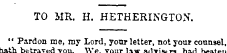
TO MR . H . HETHERINGTON . " Pardon me , my Lord , your letter , not your counsel , hath betrayed you . We , your law advistrs , had beateu down the load oi evidence produced , till the court called you up in judgment against yourself ; and so conflicting waa the testimony between your Lordahip ' B two noble selves , that we , your counse ] , knew not wliich "was our client , ¦ whether y ^ ur Lordship's villany or your Loriship's folly . "
Untitled Article
THS ItfQR ^ HBR . JSF STAR . 7
-
-
Citation
-
Northern Star (1837-1852), May 8, 1841, page 7, in the Nineteenth-Century Serials Edition (2008; 2018) ncse.ac.uk/periodicals/ns/issues/vm2-ncseproduct854/page/7/
-