On this page
-
Text (2)
-

718 ¦ THEIEA DEB. [No. 435, Jtjiy 24,185...
-
THE AGE. The Age; a Colloquial Satire. B...
Note: This text has been automatically extracted via Optical Character Recognition (OCR) software. The text has not been manually corrected and should not be relied on to be an accurate representation of the item.
-
-
Transcript
-
Note: This text has been automatically extracted via Optical Character Recognition (OCR) software. The text has not been manually corrected and should not be relied on to be an accurate representation of the item.
Additionally, when viewing full transcripts, extracted text may not be in the same order as the original document.
A Month In Yorkshibe. A J/Onf/T In Torks...
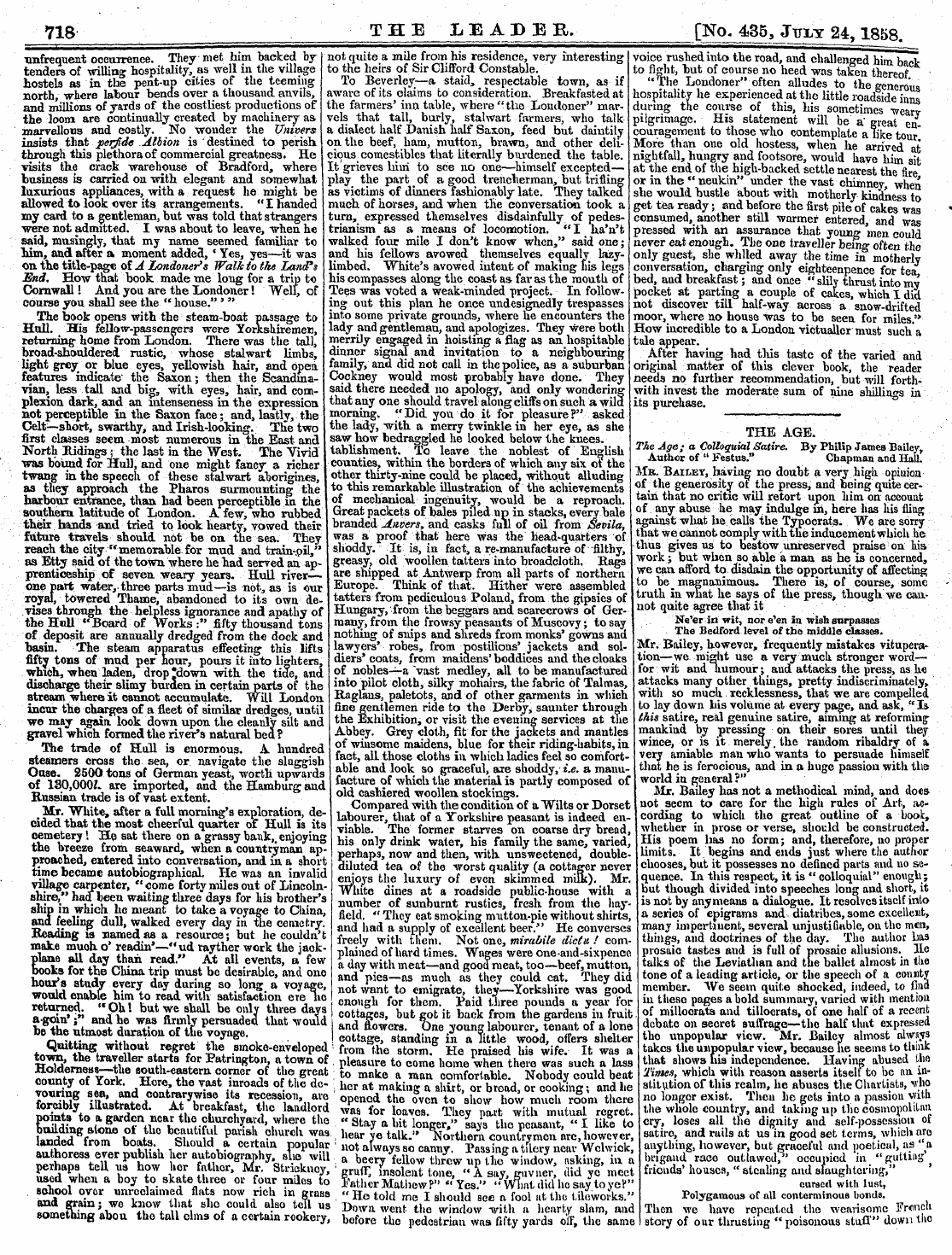
nnfrequent occurrence . They met him backed bytenders of willing hospitality , as well in the village hostels as in the pent-up cities of the teeming north , where lafcour bends over a thousand anvils , and millions of yards of the costliest productions of the loom are continually created by machinery as marvellous and costly . No wonder the Univers insists that jaerfide Albion is destined to perish through thus plethora of commercial greatness . He visits the crack warehouse of Bradford , where business is carried on with elegant and somewhat luxurious appliances , with a request he ' , might be
allowed to look over its arrangements . " I handed my card to a gentleman , but was told that strangers were not admitted . I was about to leave , "when he said , musingly , that my name seemed familiar to Mm , and after a moment added , ' Yes , yes—it was on the title-page of A Londoner's Walk to the Land ' s End . How that book made me long for a trip to Cornwall ! And you are the Londoner ! Well , of course you shall see the " house . " '" The book opens with the steam-boat passage to Hull . His fellow-passengers were Yorkshiremeii , returning home from London . There was the tall , broad-shouldered rustic , whose stalwart limbs , light grey or blue eyes , yellowish hair , and open
features indicate the Saxon ; then the Scandinavian , less tau and big , witt ^ eyes , hair , and complexion dark , and an intenseness in the expression not perceptible in the Saxon face ; and , lastly , tlie Celt— -short , swarthy , and Irish-looking . The two first classes seem most numerous in the East and North Hidings ; the last in the West . The Vivid was bound for Hull , and one might fancy a richer twang in the speech of these stalwart aborigines , as they approach the Pharos surmounting the harbour entrance , than had been perceptible in th . e southern latitude of London . A few , who rubbed their hands and tried to look hearty , vowed their future travels should not be on the sea . They
reach the city " memorable for mud and train-oil , " as Etty said of the town where he had served an apprenticeshipi of seven , weary years . Hull riverone part water , three parts mud—is not ., as is our royal , towered Thame , abandoned to its own devises through the helpless ignorance and apathy of the Hull " Board of Works : " fifty thousand tons of deposit are annually dredged from the dock and basin . The steam apparatus effecting- this lifts fifty tons of mud per hour , pours it into lighters , which , when laden , drop "down with the tide , and discharge their slimy burden in certain parts of the stream where it cannot accumulate . Will London
incur the charges of a fleet of similar dredges , until we may agaia look down upon the cleanly silt and gravel which formed the river ' s natural bed ? The trade of Hull is enormous . A . hundred steamers cross the sea , or navigate the sluggish Ouse . 250 O tons of German yeast , worth upwards of 130 , 000 * .. are imported , and the Hamburg ; and Russian trade is of vast extent . m White , after a full morning ' s exploration , decided that tlie most cheerful quarter of Hull is its cemetery 1 He sat there on a grassy bank , enjoying
the breeze Irom seaward , when a countryman approached , entered into conversation , and in a short time became autobiographical . He was an invalid village carpenter , " come forty miles out of Lincolnshire , " hadleen waiting three days for his brother ' s ship in which he meant to take a voyage to China , and feeling dull , walked every day in the cenictry . Beading is named as a resource ; but he couldn't make much o * readin * —" ud rayther work the jackplane all day than read . " At all events , a few books for the China triD must be desirable , and one books for the China trip must be desirableand one
, hour ' s study every day during so long a voyage , would enable him to read with satisfaction ere no returned . cc QUI but we shall be only three days a-goin' ; ** and he was firmly persuaded that T \ rould be the utmost duration of the voyage . Quitting without regret the smoke-enveloped town , the traveller starts for Patrington , a town of Holdernes «—the south-eastern corner of the great county of York . Here , the vast inroads of the devouring sea , and contrarywiae its recession , are forcibly illustrated . At breakfast , the landlord points to a . garden near the churchyard , where the building stone of the beautiful parish church was landed from boats . Should a certain popular authoress ever publish her autobiography , sue will perhaps tell u $ how her father , Mr . Strickncy , used when a boy to skate three or four miles to school over unreclaimed flats now rich in grass and grain ; we know that slio could also tell us something abou the tall elms of a certain rookery ,
not quite a mile from his residence , very interesting to the heirs of Sir Clifford Constable . To Beverley . —a staid , respectable town , as if aware of its claims to consideration . Breakfasted at the farmers' inn table , where " the Londoner" marvels that tall , burly , stalwart farmers , who talk a dialect half Danish half Saxon , feed but daintily on the beef , ham , mutton , brawn , and other delicious comestibles that literally burdened the table . It grieves hiiri to see no one—himself excepted- — play the part of a good trencherman , but trifling as victims of dinners fashionably late . They talked much of horses , and when the conversation took a turn ^ expressed themselves disdainfully of pedestrianism as a means of locomotion . " I ha ' n'fc
walked four mile I don't know when , " said one ; and his fellows avowed themselves equally lazylimbed . "White's avowed intent of making his legs his compasses along the coast as far as the mouth of Tees was voted a weak-rninded ¦ project . In following out this plan he once undesignedly trespasses into some private grounds , where he encounters the lady and gentleman , and apologizes . They were both merrily engaged in hoisting a flag as an hospitable dinner signal and invitation to a neighbouring family , and did not call in the police , as a suburban Cockney would most probably have done . They said there needed no apology , and only wondering that any one sliouLd travel alonsr cliffs on such a wild
morning . " Did you do it for pleasure ? " asked the lady , with a merry twinkle in her eye , as she saw how bedraggled he looked below the knees , tablishment . To leave the noblest of English counties , within the borders of which any six ot the other thirty-nine could be placed , without alluding to this remarkable illustration of the achievements of mechanical ingenuity , would be a reproach . Great packets of bales piled up in stacks , every bale branded Anverst and casks full of oil from Sevila , was a proof that here was the head-quarters of shoddy . It is , in fact , are-manufacture of filthy ,
greasy , old woollen tatters into broadcloth . Rags are shipped at Antwerp from all parts of northern Europe . Think of that . Hither were assembled tatters from pediculous Poland , from the gipsies of Hungary , from the beggars and scarecrows of Germany , from tlie frowsy peasants of Muscovy ; to say nothing of snips and shreds from monks' gowns and lawyers' robes , from postilions' jackets and soldiers' coats , from maidens' boddices and the cloaks of nobles—a Vast medley , all to be manufactured
into pilot cloth , silky mohairs , the fabric of Talmas , Raglans , paletots , and of other garments in which fine gentlemen ride to the Derb y ^ saunter through the Exhibition , or visit the evening services at the Abbey . Grey cloth , fit for the jackets and mantles of winsome maidens , blue for their riding-habits , in fact , all those cloths in which ladies feel so comfortable and look so graceful , axe shoddy , i . e . a manufacture of which the material is partly composed of old cashiered vroollen stockings .
Compared with the condition of a Wilts or Dorset labourer , that of a Yorkshire peasant is indeed enviable . The former starves on coarse dry bread , his only drink water , his family the same , varied , perhaps , now and then , with unsweetened , doublediluted tea of the worst quality ( a cottag-er never enjoys the luxury of even skimmed milk ) . Mr . White dines at a roadside public-house with a number of sunburnt rustics , fresh from the hayiield . " They eat smoking mutton-pie without shirts , and had a supply of excellent beer . " He converses freely with them . Not one , mirubile dicCii / complained of hard times . Wages were one-and-sixpence a day with meat—and good meat , too—beef , mutton ,
and pies— -as much as they could cat . They did not want to emigrate , they—Yorkshire was good enough for them . Paid three pounds a year for cottages , but got it back from tlie gardens in fruit and flowers . One young labourer , tenant of a lone cottage , standing in a little wood , ofFers shelter from the storm . He praised his wife . It was a pleasure to come home when there was such a loss to make a man comfortable . Nobody could beat her at making a shirt , or broad , or cooking ; and he opened the oven to show how much room there was for loaves . Tliev nor * with mutual reorret .
, " Stay a bit longer , " says the peasant , " I like to hear ve talk . " Northern countrymen arc , however , not always so canny . Passing a tilery near Welwick , a beery fellow threw up the window , asking , in a gruflQ insolent tone , " A say , guv ner , tlid yo meet Father Matlievv P" «« Yes . " " Wlmt did ho sny to ye ?" " He told me I should see a fool at the Ulcworks . " Down went the window with a hearty slam , and bofore the pedestrian was fifty yards off , the same
voice rushed into the road , and challenged him back to fight , but of course no heed was taken thereof " The Londoner" often alludes to the generous hospitality he experienced at the little roadside inns during tlie course of this , his sometimes ^ earr pilgrimage . His statement will be a" great en couragement to those who contemplate a like tour " More than one old hostess , when he arrived at nightfall , hungry and footsore , would have ' him sit at the end of the high-backed settle nearest the fire or in the " neukin" under the vast chimnev whpn
she would bustle about with motherly kindness to get tea ready ; and before the first pile of cakes was consumed , another still warmer entered , and was pressed with an assurance that young men could never eat enough . The one traveller being often the only guest , she whlled away the time in motherly conversation , charging only eighteenpence for tea bed , and breakfast ; and once " slil y thrust into my pocket at parting a couple of cakes , which I did not discover till half-way across a snow-drifted moor , where no house was to be seen for miles . " How incredible to a London victualler must such a
tale appear . After having had this taste of the varied and original matter of this clever book , the reader needs no further recommendation , but will forthwith invest the moderate sum of nine shillings in its purchase .
718 ¦ Theiea Deb. [No. 435, Jtjiy 24,185...
718 ¦ THEIEA DEB . [ No . 435 , Jtjiy 24 , 1858 .
The Age. The Age; A Colloquial Satire. B...
THE AGE . The Age ; a Colloquial Satire . By Philip James Bailey , Author of " Festus .- * Chapman and Hall . Mr . Bailey , having no doubt a very high opinion of tlie generosity ot the press , and being quite certain that no critic will retort upon Mm . on account of any abuse he may indulge in , here lias his fling against what he calls the Typocrats . We are sorry that we cannot comply with the inducement which he thus gives us to bestow unreserved nraise on his work ; but when so able a man as he is concerned , we can afford to disdain the opportunity of affecting to be magnanimous . There is , of course , some truth in what he says of the press , though we cannot quite agree that it
Ne ' er in wit , ' nor e en in wish surpasses The Bedford level of the middle classes . Mr . Bailey , however , frequently mistakes vituperation—we mig'lit use a very much stronger wordfor wit and liumour ; and attacks the press , as he attacks many other things , pretty indiscriminately , with so much , recklessness , that we are compelled to lay down his volume at every page , and ask , "Is this satire , real genuine satire , aiming at reforming mankind by pressing on their sores until they wince , or is it merely , the random ribaldry of % very amiable man who wants to persuade himself
that he is ferocious , and in a huge passion with the world in general ?" Mr . Bailey has not a methodical mind , and does not seem to care for the high rules of Art , according to which the great outline of a book , whether in prose or verse , should be constructed . His poem has no form ; and , therefore , no proper limits . It begins and ends just where the author chooses , but it possesses no defined parts and no sequence . In this respect , it is " colloquial" enough ; but though divided into speeches long and short , it is not by any means a dialogue . It resolves itself into
a series of epigrams and diatribes , some excellent , many impertinent , several unjustiGnble , on the men , things , and doctrines of the day . The author has prosaic tastes aud is full of prosaic allusions , lie talks of the Leviathan and the ballet almost in tlie tone of a leading article , or the speech of a county member . We seem quite shocked , indeed , to find in these pages a bold summary , varied with mention of millocrata and tillocrats , of one half of a recent debate on secret suffrage—the half that expressed
the unpopular view . Mr . Bailey almost always takes the unpopular view , because lie seems to think that shows his independence . Having abused tho Times , which with reason asserts itselt to be an institution of this realm , he abuses the Chartists , vho no longer exist . Then he gets into a passion vyith the whole eountry , and taking up tho cosmopolitan cry , loses all the dignity and self-possession of satire , and rails at us in good set terms , which aro anything , however , but graceful and poetical , as " a brigand raco outlawed , " occupied in " gutting * friends' houses , " stealing and slaughtering , " '
curaccl with lust , Polygamous of all conterminous bonds . Then we havo repeated tho wearisome French story of our thrusting " poisonous stuff" down the
-
-
Citation
-
Leader (1850-1860), July 24, 1858, page 22, in the Nineteenth-Century Serials Edition (2008; 2018) ncse.ac.uk/periodicals/l/issues/cld_24071858/page/22/
-