
On this page
-
Text (3)
-

926 THE LEADER. , CSATtJiRDAY ,
-

THE HOST. MRS. NORTON'S WRONGS. Our read...
-
RUSSIA AND TURKEY. (To the Editor of the...
Note: This text has been automatically extracted via Optical Character Recognition (OCR) software. The text has not been manually corrected and should not be relied on to be an accurate representation of the item.
-
-
Transcript
-
Note: This text has been automatically extracted via Optical Character Recognition (OCR) software. The text has not been manually corrected and should not be relied on to be an accurate representation of the item.
Additionally, when viewing full transcripts, extracted text may not be in the same order as the original document.
Rationale Op Inn Cheapness. " You Englis...
for things that are not apparent in the supply , and the traveller demands many things that he does not express in words , and which could not be put in the bill . The Englishman , of whatever grade , takes a pleasure , especially when he is out travelling , in an ostentatious air of magnificence , always placing himself not in an independent position , as a man , but in a " superior" position , as " above" what he really is , and still more above those about him . Your English traveller not only grudges being civil to those whom he meets , especially his " inferiors , " but takes an actual pleasure in being rude to them . He dislikes to
ask the waiter , and prefers to " order" him . He expects to find the inn choked with stores of the particular things which he desires ; he will not wait a moment , and yet he wants to pay as if he waited to bargain . His commercial habits , the impatient spirit , the love of exacting servility in every form , require that he should be served at once . Arriving at the inn when ' nobody , expected him , the dinner must be ready on the instant , in the primest condition , hot , " ordered , "introduced
by an obsequious landlord , and served by obseauious waiters . If there is any lack in these lings he proclaims the inn to be ill-furnished , the people slow , the waiters uncivil , and the landlord regardless of his guests . Now , the landlord cannot put down in his bill so much "to dinner kept waiting for Mr . John Bull , who was not expected . " He cannot put down in the bill "to so many pairs of fowls , awaiting the honour of your arrival , " when Mr . Bull himself did not expect the honour of his own cominsr . The landlord cannot
put down in his bill "to meeting your insolent manners with unbroken smiles or low bows . " The waiter cannot represent that he has submitted to reproaches and oaths , for not bringing things not ordered , for serving things in the usual style , and being accused of ignorance , which was the traveller ' s own ; for nofc hearing an imbecile voice , or not understanding a thick one . So the
landlord sets down his bows in an additional price for his sherry , charges the spoiled fowls in the mutton cutlets ; and the waiter , who behaves more honestly , does but withhold a portion of that enormous civility which the traveller expects for the odd pence . It is the ill-considered arrangements , the unexpressed ambitions , the stupid want of attention to his own interest , and the bad manners of the traveller , which are
set down in the bill . When he storms at the wax lights or the port wine abomination , it would be much more reasonable if he reflected that he had better teach to himself or his fellows the art of expressing what they want in civil language ; for then , by degrees , landlords and waiters will learn to understand what travellers want , and begin to meet the demand accordingly . In a former article we pointed out the evils of the licensing system in connexion with the brewing trade . Innkeepers suffer from the same
cause , and the remedy is to reject the support of such a broken staff . What protection does an innkeeper require P He supplies a universal want , since the demand for food and sleep will never cease to exist . As long as tho world lasts men will run from place to place , railway carriages will discharge their enrgoea , and there will be inns to furnish shelter and repose . Of course there must be a limit to the demand , and though the immediate consequence of an opening of the trade might bo an excess of accommodation , a
very short time would suffice to make tho balance oven . The best men would win tho day . Excellence combined with fair prices , would attract customers , and contented numbers would take tho placo of a discontented few . Hitherto attempts to establish cheap inns havo been failures , but tho fault has lain with tho innkeepers rather than with tho public . " Cheap and Nasty" in a combination of words which , though usually applied to the productions of slop-shops and cheap tailoring establishments , may bo said , without
exaggeration , of somo of our " cheap' hotels . Cleanliness , good fare , and civility , arc tho throe essentials of a good hotel . Nine travellers out of ton would rather bo without tho luxurious additions of wax caudles , waiters with powdered hoadrvund a show of vulgar plato . But so long as 1 , 110 only choice is between the bad accommodation of a cheap inn , and tho extravagant ohargns but substantial comfort of n first-rate hotel , an Englishman will continue to satisfy exorbitant demands , and appoaso himself by Writing angry letters to tho Times . Doubtless an opening of tho ti'ttdo would iiv
volve experiments of all kinds , and we are glad to learn that the Crystal Palace Company have determined upon building hotels adapted , like railway carriages , to the wants of different classes . No one need then complain j and a traveller will only have himself to blame , if he suffers his false pride or his slavery to fashion to lead him . to an expensive hotel , when good accommodation is offered him at a moderate rate , on a scale and at a charge known beforehand , and familiarized to the public by a general uniformity . This is the grand point — uniformity , steadiness , and certainty of the charge .
926 The Leader. , Csattjirday ,
926 THE LEADER . , CSATtJiRDAY ,
The Host. Mrs. Norton's Wrongs. Our Read...
THE HOST . MRS . NORTON'S WRONGS . Our readers have had a week to reflect upon the letter of Sir John Bailey , and they will probably agree with us in thinking that the statement by that gentleman , who was appointed as judge between husband and wife by Mr . Norton himself , is conclusive . Mrs . Norton has declared that she
will write no more , and Mr . Norton , we anticipate , could not benefit his case by adding another word to it . We will treat the " latest letter by the umpire exactly as we treated the letters on both sides , presuming its representations to be true , without supposing that we can do _ anything to add to its authenticity or credibility . We take it as it stands .
According to this statement , then , Mr . Norton invited counsel to give him an " opinion , " and supplied that counsel , not with a real case , but with " a series of invented fables which he had strung together , " and it is the opinion upon these fables , which he advanced in his letters as Sir John Bailey's . Mrs . Norton was " anxious only on one point , the restoration of her children ;" the husband was " anxious only about the pecuniary part of the arrangement , and , obviously making the love of the mother for her offspring the means of barter and bargain . " While Mr . Norton made untrue statements of his wife ' s
expenses and extravagancies , he detained her wardrobe , jewellery , and books . She offered to pay her own bills , but Mr . N . orton ' s solicitor replied that " there was no undertaking , that even if she did Eay her bills , her property should be returned to er . " Mr . Norton confesses to gx * oss personal violence towards his wife ; on one occasion kicking her room door from its hinges , and dragging her out by force , not long before the birth of her youngest son . The wife was " reasonable" in her language , and desirous to be at peace with " her children ' s father . " He promised to return her children , and at his counsel ' s dictation wrote
a letter which that gentleman posted , Mr . Norton being " base enough to write a second letter , " unknown to the arbitrator , to forbid the coming of the children—" and come they did not . " Mr . Norton admitted liis firm belief of his wife ' s innocence of tho charge he had brought against her and Lord Melbourne , and then advertised it in the papers ! "I then , " says Sir John Bailey , " certainly changed my opinion . " The public had been somewhat impressed with tho rights of the husband , and the confident statement put forth by Mr . Norton , but tho public will henceforward read Mr . Norton ' s statement by tho light of Sir John Bailey ' s commentaries .
What , then , do wo find to be , according to the statement of the judicial authority , his true story of an English wife P Sho is deprived of her children , and falsely accused of extravagance by her husband , who withholds her property , oven her personal effects ; she is advertised in tho papers by her husband , who confesses her innocence- ; she is subjected to personal violence by tho husband who had endearingly besought her to return ; and ultimately , when ho is made answerable for the debts ol a wife whom ho has persisted to hold in bondage , ho permits her to bo dragged into a public court , and moots tho exposure' of the facts by a reiteration of all that has been rofutod by liia own arbitrator .
I ho simple statement of this caso is enough to oxcito indignation whorevcr natural feeling lias not been stilled by tho custom of the- country . But wo are to reflect , tluit this case had in it something peculiar . Mrs . Norton is no doubt n , woman sharing tho ordinary feeling of her sex , and on that account alono " to bo tho object of tenderness and honour . But , bonifies that , sho is a woman endowed with many gifts of uaturo which point hor out jib peculiarly calling for honour from any man upon whom she bestowed hor hand , In thia ecnae , although beauty
cannot claim to have rights of its own , yet enhancing the sacrifice , it might at all evenf have constituted , with other reasons , a ground why she should have been received to tV heart and hearth of any man as an object mo precious than an ordinary gift , especially when she had united herself to a man who has tak the pains to stamp his own grade before this public . But besides beauty , Mrs . Norton is also endowed with the rarer charms of genius , and it most refined accomplishments : she has wedded and to the lish
feeling grace Eng language , botl » in its prose and verse ; and has a reputation far transcending the bounds of her native country To be permitted to provide a home for one of the most distinguished living intellectual celebrities of a country renowned in letters ; to be chosen as the companion of one of the most beautiful women , in a country celebrated for its beautiful women , might have extorted a sense of proud gratitude in the heart of any man fully endowed with the faculties of man ' s nature . Mr . Norton , it appears , did not acknowledw
any such sense . The woman who is received with homage in the highest society in the land , who is honoured by tile whole people , was by him subjected to shuffling avoidance of promises , to the " Greenacre" correspondence , to charges which he confessed to be false , to advertisements in the newspapers , pointing her out for the contempt of the virtuous and the discredit of the commercial world , and to personal violence . And yet , we have a right to say , such stories are discovered in good society , are not treated as
incredible , not as unparalleled monstrosities , but are only matters of debate and of evidence , like any ordinary quarrel . The husband in this case , who thus treats his wife and judge , is still himself a judge of summary jurisdiction in cases of wife arid husband ! And although this wrong stands flagrant before the public , there is , it appears , no law which can procure redress , or even the common justice of independent industry for the woman , although that woman is a Caroline Norton .
Russia And Turkey. (To The Editor Of The...
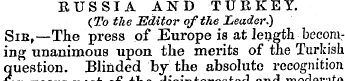
RUSSIA AND TURKEY . ( To the Editor of the Leader . ) Sie , —The press of Europe is at length becoming unanimous upon the merits of the Turkish question . Blinded by the absolute recognition for years past of the disinterested and moderate policy of the Czars , the vigilance of Europe has been stilled , and her watchfulness lulled to sleep . Even when startled from her heavy slumber by the stifling of Italian , Polish , and Hungarian liberty , and by the extinction of republican Cracow , Europe did but half rise , the heavy torpor of her belief exerted too deadening an influence upon her judgment ; it spread too thick a pall over her intellect to permit of the simple principles involved once appearing luminous and clear to her understanding . Hence her slowness to comprehend the refutation liussia has xtsolt afforded , and hence that long lingering conlidenco in the magnanimity of the Czar Nicholas , which has uaralvzed the action of Europe , ana
procrastinated Turkish civilization for halt a century to come . But the deceptive panegyrics upon that system " which oxhausted every maw * of procuring peace boforo it resorted to wai , have also contributed not a little to produce tlio perilous result which now keeps tho un < M world in suspense . Tho voices of 8 WH £ - jobbers and of petty dynastic intriguers , ana u > whimperings of the Peaco Society , have uct heard in the chambers of tho Government , ana the natural result of measuring British iccnno lillU ilUlAUiU ICttllll , « Jl inuiwuiu'fi innlai si
by tho rise and fall of the public *™ lias been tho complete victory of tho Jw >*> autocrat . Undeterred by any considerate s tho three per cents , tho Cmv has coneliictw i > manoeuvres with spirit ; they all bear the s i of an inflexible will , and of a vigorous mic » ^ and they havo nil boon unqualifiedly « u < ( % although founded upon complete nii'istiec- y Allies , with a good cause , with public law , amUiJ ; tiee on their side , havo suffered mugnomu foal ; . And whence does so starthnff « -n < " " £ arise P Hud tho movements of the js > . l > r . « . <^ u i « w » , /' Kfiw > f . i > rl wit . li nnlitfhtoneu uii » " _ <
and well arranged precision , wouia pu ^ and ho humiliating a contrast have occu 11 . , a should wo now bo dep loring tho > " ^ ° " l I ion ot precipitancy which has caused tno r ' fortutho licimnNotoP Throug hout ^ ^ . inite negotiations tho dip lomacy 01 ' - i cftMgOf getting ita dignity and tho jnoww ol
-
-
Citation
-
Leader (1850-1860), Sept. 24, 1853, page 14, in the Nineteenth-Century Serials Edition (2008; 2018) ncse.ac.uk/periodicals/l/issues/cld_24091853/page/14/
-