On this page
-
Text (2)
-
![November 24, 1855.] THE jiff. AE>EB. U&5](/static/media/periodicals/101-CLD-1855-11-24-001-SINGLE/Ar01900S.png)
November 24, 1855.] THE jiff. AE>EB. U&5
-

THE LIFE OF FIELDING. The Life of Henry ...
Note: This text has been automatically extracted via Optical Character Recognition (OCR) software. The text has not been manually corrected and should not be relied on to be an accurate representation of the item.
-
-
Transcript
-
Note: This text has been automatically extracted via Optical Character Recognition (OCR) software. The text has not been manually corrected and should not be relied on to be an accurate representation of the item.
Additionally, when viewing full transcripts, extracted text may not be in the same order as the original document.
Longfellow's New Poem. The Song Of Hiawa...
" Four days . is the spirit s journey To the laud of ghosts and shadows , Four its lonely night encampments ; Four times must their fires be lighted Therefore , when the dead are buried , Let a fire , as night approaches , Four times on the grave be kindled , That the soul upon it 3 journey May not lack the cheerful fire-light , Hay not group about in darkness . " Farewell , noble Hiawatha ! We have put you to the trial , To the proof have put your patience , By the insult of our presence , By the outrage of our actions . We have found you great and noble . Fail not in the greater trial , Faint not in the harder struggle . "
When they ceased , a sudden darkness Fell and filled the silent wigwam . Hiawatha heard the rustle As of garments trailing by him , Heard the curtain of the doorway Lifted by a hand he saw not , Felt the cold breath of the night ah " , For a moment saw the starlight ; But he saw the ghosts no longer , Saw no more the wandering spirits From the kingdom of Ponemah , From the land of the Hereafter .
America has now her epic . The intellectual greatness of America , which every dispassionate eye must see , will one day be commensurate with her territorial greatness ( and of which , even now , there are unmistakeaoler signs , in the originality of several writers ) , may , and prohably will , produce epics grander in substance than this of Hiawatha ; but the glory of having given his country her first national poem worthy to be placed beside the national poems of " other lands , will always belong to Longfellow .
November 24, 1855.] The Jiff. Ae>Eb. U&5
November 24 , 1855 . ] THE jiff . AE > EB . U & 5
The Life Of Fielding. The Life Of Henry ...
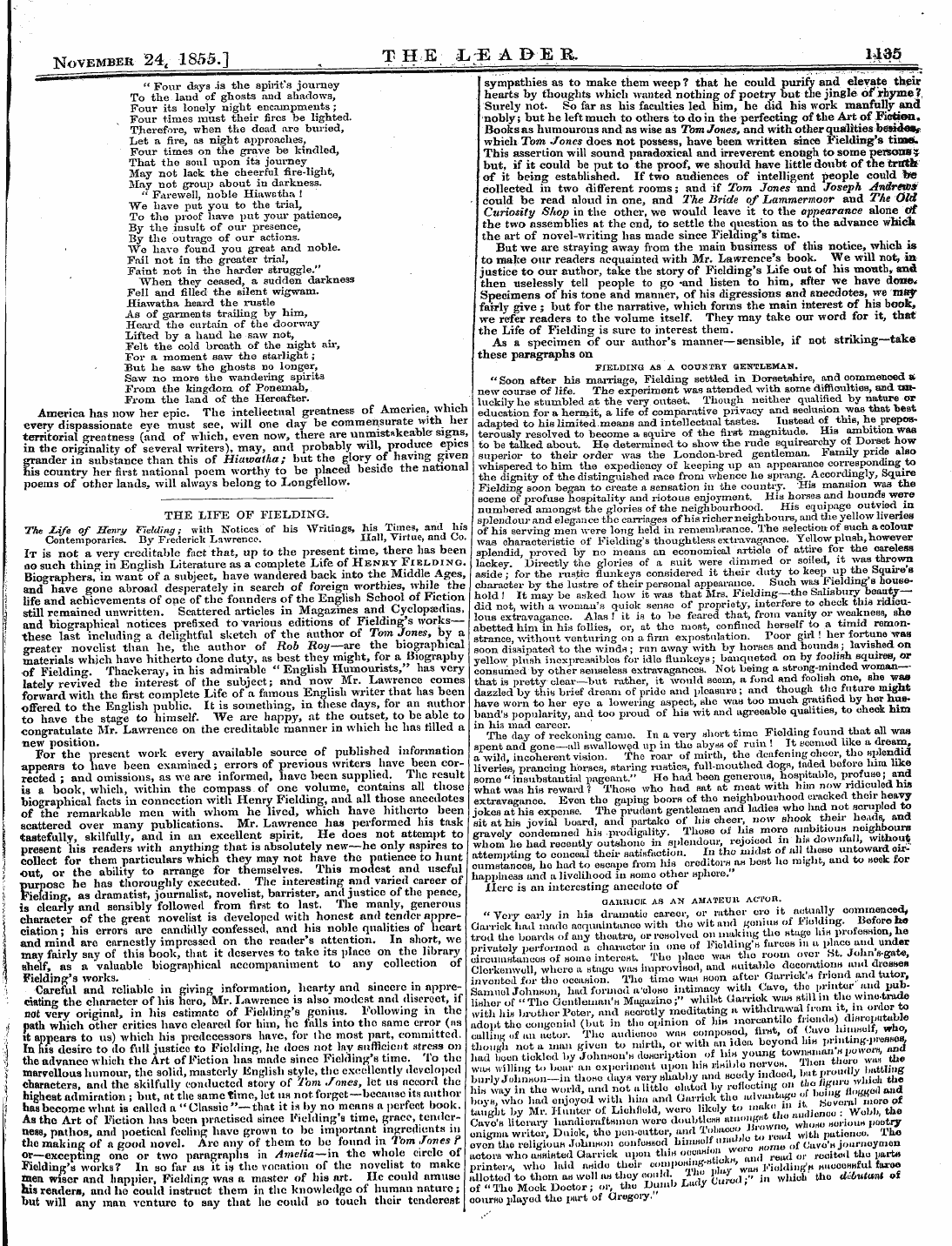
THE LIFE OF FIELDING . The Life of Henry Fielding ; with Notices of his Writings , his Times , and his Contemporaries . By Frederick Lawrence . Hall , Virtue , and Co . It is not a very creditable fact that , up to the present time , there has been qo such thing in English Literature as a complete Life of Henry Fielding . Biographers , in want of a subject , have wandered back into the Middle Ages , and have gone abroad desperately in search of foreign worthies , while the life and achievements of one of the founders of the English School of Fiction still remained unwritten . Scattered articles in Magazines and Cyclopaedias ,
and biographical notices prefixed to various editions of Fielding ' s worksthese last including a delightful sketch of the author of Tom Jones , by a greater novelist than he , the author of Rob Roy—are the biographical materials which have hitherto done duty , as best they might , for a Biography of Fielding . Thackeray , in his admirable " English Humourists , " has very lately revived the interest of the subject ; and now Mr . Lawrence comes forward with the first compl ete Life of a f amous English writer that has been offered to the English public . It is something , in these days , for an author to have the stage to himself . We are happy , at the outset , to be able to congratulate Mr . Lawrence on the creditable manner in which he has tilled a
• new position . . For the present work every available source of published information appears to have been examined ; errors of previous writers have been corrected ; and omissions , as we are informed , have been supplied . The result is a book , which , within the comp ass of one volume , contains all those biographical facts in connection with Henry Fielding , and all those anecdotes of the remarkable men with whom he lived , which have hitherto been scattered over many publications . Mr . Lawrence has performed his task tastefully , skilfully , and in an excellent spirit . He does not attempt to present his readers with anything that is absolutely new—he only aspires to collect for them particulars which they may not have the patience to hunt
out , or the ability to arrange for themselves . This modest and useful purpose he has thoroughly executed . The interesting nnd varied career of Fielding , as dramatist , journalist , novelist , barrister , and justice of the peace , is clearly and sensibly followed from first to last . The manly , generous character of the great novelist is developed with honest and tender appreciation ; his errors are candidly confessed , and his noble qualities of heart and mind arc earnestly impressed on the reader ' s attention . In short , we may fairly say of this book , that it des erves to take its place on the library shelf , as a valuable biographical accompaniment to any collection of Fielding ' s works . Careful and reliable in giving information , hearty and sincere in appreciating the character of his hero , Mr . Lawrence is also modest and discreet , if not very original , in his estimnto of Fielding ' s genius . Following in the hinlls into tho ( $
path which other critics have cleared for him , e same error n it appears to us ) which his predecessors have , for the most part , committed . In his desire to do full justice to Fielding , he does not lay sufficient stress on the advance which the Art of Fiction has made since Fielding ' s time . To the marvellous humour , the solid , masterly ISnglish style , the excellently developed characters , and the skilfully conducted story of Tom Jones , let ua accord the highest admiration ; but , nt the same time , let ua not forget—because its author has become what is called a " Classic "—that it is by no means a perfect book . Aa the Art of Fiction has been practised since Fielding ' s time , grace , tenderness , pathos , and poetical feeling have grown to be important ingredients in the making of a good novel . Arc any of them to be found in Tom Jones ? or—excepting one or two paragraphs in Amelia —\ n tho whole circle of Fielding ' s works ? In so far as it is tho vocation of the novelist to make toen wiser and happier , Fielding was a master of his art . He could amuse his renders , and ho could instruct them in the knowledge of human nature ; but will any man venture to say that he could so touch their tendcrest
sympathies as to make them weep ? that he could purify and elevate their hearts by thoughts which wanted nothing of poetry but the jingle of rhyme ? Surely not . So far as his faculties led him , he did his work manfully and nobly ; but he left much to others to do in the perfecting of the Art of Fiction . Books as humourous and as wise as Tom Jones , and with other qualities besides ^ which Tom . / ones does not possess , have been written since 1 * ieldirig ' s time This assertion will sound paradoxical and irreverent enough to some persona $ but , if it could be put to the proof , we should have little doubt of the trirth of it being established . If two audiences of intelligent people could l * e collected in two different rooms ; and if Tom Jones and Joseph Aw & r & ns could be read aloud in one , and The Bride of Lammerrnoor and The Old Curiosity Shop in the other , we would leave it to the appearance alone <* f the two assemblies at the end , to settle the question as to the advance which
the art of novel-writing has made since Fielding ' s time . But we are straying away from the main business of this notice , which is to make our readers acquainted with Mr . Lawrence ' s book . We will not , in justice to our author , take the story of Fielding ' Life out of his mouth , and then uselessly tell people to go -and listen to him , after we have done . Specimens of his tone and manner , of his digressions and anecdotes , we tn & jr fairly give ; but for the narrative , which forms the main interest of his book , we refer readers to the volume itself . They may take our word for it , that the Life of Fielding is sure to interest them . As a specimen of our author ' s manner—sensible , if not striking—take these paragraphs on FIELDING AS A COUNTRY GENTLEMAN .
" Soon after his marriage , Fielding settled in Dorsetshire , and commenced « new course of life . The experiment was attended with some difficulties , and tatluckily he stumbled at the very outset . Though neither qualified by nature coeducation for a hermit , a life of comparative privacy and seclusion was that beat adapted to his limited . means and intellectual tastes . Iustead of this , he preposterously resolved to become a squire of the first magnitude . His ambition was to be talked about . He determined to show the rude squirearchy of Dorset Jiow superior to their order was the London-bred gentleman . Family pride also whispered to him the expediency of keeping up an appearance corresponding to the dignity of the distinguished race from whence he sprang . Accordingly , Squire Fielding soon began to create a sensation in the country . His mansion was the scene of profuse hospitality and riotous enjoyment . His horses and hounds were numbered amongst the glories of the neighbourhood . His equip ^ outvied in splendour and elegance the carriages of his richer neighbours , and the yellow liveries of his serving men were long held in remembrance . The selection of such a colour was characteristic of Fielding ' s thoughtless extravagance . Yellow plush , however of attire tor tcareless
splendid , proved by no means an economical article ne lackey . Directly the glories of a suit were dimmed or soiled , it was thrown aside ; for the rustic flunkeys considered it their duty to keep up the faquire s character by the lustre of their personal appearance . Such was Fielding s household ! It may be asked how it was that Mrs . Fielding—the Salisbury beautydid not . with a woman ' s quiok sense of propriety , interfere to check thia ridiculous extravagance . Alas ! it is to be feared that , from vanity or weakness , she abetted him in his follies , or , at the most , confined herself to a timid remonstrance , without venturing on a firm expostulation . Poor girl ! her fortune was soon dissipated to the winds ; ran away with by horses and hounds ; lavished on yellow plush inexpressibles for idle flunkeys ; banqueted on by foohsh squires , or consumed by other senseless extravagances . Not being a strong-mmded womanthat is pretty clear—but rather , it would seem , a fond and foolish one , ehe was dazzled by this brief dream of pride and pleasure ; and though the future might have worn to her eye a lowering aspect , she was too much gratified by her hus . band ' s popularity , and too proud of his wit and agreeable qualities , to check him
in his mad career . _ ,.,,. ,. . ,, . « The day of reckoning came . In a very abort time Fielding found that all was spent and gone—all swallowed up in the abyss of ruin ! It seemed like a dream , awild , incoherent vision . The roar of mirth , the deafening eheor , tho splendid liveries , prancing horses , staring rustics , full-mouthed dogs , laded before him like some " insubstantial pageant . '' He had been generous , hospitable , profuse ; and what was his reward ? Those who had Hat at meat with hnn now ridiculed his extravagance . Even the gaping boors of tho neighbourhood cracked their heavy jokes at his expense . The prudent gentlemen and ladies who had not scrupled to sit at his jovial board , and partake of his cheer , now shook their beads and gravely condemned his prodigality . Those of Lia more ambitious neighbours whom he had recently outshone in splendour , rejo oed in h , « downfall , 'jvithout attempting to conceal their satisfaction . In tho midst of nil these ^ toward ouv oumstances , ho had to escape from his creditors as best he might , and to seek for happiness and a livelihood in Borno other upbore . " Here is an interesting an ecdote of dAlllllOIC AS AN AMATETJH ACTOR .
" Very early in his dramatic career , or rather ore it actually commenced , Gai-rick had made acquaintance with tho wit and genius of Imo ding . Moreto trod the boards of any theatre , or resolved on making the stage Iiih . profession , lie privately performed a character in one of Fielding '» farces m u place . and under circumstances of some interest . Tho place was tho room ovo _ St . J . n _ -gate , Clorkenwell , whore a stage was improvised , and mutable ^ r ^ ° ™ " £ *™ Z £ invented for the occasion . Tho time was soon after Garrick « fr end andtutor , Samuel Johnson , had formed a ' close intimacy with Cave , the printer , » d pub-Usher of " The Gentleman ' s Magazine ; " whilst ( Jamok was still in tle w » ™*™ £ with lii » brother Peter , and secretly meditating a w ^^^ J ^^ ^ KSbte adopt tho congenial ( but in tho opinion of hlH ?^ / S , £ T < f , m ££ Tho audience" composedfirstof Ouvo
3 ^ u was , , J ^ VJJ though not a man given to mirth , or with an idea beyond his I '""^ " ^ ^ had boon tickled by Johnson ' s description . of h s young to ™» " » ^ . ^ 4 h « £ wan willing to boar an experiment upon his WHil > lo nerves ^ proudly buttling burly J « hn » on-in those days very shabby and seedy Hideed , but g' «»; IJ JhJdl th % his way in the world , and not u little elated by reflect . » U o jm ^ boys , who had enjoyed with him and ( Jamok the mlva . it . go ol » ££ « , « 10 ro pf taught by Mr . Hunter of Liehfleld , were Hkoly to ' , "" V , lloSo : Webb , tue Cavo ' H litorary handicraftsmen woro doubtloMS alIU "'« " wilortt , Horious pootry enigma writer , Duiok , tho pen-oiitter , and 1 ™"" ° " "Zvmvl with patience . Tlxo even tho religious Johnson oonfosHod himsoli """¦ ' 1 O of ( javo ' s journeymen actors -who assisted Ourriek upon this occasion vy ^ ^ ^ rC oitod tho parts printer * , who laid aside their ««» p «««^^ Fioldinrfp successful faroe allotted to thorn as well as they « oul < l . *» " \ " * .- > in which ' tho dibutmt of of " Tho Mock Doctor ; or , tho Dumb Lady Wio , course played tho part of Gregory .
-
-
Citation
-
Leader (1850-1860), Nov. 24, 1855, page 19, in the Nineteenth-Century Serials Edition (2008; 2018) ncse.ac.uk/periodicals/l/issues/cld_24111855/page/19/
-