On this page
-
Text (2)
-
WTrFTMTNT W JUliJ-MJJN
-

Untitled Article
Note: This text has been automatically extracted via Optical Character Recognition (OCR) software. The text has not been manually corrected and should not be relied on to be an accurate representation of the item.
-
-
Transcript
-
Note: This text has been automatically extracted via Optical Character Recognition (OCR) software. The text has not been manually corrected and should not be relied on to be an accurate representation of the item.
Additionally, when viewing full transcripts, extracted text may not be in the same order as the original document.
Untitled Article
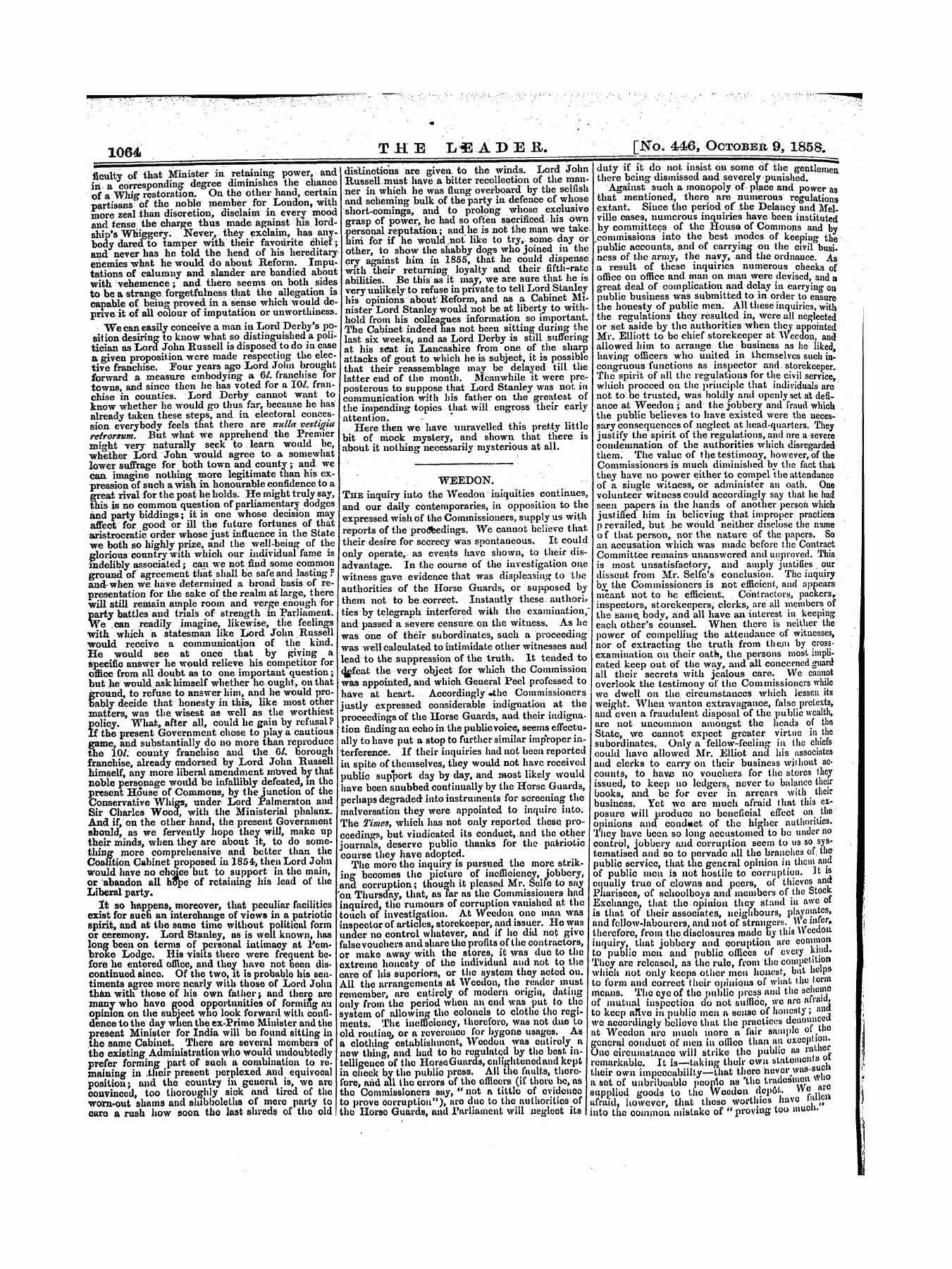
ficulty of that Minister in retaining power , and in a corresponding- degree diminishes the chance of a Whig restoration . On the other hand , certain partisans of the noble member for London , with more zeal than discretion , disclaim in every mood and tense the charge thus made against his lordship ' s Whiggery . Never , they exclaim , has anybody dared to tamper with their favourite chief ; and never has he told the head of his hereditary enemies -what he would do about Reform . Imputations of calumny and slander are bandied about ¦ with vehemence ; and there seems on both _ sides to be a strange forgetfulness that the allegation is capable of being proved in a sense which ' would'deprive it of all colour of imputation or unworthiness .
We can easily conceive a man in Lord Derby ' s position desiring to know what so distinguished a politician as Lord John Russell is disposed to do in case a given proposition were made respecting the elective franchise . Pour years ago Lord John brought forward a measure embodying a 6 / . franchise for towns , and since then he has voted for a 10 / . franchise in counties . Lord Derby cannot want to know whether he would go thus far , because he has already taken these steps , and iu electoral concession everybody feels that there are nulla vestigia retrorsum . But what we apprehend the Premier
distinctions are given to the winds . Lord John Russell must have a bitter recollection of the manner in which he was flung overboard by the selfish and scheming bulk of the party in defence of whose short-comings , and to prolong whose exclusive grasp of power , he had so often sacrificed his own Eers onal reputation ; and he is not the man we take ini for if he would , not like to try , some day or other , to show the shabby dogs who joined in the cry against him in 1855 , that he could dispense with their returning loyalty and their fifth-rate abilities . Be this as it may , we are sure that he is vfirv uiilikelv to refuse in p rivate to tell Lord Stanley
his opinions about Reform , and as a Cabinet Minister Lord Stanley would not be at liberty to withhold from his colleagues information so important . The Cabinet indeed has not been sitting during the last six weeks , and as Lord Derby is still suffering at his seat in Lancashire from one of the sharp attacks of gout to which he is subject , it is possible that their reassemblage may be delayed till tlie latter end of the month . Meanwhile it were preposterous to suppose that Lord Stanley was not . in communication with his father on the greatest of the impending topics that will engross their early attention . - "
Here then we have unravelled this pretty little bit of mock mystery , and shown that there is about it nothing necessarily mysterious at all .
might very naturally seek to learn would be , whether Lord John would agree to a somewhat lower suffrage for both town and county ; and we can imagine nothing more legitimate than his expression of such a wish in honourable confidence to a great rival for the post he holds . He might truly say , this is no common question of parliamentary dodges and party biddings ; it is one whose decision may affect for good or ill the future fortunes of that aristrocratic order whose just influence in the State we both so highly prize , and the well-being of the glorious country with which our individual fame is indelibly associated : can we not find some common
ground of agreement that shall be safe and lasting ? and-when we have determined a broad basis of representation for the sake of the realm at large , there will still renlain ample room and verge enough for party battles and trials of strength in Parliament . We can readily imagine , likewise , the feelings with which a statesmanlike Lord John Russell would receive a communication of the kind . He would see at once that by giving a specific answer he would relieve his competitor for office from all doubt as to one important question ; but he would ask himself whether he ought , on that
ground , to refuse to answer him , and he would probably decide that honesty in this , like most other matters , was the wisest as well as the worthiest policy . What , after all , could he gain by refusal ? If the present Government chose to play a cautious game , and substantially do no more than reproduce the 10 / : county franchise and the 6 / . borough franchise , already endorsed by Lord John Russell himself , any more liberal amendment moved by that noble Dersonaee would be infallibly defeated , in the
present House of Commons , by the junction of the Conservative Whigs , under Lord Palmerston and Sir Charles Wood , with the Ministerial phalanx . And if , on the other hand , the present Government should , as we fervently hope they will , make up their minds , when they are about it , to do something more comprehensive and better than the Coalition Cabinet proposed in 1854 ? , then Lord John would have no choice but to support in the main , or abandon all hope of retaining his lead of the Liberal party .
It so happens , moreover , that peculiar facilities exist for such an interchange of views in a patriotic spirit , and at the same time without political form or ceremony . Lord Stanley , as is well known , has long been on terms of personal intimacy at Pembroke Lodge . His visits there were frequent before he entered office , and they have not been discontinued since . Of the two , it is probable his sentiments agree more nearly with those of Lord John than with those of his own father ; and there are many who have good opportunities of forming an
opinion on the subject who look forward with confidence to the day when the ex-Prime Minister and the present Minister for India will be found sitting in the same Cabinet . There are several members of the existing Administration who would undoubtedly prefer forming part of such a combination to remaining in . their present perplexed and equivocal position ; and the country in general is , we are convinced , too thoroughly sick and tired of the wotn-out shams and shibboleths of mere party to care a rush how eoon the last shreds of tho old
Wtrftmtnt W Julij-Mjjn
duty if it do not insist on some of the gentleme n there being dismissed and severely punished . Against such a monopoly of place and power as that mentioned , there , are numerous r egulatio ns extant . Since the period of . the Delancy and Melville cases , numerous inquiries have been instituted by committees of the Housa of Commons and by commissions into the best modes of keeping the public accounts , and of carrying on the civil business of the army , the navy , and the ordnauce . As a result of these inquiries numerous checks of office on office and man on mau were devised , and a great deal of complication and delay in carrying on public business was submitted to in order to ensure the honesty of public men . All these inquiries , with
the regulations they resulted in , were all neglected or set aside by the authorities ¦ when they appointed Mr . Elliott to be chief storekeeper at Weedon , and allowed him to arrange the business as he liked , having officers who united in themselves such incongruous functions as inspector and storekeeper . The spirit of all the regulations for the civil service , which proceed on the principle that individuals are not to be trusted , was boldly and openly set at defiance at Weedon ; and the jobbery and fraud which the public believes to have existed were tlie necessary consequences of neglect at head-quarters . They justify the spirit of the regulations , and are a severe condemnation of the authorities which disregarded them . The value of the testimony , however , of the Commissioners is much diminished bv the fact that
they have no power either to compel the attendance of a single witness , or administer an oath . One volunteer witness could accordingl y say that he had seen papers in the hands of another person which justified him in believing that improper practices prevailed , but he would neither disclose the name o f that person , nor the nature of the papers . So ail accusation which was made before the Contract Committee remains unanswered and unproved ' . This is most unsatisfactory , and amply justifies our dissent from Mr . Selfe ' s conclusion . The inquiry by the Commissioners is not efficient , and appears meant not to be efficient . Contractors , packers * inspectors , storekeepers , clerks , are all members of
WEEDON . The inquiry into the Weedon iniquities continues , and our daily contemporaries , in opposition to the expressed wish of the Commissioners , supply us with reports of the proceedings . We cannot believe that their desire for secrecy was spontaneous . It could only operate , as events have shown , to their disadvantage . In the course of the investigation one witness gave evidence that was displeasing to the authorities of the Horse Guards , or supposed by them not to be correct . Instantly these authority ties by telegraph interfered with the examination , and passed a severe censure , on the witness . As he was one of their subordinates , such a proceeding was well calculated to intimidate other witnesses aud lead to the suppression of the truth . It tended to defeat the very object for which the Commission was appointed , and which General Peel professed to have at heart . Accordingly ' the Commissioners justly expressed considerable indignation at the proceedings of the Horse Guards , and their indignation finding an echo in the public voice , seems effectually to have put a stop to further similar improper
interference . If their inquiries had not been reported in spite of themselves , they would not have received public support day by day , and most likely would have been suubbed continually by the Horse Guards , perhaps degraded into instruments for screening the malversation they were appointed to inquire into . The Times , which lias not only reported these proceedings , but vindicated its conduct , and the other journals , deserve public thanks for the patriotic course they have adopted . The more tho inquiry is pursued the more striking becomes tho uicturo of inefficiency , jobbery ,
and corruption ; though it pleased Mr . Selfe to say on Thursday , that , as Tar as the Commissioners had inquired , the rumours of corruption vanished at the touch of investigation . At VVccdon one mau was inspector of articles , storekeeper , and issuer . He was under no control whatever , and if ho did not give false vouchers and share tho profits of the contractors , or make away with tho stores , it was due to the extreme honesty of the individual and not to the care of his superiors , or the system they acted on . All tho arrangements at Weedon , the render must
remember , are entirely of modern origin , dating only from tho period when an end was put to tho system of allowing the colonels to olotho tho regiments . Tlie inefficiency , therefore , was not due to old routine , or a reverence for bygone usages . As a clothing establishment ,. Weedon was entirely a now thing , and had to bo regulated by tho best , intelligouce of tho HorsoGuaras , enlightened and kept in check by the publio press . All tho faults , therefore , and all the errors of the officers ( if thore bo , as tho Commissioners say , " not a tittle of evidence to prove corruption" ) , are duo to tho authorities of the Ilorao Guards , and Parliament will neglect its
the same , body , and all have an interest in keeping each other ' s counsel . When there is neither the power of compelling the attendance of witnesses , nor of extracting the truth from them by crossexamination on their oath , the persons most implicated keep out Of the way , and all concerned guard all their secrets with jealous care . We cannot overlook the testimony of the Commissioners . while we dwell on the circumstances which lessen its weight . When wanton extravagance , false pretexts , and even a fraudulent disposal of the public wealth , are not uncommon amongst the hcad 3 of the State , we cannot expect greater virtue in the subordinates , Only a fellow-feeling in the chiefs could have allowed Mr . Elliot and his associates
and clerks to carry on their business wjihout accounts , to have no vouchers for the stores they issued , to keep no ledgers , never to balance their books , and be for ever in arrears with their business . Yet we are much afraid that this exposure will produce no beneficial effect on the opinions and conduct of the 'higher authorities . They have been so long accustomed to be under no control , jobbery and corruption seem to us so systematisea and so to pervade all the branches of . the public service , that the general opinion in them ana of public men is not hostile to corruption , it is equally true of clowns and peers , of thieve ? ana stoat
Pharisees , of schoolboys and members ol the Exchange , that the opinion they stand in awe ot is that of their associates , neighbours , p laymates , and fellow-labourers , and not of strangers . W o m , therefore , from the disclosures made by this > v ccaon inquiry , that jobbery and coruption arc common to publio men and public offices of every Ki " » Thoy are released , as the rule , from the competition which not only keeps other men honest , but helps to form and correct their opinions of what tho torm
moans . Tho eye of tho public press and the sclicmo of mutual inspection do not suffice , we arc alnua , to keep hKvo in public men a sense of honesty j « n « wo accordingly bcliovo that the practices d pnouncew at Weedon arc muoli more u fair siunjilo ot uio general conduct of men . in office than an oxcopuon . One oiroumstaneo will strike the publio as niM » er remarkable . It is—taking thofr own statements oi their own impeccability—that there hcvor wa 3 suc » a sot of uubriboublo people us 'the tradesmen \ vuo supplied goods to tho Woodon depot . Wo nro afraid , Uowovor , that those worthies have liiiwn into tho common , mistake of " proving too inuoh .
Untitled Article
1064 T H "E Ii ^ E APE R . [ No . 446 , October 9 , 1858 .
-
-
Citation
-
Leader (1850-1860), Oct. 9, 1858, page 1064, in the Nineteenth-Century Serials Edition (2008; 2018) ncse.ac.uk/periodicals/l/issues/vm2-ncseproduct2263/page/16/
-